Jump to ratings and reviews
Rate this book

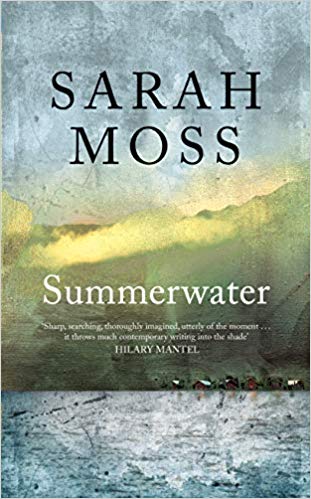
Summerwater

Rate this book
From the acclaimed author of Ghost Wall, Summerwater is a devastating story told over twenty-four hours in the Scottish highlands, and a searing exploration of our capacity for both kinship and cruelty in these divided times.

On the longest day of the summer, twelve people sit cooped up with their families in a faded Scottish cabin park. The endless rain leaves them with little to do but watch the other residents.

A woman goes running up the Ben as if fleeing; a retired couple reminisce about neighbours long since moved on; a teenage boy braves the dark waters of the loch in his red kayak. Each person is wrapped in their own cares but increasingly alert to the makeshift community around them. One particular family, a mother and daughter without the right clothes or the right manners, starts to draw the attention of the others. Tensions rise and all watch on, unaware of the tragedy that lies ahead as night finally falls.

208 pages, Hardcover

First published August 7, 2020

831 people are currently reading
15739 people want to read

About the author

Sarah Moss

33 books1,879 followers
Sarah Moss is the award-winning author of six novels: Cold Earth, Night Waking, selected for the Fiction Uncovered Award in 2011, Bodies of Light, Signs for Lost Children and The Tidal Zone, all shortlisted for the prestigious Wellcome Prize, and her new book Ghost Wall, out in September 2018.

She has also written a memoir of her year living in Iceland, Names for the Sea, which was shortlisted for the RSL Ondaatje Prize in 2013.

Sarah Moss is Professor of Creative Writing at the University of Warwick in England.

Ratings & Reviews

What do you think?
Rate this book

Friends & Following

Create a free account to discover what your friends think of this book!

Community Reviews

5 stars
2,319 (14%)
4 stars
5,927 (37%)
3 stars
5,244 (33%)
2 stars
1,777 (11%)
1 star
519 (3%)
Displaying 1 - 30 of 2,183 reviews
Profile Image for Nilufer Ozmekik.
3,115 reviews60.6k followers
April 14, 2021
Such a well written cabin fever story is taken place in claustrophobic, rainy, depressing atmosphere with detailed, living, breathing, pure realistic, layered characterization and their random, smart, quirky, dark narrations.

Of course it’s well deserved five starred reading. When you read something special you feel you’re safe with the extremely great written words of extraordinarily talented story-teller!

Different families gather in holiday park located at Trossachs / Scotland for spending their quality time which ruins with never stopping rain. They are forced to spend more time indoors which increases the pressure, conflicts between them and getting more agitated from the next door neighbors prying into their lives as they do exactly the same to them.

So many vivid characters make you laugh out loud, nod your head ( because you exactly feel and think like them), sigh (some of the hard realities of life)!

A retired couple who want to sell their cabin to start a new life maybe going to the tour around Europe as their old neighbors already vanish and resume living in different places. Justine, the runner, who has dark and so entertainingly smart sense ( I enjoyed to be in her head and trace her thought patterns) , Milly and Josh who try rekindling their orgasmic powers. Especially Milly’s way of thinking throughout the sex can varied with fantasizing Don Draper (oh Milly, you already became the winner character of this book), Greek’s economic bankruptcy and Zimbabwean ecological and climate changes as her partner Josh tries different positions to satisfy her ( yes, you may guess, these are funniest parts of the book) , Claire: a mother who has no idea spending one free hour by herself to relax and rest, Alex: only a teenager goes to the loch for experimenting a dangerous kayaking vacation.

And of course mother never daughter get the unwanted attention with their quirky manners and unusual clothing.

Everything connected with the misjudgingly whining of these characters about loudly partying group of Eastern European ( Polish, Ukrainians) people ! Because of them, they can not get enough sleep and their children become nervous! And of course from the beginning we wait for something explosive and shocking will happen to connect those characters tragically! Yes, we definitely get the jaw dropping ending we deserve!

No more words! I got enchanted by the skilled storytelling skills of Ms. Moss! Her previous book belonged to different genre ( horror, paranormal) which I gave five stars! It’s great to see an author can write different genres so perfectly, building original worlds and creating amazing character portraits!

Sooo much thanks to NetGalley and Farrar, Straus and Giroux for sharing this arc copy with me in exchange my honest review.
Profile Image for Marchpane.
324 reviews2,846 followers
August 29, 2020
Summerwater is a slim novella tracking the course of a single rainy day in a Scottish holiday park. Each section—somewhere between a vignette and a short story—follows a different guest, capturing that very specific ennui of ostensibly being on holiday but it’s bucketing down.

The writing is crisp, unfussy and flows easily, with an attentive third-person limited perspective (it’s a style that reminds me: I should read more Virginia Woolf). I found that my interest in the various characters fluctuated a lot and as a result, some chapters were terrific and others tedious.

My favourite was the one with a mother of young kids who has an unexpected hour all to herself, then squanders much of it by fretting over how to best use the time. Take a bath? Cup of tea? Definitely not cleaning, that would defeat the point! Very relatable and real.

It’s probably clear, this is the sort of book where very little happens... except that there is a dramatic event right at the end, affecting the whole park. The abrupt change of tone was quite jarring, and also a reminder that there is one group of guests whose story we never hear. The book was over before I could puzzle this out. Overall, I found Summerwater to be something of a mixed bag, but I am keen to read this author again.
Profile Image for Meike.
Author 1 book4,943 followers
April 1, 2020
Sarah Moss is a master of evocative writing: The story moves slowly and many passages are very descriptive (which usually bothers me), but the text is still intense and intriguing. For her short novel "Summerwater", she chose a peculiar structure: Over the course of one day, we meet 12 people in different stages of their lives, all of them spending their summer holidays in a Scottish cabin park at a loch. There's a retired couple, there are families with children of different ages, a young engaged couple, and a family with Eastern European roots. In longer vignettes, alternating between viewpoints, we hear about the trials and tribulations of these vacationers, and by them conveying what they think of the others in the park - people they mainly see, but hardly ever talk or even connect to - the isolation of the inhabitants of the cabins becomes clear. And it's mainly the family with the foreign surname who likes to throw noisy parties they are suspicious of - until the tension culminates in a catastrophe.

If you now think that this plot structure does not seem particularly appealing, don't be fooled: The individual stories prove Moss' keen eyes and ears - this woman knows how to write hilarious sex scenes, women trapped in familial duties (Weather falls so, so short compared to this), old people dealing with changes, young kids playing cruel games, teenagers stuck in a cabin with their parents, and, more than anything, nature. Not only are there nature scenes separating the vignettes, there are also great descriptions within the stories full of elements that connect the stories of individual, isolated people who are connected by the setting: The rain, the stones, the trees, the loch. Moss also employs motifs and objects that appear again and again in the different stories, and if you put them together, they point to the tragedy at the end.

The book title refers to The Ballad of Semmerwater by Sir William Watson - one of the characters always misheard the name of the poem as a child. Needless to say, the ballad can be read in the context of "Summerwater", but as this is Sarah Moss, the book isn't a simple re-telling.

A fascinating book, at times contemplative, at times hilarious, and worth reading for Moss' atmospheric prose alone.
Profile Image for Kelli.
927 reviews448 followers
February 5, 2021
I can't shake the idea that this book was probably brilliant, but the cacophony of disgruntled, unhappy voices presented in third person stream of consciousness nearly drove me mad. Atmospheric beyond measure and absolutely saturated in commentary on the state of the world today, this (most likely) brilliant book exhausted me and wrung me out.

There are some writers that I just don't "get" and I feel like perhaps Sarah Moss might be one of those. If I were to place her on that list, she'd be in good company with George Saunders, but I will need to read another novel of hers before I make that call because seriously, 2021! 2.5 stars from me.
Profile Image for Ceecee .
2,738 reviews2,307 followers
April 13, 2020
Location-Scotland, a holiday lodge park in The Trossachs. It’s raining like there’s no tomorrow, some cabin fever setting in as the holiday makers are trapped indoors though a few decide to ‘make the best of it’. The story is told from the perspectives of the occupants of some of the lodges, all in their own little world but also hyper aware of possible prying eyes in the close proximity. They are unknowingly united in their grumbling about the nightly loud music and partying from a cabin of Ukrainians/Romanians/ Polish/ etc, etc which reveals so much about them and their judgemental thoughts.

The characters are vividly depicted and I love the thoughts of some of them such as runner Justine with her dark thinking especially about her husband and Milly fantasising about Don Draper - mmmmm! They are especially funny with their humour tending towards the dark side! There’s an older mum who takes forever to choose a tea bag flavour to the fury of her teenage daughter and a young mum given the gift of a free hour with no clue how to spend it. I love the randomness of their thoughts, some are off the wall but who hasn’t been there??? Between each characters narration there are some beautiful depictions of the natural world such as a deer and a fawn, ants, bats, flora and fauna and this heightens your awareness and you become watchful like the deer and it makes you observe the occupants with a closer eye. It also highlights the isolation of the setting beside a large loch (I imagine Loch Lomond or Loch Katrine) and it adds to the ambience. With separate story the atmosphere intensifies and you realise you are building to a dramatic conclusion. The end is shocking partly because of the peaceful, idyllic setting but you also realise that all the signs are there that something dramatic is about to happen.

Overall, a beautifully written and atmospheric piece if work from the talented Sarah Moss.

Thanks to NetGalley and Pan MacMillan for the ARC.
Profile Image for ♑︎♑︎♑︎ ♑︎♑︎♑︎.
Author 1 book3,799 followers
April 11, 2021
This is brave, confident writing. I read to the end and then I started back at the beginning and read it to the end again. And then, because it's a library book that was due, and because I wanted to be able to read it whenever I wanted to--maybe, even, to read it right away again--I bought it. And now I'm reading it in the way that I sometimes like to read, when it's a book I love: Open it. Read a sentence. Close it. Open again. Read another sentence. Say to yourself: yes, yes, yes.
Profile Image for Roman Clodia.
2,895 reviews4,646 followers
March 31, 2020
I've loved some of Moss' past books but this brief fable of a story feels distinctly underpowered. It seems to me to show how a disparate group of strangers become a temporary quasi-community when something disastrous happens, but for about 95% of the time before we're rather aimlessly in the self-absorbed heads of various characters. The voices of these inner monologues are too same-y and, by their very nature, mundane.

That said, the 'story' of the young woman whose lover is determined they should practice constantly to achieve simultaneous orgasm while she fantasies about John Hamm and bacon rolls is hilarious!

Is this book a response to how, even in our divisive times, people can and do come together? Too little, too late, I'm afraid, for this reader.

Thanks to the publisher for an ARC via NetGalley
Profile Image for Doug.
2,544 reviews911 followers
February 6, 2021
4.5, rounded up.

This is my first Moss novel, but it won't be my last - in fact, as soon as I finished, I immediately started reading Ghost Wall. In an odd way, this reminded me of Olive Kitteridge and its sequel - the way a major character in one story becomes a cameo in another, how the community itself is as much a character as any of the human ones, how the natural environment is always impinging on what happens.

Although I generally prefer a more linear structure, and this is just barely a novel, rather than a series of interconnected disparate short stories, the format grew on me, particularly how each story is bracketed by a very short passage telling what is happening AROUND the humans, in the foliage and animal kingdoms. Mainly though, Moss's exquisite handling of her prose style, her uncanny insight into human psychology, and the depth and breadth of her canvas I just found immensely satisfying.

My sincere thanks to Netgalley and F S & G for the ARC in exchange for this honest and enthusiastic review.
Profile Image for JimZ.
1,297 reviews757 followers
April 29, 2021
I was nervous when reading this...like something bad is going to happen. Certainly, something bad is going to happen because so far, she is introducing us slowly but surely but also BORINGLY to the characters in this novel and every other chapter consists of one page with spooky writing (i.e., like something bad is going to happen).

I kept on writing notes to myself such as this:
• What’s the point of this??
• Such boring bull crap.
• I still have no clue
• Arghh!

And then there is the reveal on the last 4 pages of the book. As I recall Shirley Jackson’s ‘The Lottery’ built up and built up to like a slow burn to a crescendo-ending maybe one or two sentences at the end and it was a shockingly good short story but fer chrissake it was a short story! Here we are privy to each of the 12 character’s ramblings in their frigging heads, such as a sister getting annoyed because she is in the bathroom of a rustic cabin and has to smell her brother’s poop odors after he has left the bathroom! Like, why do I need to know this? How does it add to the story?

I liked some of Sarah Moss’s oeuvre, especially her memoir, ‘Names for the Sea: Strangers in Iceland’, and two of her novels, ‘Tidal Zone’ and ‘Ghost Wall’.

Reviews (never fear, as per usual everybody loved it!)
https://www.theguardian.com/books/202...
https://www.npr.org/2021/01/15/956847...
https://chireviewofbooks.com/2021/01/...
https://www.newyorker.com/magazine/20...
Profile Image for Gumble's Yard - Golden Reviewer.
2,189 reviews1,794 followers
December 10, 2022
Published today 20/08/2020.

The book is set on a single Summer day in a Scottish cabin park occupied by a number of otherwise unconnected families (some owners of the cabins, most borrowing from families or friends). On the day in question the relentless rain of the previous days has continued.

The story is told in a series of third party point of view chapters – with narrators largely matched in pairs (husband and wife, boyfriend and girlfriend, siblings) and ranging in age from a young child listening to nighttime noises and shadows to a retired lady with early-stage dementia (wife of a retired anti-English bigoted Scottish doctor), searching for words and objects that escape her. These chapters at either end of the spectrum are ambitious in what they try to voice and perhaps not entirely successful.

The chapters are mainly in an internal loosely stream-of-consciousness style which I think fits one of the themes of the novel – with each character (even those in the same family) pre-occupied with their own thoughts and concerns (either immediate or longer term), despite their communal situation.

Some of the chapters are particularly internally focused and repetitive: a young mother who wakes early and goes for a long, almost obsessive, run into the hills; a girl suffering more than enjoying her boyfriend’s attempts to induce simultaneous orgasms; a sixteen year old boy on a kayaking adventure that turns out to be far harder than he had expected; a teenage girl musing on suicidal thoughts; the Mum of two toddlers trying and failing to enjoy a brief respite of me-time.

The problem for me was that it means that the chapters, even though objectively short, appear subjectively far too long.

One thing that brings the disparate families together, other than their despair at the duration of the downpour, is distrust of two outside groups: a solitary ex-solider in a nearby tent and a Ukrainian family who, each side of the day, play loud music into the night with a group of friends. A distrust which ranks from ignorant hostility (the racist husband of the runner in his story calls them interchangeably– Bulgarian/Polish/Romanian) to unpleasant intervention (a chapter by a rather psychopathic teenager).

Threaded through the chapters are a series of natural vignettes (rain, the bedrock, the sky and the Transatlantic airlines passing overhead, a deer, a loch bed and its sunken aancient coracles, a peregrine, an anthill, a vixen, bats, trees) which to some extent I think exist to evoke a feeling of timelessness and of nature continuing of human concern, but on the other to show how many of these have their own concerns for food, shelter, the avoidance of dangerous predators, the exclusion of outsiders). There are also portentous links to the main story “There will be deaths by morning” and the first vignette ends the same way “You would notice soon enough, if it stopped” as the book.

And the deceptively slow-moving book meets a dramatic climax.

Overall I felt that the concept underlying the book was better than either its realisation (I struggled to see what lesson I should take – that actually be making peace with outsiders and sharing experiences is to invite disaster, only to be rescued by a paramilitary intervention) or its execution (as commented above too many of the PoV chapters end up rather tedious and the ending is a little rushed and unnecessary).

My thanks to Pan Macmillan for an ARC via NetGalley.
Profile Image for Paula Mota.
1,662 reviews561 followers
July 27, 2025
3,5*

As pessoas, por vezes, traem a selvageria que transportam na cabeça. Quanto mais velha fica, mais acha que é assim com todos, porque na verdade ser uma velhinha não impede uma pessoa de querer esmagar os painéis dos carros estacionados nos passeios com o guarda-chuva, e arrancar e pisar os telemóveis das pessoas com conversas em voz alta no autocarro.

Este é o terceiro livro de Sarah Moss que leio e, ainda que não me tenha deslumbrado com nenhum, gosto da escrita e dos temas por ela abordados, aprecio a sua perspectiva feminina aplicada tanto ao mundano como a situações mais extremas.
Infelizmente, “Água de Verão” foi assombrada pela péssima tradução/revisão, que me deixou em alerta desde as primeiras páginas e não me deixou usufruir realmente da obra, por desconfiar, justificadamente, de cada palavra. Esse sermão, no entanto, ficará para o final da recensão, pois sei que há pessoas para quem a tradução é uma questão de somenos, para quem o que importa é poder ler em português, tal como há quem não se sinta penalizado por pagar um corte de cabelo feito por um curioso, nem pagar uma refeição preparada por quem está claramente na profissão errada. Eu não gosto de pagar e ser mal servida, logo…
Comecei por ouvir “Água de Verão” em audiobook, mas passagens como esta fizeram-me crer que seria um livro que precisava de ter em formato físico para as marcar.

Agora que começou a levantar-se a meio da noite, prefere acordá-la a mijar que nem um cavalo do que sentar-se como uma mulher uma vez que seja. (…) Irrita, estar ali deitada a ouvir o mijar agressivo de uma pessoa que podia muito bem sentar-se, mas não, porque na sua cabeça a polícia da masculinidade está à coca mesmo a meio da noite, escondida, à espreita pelas janelas.

Sarah Moss consegue aqui juntar dois dos meus maiores pesadelos, férias com chuva e vizinhos barulhentos, neste livro passado num aldeamento turístico da Escócia, onde em cada cabana vive o seu tipo de casal: o jovem sem filhos, o menos jovem com filhos pequenos, o mais velho com filhos adolescentes e o de idosos. Cada capítulo é vivido na mente de um dos habitantes, que vê os membros da sua família da sua perspectiva e também os vizinhos pela janela, para posteriormente ser essa pessoa o alvo das observações dos outros, dando origem a algumas situações caricatas.

Bem, agora não, não penses sobre o Holocausto. Ou qualquer outra atrocidade, o genocídio Europeu não é mais importante do que qualquer outro. A Passagem do Meio. A Revolução Cultural. Os Khmer Vermelhos. Oh meu deus. É bom, diz ele, e ela, hum, o que provavelmente é verdade, ou seria se ela não estivesse a pensar sobre – Don Draper. Não, Josh.

Alguns comentários da autora são pertinentes e até divertidos, no entanto, a existência de tantas personagens permite que se levantem muitas questões, como o Brexit, a imigração, o sexo, o feminismo, o desgaste do casamento, as limitações físicas e intelectuais da velhice, a parentalidade, mas sem o aprofundamento de nenhuma, e no que toca a histórias em que está tudo ligado, já se fez melhor, como no caso de “Turbulência” de David Szalay.

Aparte os violentos e os loucos, casar é como votar que, escolhas o que escolheres, o resultado vai ser na melhor das hipóteses moderadamente satisfatório daí a quatro anos.

Compreendo que em Portugal poucos consigam viver somente da escrita, que para muitos escritores a tradução seja o passo natural e que as editoras aproveitem a prata da casa, mas admito sem problemas o meu preconceito, várias vezes validado ao longo dos anos, para com o percurso escritor-tradutor, ainda que não me cause pruridos o percurso inverso. Como saber o que veio primeiro, o ovo ou a galinha? É fácil saber e perceber, até mesmo pelo resultado final. Se uma pessoa é capaz de pedir um granizado de morango e uns churros na língua original e consegue perceber o enredo de um filme americano sacado da Internet, está automaticamente habilitado a ser tradutor de espanhol e inglês. Não é esse o critério? Parece. Se for autor publicado, pontos extra, domina automaticamente a língua portuguesa. Ou não? Não, por exemplo no caso da escritora que traduziu “Água de Verão” e da respectiva revisora, que se limitou, pelos vistos, a pôr duas ou três notas de rodapé e tudo o resto lhe escapou. Desde “Mediterrânio”, “vão haver”, desaprovar de”, pretéritos imperfeitos em vez de condicionais, trocas de sujeito e de pronomes que alteram o sentido das frases, até traduções disparatadas ou sem adequação à realidade portuguesa (owl/falcão-peregrino; cling film/plástico autocolante; fat-free yoghurt/iogurte sem gordura; deck/convés-numa casa) a tradução constante de “weather” como tempo, o que causa interpretações ambíguas como “os carrinhos eram tão grandes na altura, davam jeito para as compras e eram bons com o tempo (in the weather=chuva), ou seja, pormenores que não matam mas moem.
De quem é a culpa em última instância? Da editora Cultura, obviamente, que embolsa 17,5 € por exemplar. Se quiserem muito conhecer Sarah Moss e souberem inglês, não se aborreçam, leiam o original e ainda poupam uns cobres.
Profile Image for Proustitute (on hiatus).
264 reviews
October 1, 2020
Eerie, lyrical, poignant, unflinching: Sarah Moss’s Summerwater is a series of vignettes about families and couples on holiday in the Trossachs, where the rain pours down unrelentingly. We encounter many people whose paths all cross—a couple trying to orgasm together; an elderly couple with a growing distance between them due to the wife’s disability; a young girl who enjoys a swing that dangerously exists between loch and rocks, and who actually throws rocks at another girl for not belonging; a sixteen-year-old boy who doesn’t seem to realize while kayaking that he’s had a precarious run-in with death.

All of these brief inner lives are told in almost Woolfian streams of consciousness that are poetic and painful to read for their revelations about the depravity of human nature; perhaps more striking here is how Moss intersperses the longer, human vignettes with brief scenes showing human encroachment on the natural world, with the looming threat of climate change and a bleak, post-Brexit view of interpersonal relations.

As in Ghost Wall, Moss shows herself a master at shocking climaxes; again, I was reminded of Shirley Jackson’s “The Lottery” in many ways, but Moss makes her shockers all her own.

Highly recommended. 4.5 stars.
Profile Image for Alex.andthebooks.
709 reviews2,846 followers
July 16, 2022
3.5/5

Po dość opornym początku wbiłam się w rytm tej książki i występujące w niej relacje międzyludzkie naprawdę mnie fascynowały.
Jestem ogromną fanką obserwowania ludzi „pod maską”, ich myśli.

Czy jest to ulubieniec? Nie.
Czy przeczytam inne książki Moss? Muszę się zastanowić.
Czy polecam każdemu? Nie. To trudna, niewygodna lektura.
Profile Image for Bianca thinksGRsucksnow.
1,316 reviews1,144 followers
January 27, 2021
4.5

I was impressed with Sarah Moss's Ghost Wall, so I was eager to read more by her.
The ratings and reviews are quite mixed, so I was prepared for disappointment.
I was charmed from the first chapter, but I didn't want to declare my delight early, just in case things went down the drain.
Summerwater is made up of chapters written in the stream of consciousness style. Each chapter represents the points of views of several people holidaying in a Scottish cabin park. There's a forty-something woman, who loves running; a couple of teenagers, an elderly couple, a young mother, an engaged young couple and a few kids. All the characters were very realistic and well-drawn. They're ordinary people, with petty grievances, some are tired, depressed, annoyed. The unrelenting rain and the cabin fever makes one go crazy no matter one's circumstances. The lyrical writing was beautifully atmospheric and I could almost smell the rain and feel the humidity in my bones.
Some annoying Ukrainians/Romanians/Bulgarians and their loud music and partying irritate many of the people in the cabins close by.
The tense atmosphere builds and builds...

Summerwater was lyrical, evocative, realistic, and it packed a lot in very few pages. I also loved Morven Christie's narration.


Profile Image for Jan-Maat.
1,684 reviews2,488 followers
Read
February 21, 2022
I surrendered to the temptation of a Sarah Moss book. Her surname leads me to imagine a Japanese Zen garden, the stones and rocks richly covered in velvet moss.

But perhaps I have read too many moss books already? Are shared themes a glistening cob web linking them altogether? Do they tell me the cog wheels that bite together and ceaselessly turn in her mind? Is she one of those authors always writing the same book?

I am uncertain and will have to read more. This one I felt was less of a novel than a nest of short stories set in a camp of holiday lodges by the Trossachs, on the shores of Loch Lomond, a fair drive outside of Glasgow. Originally the owners of the lodges used them as summer cabins and for weekend breaks, now they are mostly rented out, and each chapter takes us into the view point of one of the people staying at the camp during the course of one long, wet, rainy, summer's day.

There is a relationship with the poem Semmerwater, in which a beggar is inhospitably received by the folks of the town of Semmerwater, so he curses it and it sinks into the water. Here too the occupants are mostly full of curses or at least grumbles; the place is boring, its wet, there is no internet connectivity, other people are behaving atrociously: and so eventually the day will end in disaster. We are told early on that there will be deaths, and fortunately there is no obvious shortage of possibilities that are paraded before us as we read.

I liked that Moss is experimenting here with style, though I did feel that some of the voices were similar - grouped close together on the curmudgeonly end of the personality scale - but possibly that is a reasonable representation of British people on holiday in Britain.
Profile Image for Paul.
1,471 reviews2,167 followers
October 23, 2020
This is a fairly brief novel set in a day, the longest day of summer. It is set in Scotland in the Trossachs, next to a loch where a group of holiday cabins sit. The novel consists of the day from the various perspectives of the occupants of the various cabins, except one of the cabins. There is a cross section of ages with a variety of concerns about day to day life. The weather for the day is appalling, cold and raining: high summer in the UK! It starts at dawn and ends in the dark in the late evening. There are brief one page forays into the natural world which separate the perspectives of the various residents of the cabins. There is also a tent in the woods where someone is living. The torrential rain has an effect on everyone, especially the children who find it a struggle to play outside. Moss does write teenage angst very well and she manages as well to bring some sympathy even to the less likeable characters. The title is from a poem by William Watson (The Ballad of Semmerwater).
There is something distinctive about all of the characters, a quirk, an illness, a small despair, an obsession. It is very much set in the present and Brexit is in the background. In the unmentioned cabin are a group of foreign workers: polish, Bulgarian, Ukrainian, we are never sure. They are the focus of some opprobrium and hostility just for being there (aren’t they supposed to have gone home?) and especially for appearing to have a good time and playing loud music at night. There is a range to the voices, but also a marked similarity. The innate racism shows through. There is also some good observational comedy too. The reader realises that there is a build up to something and there are a few near misses, but the something is right at the end of the book.
As always with Moss we are ever close to the natural world:
“The sky turned a yellowish shade of grey, the colour of bandages, or thickened skin old old white feet. Rain simmers in puddles. Trees drip. Grass lies low, some of it beginning to drown in pooling water…”
Moss writes damp and soggy very well! She also explores unquestioned prejudice and its effects in a telling way.
This is well written and feels very prescient for our times and is the third novel I have read by Moss. It won’t be the last.
Profile Image for Dannii Elle.
2,331 reviews1,830 followers
June 11, 2020
Actual rating 4.5/5 stars.

Continual rain keeps those vacationing in one of Scotland's loch-edged holiday parks largely indoors. With little to do, tempers fray and force some out to face the misery of the sodden landscape, instead. Some run, some kayak, some visit those they shouldn't. Those inside clean, contemplate, make love, eat too much, drink too much. All watch. All wait. Something, something they can not name or even begin to understand, is descending on them all, along with the expanse of clouds above.

This was such a well-constructed novel. Twelve perspectives were each given free reign to provide an account of their day. The trivialities for some were major incidents for others. The quiet joy for one was the sole reason for distemper in another. All differed, but all were also there to share in a fate that would bond them, forever. They were unaware of it and so too was the reader, but a curious and ominous air coated all actions and events, leading the tension to rise as the pages were turned.

Despite the diverse differences in all of these characters, Moss made each feel like an authentic and distinct voice, with a small child's innocence conveyed just as well as an elderly lady's onset dementia. I loved exploring each of their characters, as well as the families they belonged to.

The limited page length made this a quick read, but also one's whose focus was anything but. Pages loitered over evocative depictions of landscape and the seeming individual trivialities of each perspective. I just enjoyed just being in the presence of these twelve individuals, as they narrated the petty incidents of their day.

The majority of the novel received nothing but adoration from me but I found the concluding event a little rushed, which stunted this love, just a little. All came as a surprise and was dealt with just as well as everything preceding it, but I longed for a few additional pages for the full extent of the occurrences to penetrate deeply.

I received a copy of this book in exchange for an honest review. Thank you to the author, Sarah Moss, and the publisher, Pan Macmillan, for this opportunity.
Profile Image for Krista.
1,469 reviews854 followers
November 27, 2020
She can still do poetry. Deep asleep, deep asleep, Deep asleep it lies, The still lake of Summerwater Under the still skies. Herself in little white socks and the dress her mother made, real Liberty lawn with red berries on it, stepping forward on the stage and seeing her parents in the middle of the front row, smiling, Dad mouthing along with her, Mum in that hat. No, Semmerwater not summerwater, took her ages to remember to say it right, Dad listening to her every night when he came back from work, and here she is getting it wrong again sixty years later. Or sixty-five.

Gosh, this has taken me too long to get to writing this review (#thanks2020), so while the details aren’t entirely fresh, Summerwater lingers in the memory as a quite enjoyable read. The title (and the opening quote) reference the poem Semmerwater by Sir William Watson (in which a land is cursed and destroyed by flood after its king and queen refuse charity to a beggar), and by giving us glimpses into the minds of twelve cottagers in a rain-soaked Scottish holiday camp, author Sarah Moss subtly makes commentary on Brexit, climate change, and domestic relationships, asking: are we humans simply incapable of charity and therefore deserving of the briny depths Deep asleep till Doom? There is plenty of nice nature writing here, interesting interactions seen from contrasting POVs, and while the plot felt light (until it became overwrought), viewed as an allegory, I was more than satisfied in the end. (Note: I read an ARC through NetGalley and passages quoted may not be in their final forms.)

Leap a puddle, easier now, wet feet won’t matter later, once they’re warm, and here it is, the shift, the running element, like getting into a lake and at first your body says what are you doing, this water is icy, these are boobs, they’re meant to be warm, but you keep going, you swim, you push and glide, belly and lungs floating the way they did before you were born and it’s not cold, not once you get used to it. It’s like that, running, after the first mile. Your body knows how.

Summerwater is set on the longest day of the year and starts from the POV of Justine — a Mom and wife who has become obsessed with running and fitness, waking at 5 am while on holiday to jog in the pouring rain before her boys wake and clamour for their breakfasts — and as she runs, her thoughts rake over all the small resentments of her marriage (He won’t even sit down to pee now he’s started getting up in the middle of the night, would rather wake her pissing like a horse than sit like a woman just the once.), and while I suppose readers are meant to identify with any character whose mind we’re visiting, Justine doesn’t seem entirely reasonable or likeable — and I found that to be an interesting place to begin. As she runs, Justine thinks passingly about the old couple in the cabin next door, and then the next chapter is from that old man’s POV — in which he not only has a chapter-length stream-of-consciousness overview of his own life and marriage but has uncharitable thoughts about Justine as she runs by in just her sports bra after taking off her sodden shirt — and so the book proceeds: jumping from this character to that, often the second partner in a couple reframing what the first was thinking about in an earlier chapter, and it’s not so much that any character is actually an unreliable narrator but that each of them has trouble seeing beyond their own narrow experience. (My favourite chapters involved these married [or soon-to-be married] characters and many well-observed moments, but I will note that I was less interested in the POVs of angry teenagers and young children.) And while familiarity may breed contempt and the pressure ratchets up as families are shut indoors together while the rains bucket down outside, these proud Scots are unified in their contempt for that one Eastern European family that kept everyone up the night before with their loud music: Are they from somewhere where people yell and scream like baboons all night and keep the babies and old people awake? And weren’t they supposed to have left the country by now anyway? Isn’t that what the vote was about?

The sky has turned a yellowish shade of grey, the colour of bandages, or thickened skin on old white feet. Rain simmers in puddles. Trees drip. Grass lies low, some of it beginning to drown in pooling water, because even here, even where the aquifers are in constant use and the landscape carved by the rain for its own purposes, the earth cannot hold so much water in one day. Under the hedges, in the hollows of tall trees, birds droop and wilt, grounded, waiting. Small creatures in their burrows nose the air and stay hungry. There will be deaths by morning.

At the beginning of each chapter is a small passage describing how the unrelenting rain is affecting the land and animals; the deluge seems unnatural and threatening and ultimately human-caused. This sense of “there will be deaths by morning” looms over everything: The peregrine will starve if she can’t take to the air but the rains would drag her down if she tried. Just who is that man dressed in camo lurking in the woods? And why is there a girl’s patent leather shoe abandoned on the lakeshore? There are many warnings that a tragedy is coming but we humans aren’t very good at reading those signs.

I did very much like this view into Scottish life: I live in a northern country, but I was surprised to learn just how long their summer solstice is (even in a day that saw no actual sunshine). I was also surprised to read about the children being sent out to play in pouring rain in their splash suits (which I think would make me miserable, but do others think we Canadians are miserable when bundled up to play in the snow and cold? Because we’re not.) I was amused when one character winced as his fiance used the phrase “jolly good” (Just so long as she doesn’t say it to his mum. Or in the hearing of pretty much anyone in his family.), as that was the first I realised she must be English and the first I’ve ever considered that an English daughter-in-law would be deemed “foreign” in a Scottish family. Moss paints a very vivid picture of the Scottish experience (within and without human consciousness), and while pride and history and tradition bind these cottagers into a like-minded community, a tendency towards uncharitableness towards “others” (whether the foreign-born or the nonhuman environment) seems destined to doom Scotland (and us all) to Semmerwater’s unhappy fate. I liked the line-by-line writing here quite a bit and the overall picture gives much to think about.
Profile Image for Claire Fuller.
Author 14 books2,499 followers
November 9, 2020
I really enjoyed this short novel - almost a series of short stories - about a few family groups staying in cabins on the shore of a loch during a single very rainy day. I liked the many different voices and their thoughts that we are so close to: the elderly woman who is beginning to forget things, the young girl who taunts another child, the young woman having sex and fantasizing about Don Draper, the teenage boy who nearly drowns. But in many of them Moss stops just short of something terrible happening, until the final story. This is of course deliberate, but I would have liked more of feeling that something is coming, some more build up of tension to propel the overall narrative. But that is a niggly point and clearly something Moss made a decision about, because she is so definitely a writer in control of her story.
Profile Image for Sarah.
1,247 reviews35 followers
March 28, 2020
4.5 rounded up

I've been a big fan of all the Sarah Moss books I've read, but this one is definitely up there with The Tidal Zone as one of her best. Summerwater is a taut, and at times claustrophobic novella chronicling a day at a holiday resort in rural Scotland. The day is rainy, torrentially so, confining most of the holiday-goers to their cabins, providing the perfect environment for them all to watch each other and get on each other's nerves. Tensions rise throughout the day, culminating in a tragedy.

As in The Tidal Zone I found Moss's observations of human nature spot-on, and these were what really made this such a great read. The narrative is written through the internal monologues of the various characters, and there wasn't a weak character among them - from the moody teenager kayaking in the downpour to escape his irritating family to the fitness-obsessed mum trying to get away from her insufferable husband.

I have no doubt this will be a roaring success when published, akin to Ghost Wall. Very highly recommended!

Thank you Netgalley and Pan Macmillan for the advance copy, which was provided in exchange for an honest review.
Profile Image for Rebecca.
4,182 reviews3,447 followers
August 25, 2020
This is nearly as compact as Moss’s previous novella, Ghost Wall, yet contains a riot of voices. Set on one long day at a Scottish holiday park, it moves between the minds of 12 vacationers disappointed by the constant rain – “not that you come to Scotland expecting sun but this is a really a bit much, day after day of it, torrential” – and fed up with the loud music and partying that’s come from the Eastern Europeans’ chalet several nights this week. In the wake of Brexit, the casual xenophobia espoused by several characters is not surprising, but still sobering, and paves the way for a climactic finale that was not what I expected after some heavy foreshadowing involving a teenage girl going off to the pub through the woods.

The day starts at 5 a.m. with Justine going for a run, despite a recent heart health scare, and spends time with retirees, an engaged couple spending most of their time in bed, a 16-year-old kayaker, a woman with dementia, and more. We see different aspects of family dynamics as we revisit a previous character’s child, spouse or sibling. I had to laugh at Milly picturing Don Draper during sex with Josh, and at Claire getting an hour to herself without the kids and having no idea what to do with it beyond clean up and make a cup of tea. Moss gets each stream-of-consciousness internal monologue just right, from a frantic mum to a sarcastic teen.

Yet I had to wonder what it all added up to; this feels like a creative writing student exercise, with the ending not worth waiting for. Cosmic/nature interludes are pretentious à la Reservoir 13. It’s not the first time this year that I’ve been disappointed by the latest from a favorite author (see also Hamnet). But my previous advice stands: If you haven’t read Sarah Moss, do so immediately.

Originally published on my blog, Bookish Beck.
Profile Image for Lotte.
631 reviews1,132 followers
August 22, 2020
4.25/5.
If the blurb of a book says that it's "written in stream-of-consciousness" or something along those lines, I'm immediately less interested. I never gravitate towards books written in that way (I think this one lecture on modernism at university is to be blamed here, damn you Ulysses!). However, I now declare that with this book and her previous novel Ghost Wall, Sarah Moss has Made Stream-of-Consciousness Great Again™.
Summerwater is told through the perspectives of twelve people as they spend a very rainy summer day cooped up in a Scottish cabin park. Each chapter is told from another character's point-of-view and we get to hear each character's unfiltered thoughts and worries, ranging from the mundane, absurd and funny to the heartbreakingly sad. There's not much plot to speak of for most of this book, so it really is due to the writing and the characters that I raced through the pages. There was a palpable sense of foreboding throughout it, as there's quite an eerie quality to the cabin park where everyone seems to watch, observe and judge each other. Like in Ghost Wall, this sense of foreboding grows and grows as the novel goes on and the tension eventually erupts at the end of the book in a way that I kind of saw coming and I kind of didn't.
I feel like the problem I had with this ending could be seen as a spoiler and it's probably not going to make much sense to you if you haven't read the book.
Profile Image for Marc Lamot.
3,461 reviews1,970 followers
November 20, 2022
A drowned summer holiday, on a lake in Scotland. The perpetual rain isn't producing happy feelings, and so this novel certainly isn't offering that. As in a kaleidoscope, Moss gives the floor one by one to the temporary residents of a holiday center, each in their own bungalow, preoccupied with rather gloomy worries, and each time presented in the form of a stream of consciousness. She has spread the narrators nicely by age and gender, and also lets them spy a bit on each other. This is a process that allows her to gradually increase the tension, until the dramatic denouement at the end. Not really badly done, but not spectacularly either. Rather depressing, really. Both literary and story wise I felt a bit underwhelmed. A holiday read, if it wasn’t for that perpetual rain... :)
Profile Image for Carmel Hanes.
Author 1 book176 followers
February 5, 2021
4.5 rounded down.

A favorite pastime (pre-covid) was observing fellow travelers in airports. Where are they headed? What is their story? I'd make up scenarios in my head in response to their expressions and behavior, especially towards those they traveled with. It's a game I'd play with restless grandchildren in cars, assigning lives and preferences for the people we passed; the more outlandish, the better.

So perhaps it's no surprise that Summerwater was right up my alley. Moss takes an unconnected group of people and puts them in physical proximity at a lake. Over the course of one day, we meet a number of these travelers, who have brought who they are to this new place because, well, because no matter where you go, there you are.

The characters change in each chapter, reading almost more like short stories, except that they are all in the same wet, somewhat dreary place, and make cameo appearances in each other's stories. You sense that somehow it's all going to come together, sprinkled with just enough uncertainty and things unsaid as to leave the reader with a faint thread of foreboding in that expectation.

Moss is skilled at creating a mood with her prose, and at capturing an inner stream of consciousness that seems legitimate, informative, often amusing, and offers inner glimpses fleshing out a character. A favorite chapter involved a woman with children being given an hour to do whatever she wanted, only to waste the entire time debating (amusingly) how to spend the hour most satisfyingly. Inner thoughts are fertile ground for humorous commentary, such as this moment when a woman's husband has gotten up to relieve himself in the middle of the night:

"It's a thin partition, she says, I can hear everything, it's not nice. It puts you off, lying there listening to aggressive peeing from someone who could perfectly well just bloody sit down but won't because in his head the masculinity police are watching even in the middle of the night, hiding, peering in through the windows or crouching in the laundry basket."

Who knew peeing could be aggressive? :-)

Prose that nails the slipping away of the self with age and disability:

"It's not easy, standing up again, even holding on to the chair back. Things aren't always exactly where she thinks they are these days, as if everything is out of the corner of her eye, as if her hands and feet are guessing a bit."

I feel as though I've traveled, even though I'm stuck at home.

Profile Image for Trudie.
650 reviews753 followers
December 28, 2020
This was a perfect little novel to read over a few wet summer days. Although set in a holiday park in Scotland the setting could be any number of similar establishments here in New Zealand. Vaguely mildewed cabins set amongst trees, families forced into claustrophobic proximity. And rain... so much rain for what was supposed to be a holiday spent in the sun.

Told in a series of linked vignettes, we circle around the guest cabins, teasing out awkward family dynamics, spying on the other residents. Cabin fever fairly leaps off the page. If nothing else it had me craving a bacon bap and hot cuppa.

Sarah Moss excels at the moody landscape and this book was no exception. She conjures up this Scottish loch-side paradise with immense attention to detail and with one eye on the ancient past.

What a beautiful atmospheric bit of writing and a great way to end my reading year.
Profile Image for Lee.
381 reviews7 followers
August 25, 2020
(4.5)

Ominously oppressive, atmospheric and enigmatic, this was for me slightly better than Ghost Wall. I could've handled another 50 pages for two more additional interior monologues but perhaps the brevity will mean the shock of the abrupt finale lingers...
Profile Image for Carrie.
3,557 reviews1,693 followers
August 11, 2021
Summerwater by Sarah Moss is a contemporary fiction novella. This one is set in Scotland so of course I was interested since I love to virtually travel along to interesting places.

The story in this one follows a group of strangers staying at a park in a group of cabins. It’s told in a stream of consciousness writing style as each go about their time while keeping an eye on what the others are doing. Here we have anything from an older retired couple interested in selling to a younger couple chasing the perfect orgasm.

Summerwater is another of those books that a lot of people loved but I just unfortunately was not one of them. Reading twelve different situations it almost felt like a book of short stories and I’m not a huge fan of short stories. The characters just seemed to blend together to move and I felt like this one moved incredibly slowly for such a short read. Perhaps the style, perhaps the story but whatever the case I just wasn’t captured by this one.

I received an advance copy from the publisher via NetGalley.

For more reviews please visit https://carriesbookreviews.com/
Profile Image for Julie.
Author 6 books2,302 followers
March 19, 2022
If it's possible for any contemporary writer to evoke the spirit of Virginia Woolf, it is Sarah Moss. Summerwater streams with the same lush and meandering consciousness in its voices, its setting and themes. What happens is incidental to what it means. Don't expect plot, expect connection. Don't expect linear construction, expect inevitability.

This slim novel is arranged around holiday makers in northern Scotland during an epically rainy August. Trapped in their respective cabins near the main lodge, they are defiantly, if not miserably, making the best of a sodden vacation, watching each other through large front windows and wondering how upset they can reasonably get with the foreigners (Romanians? Ukrainians? Poles?) who play thumping music in their cabin all night long. We delve into the inner lives of a character or two in each household—excepting the blasted foreigners—through a running inner monologue that takes place while the character is out for a run, or a treacherous kayak jaunt on the loch, or while having sex, distractedly, or while trying to make sense of the world through the fog of dementia. A sense of dread darkens the pages but the ending is abrupt and mystifying, a head-scratcher in an otherwise sublimely original read.
Profile Image for Ken.
2,562 reviews1,375 followers
August 8, 2021
A cleverly constructed short novel with each chapter told through the POV's of one of the guests staying in the Scottish cabin park.
Between each character switch are beautifully descriptive mentions of the local surroundings whilst offering an ominous warning of death.

The book really incapulates the different types of people who are thrust together on holiday.
With a torrential downpour most seek comfort in there lodge whilst spotting their temporary neighbours.
There's the women runner with a heart condition, a teenager who wants to take his kayak, a retired couple who actually own their cabin to the engaged couple who stay busy through the day.

But there's one particular family that seems to be causing a stur, the Eastern European family (from Ukraine) play loud music which infuriate the rest of the guests.

This really is a Brexit inspired story.
The type of language used is shamefully commonplace since the referendum result.
The snide comments of 'if they want to play it so loud, go back home and do it' to the constant referencing of others assume 'home' is - Russia, Poland, Romania we're all mentioned as hardly anyone bothered to find out.

The book also highlighted how children pick up on their parents prejudice, the interaction between Lola and Violetta (the Ukrainian girl) made for a compelling scene.

I can see why others have bulked at the abrupt ending but I personally felt it suited the story perfectly.
Profile Image for Claire.
811 reviews365 followers
November 2, 2020
I expected to enjoy this more after listening to the author speak about the inspiration behind the novel and her observations of holidaymakers after spending a rain-filled holiday in similar circumstances, however I found that most of the narrative voices sounded too similar to be able to distinguish between one disgruntled couple/family and another, their stream-of-consciousness thoughts were tedious and a sad depiction of the state of mind of that demographic. Perhaps that was the point, but the one place that might have been interesting to spend time in the mind of, was the one cabin whose occupants were never given voice.
Displaying 1 - 30 of 2,183 reviews

Can't find what you're looking for?

Get help and learn more about the design.