The history of the North African Campaign is the story of an army forging itself into a superb fighting force from the debris of defeat and discouragement. Without the battle experience bought at such high cost by the Allied forces in North Africa, "Overlord" the invasion of Europe would never have been possible.
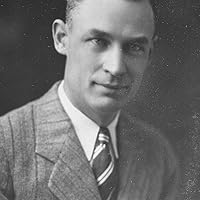
Educated at Shrewsbury School, the Royal Military Academy, Woolwich, and King's College, Cambridge, William Jackson was commissioned into the Royal Engineers in 1937. He served with the British Army in Norway during the Second World War, where he was one of the first British officers to engage the enemy. His work in blowing up bridges as the British retreated from Lillehammer earned Jackson his first Military Cross (MC). He also served in North Africa, Sicily and Italy during the war. He was twice injured by a land mine. The one at Bou Arada in Tunisia placed him in bed for four months before he joined Dwight Eisenhower's headquarters, where the invasion of Sicily was being planned. He won a Bar to his MC in 1944 at the Battle of Monte Cassino in recognition of "gallant and distinguished services", and by the end of the war Jackson was in post as an acting major but was only formally promoted captain in August 1945,having been promoted to lieutenant in 1940. He was also mentioned in despatches in 1945 for his services in Italy.
After the war he became a General Staff Officer at Headquarters Allied Land Forces, South East Asia in 1945 before moving on to be an Instructor at the Staff College, Camberley in 1948. Promoted major in 1950, he was an Instructor at the Royal Military Academy, Sandhurst from 1951. He was promoted brevet lieutenant colonel in 1955 and was appointed Assistant Adjutant & Quartermaster General (Plans) at the War Office during the Suez crisis in 1956. Jackson was appointed an Officer of the Order of the British Empire in the 1957 Birthday Honours. In 1958 he was promoted lieutenant colonel and became Commander, Gurkha Engineers in Malaya. In 1960 he was promoted full colonel and in 1961 returned to the Staff College, Camberley as Colonel General Staff at the Minley Division.
He was Deputy Director of Staff Duties at the War Office from 1962 and joined the Imperial Defence College in 1965 being promoted brigadier in March. He went on to be Director of the Chief of Defence Staff's Unison Planning Staff in 1966 in the temporary rank of major general (his rank of major general was confirmed as permanent in July 1966) and Assistant Chief of the General Staff (Operational Requirements) at the Ministry of Defence in 1968.
In 1970 Jackson was promoted to lieutenant general and appointed General Officer Commanding-in-Chief for Northern Command. He was knighted as a Knight Commander of the Order of the Bath in 1971, and In 1973 he became Quartermaster-General to the Forces in the local rank of full general with formal promotion to general coming four months later. Advanced to Knight Grand Cross of the Order of the British Empire in the 1975 Birthday Honours, Jackson retired from active army service in February 1977, taking a post of Military Historian at the Cabinet Office from 1977 to 1978 and then becoming Governor and Commander-in-Chief of Gibraltar, overseeing the colony's transition to a British dependent territory and where he was a stalwart advocate for self-determination in the territory.
Jackson retired from his post in Gibraltar in 1982 (having had his tenure extended by a year) and returned to being historian at the Cabinet Office until 1987. He had held five honorary military appointments: as ADC General to the Queen (1974–1979), Colonel Commandant the Royal Engineers (1971–1981), Colonel the Gurkha Engineers (1971–1976), Colonel Commandant Royal Army Ordnance Corps (1973–1976) and Colonel of the Territorial Army Volunteer Reserve Engineer and Railway Staff Corps.
I have mixed feelings about this book. On the positive side, there is an abundance of maps, something we WWII history readers are always complaining about the lack of. He covers the entire war, from the battles against the Italians in East Africa to the final denouement in Tunisia with the Americans and British bumping heads while learning to work together. Every significant battle is more or less covered. On the negative side, the East African and Tunisian campaigns are not covered in sufficient detail. My biggest complaint is this book is all about the generals and the politicians. The lowest level of soldier account is by a Brigadier. I really don't give a F@#& about the generals at this stage. I had hoped for a complete account, from low to high. Still, anyone not familiar with the North African campaigns will get a decent overview, a very pro-British overview of this theater. Not sure if this one will make the permanent shelf but am going to give it a generous Three+ Stars
Wow. A North Africa campaign book that covered Greece, Iraq, and Somaliland battles. How cool is that. I am thrilled to have found this rare text that included so much!
I know this book well—lost my first copy & now got another--AMAZING HISTORY BOOK. The North African Theater of War in the Second World War is well known but not appreciated enough, for, as General Sir William Jackson ably points, the success at Normandy in June 1944 owed much to the lessons learned in all phases of the war in North Africa. From ironing out the problems with equipment, such as tanks, and perfecting the ability of the Allies to use codebreaking and deception campaigns to giving much needed combat experience to the Americans arriving in Europe in November 1942.
I was particularly fascinated by how Jackson broke down the fight into phases with British, German and American forces being the main factors. Speculation also exists regarding Hitler taking North Africa and the Middle East before moving on Russia, which was entirely in his power to do in 1941, before the Americans were doing no more than sending old weapons, new weapons and praying to stay out.
Get this book to fully understand how important the years fighting in the desert were, for also it helped keep the British Royal Navy predominant in the Mediterranean Sea with Malta as a main aviation and naval base for resupply and attacking German and Italian shipping going to North Africa.
I have read a number of books covering the North African campaign and Jackson's effort is one of the best. It has just enough detail to be informative, while still being readable. His style of writing is excellent and the pages fly by. I had just finished the trilogy by Barrie Pitt prior to reading this one and it compares very favourably with Pitt's much longer effort. All in all a must read for anyone with an interest in North Africa in WWII.
Good coverage of the initial British battles vs. the Italian army in North Africa and the horn colonies. But the book did not have the same level of detail in describing the push across Libya after El Alamain. Author had the view that the British success was more about lack of German resources vs. the generalship of Montgomery. Included a rushed view of the final battle for Tunisia.
Dry but informative. I've had this book for over 40 years since I was in the Military Book Club, finally decided to read all of them. I'll be reading a German POV history of the same battle next.
This is a great one-volume treatment of the entire war in North Africa, the Middle East and eastern Africa. It covers the opening blows in eastern Africa and Libya all the way through to the end of combat in Tunisia. The author did a wonderful job in weaving these different areas into a comprehendible form for the reader. There are dozens of maps; too many to be frank. That way one can readily see where a specific place is in reference to everything else. A minor problem with some of the maps is that the spelling used in the text does not always match that found in the maps. The author wrote in a clear and entertaining style. I would recommend this to anyone as a comprehensive book on that segment of World War II.