

What do you think?

Perfect Strangers
“These kisses of his...they're demanding and possessive. They're hungry and deep. They're the kisses of a man who wants more of a woman—who wants everything—and isn't going to stop until he gets it."
Author Olivia Rossi hasn’t been able to write a word since tragedy struck two years ago and ripped her world apart. Heartbroken and still haunted by the past, she accepts an offer to spend the summer at a friend’s apartment in Paris in search of healing and her lost muse.
What she finds instead is James, an enigmatic stranger who ignites in her an unexpected and all-consuming passion.
Agreeing to tell each other nothing more than their first names, Olivia and James embark on a torrid affair. But the more time they spend together, the more Olivia begins to realize her summer fling is turning into a powerful connection…and that the magnetic man she’s falling in love with might not be what he seems at all.
Author's Note: This is a work of literary fiction, not a romance. Readers looking for a traditional happy ending should look elsewhere.
Author Olivia Rossi hasn’t been able to write a word since tragedy struck two years ago and ripped her world apart. Heartbroken and still haunted by the past, she accepts an offer to spend the summer at a friend’s apartment in Paris in search of healing and her lost muse.
What she finds instead is James, an enigmatic stranger who ignites in her an unexpected and all-consuming passion.
Agreeing to tell each other nothing more than their first names, Olivia and James embark on a torrid affair. But the more time they spend together, the more Olivia begins to realize her summer fling is turning into a powerful connection…and that the magnetic man she’s falling in love with might not be what he seems at all.
Author's Note: This is a work of literary fiction, not a romance. Readers looking for a traditional happy ending should look elsewhere.
342 pages, Kindle Edition
First published September 29, 2019
About the author
J.T. Geissinger
46 books27.7k followersJ.T. Geissinger is a New York Times, USA Today, Publishers Weekly, and Amazon Charts bestselling author of thirty-five novels and novellas. Ranging from funny, feisty romcoms to intense erotic thrillers, her books have sold over twenty-five million copies and been translated into more than two dozen languages.
She is a three-time nominee in both contemporary and paranormal romance for the RITA® Award, the highest distinction in romance fiction from the Romance Writers of America®. She is also a recipient of the Prism Award for Best First Book, the Golden Quill Award for Best Paranormal/Urban Fantasy, and the HOLT Medallion for Best Erotic Romance.
Newsletter ➡️ http://bit.ly/1IbgZZI
Reader group ➡️ http://bit.ly/2xbtnY3
Amazon ➡️ http://amzn.to/1xQN4za
She is a three-time nominee in both contemporary and paranormal romance for the RITA® Award, the highest distinction in romance fiction from the Romance Writers of America®. She is also a recipient of the Prism Award for Best First Book, the Golden Quill Award for Best Paranormal/Urban Fantasy, and the HOLT Medallion for Best Erotic Romance.
Newsletter ➡️ http://bit.ly/1IbgZZI
Reader group ➡️ http://bit.ly/2xbtnY3
Amazon ➡️ http://amzn.to/1xQN4za
Ratings & Reviews
Friends & Following
Create a free account to discover what your friends think of this book!
Community Reviews
Displaying 1 - 30 of 9,825 reviews
![Profile Image for Carol [Goodreads Addict].](https://i.gr-assets.com/images/S/compressed.photo.goodreads.com/users/1626057011i/10717098._UX200_CR0,33,200,200_.jpg)
September 25, 2019
Perfect Strangers is a stand alone romance by the amazing J.T. Geissinger. I just finished this book a short time ago. I have calmed down a little bit, enough to try to string together my thoughts to put something down for you. Whether it will make any sense is yet to be determined. This is one of those books where I can say very little. There is so much in this book, but I can’t give any of it away. You need to experience this book just as I did and get your mind blown, again, just as I did. Within these pages you will find heart break, romance, a connection between two people that you never dreamed existed, suspense, twists and turns, and sexy steamy scenes that will melt your e-reader. I could just stop here! But I’ll try to give you a little bit more.

Olivia Rossi is an author that has lost her words. Tragedy took away her will to put words to paper. In desperation, her friend sent her to Paris for the summer, for three months. Maybe the change of scenery, the beauty of Paris will help to heal her heart. It only took one look, those eyes meeting across the room, that electrical current you only read about in romance novels, to change everything. Suddenly, Olivia’s world was turned upside down.

James Blackwood is an artist. He saw her and he just knew. He knew he needed to know her. It was the look in her eyes, the sadness. In that moment, she was his, or was it that he was hers?

James and Olivia find a passion together that they never imagined. Olivia finds a freedom with James, a side to her she never knew existed. They agree to live in the moment, no pasts, no details, first names only. But once feelings start to become involved, is that going to be enough?

I am only touching the surface here. This book is full of so much. I can’t even read my favorite highlighted quote without my stomach doing somersaults. There are so many twists and turns. Just so much…everything. There is also humor, the little banter between James and Olivia is so much fun. So when I say there is so much everything, I really mean it. And the sexy times! I do believe this is J.T.’s hottest book yet!

I’m going to stop there. If you want a romance that will make your heart beat out of your chest, read this! If you like lots of hot steamy sexy times, read this! If you want suspense and twists and turns, read this! If you want a book that you will never forget, read this book! That is all!
“There exists a field, beyond all notions of right and wrong. I will meet you there.”
For more about this book and so many more, come and visit me at Carol's Crazy Bookish World.
https://www.facebook.com/groups/44036...

Olivia Rossi is an author that has lost her words. Tragedy took away her will to put words to paper. In desperation, her friend sent her to Paris for the summer, for three months. Maybe the change of scenery, the beauty of Paris will help to heal her heart. It only took one look, those eyes meeting across the room, that electrical current you only read about in romance novels, to change everything. Suddenly, Olivia’s world was turned upside down.
James Blackwood is an artist. He saw her and he just knew. He knew he needed to know her. It was the look in her eyes, the sadness. In that moment, she was his, or was it that he was hers?
James and Olivia find a passion together that they never imagined. Olivia finds a freedom with James, a side to her she never knew existed. They agree to live in the moment, no pasts, no details, first names only. But once feelings start to become involved, is that going to be enough?
I am only touching the surface here. This book is full of so much. I can’t even read my favorite highlighted quote without my stomach doing somersaults. There are so many twists and turns. Just so much…everything. There is also humor, the little banter between James and Olivia is so much fun. So when I say there is so much everything, I really mean it. And the sexy times! I do believe this is J.T.’s hottest book yet!
I’m going to stop there. If you want a romance that will make your heart beat out of your chest, read this! If you like lots of hot steamy sexy times, read this! If you want suspense and twists and turns, read this! If you want a book that you will never forget, read this book! That is all!
“There exists a field, beyond all notions of right and wrong. I will meet you there.”
For more about this book and so many more, come and visit me at Carol's Crazy Bookish World.
https://www.facebook.com/groups/44036...

September 21, 2019
I was so very excited about this book before I started to read it. However, now that I have finished reading the book, I have contradicting feelings about it.
I am applauding the writer for the interesting direction the story took and how much it shocked me but I also resent her for doing it this way because I hated the direction it took.


Let me tell you that this book has a very interesting plot with bloody awesome plot twists that come one after the other in the last quarter of it. Prepare to be shocked…
*********************************************
It’s a very-well written book, indeed; as this is always the case with Ms. Geissinger; she is one talented writer and I love her. However, I am very unhappy after reading this book because I feel “cheated”. Although I resent her for the time being, I will always read whatever she writes. I just hope she won’t do this again.
*********************************************
I cannot explain why I am so unhappy without spoiling it and I won’t spoil it. That would be such a disgrace to the writer. And it is very hard to explain why this book might bother readers like me, who want to read a good romance book.

I can only say that my main disappointment is I thought I was reading a romance book but then, I saw that I was not reading a romance book at all because it all... oops, I cannot say it. Sh*t! I must stay cryptic or I will give you a clue and it won't be fair.
*********************************************
So, if you expect to read some good romance, which, in the end will make you happy; then, this is not the book for you. You might most probably be disappointed like me.
But, if you want to read an interesting, different and carefully-crafted book in which you will also be reading a passionate and romantic love affair with deep emotions and hot sex (I know I know, it doesn't make sense to you now but it will if you read the book), then you can try it; maybe you will love it more than I did. At least, all the surprise effects will show you that the writer is a master mind. But, in the end, if you are a romantic at heart (like me), That's all I can say.
*********************************************
I know I am not making much sense but well, as I said, it is hard to explain it without spoiling it.
I read romance books that had a huge shock effect on me and I still loved them (BLACK LIES / IF I BREAK series etc.) but the shock effect of this book kills its romance for me. Frankly, the problem I had with this book lies within its plot twists. “The bloody awesome plot twists” killed all the romance for me and I was left, feeling having been cheated...
*********************************************
My rating
I had a hard time rating this book and here's how I decided:
+ 3 stars for the multiple surprise effects of the book and its good writing
- 2 stars for the way it made me feel (frustrated and cheated)
*********************************************
P.S. Oh, by the way, the blurb is misleading but I really don't know how she would write a blurb without giving spoilers... So, I am just saying... Don't expect that what you read in the blurb will be the real story.
*********************************************
Here are some readers who felt "cheated and betrayed" like me while the author was trying to be creative for the sake of being creative... I say we got played!
https://www.goodreads.com/review/show...
https://www.goodreads.com/review/show...
https://www.goodreads.com/review/show...
*********************************************
You can follow my instagram page from here
I am applauding the writer for the interesting direction the story took and how much it shocked me but I also resent her for doing it this way because I hated the direction it took.
Let me tell you that this book has a very interesting plot with bloody awesome plot twists that come one after the other in the last quarter of it. Prepare to be shocked…
*********************************************
It’s a very-well written book, indeed; as this is always the case with Ms. Geissinger; she is one talented writer and I love her. However, I am very unhappy after reading this book because I feel “cheated”. Although I resent her for the time being, I will always read whatever she writes. I just hope she won’t do this again.
*********************************************
I cannot explain why I am so unhappy without spoiling it and I won’t spoil it. That would be such a disgrace to the writer. And it is very hard to explain why this book might bother readers like me, who want to read a good romance book.
I can only say that my main disappointment is I thought I was reading a romance book but then, I saw that I was not reading a romance book at all because it all... oops, I cannot say it. Sh*t! I must stay cryptic or I will give you a clue and it won't be fair.
*********************************************
So, if you expect to read some good romance, which, in the end will make you happy; then, this is not the book for you. You might most probably be disappointed like me.
But, if you want to read an interesting, different and carefully-crafted book in which you will also be reading a passionate and romantic love affair with deep emotions and hot sex (I know I know, it doesn't make sense to you now but it will if you read the book), then you can try it; maybe you will love it more than I did. At least, all the surprise effects will show you that the writer is a master mind. But, in the end, if you are a romantic at heart (like me), That's all I can say.
*********************************************
I know I am not making much sense but well, as I said, it is hard to explain it without spoiling it.
I read romance books that had a huge shock effect on me and I still loved them (BLACK LIES / IF I BREAK series etc.) but the shock effect of this book kills its romance for me. Frankly, the problem I had with this book lies within its plot twists. “The bloody awesome plot twists” killed all the romance for me and I was left, feeling having been cheated...
*********************************************
My rating
I had a hard time rating this book and here's how I decided:
+ 3 stars for the multiple surprise effects of the book and its good writing
- 2 stars for the way it made me feel (frustrated and cheated)
*********************************************
P.S. Oh, by the way, the blurb is misleading but I really don't know how she would write a blurb without giving spoilers... So, I am just saying... Don't expect that what you read in the blurb will be the real story.
*********************************************
Here are some readers who felt "cheated and betrayed" like me while the author was trying to be creative for the sake of being creative... I say we got played!
https://www.goodreads.com/review/show...
https://www.goodreads.com/review/show...
https://www.goodreads.com/review/show...
*********************************************
You can follow my instagram page from here
September 30, 2019
I have one question for the author tho. Did you smoke something when you wrote this?

September 29, 2019
4.5 STARS

I... So... Well... And then... Yeah... I got nothing. Seriously. NOTHING. I'm too busy still picking my jaw off of the floor because this story just blew my ever loving mind! I can't even. I don't even know where to begin to review this book. How do I even tell you about what I just read if even I'M still figuring it out. My brain needs to phone a friend or poll the audience. Sweet baby jesus I don't know what is happening!!!
If you're looking for a book that's uniquely different, take you out of your comfort zone, and make you feel, you need to read this book. Seriously.
Olivia and James were absolutely electric together. There's just something about reading Olivia's inner monologue that made you feel like you were getting a peek into the author's own psyche. It was fascinating. The connection between her and James is instant and no less potent as they continue on their affair. Olivia is in Paris for a short time only and knows that whatever they have will come to an end. They agree to a short but fiery affair but no more. No last names. No personal information. Nothing to tie them down. But you know what they say about those best laid plans, right? It's not long before the lines get blurred and secrets begin to unravel.
Man oh man, I don't even know where to start with this story. I will definitely advise you to avoid reviews until you read it, because there's so much about this story that's a HUGE spoiler. I won't give you any hints in terms of what that spoiler is, but let me tell you, it's seriously HUGE. Like mind blowingly huge. Like questioning everything you thought you knew huge. All I know is I spent an entire ten minutes after I finished with my jaw on the floor and my mind reeling. This story was a unique and unexpected surprise from someone that's become an absolute must read author for me. I cannot recommend this one enough!
ARC courtesy of publisher in exchange for an honest review
Find me on:


Just feel me. Just feel me and breathe.”
I... So... Well... And then... Yeah... I got nothing. Seriously. NOTHING. I'm too busy still picking my jaw off of the floor because this story just blew my ever loving mind! I can't even. I don't even know where to begin to review this book. How do I even tell you about what I just read if even I'M still figuring it out. My brain needs to phone a friend or poll the audience. Sweet baby jesus I don't know what is happening!!!
If you're looking for a book that's uniquely different, take you out of your comfort zone, and make you feel, you need to read this book. Seriously.
Olivia and James were absolutely electric together. There's just something about reading Olivia's inner monologue that made you feel like you were getting a peek into the author's own psyche. It was fascinating. The connection between her and James is instant and no less potent as they continue on their affair. Olivia is in Paris for a short time only and knows that whatever they have will come to an end. They agree to a short but fiery affair but no more. No last names. No personal information. Nothing to tie them down. But you know what they say about those best laid plans, right? It's not long before the lines get blurred and secrets begin to unravel.
Man oh man, I don't even know where to start with this story. I will definitely advise you to avoid reviews until you read it, because there's so much about this story that's a HUGE spoiler. I won't give you any hints in terms of what that spoiler is, but let me tell you, it's seriously HUGE. Like mind blowingly huge. Like questioning everything you thought you knew huge. All I know is I spent an entire ten minutes after I finished with my jaw on the floor and my mind reeling. This story was a unique and unexpected surprise from someone that's become an absolute must read author for me. I cannot recommend this one enough!
ARC courtesy of publisher in exchange for an honest review
Find me on:

December 19, 2020
The novel hails itself as the next Inception (i.e., a book within a book within a book), but nowhere does it come remotely close to what it so desperately wanted to achieve. In actuality, it was a dumpster fire – chaotic and abrupt developments that made no sense yet somehow became more asinine as the novel progressed.
Consumed with grief over the passing of her daughter, acclaimed author Olivia Rossi moves to Paris for a much-needed fresh start. There, she’ll stay at her editor’s apartment for the summer and hopefully garner inspiration for her next novel. On her first day, she meets local artist James Blackwood at a café, where, for the first time in a long time, she feels seen. But when he propositions her to a portraiture session, she immediately turns him down and flees, choosing instead to cocoon herself from what she believes to be inevitable heartbreak. But when fate intervenes and she runs into him again – this time at their landlord’s party – she takes it as a sign that maybe she can be vulnerable again. Little does she know, however, that things may not be what they seem …
The synopsis was incredibly deceiving. In hindsight, J.T. Geissinger did provide a note that foreshadowed the novel’s eventual conclusion. However, regardless of her comparison to the masterpiece that was Inception, her plot twists were thoughtlessly and haphazardly strewn. In essence, Olivia discovers that her ex-husband was the intended target of their daughter’s murder, as he had made powerful enemies illegally trading arms. When she learns that her new lover, James, is an assassin (!), she asks him to murder her daughter’s assailant and bring his head (!) back as a symbol of retribution. Shortly after they get their happy ending, the scene sudden morphs into Olivia bedridden at a psychiatric hospital. The already asinine plot, which represented 80% of the novel, was revealed to be a HALLUCINATION. James turns out to be a figment of her imagination conjured out of guilt. Olivia was the one who had accidentally killed her own child when she had lost control of her body and subsequently, her vehicle, from ALS. When she returns to “reality” (aka a loveless marriage to her uncaring “ex” husband), she makes it her personal mission to return to her dream state with James. She succeeds right before she succumbs to her illness, which the epilogue then reveals to be a HOAX. The true Olivia is pitching the intertwined stories to her editor, with James being a tribute to her actual loving husband. The novel ultimately ends with Olivia rushing home to tell him about her latest novel(s) and their (real and alive) daughter overhearing her parents having sex (!). It was insane.
The worst part of it all was the delusional scene at the end where the editor was lauding the first two novels and proclaiming the gut-wrenching emotions that they supposedly evoked. With the author’s inclusion of that scene, it seemed like she was patting herself on the back for being “inventive” or creating a “moving piece of art”. However, this couldn’t be further from reality. The jarring and inane plot twists aside, the “book within a book within a book” concept would have only worked had she made me feel invested in the story. For instance, in Inception, I wanted to learn more about Cobb’s backstory. I was curious about his family and how he ended up being the person he was today. In contrast, the first 80% of Perfect Stranger was so insipid that I couldn’t give one iota about the protagonists or their fate. Maybe that was the point of it all? Perhaps James being too “perfect” or Olivia too distant were indications that it was all an illusion? At the end of the day, however, it didn’t really matter because the corny dialogue (including James’ constant proclamations of undying devotion based on NOTHING) and the prolific but tedious sex scenes made the novel feel torturous. The actual writing was so robotic and uninspiring that the eventual plot twists only left me brimming with fury.
Per the author’s own admission, she decided to incorporate the most random plot twists just because, never mind that they weren’t coherent or well-written. It was infuriating that these doltish plot twists came so late in the game and with what felt like zero warning. The biggest offender however, was the lack of self-awareness. The self-praise was purely delusional, particularly considering the majority of the novel centred around protagonists with zero chemistry or individual charm. Nonetheless, the author did manage to pull off a colossal feat: a simultaneously monotonous, distant-feeling and chaotic clusterfuck of a “journey”.
Consumed with grief over the passing of her daughter, acclaimed author Olivia Rossi moves to Paris for a much-needed fresh start. There, she’ll stay at her editor’s apartment for the summer and hopefully garner inspiration for her next novel. On her first day, she meets local artist James Blackwood at a café, where, for the first time in a long time, she feels seen. But when he propositions her to a portraiture session, she immediately turns him down and flees, choosing instead to cocoon herself from what she believes to be inevitable heartbreak. But when fate intervenes and she runs into him again – this time at their landlord’s party – she takes it as a sign that maybe she can be vulnerable again. Little does she know, however, that things may not be what they seem …
The synopsis was incredibly deceiving. In hindsight, J.T. Geissinger did provide a note that foreshadowed the novel’s eventual conclusion. However, regardless of her comparison to the masterpiece that was Inception, her plot twists were thoughtlessly and haphazardly strewn. In essence, Olivia discovers that her ex-husband was the intended target of their daughter’s murder, as he had made powerful enemies illegally trading arms. When she learns that her new lover, James, is an assassin (!), she asks him to murder her daughter’s assailant and bring his head (!) back as a symbol of retribution. Shortly after they get their happy ending, the scene sudden morphs into Olivia bedridden at a psychiatric hospital. The already asinine plot, which represented 80% of the novel, was revealed to be a HALLUCINATION. James turns out to be a figment of her imagination conjured out of guilt. Olivia was the one who had accidentally killed her own child when she had lost control of her body and subsequently, her vehicle, from ALS. When she returns to “reality” (aka a loveless marriage to her uncaring “ex” husband), she makes it her personal mission to return to her dream state with James. She succeeds right before she succumbs to her illness, which the epilogue then reveals to be a HOAX. The true Olivia is pitching the intertwined stories to her editor, with James being a tribute to her actual loving husband. The novel ultimately ends with Olivia rushing home to tell him about her latest novel(s) and their (real and alive) daughter overhearing her parents having sex (!). It was insane.
The worst part of it all was the delusional scene at the end where the editor was lauding the first two novels and proclaiming the gut-wrenching emotions that they supposedly evoked. With the author’s inclusion of that scene, it seemed like she was patting herself on the back for being “inventive” or creating a “moving piece of art”. However, this couldn’t be further from reality. The jarring and inane plot twists aside, the “book within a book within a book” concept would have only worked had she made me feel invested in the story. For instance, in Inception, I wanted to learn more about Cobb’s backstory. I was curious about his family and how he ended up being the person he was today. In contrast, the first 80% of Perfect Stranger was so insipid that I couldn’t give one iota about the protagonists or their fate. Maybe that was the point of it all? Perhaps James being too “perfect” or Olivia too distant were indications that it was all an illusion? At the end of the day, however, it didn’t really matter because the corny dialogue (including James’ constant proclamations of undying devotion based on NOTHING) and the prolific but tedious sex scenes made the novel feel torturous. The actual writing was so robotic and uninspiring that the eventual plot twists only left me brimming with fury.
Per the author’s own admission, she decided to incorporate the most random plot twists just because, never mind that they weren’t coherent or well-written. It was infuriating that these doltish plot twists came so late in the game and with what felt like zero warning. The biggest offender however, was the lack of self-awareness. The self-praise was purely delusional, particularly considering the majority of the novel centred around protagonists with zero chemistry or individual charm. Nonetheless, the author did manage to pull off a colossal feat: a simultaneously monotonous, distant-feeling and chaotic clusterfuck of a “journey”.

September 27, 2019
What the ever lovin’…holy freaking Hades!!! I’m not sure what I just read except that it has literally blown my mind, tossed my world upside down, wrenched my heart, and I will never forget this story or these characters for the rest of my life!!!
’But in our case – with our lives thousands of miles apart – it’s perfect. We’ll be perfect. Perfect strangers.’

I’m not even going to give a basic summary that you can get from the blurb, because really, this book goes far beyond what’s on the blurb. There is definitely romance, and two characters that you can feel their very connection in every word. There is plenty of fun banter and moments that I was laughing out loud. Olivia really knows how to knock James’ ego down to size and I loved that she did so with humor and a smile. And he loved that she did it.
This author said this book would be steamier than her other work and oh yeah…this baby absolutely sizzles. There is no denying the chemistry between the hero and heroine. I’m not a fan of saying something is “hot”, but really, I’ve got say it, because this couple together was hot, Hot, HOT!!!
’This casual summer fling has the potential to burn the whole city down and leave a path of smoking runs in its wake.’

There really are no words to express how this book turned my book lovin’, romantic heart around and around until I fear for any book I read following this one…for days or weeks to come. Because how the heck do you follow this one up with something else? You can’t!
“There exists a field, beyond all notions of right and wrong. I will meet you there.”

With lots of suspense, action, smexy times, intrigue, and twists and turns that you will NEVER EVER see coming, this book is going to give you a huge case of book hangover and leave you thinking about them long after the last page. I’m still struggling with the adrenaline high this story gave me.
Perfect Strangers will give you your happy ever after. Just be prepared to get there in a way you never imagined to do so.
Heroine POV
Safe
Triggers
’But in our case – with our lives thousands of miles apart – it’s perfect. We’ll be perfect. Perfect strangers.’
I’m not even going to give a basic summary that you can get from the blurb, because really, this book goes far beyond what’s on the blurb. There is definitely romance, and two characters that you can feel their very connection in every word. There is plenty of fun banter and moments that I was laughing out loud. Olivia really knows how to knock James’ ego down to size and I loved that she did so with humor and a smile. And he loved that she did it.
This author said this book would be steamier than her other work and oh yeah…this baby absolutely sizzles. There is no denying the chemistry between the hero and heroine. I’m not a fan of saying something is “hot”, but really, I’ve got say it, because this couple together was hot, Hot, HOT!!!
’This casual summer fling has the potential to burn the whole city down and leave a path of smoking runs in its wake.’
There really are no words to express how this book turned my book lovin’, romantic heart around and around until I fear for any book I read following this one…for days or weeks to come. Because how the heck do you follow this one up with something else? You can’t!
“There exists a field, beyond all notions of right and wrong. I will meet you there.”
With lots of suspense, action, smexy times, intrigue, and twists and turns that you will NEVER EVER see coming, this book is going to give you a huge case of book hangover and leave you thinking about them long after the last page. I’m still struggling with the adrenaline high this story gave me.
Perfect Strangers will give you your happy ever after. Just be prepared to get there in a way you never imagined to do so.
Heroine POV
Safe
Triggers

September 30, 2019
Wow there’s a first for everything; just like me giving a JTG book 1 star. In the acknowledgements, the author says ‘I hope you enjoyed their very twisty journey’ and I’m just going to say no I did not enjoy it and as an avid reader of her books, I feel
cheated
. If I knew the ending would have been like this, I would not have wasted my time on it.

October 2, 2019
I think by now everyone knows what happens, but I'll put it under the spoiler tag:
*
*
*
*
THIS IS A SPOILER!!!
*
*
*
*
THIS IS A SPOILER!!!

September 27, 2019
I'm just going to have to apologize now. I have no idea how to review this book. I can't even express my emotions with out possibly giving anything away. And trust me, you don't want me to spoil a thing. Not ONE thing.
I might have had a mini melt down at one point in the book and it was worth every second. You're going to start this book and think, what the heck is everyone talking about, and not in a bad way. It's actually an extremely hot read. The way this couple meet and progress in the story was one of the hottest things I've read. Just when you start to relax....well, don't. Just...don't relax.
I'm sorry, my hands are tied. I refuse to give anything away. Read it. Some books are just worth the deep dive and this is one of them.
I might have had a mini melt down at one point in the book and it was worth every second. You're going to start this book and think, what the heck is everyone talking about, and not in a bad way. It's actually an extremely hot read. The way this couple meet and progress in the story was one of the hottest things I've read. Just when you start to relax....well, don't. Just...don't relax.
I'm sorry, my hands are tied. I refuse to give anything away. Read it. Some books are just worth the deep dive and this is one of them.
September 30, 2019
Authors, don’t do this
Not to spoil this book, but if you’re looking for straight up romance, this book is not it. This book is the author trying to be inventive and different and creative. All that’s great unless your readers are used to more traditionally defined romance or you happen to be writing literary fiction, where anything goes.
Used to love this author but after her last book with a major cliffhanger that was not marked as part of a series and then this book, I doubt I’ll read her new work again.
The first “Act”, I liked. I thought the “twist” was stupid and frankly annoying and self-indulgent. I honestly don’t get the 5 star reviews at all. The part of the book that was the “romance” was good if a bit fantastic. The rest was crap.
Not to spoil this book, but if you’re looking for straight up romance, this book is not it. This book is the author trying to be inventive and different and creative. All that’s great unless your readers are used to more traditionally defined romance or you happen to be writing literary fiction, where anything goes.
Used to love this author but after her last book with a major cliffhanger that was not marked as part of a series and then this book, I doubt I’ll read her new work again.
The first “Act”, I liked. I thought the “twist” was stupid and frankly annoying and self-indulgent. I honestly don’t get the 5 star reviews at all. The part of the book that was the “romance” was good if a bit fantastic. The rest was crap.

July 5, 2024
My grandma used to tell me that i waste my money and time on nonsense and stupid stuff!! This is me proving she’s right!
March 1, 2024
➼ 4★
mar 1: lately i have a thing for books with atrocious covers🤧🤧
tysm to my love bru who recommended this💓
”I am thee and thou art me and all of one is the other. And feel now. Thou hast no heart but mine.”
about the plot
olivia is a writer who has been going through a tough time of her life. she decides to move to paris for the summer, just to take a break from her messy life. there, she meets james, an artist, who lives in her same building. soon they become lovers but you have no idea what’s gonna happen!!!!
my thoughts
what a roller coaster!!!
first of all, i wasn’t expecting a single thing that happened in this book. i was confused for most of the time bc all the shit that happened–even if it was GOLD– doesn’t make any sense. but this book not only has a plot twist, BUT 4???? i counted 4… but the biggest one was jaw dropping. my jaw was literally on the floor, too stunned to speak.
despite the atrocious cover, this book was entertaining and funny and intriguing. there’s a lot of smut for all the girlies who love smut, it’s a great one ngl, but it also deals with important matters.
olivia and james are hilarious, even tho sometimes they’re a little bit cringe… i really appreciated them as mmc and fmc.
what can i say? i really liked this book and i’m happy to say that i recommend it!!
tysm bru for making me read this book, i wouldn’t have picked it up if you hadn’t recommended it to me! but i’m glad you did, bc the fact that you read weird books which nobody knows where you find them, turned out to be quite useful and enjoyable! ily bru
mar 1: lately i have a thing for books with atrocious covers🤧🤧
tysm to my love bru who recommended this💓

Want to Read
October 2, 2019I love this author so much. I love her creativity! I love her sense of enormous and somewhat awkward but fully intelligent humor ! Lately most of my all time favorite writers deny to write romances and they try to do something different.
I understand J.T. Geissinger did it, too. But I don't want to risk myself to give her one or two stars for the book. I can sense a surprising twist is coming but not Black Lies or Jersey Six kind of twist(by the way I also gave two stars to Jersey Six,even the surprise so good but heroine was trash for me) so I'm passing this book and waiting for her write new, complex, twisty, edgy ROMANCE just ROMANCE books that I can happily devour at one sit :)
I understand J.T. Geissinger did it, too. But I don't want to risk myself to give her one or two stars for the book. I can sense a surprising twist is coming but not Black Lies or Jersey Six kind of twist(by the way I also gave two stars to Jersey Six,even the surprise so good but heroine was trash for me) so I'm passing this book and waiting for her write new, complex, twisty, edgy ROMANCE just ROMANCE books that I can happily devour at one sit :)
November 6, 2024
I was so sure this was gonna be a five star read but then the epilogue happened and the twist made me realise everything I read was nothing but merely waste of time. The author shouldn't have done that. Just No. It indeed was a promising read throughout and just as surprising when it became a crystal clear miss because of the epilogue.
It's evident that the author attempted to try something creative contrary to her other works but she certainly didn't pull it off.
════ ⋆★⋆ ════
⋆。°✩ 𝑪𝒖𝒓𝒓𝒆𝒏𝒕𝒍𝒚 𝒓𝒆𝒂𝒅𝒊𝒏𝒈 ⋆。°✩
Halfway through the book and I'm loving it already!🤍
It's evident that the author attempted to try something creative contrary to her other works but she certainly didn't pull it off.
════ ⋆★⋆ ════
⋆。°✩ 𝑪𝒖𝒓𝒓𝒆𝒏𝒕𝒍𝒚 𝒓𝒆𝒂𝒅𝒊𝒏𝒈 ⋆。°✩
Halfway through the book and I'm loving it already!🤍

October 2, 2019

𝟜.𝟝 ℙ𝕖𝕣𝕗𝕖𝕔𝕥 𝕤𝕥𝕒𝕣𝕤!
I'm still sitting and staring at my Kindle, trying to lift my jaw off the floor and digest the end of this book... 😱
📚 "𝑾𝒊𝒕𝒉 𝒐𝒖𝒓 𝒍𝒊𝒗𝒆𝒔 𝒕𝒉𝒐𝒖𝒔𝒂𝒏𝒅𝒔 𝒐𝒇 𝒎𝒊𝒍𝒆𝒔 𝒂𝒑𝒂𝒓𝒕 – 𝒊𝒕’𝒔 𝒑𝒆𝒓𝒇𝒆𝒄𝒕.
𝑾𝒆’𝒍𝒍 𝒃𝒆 𝒑𝒆𝒓𝒇𝒆𝒄𝒕.
𝑷𝒆𝒓𝒇𝒆𝒄𝒕 𝒔𝒕𝒓𝒂𝒏𝒈𝒆𝒓𝒔." 📚
So why did I like this book...?
1. The heroes are not too young, they are close to 40 years-old, which was totally refreshing. 💙
2. The male character, James, is all sex appeal (and he also has a cleft chin that would impress Superman himself!) 😍
3. The female character, Olivia, is a whacky writer and her inner dialogues are so funny and witty- They allowed me to get into the mind of a real writer and understand their crazy. 😂
4. THE SEX SCENES. I have nothing to add here... just help me convince my husband that we should copy them together, please!!! 🙏
5. Twist after Twist ... Surprise after Surprise ... God, this book was not what I thought it will be! 😱
📚 “𝑼𝒏𝒕𝒊𝒍 𝑺𝒆𝒑𝒕𝒆𝒎𝒃𝒆𝒓 𝒄𝒐𝒎𝒆𝒔 𝒂𝒏𝒅 𝒚𝒐𝒖 𝒘𝒂𝒍𝒌 𝒐𝒖𝒕 𝒐𝒇 𝒎𝒚 𝒍𝒊𝒇𝒆 𝒇𝒐𝒓𝒆𝒗𝒆𝒓, 𝒘𝒆’𝒓𝒆 𝒈𝒐𝒊𝒏𝒈 𝒕𝒐 𝒔𝒑𝒆𝒏𝒅 𝒆𝒗𝒆𝒓𝒚 𝒅𝒂𝒚 𝒂𝒔 𝒊𝒇 𝒊𝒕𝒔 𝒐𝒖𝒕 𝒍𝒂𝒔𝒕. 𝑵𝒐 𝒓𝒆𝒈𝒓𝒆𝒕𝒔. 𝑵𝒐 𝒍𝒐𝒐𝒌𝒊𝒏𝒈 𝒃𝒂𝒄𝒌 𝒐𝒓 𝒇𝒐𝒓𝒘𝒂𝒓𝒅. 𝑱𝒖𝒔𝒕 𝒃𝒆𝒊𝒏𝒈 𝒊𝒏 𝒕𝒉𝒆 𝒎𝒐𝒎𝒆𝒏𝒕. 𝑴𝒂𝒌𝒊𝒏𝒈 𝒆𝒗𝒆𝒓𝒚 𝒎𝒊𝒏𝒖𝒕𝒆 𝒄𝒐𝒖𝒏𝒕. 𝑴𝒂𝒌𝒊𝒏𝒈 𝒎𝒆𝒎𝒐𝒓𝒊𝒆𝒔 𝒘𝒆 𝒃𝒐𝒕𝒉 𝒄𝒂𝒏 𝒕𝒓𝒆𝒂𝒔𝒖𝒓𝒆 𝒂𝒇𝒕𝒆𝒓 𝒘𝒆 𝒈𝒐 𝒃𝒂𝒄𝒌 𝒕𝒐 𝒐𝒖𝒓 𝒓𝒆𝒂𝒍 𝒍𝒊𝒗𝒆𝒔.” 📚
I'm dying to share my full experience with you, but I won't elaborate because all I want to say will be a spoiler! 😬
So briefly:
Olivia is a writer, but after a tragedy in her personal life, she struggles to keep going, so she travels for 3 months to Paris to find inspiration. 💙
She meets James, a beautiful stranger, a talented painter and a VERY hot man. 🔥
Besides their immediate chemistry, Olivia recognizes in him the same pain she has - and they agree to share her brief time together in the city, without sharing details - no last names or significant conversations - just a passionate affair... 💕
📚 “𝑰 𝒄𝒐𝒏𝒔𝒊𝒅𝒆𝒓 𝒎𝒚𝒔𝒆𝒍𝒇 𝒂 𝒇𝒆𝒎𝒊𝒏𝒊𝒔𝒕. 𝑰 𝒉𝒂𝒗𝒆 𝒂 𝒄𝒐𝒍𝒍𝒆𝒈𝒆 𝒅𝒆𝒈𝒓𝒆𝒆. 𝑺𝒆𝒗𝒆𝒓𝒂𝒍, 𝒊𝒏 𝒇𝒂𝒄𝒕. 𝒀𝒆𝒕 𝒉𝒆𝒓𝒆 𝑰 𝒂𝒎, 𝒘𝒂𝒍𝒍𝒐𝒘𝒊𝒏𝒈 𝒊𝒏 𝒉𝒐𝒘 𝒇𝒂𝒏𝒕𝒂𝒔𝒕𝒊𝒄 𝒊𝒕 𝒇𝒆𝒆𝒍𝒔 𝒕𝒐 𝒉𝒆𝒂𝒓 𝒚𝒐𝒖 𝒄𝒂𝒍𝒍 𝒎𝒚 𝒃𝒐𝒐𝒃𝒔 𝒄𝒂𝒏𝒕𝒂𝒍𝒐𝒖𝒑𝒆𝒔.”
“𝑯𝒐𝒏𝒆𝒚𝒅𝒆𝒘 𝒎𝒆𝒍𝒐𝒏𝒔.”
“𝑹𝒊𝒈𝒉𝒕. 𝑺𝒐𝒓𝒓𝒚. 𝑾𝒉𝒆𝒓𝒆 𝒘𝒂𝒔 𝑰?” 📚
But you know what they say about plans...? they never work! Eventually, everything explode in their faces- secrets, lies, surprising revelations and crazy twists! 💥💥💥
The story begins slow with passionate chemistry and humor - then suddenly... BOOM! Everything I thought I knew about romance novels just evaporate. 💣
📚 "𝑶𝒖𝒓 𝒆𝒙𝒊𝒔𝒕𝒆𝒏𝒄𝒆 𝒊𝒔 𝒎𝒆𝒂𝒔𝒖𝒓𝒆𝒅 𝒊𝒏 𝒎𝒊𝒏𝒖𝒕𝒆𝒔. 𝑺𝒆𝒄𝒐𝒏𝒅𝒔. 𝑯𝒆𝒂𝒓𝒕𝒃𝒆𝒂𝒕𝒔. 𝑻𝒊𝒎𝒆 𝒊𝒔 𝒕𝒉𝒆 𝒎𝒐𝒔𝒕 𝒗𝒂𝒍𝒖𝒂𝒃𝒍𝒆 𝒄𝒐𝒎𝒎𝒐𝒅𝒊𝒕𝒚 𝒘𝒆 𝒉𝒂𝒗𝒆, 𝒃𝒆𝒄𝒂𝒖𝒔𝒆 𝒊𝒕 𝒄𝒂𝒏 𝒏𝒆𝒗𝒆𝒓 𝒃𝒆 𝒓𝒆𝒑𝒍𝒆𝒏𝒊𝒔𝒉𝒆𝒅. 𝑶𝒏𝒄𝒆 𝒊𝒕’𝒔 𝒈𝒐𝒏𝒆… 𝒊𝒕’𝒔 𝒈𝒐𝒏𝒆 𝒇𝒐𝒓𝒆𝒗𝒆𝒓. 𝑨𝒏𝒅 𝒔𝒐 𝒂𝒓𝒆 𝒘𝒆.” 📚
And although I was surprised, I have to admit that the amount of twists in the plot was a bit too much for me - it felt like they came at the expense of the romance... Still, the characters were complex and intriguing, the plot was well developed and surprising and the writing pulled me in from the first page. 👑
J.T. Geissinger proved again that she is a genius writer! 🎉
So if you want to read something different that will totally surprise you... read this book. 💙
*** 𝕀 𝕣𝕖𝕔𝕖𝕚𝕧𝕖𝕕 𝕒𝕟 𝔸ℝℂ 𝕗𝕣𝕠𝕞 𝕥𝕙𝕖 𝕒𝕦𝕥𝕙𝕠𝕣 𝕗𝕠𝕣 𝕒𝕟 𝕙𝕠𝕟𝕖𝕤𝕥 𝕣𝕖𝕧𝕚𝕖𝕨 ***
▪️▫️▪️▫️▪️▫️▪️▫️▪️▫️▪️▫️▪️▫️▪️▫️
📖 ᖴOᒪᒪOᗯ ᗰE Oᑎ IᑎᔕTᗩGᖇᗩᗰ: https://www.instagram.com/the_romanti...
📖 ᐯIᔕIT ᗰY ᗷᒪOG ᖴOᖇ ᗰOᖇE ᖇEᐯIEᗯᔕ: https://books-romance.com/
📖 GOOᗪᖇEᗩᗪᔕ: https://bit.ly/3acMRMP
💕 לקריאת הסקירה בעברית, כנסו לבלוג: https://books-romance.com/ 💕

September 1, 2024
holy fucking shit that was the craziest 24 hours of reading I’ve ever experienced in my life!!!!
firstly there’s not one but 2 (kinda 3?) twists in this book which literally gave me whiplash and left me staring at a wall but in the best way possible
this is the most well written, earth shattering kinda love, which will make you laugh, cry, lose your mind & tug at your heart strings all the same time in a whirlwind of 320 pages!
this was like book inception, it was unique, the spice was absolutely 10/10 the pacing, the romance, everything about this was perfect
this was as a big of mindfuck if not more than penpal! So if you’ve read that book by this author you’ll LOVE perfect strangers
oh and by the way this is SPICY 😮💨
firstly there’s not one but 2 (kinda 3?) twists in this book which literally gave me whiplash and left me staring at a wall but in the best way possible
this is the most well written, earth shattering kinda love, which will make you laugh, cry, lose your mind & tug at your heart strings all the same time in a whirlwind of 320 pages!
this was like book inception, it was unique, the spice was absolutely 10/10 the pacing, the romance, everything about this was perfect
this was as a big of mindfuck if not more than penpal! So if you’ve read that book by this author you’ll LOVE perfect strangers
oh and by the way this is SPICY 😮💨

February 14, 2021
WHAT THE FUCK
how you gonna do me dirty w a plot twist like that?? HOW SWAY?!?? I was practically prancing my way through this, having the best freaking time, and then all of a sudden I was TRIPPED and had a BUCKET OF ICE WATER DUMPED ALL OVER ME. Was this author on drugs when she wrote this?? I can already tell I'm gonna be mad about it for a while *fights the freaking air before sliding into angry calm*

I don't even know how to rate this now. James was amazing. Up until 85% was a solid 4.5 stars. Ya know what, fuck it it's still getting 4 stars, that's how much I liked it before it crashed and burned into an unsalvageable mess. Live footage of me cherry picking everything I loved and erasing from my brain everything I hated:

My ability to lie to myself is truly my best quality. Still can't wait to read Ruthless Creatures and JT Geiss is still my girl but if she tries to play me like this again I will take it to heart.
how you gonna do me dirty w a plot twist like that?? HOW SWAY?!?? I was practically prancing my way through this, having the best freaking time, and then all of a sudden I was TRIPPED and had a BUCKET OF ICE WATER DUMPED ALL OVER ME. Was this author on drugs when she wrote this?? I can already tell I'm gonna be mad about it for a while *fights the freaking air before sliding into angry calm*
I don't even know how to rate this now. James was amazing. Up until 85% was a solid 4.5 stars. Ya know what, fuck it it's still getting 4 stars, that's how much I liked it before it crashed and burned into an unsalvageable mess. Live footage of me cherry picking everything I loved and erasing from my brain everything I hated:
My ability to lie to myself is truly my best quality. Still can't wait to read Ruthless Creatures and JT Geiss is still my girl but if she tries to play me like this again I will take it to heart.

October 1, 2019
I just started reading this but I already know from two of my friends that there is a twist coming and that neither of them liked it very much.....so we shall see what I think shortly!!!
******************************
1.5 stars.
Oh, Hell !!!!......What is going on with all my favorite authors lately.....Mia Sheridan.....Jewel E Ann and now J.T. Geissinger.....all their newly released books had such unexpected departures from the individual author's usual writing style and more typical storylines.

This is definitely the one that I liked the least though.👎
In fact I really didn't enjoy it at all once I got a little past the half way point.
There are multiple twists to this story and I was certainly fooled by them all but they are also the same reasons that turned me off from loving this book.
The final twist once unveiled is kind of clever in it's own way but it comes too late for me.... by then I was over this confusing book and it is like the romance never really existed at all.

THE MULTIPLE TWISTS AND CONVOLUTED STORYLINE REALLY SUCKED ALL THE PLEASURE OUT OF THIS BOOK READING EXPERIENCE....sorry but that's how I really feel !!!!..... which super-sucked as dammit.... the writing was really great.
Spoiler Alert:
******************************
1.5 stars.
Oh, Hell !!!!......What is going on with all my favorite authors lately.....Mia Sheridan.....Jewel E Ann and now J.T. Geissinger.....all their newly released books had such unexpected departures from the individual author's usual writing style and more typical storylines.
This is definitely the one that I liked the least though.👎
In fact I really didn't enjoy it at all once I got a little past the half way point.
There are multiple twists to this story and I was certainly fooled by them all but they are also the same reasons that turned me off from loving this book.
The final twist once unveiled is kind of clever in it's own way but it comes too late for me.... by then I was over this confusing book and it is like the romance never really existed at all.
THE MULTIPLE TWISTS AND CONVOLUTED STORYLINE REALLY SUCKED ALL THE PLEASURE OUT OF THIS BOOK READING EXPERIENCE....sorry but that's how I really feel !!!!..... which super-sucked as dammit.... the writing was really great.
Spoiler Alert:

October 3, 2022
Surprisingly unpredictable!

The following ratings are out of 5:
Narration: 🎙🎙🎙🎙🎙
Romance: 💚🖤💙❤️💜
Heat/Steam: 🔥🔥🔥🔥🔥
Story/Plot: 📕📗📙📘📔
World building: 🌏🌍🌎🌏🌎
Character development: ☺️😉😀😘🥰
The heroine: Olivia - She is a writer who has suffered a terrible loss and has been suffering from writers block ever since. She is spending some time in France at the apartment of her agent to try to get her writing mojo back.
The Hero: James - He is an artist who is doing portraits of people suffering from grief. He sees Olivia who is living in the same apartment complex as him and is interested in her from the start. He wants to paint her but he wants more as well.
The Story: Olivia is at first very skeptical of James after he approaches her in a café. Though after meeting him in a gathering at the apartment complex and seeing his artwork. She agrees to sit for him and is candid about wanting an affair with him for the time she is in Paris. He eagerly agrees and things heat up quickly.
The book was told from Olivia’s point of view via duet narration which I love and I will not give 5 points for narration without it. This is where the male narrator does all the male voices and female does the female voices no matter who’s point of view the chapter is told from. The narrators were Troy Duran, Veronica Pace and Marnye Young. They all did a great job and I just love Troy Duran’s deep and sexy voice.
The story was great, both Olivia and James had a story and have suffered in different ways. They had chemistry from the start and it just kept growing. I love how they grew to know each other and the book was super steamy as well. The two of them had a plan not to get personal in the time they are together so a lot of hints were dropped about certain things without much clarification until later in the book.
I was pleasantly surprised at the direction this book took and loved that it was unpredictable. I thought I knew exactly what would happen at the end based on some of the things that happened, but something completely different happened and It isn’t very often that a story can surprise you like that.
Blog|Goodreads|Facebook|Instagram|Twitter|BookBub
The following ratings are out of 5:
Narration: 🎙🎙🎙🎙🎙
Romance: 💚🖤💙❤️💜
Heat/Steam: 🔥🔥🔥🔥🔥
Story/Plot: 📕📗📙📘📔
World building: 🌏🌍🌎🌏🌎
Character development: ☺️😉😀😘🥰
The heroine: Olivia - She is a writer who has suffered a terrible loss and has been suffering from writers block ever since. She is spending some time in France at the apartment of her agent to try to get her writing mojo back.
The Hero: James - He is an artist who is doing portraits of people suffering from grief. He sees Olivia who is living in the same apartment complex as him and is interested in her from the start. He wants to paint her but he wants more as well.
The Story: Olivia is at first very skeptical of James after he approaches her in a café. Though after meeting him in a gathering at the apartment complex and seeing his artwork. She agrees to sit for him and is candid about wanting an affair with him for the time she is in Paris. He eagerly agrees and things heat up quickly.
The book was told from Olivia’s point of view via duet narration which I love and I will not give 5 points for narration without it. This is where the male narrator does all the male voices and female does the female voices no matter who’s point of view the chapter is told from. The narrators were Troy Duran, Veronica Pace and Marnye Young. They all did a great job and I just love Troy Duran’s deep and sexy voice.
The story was great, both Olivia and James had a story and have suffered in different ways. They had chemistry from the start and it just kept growing. I love how they grew to know each other and the book was super steamy as well. The two of them had a plan not to get personal in the time they are together so a lot of hints were dropped about certain things without much clarification until later in the book.
I was pleasantly surprised at the direction this book took and loved that it was unpredictable. I thought I knew exactly what would happen at the end based on some of the things that happened, but something completely different happened and It isn’t very often that a story can surprise you like that.
Blog|Goodreads|Facebook|Instagram|Twitter|BookBub

October 1, 2019
Wow. This book deserves an award. Amazing.
~~~~~~~~~~~
The book is completely not what you expect. The author tells a story that is intensely compelling, sexy, and so different from a typical romance. Her characters are awesome and the twists are completely unexpected.
I simply loved it.
~~~~~~~~~~~
The book is completely not what you expect. The author tells a story that is intensely compelling, sexy, and so different from a typical romance. Her characters are awesome and the twists are completely unexpected.
I simply loved it.

September 19, 2026
Wow, what a delight!

May 18, 2020
Okay now I'm awake enough to write this.
First, however you expect this to end? So not going to end that way, my friend.
I really liked the story as it progressed. I liked James, even though he was being mysterious as heck. At some points there was a small voice in the back of my head, this is so OTT, but I crushed it with my heel because I was too busy liking the plot.
Then in the last few chapters I had a reaction, just the one- WHAT THE FUCK JUST HAPPENED? I almost had a whiplash.
So that's it because whatever happens in those chapters and the epilogue pretty much takes the earlier plot in a different direction all together.
But if I'm being honest, I loved the earlier plot and I seriously don't think that the twist was necessary because for me it took out the charm of the story. It was simply unnecessary to hurt me like that. And there's where we lose the one star. The four is just for the part before the......twist, you could say. This author has written some of my most favorite books and there's always something unexpected in the end, a little extra sometimes but in this one, instead of pleasing me, it just annoyed me, even though it was an HEA- sort of.
First, however you expect this to end? So not going to end that way, my friend.
I really liked the story as it progressed. I liked James, even though he was being mysterious as heck. At some points there was a small voice in the back of my head, this is so OTT, but I crushed it with my heel because I was too busy liking the plot.
Then in the last few chapters I had a reaction, just the one- WHAT THE FUCK JUST HAPPENED? I almost had a whiplash.
So that's it because whatever happens in those chapters and the epilogue pretty much takes the earlier plot in a different direction all together.
But if I'm being honest, I loved the earlier plot and I seriously don't think that the twist was necessary because for me it took out the charm of the story. It was simply unnecessary to hurt me like that. And there's where we lose the one star. The four is just for the part before the......twist, you could say. This author has written some of my most favorite books and there's always something unexpected in the end, a little extra sometimes but in this one, instead of pleasing me, it just annoyed me, even though it was an HEA- sort of.

January 26, 2022
1.5 stars ✧
i feel cheated, i feel robbed, but most off all, i feel ... homicidal ✨😍
i feel cheated, i feel robbed, but most off all, i feel ... homicidal ✨😍

December 20, 2020
4 stars

This was me after reading the end of the second twist late last night. Due to the multiple twists, the ending/epilogue felt a bit unreal to me. And I don't know if it's the period talking but man did I sob And because one perfect HEA ending was swiped from under me I just couldn't trust the actual ending.

Even so I love J.T. Geissinger, she really made me feel very keenly during this book.
This was me after reading the end of the second twist late last night. Due to the multiple twists, the ending/epilogue felt a bit unreal to me. And I don't know if it's the period talking but man did I sob And because one perfect HEA ending was swiped from under me I just couldn't trust the actual ending.
Even so I love J.T. Geissinger, she really made me feel very keenly during this book.

October 24, 2019
I read this *quietly* because my friends loved it and there's nothing worse than disliking a book your friends love. For the first half, I struggled to keep reading because I couldn't connect with the characters--especially the h who, IMO, didn't come across as believable, considering what she'd suffered (and on that note, this book really needs a trigger warning).
It was the second half where everything picked up for me. Not only did it pick up, it sucked me in so hard and fast, I finished the book at 4:30 am, sitting up in bed to stay awake, one eye propped open with my free hand.
By the time I reached the end, my initial concerns were no longer valid. Everything I disliked (or misunderstood) about the characters in the beginning suddenly made sense.
Is this a romance? Depends on who you ask. I say yes.
Go in blind (unless you have triggers) and expect the unexpected.
It was the second half where everything picked up for me. Not only did it pick up, it sucked me in so hard and fast, I finished the book at 4:30 am, sitting up in bed to stay awake, one eye propped open with my free hand.
By the time I reached the end, my initial concerns were no longer valid. Everything I disliked (or misunderstood) about the characters in the beginning suddenly made sense.
Is this a romance? Depends on who you ask. I say yes.
Go in blind (unless you have triggers) and expect the unexpected.

October 1, 2019
The author wanted to write about everything, and ended up writing nothing... I feel cheated. seriously, what was that!?
This review is exactly how I felt about the story
This review is exactly how I felt about the story

September 11, 2021
maybe its coz ive read the reviews saying theres gon be a major plot twist, so i guessed it right (not particularly but i wasnt surprised at all when it came). though i disliked this sm mostly bcs it wuz boring n i didnt care bout anyone / anything. just blah

October 12, 2019
Why would Geissinger do this to me? I wanted an epic love story, damnit!

Read
December 30, 2019DNF.
Total reader betrayal by author who really needs to change up her blurb. I read reviews after I started and am glad I did. No spoilers, but this is more a writing experiment gone wrong from my point of view. A mashup of Somewhere in Time the movie and One Flew Over the Cuckoo's Nest.
Geissinger is a sharp and witty writer who creates passionate characters and can deliver a sexy romance, but the end run around her romance readers is not good.
Total reader betrayal by author who really needs to change up her blurb. I read reviews after I started and am glad I did. No spoilers, but this is more a writing experiment gone wrong from my point of view. A mashup of Somewhere in Time the movie and One Flew Over the Cuckoo's Nest.
Geissinger is a sharp and witty writer who creates passionate characters and can deliver a sexy romance, but the end run around her romance readers is not good.

June 9, 2022
Genre: Romantic Suspense
Type: Standalone
POV: First Person - Female
Rating:


After struggling to write her next book, Olivia Rossi needed an escape and inspiration. When she was offered an opportunity to live in a Paris apartment for the next few months, she took it not knowing how it would change her life.

This book is best enjoyed with as little prior knowledge as possible. It was not what I expected, and that heightened my reading experience.
The story intrigued me and constantly made me question its direction. The first 70% of the book was romantic and sexy with an intense relationship between the main characters. And the last 30% was hard-hitting on my emotions and thoughts.
Perfect Strangers is a story of taking chances and a fulfilling life. It would appeal to readers looking for a brilliantly executed story with romance and suspense.
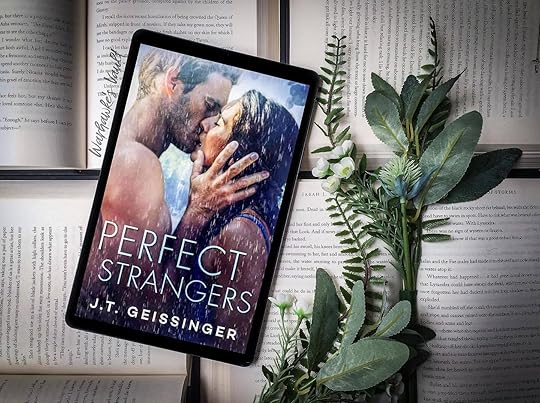
⚡️💗⚡️. . . (F)BR with Twinsie CC . . . ⚡️💗⚡️
For more reviews/interviews/book talk/promo visit:


Type: Standalone
POV: First Person - Female
Rating:
After struggling to write her next book, Olivia Rossi needed an escape and inspiration. When she was offered an opportunity to live in a Paris apartment for the next few months, she took it not knowing how it would change her life.
This book is best enjoyed with as little prior knowledge as possible. It was not what I expected, and that heightened my reading experience.
This isn’t me. This woman, so reckless and overtaken by desire, isn’t anyone I recognize.
The story intrigued me and constantly made me question its direction. The first 70% of the book was romantic and sexy with an intense relationship between the main characters. And the last 30% was hard-hitting on my emotions and thoughts.
Perfect Strangers is a story of taking chances and a fulfilling life. It would appeal to readers looking for a brilliantly executed story with romance and suspense.
⚡️💗⚡️. . . (F)BR with Twinsie CC . . . ⚡️💗⚡️
For more reviews/interviews/book talk/promo visit:
Displaying 1 - 30 of 9,825 reviews