
What do you think?

Clearing in the Sky and Other Stories
Here are twenty-one tales from Kentucky's inimitable and beloved storyteller, Jesse Stuart. Full of high, rambunctious humor, quick-paced as a mountain square dance, bright as a maple tree against an October hill -- these stories are Stuart in his best form -- the form that has made him one of the most widely read authors in America. Read here about the man who coveted a steam shovel and stole it piece by piece, or about the celebrated eating contest between Sam Whiteapple and the game rooster, or about the hill farmer who wanted to clear and farm one last spot of new ground before he died.Although he has a sharp eye for human foibles and infirmities, Stuart never fails to write of his people with affection or to see that justice is done them. Originally published in 1950, Clearing in the Sky was inadvertently declared out of print after three years and never reprinted. Now for Jesse Stuart's many readers it is once more available with an appreciative foreword by Ruel Foster.
- GenresFictionShort Stories
Hardcover
Published January 1, 1984
About the author
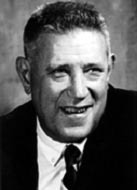
Jesse Stuart
186 books59 followersJesse Hilton Stuart was an American writer known for writing short stories, poetry, and novels about Southern Appalachia. Born and raised in Greenup County, Kentucky, Stuart relied heavily on the rural locale of Northeastern Kentucky for his writings. Stuart was named the Poet Laureate of Kentucky in 1954. He died at Jo-Lin nursing home in Ironton, Ohio, which is near his boyhood home.
Ratings & Reviews
Friends & Following
Create a free account to discover what your friends think of this book!
Community Reviews
Displaying 1 - 4 of 4 reviews

March 27, 2022
In American fiction, Jesse Stuart (1906-1984) was one of the 20th century's leading voices in regionalist Realism, one of the foremost writers to depict the Appalachian experience and culture. Although his novel Daughter of the Legend (1965) got five stars from me back in 2020, my first exposure to his writing (actually starting back in grade school, where some of it was required reading) was to his short fiction, principally through this collection, which Barb and I read together about 30 years ago and greatly liked. Though he published it the year that he died, all of the 21 stories it contains were written and originally published between 1941-1950. All but one of the selections are general fiction set in his own lifetime, but the conditions depicted reflect those of his childhood and young manhood in the early decades of the last century.
Attitudes towards Appalachian mountain people on the part of the cultural elite, extending on down into the 1960s, were generally patronizing and/or demeaning; stereotypes abounded, and fictional depictions of Appalachian life stressed the grotesque and seamy, aiming for the literary equivalent of a “freak show.” Stuart's first collection of Appalachian fiction, Head o' W-Hollow (1936), which I've read but never bothered to review, actually seems to me, sadly, to reflect that approach. But as his fiction matured in the following years, he either came to appreciate and value the virtues and independent hardihood of many Appalachian mountain folk, or else always secretly did, but became bolder about expressing it. So even when they depict such regional foibles as feuding. moonshining, election fraud, and horse-trading swindles, the stories and sketches here are much more positive in tone; and when they employ humor (which is often), it's gentle rather than ridiculing.
Stuart also wrote essays, autobiography and other nonfiction, and poetry (he was poet laureate of Kentucky for 30 years), as well as numerous novels; but he was most prolific in short fiction, penning at least 500 stories. Ruel E. Foster, the author of the worthwhile five-and-1/2 page Foreword here (his qualifications aren't stated; I'm guessing he taught in Kentucky's state university system, given that the University Press of Kentucky was the publisher here) makes a convincing case for Stuart's enduring significance in the history of the American short story. His prose is vivid, well-crafted, easily readable, and evinces an ear for Appalachian dialect and a keen appreciation of the natural world. The literary vision here is moral and optimistic, with plots that not infrequently feature comeuppances for the selfish and conniving. In Foster's words, “Stuart says 'yes' to life all along the way.”
My personal favorite of the selections here is “The Slipover Sweater.” Among the other outstanding tales included are “Evidence Is High Proof” (which is the only one of the stories set before Stuart's time, in the late 1800s), in which a big-time moonshiner who thinks himself virtually invulnerable to the law has to reckon with the ingenuity of one revenue officer; the title story; “No Hero,” which features a scrawny, poverty-stricken farmer who agrees to wrestle a bear in a desperate attempt to raise money for his family; and “Horse-Trading Trembles,” wherein a young farm boy, tired of seeing his father repeatedly cheated by the local shady horse trader, decides to try his own hand in dealing with the swindler. “Thirty-two Votes Before Breakfast” is among the selections that highlight the often shady practices that historically characterized electoral politics in the region; bee-keeping (which many small Appalachian landowners practice, including my oldest brother-in-law years ago) is depicted in “Battle with the Bees.” Not all of the selections are really plotted stories; a few, like “Land of Our Enemies,” are more sketches providing a slice of realistic Appalachian life in that time. But they're interesting enough as sketches that you don't miss a plot (or, at least, I didn't!).
Most story collections with this many samples of an author's writing are apt to contain some that miss the mark. But in this case, while some of the included works were more memorable than others, I can't recall any that didn't work for me! (This volume is enhanced by several black-and-white woodcuts, illustrating various selections, by Stanley Rice.)
Attitudes towards Appalachian mountain people on the part of the cultural elite, extending on down into the 1960s, were generally patronizing and/or demeaning; stereotypes abounded, and fictional depictions of Appalachian life stressed the grotesque and seamy, aiming for the literary equivalent of a “freak show.” Stuart's first collection of Appalachian fiction, Head o' W-Hollow (1936), which I've read but never bothered to review, actually seems to me, sadly, to reflect that approach. But as his fiction matured in the following years, he either came to appreciate and value the virtues and independent hardihood of many Appalachian mountain folk, or else always secretly did, but became bolder about expressing it. So even when they depict such regional foibles as feuding. moonshining, election fraud, and horse-trading swindles, the stories and sketches here are much more positive in tone; and when they employ humor (which is often), it's gentle rather than ridiculing.
Stuart also wrote essays, autobiography and other nonfiction, and poetry (he was poet laureate of Kentucky for 30 years), as well as numerous novels; but he was most prolific in short fiction, penning at least 500 stories. Ruel E. Foster, the author of the worthwhile five-and-1/2 page Foreword here (his qualifications aren't stated; I'm guessing he taught in Kentucky's state university system, given that the University Press of Kentucky was the publisher here) makes a convincing case for Stuart's enduring significance in the history of the American short story. His prose is vivid, well-crafted, easily readable, and evinces an ear for Appalachian dialect and a keen appreciation of the natural world. The literary vision here is moral and optimistic, with plots that not infrequently feature comeuppances for the selfish and conniving. In Foster's words, “Stuart says 'yes' to life all along the way.”
My personal favorite of the selections here is “The Slipover Sweater.” Among the other outstanding tales included are “Evidence Is High Proof” (which is the only one of the stories set before Stuart's time, in the late 1800s), in which a big-time moonshiner who thinks himself virtually invulnerable to the law has to reckon with the ingenuity of one revenue officer; the title story; “No Hero,” which features a scrawny, poverty-stricken farmer who agrees to wrestle a bear in a desperate attempt to raise money for his family; and “Horse-Trading Trembles,” wherein a young farm boy, tired of seeing his father repeatedly cheated by the local shady horse trader, decides to try his own hand in dealing with the swindler. “Thirty-two Votes Before Breakfast” is among the selections that highlight the often shady practices that historically characterized electoral politics in the region; bee-keeping (which many small Appalachian landowners practice, including my oldest brother-in-law years ago) is depicted in “Battle with the Bees.” Not all of the selections are really plotted stories; a few, like “Land of Our Enemies,” are more sketches providing a slice of realistic Appalachian life in that time. But they're interesting enough as sketches that you don't miss a plot (or, at least, I didn't!).
Most story collections with this many samples of an author's writing are apt to contain some that miss the mark. But in this case, while some of the included works were more memorable than others, I can't recall any that didn't work for me! (This volume is enhanced by several black-and-white woodcuts, illustrating various selections, by Stanley Rice.)

June 18, 2013
very good book
Read
June 3, 2013Clearing in the sky

Read
May 6, 2016good
Displaying 1 - 4 of 4 reviews