

What do you think?

Tijd tussen de jaren
In de donkere dagen tussen Kerst en Driekoningen keert een man na lange jaren terug naar zijn ouderlijk huis in de Zwitserse bergen, in een dal dat van de buitenwereld afgesneden lijkt. Moeizaam, door de hoge sneeuw, loopt de man naar de oude boerderij van zijn vader om zijn broer sinds lange tijd te bezoeken. Ooit was hij hier gelukkig, het land van zijn vader was hem beloofd als erfenis en hij zag een toekomst voor zich met zijn geliefde Minna. Maar van de een op de andere dag verloor hij alles: de boerderij en Minna gingen naar zijn broer. Vol wrok en onbegrip verliet hij de vallei en leidde tientallen jaren een leven van ongeluk.
78 pages, Hardcover
First published September 10, 2018
About the author
Urs Faes
21 books7 followersUrs Faes, born in Aarau in 1947, lives and works in Zurich and in San Feliciano (Italy). In 2008 he was awarded the Preis der Schweizerischen Schillerstiftung.
Ratings & Reviews
Friends & Following
Create a free account to discover what your friends think of this book!
Community Reviews
Displaying 1 - 30 of 53 reviews

January 16, 2020
Homecoming
Snowfall, denser and denser,
dove-coloured as yesterday,
snowfall, as if even now you were sleeping.
White, stacked into distance.
Above it, endless,
the sleigh track of the lost.
Below, hidden,
presses up
what so hurts the eyes,
hill upon hill,
invisible.
On each,
fetched home into its today,
and I slipped away into dumbness:
wooden, a post.
There: a feeling,
blown across by the ice wind
attaching its dove- its snow-
coloured cloth as a flag.
(Paul Celan)
It is quite fitting that the Swiss author Urs Faes chose a fragment of this haunting poem of Paul Celan as an epigraph. The poem’s title Homecoming would as well have made a suitable title for this slender novel which contains echoes of the parable of the prodigal son and Old Testament reminiscences of Jacob and Esau and the expulsion from the garden of Eden. Even the bleak tones of Celan’s dove-coloured snow are in tune with Faes’s writing.
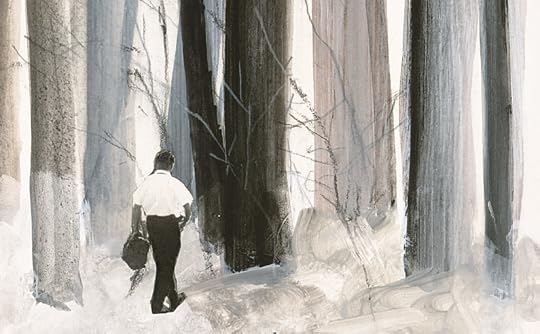
Implying lengthy or extensive family visits for many, the time around Christmas seems particularly predisposed to mull over the weight and state of affairs of family relationships in one’s life and the twisted emotions that might be connected to them. Not for everyone this is a time of blissful family harmony, long-lasting, unsettled scores or pain can smother beneath and what might seem a simple festive family ritual can be so confrontational and sharpen existent tensions that some might even consider cutting off contact radically in the future. One sees newspapers write on 'how to survive your family' or bringing testimonies of adult children on ‘divorcing’ their parent(s) and family. By situating his tale in that loaded period, Urs Faes takes the reader straight to the core of thorny family issues: can one, in truth, distance oneself lastingly from one’s family?
Set in a remote village in the Black Forest during the twelve nights between Christmas and Epiphany, the story on a feud between two brothers unfurls, told from the perspective of the oldest brother, Manfred, who returns to the village of his youth after forty years of absence. Wandering through the wintry landscape recognising places, hills, trees which were significant to him in the past, memories surge up, on his father, his mother burning herbs to prevent misfortune befalling on her and or her family during this Dodecameron period ('She let the smoke drift through the house: slightly sweet, spicily pungent, a hint of thyme, of heather and valerian, aroma's of apple blossom and resin. She would put juniper berries in the incense burner, adding fir and spruce needles, an activity that seemed to calm her, as though it gave her stability and certainty. No misfortune could strike her then, neither her or her family.'), of farm life, of his brother Sebastian, of his love for Minna, and the events which made Manfred leave for good. Ruminating on his revengeful deeds, his wrath, the loss and death of Minna, his remorse, the well-paced narrative gradually reveals why Manfred came back.
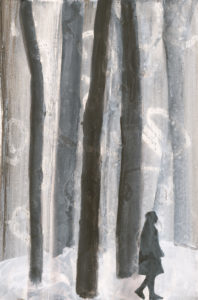
Urs Faes’s prose is spare, thoughtful and precise and evokes a world in which nature is animated and the landscape is experienced in an almost premodern way, echoing a kind of rural society where what is meaningful in life is connected to that landscape, where families lived for generations, and which is populated by the living, the dead and nonhuman beings.
A subtle, wonderfully atmospheric wintry tale on the human need for a sense of belonging, the (im)possibility of reconciliation, forgiveness, the meaning of family, the power of love and memory.
(Illustrations from the original German edition, by Nanne Meyer)
Snowfall, denser and denser,
dove-coloured as yesterday,
snowfall, as if even now you were sleeping.
White, stacked into distance.
Above it, endless,
the sleigh track of the lost.
Below, hidden,
presses up
what so hurts the eyes,
hill upon hill,
invisible.
On each,
fetched home into its today,
and I slipped away into dumbness:
wooden, a post.
There: a feeling,
blown across by the ice wind
attaching its dove- its snow-
coloured cloth as a flag.
(Paul Celan)
It is quite fitting that the Swiss author Urs Faes chose a fragment of this haunting poem of Paul Celan as an epigraph. The poem’s title Homecoming would as well have made a suitable title for this slender novel which contains echoes of the parable of the prodigal son and Old Testament reminiscences of Jacob and Esau and the expulsion from the garden of Eden. Even the bleak tones of Celan’s dove-coloured snow are in tune with Faes’s writing.
Implying lengthy or extensive family visits for many, the time around Christmas seems particularly predisposed to mull over the weight and state of affairs of family relationships in one’s life and the twisted emotions that might be connected to them. Not for everyone this is a time of blissful family harmony, long-lasting, unsettled scores or pain can smother beneath and what might seem a simple festive family ritual can be so confrontational and sharpen existent tensions that some might even consider cutting off contact radically in the future. One sees newspapers write on 'how to survive your family' or bringing testimonies of adult children on ‘divorcing’ their parent(s) and family. By situating his tale in that loaded period, Urs Faes takes the reader straight to the core of thorny family issues: can one, in truth, distance oneself lastingly from one’s family?
Set in a remote village in the Black Forest during the twelve nights between Christmas and Epiphany, the story on a feud between two brothers unfurls, told from the perspective of the oldest brother, Manfred, who returns to the village of his youth after forty years of absence. Wandering through the wintry landscape recognising places, hills, trees which were significant to him in the past, memories surge up, on his father, his mother burning herbs to prevent misfortune befalling on her and or her family during this Dodecameron period ('She let the smoke drift through the house: slightly sweet, spicily pungent, a hint of thyme, of heather and valerian, aroma's of apple blossom and resin. She would put juniper berries in the incense burner, adding fir and spruce needles, an activity that seemed to calm her, as though it gave her stability and certainty. No misfortune could strike her then, neither her or her family.'), of farm life, of his brother Sebastian, of his love for Minna, and the events which made Manfred leave for good. Ruminating on his revengeful deeds, his wrath, the loss and death of Minna, his remorse, the well-paced narrative gradually reveals why Manfred came back.
Urs Faes’s prose is spare, thoughtful and precise and evokes a world in which nature is animated and the landscape is experienced in an almost premodern way, echoing a kind of rural society where what is meaningful in life is connected to that landscape, where families lived for generations, and which is populated by the living, the dead and nonhuman beings.
A subtle, wonderfully atmospheric wintry tale on the human need for a sense of belonging, the (im)possibility of reconciliation, forgiveness, the meaning of family, the power of love and memory.
(Illustrations from the original German edition, by Nanne Meyer)

November 10, 2020
This is a translated novella set in the wintry festive season in the Black Forest by Swiss author, Urs Faes. It marks the return of Manfred to his home after 40 years in exile, estranged from his family, specifically his younger brother, Sebastian, after his parents left Hullert farm to him, despite him being ill suited to being a farmer, and the love of his life, Minna, went on to marry Sebastian instead. At the time, Manfred had felt betrayed, until then he had a close relationship with Sebastian, but filled with blind rage, had gone on to commit an unforgivable revenge and cursed his brother. The past hangs heavy over a haunted Manfred as he seeks a reconciliation with Sebastian, the snowy mountains, forests and valleys inextricably tied to his memories of his family, of his love and tender feelings for Minna that had never gone away, this ancestral place is where he belongs, this is home, and he has no intention of visiting Minna's grave.
This is the magical period of the Twelve Nights in which folklore and legend have it ghosts begin to stir, with the propensity to wreak havoc, a time when his mother told ghost stories whilst carrying out rituals with a solemnity and devotion that he has not forgotten. Then there is the tale of Lene and Hans, that Minna had related, telling of their doomed love. Will Manfred find himself reconciled with Sebastian? This is a beautifully written story, dripping with atmosphere, with a sense of melancholy that runs throughout the narrative, a location that holds centre stage, and a perfect read for this time of the year. Many thanks to Random House Vintage for an ARC.
This is the magical period of the Twelve Nights in which folklore and legend have it ghosts begin to stir, with the propensity to wreak havoc, a time when his mother told ghost stories whilst carrying out rituals with a solemnity and devotion that he has not forgotten. Then there is the tale of Lene and Hans, that Minna had related, telling of their doomed love. Will Manfred find himself reconciled with Sebastian? This is a beautifully written story, dripping with atmosphere, with a sense of melancholy that runs throughout the narrative, a location that holds centre stage, and a perfect read for this time of the year. Many thanks to Random House Vintage for an ARC.

December 27, 2020
A novel that was given to me as a Christmas present, although I’d first become aware of it via the review by my GR Friend Ilse, which I can’t hope to match.
https://www.goodreads.com/review/show...
This is a very short novella, that can comfortably be read in a day, and it’s appropriate for reading at this time of year as the events of the novel, if they can be described as such, take place on two occasions forty years apart, but both times over the twelve nights of Christmas. The lead character, Manfred, returns to his home village in Germany’s Black Forest, forty years after he left following a rift with his brother Sebastian, who has lived in the village ever since. I read the English language translation of the German language original, entitled “Raunächte”.
This is one of those nearly plotless novels that relies on quality of writing and the evoking of a special mood and atmosphere. Being the simple soul that I am, this kind of novel doesn’t always work for me. I’m glad to say this one did. The writing in this translation is outstanding.
The time setting of the book isn’t specified, but the Black Forest region described in the novel is nearly timeless. There is mention of train travel, but otherwise the modern world doesn’t intrude. Travel between the villages is on foot or horseback, most of the inhabitants are farmers, and in his youth Sebastian is apprenticed to a straw hat maker. On the first night of his return Manfred describes suppertime at the village inn.
“Speck and kirschwasser for those who wanted a little schnapps; blood sausage or pickled ham hock with farmhouse bread for those with empty, rumbling stomachs; or the warming soup with dumplings. The landlord was proud of his menu; that is why it had remained practically unchanged for decades. Even someone who had returned from the grave could have ordered from memory.”
The theme of continuity is elaborated by the villagers constantly referring to old legends and superstitions, and to beliefs that kobolds and other spirits are at their most active in midwinter. This of course, is linked to the enmity between the two brothers. The strongest theme of all though is that of the landscape, and the connection between Manfred and the land he became severed from. For me, a novel about regrets, about the importance of place, and how the places of our childhood and youth imprint themselves upon us.
https://www.goodreads.com/review/show...
This is a very short novella, that can comfortably be read in a day, and it’s appropriate for reading at this time of year as the events of the novel, if they can be described as such, take place on two occasions forty years apart, but both times over the twelve nights of Christmas. The lead character, Manfred, returns to his home village in Germany’s Black Forest, forty years after he left following a rift with his brother Sebastian, who has lived in the village ever since. I read the English language translation of the German language original, entitled “Raunächte”.
This is one of those nearly plotless novels that relies on quality of writing and the evoking of a special mood and atmosphere. Being the simple soul that I am, this kind of novel doesn’t always work for me. I’m glad to say this one did. The writing in this translation is outstanding.
The time setting of the book isn’t specified, but the Black Forest region described in the novel is nearly timeless. There is mention of train travel, but otherwise the modern world doesn’t intrude. Travel between the villages is on foot or horseback, most of the inhabitants are farmers, and in his youth Sebastian is apprenticed to a straw hat maker. On the first night of his return Manfred describes suppertime at the village inn.
“Speck and kirschwasser for those who wanted a little schnapps; blood sausage or pickled ham hock with farmhouse bread for those with empty, rumbling stomachs; or the warming soup with dumplings. The landlord was proud of his menu; that is why it had remained practically unchanged for decades. Even someone who had returned from the grave could have ordered from memory.”
The theme of continuity is elaborated by the villagers constantly referring to old legends and superstitions, and to beliefs that kobolds and other spirits are at their most active in midwinter. This of course, is linked to the enmity between the two brothers. The strongest theme of all though is that of the landscape, and the connection between Manfred and the land he became severed from. For me, a novel about regrets, about the importance of place, and how the places of our childhood and youth imprint themselves upon us.
October 31, 2020
As the elder of two brothers, Manfred expects to inherit his family’s farmstead in the Black Forest and dreams of settling down with his childhood sweetheart Minna. Instead, the Hullert farm goes to his brother Sebastian, and following a cruel and bitter falling-out between the siblings, Minna takes Sebastian’s side. Crushed, Manfred decides to emigrate, leaving his past behind him. Four decades later, during the magical Raunächte – or Twelve Nights – which give the novella its title, Sebastian returns to the village of his youth to seek reconciliation with Manfred.
As far as “plot” is concerned, there’s not much to Urs Faes’ slim novella beyond the bare bones reproduced above. However, Twelve Nights acquires a resonance well beyond the number of its pages, by tapping into folklore, myth and Biblical imagery. The rivalry between the siblings and the theme of the “stolen birthright” has echoes of the stories of Jacob and Esau, Cain and Abel, the parable of the Prodigal Son. In the inn where Sebastian is staying, the men of the village congregate around the fire, telling tales of “ghosts stirring in the ravine”. Sebastian recalls his mother burning herbs to keep “dark forces” at bay. The evil spirits which roam in the days between Christmas and Epiphany threatening “disorder and peril…abysses gaping open” turn into a metaphor for the pain which humans can inflict on each other. It seems that everywhere Sebastian looks shimmers with a magical sheen imparted by legend:
Outside, through the window, the snow was falling once more, in dense flakes on this early evening; a creeping dusk blurred the contours, turning the trees into wizened forms, the stream to a taffeta-grey ribbon, the farmhouses to shadowy distorting mirrors. The street could no longer be seen in the leaden gloom, which was tinged blue towards the forest, black down the ravine. Childhoodland, filled with scents and stories, legends like that of the forest spirit Holländer Michel, figures looming out of the darkness of the trees, the meadows and marshlands, shallow waters and moon-pale quarry ponds…
This is a deeply atmospheric read: eerie with almost Gothic overtones, and yet warm with hope. Jamie Lee Searle’s translation from the German is poetic and evocative of the natural winter wonderland which serves as a backdrop to this fable-like tale.
https://endsoftheword.blogspot.com/20...
As far as “plot” is concerned, there’s not much to Urs Faes’ slim novella beyond the bare bones reproduced above. However, Twelve Nights acquires a resonance well beyond the number of its pages, by tapping into folklore, myth and Biblical imagery. The rivalry between the siblings and the theme of the “stolen birthright” has echoes of the stories of Jacob and Esau, Cain and Abel, the parable of the Prodigal Son. In the inn where Sebastian is staying, the men of the village congregate around the fire, telling tales of “ghosts stirring in the ravine”. Sebastian recalls his mother burning herbs to keep “dark forces” at bay. The evil spirits which roam in the days between Christmas and Epiphany threatening “disorder and peril…abysses gaping open” turn into a metaphor for the pain which humans can inflict on each other. It seems that everywhere Sebastian looks shimmers with a magical sheen imparted by legend:
Outside, through the window, the snow was falling once more, in dense flakes on this early evening; a creeping dusk blurred the contours, turning the trees into wizened forms, the stream to a taffeta-grey ribbon, the farmhouses to shadowy distorting mirrors. The street could no longer be seen in the leaden gloom, which was tinged blue towards the forest, black down the ravine. Childhoodland, filled with scents and stories, legends like that of the forest spirit Holländer Michel, figures looming out of the darkness of the trees, the meadows and marshlands, shallow waters and moon-pale quarry ponds…
This is a deeply atmospheric read: eerie with almost Gothic overtones, and yet warm with hope. Jamie Lee Searle’s translation from the German is poetic and evocative of the natural winter wonderland which serves as a backdrop to this fable-like tale.
https://endsoftheword.blogspot.com/20...

November 14, 2020
Atmospheric and a good wintery read but just not very memorable.

January 1, 2021
An unexpected delight to end 2020 amid fireworks and celebrations.
A perfect novella to read between Christmas and New Year. With less words than a novel it is a pleasure to find an author who takes great care in the language and tone chosen.
Set within the farming hills of Germany’s Black Forest studded with the atmosphere and memories of winter. Steeped in the topography, customs and traditions in these communities.
It is an old fashioned tale of sibling rivalry; the struggle to take over the family business and step into one’s inheritance. Of accepted values and the love of a good woman.
Something went dramatically wrong and it ruptured the family and seemingly cursed one son’s future while the other left in disgrace, never to return home until the start of this story.
I enjoyed the descriptions, the bleak winter scenes and the harsh weather. I loved that the tale is rooted in this period of keeping evil spirits at bay, warding off those elements that would bring harm and destruction rather than the blessings through New Year and Epiphany.
The purpose of this return home is a hope of reconciliation. It has echos in local folklore, lost and blighted lives and the church seemingly struggling to extend its message of peace and hope.
There is a great sense of rejection building, that circumstances will ensure the brothers fail to meet, and that any attempt at reconciliation would not be well received. One brother has travelled miles to an inn where he can see his brother’s home. The distance between each other has been narrowed but a gulf remains.
An evocative and emotional piece of writing; which although slowly unpicks events from the past remains from one perspective alone. It is so hard in family disputes to take sides or appropriate guilt and this story shows steps towards remorse but not full redemption it seems.
However at the start of the piece the dominant tone and colour is grey while towards the end it is white. Perhaps this reflects a move towards forgiveness and although this was a tough journey to undertake it is now going along the final path to restoration and completeness.
A perfect novella to read between Christmas and New Year. With less words than a novel it is a pleasure to find an author who takes great care in the language and tone chosen.
Set within the farming hills of Germany’s Black Forest studded with the atmosphere and memories of winter. Steeped in the topography, customs and traditions in these communities.
It is an old fashioned tale of sibling rivalry; the struggle to take over the family business and step into one’s inheritance. Of accepted values and the love of a good woman.
Something went dramatically wrong and it ruptured the family and seemingly cursed one son’s future while the other left in disgrace, never to return home until the start of this story.
I enjoyed the descriptions, the bleak winter scenes and the harsh weather. I loved that the tale is rooted in this period of keeping evil spirits at bay, warding off those elements that would bring harm and destruction rather than the blessings through New Year and Epiphany.
The purpose of this return home is a hope of reconciliation. It has echos in local folklore, lost and blighted lives and the church seemingly struggling to extend its message of peace and hope.
There is a great sense of rejection building, that circumstances will ensure the brothers fail to meet, and that any attempt at reconciliation would not be well received. One brother has travelled miles to an inn where he can see his brother’s home. The distance between each other has been narrowed but a gulf remains.
An evocative and emotional piece of writing; which although slowly unpicks events from the past remains from one perspective alone. It is so hard in family disputes to take sides or appropriate guilt and this story shows steps towards remorse but not full redemption it seems.
However at the start of the piece the dominant tone and colour is grey while towards the end it is white. Perhaps this reflects a move towards forgiveness and although this was a tough journey to undertake it is now going along the final path to restoration and completeness.

December 23, 2022
Set in a snow-laden valley in the Swiss Jura, this is a dark meditation of a man's return home to his younger brother in search of peace and reconciliation, forty years after he left.
There is a gradual reveal as to the circumstances that resulted in his hastened departure, but it isn't the powerful closing pages until the shocking revelation of why seperation was the only option.
It joins Maupassant's The Mountain Inn, and Stifter's Rock Crystal as being so evocative of winter, and perfect reading for this particular time of the season.
There is a gradual reveal as to the circumstances that resulted in his hastened departure, but it isn't the powerful closing pages until the shocking revelation of why seperation was the only option.
It joins Maupassant's The Mountain Inn, and Stifter's Rock Crystal as being so evocative of winter, and perfect reading for this particular time of the season.

February 3, 2021
A walk through the Black Forest in the snowy days after Christmas and, at the same time, through the memories of a family feud between two brothers
It’s a quiet narration, events are hinted softly, the main plot decorated with the local traditions and superstitions. I’ve found it satisfying, maybe not that memorable, but appropriately, melting away as snow.
It’s a quiet narration, events are hinted softly, the main plot decorated with the local traditions and superstitions. I’ve found it satisfying, maybe not that memorable, but appropriately, melting away as snow.

December 10, 2020
This was quite a nice read, perfect for this time of year. But it did lack a little bit of oomph. Reminiscent of Robert Seethaler, Fred Uhlman, Claudio Morandini etc.
December 18, 2022
So beautiful and evocative. A warming read.

November 24, 2019
*** 3.50 ***

January 28, 2025
I don’t know many Swiss writers apart from Johanna Spyri of Heidi fame but it’s a country I have visited a number of times and adored. I found Twelve Nights by Urs Faes via a Google suggestion. It is the story of two brothers. Manfred has returned to the landscape of his childhood seeking reconciliation with his brother, Sebastian. The brothers fell out over Minna who they both loved and over the family farm which was gifted to Sebastian..
This is a slim book laden with gorgeous descriptions of Swiss scenery and threaded with local mythology. Manfred is staying in an inn which looks across to the family farm, at nights he watches for signs of his brother who believes he’s cursed and rarely leaves the house. It is an incredibly atmospheric read.
So often short books tell a story that is bigger than the number of their pages. Sometimes that story is only hinted it and the reader’s imagination fills out the details. This book raises more questions than it answers. Why did the farm go to the younger son? What exactly happened to Minna? The unanswered questions added to the sense of mystery, but also contributed to a sense of frustration.. There are hints about what precipitated the feud - the revenge channelled into unspecified cruelty to a horse which render Manfred unforgiveable.
For me this had more promise than it delivered, but I was content to wander the Swiss scenery and ponder forgiveness and brothers..and try and find my own answers.

December 24, 2022
The writing felt generic and empty. Phrases were used that surprised me for a book published in 2020, as they were phrases already said before and better.
I tried to connect to the main character, but he was simply a man who didn't get to marry the woman he wanted to and also a man who slaughtered his brothers horse and then felt self pity about it. It was both hard to connect to our main character and to feel sorry for him. Pretty much all hope was lost as soon as the main love interest was described as "a slender figure" that "floated into a room" and that "she seemed to tumble out of the frayed shadows". I'd rather shoot myself in the foot than have someone describe me, or for myself to describe a love interest, in that way.
I would describe the writing and descriptions as shallow and fleeting, but I also wouldn't have wanted the book to be any longer.
Repetitive and unoriginal descriptions (I'm sorry to this man).
I tried to connect to the main character, but he was simply a man who didn't get to marry the woman he wanted to and also a man who slaughtered his brothers horse and then felt self pity about it. It was both hard to connect to our main character and to feel sorry for him. Pretty much all hope was lost as soon as the main love interest was described as "a slender figure" that "floated into a room" and that "she seemed to tumble out of the frayed shadows". I'd rather shoot myself in the foot than have someone describe me, or for myself to describe a love interest, in that way.
I would describe the writing and descriptions as shallow and fleeting, but I also wouldn't have wanted the book to be any longer.
Repetitive and unoriginal descriptions (I'm sorry to this man).

June 1, 2021
Perhaps some of this just got lost in translation for me as I did not enjoy it as much as I believed I would.

December 7, 2022
man complains - get over it (2.5)

March 9, 2021
First published in German in 2018, Twelve Nights is the first work by the Swiss writer Urs Faes to be translated into English. It’s a beautiful, atmospheric novella set in the midst of the Black Forest during the dark, eerie period between Christmas and Twelfth Night. A lovely wintry read, exquisitely produced by Harvill Secker as part of their ‘Leopard’ series of translated literature. (My thanks to the publishers for kindly providing a reading copy.)
As the book opens, Manfred is trekking through the snow, returning to the village of his youth after an absence of forty years. A longstanding feud exists between Manfred and his younger brother, Sebastian, who effectively inherited the family farm back then, despite his lack of aptitude or training for the role.
At the time, Manfred felt betrayed by his parents’ and brother’s actions, prompting a dreadful act of revenge which still haunts him to this day. Also relevant here is Minna, the love of Manfred’s life, who went on to marry Sebastian as a consequence of this sequence of events. Minna is no longer alive; but once again, her presence hangs heavy over Manfred as he seeks some kind of redemption – ideally a reconciliation – with his brother.
There is a timeless feel to this haunting, dreamlike novel that draws on elements of folklore and superstition to augment the shadowy atmosphere. The period between Christmas and Epiphany is rumoured to be one of peril, where dark forces and spectral figures have the potential to usher in disaster. As Manfred makes his way across the landscape, he is reminded of his mother and her time-honoured rituals for banishing evil spirits.
To read the rest of my review, please visit:
https://jacquiwine.wordpress.com/2021...
As the book opens, Manfred is trekking through the snow, returning to the village of his youth after an absence of forty years. A longstanding feud exists between Manfred and his younger brother, Sebastian, who effectively inherited the family farm back then, despite his lack of aptitude or training for the role.
At the time, Manfred felt betrayed by his parents’ and brother’s actions, prompting a dreadful act of revenge which still haunts him to this day. Also relevant here is Minna, the love of Manfred’s life, who went on to marry Sebastian as a consequence of this sequence of events. Minna is no longer alive; but once again, her presence hangs heavy over Manfred as he seeks some kind of redemption – ideally a reconciliation – with his brother.
There is a timeless feel to this haunting, dreamlike novel that draws on elements of folklore and superstition to augment the shadowy atmosphere. The period between Christmas and Epiphany is rumoured to be one of peril, where dark forces and spectral figures have the potential to usher in disaster. As Manfred makes his way across the landscape, he is reminded of his mother and her time-honoured rituals for banishing evil spirits.
To read the rest of my review, please visit:
https://jacquiwine.wordpress.com/2021...
December 30, 2024
Perfect reading for the last week of the year. Evocative and mysterious, weaving folk stories, landscapes and memories. The act of walking home and walking back in time - what does it mean to meet your past, all that you loved and lost, and to meet it with hope?
‘It seemed to him that a story told, a story from the past, would never truly fade once it had moved someone. The act of remembering, of reading was like a return, a homecoming into a story. He was never closer to himself than in the remembered and read.’
‘It seemed to him that a story told, a story from the past, would never truly fade once it had moved someone. The act of remembering, of reading was like a return, a homecoming into a story. He was never closer to himself than in the remembered and read.’

December 27, 2020
'He placed one foot firmly in front of the other, as though each step had to leave an imprint in the snow. It was falling on this late afternoon too, whirling flakes in the grey that shrouded the town's porches and gables.'
.
I read this on Christmas day, and it was short and atmospheric. Set in the Black Forest, in the 'dark, wild days between Christmas and epiphany', the story follows a man returning to his home after many years, remembering his past and the stories of the valley.
.
I read this on Christmas day, and it was short and atmospheric. Set in the Black Forest, in the 'dark, wild days between Christmas and epiphany', the story follows a man returning to his home after many years, remembering his past and the stories of the valley.

December 29, 2021
3.5 stars
A quiet, gentle read for the Christmas season, a melancholy tale that holds within a dark act of cruelty. After many years away, estranged from his homeland and family, a man seeks to reconcile with his brother. Set in the Black Forest during the time between Christmas and epiphany the cold, snowy weather and the pain of memory fill this brief novella.
A longer review can be found here: https://roughghosts.com/2021/12/30/re...
A quiet, gentle read for the Christmas season, a melancholy tale that holds within a dark act of cruelty. After many years away, estranged from his homeland and family, a man seeks to reconcile with his brother. Set in the Black Forest during the time between Christmas and epiphany the cold, snowy weather and the pain of memory fill this brief novella.
A longer review can be found here: https://roughghosts.com/2021/12/30/re...
January 2, 2025
A beautiful little book to read around the festive period. A meditation on homecoming, reconciliation, rural life, memory and things lost - set against the atmospheric wintry backdrop of the Black Forest.

February 9, 2021
Deliciously dark and mysterious but still manages to melt your heart 💓

March 8, 2022
Atmospheric but to the degree where I glazed over a lot of this extremely short book. Maybe my tolerance for men writing women is just at an all-time low. Or my tolerance for spending time inside the perspective of a man is at an all-time low. Maybe both. Whatever the reason I just couldn't connect with the love triangle and the folklore comparisons. Man doesn't get the girl he wants / feels entitled to. Man acts violently and spends the ensuing decades wallowing in self-pity. Even though the folklore tale and the book narrative oscillate around how women were merely married off on a whim by fathers and landowners, no connections are made between this and Minna. I'm over romanticising men's failed romantic endeavours tbqh. It's a no from me.
November 15, 2020
A wonderful novella, so right for this time of year. The book is set in the Black Forest. Manfred after being estranged from his family for forty years, returns home. Manfred had felt betrayed by the family as a youth and the story takes you back to those early years but there is also some folklore and legend that moves the story on to the present. I was disappointed that this was only a novella because I had enjoyed it so much. To me it was written so I could also work out and think things through whilst at the same time reading and enjoying, not every book does this. Really there was only one main character Manfred who is hoping to see his brother. How I would like to hear more.

December 18, 2020
I would like to thank the author, publisher and NetGalley for trusting me with an advanced reader’s copy of this book in exchange for a fair and honest review.
I really did not like this book at all. I was looking forward to it as it has good reviews but I just didn't get it. I know at its heart it is a story about reconnecting two brothers after many many years but I didn't like the way it has been written. There is a possibility, however, that it got lost in translation to English.
I really did not like this book at all. I was looking forward to it as it has good reviews but I just didn't get it. I know at its heart it is a story about reconnecting two brothers after many many years but I didn't like the way it has been written. There is a possibility, however, that it got lost in translation to English.

November 19, 2021
A short and fairly abstract story about estranged brothers, past family feuds and attempts at reconciliation.
The descriptive elements of the landscape were the only parts of the writing that stood out for me. The rest of the writing felt flimsy, whimsical and of very little substance.
Not one I'd recommend particularly and certainly not a book I'd return to. This one is getting donated to my local library.
The descriptive elements of the landscape were the only parts of the writing that stood out for me. The rest of the writing felt flimsy, whimsical and of very little substance.
Not one I'd recommend particularly and certainly not a book I'd return to. This one is getting donated to my local library.
January 27, 2020
Mooi, poëtisch, sfeervol kort verhaal. Wat een sfeerschepping, beschrijvingen van de natuur in de winter en een mooi verhaal op zo weinig bladzijden. Prachtig einde ook: ‘Sebastián. Manfred.’

December 30, 2020
Rating: 3.5 stars
This short novella was the perfect book to pick up during the strange period between Christmas and New Year. The time when you don't know what day it is or what you're meant to be doing. My attention span is never up to concentrating on a longer novel so something short and engaging is ideal. Twelve Nights is set during the 12 days between Christmas and Epiphany. This is a time of superstitions and long-held traditions. It's a period for reminiscing and new beginnings. The perfect time for two estranged brothers to reconcile after a 40-year feud. At least that's what Manfred is hoping for when he makes a return to his home again.
As this is a period of local legends and a time when spirits are stalking the wintery landscapes, Manfred is haunted by his past. He walks the paths that he once traversed as a child and recalls the events that led to his departure. As the elder son, Manfred was set to inherit his parent's farm and made plans to settle down with his childhood sweetheart. Although, things changed and it was decided that his younger brother, Sebastian, would take possession of the farm. This tore the two brothers apart and created a violent dispute between the two. Things quickly got out of hand and Manfred lost his family and the woman he loves. Can he and his brother put the past behind them and mend their relationship?
I have always preferred character study over plot so the lack of action in Twelve Nights wasn't an issue for me. However, it won't be something that everyone will enjoy. The novella is short anyway but there's very little in the way of actual story here. The reader is taken through the Black Forest with Manfred as he reacquaints himself with the places from his childhood. As he explores his old haunts, memories of his youth come back to him. Soon, he finds himself haunted by the figures of his past and the emotions that they still stir up inside him. The wintery scenery perfectly evokes Manfred's inner turmoil and his desperation to reconcile with his brother.
Tradition and folklore are heavily linked to Manfred's story and the novella uses plenty of biblical imagery to really get its point across. The story of sibling rivalry can be linked to Jacob and Esau as well as Cain and Abel. Then there's the fact that Manfred's return is just a version of the Parable of the Prodigal Son. It might not be subtle but there is an undeniable message here. This novella also shows the power and importance of storytelling. Myths, legends and folktales haunt Manfred and Sebastian's lives and we can see how they fit into a long history of similar stories. During our lives, we connect with people and they continue to haunt our existence. These spirits appear stronger during these Twelves Nights and the pain associated with them is all the clearer.
This is a beautifully written novella and one that was a joy to read. The writing style seems simple but is full of depth. It is precise and considered, which means it does its job very effectively. You end up getting lost in Manfred's personal history and the snowy landscape that you follow him through. The world is covered in a blanket of snow and the memories that exist within the personal spaces of his childhood. Twelves Nights perfectly captures the relationship that exists between the natural and the human worlds. People become emotionally tied to their home and their memories can still be felt long after they have departed from the world. Though there is plenty of unhappiness in this novella, there is also plenty of life and love.
This short novella was the perfect book to pick up during the strange period between Christmas and New Year. The time when you don't know what day it is or what you're meant to be doing. My attention span is never up to concentrating on a longer novel so something short and engaging is ideal. Twelve Nights is set during the 12 days between Christmas and Epiphany. This is a time of superstitions and long-held traditions. It's a period for reminiscing and new beginnings. The perfect time for two estranged brothers to reconcile after a 40-year feud. At least that's what Manfred is hoping for when he makes a return to his home again.
As this is a period of local legends and a time when spirits are stalking the wintery landscapes, Manfred is haunted by his past. He walks the paths that he once traversed as a child and recalls the events that led to his departure. As the elder son, Manfred was set to inherit his parent's farm and made plans to settle down with his childhood sweetheart. Although, things changed and it was decided that his younger brother, Sebastian, would take possession of the farm. This tore the two brothers apart and created a violent dispute between the two. Things quickly got out of hand and Manfred lost his family and the woman he loves. Can he and his brother put the past behind them and mend their relationship?
I have always preferred character study over plot so the lack of action in Twelve Nights wasn't an issue for me. However, it won't be something that everyone will enjoy. The novella is short anyway but there's very little in the way of actual story here. The reader is taken through the Black Forest with Manfred as he reacquaints himself with the places from his childhood. As he explores his old haunts, memories of his youth come back to him. Soon, he finds himself haunted by the figures of his past and the emotions that they still stir up inside him. The wintery scenery perfectly evokes Manfred's inner turmoil and his desperation to reconcile with his brother.
Tradition and folklore are heavily linked to Manfred's story and the novella uses plenty of biblical imagery to really get its point across. The story of sibling rivalry can be linked to Jacob and Esau as well as Cain and Abel. Then there's the fact that Manfred's return is just a version of the Parable of the Prodigal Son. It might not be subtle but there is an undeniable message here. This novella also shows the power and importance of storytelling. Myths, legends and folktales haunt Manfred and Sebastian's lives and we can see how they fit into a long history of similar stories. During our lives, we connect with people and they continue to haunt our existence. These spirits appear stronger during these Twelves Nights and the pain associated with them is all the clearer.
This is a beautifully written novella and one that was a joy to read. The writing style seems simple but is full of depth. It is precise and considered, which means it does its job very effectively. You end up getting lost in Manfred's personal history and the snowy landscape that you follow him through. The world is covered in a blanket of snow and the memories that exist within the personal spaces of his childhood. Twelves Nights perfectly captures the relationship that exists between the natural and the human worlds. People become emotionally tied to their home and their memories can still be felt long after they have departed from the world. Though there is plenty of unhappiness in this novella, there is also plenty of life and love.
January 6, 2024
The book tells the story of Manfred, returning to his Black Forest homeland after 40 years to seek… what exactly? The unravelling of past and motive is deliberately paced and enigmatic in this beautiful short novella. Early in the story Manfred muses he is seeking ‘the notion of something that was no longer there,that memory couldn’t fill: something that had been buried…’ Through his flashbacks and musings on the landscape and through his interactions with the locals in the inn where he is staying the story of a family feud comes to light. Manfred is hoping to see his brother again after 40 years of estrangement.
Time and place take centre stage; they wrap and smother the characters and plot much as the mountain snow entombs the timeless landscape itself. The effect on plot is an atmosphere of disguise, uncertainty, lack of clarity - even confused/bewildering motives... The descriptions of the snowy mountains and man’s place in them is profoundly atmospheric and unsettling, also beautiful and beguiling. Taking place during the Twelve Nights between Christmas and Epiphany, the narrative is populated with folkloric stories, customs and characters. The Twelve Nights is traditionally a time which ‘ threatened disorder and peril through the work of dark forces’ and the novella suggests that humans may be more susceptible to these forces during these ‘Dodecameron’ days. (I confess to a little spree on Wikipedia to discover the significance of Holda and Perchta which added to the richness of the reading experience).
Manfred’s memories of childhood and young adulthood reveal an ostensibly happy family life: a strong and loving relationship with his younger brother; a surety of place and future with his sweetheart, Minna; loving parents. However, as the tale unfolds there are very subtle (subconscious?) hints at tensions beneath the surface: occasional scuffles with his brother who his parents identify as ‘different’; his father dismissing mother’s pagan beliefs and practices as ‘nonsense’; a divergence of future goals with Minna (who wants to stay in the valley). Manfred’s conscious memories reveal a pivotal betrayal by his family against him (during the ‘bleak days’/‘Dodecameron’) 40 years earlier. The beauty of the book is the scope allowed the reader to ponder Manfred’s shocking response to the betrayal. What ( or who?) led him to commit this savage act? How much do we trust his memories? How real are the spirits and ‘forces’ of the Twelve Nights? What are his (and his family’s) true motivations?
I loved this book as a brilliantly paced story of homecoming, memory, belonging and belief. I loved the tensions between truth and belief which play out through Manfred himself as well as through the themes of weather/landscape and Christianity/paganism. The plot is so simple (man returns home after a long absence) but the atmosphere uniquely captures the ‘inbetweeness’ of those strange days between Christmas and Epiphany. I definitely recommend waiting to read this book until your own ‘Twelve Days’… then snuggle under a blanket by the fire ( ideally with snow falling outside) and consume it in a sitting!!
Time and place take centre stage; they wrap and smother the characters and plot much as the mountain snow entombs the timeless landscape itself. The effect on plot is an atmosphere of disguise, uncertainty, lack of clarity - even confused/bewildering motives... The descriptions of the snowy mountains and man’s place in them is profoundly atmospheric and unsettling, also beautiful and beguiling. Taking place during the Twelve Nights between Christmas and Epiphany, the narrative is populated with folkloric stories, customs and characters. The Twelve Nights is traditionally a time which ‘ threatened disorder and peril through the work of dark forces’ and the novella suggests that humans may be more susceptible to these forces during these ‘Dodecameron’ days. (I confess to a little spree on Wikipedia to discover the significance of Holda and Perchta which added to the richness of the reading experience).
Manfred’s memories of childhood and young adulthood reveal an ostensibly happy family life: a strong and loving relationship with his younger brother; a surety of place and future with his sweetheart, Minna; loving parents. However, as the tale unfolds there are very subtle (subconscious?) hints at tensions beneath the surface: occasional scuffles with his brother who his parents identify as ‘different’; his father dismissing mother’s pagan beliefs and practices as ‘nonsense’; a divergence of future goals with Minna (who wants to stay in the valley). Manfred’s conscious memories reveal a pivotal betrayal by his family against him (during the ‘bleak days’/‘Dodecameron’) 40 years earlier. The beauty of the book is the scope allowed the reader to ponder Manfred’s shocking response to the betrayal. What ( or who?) led him to commit this savage act? How much do we trust his memories? How real are the spirits and ‘forces’ of the Twelve Nights? What are his (and his family’s) true motivations?
I loved this book as a brilliantly paced story of homecoming, memory, belonging and belief. I loved the tensions between truth and belief which play out through Manfred himself as well as through the themes of weather/landscape and Christianity/paganism. The plot is so simple (man returns home after a long absence) but the atmosphere uniquely captures the ‘inbetweeness’ of those strange days between Christmas and Epiphany. I definitely recommend waiting to read this book until your own ‘Twelve Days’… then snuggle under a blanket by the fire ( ideally with snow falling outside) and consume it in a sitting!!

December 4, 2022
What a lovely surprise this novella has given me.
This is only a short book so I'll keep my review brief too. As the tagline suggests, I am happily surprised by this book. I didn't expect a lot going into it, but I ended up thoroughly enjoying myself.
Urs Faes' writing style is sentimental and nostalgic, giving its rather cold setting, a warm and wholesome sentiment. The landscapes, the characters and the history are all told in rich detail. Giving a real craftsmanship to the story telling.
Manfred and Sebastian's broken fraternal relationship lies centrally to this book's plot. The once inseparable brother are now estranged from each other after various disagreements and acts of cruel and unwarranted revenge. Manfred, after decades of separation, now plucks up the courage to head back to his old home and attempt to reconcile their relationship.
I would honestly recommend this to anyone. Its extremely short, less than a 100 pages, and it's pacing moves along at a steady and comfortable pace. Hope you enjoy it.
This is only a short book so I'll keep my review brief too. As the tagline suggests, I am happily surprised by this book. I didn't expect a lot going into it, but I ended up thoroughly enjoying myself.
Urs Faes' writing style is sentimental and nostalgic, giving its rather cold setting, a warm and wholesome sentiment. The landscapes, the characters and the history are all told in rich detail. Giving a real craftsmanship to the story telling.
Manfred and Sebastian's broken fraternal relationship lies centrally to this book's plot. The once inseparable brother are now estranged from each other after various disagreements and acts of cruel and unwarranted revenge. Manfred, after decades of separation, now plucks up the courage to head back to his old home and attempt to reconcile their relationship.
I would honestly recommend this to anyone. Its extremely short, less than a 100 pages, and it's pacing moves along at a steady and comfortable pace. Hope you enjoy it.
Displaying 1 - 30 of 53 reviews