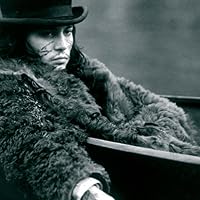
George Rudé was a British Marxist historian, specializing in the French Revolution and "history from below," especially the importance of crowds in history.
Rudé is one of the great 20th century historians of Europe, and a fine practitioner of history from below. In this case he explores the role and place of the crowd as a historical force and actor focusing on late 1th and early 19th centuries, considering rural and urban, French and English crowds as political forces, historical actors, as 'rioters' and revolutionaries and taking in such well known events as the French revolution and more little known cases such as 'Captain Swing' in England and the Welsh 'Rebecca' 'riots'. This not just a series of reports of the action of masses, but in the spirit of 'history from below', Rudé also draws us to faces in the crowd to tell the stories of individual participants. He also takes us beyond the specific events to begin to trace a theory of the crowd as a political actor: this is a book that contemporary analysts of popular and political should revisit - the cases may seem distant, but the stories and experiences of struggle and resistance resonate with the now in many ways.
Both substantively and stylistically, this comparative history of popular disturbances in the eighteenth and nineteenth centuries fits neatly into a wider Marxist historiography from which Rudé draws heavily. The book pairs a large amount of quantitative data (price fluctuations, popular participation, fiscal costs of mobs) with primary source material (from The Gentleman’s Magazine, the Annual Register, and contemporary journals) in an attempt to deconstruct ‘The Crowd’ in early modern England and France and supplant it with an almost hagiographic depiction. However, in trying to simultaneously draw comparisons between the English and French popular uprisings and deconstruct them, Rudé fails to develop the Anglo-French Crowd as a coherent unit for meaningful historical analysis. As such, this book contributes little to the historical debate, offering instead an ultimately dry reiteration of the well-worn and readily-accepted argument that there were material causes that led to violent, sociopolitical disruptions.
A study of a specific, prominent and important type of what came to be known as collective action. First, a catalogue of relevant episodes, then a few analytical chapters on composition, strategies etc. of history-making crowds. Good sociologised history, and the sources are used strategically in settling scores with Le Bon and such.
Is it not intriguing that riots have been a tag looked askance at and still very much avoided, even when some brought about progress? George Rudé ripped open the façade and unmasked as many rioters in the eighteenth and nineteenth centuries as he could in hope of busting the myth that the participants were riff-raffs. Almost all of them really were not. Not only were they wage earners from a child-bearing family but good citizens hitherto free of conviction.
Once the monolithic and flattened view of the crowd is discarded, crowd in action will introduce a lot of variables. There will be ring-leaders who would either be reluctant or militant, able or not to rein in their followers, who could in turn prefer one form of tactics over another. Directed vandalism, Rudé found, was preferred over indiscriminate attacks, although I doubt there was any distinction provided that houses were burnt down, targets hanged.
Even greater is the suspicion whether the riots had been conducive to any social progress. While that is not the main concern, Rudé gave every riot a positive spin as if suggesting that no progress would have been made had there been no class conflicts. He was Marxist; and I already saw that coming. So it did not bud me that to serve his own motive, some riots less than noble had been excused, such as the Luddite Riots and Gordon Riots.
It is the much neglected and misunderstood entity called crowd for whom he keenly defended, sympathised and eulogised, comprising the whole reason that the book is good. It stirs those who have been called a rioter with disdain. When historians tend to load a disproportionate burden on crowds for a variety of motives, they too should be held liable and challenged frequently for a simple motive–vive le peuple.
For a Marxist historian, Rude's innovative analysis of social unrest where and when the titles suggests is anything but. His real contribution is to slough off either the Taine-esque "mob" or the equally muddying "people". "Class" as a definer is also tossed aside for a more nuanced, case-by-case examination of why people rebel and revolt. It is usually because they are a) hungry, b) poor, c) oppressed, or d) all of the above. Rude connected the nature of disturbances + crowd motivation with the social/occupational composition of the crowd with some interesting results. Religion and other levelling instincts of social justice are at last reinserted into the dynamic as well. Middle East historians should get over their comparative history fear and look at works like this as a template for studying crap like this in their field.
"the forcible reduction of the price of food by riot.... the crowd itself conducted the sale..... The old practice of official intervention to protect the poor against famine prices had been abandoned sufficiently recently to live on in popular memory..." (44).