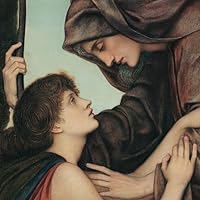
Originally published in 1529, the Declamation on the Preeminence and Nobility of the Female Sex argues that women are more than equal to men in all things that really matter, including the public spheres from which they had long been excluded.
Rather than directly refuting prevailing wisdom, Agrippa uses women's superiority as a rhetorical device and overturns the misogynistic interpretations of the female body in Greek medicine, in the Bible, in Roman and canon law, in theology and moral philosophy, and in politics. He raised the question of why women were excluded and provided answers based not on sex but on social conditioning, education, and the prejudices of their more powerful oppressors. His declamation, disseminated through the printing press, illustrated the power of that new medium, soon to be used to generate a larger reformation of religion.
Heinrich Cornelius Agrippa von Nettesheim (most often referred to by the Latinate appellation Cornelius Agrippa, sometimes Anglicized as Henry Cornelius Agrippa) was an occult writer, theologian, astrologer, and alchemist. His writings on magic and occult philosophy were a significant influence on the later work of Giordano Bruno and John Dee, and thus came to underpin much of the Western esoteric tradition.
7/10. The thing that makes this book different from other pro-feminist religious books from that era (but even to this day) is the fact that it utilizes Kabbalistic way of thinking and Kabbalah itself to justify his statements. And, clearly, this translation was not written by someone who knows Kabbalah, and not even Hebrew. It's a well researched book, but it doesn't take into account what Agrippa knew and was quoting at the time, rather it focuses on what the feminist landscape was at the time (and points out when Agrippa agrees with those positions), absolutely disregarding Agrippa's contribution to the topic. That said, even if considering the book itself, Agrippa's way too derivative of a style (which in case of mistakes disavows the arguments completely) reduces immensely the importance of De Nobilitate.
Certainly, many of the arguments are debatable or plain wrong; and understandably, the author shows misogynistic biases; but it is interesting to see the reframing of many usual arguments against women (still today for some) as a justification of their equality to men, and even some interesting considerations outside of said usual arguments.
I heavily suggest reading this book alongside Poel, Marc van der. Cornelius Agrippa, the Humanist Theologian and His Declamations / by Marc van Der Poel. Leiden [etc: Brill, 1997.
Agrippa, disciple of Trithemius was a rare defender of the female sex in these days, so all his arguments need to be put in socio-historical context.
His own wife perished in the black death plague, as he was desperately attempting to find a cure to this illness as a renown plague-doctor, and with the help of his assistant, supposedly - he found one, yet this is shrouded in legend.
found the copy of the 1670 print on the net, old english and typo made it funky to read but really enjoyed it. It was advocating to a person who is already convinced but truly awesome.
This is kind of mind blowing. I think it's not hard to see how arguments like Agrippa's can be used to justify "benevolent" sexism. But it's also a mark of just how much outright, not in any way "benevolent," sexism women are exposed to that reading this made me cry with a feeling like relief. We think of feminist "progress," and feel (rightly) discouraged and frustrated when it seems to backslide. But this man in the sixteenth century was outraged by women's mistreatment and exclusion from public life and intellectual pursuits, and he argued on our behalf. He even went so far as to argue that we are more capable than men of reflecting divine wisdom. One on hand, it's discouraging to see that this fight never ends, but on the other hand, it's so encouraging to see that this fight never ends.
Interesting pandering by the notorious hotshot "occultist" to please Margaret of Austria, Duchess of Savoy.
"Moreover, by the ordinance of nature, women through secret places every month expell their superfluities; but mens are continually expelled through the face, the most comely part of the body."
ироническая речь про очевидное, но невероятное. жаль, в конце сбился на списки. интересны детали: оказывается трупы утоплениц всегда плавают стыдливо лицом вниз, тогда как утопленники всегда аморально лицом и прочими частями вверх. учёнейший человек был агриппа)