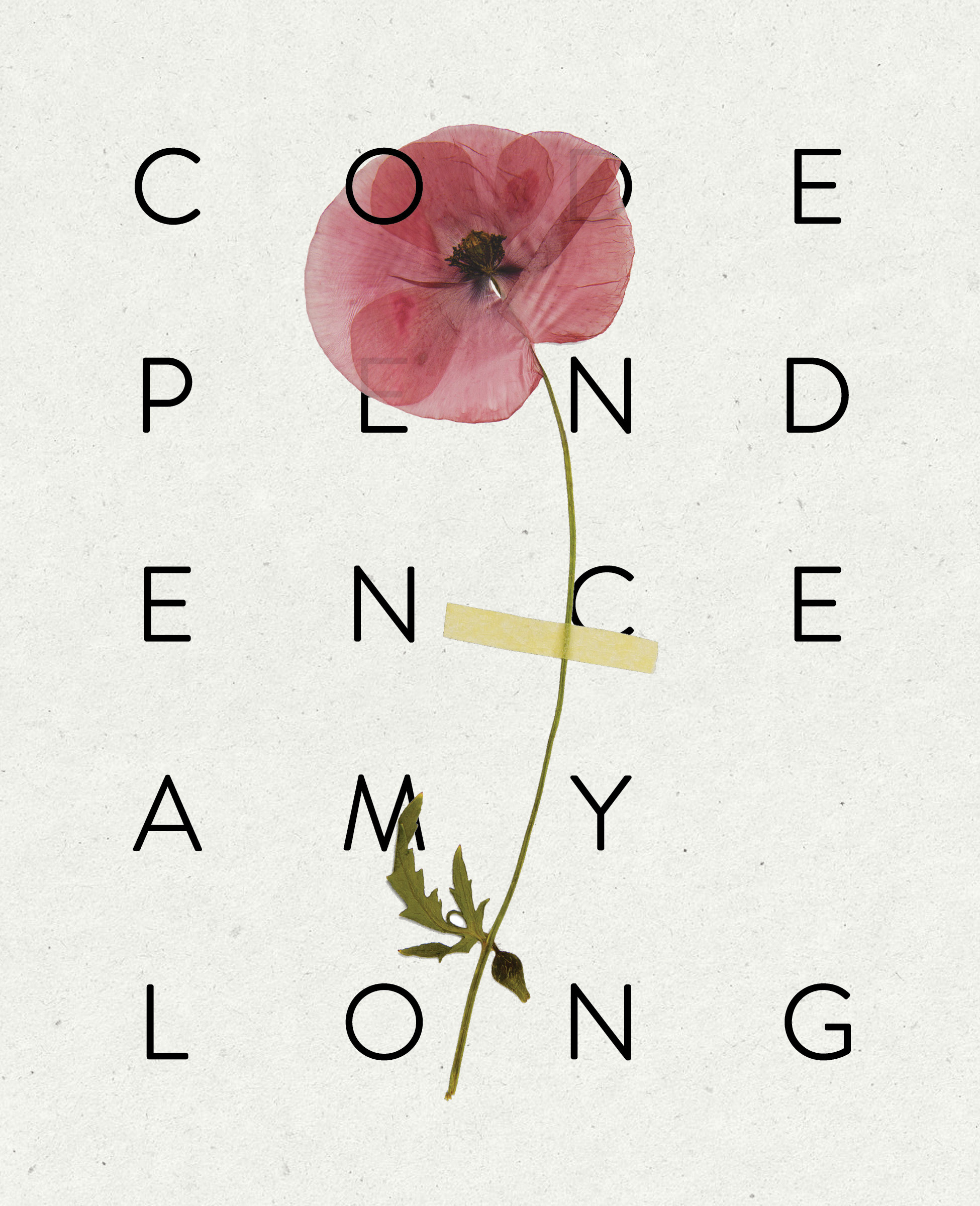
Fearless, haunting, and transcendently honest, Amy Long’s Codependence is a memoir of pain and its paradoxes. Long documents her coming of age as an ambitious young writer plagued by chronic headache and entangled with a boyfriend’s opioid addiction. The essays that result explore the complexities of care, hurt, and hope with elegance and precision. Long exposes her every nerve, crafting a story both intimate and deeply relevant. An essential book for the opioid era.
Praise for Codependence:
This gutsy memoirist of opioid addiction and pain management has not prevailed over her predicament. The electric prose of this book is not written from that vantage. Nor, as she persuasively demonstrates, is there necessarily a triumphant position to which to aspire, when a case is as precarious and enveloping as hers. The art of the essay and the practice of life writing benefit from Amy Long's decisions on every page to present a narrator who is as self-excusing, furtive, and volatile as she is candid, searching, and bracingly expert in our country’s labyrinthine industry of relief and the hurt of protracted hope. Codependence gives you the room key and invites you to inspect the parameters of Purgatory.
—Brian Blanchfield
Against all the easy recovery narratives, against all the Opioid Crisis Hand-Wringing, stands this heart-stopping book—ferociously felt, powerfully written, absolutely persuasive in its extraordinary nakedness, bravery, and gallows humor. Brilliant.
—David Shields
Vividly drawn, disarmingly forthright, and darkly seductive, Amy Long’s Codependence redefines what it means to take drugs, fall in love, and belong to a family. Exhibiting a mastery of narrative form and structure while documenting one woman’s attempt to articulate her pain—as well as the lengths she will go to eradicate it—this book represents a stunning and singular debut.
—Matthew Vollmer
Amy Long holds an MFA in creative writing from Virginia Tech and a master’s degree in women’s studies from the University of Florida. She serves as a contributing editor at the drug history blog Points.
A formally inventive/creative memoir about the author's opioid addiction and related relationships that immerses you in her experience, with great honesty and depth, via well-dramatized and considered episodes. Made me better empathize with the experience of a good friend's younger brother who recently recovered from similar addiction, although he didn't go down this tortuous rabbit hole to relieve unrelenting physical/neurological pain. In general, the author's pain and her attempts to relieve it, and the pain her struggle causes others -- and the pain others also addicted in turn cause her -- all this pain and compounding struggles are, thanks to their expression herein, transmuted and elevated into the reader's gain.
I’ve had to think hard about my reaction to this book, which is a memoir of opioid addiction that defies the traditional recovery narrative of start dirty, get clean.
Obviously, as an addict, this provoked me. No, that’s not quite right. I mean, yes, it provoked me (because I saw so much of myself in her & didn’t always like it) but it also piqued my interest & encouraged me to rethink that carrot of recovery as it’s presented to many addicts.
Hear me out.
I’m not about to go back to chugging vodka-Ativan nightcaps, but it was really fucking refreshing to read a sophisticated & gorgeous & gritty memoir that doesn’t see conventional “recovery” as the end goal. In Long’s case, to her mind, this would mean giving up the only substance that brought her an iota of relief from a lifetime of chronic pain. And it’s a pain no one can see or detect or even diagnose so, like many people with invisible illnesses, her attempts—her often frantic and obsessive attempts—to find any semblance of peace is met with dismissal & derision by medical professionals as well as the people closest to her.
Then there’s also the fact that the constant dangling of the promise of a golden recovery in front of addicts is depressing as hell for people who keep falling short of it. It’s not always helpful. Sometimes it’s about harm reduction. It’s about not holding people to impossible standards.
I mean, just read the book. Long’s writing oozes frenetic energy (think the River of Slime from Ghostbusters II) but also, a calm, precise narration that balances everything out; gives the reader space to breathe.
So what does Long think is the end goal if it’s not recovery? My thought: Read the book and see for yourself. It’s worth it. Pinky swear.
This book is intensely honest, vulnerable, and beautiful. These essays didn’t shy away in shame or boast superiority. They just existed. They document a growth that was really important for me to read personally and there were some parts where I felt really understood by Long. We have several connections: Virginia Tech Creative Writing courses, headaches, relationship anxiety, fear of comparison, mostly the connection that she is a triplet and I am a twin.
There are really intense and inexplicable joys and pains that come with that and it was nice to read about someone else who understood that part of me.
I thought these essays were very well written and there are several lines that are just going to stick with me for a long time. Lines that I underlined with a dull-pointed pencil so I can go back and look and remember how I felt.
Codependence is gorgeously written and bold. It is at turns vulnerable, adamant, and with the complications of loving and being loved woven throughout. A deep dive exploration into the author's own experiences on the many sides of addiction: as a user who became addicted, as a person dealing with chronic pain, and as someone in relationship with a person with an addiction. Here you will learn about the complexity of chronic pain, how it is managed, how those with it can be shamed for the need for the medication. These essays unfold as something other than essay, a full story with a structure that weaves time in a way that makes me want to go back and read again.
Author Amy Long's memoir Codependence should be required reading for anyone who has chronic daily headaches (CDH) and migraines or has a loved one who grapples with this stubborn and life-altering neurological disease. The author chronicles her quest for pain relief and an improved quality of life through various compelling essays. Along the way she exposes the stigma attached to using opioids on a regular basis. Interweaved in this memoir is the author's relationship with her first love, one she recounts from start to end. She's also candid about some recreational drug use at a young age. However, Long is not an addict. She clearly delineates the difference between addiction and dependence—a crucial demarcation often ignored in the current era of anti-opioid sentiment fueled in part by the media, CDC, medical establishment, and by an ableist culture that often cockblocks chronic pain patients who seek legitimate relief.
The author regularly undergoes what can only be described as a series of odysseys in order to have a valid prescription filled, specifically for Oxycontin—the only medication that puts a substantial dent in Long’s CDH and allows her to function. A pain warrior myself, I have grappled with CDH since the year 2000 when episodic migraines transformed into a constant 24-hour migraine that refused to release it's vice-like grip for over two months. The amount of devastation CDH wreaks on every aspect of one's life cannot be overstated and is clearly depicted in Codependence. The author exposes additional obstacles faced by those who live with invisible illness—including the myriad ways others fail to validate or even merely acknowledge the existence of that pain.
Long tells it like it is when she speaks of stressors like counting or stretching out pills, so they will last through the next couple of workdays; this is common practice among CDH patients in today’s opiodphobic climate where some patients have been forced to taper off medications that were improving their quality of life. Even worse, others have been forced to quit cold turkey.
Over 40 migraine-related genes have been discovered to date. Genetically speaking, episodic migraineurs and CDH patients have inherited different numbers and combinations of these genes; in part this accounts for why one person may respond to a certain medication or treatment and another doesn't. Therefore, treating chronic migraine is highly challenging and cannot be approached as a one-size-fits-all endeavor.
I particularly like that Long provides a sort of running catalogue throughout Codependence which lists properties of various medications she's taken over the years. What I admire most is the author's grit while achieving academic and personal goals, and navigating the triumphs and trials of living with CDH. I admire Long's decision to be an independent woman, one who has chosen a difficult yet rewarding path. Long has decided not to settle for less in her relationships, personal or professional. However, I also admire that Long knows the value in sometimes asking for help—a necessary survival strategy and a mark of emotional maturity.
The author walks readers through the long list of doctors who have treated her and exposes a lesson I learned the hard way—how to play the game as a female patient during a medical appointment because, unfortunately, sexism is alive and well. Long knows there is a penalty for crying, raising her voice, or appearing emotional in any way. Yet, she balances these harsh truths by acknowledging physicians who have been caring and helpful.
If you are a caretaker of someone living with migraine disease—chronic or episodic—Long’s Codependence will help you understand the daily hardships your loved ones face. If you live with CDH, this memoir will not take away your pain, but it will validate and echo many of your personal experiences. How I wish a book like this existed back in my early 20s when I was a graduate student and a CDH newbie trying to obtain effective treatment. In addition to patients and familial caretakers, Amy Long's Codependence should also be read by every physician, nurse, and therapist. If we are serious about building an inclusive present and future, we can’t afford to discount the experiences and narratives of those who live with invisible illness. Codependence challenges readers to set aside assumptions and embrace empathy and education.
This summer I have faced a slew of weather-induced migraines while rereading Codependence to remind myself of Long's resilience and perseverance—and my own—while taming the migraine dragon one day at a time.
This entire review has been hidden because of spoilers.
Long has written a brutal and brutally honest book that lays bare the struggle of dealing with debilitating chronic headaches and documents the medical quagmire of obtaining necessary pain prescriptions that makes treatment so burdensome and stigmatizing, while also detailing how these struggles cut across every facet of her life. A haunting and vital perspective.
If you've watched DOPESICK, I encourage you to read this book for a close-up, intimate look at the use and abuse of opioids and how they both can impact interpersonal relationships and a life. Beautiful language is a bonus!
Well, this collection absolutely carved out my insides. The writing is so detailed and deliberative (sometimes repeating details or timelines through several essays) and emotionally raw. Not a perspective on pain management I've read before, but one I needed and appreciated.
Amy Long is the mind and talent behind Taylor Swift As Books on Instagram, but is also the author behind this beautifully shattering collection of essays.
This book is, firstly, one of the best written books have read in years. That is undisputed. It is written in a way that works quite like memory; sporadic, unreliable, vivid and yet murky. It is written in a way that elicits tears out of empathy, out of love, and out of outright rage.
This book slices up a life and bares it to you with the courage of journalism, and the incisive introspection of a poet. Chronic Daily Headaches is described in this book in the exact way that a migraine comes on and remains; itching within, crawling slowly like spiders until it bites, and grows.
Read this book. To speak any more is to lessen the impact and import of this work. I loved this book and was hurt by this book; which is, to me, the absolute best thing a person can say. Thank you, Amy Long!
"You're no longer a voice on the phone - you're a 27 year-old woman, underweight and wearing sunglasses inside and rubbing the tender spots on the top of her head, clutching a legitimate prescription - but you're still a suspect. Walk out angry and a little more hopeless despite having known when you walked in exactly how the scene would play."
"Memory fractures and morphs; it solidifies like poured concrete. I break mine into pieces and look at each one, turn them over in my hand and let them slice my skin. If I let the blood run until the cuts scab over, I can pick at the dried wounds and start again." 🌸 🌸 It's really hard to write a proper review about Amy Long's essay collection Codependency because it just becomes about me. Like Amy, I suffer from chronic headache & migraine. Like Amy, before I ever needed pain intervention, I started using pills with a boy who also told me he was the only one who would love me enough. Least of all, the pseudonym she uses for her ex is the name of my ex that I was in an abusive relationship with for years, so as you can see, it all get muddled. What I can tell you is that Amy's essay's are thorough examinations of her self, the choices she's made, the choices she's had to make to care for her body, and the choices that were made for her by others and by her own body. I can also tell you that she is doing some really interesting structural things her in terms of the boxes she uses to put the essays in (I mean, an entire essay built around a medicine cabinet, brilliant!) & also what I can tell you is to go buy this book.
Collection of mostly previously published essays in an original structure. Many of the texts are themselves in unusual hermit crab essay forms, e.g., a glossary of terms (a compendium of the (strong) prescription drugs the author / narrator has taken), "pharmacies of New York" (7 pharmacies where the author / narrator has been compelled to beg, borrow, steal, wheedle, negotiate, strategise to obtain the drugs her body, suffering from debilitating headaches, so desperately needs to function), and a set of prescriptions (structured in Uses, How to Use, Side Effects, Drug Interactions, Overdose) that has a narrative arc. The title relates to the probably inappropriate relationship with an older, "former" heroin addict that the author / narrator stumbled into at age 17 that shaped her drug use henceforth, as well as growing up as the smallest, the odd one out of a set of triplets in small-town Alabama. Startlingly original, and meticulously written.
What a phenomenal book. Codependence is a narrative that grapples with impaired functioning, intense pain, and the struggle to treat that pain as legitimate when the patient has also previously abused the very medication needed to treat her pain. It’s a book about wanting to be believed, wanting to be treated effectively, wanting to be loved and to thrive with comorbid conditions that make it nearly impossible to do so. A stunning work.
Brutally honest memoir of a talented writer finding her voice and a way to escape from her drug dependency and codependent relationship with her addicted boyfriend. Long writes in experimental chapters and I loved this method of sculpting her journey. I hope to read more from Long some day, on a different topic, of course!
I haven't posted a review in ages, but I picked this back up to re-read it and wanted to see what I'd written about it before. I see that it was around this time that I stopped posting reviews, so I hadn't recorded my initial thoughts.
But since it's one of the most poignant books I've ever read, I needed to say that. It's brilliant and heartbreaking and honest and raw.
(4.5 stars) i really enjoyed reading this. the perspective of the speaker is unlike anything i had read previously, but she still manages to make connections between the reader and the writing. loved the formatting on this as well
This essay collection features a variety of clever forms, yet each sections works together to create a cohesive, beautifully-written, and heartbreaking book.
Wonderful read. Really enjoyed this. Recommended by some friends at Disquiet International. Cohesive and rewarding. Progresses well. A nice pairing to anyone running through Euphoria as I am.
candidate for best book of the year for me. phenomenal writing (I always love an essay collection) but man idk if I've ever felt so seen by someone's work on chronic pain and writing
This is a gorgeously written, sometimes difficult book that challenges the reader to hold two opposing thoughts at the same time — it builds true compassion. Highly recommended.