
Jump to ratings and reviews
Rate this book

A Presocratics Reader

Rate this book
Ideal for a two-to-three week introduction to the Presocratics and Sophists, this volume offers a selection of the extant remains of early Greek philosophical thought on cosmology, metaphysics, epistemology, and ethics, together with unobtrusive, minimally interpretive editorial an introduction, brief headnotes, maps, and a concordance.

126 pages, Paperback

First published January 1, 1996

70 people are currently reading
491 people want to read

About the author

Patricia Curd

8 books3 followers

Ratings & Reviews

What do you think?
Rate this book

Friends & Following

Create a free account to discover what your friends think of this book!

Community Reviews

5 stars
182 (26%)
4 stars
269 (38%)
3 stars
175 (25%)
2 stars
57 (8%)
1 star
8 (1%)
Displaying 1 - 30 of 69 reviews
Profile Image for Matthias.
190 reviews80 followers
Read
February 14, 2021
"Reviewing" this collection would be like reviewing the cosmic background radiation that gives us the earliest visible glimpses of the universe: "hmm, a little grainy, 3.5/5."

Of course it's not true that the thinkers gathered under the curiously teleological label of "presocratic" were the first people to think, or even the first people to write down interesting thoughts that responded to one another, but their own origins, as with their own doctrines and arguments, are something where we have to do more than the usual amount of squinting and conjecturing. And while one could certainly offer a starred review of the (say) philological correctness of Curd's editing and McKirahan's translations, that one would not be I.

Thankfully I've abandoned starred reviews as useless, and can only offer a few inexpert impressions: themes that stood out to me - one presence, one absence, one mystery. These are inexpert not only because I'm inexpert in myself but because, much as with my first read of Plato last year, I've tried to make a virgin and decontextualized reading: not because that's the most productive or accurate way to read the history of philosophy, but because you can only do it once.

The present theme: I said above that there wasn't a single beginning, just one we're imposing on this era for reasons of epistemological convenience. But there is a break, and that break is Parmenides. Not everyone here is responding to Parmenides' argument, but everyone after Parmenides is. It's not clear here when the idea that you could make logical proofs about the world through words, but once it gets going, and once Parmenides seems to prove that logically speaking change is impossible, every single philosophical system offered is an attempt to resolve this. Parmenides' Eleatic descendants go on churning out additional logical proofs to this effect. The natural philosophers who take up earlier Milesian theories about nature have to modify it to fit these proofs. If you read Plato's highly tendentious account it sometimes just sounds like the "sophists" are bringing question onto the whole relationship between words and reason and reality to be jerks who argue anything, but if you read the longer fragments of Protagoras here, it seems clear that they were disturbed by the consequences of Parmenides' tight relationship between them. Obviously, Plato himself is responding to Parmenides.

(Curiously, there doesn't seem to have arisen a Heraclitean "school," even though Heraclitus offers another horn to respond to this n-lemma: paraconsistent logic as a way to allow change.)

The absent theme: ethics and politics. It's not that you might not be able to do an intelligent dive beneath the surface here - it's merely that there's barely anything on the surface. These thinkers were overwhelmingly concerned with logic, epistemology, physics, and metaphysics, not ethics and politics. (This changes a bit only near the end, with the sophists again, and with the early Plato, overwhelmingly concerned ethical and political questions, and himself one more sophist.) Various heretical comments seem to indicate that this curious absence of political thinking wasn't simply to avoid touching a third rail, either. Nor do we see many indications of Plato's interest in literary criticism. Early Greek philosophy was basically a STEM affair, even when the form in which it was presented was quite stylized and literary rather than dry (Parmenides' big bang of an argument is presented in the form of an epic poem, where the truth is revealed to him by a goddess.)

The WTF theme: references to "limited" and "unlimited" as a basic kind of opposition are everywhere, and if I was only reading Animaxander I could say that unlimited means some kind of unlimited potentiality in matter or whatever, some New Materialism sort of thing (the Milesians remind me a lot of contemporary New Materialism!), it's clear there's some weird Pythagorean mystery cult thing going on with it. At least, the Pythagoreans have this gnomic doctrine that these correspond to odd and even numbers, don't explain it, but the traces of it are everywhere, including yes again in Plato, with his offhand references he drops in every other dialogue to "the difference between even and odd" as what "arithmetic" is all about. I thought he was using this as a curiously specific reference to baseline mathematical knowledge, but it's clear to me now that there's something weirder and more interesting going on.

Recommended for anybody weird enough to care about this kind of thing. Take your time. At some point I'll come back to it when I'm better-armed with context, and I'll read it slowly that time, too.
Profile Image for Ethan Zimmerman.
208 reviews12 followers
October 1, 2024
Second Reading:
Reading these ancient fragments a second time helped me appreciate these proto scientists and philosophers much more. Sure, Thales sounds a bit whack when he states that everything is water. But these folks weren't stupid, and it's a decent start at answering the big questions. Their positions continue to be represented by modern philosophers albeit in more sophisticated form.

First Reading:
I have no good way to apply a rating to this collection of fragments. If you're interested in ancient philosophizing about the nature of the world, then this is a book for you. If you're not interested in that sort of thing, then it's not.

In the meantime while you ponder that, here's a bit of wisdom from Pythagoras: "Do not have swallows in the house. Spit on your nail parings and hair trimmings.... Do not urinate facing the sun." Be blessed.
Profile Image for anna.
168 reviews3 followers
September 25, 2022
it was all good except for the uber pretentious parmenides he really brought the collection down a notch with his what-is bullshit
Profile Image for ben.wmv.
191 reviews31 followers
February 8, 2022
Fun stuff, standouts for me were the Milesians, Heraclitus, Parmenides and Zeno, Empedocles, and Leucippus and Democritus (August Thalheimer’s short piece on dialectical materialism contextualized the Milesians and co super well for me so I’m glad I read that). It’s so interesting to see that these ppl’s cosmogonies already contain materialism, flux, and the unity of opposites (Thales and Heraclitus stand out for me particularly). Parmenides and Zeno’s take on what-is and what-is not and the absurdity of motion and change (I’m associating them in my head because of Plato but apparently it’s more ambiguous than that) were also super fun, and it’s cool seeing people coming after try and take them on.
Profile Image for R.a..
133 reviews22 followers
July 28, 2016
4.8 stars

Substance. Motion. “Being” and being. And, not being. Air—condensation and rarefaction. Cosmos as arrangement, as ratio, as number.

The “transmigration of the soul. The “limited” and “unlimited.” A one god, (God); and, Universal Law.

The “Big Bang,” astronomical-geological differentiation, the transferability of energy, and the notion of dimensions.

Atoms, Nietzsche’s “cosmic symphony,” String Theory, and constant motion.

The Nature-Nurture dynamic . . .

C.S. Peirce’s “interpretant” . . . and,

Law as “agreement,” (Hobbes; Rousseau) . . .

All of these represent but some of the ideas with which the Presocratic philosophers grappled approximately 2,500 years ago.

Since then, some of the notions within Natural Philosophy not only have been refined but have been “proven” within the now mature fields of the sciences.

A Presocratics Reader presents, as subtitled, “selected” fragments and testimonia.

Although the subject matter here for most of the philosophers is either natural or metaphysical phenomena, both ethics and epistemology come under discussion as well.

Unfortunately, as the text explains, “Not a single Presocratic book has survived intact.” And, this compact little text excels in providing source information with regard to what we do have. Further, A Presocratics Reader provides maps and a “Location-philosopher” timeline for reference.

The introductory essays are excellent and act as a touchstone with which to quickly compare and contrast the postulates of earlier and later philosophers within the volume.

Given treatises of some later famous philosophers as well as Western scientific advancement, some of the thoughts here, 2,500 years old, with the “beginning” of formal philosophy, still surprise and provoke.

“Wanting more” becomes the single critique.

And, Anaxagoras and the Atomist philosophers become favorite sections.

Simply, either this or another comparable volume is "a must” for anyone interested in the metaphysical “big questions.”
Profile Image for Anna.
328 reviews
March 9, 2021
read for *uni*
honestly, i chose cl2003 cause i thought i wouldn't have to do any more philosophy but -here we go again- --> hated most of it because i hate philosophy, and by about page 100 i was skimming over the sciencey stuff because i *do not understand it*
however, enjoyed gorgias' praise of helen (82b11) because we all love ancient men not being misogynistic for once.
*march re-read* re-read this as my presocratic lectures were just starting, and still don't like it much. this time, though, i missed out the last two chapters because they are written in prose and not poetry, and i'm studying the philosophical poetry, not the sophists. generally enjoyed it a bit more because i sort of understand it now?
Profile Image for Sarah.
4 reviews1 follower
November 27, 2010
This book is very fascinating. I feel the people who are discussed are the first true philosophers. They talk about the origins/ or rather how there was no origin to the Universe. I especially appreciated the chapter on Paremenides. I would recommend this book to anyone who is interested in philosophy.
Profile Image for Akram Salam.
16 reviews3 followers
September 21, 2019
This book represents my first venture into Ancient Greek philosophy and the Classics in general. It is easily accessible to those with little to no knowledge of the field. The authors are phenomenal scholars, organizing the book in a way so as to paint a flowing chronology of the development of man's deep understanding of the natural world in the West. For the most part, each chapter deals with one presocratic thinker, giving a summary of the thinker first and then following that with testimonies and fragments -- primary textual sources -- as a basis for understanding the thinker. A superb work!
Profile Image for Parker.
225 reviews1 follower
March 18, 2026
The inquiries, absurdities, and theories of the pre-Socratic philosophers must be known to understand where the culture-defining era of Socratic philosophers found the basis of their own ideas and concepts and how they refined, innovated, disagreed, or recreated these ideas into the philosophy that has fueled Western thought for over two-and-a-half millennia.

Observant readers will realize the influence and premonitions of thinkers such as Parmenides' what-is and what-is-nots and Democritus and Leucippus' atomic theories are strikingly similar to the more refined and sophisticated concepts of later philosophers like Kant and the modern scientific traditions of, well, atomic theory.

It's a shame pre-Socratics don't get half the recognition they deserve. Even if they were eccentric, questionable, or outright wrong, the influence of their ideas are independent from the idea's legitimacy. Even if the Milesians had their own wacky and abstract ideas that many would candidly call 'stupid,' such as Earth floating in water or Earth being tortilla flat. In this era, the Milesians were busy trying to find the archē, which is the 'monism' part of 'material monism,' the concept that the entire world and or universe is comprised of a single substance (archē). Each Milesian had their own archē, and even some philosophers after the Milesian era--which became the 'Ionian school' after Milesian oriental science birthed Greek natural science and inquiry outside of Miletus and into the broader range of Ionia--tried to define the archē themselves.

Thales, the first Milesian and also the one who Aristotle credits as the 'first natural philosopher and cosmologist,' thought the archē was water. Why he thought this can be found in these fragments: 1) when anything is nourished, it is moist; therefore, water is necessary for nourishment, which is essential for all beings; 2) heat is from moisture, or was previously moist, meaning that without water there would be no heat; and 3) seeds require water to grow and develop, another thing that is 'moist;' so, without water, seeds could not become plants, and there would be no plants.

So, back in 6th-century B.C. Ionia, one would probably believe the many things that Thales deemed about the natural world. There was no real science, so whatever the matter of the world was depended on the best-sounding orator and his arbitration.

When he died, however, his predecessor Anaximander developed the archē into something a little less believable and reasonable, lacking much clarity: apeiron. Apeiron is 'infinite and boundless,' producing opposites that in turn create the observable world. This was a lot more plausible than water, since it provided such evidence as the existence of hot and cold, dry and wet, man and woman, that, when such logic fell on Greek ears, the idea was discussed and agreed upon by various thinkers.

Yet it was Anaximander's own predecessor and near-namesake Anaximenes that developed apeiron into something less vague and more complete. Anaximenes described aēr as his archē, a dense, amorphous mist that created every observable form of matter available at the time. Anaximenes explained that when undergoing rarefaction, aēr turns into fire; when undergoing condensation, aēr becomes water, and when this is more condensed it becomes a cloud, when further condensed it becomes earth, then rocks, stones, etc. This new archē was revolutionary and another step towards the popularization and development of scientific thinking and rationality in the early Greek world.

The Milesian School acted as a catalyst for what would be known as the golden age of Greece and the West's most important intellectual era. The Milesians, though nowadays impractical and silly, were as serious as it could've gotten at the time; but, even if they were respected in their time, there were still critics like us who existed amongst them and questioned their inaccuracies and continuity errors, equally sharing responsibility in the navigation of 5th-century B.C.'s intellectual direction.

Among these was the nearly magical wizard Pythagoras and his fanatic mathematician cult. Like yesterday's Milesians, Pythagoras developed in the Italian city of Croton the idea that the universe was able to be perceived and observed through numbers, proportions, and harmony. Yet, even though this influence of numbers was no doubt influential to Greeks (though I must add that there is no evidence that Pythagoras discovered any of the math he is claimed to have discovered), he introduced a certain idea that directly influenced the MVP of Western philosophy, Plato, in a substantial amount of ways. You must be asking: what is that idea? And I shall answer: the transmigration of souls, known by Infinite Jest readers as metempsychosis, and those of us who don't read bullshit like Infinite Jest as reincarnation ("The soul is immortal"). Reincarnation is mentioned in the dialogues Gorgias, Phased (my favourite dialogue), and the Republic. However, even if Poothagoras and his lunatic followers were responsible for altering the course of mathematic, astronomical, and musical inquiry (his emphasis on harmony credits him with the mathematical basis of music such as tuning), he was not very liked by Aristotle who was said to not have patience with Pythagorean concepts.

After Pythagoras had his fun with numbers, Xenophanes of Colophon stated "there is no divine communication to human beings." He did not believe in anthropomorphic gods but did believe there was a higher, supreme power that did not have a body. This is where things get really interesting in the pre-Socratic world, for now we have thinkers outwardly denying the existence of traditional gods that were not just foundational to Greek culture up to this point, but essential. He even made the famous claim that: "If horses had hands, or oxen or lions, or if they could draw with their hands and produce works as men do, then horses would draw figures of gods like horses, and oxen like oxen, [and lions like lions] ..." This makes Xenophanes a pioneer of skepticism, which was, of course, dire for Platonism and Aristotelianism's deeper inquiries.

A fan of Xenophon with double his influence, Heraclitus' misanthropy and further skepticism were even more crucial for the abstract thinking required for the Socratic age when it came to the divine and metaphysical. Though known for his famous sayings about rivers, Heraclitus' ideas were relatively horrifying to many philosophers at the time, such as his belief that there is an available truth in the universe, but everyone "fails to notice it," preferring to listen to whatever the most popular bards or the masses say, refusing to think for themselves, "unaware that most people are bad, and few are good." This is actually a very good theory that I agree with in the year 2026. Along with this, he believed that there was a single force that directed the whole universe, which he called logos. This logos is the truth that Heraclitus claimed earlier that many people were ignorant and avoidant of.

If you thought Heraclitus was idealistic for his time, Parmenides outpaces him by miles with his own idealism being disturbingly Kantian. Parmenides literally states that humans can only think about the what-is (which can be interpreted as Kant's phenomena) and cannot think of the what-is-not (as noumena), which is inconceivable. Parmenides says that one cannot trust the belief of mortals since they rely entirely on sense-understanding, nothing on a solid objective ground. This predates the theory of forms and much of what is discussed in the Critique of Pure Reasons before either Plato or Kant were conceived. He also believed that time was continuous and unceasing, a single body immune to real change. His absolutely metal perspectives on being, time, epistemology, and reason were centuries ahead of his time.

"I GO ABOUT YOU, AN IMMORTAL GOD, NO LONGER MORTAL, HONOURED AMONG US ALL, WREATHED IN HEADBANDS AND BLOOMING GARMENTS." This is what Empedocles said of himself before he was exiled from Acragas and into the Peloponnese where he died. Empedocles could be considered a grifter above all, even if his cosmic ideas were slightly entertaining. He argued that the cosmos were controlled by basic entities, six of them: Earth, Water, Air, and Fire (the elements), then Love and Strife (the human factor). The 'roots' (elements) are shocked by love and strife to create the material world where, in this mixture, things come and go, or live and pass away. Among these things that live and pass away are what he calls daimones which are basically the souls of humans that go and live life before returning back to the cosmos. The destinies of these daimones, Empedocles says, depends on the lives that the daimones live in the real world, which derives the importance of ethics and religion. This was easily sold by the man and, even if his story of the universe could only hold water in science fiction, his establishment of the four elements were utilized by Plato, Aristotle, and the Avatar. Ringing influence.

As influential and Kantian as Parmenides was Empedocles successor Anaxagoras, who's theory of the nous, or mind, being the only pure thing in the universe continues to echo through the walls of idealism to this day, even mentioning "ingredients being separated and combined with one another," which could easily be interpreted as a theory of forms or even appearances. He even boldly asserts that geological features of the world such as mountains and rivers are "breaks" from the manmade concepts that obscure the lives of people until their deaths. In short, the nous is responsible for perception, which reinforces the idealism of Heraclitus and avoidance of subjective / mortal truth of Parmenides greatly. One of his fragments even reveals the first law of thermodynamics: "...no thing comes or passes away, but is mixed together and disassociated from things that are." He also states: "...we are not able to determine truth." Isn't that straight Prolegomena?

Now comes the atomic theorists that anyone who's had to suffer through chemistry in high school may have heard about: Democritus and possibly Leucippus. Some may not have heard of Leucippus, even if he was the one who established atomic theory before Democritus, but both are equally credited with its influence and prevalence into the 1800s when John Dalton finally developed the 'first' 'atomic theory.' The two (Democritus and Leucippus) state atoms are 'imperceptible,' very small. All atomic stuff is the same and constitutes matter, but there is another player in the atomic system which is known as the void. The mixing of atoms and void is what makes the perceptible world perceptible, thus affirming the previous idealists like Parmenides and Empedocles concepts that life is constantly being recycled into the universe.

The sophistēs, as Plato called them, meaning 'expert technician,' introduced the first instances of philosophical inquiry and debate on the meaning and effects of law and justice. They were great teachers in the average Greek polis and raised a number of intriguing questions that were necessary to propose in an age of inquiry such as the 5th century B.C. A sophist debate, for example, would include something of semantics: "If we are each seated one next to the other, and we each say "I am an initiate of the mysteries," we will all say the same thing, but only I will be truthful, since in fact I am the only one who is." If Wittgenstein were in the crowd at the time of such a debate, he would have begged for a scribe. The sophist Gorgias emphasized the power of persuasion and rhetoric, mentioning the importance of logos (not Heraclitus logos, but the rhetorical logos) when it comes to altering the truth and falsity of an accusation, even stating that logos is the only way we communicate perception. Even the sophist Antiphon, had a serious amount of radical thoughts on law, such as how it not only restricts nature but justice as well, claiming that the law enables the wrongdoer to persuade a jury that he is in the right, and the victim can suffer even more if the jury decides that the wrongdoer is correct and the victim in the wrong, deeming law not as a necessary evil but as a limiter. This, obviously, proves how crucial such sophists were in this day and age, responsible for putting such unquestionable things as the law and the authority of Greece into question. As he ends his speech, Antiphon drops a nasty maxim:

"For victory comes through speech."

It is essential we learn about the pre-Socratics, for there are far too many who believe that philosophy began with Socrates and that's that. The pre-Socratics were rich in ideas, no matter the quality, and played a key part in pursuing and establishing idealism and skepticism, as well as the earlier practices of natural philosophy that in turn had an equally crucial role in shaping Western culture and thought as idealism and skepticism have. APR for the win.
Profile Image for Phillip.
Author 2 books68 followers
December 1, 2024
This is a very interesting collection for anyone interested in the roots of Western philosophical thought. The anthology brings together excerpts from and commentary on the thought of many Greek philosophers who predated Socrates (and who are not really unified by anything else). As the introduction explains, one of the criteria used to determine a presocratic 'philosopher' is a faith in rationality and interpreting observations about the nature of the world, as opposed to the acceptance of revealed truth through religion or mythology. In pursuit of this rational examination of the world, these philosophers considered disciplines as wide-ranging as physics and metaphysics, medicine, rhetoric, poetry, theology, politics, ethics, and biology.
However, most of the excerpts in this anthology focus principally on metaphysical questions, especially: what is the nature of existence? There are competing schools of thought, influence, and response to this question. But in choosing that focus, the editors have given short shrift to issues like rhetoric, poetics, and aesthetics, which I would be more interested in.

The Milesian School: https://youtu.be/VvKeUEVC9ZU
Pythagoras and the Pythagoreans: https://youtu.be/MQr0cMyecUA
Xenophanes: https://youtu.be/AUMU0ZUQQPo
Heraclitus: https://youtu.be/3cjyFltOY48
Parmenides: https://youtu.be/5K5B-osYVNc
Anaxagoris: https://youtu.be/r7zi0cK-hsQ
Empedocles: https://youtu.be/6ofqfctEKds
Zeno of Elea: https://youtu.be/2F-3FvPAlOA
The Atomists: Leucippus and Democritus: https://youtu.be/3ndvKosvxPU
Melissus: https://youtu.be/Utj0zgbwz00
Diogenes of Apollonia: https://youtu.be/fcsFNT2rwGQ
Protagoras: https://youtu.be/6KeclKLTM1k
Gorgias: https://youtu.be/bmm53i1SbT8
Antiphon: https://youtu.be/konP_zFtO3M
Critias: https://youtu.be/MSEOlqL0c_c
Profile Image for J.D. Steens.
Author 3 books39 followers
September 6, 2014
In the introduction, the editor states that in 585 BC Thales “reportedly predicted an eclipse of the sun” and that this marked the beginning of philosophy and science in Western thought. Some of the presocratics (Milesians and atomists) sought to explain the world by the material elements and forces they saw (e.g., water, air, water; atoms reacting to each other), in contrast to “appeals to the Muses or to divine warrant, and breaks in the connection between theory and evidence.” While some of the presocratics fall more in the former category, it could be argued that others such as Pythagoras, Parmenides, Heraclitus and Zeno fall into the latter category at least for some of their ideas and, interestingly, they laid the theoretical groundwork for some of the philosophy of Socrates and Plato.

The points of view of those presocratics covered in this book are gleaned from the introductory text. The philosophers themselves or what others said of them are so fragmented that it is difficult to decipher their meaning or significance. The maps in the first part of the book are excellent.

Profile Image for Caspar "moved to storygraph" Bryant.
874 reviews57 followers
Read
June 4, 2022
idk I just kind of found this in Bouquiniste and thought it'd be a good time and it does well enough on its terms. Thank you everybody it's a decent enough crash course in those pesky hazy ancients. Lots of (unexpected) love for Empedocles that was shockingly poetic I loved that I think I'll come back to it in future. Otherwise we have a familiar cast if we read our Plato heavy hitters being Parmenides (very much) Heraclitus Zeno. Will possibly return for further dips
352 reviews7 followers
March 22, 2022
An interesting reader about the Presocratic philosophers - considered mystics to some, addicts to others, and mysteries to many!

I had been familiar with Pythagoras, Heraclitus, Parmenides, and a few other Presocratics, so discovering some of the original natural philosophers in Ancient Greece has been interesting. I am particularly fascinated by their interest in the original nature of the Universe, the origins of Matter, and compositions of the Universe generally. Thales, Anaximenes, Anaximander formulated interesting ideas about where ALL Matter and thus life may have come from. Most modern science disproves them, but it is fascinating to see how inquiring these ancient minds were, as well as how they continued to search for true meaning and origin to things beyond the obvious because they were unconvinced about what knowledge of the universe had existed at the time.

Pythagoras was an odd character, propagating many mathematical methods, as well as the doctrine of the Transmigration of Soul and the Numerical Ordering of the Universe. Transmigration, or Reincarnation for short, has been a concept in world culture for years. Whether it's true, we don't know, but I like to believe such things as deja vu or eternal recurrence are warm and fuzzy ways of mulling over life's hardships, as well as its seeming random occurrences. The numerical ordering of the Universe is a fascinating theory I also find comfort in - it is reassuring to believe that an absolute exists in Nature that we can relate to since we have the learning and knowledge to understand Numbers. However, modern philosophy believes this view to be a tautology - numerical ordering may not even exist if human beings were not around to impose this view on things in the world by way of their subjectivity.

************

This is an excellent resource primarily for understanding some of the characters that Plato and Aristotle responded to in their own writings. Most readers interested will have scholarly eyes for the material, as not much will interest the common reader. I think that's much of its purpose - not much substantive philosophy comes to us from the Presocratics, and we very much have fragments, or other authors' references to them. That's what makes them mysterious - they almost became a folklore philosophy in function, which begs the question as to whether the views passed down to us are accurate. What's true philosophy as well, in that sense? Were the Presocratics appropriated by Plato/Aristotle for their comprehensive philosophies? Were the Presocratics as much victims of misappropriation as Egyptian philosophers were by the West? Where do the precise origins of thought in the Western World emanate from, and is credit due where it actually belongs? These questions have fascinated me for years.
Profile Image for N.
64 reviews
October 3, 2025
"What are the Isles of the Blest? Sun and Moon. What is the oracle at Delphi? The tetractys, which is the harmony in which the Sirens sing."
Iamblichus, Life of Pythagoras
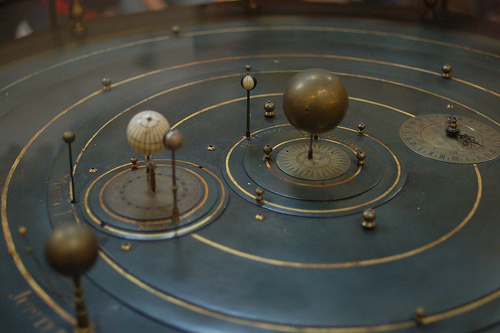


This is a compact but excellent collection of Presocratic thought. The Presocratics contemplated the nature of the cosmos before mathematics and poetry and science and creativity were divided into rigid categories. The beautiful enigma of the cosmos was ineluctably linked to the chaos of elemental changes. In seeking to explain the ineffable, they sought an originating substance, archē.

The vision of the Presocratics is consummate, enrapturing. They drove the transcendent qualities of the natural universe into language. From Anaximander's apeiron to the eternal logos of the 'Riddler'—or even Xenophanes and his astrophysics of clouds—their collective speculations were written sub specie aeternitatis.

"You shall know...the destructive deeds of the shining sun's pure torch and whence they came to be, and you shall learn the wandering deeds of the round-faced moon and its nature, and you shall know also the surrounding heaven, from what it grew and how Necessity led and shackled it to hold the limits of the stars."
Clement, Miscellanies
Profile Image for Readius Maximus.
304 reviews5 followers
February 25, 2024
A short read covering many thinkers. There is a short introductory remarks on the thinker followed by some fragments that are other thinkers representing what they said.

The presocratics spend most of their time trying to determine what is the nature of reality.

Thales - water
Anaximander - boundless
Anaximenes - air/ether
Pythagoras - number
Heraclitus - movement and flux/logos
Parmenides - critiqued the previous ones. He is complex. Basically something can't come from nothing. Things can't change into other things. Greatly changed how people thought and theorized about philosophy.
Anaxagoras - mixture of everything in everything else/nous
Empedocles - 4 natural elements and love and strife as coming together and separating.
Zeno of Elea - close to Parmenides and agreed in different words that there was many.
Democritus - monism - undivided particles in the void
Melissus -rigid unchanging one
Diogenes - rational air
Sophists - very relative and can prove any point even contradictory ones.
Profile Image for Musa.
103 reviews3 followers
May 14, 2021
This collection of Presocratic philosophy covers Heraclitus, the Sophists, the Pythagoreans, the Atomists, and some other influential schools and philosophers and is structured in a chronological order that allows you to understand how certain ideas developed. There's also super helpful introductions at the start of each chapter that carefully explain the testimonies that are laid out in the next few pages.

The issue is that around 70% the book contains fragmented passages that are so confusing out of context that many of them just end up being completely useless. I would have enjoyed reading a version of this book that has explanations for each individual passage (or at least the significant ones), or a version that cuts down on the unnecessary passages and only includes ones that actually make sense.
Profile Image for Amelia and John.
145 reviews13 followers
September 10, 2023
The Presocratic philosophers are a group of thinkers whose works and thoughts preceded Socrates.

This book takes us from the very first philosophers, such as Thales, who thought that everything around us was made up of water, to the Atomists, who thought that everything was made up of indivisible atoms, to the Sophists, who sought the best way to live in the city (though they would charge you for it!), to finally, the Orphic way of life, which believed in an immortal soul which had to break free of a cycle of transmigration from body to body.

Curd offers succinct introductions to the various thinkers, and authors a helpful text which situates these thinkers in the geo-historical contexts as well as summarizes them for those in need of a Presocratic refresher!
Profile Image for Christopher Good.
171 reviews12 followers
January 1, 2026
Six out of ten.

(Read for Dr. Woodcox's class on ancient Greek philosophy)

Curd and McKirahan do their best with the material they have here. I just couldn't get on the same page with the Presocratics on virtually anything. I explained the course to people as follows: "Maybe everything is made of water. Maybe everything is made of fire. Maybe we should worship numbers - and never pee facing the sun." There is important historical context here, and the editing and translating is carefully done. But I'd rather read Plato any day.

Solid recommend for anyone learning about the history of philosophy.
Profile Image for Noah.
208 reviews2 followers
September 29, 2019
Didn't love it, but for what it was, it seemed well done, hence the four stars.

The most interesting things to me (and perhaps what will prove the most useful)
were certain turns of phrase that I found stimulating in a poetic way. Such was,
"since it was not an evil destiny that sent you/forth to travel/this route (for indeed
it is far from the beaten path of humans)".
And, "the meadow of Disaster", and "Mildly-shining flame chanced upon a little earth."
Profile Image for sam.
85 reviews4 followers
April 14, 2021
Excellent approach and summaries of the views of the presocratic philosophers, accompanied by large collections of their surviving fragments. I find that I hold a special warm spot in my heart for Heraclitus, who despite his misanthropic ways, never fails to illicit a smile when reading his declaration to the Ephesians that it would be better to hang themselves than exile the best among them. Comedy gold. The translation of this version is okay, had lots of cross references which was neat.
Profile Image for Jacob MacDavid.
50 reviews
March 4, 2026
This is an excellent introduction to the Presocratics. The introduction to each thinker/movement is helpful and concise. The choice of fragments and testimonia is representative, without being overwhelming. It also contains a wealth of references for further study, if the spirit takes you. Alongside the Very Short Introduction book to the Presocratics, I think this book is a great way for curious people to learn more about this fascinating but obscure era of Western thought.
Profile Image for deafp0.
8 reviews
January 20, 2025
I don't rate this book on the content of what is within, that would be foolish. How could I rate what is possibly the birth of modern philosophical and scientific thought?

I give it a four simply based on my enjoyment. It is a pretty fascinating read, and worth it even if not after academic pursuit-- if just to simply gain a greater understanding of how mythos became logos.
Profile Image for 7crownofvictory7.
5 reviews
November 3, 2025
I found this to be an excellent introduction to the Presocratics. Some thinkers included in the book are definitely more interesting than others, but the collection does its job.

Highlights are the Milesians, Heraclitus (!!), Parmenides, Zeno and Anaxagoras. The inclusion of the Derveni Papyrus also went over well.
Profile Image for Sam.
346 reviews11 followers
October 16, 2020
Heraclitus absolutely rules. also wild that Parmenides was so influential that philosophers had to argue with or against him for centuries after his death and we only have a few pages left of his work
63 reviews
December 31, 2023
interesting how everyone who came before Socrates was clumped together. It was easy to understand their philosophies, but hard to tell apart except for Heraclitus, and this is speaking with personal experience from a Quote Identification exam.
Profile Image for Braden.
36 reviews
October 1, 2024
Nice little volume of the Presocratic Philosophers. Good translations and notes. I do wish there was more biographical and encyclopedic information in the introductions to each philosopher, however. It would have been a nice addition.
Displaying 1 - 30 of 69 reviews

Can't find what you're looking for?

Get help and learn more about the design.