Series Summary The new What Every Catholic Should Know series is intended for the average faithful Catholic who wants to know more about Catholic faith and culture. The authors in this series take a panoramic approach to the topic of each book aimed at a non-specialist but enthusiastic readership. Forthcoming titles planned for this series literature, salvation, mercy, history, art, music and philosophy. Book Summary Learn about everything from the Greek epics to Shakespeare's plays to Tolkien's famous trilogy. Visit Dante's Italy, Cervantes's Spain, Dostoevsky's Russia, and Jane Austen's England along the way. Part of the What Every Catholic Should Know series, this book is an insightful introduction to the world's rich depository of stories. It directs the reader back to The Story—the Story of Salvation History—because this is what great literature does. Great literature directs us back to the Storyteller, God himself. Allow Joseph Pearce to be your joyful guide on this brief pilgrimage through the literature every Catholic should know.
Librarian Note: There is more than one author with this name on GR
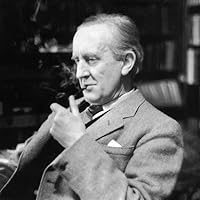
Joseph Pearce (born 1961) is an English-born writer, and as of 2004 Writer in Residence and Professor of Literature at Ave Maria University in Ave Maria, Florida; previously he had a comparable position, from 2001, at Ave Maria College in Ypsilanti, Michigan. He is known for a number of literary biographies, many of Catholic figures. Formerly aligned with the National Front, a white nationalist political party, he converted to Roman Catholicism in 1989, repudiated his earlier views, and now writes from a Catholic perspective. He is a co-editor of the St. Austin Review and editor-in-chief of Sapientia Press.
I am so grateful for this book and for Joseph Pearce! What a treasure! I am a Catholic homeschooling mother of 7 children designing my own classical literature-based curriculum. Things are going well with the direction I've gotten from others who have paved the way before me (Laura Berquist, Susan Wise Bauer, Sarah Mackenzie, etc) but it seems most of this direction is for elementary and middle school years. My oldest will be in high school in just two years and I am feeling a pull to design the curriculum around classic literature. History will be the spine and the literature, with a special focus on the classics, will be the bones. I was unsure of which classics to include (knowing I can only do a few per year) and I was definitely unsure of what exactly to focus on within each work. Now I have a blueprint. I completely trust Pearce - both his expertise in this subject matter and, more importantly, in his situating the work within the Great Conversation. How it fits within HIStory and its reflection, however oblique as in the case of the pre-Christian era works, of Christ and His Kingdom. I am familiar with nearly all the pieces he discusses, and have read a (precious too) few, but I was never taught how to properly look at them through the prism of Catholicism. Originally I read this on my Kindle, but I felt compelled to highlight, flag, post-it, and scribble all over it so I bought the print copy as well. No regrets - this book is good enough to buy twice :)
This was a great overview of classic and modern classic read and why we should read them. I read many titles mentioned in this book but now I want to read them again with fresh new eyes !
The title is self-explanatory as this book provides a wide range of literature that it is in every Catholic's (or even non-catholic christian's) interest to read and familiarize themselves with not only for the edification of their own soul but also for their efforts to evangelize and transform the world into a more Christ-like image. Stories are powerful and those stories that align with, and ultimately derive from, the fullness of Truth that can be found in God are excellent means by which to introduce a wide variety of people to the truth of the Christian Faith.
Good, brief overview of based books that should be compulsory reading but not sure why every sentence is either a lyrical verse/cheeky slick word choice competition or ‘this is the greatest/best/most influential book…?’ Also why is Goethe Faust or Dostoevsky Notes from the Underground not on the top 100 books
Introduction to literature that every Catholic needs to read. Each chapter is on an author or set of authors. For greater detail on the authors Pearce’s “Literary Giants” is excellent. A good reading list at the end.
Excellent detailed information on excellent works of literature all people should read regardless of their religious beliefs. I am personally not Catholic, but found the work insightful and well researched.
Good book about great books. Interesting insights into authors across space and time, whose works are filled with Catholic themes, even if the authors weren’t Catholic (including some from pre-Christian times). I’m leaving with a long new list of substantial works to read, starting where this book ends: Tolkien.
Years ago I stumbled upon a podcast called “Great Works in Western Literature” by a man named Joseph Pearce, and immediately a became fan of it. Pearce’s love of literature was infectious, especially seeing I was just beginning to read Chesterton for the first time and Pearce happened to be the author of a GKC biography. I was even more fascinated to learn that Pearce had essentially been saved by literature, great books serving as a conduit for grace. Over the years I’ve read numerous of Pearce’s works, including biographies of men like GKC and Solzhenitsyn, histories of the Catholic literary revival in early 20th century England, and his commentary on Narnia: reading this little introduction to the classics was inevitable. As the title indicates, Pearce is writing to Catholics from a Catholic perspective, but the works covered are not themselves all Catholic, or even Christian: he begins with the ancient classics and moves swiftly forward, (very swiftly — this is only 200 pages) to modernity, sharing books that reflect the good, the true, and the beautiful. As an added challenge, he also incorporates some discussion of poetry, particularly the Romantics. As one would expect from a Catholic author, there are works mentioned here that might not make a collection penned by someone else, because they have an especial interest to Catholics. This is the case for Robert Hugh Benson — an Anglican bishop’s son who converted to Catholicism and wrote several novels thereafter, including Lord of the World (an early dystopia) and Come Rack! Come Rope!, a novel about Catholic priests being persecuted under Elizabeth. English literature boxes out of its weight as well, Pearce being a man of London and Suffolk, but he does touch on the French decadents and the like as well as un-missables like Dante. There are some authors who Pearce is especially fond of, like Tolkien and Austen — the latter he ranks among the greatest of greats, in the same company as Shakespeare — and some he doesn’t too much like, but regards as significant to the point that people need to know about their works. He discusses the heterodox theology of Milton, for instance, and admits that C.S. Lewis (another favorite) admired the author of Paradise Lost regardless. Personally, I knew most of these authors and works already, but I always enjoy little visits with old friends, and it was a useful tool (along with Poems Every Catholic Should Know) for prepping for leading a Christian literature class this past Palm Sunday.
Like any of Pearce's works, it is fun to read. Written as a bird's eye view of (primarily) English literature, the book will certainly offer a great reading list for the well-read and novice alike. Pearce emphasizes that this is to be a brief introduction hitting the hot-spots of Catholic or Catholic influenced works. Some inclusions and exclusions, however, are not explained, and particularly egregious is the 19th Century American Literature section, which differs no more than a standard grade-school required reading list. No hidden gems are thrown our way, despite there certainly being some worthy of mention. Further, at the end of the book we are given 100 books every Catholic should aspire to read, and some of the inclusions were either not mentioned in the main body of the text (Walker Percy's novels) or some that were mentioned probably should not have been on the list taking up valuable space (listing all three of Lewis' space trilogy books and denying other novels these spots was arguably not a good call). Further, some works discussed in the body of the text didn't even make the list (especially for the American section - so why even include them?).
When I bought this book, I saw that it was intended for the "average (American, I would add) Catholic". Nonetheless, I found this book very basic indeed, a little more than what I expected. I already knew almost all of the authors, and I had already read at least one book written by the authors I knew. I think this is due to the fact that almost all of the authors mentioned are European, and being myself a European I have studied them in high school. This is maybe the reason why I found the remarks on the works I knew quite superficial, and found comments like "this is possibly the greatest poet of the ... century" "this author can only be compared to ... for his/her greatness" quite useless to understand the true value of an author (and the more so, for the majority of the authors were "the greatest" and "the best", so the "ranking" is not even clear).
The thing that made me like this book (3 stars instead of 2) was the introduction to British Catholic authors from the period of the Catholic Revival. I didn't know some of them and therefore I learned something new.
I recommend this book only to readers that are really unfamiliar with the classics of literature.
I have mixed feeling about this book. First, I have a better understanding on several authors and what they wrote about. I was familiar with quite a few authors and have read The Hobbit. But I had a hard time understanding why this author had considered these authors some that every catholic should know. It felt like the author was almost tying to put his own spin on how he read them ( although I am sure that the facts he discussed about each author was thoroughly researched). I also was sad that I would never read any of these books/authors because of the horror or sadness of their content. In other words to me every book/poem reviewed was depressing and just the bits about each I read would turn my the other way.With that said, I have a better appreciation for those mentioned in this book, but I won’t be reading anything suggested.
I skipped around on this book and I have to be honest here, the writing needs some help. (Run-on sentences and word choice are key factors.) This book makes the effort to show how writer’s throughout history have used (or been influenced by) their Catholic faith in their writings. This is noteworthy due to the fact that oftentimes the modern reader would not pick up on this due to either a lack of education/exposure as well as society’s downplay of these influences. (Hollywood) Unfortunately, this tome will probably be relegated to a theology class or an avid Catholic reader due to the heavy writing style.
Listened to the Audio Version on Formed.org. I stopped for a little bit but the continued in chunks. I especially like his highlighting some authors I had not heard of from the last 2 centuries. There was a great list of 100 literature books every Catholic should read at the back, and I wish I had a hard copy to check of what I've read. Maybe I've read a quarter or a third incidentally, but I also want to read the rest. While this isn't perfect, and sometimes Joseph Pearce is a little glowing of certain authors, it still warrants very much a read for those who want to read deeper the truly time-tested works of all time.
comprehensive assessment of literary periods and the significance therein - seems like Chesterton and Lewis are the premier critics and writers of all of literature, they get more 'according tos' and 'this is what they had to says' than Fox News gives Mitch McConnell - hyperbole abounds, as one could tell from the title itself - in the end, it accomplishes its goal - we know what literature to read and why it is important
Acknowledgment: I listened to this as an audio book rather than reading it. While I enjoyed hearing about the books that the author recommends, and there are several on his list I'd like to read, he has a disappointingly anglocentric perspective. There aren't many authors or books that were a surprise, either. Of those I'd like to read, several were already on my "to read" list. I was hoping to learn of more Catholic authors from the wider world and more who were new and unfamiliar.
Great outline of some of the best Christian literature ever written. A must read for all Christians, not just Catholics. Some of the authors discussed are Homer, Virgil, Sophocles, Dante, Chaucer, Shakespeare, Cervantes, Milton, Dryden, Jane Austen, Emily Bronte, T. S. Eliot, C. S. Lewis, J.R.R. Tolkien and many more.
A very interesting book! Pearce provides a wide review of authors and titles that he considers useful -even required- reading for catholics. Sometimes his style when denouncing modernity can be somewhat grating, but the suggestions and literary comentaries are insightful and on target. The book ends with a reading list of 100 recommended works that gave me a lot of ideas.
Best overview I’ve read of great literature. Has a list at the end of 100 books every Catholic should read. I want to start off on reading it but I’m not sure if I’ll be able to. I might print off the list and cross them off as I go. Loved Pearces notes and talking about how they relate to the Church.
Although it leans heavily on English literature, it provides an in depth review of many literary classics. It also provides a reading list for anyone wanting to wonderful of all ages.
Não se trata propriamente de literatura católica, mas obras que de algum modo refletem questões que podem ser abordadas sob o ponto de vista da doutrina da Igreja. Pearce faz um passagem rápida pelas principais obras e autores que um católico deveria ler para entender a própria fé.
A bright and important guide on the minds and works in Christian and Catholic writing, philosophy and theology. I was glad to find this and even happier for the illumination for my journey in the faith.
“The modern man has not only forgotten the name of his destination, he has even forgotten that he has a destination. He does not know that he is a traveler. He is unaware that he is on a journey or that he has anywhere to go. He is not homo viator, but homo superbus, proud-man, a pathetic creature trapped within the confines of his own self-constructed “self,” a prisoner of his own pride and prejudice.”