

What do you think?

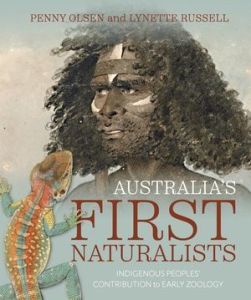
Australia's First Naturalists: Indigenous Peoples' Contribution to early Zoology
Would Blaxland, Wentworth and Lawson have ever crossed the Blue Mountains without the help of the local Aboriginal people? The invaluable role of local guides in this event is rarely recognised.
As silent partners, Aboriginal Australians gave Europeans their first views of iconic animals, such as the Koala and Superb Lyrebird, and helped to unravel the mystery of the egg-laying mammals: the Echidna and Platypus. Well into the twentieth century, Indigenous people were routinely engaged by collectors, illustrators and others with an interest in Australia's animals. Yet this participation, if admitted at all, was generally barely acknowledged. However, when documented, it was clearly significant.
Penny Olsen and Lynette Russell have gathered together Aboriginal peoples' contributions to demonstrate the crucial role they played in early Australian zoology. The writings of the early European naturalists clearly describe the valuable knowledge of the Indigenous people of the habits of Australia's bizarre (to a European) fauna.
'Australia's First Naturalists' is invaluable for those wanting to learn more about our original inhabitants' contribution to the collection, recognition and classification of Australia's unique fauna. It heightens our appreciation of the previously unrecognised complex knowledge of Indigenous societies.
As silent partners, Aboriginal Australians gave Europeans their first views of iconic animals, such as the Koala and Superb Lyrebird, and helped to unravel the mystery of the egg-laying mammals: the Echidna and Platypus. Well into the twentieth century, Indigenous people were routinely engaged by collectors, illustrators and others with an interest in Australia's animals. Yet this participation, if admitted at all, was generally barely acknowledged. However, when documented, it was clearly significant.
Penny Olsen and Lynette Russell have gathered together Aboriginal peoples' contributions to demonstrate the crucial role they played in early Australian zoology. The writings of the early European naturalists clearly describe the valuable knowledge of the Indigenous people of the habits of Australia's bizarre (to a European) fauna.
'Australia's First Naturalists' is invaluable for those wanting to learn more about our original inhabitants' contribution to the collection, recognition and classification of Australia's unique fauna. It heightens our appreciation of the previously unrecognised complex knowledge of Indigenous societies.
229 pages, Hardcover
First published May 1, 2019
Ratings & Reviews
Friends & Following
Create a free account to discover what your friends think of this book!
Community Reviews
Displaying 1 - 12 of 12 reviews

June 6, 2019
Despite the well-documented legacies of colonial naturalists, in recent years there has finally been increased and well-deserved recognition of the role of Australia’s Indigenous people in collecting, naming, cataloguing and sharing their understanding of this country’s native fauna. While history generally records ‘famous scientists’ from other countries as being responsible for identifying species, often naming them after themselves, it has become obvious that not only did this country’s first people have intricate knowledge of native fauna and its habitats and habits, but they provided an invaluable contribution to the development of western civilisation’s study of zoology. Aboriginal people knew Australia’s animals intimately for tens of thousands of years, knowledge that was passed down through the generations through song, dance, paintings and first-hand experience.
Australia’s First Naturalists (National Library of Australia 2019), by Penny Olsen and Lynette Russell, is a well-researched and beautifully presented book that would look equally at home on a coffee table or in a scientific library, and would make a special gift for anyone interested in the history of Australian zoology and the extensive contribution of Indigenous Australians in shaping this knowledge. As author Bruce Pascoe describes the extensive agricultural practices of Indigenous people in his book Dark Emu, this book turns on its head the idea that Australian fauna was only ‘discovered’ (or catalogued) since the arrival of white people to this country, but instead describes not only the rich history of zoological knowledge before that time, but also the important role played by Aboriginal people in creating the vast store of ‘officially recorded’ knowledge since the late 1700’s, through the collection and collation of species, and through sharing their knowledge (with the colonisers) of animals’ habitats, diet, reproduction and unique characteristics. It also explains the close connection not only between Indigenous people and country, but also their spiritual ties with native animals.
The book is divided into five chapters. The first depicts Indigenous knowledge before the arrival of colonial naturalists; chapters two, three and four demonstrate the assistance or partnerships between the newcomers and Indigenous people as they embarked on their search for details about this ‘new, undiscovered world’, and these sections also highlight noteworthy individuals and particular expeditions. The last chapter discusses the modern impact and role of Indigenous people as skilled and invested custodians of the land, making use of their age-old knowledge of flora, fauna, the use of fire, and the seasons and weather to develop sustainable contemporary wildlife procedures and guidelines.
Printed on thick, glossy paper, the book contains reproductions of early drawings and paintings, and later, photographs, on almost every page, and includes an extensive index and notes section. And while the writing is precise and scientific, providing essential research notes, the text is written in an easy-to-read, informative and entertaining style, which makes it much more than a scientific resource. It is also the story of Australia’s first naturalists provided through fascinating anecdotal evidence.
The two saddest things – or the information that shocked me the most – while reading this book was firstly the sheer, momentous number of animals that were killed in the name of science (and which, of course, subsequently led to the extinction of so many), and secondly, the absolute lack of recognition for so many of the often unnamed Aboriginal people who did at least the same tasks of the colonialists, and frequently did the lion’s share of the work, but without the recognition in official records or documentation. At least this book goes some way to redressing that imbalance.
Australia’s First Naturalists (National Library of Australia 2019), by Penny Olsen and Lynette Russell, is a well-researched and beautifully presented book that would look equally at home on a coffee table or in a scientific library, and would make a special gift for anyone interested in the history of Australian zoology and the extensive contribution of Indigenous Australians in shaping this knowledge. As author Bruce Pascoe describes the extensive agricultural practices of Indigenous people in his book Dark Emu, this book turns on its head the idea that Australian fauna was only ‘discovered’ (or catalogued) since the arrival of white people to this country, but instead describes not only the rich history of zoological knowledge before that time, but also the important role played by Aboriginal people in creating the vast store of ‘officially recorded’ knowledge since the late 1700’s, through the collection and collation of species, and through sharing their knowledge (with the colonisers) of animals’ habitats, diet, reproduction and unique characteristics. It also explains the close connection not only between Indigenous people and country, but also their spiritual ties with native animals.
The book is divided into five chapters. The first depicts Indigenous knowledge before the arrival of colonial naturalists; chapters two, three and four demonstrate the assistance or partnerships between the newcomers and Indigenous people as they embarked on their search for details about this ‘new, undiscovered world’, and these sections also highlight noteworthy individuals and particular expeditions. The last chapter discusses the modern impact and role of Indigenous people as skilled and invested custodians of the land, making use of their age-old knowledge of flora, fauna, the use of fire, and the seasons and weather to develop sustainable contemporary wildlife procedures and guidelines.
Printed on thick, glossy paper, the book contains reproductions of early drawings and paintings, and later, photographs, on almost every page, and includes an extensive index and notes section. And while the writing is precise and scientific, providing essential research notes, the text is written in an easy-to-read, informative and entertaining style, which makes it much more than a scientific resource. It is also the story of Australia’s first naturalists provided through fascinating anecdotal evidence.
The two saddest things – or the information that shocked me the most – while reading this book was firstly the sheer, momentous number of animals that were killed in the name of science (and which, of course, subsequently led to the extinction of so many), and secondly, the absolute lack of recognition for so many of the often unnamed Aboriginal people who did at least the same tasks of the colonialists, and frequently did the lion’s share of the work, but without the recognition in official records or documentation. At least this book goes some way to redressing that imbalance.

November 24, 2019
‘Indigenous Peoples’ Contribution to Early Zoology.’
This beautifully presented book contains five chapters:
Chapter 1 Pre-European: Australia’s First Naturalists
Chapter 2 Naturalists: 1788-1837
Chapter 3 Naturalists: 1838-1887
Chapter 4 Naturalists:1888-1939
Chapter 5 Epilogue: Contemporary Aboriginal and Torres Strait Islander Land and Sea Managers
This book is about the contributions by Indigenous people to the advancement of Western zoology, about the role played by Indigenous Australians in providing Europeans with knowledge of Australian fauna. This role has frequently been ignored or downplayed: most of us are aware of Joseph Banks and John Gould, and of Blaxland, Lawson and Wentworth’ s crossing of the Blue Mountains but I suspect that few of us have thought about the role that local Indigenous guides played.
‘The Aborigines were a constant presence in the scientific reconnaissance of the 19th-century science. They were after all, the original inhabitants of the territory into which the naturalists plunged.’ (Ann Moyal, 1986)
I am not a zoologist, and while I like the ordered structure of this branch of biology, I’m more interested in how the Indigenous people would have described the fauna. It’s nice that we’ve gathered information which fits neatly within our neatly ordered Western structures, but I can’t help thinking that something is missing. The Indigenous people lived on the Australian continent for thousands of years before European colonisation. How did they obtain their knowledge? How did they share information?
I enjoyed reading this book, and I am glad that Ms Olsen and Ms Russell have written it. I am pleased to see some recognition of the role Indigenous people played in our knowledge of Australian fauna. But I am left wishing that we could consider Indigenous information rather than their role in support of European discovery and classification.
‘By the twentieth century, with the assistance of Indigenous people, nearly all Australia’s vertebrates had been discovered and described by scientists, while many Aboriginal people had been forced from or had left their country.’
Jennifer Cameron-Smith
This beautifully presented book contains five chapters:
Chapter 1 Pre-European: Australia’s First Naturalists
Chapter 2 Naturalists: 1788-1837
Chapter 3 Naturalists: 1838-1887
Chapter 4 Naturalists:1888-1939
Chapter 5 Epilogue: Contemporary Aboriginal and Torres Strait Islander Land and Sea Managers
This book is about the contributions by Indigenous people to the advancement of Western zoology, about the role played by Indigenous Australians in providing Europeans with knowledge of Australian fauna. This role has frequently been ignored or downplayed: most of us are aware of Joseph Banks and John Gould, and of Blaxland, Lawson and Wentworth’ s crossing of the Blue Mountains but I suspect that few of us have thought about the role that local Indigenous guides played.
‘The Aborigines were a constant presence in the scientific reconnaissance of the 19th-century science. They were after all, the original inhabitants of the territory into which the naturalists plunged.’ (Ann Moyal, 1986)
I am not a zoologist, and while I like the ordered structure of this branch of biology, I’m more interested in how the Indigenous people would have described the fauna. It’s nice that we’ve gathered information which fits neatly within our neatly ordered Western structures, but I can’t help thinking that something is missing. The Indigenous people lived on the Australian continent for thousands of years before European colonisation. How did they obtain their knowledge? How did they share information?
I enjoyed reading this book, and I am glad that Ms Olsen and Ms Russell have written it. I am pleased to see some recognition of the role Indigenous people played in our knowledge of Australian fauna. But I am left wishing that we could consider Indigenous information rather than their role in support of European discovery and classification.
‘By the twentieth century, with the assistance of Indigenous people, nearly all Australia’s vertebrates had been discovered and described by scientists, while many Aboriginal people had been forced from or had left their country.’
Jennifer Cameron-Smith

May 25, 2019
The ornithologist Penny Olsen is the author of beautiful books about science and nature, and I've reviewed two of them:
Collecting Ladies, Ferdinand Von Mueller and Women Botanical Artists
A Botanical Life: Robert David Fitzgerald
 Now she has teamed up with anthropological historian Lynette Russell from the Monash University Indigenous Studies Centre to explore the contribution of Australia's Indigenous people to the body of knowledge we call zoology. Most Australians are familiar with the legacy of 19th century naturalists Joseph Banks and John Gould (and some of us who read
The Birdman's Wife
also know about the contribution of Elizabeth Gould too). But the silent and mostly unacknowledged partners in this enterprise drew on a body of knowledge that was sustained over millennia.
Now she has teamed up with anthropological historian Lynette Russell from the Monash University Indigenous Studies Centre to explore the contribution of Australia's Indigenous people to the body of knowledge we call zoology. Most Australians are familiar with the legacy of 19th century naturalists Joseph Banks and John Gould (and some of us who read
The Birdman's Wife
also know about the contribution of Elizabeth Gould too). But the silent and mostly unacknowledged partners in this enterprise drew on a body of knowledge that was sustained over millennia.
Through successive generations, using rock art, storytelling, dance and song, Australia's First Peoples passed on their extensive knowledge of animal behaviour, habitat, breeding habits and anatomical structures of fauna from land, sea and air, along with the seasonal appearance and uses of flora. For example,
Even a quick flick through the copious illustrations in this book makes it obvious that colonial explorers, collectors and naturalists were documenting the knowledge and practices of Indigenous Australians in various ways. On page 14, for instance, there is a reproduction of an 1813 engraving called Smoking Out the Opossum by John Heaviside Clark and M. Dubourg (you can see a print of it here); and page 24 shows Nicholas Chevalier's 1862 drawing 'Aboriginal family hunting malleefowl near Echuca, Victoria (which you can see here). Early European explorers and settlers documented, for example, the annual feast of Bogong Moths in diaries and journals, and the ethnographers Walter Baldwin Spencer and Francis Gillen made extensive records of the role of insects in the diet and cosmology of Central Australian Aboriginal groups. In Chapter One Olsen and Russell make the crucial point that the harvesting of insects is often ephemeral, leaving no tangible remains, so while there is evidence in cave deposits of charred remains and fragments of prey from small mammals, birds and lizards, if it had not been for these contemporaneous European observations there would be no archaeological evidence of insect use.
Apart from the use of fire, other hunting methods included pursuit with Dingoes, spearing, ambush, encirclement, stockades, pitfall traps and battues, where beaters drive game towards the hunters. The successful hunt was not only used for food, but also for making tools, utensils, clothing, waterbags and decorations - which obviously also involved knowledge about skins, sinews, bones and other body parts. The same was obviously also true of flora and fauna gathered by the women, who were taught from one generation to another, the sophisticated knowledge of seasonal produce across vast geographical areas and habitats. And the eel 'farms' of the Gunditjmara People of the Western District in Victoria, relied on knowledge of the predictable behaviour of the eels in order to engineer the waterways and wetlands to ensure a good catch. All of these activities required knowledge that was in the era of early zoology called 'natural history'.
There are some claimed elements of Indigenous knowledge that are contested. Rock art in Northern Australian that depicts extinct megafauna is not necessarily accepted as evidence, because dating shows that the paintings were done after the megafauna became extinct. However, this does not preclude the suggestion that it is a remembered image handed down through the generations.
To read the rest of my review please visit https://anzlitlovers.com/2019/05/25/a...
Collecting Ladies, Ferdinand Von Mueller and Women Botanical Artists
A Botanical Life: Robert David Fitzgerald
Now she has teamed up with anthropological historian Lynette Russell from the Monash University Indigenous Studies Centre to explore the contribution of Australia's Indigenous people to the body of knowledge we call zoology. Most Australians are familiar with the legacy of 19th century naturalists Joseph Banks and John Gould (and some of us who read
The Birdman's Wife
also know about the contribution of Elizabeth Gould too). But the silent and mostly unacknowledged partners in this enterprise drew on a body of knowledge that was sustained over millennia.Through successive generations, using rock art, storytelling, dance and song, Australia's First Peoples passed on their extensive knowledge of animal behaviour, habitat, breeding habits and anatomical structures of fauna from land, sea and air, along with the seasonal appearance and uses of flora. For example,
Among the Yanyuwa people of the Gulf of Carpentaria, to become a dugong hunter an 'apprenticeship' must be served, during which an understanding of the animal's behaviour, habitat and anatomy is gained. To become a maranja, the term given to a skilled hunter, the apprentice must show that he has:absorbed all of the teachings associated with the activity and can demonstrate the knowledge in all its areas, from hunting, butchering [which requires anatomical knowledge] and distribution of meat to aso knowing the more esoteric spiritual matters associated with the way of Dugong and sea turtle hunting. (p.11)
Even a quick flick through the copious illustrations in this book makes it obvious that colonial explorers, collectors and naturalists were documenting the knowledge and practices of Indigenous Australians in various ways. On page 14, for instance, there is a reproduction of an 1813 engraving called Smoking Out the Opossum by John Heaviside Clark and M. Dubourg (you can see a print of it here); and page 24 shows Nicholas Chevalier's 1862 drawing 'Aboriginal family hunting malleefowl near Echuca, Victoria (which you can see here). Early European explorers and settlers documented, for example, the annual feast of Bogong Moths in diaries and journals, and the ethnographers Walter Baldwin Spencer and Francis Gillen made extensive records of the role of insects in the diet and cosmology of Central Australian Aboriginal groups. In Chapter One Olsen and Russell make the crucial point that the harvesting of insects is often ephemeral, leaving no tangible remains, so while there is evidence in cave deposits of charred remains and fragments of prey from small mammals, birds and lizards, if it had not been for these contemporaneous European observations there would be no archaeological evidence of insect use.
Apart from the use of fire, other hunting methods included pursuit with Dingoes, spearing, ambush, encirclement, stockades, pitfall traps and battues, where beaters drive game towards the hunters. The successful hunt was not only used for food, but also for making tools, utensils, clothing, waterbags and decorations - which obviously also involved knowledge about skins, sinews, bones and other body parts. The same was obviously also true of flora and fauna gathered by the women, who were taught from one generation to another, the sophisticated knowledge of seasonal produce across vast geographical areas and habitats. And the eel 'farms' of the Gunditjmara People of the Western District in Victoria, relied on knowledge of the predictable behaviour of the eels in order to engineer the waterways and wetlands to ensure a good catch. All of these activities required knowledge that was in the era of early zoology called 'natural history'.
There are some claimed elements of Indigenous knowledge that are contested. Rock art in Northern Australian that depicts extinct megafauna is not necessarily accepted as evidence, because dating shows that the paintings were done after the megafauna became extinct. However, this does not preclude the suggestion that it is a remembered image handed down through the generations.
To read the rest of my review please visit https://anzlitlovers.com/2019/05/25/a...

September 10, 2019
This beautifully presented book by two admired authors is a puzzling work with a somewhat misleading title. I devoured it, eager to learn new evidence around Aboriginal deep knowledge of the fauna of the continent. Such knowledge is self evident from even a cursory reading of ethnographic and frontier reports, as well as from what we know of Aboriginal dreaming and integrated physical and spiritual worldviews. I had hoped from the title 'First Naturalists' that the work would offer insights to previously overlooked worlds of Aboriginal zoological knowledge - in much the same way that Bruce Pascoe's Dark Emu did for Aboriginal land use that had not earlier been widely identified from the sources Pascoe presented. Yet absolutely no such knowledge came to hand. The authors admitted that their evidence was constrained to reports written by white naturalists aided by Aboriginal people.
Yet we never got to see beyond the surface of these reports to encounter depictions or explanations of detailed Aboriginal zoological understanding. Rather, we have a long litany of which white person went where, how many specimens they bagged, and just how prolific Aboriginal people were in assisting them. Far more time is spent on depicting ways that Aboriginal people adapted to white lifeways or rejected them, including trips to England, than is spent on exploring Aboriginal natural knowledge. Most if not all of these accounts are well known and long published, and I effectively gained no new knowledge from the work at all.
Certainly, Aboriginal people were described in in the cited accounts as being capable of finely distinguishing between native species, and highly adept at locating them. But hunting skills do not equate to zoology. Hunting skills may provide evidence of knowledge around animal behaviour - but it is the knowledge, not the capacity to capture that is the claim of the title and which was of interest to me.
The book abruptly concludes with an incongruous chapter on modern embodiments of Aboriginal environmental knowledge. Here we have statements of the sorts of well known current Aboriginal knowing that I'd hoped to encounter similar lar instances of with regard to earlier Aboriginal peoples, in the rest of the book. Which only makes the remainder of the book more frustrating
Yet we never got to see beyond the surface of these reports to encounter depictions or explanations of detailed Aboriginal zoological understanding. Rather, we have a long litany of which white person went where, how many specimens they bagged, and just how prolific Aboriginal people were in assisting them. Far more time is spent on depicting ways that Aboriginal people adapted to white lifeways or rejected them, including trips to England, than is spent on exploring Aboriginal natural knowledge. Most if not all of these accounts are well known and long published, and I effectively gained no new knowledge from the work at all.
Certainly, Aboriginal people were described in in the cited accounts as being capable of finely distinguishing between native species, and highly adept at locating them. But hunting skills do not equate to zoology. Hunting skills may provide evidence of knowledge around animal behaviour - but it is the knowledge, not the capacity to capture that is the claim of the title and which was of interest to me.
The book abruptly concludes with an incongruous chapter on modern embodiments of Aboriginal environmental knowledge. Here we have statements of the sorts of well known current Aboriginal knowing that I'd hoped to encounter similar lar instances of with regard to earlier Aboriginal peoples, in the rest of the book. Which only makes the remainder of the book more frustrating

December 19, 2019
This is another beautiful and informative book by Penny Olsen compiled from sources gathered at the National Library of Australia.
Much of the information on various Australian flora and fauna collecting by Indigenous people, driven by Europeans interest, was new to me. I hope to look into it more in future and maybe return to this book and the copious notes at the back of the book for guidance.
Much of the information on various Australian flora and fauna collecting by Indigenous people, driven by Europeans interest, was new to me. I hope to look into it more in future and maybe return to this book and the copious notes at the back of the book for guidance.
October 8, 2019
The title, cover design and content don't quite fit together into a coherent whole. Given Aboriginal people have lived in Australia for 60,000 years, they obviously understand the natural environment, but this book is more about how they collected specimens for Europeans. In some cases, they collected so many specimens of a particular species, they must have known it was disturbing natural ecosystems and not "caring for country", but probably had little choice to survive on European terms. The cover is also odd, with an image by Augustus Earle of an Aboriginal man painted for a corroboree. The many illustrations are mostly not credited where they are used in the text, but only at the very end with the endnotes for the text. The sources and dates of the images would have been useful in interpretation.
Overall, it promises more than it delivers.
I found the story of plant collector Caley and the Aboriginal guide Moowattin who survived travels to England intriguing as not previously aware of it.
Overall, it promises more than it delivers.
I found the story of plant collector Caley and the Aboriginal guide Moowattin who survived travels to England intriguing as not previously aware of it.

February 23, 2025
Despite not including much specific information about the depth of Aboriginal knowledge of natural history over generations, Penny Olsen and Lynette Russell still present a readable compilation detailing the involvement of the Indigenous people of Australia when assisting colonial explorers/collectors.
Although I was previously aware of many of the noted expeditions, this book does highlight the overall importance of the hired local guides (and other associates) who helped identify and track the desired specimens while safely navigating country and avoiding conflict. Correct acknowledgement is given where names were recorded, but the book relies on records from those who were not overly studious about such matters, and therefore not all who were involved were accurately recorded.
A very attractive volume with a neat page layout featuring a good amount of photos, painting and drawings, Australia’s First Naturalists offers an interesting insight into the skilled contributions and guidance given by Indigenous Australians after European settlement.
Although I was previously aware of many of the noted expeditions, this book does highlight the overall importance of the hired local guides (and other associates) who helped identify and track the desired specimens while safely navigating country and avoiding conflict. Correct acknowledgement is given where names were recorded, but the book relies on records from those who were not overly studious about such matters, and therefore not all who were involved were accurately recorded.
A very attractive volume with a neat page layout featuring a good amount of photos, painting and drawings, Australia’s First Naturalists offers an interesting insight into the skilled contributions and guidance given by Indigenous Australians after European settlement.
July 18, 2026
I picked up this book with false impressions of what it would be about.
I expected from the back cover spiel a description of the development of traditional ecological knowledge as practised by indigenous Australians.
Instead I got a collection of potted biographies of European naturalists who “paid” indigenous people to collect fauna specimens for them to preserve and sell to wealthy patrons and collectors.
These men (virtually all are male predictably) seemed to take very little interest in the knowledge that their workers possessed, regarding them as little more than useful children in most cases. Late in in the book there is some brief discussion about this subject and the mass extinctions and desolation caused by colonisation and the the ignorance of Europeans about the lands they were over running but not a lot about what existed beforehand or the intricate and possible now lost for ever nature of the knowledge possessed by people who regarded themselves as an integral part of what we now call the ecosystems they lived in and had to some extent created.
I expected from the back cover spiel a description of the development of traditional ecological knowledge as practised by indigenous Australians.
Instead I got a collection of potted biographies of European naturalists who “paid” indigenous people to collect fauna specimens for them to preserve and sell to wealthy patrons and collectors.
These men (virtually all are male predictably) seemed to take very little interest in the knowledge that their workers possessed, regarding them as little more than useful children in most cases. Late in in the book there is some brief discussion about this subject and the mass extinctions and desolation caused by colonisation and the the ignorance of Europeans about the lands they were over running but not a lot about what existed beforehand or the intricate and possible now lost for ever nature of the knowledge possessed by people who regarded themselves as an integral part of what we now call the ecosystems they lived in and had to some extent created.

May 13, 2020
This is a serious look at the previously unacknowledged role played by local Indigenous people during European scientific expeditions in Australia. However, although the European men were happy to get their specimens from Aborigines, they ignored their deep knowledge of the animals behaviour and place in the overall ecology.

March 22, 2024
This was an excellent, thorough, and detailed look at how Aboriginals have assisted with zoology since the colonists first arrived in Australia. So good to learn (along with my two younger boys) the true contributions they had - despite the truth often being "lost" or hidden. We enjoyed learning more about the process of capturing and categorizing so many flora and fauna during this time period.
Read
August 5, 2019My review of this book will be published in an upcoming edition of the journal ABORIGINAL HISTORY
Displaying 1 - 12 of 12 reviews