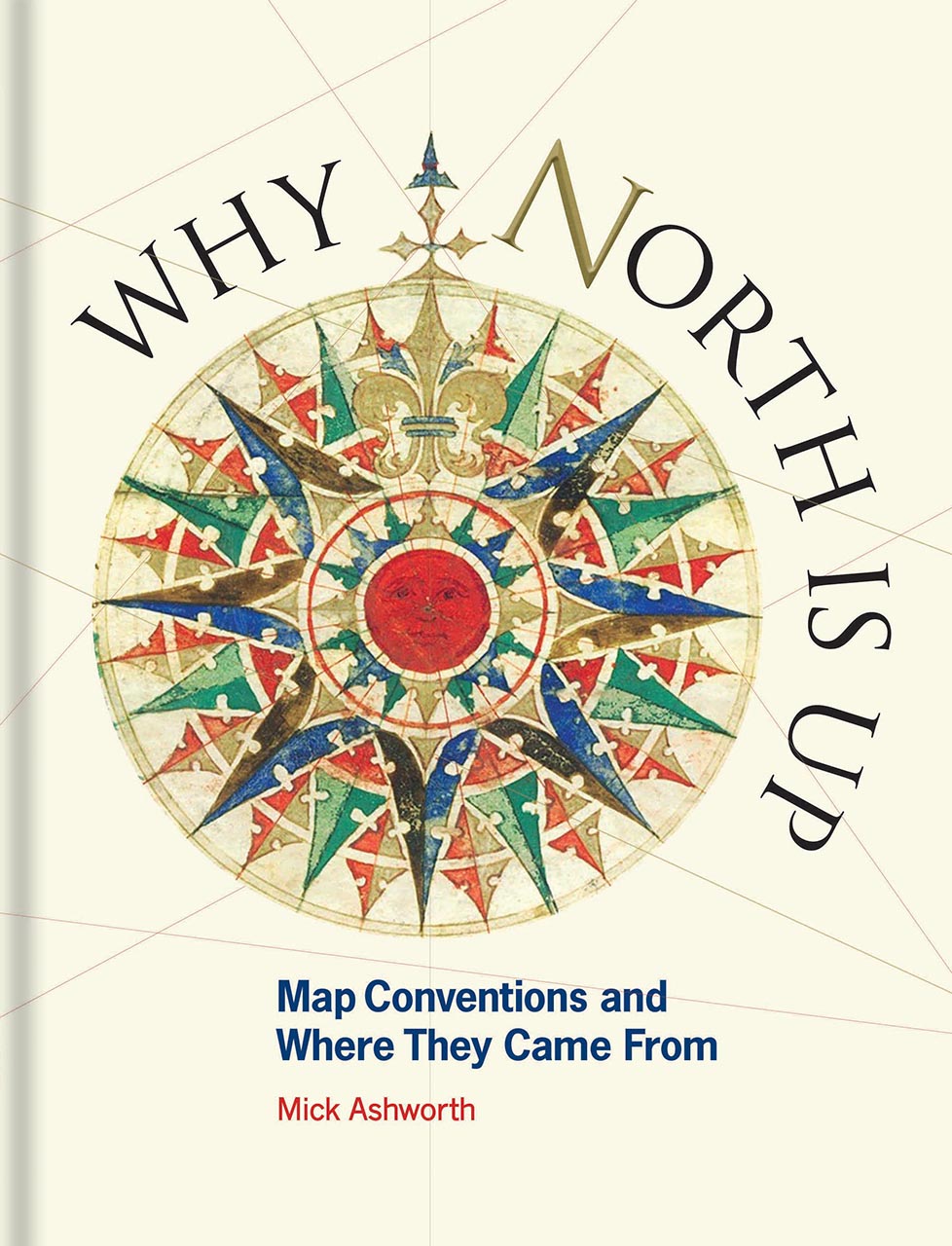
Many people have a love of maps. But what lies behind the process of map-making? How have cartographers through the centuries developed their craft and established a language of maps which helps them to better represent our world and help users to understand it?
This book tells the story of how widely accepted mapping conventions originated and evolved—from map orientation, projections, typography, and scale, to the use of color, symbols, ways of representing relief, and the treatment of boundaries and place names. It charts the fascinating story of how conventions have changed in response to new technologies and ever-changing mapping requirements, how symbols can be a matter of life or death, why universal acceptance of conventions can be difficult to achieve, and how new mapping conventions are developing to meet the needs of modern cartography. Why North is Up offers an accessible and enlightening guide to the sometimes hidden techniques of map-making through the centuries.
It is difficult to say too much that is new in a cartography book, and this one duly fails that test. Although it does what it says on the tin (going behind the process of map-making), I found it a little disappointing. The chapters are all fairly short, breaking down the content into 'themes'. As always with Bodleian Press books the illustrations are well reproduced.
I enjoyed this more than I expected. At first it just felt like a coffee table book, and to be fair its a lot of pretty map pics and some largish print writing. But as the chapters went on they became about more detailed aspects of mapping, not just what a red line means or talking about contours. I'm so used to working with land maps, so it was fascinating to learn about the different types and styles, different features, all in easy-to-digest portions. And the pictures are lovely!
Why North is Up is a handsomely illustrated book telling the history of the many conventions that make a map. See my full review at https://inquisitivebiologist.com/2019...