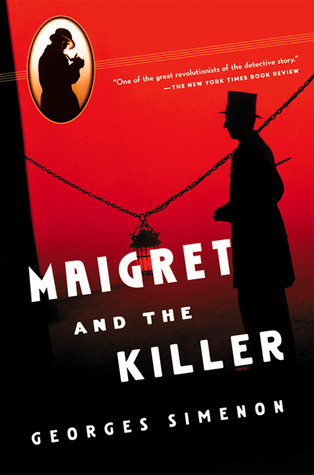
Maigret, accompanying his physician on an emergency call, is drawn into one of his most stubborn cases yet. The victim, a son of a wealthy perfume manufacturer, had been enjoying an odd hobby before his collecting human voices with a tape recorder, often in the rougher districts of Paris. But his wallet and his tape recorder have been left untouched, so the killer's motive is unclear. The absence of clues begins to exasperate Maigret until an anonymous letter reveals that he is dealing with no ordinary criminal.
Maigret is a registered trademark of the Estate of Georges Simenon.
Georges Joseph Christian Simenon (1903 – 1989) was a Belgian writer. A prolific author who published nearly 500 novels and numerous short works, Simenon is best known as the creator of the fictional detective Jules Maigret. Although he never resided in Belgium after 1922, he remained a Belgian citizen throughout his life.
Simenon was one of the most prolific writers of the twentieth century, capable of writing 60 to 80 pages per day. His oeuvre includes nearly 200 novels, over 150 novellas, several autobiographical works, numerous articles, and scores of pulp novels written under more than two dozen pseudonyms. Altogether, about 550 million copies of his works have been printed.
He is best known, however, for his 75 novels and 28 short stories featuring Commissaire Maigret. The first novel in the series, Pietr-le-Letton, appeared in 1931; the last one, Maigret et M. Charles, was published in 1972. The Maigret novels were translated into all major languages and several of them were turned into films and radio plays. Two television series (1960-63 and 1992-93) have been made in Great Britain.
During his "American" period, Simenon reached the height of his creative powers, and several novels of those years were inspired by the context in which they were written (Trois chambres à Manhattan (1946), Maigret à New York (1947), Maigret se fâche (1947)).
Simenon also wrote a large number of "psychological novels", such as La neige était sale (1948) or Le fils (1957), as well as several autobiographical works, in particular Je me souviens (1945), Pedigree (1948), Mémoires intimes (1981).
In 1966, Simenon was given the MWA's highest honor, the Grand Master Award.
In 2005 he was nominated for the title of De Grootste Belg (The Greatest Belgian). In the Flemish version he ended 77th place. In the Walloon version he ended 10th place.
Another wonderful Maigret. This one is a little different from the others I read. It is not a typical murder. I will not give anything away except to give the premise.
A young man, Antoine, is a loner. He has no friends, yet he likes to hang around lots of different people. The reason? He likes to record their conversations. Not just conversations; he's not a snoop, but he wants to record different situations the way other people take photographs.
One night Antoine visits a cafe and surreptitiously records a conversation between men playing cards at a nearby table. He downs his drink and leaves. While walking down the street a man approaches him from behind and stabs him. Not only stabs him but walks off, stops, turns around and stabs the now prostrate Antoine a few more times before leaving again.
Who killed this man and why? Maigret makes some unusual discoveries and arrives at a surprising conclusion.
If you want to find an average Maigret novel, your task is not an easy one, but this one (along with The Yellow Dog) fits the script. None of them is poor, for any standards, but The Dog is too sad and the other has an unconvincing plot.
Maigret #70, nearing the end of the novels. (75 in total). Penguin has been reproducing these in modern translations for nearly 6 years, a true literary enterprise and worthy of this series.
Maigret and the Killer was originally published in 1969. Other new books that year included Papillon by Henri Charriére which if not read at the time people at the time will remember more from the movie released in 1973 with Steve McQueen and Dustin Hoffman. Better know as a film also is Mario Puzo’s great book - The Godfather which inspired the film of the same name just 3 years later.
In context Simenon’s Paris seems rooted in a more gentle past with the Maigret novels being in less violent times. Yet here 50 years ago we find Maigret at firsthand responding to a stabbing on the Streets of the capital. Sadly, one of several similar incidents of an all too familiar crime. The only reason the Chief Inspector gets involved is that the victim is found close to Dr Pardon’s house where he is a regular dinner guest.
The only reason it becomes a case Maigret can follow-up is because the victim is the son of a businessman of great standing in Paris society.
The book here takes a twist on the author’s own rule of thumb. He writes “Almost always, he had often repeated, it was by getting to know the victim that one is led to his murderer”. Well here is the exceptional to that law. Although it starts in the usual way “As always, he [Maigret] regretted not being able to do everything himself.”
It is a story about reflection. Pardon speaks of his own professional frustrations, mirrored in Maigret’s own experience. He seems to have found away around many changes though, perhaps for continuity of a good story mind. Yet his own retirement is alluded to; we see attempts to utilise his free time better and be accepted as a man not his title.
There are also the reflections of the author here. Where the changing distinct segregation of Paris life, from district to arrondissement and the relenting change is evident. Those zinc bars and cafés beloved of Maigret are recaptured by the victim who leaves his own safe neighbourhood to capture life across the City through tape recording conversations. This in part places him in danger, listening in to private conversations, sticking out as not being local and walking unfamiliar streets.
The most telling aspect of the novel is Maigret’s ability to get into the mind of the killer. To second guess his responses and next move. But for Maigret’s experience this could have been an unsolved crime but in allowing it to play out Maigret’s own doubts surface. This personal battle to still be able to cut it and follow his intuition is what makes him the person he is at work. When it leaves him for more than a brief time of waiting filled with anxiety we fear it will be time for him to retire. 5 more books. But 74 if you are not already across this series. Napkins out and feast away.
An engaging crime fiction novel where 21 year old Antoine Braille is killed. He had been stabbed seven times. Detective Maigret investigates and learns that Antoine comes from a wealthy family and that Antoine for the last year has been recording conversations with a tape recorder in working class drinking establishments. The tape recordings help Maigret with an investigation into a number of thefts of expensive art works over the last two years. Have Antoine’s recordings lead to his death?
This book was first published in 1969 and is the 70th novel in the Maigret series.
M. Simenon wrote as well, if not better, in 1969 than he did in the 1930-40’s. I was so afraid that his later writing would not hold up against the old stuff! It was a wonderful story. Maigret has so much empathy and genuine concern for others.
This is the first one I’ve read where Madame Maigret plays a supporting role. Usually she is only mentioned in passing. I’m really hooked on this series, if only the library would reopen so I can read the rest. I’m going broke ordering from ThriftBooks! Where is my stimulus check? LOL 😷
عمیقا علاقهمندم که چند روزی را با مگره سپری کنم. سیمنون عجیب نویسندهای هست، هیچ شخصیتی در خلا رها نیست، حتی اگر شده باشد به اندازه یک خط این داستان هم مطابق مابقی داستانهای مگره، به بررسی دقیق روانی-اجتماعی یک فرد یا گروه میپردازد، و جه جالب که اینجا موضوع خود جنایتکار هست. پایان این داستان هم یک غافلگیری جذاب بود
Chissa' se esistono davvero dei poliziotti dalle qualita' morali di Maigret. Chissa' se esistono delle persone comuni capaci di vedere oltre il crimine e chi lo commette, oltre l'atto materiale. "Pure dopo quarant'anni di mestiere, un uomo cha ha ucciso mi fa sempre impressione..." "Perche'?" "Perche' ha oltrepassato il limite...". In questo scambio di parole con la signora Maigret, il commissario mostra una volta di piu' questa capacita' di astrazione. La capacita' di non giudicare e condannare e allo stesso tempo la consapevolezza che tutti noi, per le piu' svariate cause, in un qualsiasi momento della vita potremmo essere messi nelle condizioni di fare del male.
Il titolo dato a questa inchiesta di Maigret è azzeccato, e lo si capirà chiaramente nelle ultime pagine. Non “l’assassino” di rue Popincourt, bensì “l’omicida”. La prima parola ha una valenza assolutamente negativa, la seconda è più impersonale, si limita all’oggettività senza condanna morale esplicita. Omicida letteralmente è colui che ha ucciso una persona, rendendosi colpevole di omicidio. Questo è quanto è accaduto: è stato ucciso con un coltello, in strada, di notte, un giovane rampollo di una famiglia parigina molto ricca, un ragazzo di venti anni che aveva solo un “vizio”, andare in giro a registrare le voci della gente, nei ristoranti, nelle strade, nei caffè. Un innocuo passatempo, che per lui era importante, registrava cassette e cassette di voci che poi catalogava minuziosamente. Niente di più semplice che focalizzare le indagini sulla banda di ladri di ville che sta impazzando da qualche tempo a Parigi, le cui voci sono state casualmente registrate dal giovane Batille. Il commissario segue nelle indagini il modo solito di agire, concentrandosi questa volta sull’omicida. Il suo pensiero è fisso verso di lui, perché “chi uccide, è come se si tagliasse fuori dalla comunità degli esseri umani. In un attimo cessa di essere un individuo come gli altri”. E lui, lo sappiamo, ha una particolare comprensione per chi sta al di là dei limiti, per chi è emarginato o si è autoemarginato dalla società. Così riuscirà ancora una volta a risolvere il caso, anche se il finale non è quello dei gialli classici, lascia amarezza per l’inefficacia della giustizia umana e la sua impotenza di fronte a situazioni umane davvero peculiari.
Even toward the end of his long literary career, Georges Simenon did not miss a beat. His Superintendent Maigret of 1969 was as fascinating as the Maigret of 38 years earlier.
A young scion of a perfume millionaire is found murdered outside a sleazy bar after tape recording a conversation setting up a burglary. Is there a connection? Perhaps. Maigret investigates all possible connections, and even prevents the burglary of a millionaire's villa based on the tape-recorded snippets. How the murder case is solved, however, is totally unforeseen -- except that somewhere, in the back of his mind, Maigret allowed for the improbable to happen.
Wow, the 70th Maigret. In this story of murder we observe the circumspect Maigret and his established manner of processing information and coming to his god-like conclusions as those he works with are confident he will find the murderer of a young man. He is so confident all will come to proper conclusion he and his wife leave town for a weekend break. Due to the stellar police investigation other crimes are uncovered. Don't wish to spoil it for others. I will say the book has a distinctly unique conclusion. These thin little Penguin paperbacks are easy to carry from the library, another plus.
Wow. That's what I said when I finished this book. Just, wow.
So many delightful touches. One of the best scenes is when Maigret and his wife go away for the weekend. What? Yes. Somehow those scenes, somewhat removed from the crime and the mystery, make for one of the sweetest parts of the book.
Maigret's attitude, compassion, kindness, confusion -- he's a fantastic character.
This is a very enjoyable, very light, very moving, and very French book.
And now I am excited because there are so many more Georges Simenon books to read.
Probably my least favorite Maigret among the ten or so I've read so far. With the shocking murder of an eccentric young man from a prominent family, a troubled sister, and a cast of high-end burglars who may or may not have a connection to the crime, the story is ripe with possibilities, but Simenon doesn't pursue any of them. There is a mild bit of cat-and-mouse with the killer, but ultimately it's just a waiting game until he turns himself in. Rather than suspense, or drama, or even mystery, the book appears to be more about the unaccountable urge to kill, but even that gets only the barest treatment. There is enough here to keep the Maigret completist interested, but less dedicated readers may want to skip it.
This entire review has been hidden because of spoilers.
Superb again, a great case and story following a killer with seemingly no motive unless the perpetrator is involved with another case. More psychological this one but a great and fun read.
A crime has been committed, suspects are rounded up. But Maigret, the detective in charge, does not believe any of those that have been caught are the murderers. Its a psychological thriller, with a heart. Its about normal people doing abnormal things-- including murder. Its about mental illness and how a person can tell that they are doing something wrong--thus recognize the difference between good and evil, and yet are incapable of stopping themselves. Its about grey, not black and white. Maigret's experience leads him to the murderer, and the final result, breaks his heart. Its a fast and entertaining read. It feels as if you are being told a story by those involved.
I can't get used to how relatively short the Maigret books are -- 160-ish pages tops. But Simenon can do a lot in a relatively small number of pages. In this entry to the long-running series, a man is stabbed -- 7 times -- on a dark rainy Paris street. He's the son of wealthy parents who went around tape-recording other people's conversations. Did he record the wrong people? Or is there some other explanation? This is only the second or third Simenon I've read, but I think that creating such vivid characters with such a minimum of verbiage is a rare skill.
Se si conosce lo stile di Georges Simenon si sa anche cosa aspettarsi dai suoi romanzi. Una trama avvincente anche se dai toni soffusi, dei personaggi ben delineati, ma soprattutto la grande umanità di Maigret, che non smetto mai di apprezzare.
I can read one Maigret book, then I have to set them aside and do something else. They are not mysteries in the true sense, but instead are character studies of Maigret himself and the criminals he sets out to apprehend. In a way, he is like Father Brown of Chesterton's "Father Brown Mysteries", entering into the head of the criminal in such a way that he knows what they will do because it is something he understands they WILL do.
This book deals with a mentally ill man who knows he is mentally ill, and who desperately seeks help. SPOILERS He has killed once when he was young, and he struggles with the desire to kill again. Without anyone with whom to speak of his struggles, he fights alone. When he feels the desire, he retreats into his room to isolate himself from others. Eventually he does kill again, but he is horrified when the police arrest the wrong man. Thus begins his "therapy" by writing to Maigret, and receiving replies from Maigret. Maigret takes him seriously, and invites him to come speak to him. The culminating conversation is stark, and tragic.
A very interesting book, where the police (Maigret) and the criminal are more attuned to the evil around them than the judge and jury at the conclusion of the book.
This entire review has been hidden because of spoilers.
Fabulous! My first “Maigret” book and I thoroughly enjoyed every word. In recent years I’ve been reading through the Louise Penny Inspector Gamache series and I feel that Maigret is clearly a trunk of this literary family tree. Very excited to look up “Magritte books in order” and dive into this series by Georges Simenon.
Maigret and the Killer (Book 70) by Georges Simenon…somewhat different, very good, my final verdict below.
Maigret and the Madame are invited to dinner with their good friends Dr. and Mme. Pardon, on a cold, rainy, windswept evening in March. “Madame Pardon had made her unparalleled boeuf bourguignon, and the dish, filling yet refined, had been the focus of their conversation. Then they had talked about provincial cookery, about cassoulet and potée Lorraine, about tripes à la mode de Caën and bouillabaisse” … the Dr. and Maigret adjourn to the study for cognac and discussion, focusing on the weary Dr. “Pardon was tired. For quite a long time his features had been drawn, and sometimes a kind of resignation appeared in his eyes. He still worked fifteen hours a day, without a word of complaint or recrimination, in his surgery in the morning, and spent part of the afternoon lugging his heavy medical bag from street to street, then back home, where the waiting room was always full.” A knock at the door… “ ‘What’s wrong, Gino?’ ‘It’s not me, doctor. Nor my wife. There’s a wounded man on the pavement who seems to be dying.’ ‘Where?’ ‘Rue Popincourt”
The Victim. “The man was young. He looked barely twenty, he was wearing a suede jacket, and his hair was quite long at the back. He had fallen forwards, and the back of his jacket was stained with blood.” — “pointing to a black object that looked like a camera. The injured man wore it across his body. It wasn’t a camera, but a tape recorder.” — “The wallet contained an identity card and a driver’s licence in the name of Antoine Batille, twenty-one, with an address at Quai d’Anjou in Paris.” “but first all the parents had to be informed” — “ They were a young couple, elegant, apparently carefree, coming home after an evening at the theatre.” — “Has something happened to him?” He was attacked this evening, on the dark pavement of Rue Popincourt.’ ‘Is he injured?’ ‘Yes.’ ‘Seriously?’ ‘He’s dead.’” — “He would have preferred not to see them, not to witness their abrupt collapse. The chic couple, full of ease and confidence, disappeared. Their clothes no longer came from the grand stylist, the smart tailor. The apartment itself lost its elegance and charm.”
Why? “I can’t understand. Antoine was a boy who hid nothing from me, and besides, there was nothing to hide in his life. He was a student. He was studying literature at the Sorbonne. He wasn’t part of any group. He didn’t have the slightest interest in politics.’” — “I have brought you the objects I found in your son’s pockets, but I forgot his tape recorder.’ … ‘That was his passion. You will probably laugh. His sister and I joked with him about it. Other people are wild about photography and go hunting for photogenic faces even under bridges. ‘Antoine collected human voices. Often he spent whole evenings doing it.’ — “At last Maigret had something to cling to”… ‘He called those recordings “human documents”.’
The Killer. ‘He must have been walking in front of us, a certain distance away, but I was only concerned with protecting us from the rain and not wading in the puddles.’ — ‘Could you see how he was dressed?’ ‘I talked to my wife about that last night. We both think he was wearing a light-coloured mackintosh with a belt.’ — The other man caught up with him. I saw his arm going up and coming down. I couldn’t make out the knife. He struck three or four times, and the young man in the jacket fell forwards on to the pavement. -then came back. He must have seen us, because we were only about sixty metres away. He even bent down and stabbed him two or three more times.’ — “Why did he bend over his victim, and only bother to lift his head? He didn’t touch Antoine’s wrist, or his chest, to check if the boy was dead … He looked at his face … To be sure that it really was the man he had decided to kill? From that moment something was wrong. Why did he stab the man lying on the ground three more times?”
Minou, the sister, visits Maigret. “Yesterday, I expected you to come and question my parents again, and question me and then the servants, what do I know. Isn’t that what usually happens? This morning I decided I’d come and see you in the afternoon. I’ve been thinking a lot …’ -“She spotted the faint smile on Maigret’s lips and guessed what was on his mind. ‘I do think sometimes, believe me. I don’t just say the first thing that comes into my head.’ —“ ‘he never wanted to take me along on what he called his expeditions.’ Maigret looked at her, surprised that she was nonetheless a sweet girl beneath her studied, sophisticated exterior. And fundamentally her brother seemed, like her, to have been nothing but a big child.” ‘On the pretext of carrying out psychological research, documenting humanity — He was convinced that he was studying humans in their natural habitat, in bars and restaurants, he recorded scraps of conversation. He carefully labelled his findings when he filled in his catalogue.’ ‘I’ll need to listen to those recordings. Have you ever heard them?’ ‘Don’t forget that you promised I’d be able to listen to the recordings with you.’ He hadn’t promised anything at all, but he preferred not to argue.”
Antoine’s surreptitious recordings reveal three in a bar, plotting their action… had the recordings been noticed -resulting in his killing? - If so, why was the recorder left with the victim? Maigret shares his information to his colleague in charge of that sector of Paris. Maigret joins the watch. — “they found in front of them three figures in rubber gloves who, alerted by suspicious sounds, were trying to flee. They didn’t insist, they put their arms in the air, without a word, and, a few moments later, they too had handcuffs on their wrists.” — “ ‘A Cézanne,’ Grosjean murmured after turning it the right way up. There was a Louis XV desk in a corner. —“ Maigret looked at the paintings, two more Cézannes, a Derain, a Sisley. He opened a door and found a smaller, more feminine drawing room, its walls covered with Bouton d’Or silk paper. It reminded him of Quai d’Anjou.”
Crooks. “Four men are in custody, but Detective Chief Inspector Grosjean remains convinced that none of them is the true head of the gang, the brains behind the operation.” — “One of the burglars, the little, broad-shouldered one with the scar on his cheek, was wearing a light raincoat with a belt, wasn’t he? And a brown hat.’ ‘Demarle, yes.” Maigret. “He was thinking not so much about the crooks but, in spite of himself, about Antoine Batille. Almost always, he had often repeated, it was by getting to know the victim that one was led to his murderer. — Once again his thoughts turned to the journey that the young man with the tape recorder had made that night, the night of 18 to 19 March, which was to be his last one.” … “ ‘On Tuesday evening, at about nine thirty, he was in a café on Place de la Bastille and, as usual, he had turned on his tape recorder. His neighbours were …’ ‘The burglars?’ ‘Three of them. The lookout wasn’t there. The recording isn’t of the first order. Still, we can understand that a meeting is being arranged for two days later, and that a certain villa that has already been watched … ‘Less than an hour later, in Rue Popincourt, the young man was attacked from behind and given seven stab wounds, one of which was fatal.’ “ At six in the evening, the four men were taken back in a police van to Rue des Saussaies, where they would spend the night. ‘Is that you, Grosjean? Thanks for lending them to me … I didn’t get anything out of them, no. They’re not choir-boys.’”
Maigret Refocuses. “ ‘Once the photographs have been developed, study them under the magnifying glass. It’s possible that one person or several people will appear in all three places. They’re the ones who interest me. Make enlargements, without the people around them.’ - an absurd idea came into the former’s mind. How eagerly Antoine Batille would have slipped around this crowd with his microphone if he had been alive!” - “ He claimed that people’s voices were more revealing than their picture as it appeared in photographs. I remember one thing he said: ‘“There are lots of picture-hunters. I’m not yet aware of any sound-hunters.” [see movie: The Conversation].
Antoine Batille. “ ‘He planned to take classes in Anthropology next year. His dream was to be appointed professor in Asia, in Africa, in South America, one after the other, so that he could study the different human races. He wanted to prove that they were all essentially the same, that differences would vanish as living conditions balanced out on all latitudes.’ - didn’t want to marry a girl from the same social class as himself.’ ‘Was he rebelling against his parents, against his family?’ ‘It wasn’t even that. I remember he said to me one day: ‘“When I go back home I feel as if I’m in 1900.”’
Photographs. “Do you know who he is?’ ‘No, but I could find out in twenty-four hours.’ ‘Aren’t you interested in arresting him?’ ‘He’ll give himself up of his own accord.’ — “ Was he right to be so sure of himself? He thought of Antoine Batille, who had dreamed of studying tropical people and who wanted to marry young Mauricette. He wasn’t yet twenty-one, and he had been brought down in a deluge in Rue Popincourt, never to get back to his feet.”
Respite. “A real Sunday sun, a sun of childhood memories. Beneath the dew, the garden smelled good, and the house smelled of eggs and ham. The day passed uneventfully; still, Maigret’s face seemed to be behind a veil. He couldn’t relax completely, and his wife was aware of it. At the inn they were welcomed with open arms and they had to clink glasses with everyone, because they were almost considered as locals. … They ate local rillettes made locally, coq au vin blanc and, after goat’s cheese, rum babas. — He looked for the most sheltered corner of the garden to set down his wicker armchair and, with the sun warming his eyelids, he soon fell asleep. When he woke up, Madame Maigret made him a cup of coffee. ‘It was a pleasure to see you sleeping so well.’ “He had something like a taste of the countryside in his mouth, and he thought he could still hear the flies buzzing around him.”
The Killer. “ ‘After forty years in the job, I’m still impressed when I encounter a man who has killed.’ ‘Why?’ ‘Because he has crossed the line.’ ‘A man who kills cuts himself off in a sense from the human community. In the blink of an eye, he stops being an individual like the rest. Even real killers, professionals. Their manner is aggressive, sarcastic; it’s because they need to show off, to make themselves believe that they still exist as men.’ ”
Sunday. “The afternoon was spent playing cards, fanning them out, announcing runs of three or royal pairs. It was like a restful hum. From time to time the landlord came in to take a look at how each of them was playing and left again with a knowing smile. Sunday must have seemed like a long day to the man who had killed Antoine Batille.” — “The white wine had gone to his head a little. He wasn’t used to it any more. It went down like cool water, and it was only later that you felt the effects.” — ‘You’ll have to come for a bit longer at Easter.’ ‘I hope so. It’s the best I can hope for. There are criminals who …’ And there it was! All of a sudden, he was thinking about the phone call again. ‘Good evening, gentlemen.’ ‘See you next Saturday?’ ‘Maybe.’ ‘At what time do you want to leave?’ ‘As soon as we’ve had something to eat. What have you got for dinner?’ ‘Old Bambois came and gave me a tench, and I cooked it in the oven.’ He went and looked greedily at the swollen skin, a beautiful golden colour.” — “Madame Maigret watched her husband going heavily downstairs, a little as if she was watching a child going off to sit a difficult exam. She knew barely any more than the newspapers, but what the newspapers didn’t know was how much energy he put into trying to understand, how much he concentrated during certain investigations.”
The Killer & Maigret. “ ‘Another message?’ ‘Yes. Except that this one didn’t come by post, but was put in our letterbox.’ ‘Shall I read it to you?’ ‘If you would be so kind.’ Dear sir, I have read your most recent articles, in particular the one on Saturday, and while I cannot judge their literary value, I have a sense that you are really seeking the truth. But I have one reproach to make to you. In the course of your last article you speak of the ‘lunatic’ in Rue Popincourt. Why that word, which is insulting first of all, and which also implies a judgement? I don’t ask to be treated with kid gloves. I know that people only see me as a killer. But I would like not to be troubled in addition by words that probably exceed the thoughts of those who use them. Otherwise, thank you for your objectivity. On Saturday I attended Antoine Batille’s funeral. I saw his father, his mother and his sister. I would like them to know that I had no complaints about their son. I didn’t know him. I had never seen him. I am sincerely repentant about the harm I have done them.”
Further Conversation. “The phone call didn’t come until 12.30” — ‘I don’t understand you. You aren’t how I imagined a detective chief inspector with the Police Judiciaire would be.’ ‘It’s the same with everybody. Even at Quai des Orfèvres, we’re all different from each other.’ ‘You claimed you’d be able to identify me within twenty-four hours.’ ‘It’s true.’ ‘How?’ ‘I’ll tell you when we’re face to face.’ — ‘And what if I asked you what your reason was for killing?’ ‘I’m sorry for being harsh. You must face the facts.’ — ‘ That’s what I’m trying to do, believe me. Perhaps you imagine that I write for the papers and I’m calling you because I need to talk about me. Basically it’s because it’s all so wrong!’ … ‘Are you planning on handing yourself in?’ ‘You think I’ll be doing that soon, don’t you?’ ‘Yes.’ ‘Do you think I’ll be relieved?’ ‘I’m sure of it.’ — ‘Are you happy?’ he asked shyly, as if obsessed by the question. ‘Relatively happy. That is to say, as happy as a man can be.’ ‘I’ve never been happy since the age of fourteen, not for a day, an hour, a minute.’ He abruptly changed his tone. ‘Thank you’ and ends the call.”
Maigret and the Magistrate. ‘How is your investigation coming along?’ ‘It’s practically over.’ ‘Does that mean you know the murderer?’ ‘He called me again this morning.’ ‘Who is it?’ “Maigret took from his pocket the enlarged photograph of a face taken in the crowd” ‘Have you arrested him?’ ‘Not yet.’ ‘Where does he live?’ ‘I don’t know his name or his address. If I published this photograph, people who see him every day, his colleagues, his concierge – whoever – would ...’
Maigret updates Janvier. “ ‘I suppose he trusts you?’ ‘I think so. But he knows it’s not down to me. I’m just back from upstairs. When the examining magistrate starts questioning him, unfortunately he’ll grasp certain realities.’ ‘There’s nothing I can do but wait. He will probably remind me tomorrow. On Wednesday afternoon, I will have to send his photograph to the newspapers.’ … ‘An ultimatum from the examining magistrate.’ — “At the start of the call, Maigret had gestured to Janvier to pick up the second receiver. ‘What part of town are you in?’ ‘On the Grands Boulevards … I’ve been walking in the crowd for over an hour … There are times when I’m angry with you, when I suspect you of doing it on purpose to drive me mad, to put me gradually in such a state of mind that I will have no option left but to hand myself in …’ ‘It varies from case to case.’ ‘Are they so different from each other?’ ‘All men are different … Why don’t you come and see me?’ He giggled nervously. ‘Would you let me go again?’ ‘I can’t promise to do that.’ … “Maigret nearly talked to him about the examining magistrate’s ultimatum, then he weighed the pros and cons and decided to keep quiet. ‘Goodbye, inspector.’”
The Wait. “ ‘If he committed suicide, as you fear, it would be even more final.’ ‘I know. But he’s the one who should know that. I only hope he won’t go on drinking …’ A draught of fresh air passed through the room, and Maigret looked at the open window. ‘In fact, why don’t we go for a drink?’ Janvier would have given a lot to have good news to give him, because it was difficult to see his boss in this state. ‘Not yet.’ — Why was he so bothered? He had done what he could. It was time to face up to reality. He wasn’t unhappy because he had been deceived, but because his intuition had failed him. Because then it was serious. It meant that he had lost touch and, in that case …”
Maigret returns Home. “A few steps away from his landing he saw his wife, who was watching him come up. She was waiting for him the way one waits for a child coming home from school, and he was about to get cross with her. When he was level with her, she merely said to him in an undertone: ‘He’s here.’ ‘Has he been here for a long time?’ ‘Nearly an hour.’ ‘We’ve been chatting.’ ‘About what?’ ‘About everything … spring … Paris … The little restaurants popular with taxi-drivers that are disappearing …’ ‘Forgive me for coming here,’ he said. ‘Up at your office I was afraid that they wouldn’t let me see you straight away. He was embarrassed and tried to find words to break the silence. He didn’t realize that the inspector was as embarrassed as he was.” ‘When did you begin to get frightened?’‘I don’t know how I’ve been able to keep the secret until now.’ ‘What happened when you were fourteen and a half?’ ‘I think I felt I wasn’t entirely in the real world. I wanted to get away. Not to get away from possible punishment, but get away from my parents, the town, go very far away, anywhere at all …’ ‘ … In most cases I didn’t have a particular victim in mind. I would be outside, and suddenly I would think: ‘“I’ll kill him.” ‘I remembered later that when I was a child, when my father smacked me and sent me to my room to punish me I would mutter the same thing: ‘“I’ll kill him.” ‘I went to the Sainte-Geneviève library. I devoured psychiatric treatises, always hoping to discover an explanation. I’ve spent my life being afraid, afraid of striking again, without intending to …’‘I tried to muddle through on my own, to feel the attacks coming, to run and lock myself away at home … That worked for a long time …’ —they also talked about how you make people talk during interrogations. You treat the accused gently and cordially to win his trust and he doesn’t realize that you’re gradually drawing the truth out of him.’ Maigret couldn’t help smiling. ‘Not all cases are the same.’ Verdict. “The jury accepted the attenuating circumstances but still sentenced Robert Bureau to fifteen years imprisonment.”
Sono arrivati gli anni sessanta (quasi settanta, per la verità, perché siamo nel 1969): i giovani portano i capelli lunghi, usano registratori portatili, non vogliono fare il mestiere dei genitori. Sono ribellioni un po' all'acqua di rose (l'anno precedente la scrittura di questo libro, in Francia c'era stato un piccolo incidente : il maggio francese, ma Simenon non ne parla), ma sono un segnale. Maigret è quello di sempre: formidabile mangiatore e bevitore; geniale nell'individuare i colpevoli ed i loro moventi; incapace - per scelta etica - di giudicare nessuno, neppure gli assassini. Qui l'individuazione dell'assassino è affidata, come spesso avviene nei gialli di Maigret, ad una intuizione parecchio inspiegabile, ma è bello tutto il contorno: la crisi dell'assassino, l'umanità del Commissario, la sua capacità di prevedere le mosse dell'altro e perfino di preoccuparsi per lui. E poi Parigi, splendida nei giorni in cui esplode la primavera; e la signora Maigret, che a dispetto della vita da casalinga, che accetta da sempre i ritmi del marito, gli serve il caffè a letto e gli prepara manicaretti succulenti, non perde occasione per dimostrarsi donna intelligente e coraggiosa.
One of his later Maigret novels. I appreciate the moral grey, but am less impressed with the narrative. Simenon is good at narrative. People zero in on the psychology but he's also a crack storyteller. Here I think he's getting a bit lazy, although it wasn't terrible by any means (Maigret and the Coroner I thought was terrible) it isn't half as good as Simenon's best.
Maigret fans - it's worth reading, just don't put it at the top of the queue.
Readers new to Simenon - read something else first. I recommend Maigret and the Hundred Gibbets.
Una delle storie più avvincenti che ho letto tra quelle riguardanti le indagini del commissario Maigret. In grado di creare una forte suspense iniziale e condurre gradualmente il lettore alla risoluzione del caso. Finale per nulla scontato. Ho potuto anche individuare un’apprezzabile e sottile critica finale alle modalità in cui il sistema giudiziario si occupa delle malattie mentali, non tutelandole.
A late 'Maigret' and nothing special, but all novels with Maigret in them are worthwhile. This one features the type of criminal that Maigret rarely comes up against, a 'psychopathic' killer with no real motive. However there is a subplot involving art thieves interwoven with the main case and this considerably enhances the story.
The delicious slowly evolving storyline and richly detailed descriptions of his characters and of Paris make Simenon's novels fully enjoyable. Such a pleasant change from many crime novels where the author feels there has to be fast-paced action on every page
Muy entretenido. Siento que el libro esté tan hecho polvo, incluso se ha dividido en varias partes mientras leía. Intentaré arreglarlo por si puedo darle una relectura, pero no sé si aguantará el paso de aún más tiempo.
I have been reading this series for a number of years. I really enjoy the books written towards the end of the series. There is a certain coziness and interesting interpretation of life in Paris in the 1960s.