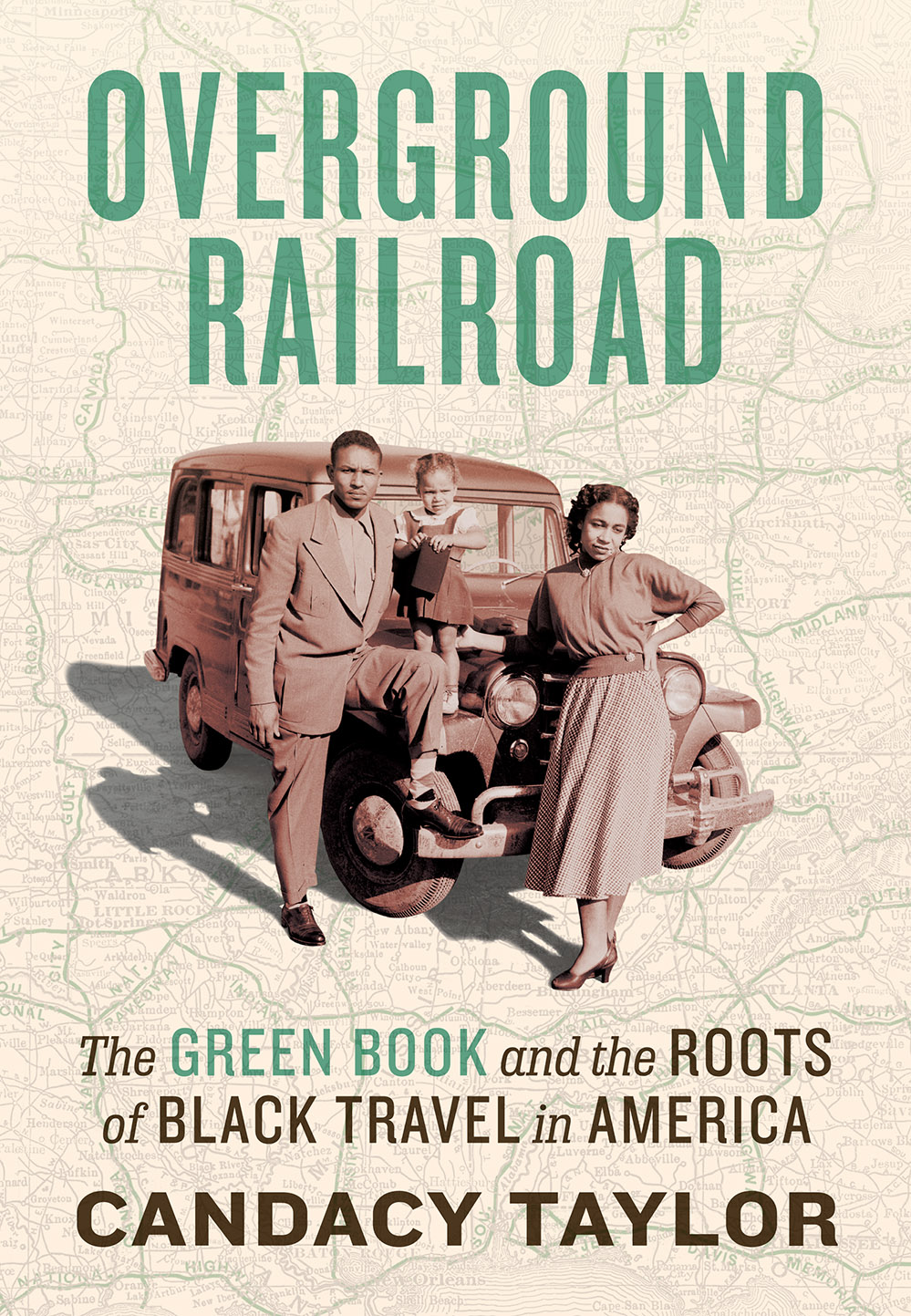
The opening lines of the book capture our attention with a shocking anecdote from the author’s family during the Jim Crow era in the United States. Ron Burford, the author’s stepfather, a child of seven in 1953, was sitting in the backseat of the family car. The car was a Chevy sedan of the same year, and Ron’s father was driving the family on vacation. A sheriff pulls him over and asks where he got the car, what he was doing, and who the inmates of his vehicle were. Ron’s father replies it was his employer’s car, points to his wife, and says she is his employer’s maid and that young Ron was her son. He is driving the car to take them home. He points to a chauffeur’s hat in the back seat, identifying it as his hat. The sheriff, satisfied, waves him on his way. Ron’s father had a good job with the railroads, and it was their family car. He was better off than a sheriff. In 1953, such lies were a safe way for a black American in the US to explain how he possessed a 1953 Chevy sedan. They help him avoid the wrath of a police officer who may get jealous of a black man owning a car he cannot. However, this was not the only thing black Americans worried about when planning a vacation during Jim Crow. There were plenty more.
Hitting the open road was not a joyful experience for African-Americans in the era of segregation, till the 1960s. On vacation, they drove during the night to avoid police harassment. Taylor says with touching pathos that seeing nature’s beauty was last on their mind as it was more important NOT to be seen. Black Americans needed to be careful not to get lost in unfamiliar territory. There were ‘sundown towns’ of all-white communities where blacks cannot enter or remain after 6 pm. If the residents found them after dark, they risked retribution from angry mobs. It surprised me to read that the liberal California of today was one of the five states with the most ‘sundown’ towns. Most insurance companies would not sell auto insurance to blacks, making it even more difficult for them to drive. African-Americans found most hotels would not rent rooms to them, allow them to eat in their restaurants, or sell them gas. On the road, they drove under the speed limit lest the police charge them for speeding. When they found a slow white driver in front, they slowed down further since Jim Crow states did not permit them to overtake a white driver. Women had it even worse. They found traveling alone a problem, as people mistook them for prostitutes if they walked into a hotel lobby alone. Many hotels forbid them in the lobby unless accompanied by men. The police considered women suspect if they carried cash with them, such as waitresses walking home with tips late evening. They accused them of being prostitutes. Despite all these impediments, African-Americans still traveled in the Jim Crow era across the country and enjoyed their travels. It is a fascinating story of entrepreneurship, initiative, and collaboration.
The solution to black travel came in the shape of a limited ‘Black Lonely Planet’ guidebook, called the Green Book. Victor H. Green, a 44-year-old African-American mail carrier with USPS in Harlem, produced in 1937 the first edition of the Green Book. It listed establishments that welcomed blacks in the New York metropolitan area, which he was familiar with. Over time, the guide expanded to list places, covering hotels, restaurants, gas stations, beauty salons, and nightclubs where black travelers are welcome all over the US. The 1947 edition even listed 106 colleges where blacks were welcome. These schools specialized in agriculture, mechanics, teaching, social work, and theology. Many users of the book sent Green their feedbacks, details of new establishments, criticisms, and suggestions much like what happens today with social media. The book even listed private residences called ‘tourist homes’ where black travelers could stay, anticipating the modern-day Airbnb. Victor Green died in 1960 and his wife, Alma, carried on the work. The last edition of the book appeared in 1967.
Taylor makes special mention of Esso as an inclusive company during Jim Crow. In the 1940s, Esso was one of the largest business enterprises in the world. And it was progressive in race relations with African-Americans. One of their marketing executives was James A. Jackson, an African-American. In the Jim Crow era, when many filling stations wouldn’t even sell gas to blacks, Esso employed blacks to own gas station franchises. When Shell Oil distributed offensive ads that featured a black man eating watermelon, Esso hired black people as chemists, pipeline workers, and sailors. In the 1940s, 312 out of 830 Esso dealers were African-American. Taylor credits Laura Spelman Rockefeller, the wife of John D. Rockefeller and Esso’s CEO, for these enlightened policies. Laura’s parents were fearless and powerful abolitionists and the Spelman family inspired Esso’s conscience. However, Taylor adds it was James Jackson who did the groundwork and implement Esso’s vision for treating African-Americans with dignity and respect.
We would commit a mistake if we see ‘Overground Railroad’ as just the history of an important travel guidebook of the past. It is a chronicle of the nitty-gritty of the Jim Crow era and a concise primer on the social history of segregation in the US. It points us to the background of why the Great Migration of blacks from the south took place from 1915, ending five decades later. The book contains copies of photographs and covers from the many editions of the Green Book from the mid-1930s. There are lovely photos of many of the old Green book establishments as they exist today. The book is worth browsing just for these photographs. Many of them are delightful, funny, and educational. However, the image on page 106 is a shocking and ignominious one for America. It shows Rubin Stacey, a black tenant farmer, hanged to death from a tree. He got executed in Fort Lauderdale on July 19, 1935, for threatening and frightening a white woman. The photograph shows three men, two women, and four young girls in pristine white dresses looking with curiosity at the hanging dead body. I remember seeing photographs of the Taliban executing women for adultery in a public place in the 1990s in Afghanistan. Adjectives such as ‘barbaric’ and ‘medieval’ always accompanied those images. It is humbling to be reminded that the US too practiced barbaric and medieval acts eighty years ago.
Candacy Taylor notes that Victor Green published the Green Book for the first twenty-five years without featuring a black figure on the cover. It is because of Colorism, which is the aversion to darker skin. She says the preference for lighter skin in the US originated with white slaveholders, but the black community too embraced it over the years. Lighter skin opened doors into the upper echelons of black society. How did they determine an African-American to be of ‘lighter skin’? They held a brown paper bag next to the face or arm of a black person to test the color of the skin. The person got entry to a black party, sorority, or nightclub only if he or she was lighter. Even black churches and black universities used the ‘paper bag test’. Black Americans obsessed about lighter skin so much that manufacturers advertised skin-lightening creams in black magazines and newspapers throughout the first half of the twentieth century. It resonated with me, as Indians and other Asians too are obsessed with it. In India, colorism gets combined with sexism. Skin-lightening creams are popular into the twenty-first century and the advertisements always targeted only women. Indian movie fans do not mind dark-skinned male stars but want the female actors to be fair-skinned. In the matrimonial market, ads invariably seek fair-skinned brides.
The last Green Book got published in 1967. In principle, we did not need the Green Book once desegregation laws got passed and integration began in America. I was keen to see how Taylor views the past fifty years. So, it startled me to see that she calls integration a double-edged sword of progress. She even dabbles a little in ‘segregation nostalgia’. Integration caused three-fourths of the Green Book sites to be closed as African-Americans had more choices now. Taylor says a century of segregation made blacks fearful of connecting with people outside their race. Paradoxically, it facilitated a stronger sense of unity in the black community. She says blacks wanted integration and sought to live free like white people. When they got what they wanted, they lost what they had! She quotes her stepdad, Ron Burford, as saying ‘integration was the worst thing that happened to blacks’. He believed he got a better education in all-black schools because the staff treated everyone the same. I got the impression that Taylor would like African-Americans of today to develop a greater sense of community and identity. Perhaps a third political party by African-Americans to advance their interests is the answer.
History tells us that the injustices of segregation caused millions of black southerners to migrate north carrying whatever they could of their possessions. It started in 1915 and lasted till 1970, resulting in six million internally displaced in the US. It surprised me to note the author’s speculation it may be the most massive internal resettlement of any people in the world. The Great Black Migration was indeed tragic. But there have been larger tragic displacements in recent world history. Since the 2010s, we are now living in the era of a massive refugee crisis. The Syrian Civil War has internally displaced six million people. Another six million have fled the country and half a million have perished in the conflict. At the end of World War 2, changes in the map of Europe left millions living in hostile territory. Twelve million Germans fled from central and eastern Europe to the new West Germany. The partition of India in 1947 caused about twenty million Hindus, Muslims, and Sikhs to displace themselves to the ‘right’ country between 1947 and 1950. A million deaths occurred in the ensuing chaos and violence. The biggest of them all, however, is the massive internal migration of Chinese from rural China to southern Chinese cities since the 1980s. Economic opportunities made 150 million Chinese undertake this resettlement.
The book is well-researched and provides lessons in history on segregation. I wondered how life must have been for poor black Americans. After all, segregation humiliated even African-Americans who owned cars and went on family vacations.
A brilliant and timely book.