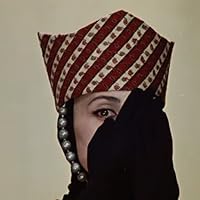
Ivan Alexandrovich Ilyin (Russian: Ива́н Алекса́ндрович Ильи́н) was a Russian religious and political philosopher, White emigre publicist and an ideologue of the Russian All-Military Union.
One need not be a christian to appreciate the absolute nobility of soul reflected in Ilyin's masterful understanding of the human experience - and the role of an essential spirituality in truly raising up the human condition.
Ilyin sets this understanding in opposition to Leo Tolstoy's 'sentimental hedonism' and the doctrine of non-resistance. He brilliantly exposes the corruptive influence of this naive and spiritually deadening 'morality' - illustrating its hypocrisy and anti-spiritual nature.
This exposé is not the typical 'religious'/'philosophical' exercise in abstract hair-splitting mental masturbation, so common in works related to the spiritual quest. Ilyin's vision - and wisdom - is one of those rare moments of integration between the spiritual and the real world(s). He raises the meaning of mortal life up from the usual escapist domains related in nearly all abstract 'spirituality' - this would include everything from the 'esoteric'/'occult' realm of 'mystical''spheres' and the achievement of 'ultimate godhood', to the deformed 'christianity' with its surrender of the will and all the personal responsibility that entails...in exchange for a 'heavenly reward', to the 'new age' 'self-help' sentimentalism of today...the self being the operative word.
Ilyin masterfully illustrates a very real-world nobility of the soul - and it's this nobility that becomes an expression of the Divine on Earth. With this comes the responsibility to defend the Honor of the Good when one witnesses its 'defamation, perversion, and extinction'.
This volume is more vitally relevant today than ever before. What Ilyin saw in his day - the horrors of evil in the communist takeover of Russia - is now more insidious and fateful to the Noble Soul, and truly meaningful Spirituality, than even back then. His descriptions of the 'egoistic philistine' embodied in Tolstoy's 'devilish[ly] evil anti-spirtuality' reveals itself in every facet of mortal life today.
The most profound point made is this: those who recognize the assaults against all decency and dignity of the soul - and by extension, the Spirit - of mortal life, and refuse to commit themselves to fighting it, are complicit by default...and contributing to the corruption of their own inner life and souls.
This book isn't for everyone - it challenges to the very depths...and heights. The noble soul will find in it a validation of everything felt in these corrupt times, but could find nothing sure to articulate it. Ilyin's work is a source of strength to such a these. It is perhaps the last true Divine Revelation to a disintegrating and spiritually bankrupt world.
I rarely give five-stars - I'd have given this ten if I could.
In America the belief in "Christian Pacifism" is very alive and well due to influence in American protestantism from the anabaptist groups.
Russia dealt with this abberation of Christian teaching over a century ago when Leo Tolstoy had great influence over many people.
Illyin demonstrates that pacifism is contrary to Christ's teaching for how Christians should respond to evil in the world and the oppression of the innocent by the wicked.
Ilyin wrote this book to refute Leo Tolstoy's pacifism in defense of the Russian Whites fight against the Soviets after the Russian Revolution. Ilyin is a challenging writer, and this is one of the most difficult books I've read. He has a vocabulary all of his own, combined with his Eastern Orthodox Christianity make this a difficult book for a westerner to read.
There are many great quotes in the book, but it is difficult to get through this book. The title is very provocative, but the thesis of the book is not nearly so radical. In essence, Ilyin seems to be arguing that it takes true courage and Christian conviction to stand against evil, which all men at some point in their life will have to do. It may even require force.
A challenging read, the author a Russian Christian wrote the book to counter Tolstoy's argument that violence of any kind goes against the mandate to love our neighbor and to turn the other cheek. The author argues that Christians are compelled to resist evil by any means available to include violence because evil must be eradicated wherever it presents itself. The author, in my view, makes his case.
I have yet to read such a robust and profound rebuttal of the kind of limp wristed, conflict averse, and weak willed "Christian" that pervades so much of the modern discourse. You are not holier than anyone for disingenuously reducing Christ to the Sermon on the Mount, and Christ most certainly would not have wanted us to sit by and watch as evil takes possession of our neighbors, friends, and family. Baring the cross is more than just becoming a spiritual recluse that shies from danger in some cave. It very well may entail using force to defend yourself, and more.
"I have come not to bring peace, but the sword" were the words Jesus spoke, and yet people like Tolstoy insist otherwise. Its no wonder Satan, in the form of the Soviets, turned a blind eye to his kind of "Christianity" as they worked tirelessly to hunt down and kill the devout and destroy their Churches.
Let your sword be a prayer, and your prayer be a sword.
A book on the importance of using force to resist the decaying and violent influence of decadence and socialism/communism. Written during the time of the "Russian Revolution" when the soul of Russia was being defended by the White Army against the communist red army.
A friend gave me this for my birthday. I briefly and reflexively thought it was a joke at first when I saw the cover. We often talk about Christianity, and Russian history, so I suppose that’s the angle. This book offers a solid glimpse of something most of us from the West will have trouble really understanding, the very heavily 1920s perspective of an Orthodox Christian Russian conservative refuting pacifism and non-violence in the wake of the revolution and usurpation of 1917.
A dense one but I made it through. Lots of clear-minded arguments against Tolstoy’s pacifism and pacifism in general, where the question of resisting evil is considered. Solid points are made about how evil is a shared burden throughout society and the spread of its effects, the responsibility of confronting it, and complicity of ignoring it. Also considered are the resulting effects of putting up a resistance when it must be to the utmost, which simpler or more zealous texts would brush aside. Far more sober-minded and comprehensive than I had expected. It’s certainly worth reading, and difficult going, for anyone with a remote interest in the subject.
This cover will likely get you put on a list if you read this in public. Who’s the 2000s-era-video-game-protagonist-dude to the right of Wrangel? Who is he planning to shoot, and why? He doesn’t seem trustworthy in the least.
This was a difficult read for me, mainly because of verbosity of russian philosophers. It was worth it though. It was recommended to me for it's examination of violence (or resistance to evil by force) from the Christian (Eastern Orthodox) perspective.
I definitely left with a partial answer to my own questions. Partial because it provided some thoughts to use as a foundation for my own continued exploration of the question. Coming to terms with the possiblity of violence is not something you can nor should outsource to someone else.
The first 2/3rds was Ilyin taking Tolstoy to task for his views and setting up for the last 1/3rd of the book. Which is where the best insights came from IMO.
Compelling topic, but another black hole-dense Russian author. Trying to parse a page of this book is like welding without a mask on, painful after more than a few seconds without stopping for a break.
Easily Post-doctoral level discussion of armed resistance to the Soviets. If you can’t read The Brothers Karamazov or War and Peace don’t even open it.
The Eastern mind has a different understanding of God than the West does. Our God is rational, Aristotelian even. He is a moral philosopher and a physicist. And a humanitarian. We’re comfortable with this God; He fits into our neat little boxes and abides by our rules. We like to puzzle ourselves with little riddles like “Can God make a boulder so big He can’t carry it?” or “Is something sinful because God does not do it; or does God not do it because it is sinful?” A game to pass the time as we challenge ideas of omnipotence, omniscience and omnipresence – words we were given in kindergarden to help us understand our creator.
But which comes first, morality or God? It’s a conundrum.
We Baptists have a real problem with the Old Testament; that we really don’t know what to do with. Not the dispensations; those we can easily explain away. As well as the different behaviors of the protagonists, they are human after all and we are all flawed and wicked. It is with God’s behavior – when he says “Wipe out a village” or “Leave nobody alive” or “Don’t even leave animals alive” those sound to us suspiciously like war crimes. We cannot square an omnipotent God with a God who would order those acts, as He so clearly does in so many parts of the Old Testament.
The Easterners don’t have the same problem. Specifically, the original church – the Nestorian or Syrian or ‘Church of the East.’ The first Church, founded by Thomas and Bartholomew and Thaddeus before even the great councils of Asia Minor. That old church looked absolutely nothing like our Baptist churches these days. Pews lined up; hymn on page 252; 30 minutes of preaching (and not a minute more). Potluck or maybe a buffet afterwards. The early church probably resembled Sufism (I’m actually doing a lot of reading on this; but there is painfully little available about the Church of the East. It was completely wiped out about 700 years ago). Sufism was probably ancient Christian philosophy brought into Islam early on; subsuming the old traditions and making the advance of Islam more palatable. The early Church’s God was unknowable and “holy” – other. And our place was not to judge his actions, but nor was it to act in His stead.
Ivan Ilyin was a Russian philosopher. He was a “White Émigré”; that is a defender of the White Army and exiled to Germany on Lenin’s “Philosopher Ship” with all Russia’s conservative thinkers. “Resistance to Evil by Force” is an exploration of the morality of fighting back, taken from Orthodox understanding of Christianity; and written sort of in opposition to Tolstoy’s ‘Quietist’ peaceful resistance. “Non-violent resistance” is very popular these days; everyone who wants to stand against their dictator channels Mahatma Gandhi and advocates for ‘peaceful resistance’. Peace is seen as the pre-eminent good; as ‘morality’ has replaced God in the imaginations of men. “God is sometimes moral, sometimes immoral, and the Bible proves that. But we need to aspire to a higher standard.” That is effectively the argument of the new philosopher kings.
We can all see the faults – especially when ‘morality’ is emptied of the divine and filled with the prejudices of today. Who defines what is moral? That is the fight now. And we, the believers, are losing.
The final point, Iylin’s treatise is providing people the justification to fight back against evil. The problem with that is that we are all human. And violence is easily coopted by ‘dark powers the market does not control’; as is non-violence, incidentally. When the colonists fought the British for independence, it was not necessarily moral or amoral. It was a political struggle of a group of people to live a certain way. The taxes currently imposed upon us are far higher than those the British imposed 200 years ago; for example. But we wanted done with the monarchy. That doesn’t make the monarchy evil; it just means we Americans chose a different path “In the course of human events” and had to fight to do what we wanted. All good.
But evil? Fighting evil? Who defines evil – if not God? And a God that behaves the way He did in the Old Testament; inscrutable; mystical; bizarre even? How might I even begin to try and understand Him and what He thinks is a “holy war” or a “jihad” or a “crusade”? I can’t. So I best not try. So we return to fighting over politics, which we are very comfortable with. But we should not give divine inspiration to our wars. The reaper harvests and God sorts the wheat from the chaff. My point is, I think, Iylin missed the mark. Though I do appreciate his efforts to preserve his ancient faith, which the Communists were extirpating from an ancient Christian society.
Hegel aficionado, Ivan Ilyin, a Russian Orthodox Christian who spent his life in diaspora, with one eye on 1917 Russia and another on Christian society's future, embarks on a deeply analytical approach to the problem of Resistance to Evil by Force in this little book of the same name. His view on the matter can be boiled down to forceful resistance to evil and a Tolstoyian pacifism as both unrighteous but the former heroic and just while the latter cowardly and ignorant. To use an example of Ilyin: imagine a little girl is being raped in the middle of the street, and you are passing by with a firearm in your pocket. Under Tolstoy's pacifism, which demonizes physical opposition to evil as violent abuse, the most you could do is scream out obscenities and ask, beg, plead for the perpetrator to stop in the name of God. However, under Ilyin's doctrine (which is merely a reiteration of the doctrine shared by the countless warrior saints Orthodoxy has produced), if pleading does not work and cries to stop do not bear fruit, then duty falls upon you to resist that evil with force... *pop.* When that unrighteousness is completed, contemplate whether Tolstoy's pacifism would have been the better route. Contemplate whether Tolstoy's pacifism or Ilyin's force follow Christ when he says, "But whoever causes one of these little ones who believe in Me to sin, it would be better for him if a millstone were hung around his neck, and he were drowned in the depth of the sea" (Matthew 18:6). Far be it from me to contemplate, but if the mere act of invoking a child to commit sin requires death for appeasement, then imagine the necessary consequence of raping one?
More about Ilyin and his view of the state: I fail to understand the Wikipedia approved label of "Fascist" that is so readily applied to this monarchist. He was not a fascist but, as I just wrote, a monarchist who leveled enough criticism against Fascism to have the Soviets extradite him and the Nazis dismiss him from the Berlin Russian Academic Institute. His critique was simple: unlike monarchy, which is a system historically built by and for the people with inherent order, direction, religion, and purpose that, ideally, works to protect the people from evil and not be a cause of it, Fascism has as its standard fear and hatred in the minds of each party's subjects. Fascism is always built up against some threat: for the Nazis it was the Jews, for the Soviets the bourgeois, for the Italian Fascists the Communist party. But with monarchy, Ilyin's ideal order of government, the system is built up for long-standing good, hence why dynasties could last centuries but the Fascist regimes only a few decades or so. In a monarchy, the king represents the King of Kings and has as his role the protection of his subjects from evil. In Fascism, the system rarely has a positive telos and consistently acts to undermine the opposition, not uphold the citizen.
Despite being short, this book is dense and caused my pen to run out of ink! While redundant at times, it is a highly recommendable book that really keeps in tact the Orthodox tradition of forceful resistance to evil when persuasion is null and void.
Ilyin is a spiritual and intellectual javelin. He cuts right through the heart of Tolstoy's overzealous pondering and gets right down to the technical nitty gritty of foundational thought and "right action." I was very impressed by the depth and breadth of this reflection. It was a difficult read at times, and I read it with a pencil in hand to underline and take notes. This is a work best digested over a number of days at short intervals, due to its profundity. Definitely a fantastic and edifying read.
Contains a lot of memorable quotes. Very densely written. Sometimes unnecessarily difficult to read. His point about the distinction between rightousness and sin has some utility, but I am not thoroughly convinced of it. Same holds for his critique of Luther. The book is still worth reading, but it demands a lot of patience and focus from the one reading it.
An excellent, thoughtful and thought provoking work. One of a handful of texts that required careful consideration and research as I worked through the author's argument. Not conclusive, at least not for me, by any means but certainly an important philosophical treatise on the subject. As a retired professional Soldier, I'm better for having read it.
Ilyan makes the claim that Christ calls believers to love and sometimes that means restraining evil by force when no peaceful alternative is available.
This is a dense read and provides on alternative theology to those who would uphold pacifism as the ideal.
Проблематично на толико нивоа, Зинаида Хипијус је све те проблеме лепо покрила у свом текту "Мач и крст", за који сам сазнала захваљујући једном приказу на овој мрежи, и упућујем једно бескрајно хвала том читаоцу који ми је скренуо пажњу