

What do you think?

The Shadow
"I am neither a roué nor a degenerate; yet there are days when certain visions rise so definitely before me and I am a prey to such violent desires, that if, hitherto, I have been able to resist their attraction, it is impossible for me to say whether, an hour hence, I shall be able to do so. At other times, I feel strangely weary, as though I had just accomplished some gigantic task. I feel that my bones are broken, my muscles torn, and it is when I wake up that I feel this--when I wake up, after eight hours' sleep and rest, following no excess and troubled by no dreams. . . . I also have fits of inexplicable rage; of fury that would urge me to any crime; preconceived dislikes; I am so sensitive and excitable, that a word, a gesture, are sufficient to unhinge me: I suffer almost physically from all these things."
164 pages, Paperback
First published January 1, 1921
About the author
Maurice Level
96 books19 followersMaurice Level was a writer of fiction and drama who specialized in short stories of the macabre which were printed regularly in the columns of Paris newspapers and sometimes staged by Théâtre du Grand-Guignol, the repertory company in Paris's Pigalle district devoted to melodramatic productions which emphasized blood and gore.
H.P. Lovecraft observed of Level's fiction in his essay "Supernatural Horror in Literature" (1927): "This type, however, is less a part of the weird tradition than a class peculiar to itself — the so-called conte cruel, in which the wrenching of the emotions is accomplished through dramatic tantalizations, frustrations and gruesome physical horrors."
H.P. Lovecraft observed of Level's fiction in his essay "Supernatural Horror in Literature" (1927): "This type, however, is less a part of the weird tradition than a class peculiar to itself — the so-called conte cruel, in which the wrenching of the emotions is accomplished through dramatic tantalizations, frustrations and gruesome physical horrors."
Ratings & Reviews
Friends & Following
Create a free account to discover what your friends think of this book!
Community Reviews
Displaying 1 - 5 of 5 reviews

February 10, 2017
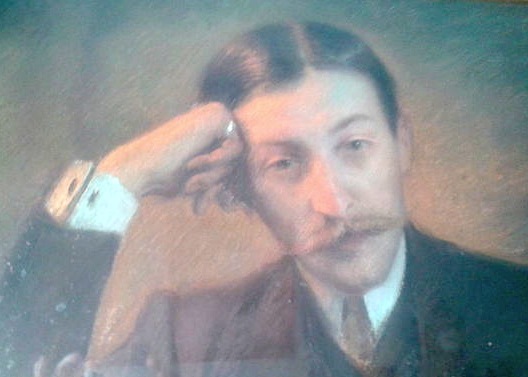
Maurice Level (1875-1926) - French novelist and short story writer connected with the theater of the Grand Guignol
Those Who Return by Maurice Level (1875 - 1926) is a psychological thriller, a gripping page-turner, a tale of hysteria, madness, revenge and bizarre deaths in the contes cruel tradition of nineteenth century French literature. This short novel is told in crisp, sparse language yet contains elements of romanticism (the feelings and sensitivity of a passionate, poetic main character), decadence (the decay, the unclean, the unnatural), the tension between reason and science on the one hand and magic and ghosts on the other, and is a curious cross between, if you can believe it, James M. Cain hard boiled and Edgar Allan Poe macabre.
I wouldn’t want to say too much about the specifics of the plot since there are many unexpected twists and turns, especially toward the end. To provide a sampling of the writing style and literary themes, below are several quotes from the first two chapters coupled with my brief comments.
In the course of conversation with a doctor, the twenty-seven year old main character, Claude de Marbois, conveys the following brooding observations on his own character, “I am neither a roué nor a degenerate; yet there are days when certain visions rise so definitely before me and I am prey to such violent desires, that if, hitherto, I have been able to resist their attraction, it is impossible for me to say whether, an hour hence, I shall be able to do so. At other times, I feel strangely weary, as though I had just accomplished some gigantic task.” Claude is a true romantic: volatile, moody, imaginative, emotional, intense. And the visions Claude alludes to here build as the story unfolds, build like furious waves in a stormy sea; it is as if one can hear Hector Berlioz’s Symphonie Fantastique in the background.
After a turbulent, gut-wrenching confrontation with his father, Claude retires to his room and, pen in hand, reflects on committing suicide, “He would first write down the tortures of his childhood, the sorrows of his manhood, so that people would know why he had preferred death to a life without love or pity. The thought that the blame would fall on his father, that the scandal would cause that hard proud being to tremble, filed him with joy:” What stronger emotion and feelings are there than a child’s emotionally-charged relationship with his or her father and mother, particularly if the mothers death is shroud in mystery? Maurice Level’s tale contains a number of elements one would find in Sophocles’ Oedipus Rex.
The following morning, Claude has yet again another confrontation with his father. We read, “You are trying to force me into a nursing home, in other words, into a madhouse! Oh do not let the word upset you, when the intention leaves you calm. Well, however much you may wish it, I am not mad, and have no desire to become so.“ Ah, what is romantic nineteenth century fiction without the ever-present threat of the label of madman? Many are the tales and novels following Poe’s The Black Cat that begin with a disclaimer from the narrator that he is not mad. The novel fleshes out the power struggle when people attempt to exercise control over others by labeling them as mad and packing them off to a padded cell in the madhouse.
Revenge is certainly one of the most intriguing themes of the novel. How deep is the revenge Claude seeks? What is he willing to sacrifice to extract not only some revenge, but, in his own mind, a revenge that is nothing less than total? With this short novel, in the spirit of Faust or Heathcliff, we witness a true romantic in action.

Want to Read
January 30, 2019This hardcover edition is limited to 70 copies.

February 8, 2010
In terms of plot, this could be tighter, but it's still a sharp conte cruel portrait of descending madness at a mysterious old French country house and the protagonist's possible (but ambiguous) confrontation with the supernatural and unseen tormentors (natural or otherwise). The conclusion's about as luridly bloody as you might have hoped for from a writer who was beloved by the Grand Guignol's management.

August 22, 2026
Finishing The Shadow has readers questioning if the ‘madness’ portrayed in this book is a slow burn or sudden possession from external sources.
A slow burn read, not for everyone, but if you enjoy macabre and sinister personalities you will enjoy this.
There were moments that were obscure and haunting but I wish I felt more chilled reading them.
A slow burn read, not for everyone, but if you enjoy macabre and sinister personalities you will enjoy this.
There were moments that were obscure and haunting but I wish I felt more chilled reading them.

July 21, 2022
Level, Maurice - The Shadow
Disturbing slice of madness, cruelty, perhaps murder.
Our narrator, Claude, is not stable, financially or emotionally.
Long out of school, he cannot or will not find employment.
Living with papa is bearable, until papa suggests, “Maybe you would be happier in a quiet home.”
Claude understands the code for mental asylum, and travels instead to the country manor, now crumbling to ruin.
History is buried there, however. Or it ought to stay buried.
Claude’s arrival has awakened something.
This nasty plum runs vicious, humorous, banal, menacing.
The exposure of family secrets, like maggots, better left undisturbed.
Disturbing slice of madness, cruelty, perhaps murder.
Our narrator, Claude, is not stable, financially or emotionally.
Long out of school, he cannot or will not find employment.
Living with papa is bearable, until papa suggests, “Maybe you would be happier in a quiet home.”
Claude understands the code for mental asylum, and travels instead to the country manor, now crumbling to ruin.
History is buried there, however. Or it ought to stay buried.
Claude’s arrival has awakened something.
This nasty plum runs vicious, humorous, banal, menacing.
The exposure of family secrets, like maggots, better left undisturbed.
Displaying 1 - 5 of 5 reviews