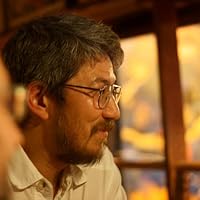
Harry Clement Stubbs better known by the pen name Hal Clement, was an American science fiction writer and a leader of the hard science fiction subgenre.
Space Lash was originally published with the title Small Changes. It's a collection of nine hard-science stories by Hal Clement, the famous pen-name of Harry Stubbs. They are mostly all puzzle stories, in which a knowledge of scientific principles leads to the successful solving of the problem. They have little in the way of characterization; the usually individual protagonists are primarily there just to present and face the questions, but they do that with unparalleled cleverness and thought-provoking application of exploration, trial-and-error experimentation, and rigorous logical reasoning. All but three of the stories originally appeared in Campbell's Astounding (later renamed Analog) magazine. My favorites are Dust Rag and the classic Uncommon Sense.
A favourite from my childhood --- collection of thought-provoking hard-sci-fi topics which have aged well, and remain topical and worth consideration.
- Dust Rag (1956) --- a basic knowledge of physics and similar principles solves a simple problem - Sun Spot (1960) --- even as a child, the scale of this story never quite fit - Uncommon Sense (1946) --- solving problems through welding - "Trojan Fall" (1944) --- running never solves anything, or does it? - Fireproof (1949) --- with a spy as an antagonist, this may not have aged well, or perhaps it has - Halo (1952) --- what are the obligations of a farmer? - The Foundling Stars (1966) --- just what is relative? - Raindrop (1965) --- how much of the planet's surface will we use for what? What will we do as the limits of the earth's crust are approached? - The Mechanic (1966) --- what are the consequences of genetic engineering?
A story collection. Hal Clement was acknowledged as a master of hard SF. Hard SF does not age that well, but when you take into account that some of the stories are from the 40s you have to be impressed by his skills in extrapolation. Most of the stories are about astronomic phenomena (Clement studied stronomy). The longest story "the mechanic" from 1966 is about regenerative medicine and gives a glimse of what we now call "nano technology".
Not all of the stories are as logical and consequential as the critics claim. Especially "Trojan Fall" seems rather illogical to me. Generally he ignores Einstein's relativity in his stories (because the lightspeed - barrier is so pesky, I guess).
Some stories are rather difficult to understand, because he throws you into the middle of the action and refuses to explain what it´s all about. The worst example of this was "The foundling stars" from 1966, where I really was not sure if I got it at the end.
I read the German translation from Erich Pabel Verlag / 1974. 2 stories are missing in this edition ("Dust Rag" and "Raindrop"). This used to be (or maybe still is?) an annoying habit of German publishers.
This is not one of Hal Clement's better reviewed books; I found it better than its reputation. Hal Clement is of course best known for his creative but hard SF worldbuilding, and this is no exception. One story, "Dust Rag" is probably the most realistic forecast in SF of the properties of Lunar dust before the Lunar landings, for example. Another, discussing a close Solar flyby mission, prefigures observations that the Parker Solar Probe is just doing today. Each one of the shorts has that classic Clement touch.
However, like much of Clement's work, the characters take a pretty distant back seat to the story ideas, and that is more so in his short SF than his long, so for that reason, I gave it only 4 stars.