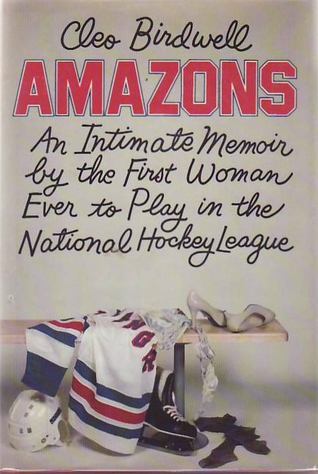
An Intimate Memoir by the First Woman Ever to Play in the National Hockey Cleo Birdwell (Don Delillo) An Intimate Memoir by the First Woman Ever to Play in the National Hockey Holt Rinehart & FIRST First Edition, First Printing. Not price-clipped. Published by Holt, Rinehart and Winston, 1980. Octavo. Hardcover. Book is like new. Dust jacket is like new. A lovely copy of this vintage novel from Don Delillo under the pen name of Cleo Birdwell. 100% positive feedback. 30 day money back guarantee. NEXT DAY SHIPPING! Excellent customer service. Please email with any questions. All books packed carefully and ship with free delivery confirmation/tracking. All books come with free bookmarks. Ships from Sag Harbor, New York.Seller 331696 Literature We Buy Books! Collections - Libraries - Estates - Individual Titles. Message us if you have books to sell!
In the late '70s, after writing a nearly perfect early masterpiece/distillation of his sensibility and style in End Zone, and then the amusing maximalist funhouse of Ratner's Star, which he considered his favorite novel and hardest to write, and then Players, probably his most formally unconventional/artsy early novel, it seems like DeLillo wanted to sell-out and make some money and so there's a half-baked yet still pretty silly thriller (Running Dog), and then this one under a pseudonym after his primary publisher essentially rejected it, a novel that's really straightforward, mostly linear and episodic, following the narrator's first season as the first woman in the NHL with the New York Rangers, interspersed with occasional descriptions of the good simple life growing up in small-town Ohio.
The title relates to a TV commercial the narrator agrees to appear in but then quits on as filming begins, thinking it too stupid, which jibes with the idea that this is DeLillo's comic commercial sellout, something he ultimately believed too silly and stupid to publish under his own name. But I think this one is pivotal for DeLillo in that it leads to White Noise, wherein he ultimately fuses (and refines) conflicting sensibilities -- the silly and the serious ("the Dum-Dum pops, the Mystic mints," per the end of WN's first paragraph). This is DeLillo putting all his weight on the sillier sensibility, having fun, not worrying too much about the language (few to no weighty sentence fragments and/or short phrases and single words strung along at the end of sentences; the general RPM, the energy and pace of the sentences, is also higher than usual — feels quickly handwritten like one of Cleo’s letters instead of typed?) but also incapable of writing weak or shaggy or unclear sentences, unable to write poorly but also unwilling in this case to let his competing dominant instinct for headiness gain much ground either.
In this one, there's no attempt at grand statement or metaphysics, there's a ton of conventional dialogue that's usually engaging, rangy, playful, and uncharacteristically intelligible for DeLillo (characters don't speak past each other as in Players, for example) and usually it's just two characters together talking since most scenes are intimate encounters between the narrator and her many suitors so it's clear most of the time who's speaking. Since this is essentially a comic novel, some of the underbaked characters are more forgivable than in his more serious novels, but this one also has some of DeLillo's most thorough and memorable characterization. The scene in Glenway's tiny spartan apartment is probably one of the funniest, clearest I've read by DD, as well as the seduction by the smoking French Canadian coach speaking French to her.
In the context of the late '70s, you also have to consider how this emerges from a decade of sexual liberation and the rise of feminism, not to mention the mainstream popularity of men's mags like Playboy and Penthouse (with its famous "Forum"). And this came out in January 1980, the year the US hockey team beat the CCCP in the winter Olympics, in my life the highpoint of interest in the sport. But I would definitely avoid this if you're just looking for a good hockey book.
So: a pivotal DeLillo novel in a way, in that it's a distillation of one side of his instinct, the accessible, silly, bawdy, rangy, playful, zany, outrageous side, descriptive and well-phrased language but not pared down with every sentence perfect, hefty, honed. He must have been working on this at the same time as The Names (1982), which to me seems like everything this novel isn't. Comparatively The Names seems totally pretentious, intentionally opaque, signaling but not really signifying, excessively concerned with identifying the pattern and discerning its meaning (DeLillo's thesis?), just as much pathological apophenia ("seeing patterns or connections in random or meaningless data") as salubrious literary association, insightful assembly/interweaving of disparate everything into a text unified by a single sensitive consciousness uniquely (and often deftly) able to approximate in language the true complexity of existence. The Names is a realist(ic) elaboration of the exaggerated, playful, maximalist silliness of deciphering the star code to fill the void core in Ratner's Star. There's mention of meaning in this one's brief intro section but it comes with a funny acknowledgment that this memoir propagates less meaning than life itself.
Some random notes: the first sentence in this is straight outta End Zone. It's a dig on Yalies, and since my wife is a Yalie, I read it to her when I first read it in End Zone and so immediately recognized it when it reappeared here. Also, at one point a cabbie lights up a joint at 4:20 am -- this could be a coincidence or DD could've been aware of 4:20 way before mainstream America. Per the internet, High Times didn't note 4:20 until the early '90s and I don't remember hearing it until around then either. And then there's also an exchange early on that seems like it may have influenced DFW's "This Is Water" speech (his copy of Amazons at the UT Austin archive is apparently highly annotated). Also DFW-related: this is a parade of aggressive, amorous, albeit not totally hideous men, possibly inspiring Brief Interviews with Hideous Men? Unrelated to DFW, it's funny that the novel's ideal man is asleep for months in stain-colored jumpsuit-like pajamas, recovering from a wicked case of Jumping Frenchman (a chronic tic expressed as random sudden exaggerated movement as though leaping away from a non-existent donkey kick).
If you're a DeLillo fan, it's worth trying to find a relatively inexpensive copy online. I found a first-edition hardcover with a dust jacket in good shape for $45 and consider myself lucky.
It should come as no surprise that David Foster Wallace's archive at University of Texas' Harry Ransom Center contains Wallace's annotated copy of Amazons. (The Harry Ransom Centre is also home to Don DeLillo's archive). Wallace was a huge fan of DeLillo and the two corresponded by mail. The thing that immediately stood out to me about Amazons is how strong an influence it must have been on Wallace's first novel, The Broom Of The System. Some of the dialogue here is strikingly similar and the rational and overwhelmed central female protagonist, Lenore Beadsman, struggling through a world of neurotic men in Wallace's novel seems heavily based on Cleo Birdwell and her many suitors.
This is an excellent book, laugh-out-loud funny, and the best of the five or six DeLillo novels I've read. It's a shame that such a comic masterpiece has been out of print for almost 30 years. If you can find a copy, pick it up. Especially if you're a DFW fan.
a sort of hypersexualized screwball comedy taking place through the eyes of the first woman to play in the nhl, cleo birdwell. cleo birdwell, the author, is a pseudonym of Don DeLillo, and it reads like a Delillo book from start to finish. There's very little hockey in there, in spite of the premise. What the book is mostly about is men who are surrounded by other men in what is basically a testosterone/masculinity contest seeking out the warmth and tenderness of a woman who can give them a reprieve from that: most of these men are scumbags. there is also a massive subplot about the distinction between sickness and health and that arbitrariness of disease. in some ways this novel is remarkable, and in some ways it is really dull. out of print, unfortunately, but worth reading if you can get your hands on it.
I’ve wanted to read this book for a long time and I’ve tried many times. I’m a diehard New York Rangers fan and I thought a fictional take on what it would be like to be a female Ranger would be a blast. But after 10 pages, I soon realize that’s not what “Cleo Birdwell” (aka Don DeLillo) is going for here.
This book is really about sex. Lots and lots of sex. Sexual exploration, etc.
Which is fine. I’m not a prude. But wanting to read about one thing (hockey, the Rangers, gender dynamics) and instead getting another (sexuality, postmodernism, satire), especially with a male perspective makes this tough for me to appreciate.
The big issue is: can a man write all about female sexuality from a female’s perspective? I feel like in most instances, DeLillo handled it well. There are some predictably squicky moments too. I’m forever leery of men writing female POVs in the same way I am white people writing non-white ones, straight people writing gay ones, etc. I get the sex is a only a gateway to examine the socio-cultural norms DeLillo wants to autopsy but still. I can at least appreciate how he makes the larger point of a female philandering athlete and how that would be received differently versus a male one.
Can’t make this clear enough, if you’re reading it solely for the hockey, give it the hardest of hard passes. But if you like satire and are a fan of DeLillo, you should check it out because there are plenty of moments of inspired comedy and sharp satire. It also functions as a good snapshot of New York City at the dawn of the 80s. DeLillo treats it respectfully and realistically instead of making it out to be the giant toilet bowl most of America thought it was at the time.
Don Delillo is the real author of this fictional memoir of a female goalie in the NHL. Cleo Birdwell is a pseudonym. My own feeling is that Delillo is at his best when he's just having fun and being funny, both of which he's doing here. None of the pretense of say, Underworld or The Names, where he's trying too hard. Some of it may be a little too silly, but it's still a fun ride. Also, some of the best/funniest sex scenes in literature. I just regret that I lost my copy. Damn.
This book is reminding me how vast the chasm between three and four stars is. This would've been a four last year but there's been some inflation with all the other exceptionally good stuff I've read lately. Sorry Cleo, maybe try being as compelling as an oral history of the Syrian War next time.
A lot of fun. Not DeLillo's best, but a sharp reminder that (in contrast to the joylessness of his most recent stuff) he could be hysterically funny when the mood struck--it's a much better, much more careful novel than his refusal to acknowledge it (while some material on it is collected in his papers at the Harry Ransom Center, he never spoke about it publicly and requested that his publisher keep it off official bibliographies) would suggest.
Of particular interest (and worth seeking out) to anyone who's particularly enamored of DeLillo's middle period (say, *Running Dog* to Mao II* or so), as you can spot in here a number of gags, bits, and set-pieces (as well as moments of ambient mood or predilections regarding the cultural mood post-Vietnam, mid-Cold War) that get recycled or fleshed out elsewhere--Murray Jay Suskind, of *White Noise* fame, plays an important role, for instance.
I literally have spent the last few hours binging this bullshit because I knew that if I had to wake up one more time remembering it was the book I was reading that I would burn the copy in my fireplace. It's bad. Not just bad for DeLillo, but bad in general.
It has glimmers of DeLillo. He starts going on a philosophical tangent about death or something and then all of a sudden we're back in one of the what must be 50+ sex scenes with one of Cleo's (the female hockey player) male acquaintances.
If you took everything that made DeLillo unique and used it to tell a random straightforward boring narrative. This is what you would get. His oddities become grating. The only semi-interesting thing was the Kramer machine near the end, but it felt like it was just dropped in because DeLillo thought some contemporary lifestyle critique needed to be there.
Anyways, I don't want to talk about this book ever again. I need to treat myself to something really good after this hell.
This was on Gary Wyshinski's list of MUST hockey reads for summer but after tracking it down from a book seller in France I have to say that it was a huge disappointment. It was more about how to have sex with weird men then it was about hockey.
Cleo Birdwell is a pseudonym for John DeLilo and he has no clue how a woman really thinks. He thinks he does, but it's painfully obvious during the long stretches in this book that he doesn't. When all he can come up with "I want to play hockey, just play hockey" as Cleo's hark to the rink amidst her constant sexual gymnastics, then you can be assured that he thinks like a man.
It was slightly entertaining, but otherwise it was pretty empty.
Howlingly, fall off your chair funny; beautiful sentences; postmodern riffs on advertising culture, second wave feminism, professional sports, and globalization... despite the name on the cover this novel is pure Delillo and highly worth seeking out. David Foster Wallace even lifted a minor character from this book for Infinite Jest. Unfortunately all the recent attention has driven copies from the modest price of $16.00 I paid a year and a half ago to $70.00 and up, which is too bad since it was a best seller and there are plenty of copies around (mine is ex-library and has DISCARD indignantly stamped on the fly-leaf and the title page).
Whew, doggy, did Delillo get his rocks off with this one. Almost a religious purge of a novel, it contains all of Delillo's goofiest, horniest, most farcical intentions in one package. Cleo Birdwell is a fascinating (if not the least problematic) creation, a representation of the dual sexual and feminist revolutions taking place over the decade-and-a-half leading up to Amazons' publication, all imprinted onto the most incongruous of the major sports, hockey. I wish this was a bit more "in publication," as it's something that has to be read to be believed, but it also makes sense that it has been largely lost to time.
"You add the heavy cream and sugar at low speed because you want a heavy cheesecake. The original Lindy's is heavy. If you beat at high speed, you get air pockets and that gives you a feathery cheesecake, which is the last thing you want. If you beat at moderate speed, you get a well-balanced, midwestern cheesecake. We want to be extremist here. So we go low speed. The best cheesecake sits in your stomach like a gold bar. Cheesecake has to hurt a little. That means it cares."
Secretly written by Don DeLillo, this "memoir" by the first woman to play in the NHL is by turns hilarious and lyrical. Lots of old-world/eccentric New York City, frank, untortured sex scenes, and philosophical digressions on modern America. Highly recommend. I wrote an essay about some of the themes in the book, which you can find here:
An hidden DeLillo. Surely his most accessibile and funny novel, but nevertheless it shows all the typical DeLillian characteristics, from the quasi- philosophical rumblings to the hysteria of contemporary life. There are some memorable characters, some unforgettable scenes and even the parts written by Sue Buck (recognizable) have their own descriptive quality with a hint of nostalgia but, alas, it’s out of print. that’s a real pity
Strange how Don DeLillo's distanced himself from Amazons, which, with its deadpan asides, repetitions, absurd interactions, and set pieces, uniquely foregrounds his comic approach. It sits well against his other sports novel, End Zone; and the "Kramer box" anticipates the Convergence capsules in Zero K.
As the lengthy subtitle suggests, Amazons is the 1980 memoir of one, Cleo Birdwell, the first woman to play hockey in the NHL. Covering the span of only part of a single season, Birdwell expands on her many sexual liaisons with men within the ambit of the New York Rangers Hockey Organization, including the team president, coach, former players, reporters, and agents. Given Birdwell’s glass ceiling–breaking position in sports history, surprisingly little about sports appears in these pages, to the point where you get the sense that Birdwell was just totally bored of discussing hockey by time of the writing. Here, then, the few descriptions of games that exist in the book sit dead on the page, leaving the reader wanting a lot more detail that is never to come. Floating in the background of this memoir is the vogue popularity of obscure author, Wadi Assad, whose “pseudo profound” works are the talk of the league, coming up again and again in Birdwell’s conversations with her teammates and partners (he also provides the memoir’s epigraph). The book’s tension – as thin on the ground as descriptions of her games – is the well-being of Shaver Stevens, the former player who was forced into retirement after his diagnosis of Jumping Frenchmen disease, a rare neurological disorder that manifests in the sufferers’ elaborate tics, who is put into a medically induced coma for five months by a doctor on the fringes of the medical sciences. By memoir’s end the Rangers are out of the playoffs, Stevens is still in his coma, and Birdwell is considering whether she wants to start a life with him after he wakes up (if he wakes up (and assuming the coma helps)). The book ends with Birdwell in a reverie about her future with Stevens after having a conversation with her agent, Floss Penrose, about writing a memoir, which we’re led to believe is what we’re holding in our hands.
But then of course none of that is really true, since it’s about the worst-kept secret in publishing history that “Cleo Birdwell” is really Don DeLillo (with Sue Buck, it should be noted) and that this is really a novel posturing as a memoir. Naturally, this changes the way the work is received, adding, if nothing else, a narrative layer between reader and text while simultaneously pretending to do the opposite. What you’ve got here is a novel by DeLillo (and Buck) that attempts to tell some cultural truth from behind the veil of fiction, posing as a memoir by Birdwell that attempts to tell some cultural truth by removing the veil of fiction. This is the kind of narrative game that scratches a very hard-to-reach itch in the recesses of my brain—it’s a beautiful reduction of the postmodern paradox: by being more explicit about the artificial fabrication of fiction, novels become less real; by trying to reduce the narrative distance between author and text, that distance increases. So even though much of what you’re reading from page to page is prurient and base, this is an intellectual exercise from beginning to end.
And so probably because of the narrative layering and the I’m-never-really-saying-what-I-mean nature of postmodern fiction, getting to the bottom of what this is about is tough. The cultural commentary being made, though, seems to build out of the anxiety felt by the ever-fragile patriarchy at the prospect of women’s role in society expanding into positions traditionally held by men (e.g., NHL-level hockey). Here, Cleo has to endure the hyper-sexualization of her body along with concerns about her ability to compete in a world of men, while at the same time being forced to carry the figurative weight of the emotional labor men freely (and unknowingly (and constantly)) heap onto her. Cleo in effect becomes the vessel (an icky metaphor) for these men’s problems, and so has to listen to the Rangers’ president reveal his intimacy issues, and her coach pummel her with French (because it makes him feel less lonely to speak in his mother tongue (and because, as a woman, she’ll understand this emotional need)), and her agent’s deputy talk about his mother (who she’s later prevailed upon to meet). Birdwell’s recurring line – “I just want to play hockey” – lands, by the end of the book, a bit more poignantly than it did at the start.
If you’re a DeLillo completist and have a few extra dollars lying around, then this is definitely worth your time, but at the end of the whole everything this book aims for laughs and isn’t funny (at least, not anymore).
That's the first line of the back-cover copy. I like it better as an intro than the oft-quoted first line of the book: "If a man's name sounds right whether you say it forwards or backwards, it means he went to Yale." Cleo is referring there to a man named Sanders Meade, one of the many strange men vying for her attention.
You might wonder who an avowed sports cipher (I try to watch sports, it's just...nothing sticks) why I'd read a memoir about the first woman to play in the National Hockey League. You might wonder until you realize 1. it's a novel, not a memoir, and 2. it's by Don Delillo, not "Cleo Birdwell."
There you go. Now it all makes sense.
Because I dedicated myself a year and a half ago to reading all of Delillo's novels (we'll....we'll see about the plays), I had to go deep, and that included a book that he wrote under an assumed name and has since had officially expunged from his bibliography. It's long out of print, and you have to be pretty watchful to find a reasonably-priced copy, but I gotta say, it's worth the hunt! (If you need further professional/literary verification that it's good, it's received high marks from both Jonathan Lethem and David Foster Wallace, whose annotated copy of Amazons can be found amongst his papers. Also, here's a cool article about Amazons by an author named Victoria Patterson, who wrote her own contemporary female-led fictitious sports memoir and her relationship to Delillo's book: http://www.theweeklings.com/vpatterso...)
As the lurid cover suggests, this is a relatively steamy (by Delillo standards) book about a female hockey player in a man's world. She's from the small town of Badger, OH, and she's pretty canny and smart and reads the works of the philosopher Wadi Assad (author of The Mystic Prince I, The Barefoot Rose, or The Romance of Being). I mean, most of the team (and a share of her paramours) are reading Assad, too. But still, she seems to understand it better than them.
This to me felt like the second part of a two-part investigation Delillo was conducting in the late '70s in which he was trying to write fully-formed female characters that were also sexually open without being a one-dimensional male fantasy. Moll in Running Dog is definitely Cleo's predecessor here. She jumped from situation to situation while still keeping her eye on the investigation, having fun and goin' for hers without having to be punished for it, or being regretful for not going with Mr. Right or whatever. Cleo has enough sex in this to make Southern's Candy blush, but without being thrown around by forces beyond her control. It helps that Cleo is smart and canny, but her guy suitors are in no way her equal. Some are sweet, some mean well, but many of them (especially the aforementioned Sanders Meade) don't realize how lucky (or broken) they are.
Amazons is a well-written sex farce in the classic style. One male after another tries to seduce Ms. Birdwell throughout her first season with the Philadelphia Rangers, but none of them seem up to the task. Cleo's agent, the perpetually nervous Floss Penrose, has a new tennis protege named Archie Brewster, who is always jetlagged and consents to regularly playing Strip Monopoly with Floss. Cleo tries to lure him away, but he falls asleep; she has to drag him to her room by throwing him on an area rug and dragging it like Edmund Hilary up the stairs. Then there's Shaver Stevens, an ex-hockey man himself and very much Cleo's equal. Sadly, he's afflicted with a hazy, hard to cure ailment called Jumping Frenchman Disease. He's later put into sleep state with a machine called a Kramer box for six months, hoping that his body will work itself out after six months of R&R. Then there's Sanders Meade, the Yale man with the interchangeable name. He wants to do it in the worst way, but certain subjects turn him off. One is the member of a certain member of the team -- Eric Torkleson, whose praiseworthy penis has been named Torkle by everyone else on the team. An ill-timed mention of "Torkle" sends Sanders into a shame spiral. The other is "the twin spectres of Vietnam and Watergate," to use his own words.
Then there's sportswriter Murray Jay Siskind, who eagle-eyed Delillo readers will remember is Jack Gladney's colleague in White Noise, a "visiting lecturer on living icons." (He and Jack pace the floor while comparing Elvis and Hitler.) He can barely control himself while Cleo describes her bucolic, quintessentially Midwestern upbringing in Badger, Ohio especially the traditions of Christmas night. Tell me about the carolers again. No...slower.....
The book is full of weird little storylines like this. Murray Jay is thinking about quitting sportswriting because of his new obsession, a story guaranteed to blow the lid off, as old newspaperman might say: it's an expose about how the snowmobile industry is entirely Mafia-run. Then there's James Kinross, the owner of the team who would rather tell Cleo about all his violent hyjinks as a youth then chase her around the office:
"Anyone come into our neighbourhood, we’d crack their fuggin heads open. I opened more heads than a brain surgeon. We used to break aerials offa cars and use them for weapons. Swish swish. Whip one of them things across somebody’s face, he’s gonna be looking at glass eyes on a jeweller’s tray. We used entire steering wheels. We ripped entire steering wheels out of cars. All our weapons came from cars, except for rocks. Not lot many cars have rocks for parts. Our rocks came from empty lots. We used to have rock fights at point-blank range in empty lots. You wouldn’t believe the blood, the guys out cold, the guys staggering around holding their open heads—it was fuggin urban mayhem."
As you might have gathered, Amazons is Delillo's funniest book by far. Really funny, not just "oh, how droll." Well, it's both, actually. It's funny like this: "I reached up with my right hand and grabbed the hair at the back of his head and just jerked the whole mass of hair, skull, and flesh back out of my face. It was like pulling a toy arrow with a rubber suction up off a wall. It made a noise that sounded like Platt, Utah, although I don’t know if there is such a place."
and it's droll like this:
"If the president is described as looking fit and trim, or trim and fit, it means he has had a good night’s sleep, he has had some fresh-squeezed orange juice upon awakening, and we have not lost further leverage in the Horn, the Rim, the Gulf, or the Corridor overnight. After presidential vacations, trim and fit becomes tanned and fit. This is automatic. Either way, it is a term I associate with people who have enough money to be happily obese, out of shape, and generally wasted, jowly, and dissipated, out drinking and screwing every night, but who have resolved to be fit and trim out of a deep sense of duty. In other words, fitness and trimness are moral qualities, and when the president is described as being fit and trim, we should all feel better. Power has its darker side, of course, and this same president will be described two days alter as looking tired and drawn. This isn’t so bad. When he is called pale and haggard, however, or grey and shaken, he is having problems right down the line, personal and otherwise. Weary and beat means the job is just too much for him, and if you read that he is looking haunted and ashen, it probably means he is getting ready to board Air Force One for the ultimate scenario."
Then there's this, a perfect summation of made-for-TV movies circa 1980:
"Natasha was watching a movie made for TV. It had that glossy look. They spritz the whole set with hair spray. The actors have carved faces and move about on casters. Every third shot is a zoom into a frightened woman’s teeth."
The book takes the occasional dark turn, and it's pretty long for a humor book, but it's got a far better hit ratio than I expected. The one clunker joke/thing is in the last third of the book, when a Saudi sheik buys the team and initiates compulsory 4 a.m. bed checks. They go even further by demanding that Cleo wear a veil the next season. Very "Up the Academy," minus ensuing hijinx.
I guess it's not for me as a dude to declare that another dude did a really good job writing a woman who is both sexually active but also dignified, so I'll leave that for my lady friends who might want to give this a try and decide for themselves. I liked it, I thought it erred on the right side of the equation -- making the dudes lunks rather than her a sexual naif -- while still keeping her flawed and intriguing. It's also a damn sight sexier than that awful sex scene in Americana.
Do you need to read this? Unless you're a Delillo obsessive, maybe not, and honestly, the scarcity of it doesn't make your decision that hard. If you do come upon a copy, though, I'd say go for it -- it's a nice harbinger of the more humorous and humane side that came out in White Noise, while being a far faster and more straightforward read -- no pondering over architecturally jaw-clenching sentences here. It's fast and loose and kooky and a lot of fun.
I would say I was definitely interested in reading Don DeLillo writing a memoir about the first woman to play in the NFL. And there are parts of it that are great-- weird turns of phrase and some lovely sentences, flashes of his "big" themes, especially those that crop up in books like _White Noise_, for example, ideas about health and medicine (I wish there was a whole series of medical mysteries, a la the novels of Robin Cook, that DeLillo had written). Some stuff about consumerism, some about consumer churn. A lot about NYC, and a lot of broad pastiche about places that aren't NYC.
But the book as a whole is kind of an eh. I didn't expect it to be serious, but I didn't expect to be bored or find the last seventy-five pages of section two tedious, and I kind of did. There are striking moments throughout, but some of them-- especially the cross-cutting between sex and monologues, while funny at the level of concept, maybe didn't totally work as executed.
I'm glad I read it, but completely understand why some others who read it don't push it on everyone else.
Voor de verandering een boek van matige kwaliteit gelezen. Als je hiervan een film zou maken, wordt het je reinste porno. De hoofdpersoon Cleo kan geen enkele man weerstaan en duikt met allen het bed in. Typisch geschreven door een man. Geen vrouwelijke auteur zou dit bedenken. Geen karakteronwikkeling. Wel een hele serie van mannelijke onzekerheden en trauma’s zien we in dit verhaal voorbij trekken. De achtergrond is de eerste vrouwelijke speler in de NHL. Hier zou je toch een véél betere roman over kunnen schrijven.
This is a jape, of course. There is no Cleo Birdwell. This Don DeLillo, writing in a woman's voice, and what a triumph it is. Droll, cool and sexy. And there's very little about hockey. Instead you get his wry voice and, O!, those DeLillo conversations! Unfortunately it is out of print and used copies are pretty pricey. Surely, at some point, they'll reissue this.
this was enjoyable for the most part, though i do get why delillo didn't publish under his real name. overall a fun book with occasional pseudo-profundity. some parts, especially the sex scenes, are tough to get through.
“This may be the whole point of Western civilization. How to be afraid intelligently. How to get more out of your fear than the other fellow gets out of his.”
A tedious novel from a tedious author. Leave it to DeLillo to spend his time writing under a female surname to talk endlessly about the shape and feel of countless dicks.
Remember Cleo Birdwell? No? She was supposedly the first woman to play hockey in the NHL and “Amazons” is her supposed memoir. Funny thing is though, it was actually written by Don DeLillo in the early 80’s right around the same time as one of his most famous novels, “White Noise.” As a matter of fact, sportswriter character Murray Jay Siskind actually appears in both works.
Why does DeLillo refuse to acknowledge writing this in any of his official bibliographies and why hasn’t he allowed it to be republished since its initial release? Your guess is as good as mine, but the fact that it is not easily available to the masses is tragic because it’s one of his best efforts.
If you’re unfamiliar with Don DeLillo, most of his body of work tackles heavy topics such as nuclear war, global terrorism, mathematics, 9/11, and the Kennedy assassination. “Amazons” however is something altogether different; it’s a comic masterpiece that addresses the average American’s two greatest obsessions: sports and sex.
As previously mentioned, “Amazons” is the tale of Cleo Birdwell, supposedly the first woman to play hockey in the NHL. We follow her exploits, narrated by her, over the course of an entire season. When she’s not playing hockey, which is for most of the book, she’s sleeping with just about everyone who is somehow connected to the team. Each guy she hooks up with though, has his own, strange, fucked up thing when it comes to sex. One gets flaccid at the sound of the word “Watergate,” one can only get aroused by giving long speeches in French, one has jumping Frenchmen disease (yes, this is actually a real thing), one has to be told tales of small town America in order to become aroused, the list actually goes on and on. Our Cleo may be great on the ice, but she’s even better between the sheets.
Personally, my favorite thing about DeLillo as an author is the way he writes conversations and his ability to make beautiful the smallest of seemingly meaningless moments. Reading “Amazons” was like taking those best bits from any serious DeLillo novel, turning them on their head so they become over the top in their absurdity, and then inserting them into a comedy. Simply put it shouldn’t work at all, but it does perfectly.
I’m jonesing for an entire Cleo Birdwell series of novels. I want some up and coming “documentary” filmmaker to turn this thing into a mega movie franchise (though it may end up being a little too NC-17…). It’s hard for me to do because it’s so hilarious, but I have to admit that after “White Noise” this novel is my favorite thing DeLillo’s ever done.
This was clearly DeLillo's guilty pleasure book. That's fine except that the guilt was well earned. It's just not a very good book. Yes, there are a few funny moments of social satire and a few characteristic metafictive reflections; however, they're just too few and far between. My biggest disappointment was that he didn't do more to mimic and/or play with the "fake memoir" form. After the first few pages, there was barely a mention of it being a memoir (or of it acting like a memoir). Really, a few pages in, it simply began to read like a standard first-person novel. The memoir ruse was all but gone as I read further into the book. Furthermore, there's much to be said (too much to get into here) about how masculinist the supposed female viewpoint here tends to be. All in all, I suppose I understand why DeLillo has yet to claim Cleo Birdwell. Apparently, he was writing this at the same time as White Noise, and it's clear that he made the right call as to which book to put his name on.
I wish all of Delillo's books were this accessible, fun, and downright silly. The writing craft throughout the book is evident, and it seems clear from the outset that this manuscript is a practice dojo for a writer just wanting to work some things out. If you go in expecting a complete, and perhaps usually somewhat pretentious piece of Delillo-ness, it's not for you. But if you forego the sterling standards and just let the writing be the fun, this book can't miss. The story is really only partly about hockey, and as a 20 year player from Minnesota, I loved the hockey trimmings on the much larger human tree here. This is one of my favorite books period.