Xiong Yaohua (Chinese: 熊耀華) (7 June 1938 – 21 September 1985), better known by his pen name Gu Long, was a Chinese novelist, screenwriter, film producer and director. Xiong is best known for writing wuxia novels and serials, which include Juedai Shuangjiao, Xiaoli Feidao Series, Chu Liuxiang Series, Lu Xiaofeng Series and Xiao Shiyilang. Some of these works have been adapted into films and television series for numerous times. In the 1980s Xiong started his own film studio, Bao Sian, to focus on adaptations of his works. He graduated from Cheng Kung Senior High School in Taipei and from the Foreign Language Department of Tamkang University.
Xiong was born on 7 June 1938 in Hong Kong but his registered identity claimed that he was born in 1941. His ancestral home was in Nanchang, Jiangxi, China, and he lived in Hankou in his childhood. He moved to Taipei, Taiwan in 1952 with his parents, who divorced in 1956. With help from his friends and using the money he earned from part-time work to fund his education, Xiong graduated from the Foreign Language Department of Tamkang University. He found a job in the United States Army Advisory in Taipei later.
In 1960, Xiong published his first wuxia novel, Cangqiong Shenjian (蒼穹神劍), under the pen name "Gu Long". From 1960 to 1961, Xiong published eight novels but did not achieve the results he desired. He moved to Ruifang Town (瑞芳鎮) and lived there for three years, after which he changed his perspective and adopted a new writing style. Between 1967 and the late 1970s, Xiong rose to prominence in the genre of modern wuxia fiction for his works. As the sole representative of excellence in the wuxia genre from Taiwan for an entire decade, Xiong was named along with Jin Yong and Liang Yusheng as the "Three Legs of the Tripod of Wuxia".
While he was still in university, Xiong lived with a dance hostess, Zheng Yuexia (鄭月霞), and had a son, Zheng Xiaolong (鄭小龍), with her. However, later, he started a relationship with another dance hostess, Ye Xue (葉雪), who also bore him a son, Ye Yikuan (葉怡寬). Shortly after that, Xiong met a senior middle school graduate, Mei Baozhu (梅寶珠), who became his first legal spouse and bore him his third son, Xiong Zhengda (熊正達). Xiong's extramarital affairs with other women caused him to break up with Mei later.
In the later part of his life, Xiong suffered from depression and the quality of his works declined rapidly. He had to employ ghostwriters to co-write many of his later works because of his ailing health. He died on 21 September 1985 at the age of 48 due to illness wrought by alcoholism, namely cirrhosis and esophageal hemorrhage, at around 6pm. Xiong's friends brought him 48 bottles of XO at his funeral.
Xiong was said to be influenced not only by wuxia fiction, but also by the works of Ernest Hemingway, Jack London, John Steinbeck and Friedrich Nietzsche. His novels are usually made up of short sentences and paragraphs, and mostly dialogues between characters like a play script.
In contrast with Xiong, other writers such as Jin Yong and Liang Yusheng take an alternative route in writing wuxia fiction, incorporating Chinese history, culture and philosophical ideas in their works. Xiong initially intended to follow them but changed his decision after exposure to western works such as the James Bond series and The Godfather novels. The influence of these works, which relied on the idiosyncrasies of human life, razor-sharp wit, poetic philosophies, mysterious plots and spine-tingling thrills to achieve success, enabled Xiong to come up with a unique way of writing.
(source: wiki)
Gu Long and Khu Lung are the same person, the latter is the Hokkien pronunciation in Indonesia.
A note on the author, Gu Long: this guy's personal life is as colorful as his novels! He seemingly got into fistfights (after drinking) from time to time, he married (not sure these marriages were legal or not) one woman after another, he got cut up because he refused to pay his respect to a crime boss. Then he basically drank himself to death at age 47. When he was buried, his buddies (many famous novelists among them) decided to put 48 bottles of XO Cognac into his coffin to guide him through his journey to the afterlife. What a way to go out with a bang! *smirks*
Rating: 3.5 stars
My remark in Chinese: 世上只有古龍一個這樣寫書寫對白寫成這樣但還是不會顯得很中二,反而你會覺得他寫得高明。
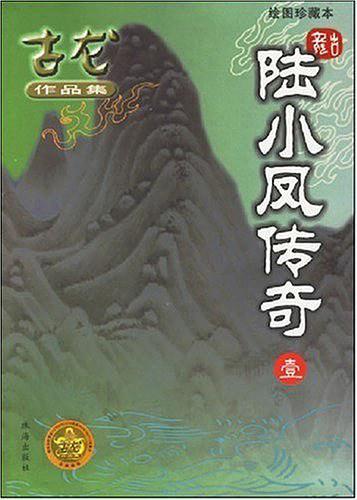
Legend of Lu Xiaofeng is the first book of a highly popular martial art series by Gu Long, and many of its characters have become household names through the years.
The hero of the story is Lu Xiaofeng (his name means 'Lu the young phoenix'), an extremely skilled swordman who has a great love for all kinds of earthly pleasure and a laid back attitude toward life. When a beautiful princess (from a fallen kingdom) seeks him out and asks for his help to right a wrong which had been done to her family some 50 years ago, Lu and his merry band of friends must go on a quest to find the princess' enemies and solve a mystery from 50 years ago.
Honestly, the novel has many flaws, for example the colorful, remarkable but undeveloped characters, how characters from a supposed 'fictional ancient China' backdrop talk like they are modern men and women, plus all these highly skilled swordmen, assassins and bodyguards in the story spend most of the novel chatting instead of doing the actual fighting.
The flaws are obvious and there is no defending them.
However, the strength of this novel lays on the witty dialogues (they are endless) among characters (and I don't even want them to stop having these witty dialogues once they are at it), the great sense of humor and the 'devil-may-care' attitude pulls up by the author. At first the story looks like a typical revenge-themed martial art tale but soon it is takes over by a murder mystery and conspiracy plot. I quite like how plot twists keep on coming by the end of the story. For example, .
As for the writing, I invite you to look at the opening sentence for this novel:
Lu Xiaofeng was a man, an unforgettable man.
A few sentences later, we have this:
Full moon, heavy fog. Full moon in the heavy fog, the moonlight so sorrowful and blurry, it was heartbreaking.
Sentences like these are everywhere in each of Gu Long's novels, and I can only say Gu Long probably is the only guy who can get away with writing like this. LOL
Ok...there's a HUGE difference in writing skill between Gu Long and Jin Yong (No wonder my parents only bothered to read Jin Yong's works), but the story/plot is engaging enough, and pretty funny at times. Kind of wish the fights were more in detail though. After book 1 I still have no idea just to what extent Lu Xiaofeng's abilities are, they kept building up the expectations, but no awesome fight ="= I liked Ximen Chuixue though, lolz.
Đã đọc KD thì khi đọc Cổ Long khó mà không so sánh hai người này, nhưng đáng ra không nên so sánh làm gì. Những gì có thể định lượng được (cốt truyện, kết cấu, chi tiết, bề sâu, bề rộng) thì có lẽ KD đều hơn Cổ gia. Những gì không định lượng được thì đương nhiên không so được.
2 quyển đầu Kim Bằng vương triếu với Tú hoa đại đạo thì cũng tàm tạm thôi no cigar. Mặc dù cũng như nhân vật Lục Tiểu Phụng, chẳng có điểm gì đáng nói nhưng nhìn chung lại thấy có phần khả ái. U Linh sơn trang và Phụng vũ cửu thiên lại là 2 phần thích nhất, thích đến tối đa trên mọi thang điểm, ngay cả khi lúc đọc xong chẳng còn biết đọng lại gì. Lục Tiểu Phụng yêu cô nào cũng long trời lở đất, sẵn sàng nhảy xuống biển bơi lại vào bờ để có thể nhìn người ấy thêm một lần mặc dù thuyền đã ra khơi được hơn 1 tiếng. Người thương mất đi tưởng như trong lòng đã chết, không thèm nhích người tránh một chiêu kiếm. Ấy thế mà sang phần sau đã yêu ngay cô khác được. Cuộc đời lại nở hoa!
Quyển cuối cùng Kiếm thần nhất tiếu đã có cả bộ Lão thực hòa thượng, Tư Không Trích Tinh, Tây Môn Xuy Tuyết, thế mà lại không có Hoa Mãn Lâu ;__;. Nv Hoa Mãn Lâu dương quang chỉ được tỏa sáng trong 2 quyển đầu lại là 2 quyển tôi để ít tình vào nhất. Ngoài ra 2 quyển này cũng nhiều nv nữ tôi yêu mà các cô cứ đến cuối truyện lại thi nhau chết ngoẻo. Những người đàn bà trong Lục Tiểu Phụng ngoài được tả xinh đẹp thế nào, hung dữ thế nào, dễ yêu thế nào thì cũng chẳng có gì mấy để phân biệt với nhau. Một người tự cho là yêu đàn bà mà lại xây dựng những nhân vật nữ nhạt nhòa như thế. Điểm này tôi đành nhắm mắt cho qua.
Ngoài đoạn nhảy thuyền bơi vào bờ, còn có đoạn Cửu thiếu gia lại phòng Sa Mạn để tặng một bông hoa nằm trong băng đá cho nàng, nhưng vì nàng đang nằm trong tay người đàn ông khác nên đành đặt lên bàn và dùng khinh công siu hạng để bỏ đi mất. Nv Cửu thiếu gia về sau hóa ra lại là một tên M không cò gì đáng yêu mấy. Một đoạn cảm khái khác là Lục Tiểu Phụng chia tay Tây Môn Xuy Tuyết cũng là ở cuối truyện Phụng vũ cửu thiên. Chẳng hiểu sao chỉ là rời xa một người bạn tỉ năm không ló mặt mà phải đau lòng còn tả là bước đi nhanh không dám quay đầu. Thật ra có khi tôi đã từng trong tình cảnh thế này rồi nên nói chẳng hiểu sao cũng là có phần không thật.
Membaca karya Gu Long (Khu Lung) selalu memberikan sensasi yang berbeda. Kalau Jin Yong kuat di sejarah dan world-building yang megah, Gu Long adalah rajanya cerita detektif silat dengan dialog yang tajam, penuh misteri, wanita cantik, dan tentu saja... arak!
Kisah Pendekar Empat Alis, Lu Xiaofeng (atau Lioe Hian Hong dalam ejaan saduran lama), ini benar-benar mahakarya. Jurus Jari Sehati (Lingxi Finger) miliknya yang bisa menangkap senjata tajam apapun hanya dengan dua jari sangatlah ikonik. Plotnya serba cepat, penuh teka-teki, dan persahabatannya dengan Hua Manlou (pendekar buta) ditulis dengan sangat indah.
Sayangnya, mencari terjemahan bahasa Indonesia yang rapi dan enak dibaca untuk novel-novel klasik Wuxia seperti ini di era modern cukup menantang. Terlalu banyak hasil terjemahan mesin (MTL) yang kaku dan bikin pusing kepala.
Bagi teman-teman sesama pendekar yang mungkin kesulitan mencari tempat baca, atau ingin membaca novel cersil terjemahan bahasa Indonesia dengan kualitas rapi, kalian bisa mampir ke pelataran Tinta Murim. Kami sedang berusaha mengarsipkan dan menerjemahkan berbagai karya Wuxia/Xianxia secara gratis tanpa gangguan iklan pop-up.
Sangat direkomendasikan untuk penggemar genre misteri bercampur martial arts! 5 Bintang untuk Gu Long! ⭐⭐⭐⭐⭐
Giờ mới biết sao cuốn này được coi là kiếm hiệp pha trinh thám. Trùm cuối được giấu khá kỹ đến cuối mới lộ mặt. Cách xây dựng nhân vật vẫn đúng phong cách Cổ Long: võ công tài ba không rõ xuất xứ, giao đấu chỉ một hai chiêu là phân thắng phụ... chứ không mô tả kỹ càng như Kim Dung.