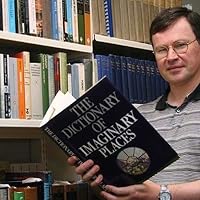
Who was Elizabeth I's true father? Did Buckingham poison James I? And who was the Man in the Iron Mask?
These and a host of other tantalizing age-old mysteries that have caused speculation and scandal through the centuries are explored in this intriguing book. Using techniques of modern detection, Hugh Ross Williamson re-evaluates the evidence, examines character and motive, and uses the known facts of the cases to come up with solutions both intriguing and controversial. Shattering myths and propaganda, he exposes a grisly array of murder, lies, intrigue, and conspiracies. Discover the political frame-up surrounding the Gunpowder Plot, the secret identity of Charles I's executioner, Elizabeth I's involvement in the murder of her lover's wife, and much more.
Hugh Ross Williamson (1901 - 1978) was a prolific British historian, and a dramatist. Starting from a career in the literary world, and having a Nonconformist background, he became an Anglican clergyman in 1943; and later in 1955 a Catholic convert. He wrote many historical works in a Catholic apologist tone. and in 1956 published his autobiography entitled "The Walled Garden".
This volume in the Penguin Classic History series looks at more than just the title question. In fact, the majority of the historical mysteries focus on Scotland and England from the Middle Ages to George IV. Each chapter presents the question of what actually happened and Hugh Ross Williamson then presents his suggestion. It’s True Crime for the sword and gunpowder era.
It starts with William Rufus, famously shot by an arrow while hunting in the New Forest in 1100. The third and most favored son of William The Conqueror, William had the misfortune of having a younger brother who was a bit more ruthless in getting his hands on the crown of England. It doesn’t take much discussion to decide on who benefited from the death of William Rufus, as Henry wasted no time taking over the throne. We will never truly know whether it was a hunting accident or an assassination, but Henry’s quick action suggests the latter.
We then move on to the Princes In The Tower, the young sons of Edward IV. Legend, as written by the Tudors, states they were killed by Richard III, but the author reminds us to look again at Henry VII. Once again, who would have benefited from the death of the boys? Henry VII was a rather odious ruler, always paranoid, always counting his coins, always looking at any potential Yorkist claimants who might re-take his precious throne. Edward V and his younger brother were definitely in the way. We may never know the true answer. Would Richard III, who worshipped his older brother, really have killed his nephews? Did Buckingham do it? Again, look to the end result and the nasty Tudor/Lancastrian motives. There, I solved it.
The remainder of the book then spends most of its time tracking down the various Mary Queen Of Scots events (she just invited chaos, didn’t she), with the stabbing of Rizzio and the murder of Darnley. There’s also the infamous Gunpowder Plot, the murder of Sir Thomas Overbury, and the machinations of King James I, who as the son of Mary, invited as much drama as his mother. Eventually, we get to the Iron Mask enigma, which is very exciting. It’s not an invention of Dumas, as we now know there truly was a prisoner who frightened King Louis XIV enough to be kept under lock and key until the end of his days, albeit in a velvet mask, not iron. Who was it? Inquiring minds want to know.
Hugh Ross Williamson does his best to break down every mystery while also explaining his revelations. He was definitely opinionated, which makes the reading interesting, as the reader has to get through the actual historical timeline before the author presents his case. Needless to say, I never thought much of James I (who takes up much of the book) before this read, but his shenanigans made my head swirl.
Book Season = Year Round (always look over your shoulder)
This book was originally published in the 1950s under the title "Historical Enigmas," however the title was changed in 2002, presumably to build on the film adaption of The Man in the Iron Mask released around that time. I mention this because the current title may make you think this is a book on global historical mysteries, when in fact it is entirely focused on England (there is a story about Scotland, and the Man in the Iron Mask is a French tale, however the links to England in these stories are still strong).
There is a real mixture of stuff in this book. It deals with huge historical mysteries involving monarchs, such as the death of William II, the murder of the Princes in the Tower, and the father of Elizabeth I, but also deals with the murder of less historical characters and in some cases fairly trivial people (in the grand scheme of history anyway). The themes of the mysteries often vary as well. Some are who-done-its and would be at home in a Sherlock Holmes novel. Others are attempts to unravel the motives behind actions. Some leave a satisfying conclusion that has you convinced of the truth, others just leave you with a plausible theory. In some cases the author just establishes a motive and seems to think that is enough.
Unfortunately, the variety in these stories extends to the quality too. Some are great--everyone should read his theory on the murder of the Princes in the Tower, that is erroneously credited to Richard III. Others are just too dull. I appreciate that the executioner of Charles I is a massive historical figure, but the suspects are all just random unknowns, and it is hard to care who did the act. There is also variety in the strength of his theories. While I enjoyed the chapter on Elizabeth I's parentage, the author places huge weight on the belief of Mary I with no real evidence to support it. I was not convinced by this argument. In addition, the death of William II is discussed too briefly. The author discusses witchcraft and then, with little explanation, suggests that the King sacrificed himself for a cult belief. I need a lot more explanation to be convinced of something so outlandish.
Finally, there is also inconsistency in the quality of the writing. For the most part, the author is great at telling the background and main story, however his theories often read like an afterthought. You sometimes get 20 pages of story and then 1.5 pages saying why it was X. Some of the stories are badly written, and the author's liberal use of commas instead of full stops can be infuriating. A number of passages were completely incomprehensible to me even after re-reads. It should be noted that in some cases the author has actually written full books on the subject, and I think he sometimes struggles to contract the story into 20 or so pages. He seems to assume the reader has certain knowledge of the topic already and introduces irrelevant details while leaving out important ones. In short, this book would have benefited from a thorough edit.
Despite these criticisms, I have no qualms in recommending the book. The author is a fantastic researcher. To write this in the pre-internet era must have required a devotion to research that I can only begin to imagine. He uncovers some truly great stuff. A search on Wikipedia for some of the cases shows that unfortunately his work does not seem to have permeated the mainstream. This is a shame. In some cases, the author proves beyond any reasonable doubt that the common belief is erroneous, and he deserves great credit for his work. This book also gets a decent score because it has motivated me to read further into a number of topics including English legal history. Some of the miscarriages of justice discussed in this book, are quite incredible and I want to read more about how this corrupt legal system developed and changed over the years. Any book that motivates you to read more, must be worth a decent score.
Despite being first published in the 1950s, this fascinating volume of revisionist history is still an absorbing and thought-provoking read for both the historian and the general reader alike.
What a load of tripe! Should be fiction. The theories are wonderful, and sometimes elaborate, but one slight glance at the introduction will tell you that you're not going to get anything of any historical value. No referencing, virtually no footnoting - no traceable path to follow if you want to explore any one of the historical enigmas further. It could have been so much more interesting had it been backed up with evidence (however slight that evidence might be). The sycophantic manner in which the author follows the opinion of a minor aristocrat (in the chapter actually devoted to The Man in the Iron Mask) as the basis for his conclusions was just plain laughable. If this were a school report, I'd be writing, "Could have done better".
As a child I had been fascinated with The Man in the Iron Mask, a phrase that promised romance and persistent questions (How does he eat? Does he wash his face?). I snatched this book for its title alone, of which my failing eyesight saw only the first sentence, in bold large font: Who Was the Man in the Iron Mask? And so this sat on my pile of unread books until I could commit to reading a hefty book on this French enigma which spawned many a movie. It wasn't until last week, when I saw the much smaller print "And Other Historical Mysteries" did I realize I was in for more than one treat--there were nineteen more! And so I dug in...
This book is best enjoyed by a reader who is easily captivated by well-documented, unsolved incidents in history--the whoddunits as well as the whydunnits. But it is better understood by the reader who has some knowledge of European history, especially the musical chairs monarchy and fickle politics of England and Scotland, where most of the book's action takes place. Some mysteries are more captivating, and given to more interesting arguments than others. Such as:
1 The Princes in the Tower - Richard III is one of the most notorious villains in English history as we know it courtesy of William Shakespeare's play (A horse, a horse! My kingdom for a horse!). But I admit to seeing him in a softer, lightly rose-colored light since reading Josephine Tey's The Daughter of Time, an exquisite novel that sets out to question how history has judged the man, this killer of princes, his nephews, heir and spare to the crown of England. Who had the most to gain by their killing? Was it Richard? Or Henry VII, whose foothold on the crown was "tenuous in the extreme?" Hugh Ross Williamson asks the same questions, and lays out the plausibilities, exonerating the uncle.
2 The Identity of Perkin Warbeck - I first read of this poor unfortunate blond, blue-eyed boy in The Great Pretenders by Jan Bondeson. As that title suggests, he was a fake. Warbeck was merely a naive, willing, ambitious pawn caught up in the politics of the day. Williamson seems to believe he may have been the real deal, the younger son of Edward IV, one of the princes in the tower. I remain unconvinced.
3 The Parentage of Queen Elizabeth I - Williamson pins his doubts on Elizabeth's parentage on Queen Mary's obstinate refusal to recognize her as her half-sister, thereby jeopardizing the act of succession. But he fails to realize Mary's two strongest reasons for her actions, driven by faith and human nature. The first reason was simple: Elizabeth refused to convert to Catholicism. This alone would have been non-negotiable to the fanatically Catholic Mary. The second reason is even simpler, to anyone familiar with fairy tales, half-sibling rivalry, and tyrannical queens with literal axes to grind. Being childless, Mary could not stand the thought of the Protestant Elizabeth being queen of England one day, and so held off for as long as she possibly could.
4 The Murder of Amy Robsart - The movies have long since made us aware of Elizabeth's fondness for Sir Robert Dudley, Earl of Leceister. He was her favorite, and she made no pretense of this at court. But this is my first time to hear of his wife's early, unexplained death. Was it murder? And was the queen involved in it? This chapter indicates she was merely aware of it. Which amounts to the same thing.
5 Holyrood and Kirk o' Field - The more I read of Mary, Queen of Scots, the more I despair for the life she could have enjoyed as Queen of Scotland and France, had her husband Francis II not died young. Her father King James died when she was six days old, and she was five when she left to live at the French court, where she married the fifteen-year-old dauphin at fifteen. Two years later, he was dead. Of an ear infection. To be suddenly thrust into barbaric Scotland at eighteen--Mary's choice it seems, as her mother-in-law Catherine de' Medici wanted her to stay in France. I wonder, if her life would have been much easier, had she decided to remain in France as a former queen, rather than risk her heart (and head), trying to rule the belligerent, brutish Scots.
6 The Poisoning of King James I - This was a scenario, briefly discussed, in Leanda de Lisle's The White King, a recent book I read. Williamson makes his case against George Villiers, 1st Duke of Buckingham, a court favorite and former lover of James I.
7 The Campden Wonder - This is a whodunnit I've come across in other books on the bizarre and unexplained disappearances. The twist is here is the resurfacing of the victim long after three innocent people have hung for his assumed death. This, like the other articles I've read on the incident, doesn't supply any plausible answers. Sorry, but kidnapping by Turkish pirates story doesn't fly.
8 The Man in the Iron Mask - This failed to captivate. But I guess I lost interest when Williamson pointed out, early into the article, that it was not an iron mask. It was a velvet mask. And The Man in the Velvet Mask just doesn't quite cut it.
9 The Innocence of Sir John Fenwick - Jacobite comes from Jacobus, which is Latin for James. The Jacobites were the supporters of England's deposed Catholic king James II, son of Charles I, beheaded King of England, and younger brother of Charles II, who assumed the throne after years of exile. This was an England fond of royal musical thrones, and based on Williamson's profile of the man, Sir John Fenwick was a benevolent supporter of James II, a king he felt would eventually defeat his Dutch son-in-law William of Orange and re-assume his rightful place as King of England, Scotland and Ireland, as his brother Charles II did before him. We'll never know if he was indeed capable of the accusations--trumped up, Williamson insists--against him, mainly treason and an assassination plot against William, for which he was found guilty and beheaded. As were many a royal subject before and after him. But what gives this story a delightful piquancy is its epilogue, surely "one of the most edifying examples of unexpected justice in English history." For "five years after Fenwick's execution, William was riding at Hampton Court, when his horse stumbled on a mole-hill. William broke his collar-bone and shortly afterwards died. Everyone knows of the famous Jacobite toast to the mole--'the little gentleman in black velvet.' But not everyone knows, I think, that the horse was Sir John Fenwick's favorite horse, Sorrel, which William had taken for his own after its master's execution."
10 The Appin Murder - Scotland, 1752. An unhealthy place and time to be, if you happened to be a Stewart. A man is shot while riding through the Argyll Woods. A Stewart is sent to the gallows for the murder. This was beguiling reading for the quirks of Scottish clansmen and their policies on warfare. If the clan hated a man enough to kill him, the battle had to be in fair fight. A traitor to the clan however, had no claims on conventional warfare, including fair warning. A traitor to the clan was fair game for a sniper's bullet. Robert Louis Stevenson's Kidnapped was inspired by The Appin Murder. This was Scotland of its time's Who Killed JR?
Three and a half stars, plus the likelihood of selective re-readings!
Pretty miserable. Extremely England-focused (the title doesn't give away that only one of the "historical enigmas"- that of the Man in the Iron Mask- is related to events outside the British Isles), and regularly absurd. Williamson was an Anglican (then Catholic) priest and eccentric, not a historian, and prone to flights of fancy. He never meets an absurd, fanciful explanation that he'd prefer over a more plausible one. He proposes that William II Rufus was murdered as part of a supposed fantastical pagan ritual for which there is no direct evidence. He proposes that the explanation for Campden Wonder (where an elderly man vanished from a small English town, then reappeared several years later, after three people had been executed for his putative murder) is... the story said man told upon his reappearance, a nonsensical story featuring Turks abducting him in the night, stuffing his pockets with money, and shipping him off to the Ottoman Empire on a slave ship. He doesn't even do a very good job of explaining the enigmas in the first place. Worthless.