

What do you think?

Without a Name and Under the Tongue
Yvonne Vera's novels chronicle the lives of Zimbabwean women with extraordinary power and beauty. Without a Name and Under the Tongue , her two earliest novels, are set in the seventies during the guerrilla war against the white government.
In Without a Name (1994), Mazvita, a young woman from the country, travels to Harare to escape the war and begin a new life. But her dreams of independence are short-lived. She begins a relationship of convenience and becomes pregnant.
In Under the Tongue (1996), the adolescent Zhizha has lost the will to speak. In lyrical fragments, Vera relates the story of Zhizha's parents, and the horrifying events that led to her mother's imprisonment and her father's death. With this novel Vera became the first Zimbabwean writer ever to deal frankly with incest. With these surprising, at times shocking novels Vera shows herself to be a writer of great potential.
In Without a Name (1994), Mazvita, a young woman from the country, travels to Harare to escape the war and begin a new life. But her dreams of independence are short-lived. She begins a relationship of convenience and becomes pregnant.
In Under the Tongue (1996), the adolescent Zhizha has lost the will to speak. In lyrical fragments, Vera relates the story of Zhizha's parents, and the horrifying events that led to her mother's imprisonment and her father's death. With this novel Vera became the first Zimbabwean writer ever to deal frankly with incest. With these surprising, at times shocking novels Vera shows herself to be a writer of great potential.
224 pages, Paperback
First published February 13, 2002
About the author
Yvonne Vera
13 books62 followersYvonne Vera (September 19, 1964 – April 7, 2005) was an award-winning author from Zimbabwe. Her novels are known for their poetic prose, difficult subject-matter, and their strong women characters, and are firmly rooted in Zimbabwe's difficult past. For these reasons, she has been widely studied and appreciated by those studying postcolonial African literature.
Vera was born in Bulawayo, in what was then Southern Rhodesia, to Jerry Vera and Ericah Gwetai. At the age of eight, she worked as a cotton-picker near Hartley. She attended Mzilikazi High School and then taught English literature at Njube High School, both in Bulawayo. In 1987 she travelled to Canada and she married John Jose, a Canadian whom she had met while he was teaching at Njube. At York University, Toronto, she completed an undergraduate degree, a master's and a PhD, and taught literature.
In 1995, Vera returned to Zimbabwe and in 1997 became director of the National Gallery of Zimbabwe in Bulawayo, a gallery that showcases local talent ranging from that of professional artists to school children. In 2004 she went back to Canada, where she died on April 7, 2005, of AIDS-related meningitis.
(from Wikipedia)
Vera was born in Bulawayo, in what was then Southern Rhodesia, to Jerry Vera and Ericah Gwetai. At the age of eight, she worked as a cotton-picker near Hartley. She attended Mzilikazi High School and then taught English literature at Njube High School, both in Bulawayo. In 1987 she travelled to Canada and she married John Jose, a Canadian whom she had met while he was teaching at Njube. At York University, Toronto, she completed an undergraduate degree, a master's and a PhD, and taught literature.
In 1995, Vera returned to Zimbabwe and in 1997 became director of the National Gallery of Zimbabwe in Bulawayo, a gallery that showcases local talent ranging from that of professional artists to school children. In 2004 she went back to Canada, where she died on April 7, 2005, of AIDS-related meningitis.
(from Wikipedia)
Ratings & Reviews
Friends & Following
Create a free account to discover what your friends think of this book!
Community Reviews
Displaying 1 - 14 of 14 reviews

January 30, 2015
"When the tears have become a river, morning will arrive even in such a place. The river will become a tongue. Under the tongue are hidden voices. Under the tongue is a healing silence."
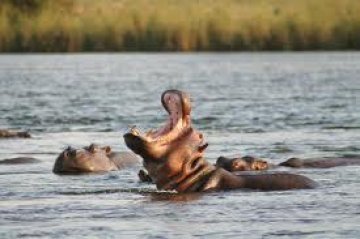
Zambezi River, Zimbabwe
In "Under the Tongue," Zhizha is a child of war who must face her own battle at home, a struggle that leaves her in a psychological state where she has lost her ability to speak. While protecting her child from brutality, Zhizha's mother is sent to jail and she is raised by her grandmother, a woman who has seen her share of catastrophe, a woman who has the kind of quiet strength she bestows to her granddaughter. Through fragments of poetry, a story is told of the human condition, where the sorrow of women soar silently, leaving no "no resounding echoes or footsteps, no memorable silhouettes."
Some thoughts rot under the tongue, remain in the quiet soul, and these thoughts are stunningly portrayed in this framework of two novellas. What happens to the innocent survivors of war, those women and children, when soldiers needing rehabilitation return home? What happens to the homeless who must find some means, any means, of survival? And what of the children of war who never get to experience childhood?
In "Without a Name," a homeless woman leaves her small town to find her dream in the city of Harare. It is 1977. Rhodesia sheds its white skin to become black Zimbabwe. A woman sheds the robe in which society has clothed her, and dons her individuality. "Freedom was a translucent rose, ready to drop…no one understood what freedom truly was." Instead of freedom, chaos ensues. Like her country, Mazvita realizes that it may take years to be truly free. Disillusioned, she does something unspeakable. Her trauma is whispered in graceful psychological posturing, her trauma builds through inner subtleties.
"If she had no fears, she could begin here, without a name…soundlessly and without pain."
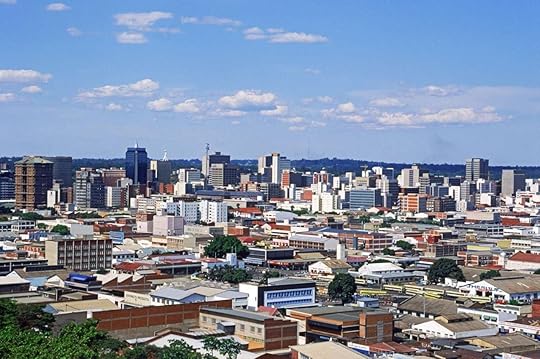
Harare, Zimbabwe taken by The Telegraph
These spellbinding prose poems move like the enigmatic writing of Nicole Brossard in Yesterday, at the Hotel Clarendon or in The Blue Books. The underlying story dazzles, like Maraire's Zenzele: A Letter for My Daughter; syntax and structure take precedence and words tease, as in Luiselli's Faces in the Crowd. This encapsulation of pain is as beautiful as it is ugly, as encouraging as it is despairing.
On the front cover of my book, which isn't on Goodreads, there is the picture of a beautiful African woman. She stands naked, her arms shielding her breasts only. Behind her, Zimbabwe, the former Rhodesia, is a silhouette of dark moving clouds against a white sky that stretches into the mountains, a gray sea in the distance, bold, lush trees as a backdrop. She is the portrait of a woman who must stand within a white, patriarchal society that has been shred to pieces, one in which the black patriarch must find his place at her expense. She stands naked, on the top of the mountain, exposed and calm, head held high, shoulders arched, an allusion to the strength of this African nation called Zimbabwe.
Update: Thanks to the fantastic GoodReads librarian and my GR friend, Jean, the cover is now updated!
Zambezi River, Zimbabwe
In "Under the Tongue," Zhizha is a child of war who must face her own battle at home, a struggle that leaves her in a psychological state where she has lost her ability to speak. While protecting her child from brutality, Zhizha's mother is sent to jail and she is raised by her grandmother, a woman who has seen her share of catastrophe, a woman who has the kind of quiet strength she bestows to her granddaughter. Through fragments of poetry, a story is told of the human condition, where the sorrow of women soar silently, leaving no "no resounding echoes or footsteps, no memorable silhouettes."
Some thoughts rot under the tongue, remain in the quiet soul, and these thoughts are stunningly portrayed in this framework of two novellas. What happens to the innocent survivors of war, those women and children, when soldiers needing rehabilitation return home? What happens to the homeless who must find some means, any means, of survival? And what of the children of war who never get to experience childhood?
In "Without a Name," a homeless woman leaves her small town to find her dream in the city of Harare. It is 1977. Rhodesia sheds its white skin to become black Zimbabwe. A woman sheds the robe in which society has clothed her, and dons her individuality. "Freedom was a translucent rose, ready to drop…no one understood what freedom truly was." Instead of freedom, chaos ensues. Like her country, Mazvita realizes that it may take years to be truly free. Disillusioned, she does something unspeakable. Her trauma is whispered in graceful psychological posturing, her trauma builds through inner subtleties.
"If she had no fears, she could begin here, without a name…soundlessly and without pain."
Harare, Zimbabwe taken by The Telegraph
These spellbinding prose poems move like the enigmatic writing of Nicole Brossard in Yesterday, at the Hotel Clarendon or in The Blue Books. The underlying story dazzles, like Maraire's Zenzele: A Letter for My Daughter; syntax and structure take precedence and words tease, as in Luiselli's Faces in the Crowd. This encapsulation of pain is as beautiful as it is ugly, as encouraging as it is despairing.
On the front cover of my book, which isn't on Goodreads, there is the picture of a beautiful African woman. She stands naked, her arms shielding her breasts only. Behind her, Zimbabwe, the former Rhodesia, is a silhouette of dark moving clouds against a white sky that stretches into the mountains, a gray sea in the distance, bold, lush trees as a backdrop. She is the portrait of a woman who must stand within a white, patriarchal society that has been shred to pieces, one in which the black patriarch must find his place at her expense. She stands naked, on the top of the mountain, exposed and calm, head held high, shoulders arched, an allusion to the strength of this African nation called Zimbabwe.
Update: Thanks to the fantastic GoodReads librarian and my GR friend, Jean, the cover is now updated!

December 30, 2014
The five stars are really for Under the Tongue, which is wrenching, poetic, dream-like, simply extraordinary.
February 8, 2009
It is difficult to describe Under the Tongue. I had to study it and it took a while for me to understand it. When I felt I had understood it I read it again and it wrenched my heart. There is something very authentic and very real about how Vera uses language to make unspeakable experiences and emotions real.
February 5, 2025
These two stories were truly powerful and depicted the horrific injustices women in the 1970s in war-torn Zimbabwe had to endure. Although some of the metaphors in these poetic stories were more difficult to follow, they gave such a deep visual of the realities some women faced. Yvonne Vera is a truly talented writer and poet.
January 24, 2008
Please see my review of "Without a Name" for more on that book and the author. "Under the Tongue" is my second-favorite of her books. It's the story of a woman who has suffered at the hands of others and who has been holding all of her secrets back, under her tongue. Like all Yvonne Vera's books, it's not really a narration of events as much as it is a descriptive narration of feelings, so what is really happening outside of the main character is not always clear. The focus is on what is happening inside of the main character, and the truth of what is going on outside of her is revealed slowly as the story progresses.
October 18, 2025
Really loved Without a Name. It's one of those texts that really stays with you. Under the Tongue is a slow burner and the abstract passages draw on quite long - the kind of passages you find yourself skipping. That being said, lovers of more abstract, mystical language and symbolism would probably be more patient with the text than I was.
February 20, 2020
African lyrical....1977, Harare, Zimbabwe & 1980 Zimbabwe....lyrical abstract prose, two novellas, female centric. Without a Name is rich, dark, brutally exposed. Under the Tongue is obscure in meaning and intent.
July 19, 2021
Lyrical and beautiful writing, but I found this super challenging. I'm not used to such a non-linear style and the metaphors were so complex and unusual that I really struggled.

May 19, 2008
Okay, I'll be honest, I didn't read Under the Tongue because Without a Name was so entirely upsetting and depressing I couldn't bear any more. Which I guess isn't fair because the second story might provide a breather. At some point I'll go back and see because I do love Vera's language and narrative style.

July 7, 2009
Without a Name is hard to read (again, because of the subject matter), but it's intense and beautiful. Under the Tongue is sometimes difficult to understand, which is really OK because the subject matter is so horrific. Vera is not a happy writer!

May 13, 2010
For the first third of Without a Name the book I thought it was really indulgently written: lots of semi-lyrical writing, but it did not make much sense. Towards the middle I realised there was a story there, but not much of one, and it was padded with too much weird description.
November 10, 2009
Incredible use of symbolic language.

June 22, 2010
The repetition and jumping around became really annoying and hard to keep up with. Same problem in both books. Depressing and no sense of hope or positive thought, just war and rape.
Read
September 25, 2018INCREDIBLE.
Displaying 1 - 14 of 14 reviews