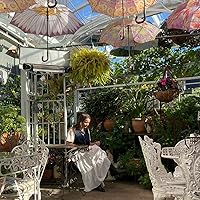
As Australia began the process of breaking away from its status as a British colony, Catherine Martin was fascinated with the meaning of Australian culture and identity. She examines these issues through the story of the independent and intelligent Stella Courtland, a young girl who marries and finds herself hampered by the social constraints of her new life. In this sensitive tale of moral and emotional growth, Martin brilliantly captures this turning point in Australian history and anticipates the values of a new generation.
Catherine Martin was born on the Isle of Skye, late in the 1840s. Her family were poor crofters and some years later they emigrated to South Australia , alongside many other impoverished Highland families.
There were lessons for the children on the long, long voyage to Australia, and Catherine came to love language and literature. Her education would continue in Australia; she became a teacher, she became a wife, she developed progressive views; she came to especially love German language and literature, and she began to publish poems and translations.
All of this would inform this book – her first novel – which was published anonymously in 1890.
‘An Australian Girl’ is the story of Stella Courtland. She was beautiful, articulate, and sociable; and she loved the world around her and all the things she could do in that world just as much as she loved her books and intellectual pursuits. She was one of the youngest children of a large family, most of her siblings had scattered, and only the youngest were left at home with their widowed mother. Stella was ready to fly, but she would never flout the conventions of society; she would always love her home, and she was able to travel to visit friends and family in different parts of South Australia.
I had to love Stella. She was a wonderful mixture of new woman and tradition heroine, and she was completely and utterly a woman of a particular time and place.
Edward Ritchie had been a childhood friend and he had become Stella’s most devoted suitor. He was a successful and wealthy pastoralist, and though he had no interest in books and learning himself he was happy for Stella to pursue whatever interests she had, to live however she wished, just as long as she would become his bride.
Their friends and their families thought that it would be a wonderful match; but Stella knew that she loved him as a friend and no more than that, and so she did her best to refuse his proposals without losing his friendship.
When Stella was introduced to a visitor from England, Dr Anselm Langdale, she knew that she had done the right thing. They shared the same interests, and they were perfectly matched, both intellectually and romantically.
Friends and family were unsure, but Stella was certain.
The trouble was that one person, Ritchie’s sister Laurette Tareling was unhappy with that match. She had serious financial and marital issues, she would do anything within her power to resolve them and claim the social position that she knew should be hers, and she wanted her brother safely married to Stella.
The story moves between Australia and Europe as it plays out, beginning as a classical Victorian drama, coming close to a sensation novel as it moves forward, and finally settling into a wonderful conclusion when Stella came to realise that she must make her own decisions and determine her own future.
There was an conventional route along which Catherine Martin could have steered her heroine, and I am so pleased that she didn’t, and that the route that she did take was influenced by the values that Stella was raised with as well as her own independent thinking.
Her story says much about the world that she lived in, how it had developed, how it might change in the future, and exactly what in meant to be an Australian woman in the latter years of the 19th century.
The writing is effective in many ways. It describes Stella’s world, especially the natural world that she so loves, wonderfully well. It captures conversations so well that I could hear them in my head. It allows me to understand her life, and to see and feel all of the things that she does.
The book as a whole though felt a little odd. The early chapters were almost entirely conversation, they were followed by a series of letters from Stella to her brother setting out all of the details of what she was doing, and then it settled into traditional storytelling.
I enjoyed the conversations, but I was anxious for the story to open out. I loved the letters, and they were so illuminating that I could forgive the fact that they fell into the kind of narrative that felt more like a book than a letter. I enjoyed what followed, but the prose lacked elegance, and the story didn’t flow as naturally as it might. There is nothing that I can say is wrong, but I can say that Catherine Martin is not as skilled a storyteller as the writers who influenced her.
The accounts of what Stella saw when she was doing ‘good works’ made me think of Dickens; many of the drawing room scenes made me think of Trollope; and some of the later drama made me think of Wilkie Collins …
That isn’t what will stay with me; what will stay with me is the story of a wonderful heroine and all that her story told me about her country.
A gem of a novel by an author I'd never heard of before I found her on the Goodreads "Best Australian Literary Fiction and Poetry" list. (Many thanks to the reader/s who put her there!) At the girls' school I attended through the 1970s, we read a Shakespeare play every year; some poetry (the Romantics, T.S. Eliot, Sylvia Plath); and novels by the Brontes, E.M. Forster, D.H. Lawrence, and F. Scott Fitzgerald. All of which I'm glad to have read. Still, it's sobering to realize that less than a hundred years after Catherine Martin's ambitious and accomplished novel was published, it had been completely forgotten, even in her homeland.
The novel begins in the vein of Jane Austen: the heroine, Stella Courtland, is introduced, and the story reveals itself as a classic marriage-plot: Stella will choose her self by choosing a husband. Pages of amusing dialogue delineate the characters, especially Stella's suitor Ted and his sister Laurette, and much fun is had skewering that variety of social snobbery that worships British aristocratic connections. The novel then veers off into George Eliot territory: Stella meets the Englishman Anselm Langdale and the possibility of a marriage between like minds is explored. It would be unfair to reveal here how Stella makes her choice and what happens thereafter.
This is an excellent edition with several hundred very necessary endnotes elucidating everything from the characters' use of (often dated) Australian dialect through Biblical, classical, and poetic references. All in all, a wonderful discovery!
Synopsis: An Australian Girl was written by the Australian author Catherine Martin and was published in 1890. This is the story of Stella. A true Australian girl born and raised in Australia. She is a new woman of Australia. Independent. Physically healthy, enjoying exploring the wild landscape around her. Intellectual with a love of learning and reading. Craving discourse with an equally intellectual companion. At the beginning of the novel Stella keeps trying to reject the marriage proposals of her friend since childhood, Ted. She seems quite cynical of the marriage institution and while she is fond of Ted, they are not intellectual equals and she does not love him. Then unexpectedly she falls in love with a man named Anselm. They start off as having a ‘true friendship’ . He is her intellectual equal and she can’t help falling in love with him. It seems like Stella has found the perfect match, but then deception and the intervention of a desperate and greedy woman changes the course of Stella’s story.
Storyline: I so enjoyed this novel, there were so many things packed in here. First of all the writing! Oh my the writing was gorgeous and passionate. The parts following Stella were beautiful in particular and the description of the natural landscape was off the charts fantastic. In part this was a wonderful novel about Australia as it was soon to become a country in 1901 and not just a bunch of colonies. Not only is the natural beauty of Australia commented on, but all the different people and experiences. The aboriginals are touched on, the people exploring the bush in search of gold and what not. The people trying to make a living off of sheep farming. The society in the urban center of Melbourne. The foreigners coming to Australia with fresh eyes. The youth who were born and raised in Australia like Stella and Ted. On the other hand this was a novel about Stella, this new woman of Australia trying to find a new place for herself and struggling against Victorian ideals. The institution of marriage is criticized and Stella questions the ideals of marriage and love. Marriage never goes well in this book. Stella ends up marrying the wrong man. You hear stories about her sister’s and friend’s marriages turning out to be failures. Ted’s sister Laurette’s marriage is quite horrible as she is married to a man who gambles away their money and has affairs. It’s a loveless marriage that threatens to leave Laurette in ruin, so she takes actions that end up making her the villain of the novel. Even with all that criticism of marriage, Stella finds love. A love based in friendship and mental equality. These seem to be the ideals for the best type of partnership that the author it seems found lacking in most marriages. Weirdly enough the ending of the novel goes in a strange direction , away from Stella’s desires. Honestly I loved everything about the novel except the ending. It does not end so called happily and Stella does not follow her desires. I almost saw it in a sense of her not being able to break away from the old world and the old traditions as much as she’d like. The novel ends in England ( the old world) and with Stella falling back on religion. It’s like she’s pulled back into the old a bit and can’t quite break free from the old ideals and moral code enough to be truly independent and follow her own heart.
Setting: The setting of An Australian Girl was one of my all time favorite settings I’ve read about in awhile. It’s mostly set in Australia of course, although near the end it’s set for a bit in Berlin, Germany and in London, England. Australia’s natural beauty was described with such passion. Such fantastic descriptions that really brought it to life. There were so many I loved: the Mallee Scrub where her family had a house, her family’s garden and surrounding views in Adelaide, other parts of the bush, a place called The Wicked Wood, the Peeloo Plain that with all it’s waving grasses looked like an ocean, her brother’s house and surrounding gardens with trees native to Australia and also from all over the world and horseback rides on the beach. This world was described to be one of splendor, melancholy, beauty, mystery and a kind of sacred loneliness.
Characters: Stella was a fantastic character. She was so passionate, so smart and so independent. Such a love for her native Australia. I loved seeing her develop. When she was more ‘innocent’ however is when I liked her the best. She seemed so content to be with herself and to read and experience the natural world. She has one of those sensitive temperaments though, which can be so alive to the beauty of the world, but whom tragedy touches deeply. Near the end of the novel her mental anguish wracks her nervous system and also weakens her body. I loved Anselm. I so badly wanted that relationship to work out. I loved how their love was based on a deep friendship that grew because they could share so much intellectually. Such a beautiful relationship dynamic. It was hard to dislike Ted too much though because he seemed so good natured and like he cared so much for Stella. He just doesn’t understand her depth and isn’t her equal mentally. Laurette I disliked as the villain she was. So selfish. Yet, she was the character the most trapped and constrained. Lots of little interesting side characters and stories as the novel went on, which I thought added to the picture of Australia in particular.
Did I Like It?: I loved this novel! Definitely a hidden gem. I know the ending wasn’t one I wanted or agreed with, but I still loved the bulk of it so thoroughly. A wonderful Australian classic and a wonderful classic in general. I want to check out more by this author!
Do I Recommend it?: Yes very highly! This book currently is out of print, although they reprinted it in the 90’s and I found it easy to get a hold of a copy. I feel like this is such a gem of a book though that I really would like to see gain a readership again. It is a fabulous book by a female author in the Victorian period for one. Most of all it is an Australian classic that really captures what it meant to be Australian at the time. It should not be forgotten and should be valued as a wonderful work of Australian literature and a great classic of it’s time by a female author.
Don’t talk to me until I’ve had my mental-breakdown-inducing tryst that crosses borders and pits my not-so-secret German lover against my secretly-alcoholic (trying to be sober) long-term-friend-turned-husband but also isn’t the Australian bush just so beautiful
I was attracted to this book on Gutenberg.org (http://www.gutenberg.org/ebooks/50832) by the opening scene, where Stella the heroine deftly puts off the advances of her longtime suitor Teddy. My reaction was--yes! Don't ever marry him! I was looking forward to a book where the female lead actually takes charge and goes willingly into all the life provides.
I'm happy to say that, even though the plot turned out differently than I expected--quite differently--I still had a good amount of respect for Stella. If you like the idea of spunky heroines battling what life throws at them with a good wit and sense of humor, you'll like this story.