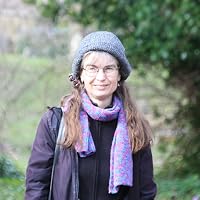
Akiko Busch has written about design and culture since 1979. She is the author of Geography of Home: Writings on Where We Live and The Uncommon Life of Common Objects: Essays on Design an the Everyday. Her most recent book of essays, Nine Ways to Cross a River, a collection of essays about swimming across American Rivers, was published in 2007 by Bloomsbury/USA. She was a contributing editor at Metropolis magazine for 20 years. Her essays have appeared in numerous exhibition catalogues, and she has written articles for Architectural Record, Elle, Home, House & Garden, Metropolitan Home, London Financial Times, The New York Times, Traditional Home, Travel & Leisure and Wallpaper*, among other publications. In Fall, 2005 she served as a Richard Koopman Distinguished Chair for the Visual Arts at the Hartford Art School at the University of Hartford. She has lectured widely on architecture and design and has appeared on public radio in the U.S. and Canada. Currently, she is a regular contributor to The New York Times Sunday regional section.
This book has a lot to offer even to casual nature watchers, with its realistic, personal, down-to-earth perspective. Each chapter describes a field trip, with its joys and frequent frustrations. What gives this book richness is Busch’s reflections on learning to pay attention, to see, developing awareness in our own neighborhoods , and her thoughts on the ambiguities in nature and in our lives,. And she considers how the local connects with the national, the global, and on how “knowing well” can lead to love and inform policy.
n her new book, The Incidental Steward: Reflections on Citizen Science, Akiko Busch discusses how a thoughtful citizenry can learn, understand, and act upon their findings as they observe, closely, the rapidly changing natural world around them. In reading her introductory remarks, in which she gives the pride of place to a quote from Edward O. Wilson–“We do not understand ourselves yet and descend further from heaven’s air if we forget how much the natural world means to us”– an overwhelming truth hit me square in the eye. As a long-time resident of the big city, I have forgotten my innate connections with the natural world. As I went deeper into Busch’s text, I came to a painful realization of what this careless disconnection has done to me. I now know that the further I have turned away from that natural world, the more impoverished I became, both intellectually and emotionally. Busch’s examples of citizen scientists, those who regularly observe, record, and act upon the wrongs visited on the natural world in their own back yards, seem to have a deeper sense of place than those of us who stopped paying attention. In addition to using their keen powers of observation, these alert citizens take it upon themselves to share their findings with others through all kinds of social networking, thus adding to the sum total of human knowledge of our world. They also get their hands dirty, like Busch and her cohorts have done in the Hudson Valley, where she made these observations about nature, human nature, and the nature of deep connections to place. Here, as she talks about her encounter with water chestnuts, she got me intrigued about Bats in the Locust Tree, Coyotes Across the Clear-Cut, Eels in the Stream, just a few of her evocative chapter headings I’ll be getting involved with next.—SSS
Weeding water chestnuts (trapa natans) from the river is an exercise in which leisure and industry easily coincide; it’s a brand of gardening in which a sense of purpose can intersect with being languid.
From time to time, I saw an elver, a juvenile American eel, winding around a stem or root like some weird extra plant appendage. Although the fish diversity is lower here than elsewhere on the river, eels can withstand the low oxygen levels of the water chestnut bed, all the while snacking on its assorted invertebrates. Yet if the eels swim off quickly, everything else seems to take its own time. Like anything else that is done in water, weeding is done slowly, as though it is possible to take on the liquid motion of what is around you. The stems can be pulled out with the gentlest tug; their attachment to the riverbed seems slight, their resistance imperceptible. Yet there is the smallest bit of spring to them, as though some bit of elastic thread has woven its way through the watery pink tendrils, and they have that sense of give that the most tenacious opponents sometimes seem to have. With a bit of stretch, these interlopers seem to be hanging on, though without much faith. And the mud on the bed of the river has a give, too; at each step, we sink in a bit. Perhaps this is why I am so drawn to the waterworld of rivers: nothing here stays the same for too long; things are always shifting, drifting, gently giving way. Our weeding accessories were primitive. Once we had pulled the water chestnuts up, we put them in small, gray buckets. Dime-sized circles had been punched into the buckets so that the water would drain out. The buckets were kept afloat with a bright blue foam swimming noodle encircling them and attached with a strip of silver duct tape. Buckets, noodles, tape. There was an almost childlike quality to the tools we were using, as though they were the accessories in some kind of water game. We were not dousing the leaves with pesticides, because there are no such things as safe pesticides. Nor were we relying on the blades of a mechanical weed cutter or harvester.
They are expensive, and the heavy boats that carry them are impractical for shallow water. And while biological controls may be found in the future, there is nothing conclusive or licensed, for that matter, yet. Not long before I had read an account of Qingdao, a city in China whose coast was being choked by an unexpected bloom of green algae, officially said to be a result of warmer weather and heavy rains, but more likely a product of excessive nutrients from sewage, industrial pollutants, agricultural waste. The photographs documented not so much a landscape of displacement but a grotesque parody of aquatic flora; what should have been the surface of clear water was a swirling, shaggy stew of chartreuse plant life. The city was to host the regatta for the summer Olympics, and thousands of city residents had volunteered—or been ordered—to go out into the Yellow Sea on foot or in small wooden boats to scoop up the green algae by hand. And I wonder how it has come to be that our responses to these invasive species are so rudimentary—our little gray buckets, their little wooden boats; and how our ingenuity so often fails us when it comes to cleaning up after ourselves, as we are going out now, collecting these weeds with nothing but our hands. Certainly the term “citizen activist” describes the kind of effort we were engaged in this morning, but the phrase that stuck with me was “incidental steward”: what we do and what we use to do it with both have the air of the improvisation that so often comes from necessity. Pete Seeger says the world changes one teaspoon at a time, but on the river on this shining July morning, it is more like one leaf, one stem, one seed at a time.
When we think about data, we might think about boring rows of spreadsheets, Excel, fancy pie charts - or the unwelcome invasion of computer algorithms that infringe on our privacy; greedily sucking up our behaviour, routines and familiar patterns that we fall back on, in order to figure out what we would really buy. What if we could use data to tell us something about the behaviour and patterns of the natural world?
In seeking and analysing raw data, the usual conclusion is that we can come up with logical, orderly conclusions - and perhaps, a solution. Or so we laughably think, when Akiko Busch follows a couple of scientists as a volunteer on various citizen science programmes in her local Hudson Valley area. She proceeds to discover that Nature herself is often not a willing participant in our data collection frenzy. Moments of joy at acheiving their objectives are often interspersed with frustration when their data collection is impeded by unexpected events, or Nature being an impudent mistress through denial of her presence. This doesn't stop Busch from wandering into the spaces of uncertainty where logic and linearity fail, and here is where her writing really shines, linking these mundane and often incomprehensible threads into meaningful ruminations.
From the extraordinary and mysterious journey of eels that turn into transparent elvers in their youth - then eventually turning silver in their later years and returning to the Sargasso Sea to spawn and perish - to the spectral presence of the coyotes that Busch likens to the edgelands in between the urban and the wild, she contemplates on the roller-coaster of discovery, loss and life, and the desire that feeds our need to know, uncover and experience what we can't see with our eyes.
Every sentence written here is a delightful, contemplative rabbit-hole. A water chestnut weeding turns into a reflection on dualism, the Sisyphean task of countering its overenthusiastic growth with 2 mere humans a brutal reminder of keeping things going despite the going getting tough. While searching for the elusive Indiana bats via radio transmitters, Busch likens the maze-like process to the desire paths that people often create, ignoring the concrete walkways for a more instinctual approach towards their destination. Variability and significance in data is dependent on strict percentages and probabilities, and she muses on the subjective unreliability of personal significance in an incredibly funny anecdote. I am also reminded of the border-making paradox mentioned in An Anthropology of Nothing in Particular by Martin Demant Frederiksen, where the more demarcated an area is, the more unreliable these borders start to become.
As with her previous book, I've taken nearly 2 months to savour every passage - and I might need to come back to this book again for a second sitting. If you like taking the straight path, this may not be your book.
Subtitled 'Reflections on Citizen Science' this is a wonderfully observed, carefully documented and inspiring read for anyone interested in rivers, freshwater ecology or citizen science.
The book studies several different citizen science inititatives that focus on the USA's Hudson River, including recording and controlling invasive species, evaluating the health of fish species, ceaning up the river and tracking bald eagles. Each chapter focuses closely on the one aspect of the river ecology, with Busch enthusiastically describing how close attention to detail increases her appreciation of the local ecology and discussing what we can take from these types of scientific investigations and learn from them in other areas of life.
The author also considers the human relationship with nature:
' In my mind it remains an open question whether a sense of displacement from the natural world brings us greater anxieties or whether our other existing stresses cause us to distance outselves from nature and cause this larger sense of being adrift. I would suspect that both of these are true and that, in fact, displacement is likely to travel this infinite loop: the greater our disquiet, the more we tend to remive ourselves from nature; the more we become so removed, the more deeply our anxieties take root.
But all of this said, or perhaps as a direct result of it, the seatch for some sense of belonging seems to befall many of us, whether it is in watching, naming, counting, documenting or otherwise boting the natural events unfolding around us'.
As someone who volunteers to look after our local river (the Water of Leith) I found this book fascinating. I was very interested in finding out more about a different river ecosystem on the other side of the world that however faces a lot of the same pressures as our local river. I also found Busch's enthusiasm infectious. I definitely recommend this book to anyone who loves rivers or wants to get involved with citizen science.
This book aptly is subtitled "Reflections on Citizen Science." If you are looking for technical aspects of various volunteer science initiatives then this not the book for you. These are Busch's meditations on initiatives. She is often very verbose and flowery when discussing some of her exploits. For example, when discussing an invasive species form a river she had this to say: “The only thing I was beginning to grasp for sure was what had brought me here, which had something to do with the chance to restore clarity to what is cloudy and cluttered in our lives. That it is possible to weed something so fluid as river water speaks to our ability to put some kind of order to those things in our lives thought to be too quick, too changeable, too transparent to require our care." This is not the style of writing I expect when reading science related writings and so I found a little incongruous and halting as I read. That is my personals preference and others I am sure will disagree. There is no doubt the Busch has a passion of natural world and that is very evident in the words she chooses.
As the book jacket says, this is not a primer on citizen science but her reflections on a changing world, and in that sense it succeeds.
Personal meditations on various citizen science initiatives—and those like the Emerald Ash Borer monitoring program of chapter 11 that would be citizen science, but for the lack of funding. Sometimes Busch participates in the work, for other projects she tags along. It's admirable that she focuses on work that is done in the field, near her home in the Hudson Valley. If this means that indoor, computational projects like the @Home suite are slighted, at least they are noted in a fine appendix that catalogs more than 50 opportunities for lay participation. Four of her chapters deal with invasive exotics: is this undue emphasis by Busch or the scientific community, or simply the reality of what's going on in the natural world?
Not exactly science, but more reflections on a non-scientist's volunteering to help scientific efforts by things like finding radio-tagged bats, removing invasive species and counting glass eels.
An odd mixture of feelings from this because the language is calming, but often the subject matter is indirectly and directly hinting at the problems we as humans have caused in the nature around us.
Either way, this book did inspire me to look up citizen science opportunities in my area.
Although I rarely read non-fiction, I LOVED this book. All of the essays are about events/places in the Hudson River Valley - many place names I'm familiar with. It is about citizen science, something I participate in at Five Rivers Environmental Center. Recommended to anyone who cares about the environment, loves nature, and might consider getting involved in a relatively low-key way.