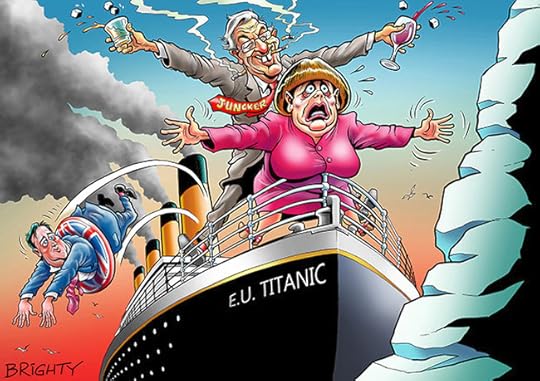
Europa išgyvena didžiausią krizę nuo Antrojo pasaulinio karo laikų. Ekonomikos krizė, išplitusi Viduržemio jūros pakrantėje, susilpninusi Graikiją, supriešinusi Šiaurės Europą ir Pietų Europą, teroristų išpuoliai Paryžiuje, Briuselyje ir Nicoje, neslopstanti Rusijos agresija Ukrainoje, pabėgėlių antplūdžiai... Europos Sąjungos negebėjimas susitvarkyti su šiomis problemomis paskatino Didžiąją Britaniją balsuoti už pasitraukimą – ir gali būti, kad jos pavyzdžiu paseks kitos šalys. Tai sustiprintų grėsmes ne tik Europoje, bet ir visame pasaulyje.
Taigi Europa privalo išlikti kiekvieno iš mūsų labui. Vienintelis klausimas – kaip? Knygoje „Paskutinis Europos šansas" Guy Verhofstadtas pateikia esmiškai svarbų modelį šiandienos Europai suprasti. Atskleisdamas dabartinės sistemos absurdiškumą, autorius ne tik kritikuoja Europos Sąjungą, bet ir siūlo savo viziją, kaip būtų galima ją pakeisti. Anot G. Verhofstadto, geriausias sprendimas – Europos federacijos sukūrimas. Federacijos, kuri būtų pakankamai stipri, kad galėtų drauge su Jungtinėmis Amerikos Valstijomis kurti geresnį ir saugesnį pasaulį. „Paskutinis Europos šansas" – vizionieriška knyga apie Europos ir pasaulio ateitį, apie norą išsaugoti tai, ką turime geriausia.
Belgian Liberal Politician and European Federalist.
He served as Prime Minister from 1999-2008 after defeating the Social-Democrats and Christian Democrats in the aftermath of the Agusta scandal and Dioxin Affair. He was the first liberal Prime Minister in Belgium since 1884.
In 2009 he was elected as Member of the European Parliament and became the leader of the Group of the Alliance of Liberals and Democrats.
Guy Verhofstadt is probably best known to most non-Belgians as the anti-Nigel Farage, the man at whom Farage's anti-EU tirades are perhaps most often directed, given that Verhofstadt and Farage face off in the European Parliament, whereas Jean-Claude Juncker, Farage's other bete noire, presides over the European Commission. Verhofstadt's designation as the Parliament's Brexit representative has thrust him further into the limelight recently, a position he certainly enjoys.
He's a pro-European, but also a reformist, and Europe's Last Chance is his diagnosis of and prescription for the EU's ills. As such it's wide-ranging, covering EU governance, financial union, an EU army, the rise of populism, the migrant crisis and Russia.
I expect it's therefore an almost perfect book for someone looking for a middle-distance contemporary guide to the EU. As someone who reports on the EU for a living, I'd have preferred a more warts-and-all, microscopic examination of everything from which Commissioners take sugar with their coffee to what national heads of state spit when they talk, but probably that's just me.
The book starts weakly, with a subjective and unconvincing attempt to solve the problems of nationalism and European identity. That the EU Verhofstadt envisions - as he later reveals - is essentially just a nation writ large undermines his attempt to dispel nationalist sentiment as wrong-headed. "That Europe is suffused with social bases and values so different as to be incompatible is nonsense", we're told, rightly, but then Verhofstadt declares that: "The entrepreneurial spirit is not northern European, it is European [his emphasis], as are solidarity with the vulnerable, the pursuit of justice...", as if North Americans or Africans were not entrepreneurial, Central Americans not empathetic, Middle Easterners not concerned with fairness. This crude if well-intentioned assertion is then undermined later by Verhofstadt himself, when he notes that "many French people still hold monarchist, rightist, and downright anti-semitic opinions".
It's not so much that Verhofstadt is wrong - later he says that "everyone should be able to become European" - it's just that he's better at handling the technical details than the emotional reasoning, and unfortunately the emotional part of the book comes first.
Later chapters are more convincing. The problems with the currency union lacking a fiscal union are well-known but quite clearly presented here, and the problems with the Greek debt crisis and the fractured and sclerotic EU governance even more so. Likewise, Verhofstadt's plans for dealing with these problems and others are clearly presented: he wants the Eurozone to be a genuine union; Greece's politicians to institute sweeping reforms; and the EU government to be shrunk and elected on a continent-wide basis and executive powers to be transferred to the Parliament and Commission, with a nationally selected senate acting only as a legislative check.
For those not already well versed in EU politics, this will all be informative and interesting stuff. For me, the most interesting parts were those that were less familiar and more personal: Verhoftstadt's take on the rise and (moral) fall of Hungary's prime minister Viktor Orban, the difficulties his cleaner had securing asylum in the EU, the wall he himself ran into when trying to secure a loan in Italy to set up a vineyard.
The book isn't perfect: in places it feels a touch shallow (minus the index it comes in under 300 pages), it could've done with more raw data and insider examples, some idea of how broad Verhofstadt thinks the EU should ultimately be would have been interesting (should Turkey be a member?), as would some indication of how he thinks the EU should deal with Brexit outside of his ideal scenario of a two-tier EU with an inner Eurozone and an outer associate layer in which the UK might find a home, plus there are too many typos, but over its course it slowly gains authority as it covers more ground, and by the end it's hard to imagine any but the most fixedly anti-EU readers not agreeing that the EU needs to succeed if Europe is to compete on the world stage, and that the only way it can do so in the long-term is through reform and closer unity.
A final thought: as a Brit, it's depressing to read a plan for European success in which Britain realistically will play no part. If a close-knit market of half a billion people and a European army are needed to compete with the US and China, repel the threat of a rampaging Putin and bring stability to north Africa, where does that leave the UK? A lone outsider, desperately trying to keep upper lip stiff while the realisation of increasing irrelevance and backwardness slowly dawns...
Puiki knyga, apnuoginanti Europos Sąjungos problemas bei pateikianti būdus toms problemoms spręsti. Smagiausia tai, jog, nors autorius ir aršiai kritikuoja ES (ko ES tikrai nusipelnė), ši kritika niekada nepereina į tam tikrą skepticizmą. Tai tikrai idealo paieškos.
Apskritai skaityti buvo įdomu. Nežinau, ar tai paties autoriaus rašymo ypatumai (visgi skaičiau ne originalo kalba), ar pačios paliestos temos įdomios, ar abu. Bet kuriuo atveju skaitydama karts nuo karto jaučiausi įkvėpta dar labiau gilintis į politiką ir dar daugiau skaityti, kas gal skamba gan kvailai, bet, manau, daug pasako apie šią knygą.
Galbūt šiek tiek erzino JAV idealizavimas, ypač skaitant apie bendrą ES kariuomenės viziją. Asmeniškai aš matau problemų (ir rimtų problemų) su JAV užsienio politika šioje vietoje. Iš kitos pusės žiūrint, autorius tikrai nesitiki, jog ES kariuomenė vykdytų tokias invazijas kaip JAV ir Irako atveju, ES kariuomenės paskirtis būtų kitokia (beje, ES valstybių narių nesutarimą dėl požiūrio į JAV-Irako situaciją autorius pamini ne kartą), tai galbūt ši pastaba ir nėra būtina, tiesiog gal norėjosi to tokio kritiškesnio požiūrio JAV atžvilgiu.
Kaip minėjau, skaičiau ne originalo kalba (obviously, duh). Kadangi neturiu su kuo lyginti, gal ne visai sąžininga tai paminėti, bet manau, kad lietuviškasis knygos vertimas puikus. Buvo miela aptikti kai kuriuos itin specifiškus lietuviškus pasakymus tam tikrose vietose.
Manyčiau, kad knygą drąsiai gali skaityti kiekvienas, net ir mažai politika besidomintis žmogus. Skaitosi tikrai lengvai. Na, gal tik tos vietos, susijusios su ekonomika, šiek tiek sunkiau, bet čia kaip man, nieko nesuprantančiai :)
So much about European politics I did not know, and this book led me to wikipedia to research! The European Parliament spends only 1% of europe’s GDP, which is paid by voluntary contributions from EU member states. Many MEPs (members of European parliament) are actively hostile to the EU mission, and many others just aim to win back (through targeted projects) as much of their nation’s contribution as possible. Most truly multinational projects that would increase efficiency and bring Europe closer to together are vehemently and successfully opposed by short-sighted and selfish national bureaucrats and regulators.
Europe doesn’t have a unified banking sector, energy market/grid, and most especially, it doesn’t have any multinational telecom service. One third of travelers turn off their phones when moving outside of their own national market, due to high “roaming” fees. Excess solar/wind energy is just wasted and lost because it can’t be sold across most national boundaries, though I have seen examples where it is specifically between nations. He also claims that Europe doesn’t even have consistent Patent/IP law, and that is only partly true.
I was greatly impressed by how weak and inefficient Europe’s pan-national institutions are (relative to China or the US) and how unlikely this is to change in the current decade. I was most impressed by his data showing the economic impact on post-2008 recovery, and on how hard life is for European internet companies (funding, licensing, and marketing) and why they decamp for the US.
Verhofstadt is the leader of a smallish political faction speaking for about a fifth of the European’s parliament’s delegates. It is centrist within European politics so is often involved in coalition building. Many of this arguments can seem self-serving — such as calls for maximal power for the European parliament because of direct democracy, or his call for direct taxation to fund parliament projects. This book would be more powerful were he more powerful, or where any of the plans he calls for likely to be implemented.
Mostly Verhofstadt writes casually from personal experience, and while he been in some important meetings and situations, I don’t feel that his first person experience includes most of the key events that should be included in proving his point. Of course, he could make a stronger case for his plans for Europe with more data, and more emotional stories of the actual people of Europe and how they would be effected. His primary anecdotes (such as his wine business) are only about himself.
This book largely preaches to the choir, or worse, isn’t clear about its intended audience. Perhaps Verhofstadt needed to write a book to summarize and justify his MEP’s political objectives. Perhaps it was written for the Economist reading business and for the “european political class", but they usually already are pan-European and in favor of a stronger EU.
Verhofstadt is most persuasive on defense and security. Europe has more active duty military personnel (2.4m) than the US (2.1m), yet has nowhere near the operational effectiveness or capability of the US. Most of the EU defense spending (all together half as much as the US, a huge sum) is wasted on redundant projects, and lacks a cohesive, forward looking strategy. Putin lurks out against the weakness.
The people and groups that most need to be convinced of “benefit to them” from a stronger Europe and nationalist and right of center politicians and voters — and they would find nothing here for them except scorn. Within these voting groups, selfish nationalist politicians find refuge and power to sabotage the greater union and the broadly distributed benefits of operating as a larger economic union.
Europe needs to unify, to compete and even survive in the modern global economy. Europe also faces massive demographic and unemployment problems (even already in this decade) which must be fixed through integration. It is not at all clear that this is politically what will happen. It is just as likely the euro itself will fall apart or become less viable, as eurozone countries actively grow further apart.
I am a fan of Guy Verhofstadt, I like his speeches in the European Parliament and his passion for creating a better Europe. Although the book is clearly written by a political person and this can be felt in the text - many conclusions are not proven and are built on assumptions that are not entirely convincing.
Being born and living in USSR I clearly remember the nice slogans of brotherhood and common happiness of the Soviet peoples, but the reality was rather different. There were many things that were just very different from what we were fed from state-owned media and the party. I support the ideas of federalisation and the foundation of the European Army and a closer union between the members that are described in the book, but it is a far cry from the reality we are living in. So this is very similar to my Soviet experience - the reality and the dream are very different things. Although the dream is really attractive and I would support it to see how it will work out.
One of the big disagreements I had with the author is the migration crisis. My main problems are: - the author is contradicting himself in two separate chapters - as an argument for young immigrants Guy is saying that Europe is going through a demographic crisis and it needs young labour force, but at the same time in a later chapter, he is presenting the data on huge youth unemployment in many European countries. - the author is not making a clear distinction between refugees (which legally should be protected) and migrants (that are just people that must understand the risks of their actions). - the lack of any economic calculation regarding the absorption of a large number of people from a very different culture and with unknown agendas. In other words the simple I accept the idea of the author regarding the introduction of a system of points for immigrants, similar to the Canadian or Australian one. - I still do not get it why some immigrants must have a more oppressed status like we have a type of hierarchy of oppression. In other words why Ukranian refugees are not so important as Sudanese ones? - Multiculturalism is very problematic anywhere on the globe and this is part of human psychology. If it would not be true we would not need the European transfer of populations after WW2. Why did no one think of multiculturalism when millions of people were moved from one area to another at that point in time and they were quite similar - similar religions, similar cultures? Now we want to pretend there is no problem in having a huge number of people that are very different in their culture, values, language, religion, experiences, morals - I seriously doubt the process of integration will be quick and without problems. How can Europe tolerate the intolerant? How can we accept people that consider the concept of human rights as something to be changed? - The rise of right wing parties is not due to propaganda , but people are fed up with the liberal narative and they look for the solution in the worng people. The rise of extremism is absolutely natural and was foreseeble right at its start and the correct reaction was not to ignore or to label people fascists, but to look for viable solutions. By labeling people fascits you get nothing - in the PC era voters are afraid to speak up about their concerns, but they still vote privately as they feel fit, so you can accept this political reality and react to it, not deny it.
I liked the ideas about labour mobility or lack of it in EU, which I think is mainly caused by language requirements and not political factors. And the ideas about the freedom fo doing business, which is a problem in European countries mainly because of taxation and bureaucracy.
So my conclusion - an interesting book with a nice idea about a possible future of Europe that I fully support.
Probably the most important book about Europe and the EU these days.
Whether you agree or completely reject Verhofstadt's solutions, the diagnosis is undeniable: a disunited Europe and an incomplete Union brought us to this stage, and, as it stands today, the EU is doomed. As he correctly puts it: "we look to Europe to solve many social problems [the sovereign debt and the migrant crises being good examples], but no one is prepared to equip Europe with the resources it needs to solve them."
My rating somewhat reflects my stand on his solution, as I believe that only further integration will safeguard all the values and liberties we enjoy today, without compromising our safety (in the very broad term of the word, from counterterrorism to the economy and welfare). We had a taste of nationalism and 'competition' in Europe in the past, one that some are deliberately trying to erase from the public mind. Let's say it didn't end well...
However, we need a European Union that we can trust and hold accountable for, not one that relegates important political decisions to unelected/informal institutions (such as the Eurogroup), often taken behind closed doors in the middle of the night. By continuously avoiding difficult decisions and reforms, we are giving voice (and reason) to the Euroskeptics, as our inability to handle difficult political situations speaks for itself.
Only by completing the Union can we have a truly open, transparent and democratic Europe, one that works for everyone. "United we stand, divided we fall."
EU DON'T GET IT Deluded EU chief Guy Verhofstadt STILL thinks Britain will rejoin the bloc after Brexit ‘catfight’ as European Parliament approves red lines for negotiations in: https://www.thesun.co.uk/news/3259581...
Populárny je Guy. Aj dobré, plamenné prejavy má v Europarlamente. Zábava pozerať. Ale kniha veľký smútok. Šielene zle zorganizovaná. Šialene zle zeditovaná. Čo je však asi najhoršie, veľmi povrchná. Nacionalizmu sa dá prekonať, európska identita je silnejšia. Dve strany a ide sa ďalej. Podobným spôsobom asi všetkých zásadnejších otázkach integrácie. A to všetko vravím ako človek, čo s politickými stanoviskami autor skôr súhlasí. Titul sa dá odporúčať asi naozaj len absolútnym začiatočníkom v EÚ témach, ktorí si chcú prečítať politický, normatívny pamflet. Pokročilejším čitateľom to veľa nedá.
I have given Europe's Last Chance three stars, but I do not know yet how I truly feel about this book.
Guy Verhofstadt, former Prime Minister of Belgium and current representative for the European Union in the Brexit negotiations, is undoubtedly a Europhile. He calls for ever-closer European integration; not just more of the same, but a Europe democratically and fiscally united as it has never been before. I share many of these sentiments. I am pro-Europe British citizen; I would love nothing more than for the United Kingdom to remain a part of the European Union and take on a leading role in fulfilling the European promise.
Yet, the book left me feeling rather hollow.
Verhofstadt is an intelligent man; he acknowledges and understands the many faults inherent in the European Union's current institutional makeup. Unfortunately, this willingness to engage in the arguments advanced by Euroskeptics–something which is of course to be encouraged–somewhat drowns out the hopeful message at the heart of this book: a reformed and effective European Union is the continent's best (and perhaps only) hope for long-term growth.
Each of the Union's most glaring failures and weaknesses are tackled: Brexit, representation without taxation, constant kowtowing to the vetoes and demands of lone dissenting voices. Verhofstadt dissects each of these, and each time concludes that the answer is not dissolution, but resolution. He is correct in this assertion, I believe. However, the relentless march of chapters, each highlighting the European project at its most fallible, becomes dispiriting for even the most hardened believer in the Union.
Ultimately, Europe's Last Chance is a book with which I agree on much, yet I find hard to recommend to anyone. It is unlikely to sway anyone with anti-EU sentiments, who will devour the various shortcomings listed in each and every chapter; conversely, even those who agree with Verhofstadt's core message are likely to be left deflated by the size of the problem which he diagnoses, whilst offering little hope of achieving the reforms which are so desperately needed to make the European project succeed.
Pretty insightful and concrete ideas on Europe's political evolution. However, I don't think it will convince people who disagree. If you agree with Verhofstadt's Liberalism, then you'll love this book. But if you're leaning Conservative or Righty Moderate, then I'm not sure how much of this will change your mind. Definitely worth a read if you're interested in the potential of the European Union.
Verhofstadt --the ex-prime minister of Belgium whose passionate speeches at the European Parliament I follow now and then, describes EU’s current crisis, and makes the argument the supranational organization can overcome it only through becoming a tighter federation akin to the USA.
While I agreed with some of what Verhofstadt’s points, I found his EU-USA comparison to be a bit unrealistic in practical terms. Specifically, his sentiment that 20+ European nations that came together to form a mainly economic club only relatively recently could set aside their differences, national interests, and ultimately replace their national identity with a “European” is naïve in my opinion, and one that goes too far, even on an idealistic scale. At a minimum, contrary to what the author suggests, the starting premises of the US and the EU have little in common. I also do not agree with the author’s view that the EU halt its economic decline (in particular with regards to industry, credit, and labor).
Sorry, Guy, but I believe the most the EU can achieve is becoming “a limited loose economic confederation.”
Overall a useful read but the content didn’t need a book, could have been a blog article. The author keeps repeating the same stance and the arguments for it are mostly the same.
What is missing: - A much more in depth understanding on how this could be achieved. - A more honest look at criticism of this approach. He often just dismisses it without really trying to understand the opposition. - A more in depth explanation of why this is a better alternative than the alternative. The author many times explains the benefits of his proposal but they are not detailed enough. (How would a EU army would work from top generals to solder to language to …, how would taxation be introduced legally, why would we be ok with still more politicians, how can we shift rhetoric member states from just caring about themselves)
Overall the book is OK but it will fail to provide more information to the pro EU and it would fail to convert the scepticism, so the goal of the book is unclear to me.
A very thought provoking book. Europe definitely has its share of problems, which this book attempts to tackle.
One thing that frustrated me with this book was it was highly opinion based, and wasn't grounded in facts or statistics. This was a tad bothersome given my own personal preferences but also something of this scale cannot be left up to opinion. For that I knocked a star off.
A second star was knocked given I didn't necessarly agree with what he proposed in many cases. Some of the fiscal and monetary policies as well as the open border policy are two examples.
I do agree with his "two tiered" membership into the EU, where you can belong to both political and economic unions, or just economic. Seems the UK would be the obvious guinea pig if that is something that was to be tested.
Mintis apie stipresnę Europą kaip federaciją skamba gražiai, bet žinant šių dienų realybę tai atrodo nebeįmanoma. G. Verhofstadt kritikuoja ES neveiklumą ir neryžtingumą priimant būtinus ir reikalingus sprendimus ir yra visiškai teisus tai darydamas, knyga kupina viltingumo, kad Europa galėtų atgimti ir tapti vienu kūnu, funkcionuojančiu ir judančiu viena kryptimi, tačiau nuo 2018 m., kai buvo išleista ši knyga iki pat 2025 m., matyti, kad Europa toliau eina susiskaldymo link, nėra jokio konsensuso, kai situacija reikalauja neatidėliotinų sprendimų- nacionaliniai valstybių interesai ima viršų. Tas ypač matyti Rusijos invazijos prieš Ukrainą kontekste- nėra jokios politinės valios nei iš Vokietijos, nei Prancūzijos, visa ka turime, tai skambūs pareiškimai ir pažadai, niekaip netampantys kažkuo apčiuopiamu.
Even if you don't believe in EU as a federation, I think the book is well worth reading as it makes many good points on what is wrong and why the federation might not be such a stupid idea after all as it would help at many places (basically making the EU finally able to decide and act).
Not the best text ever (lots of points are repeated many times and - as somebody already wrote below - not everything is well argumented / lots of things are based on author's political opinion), but again it's a book well worth reading for anybody interested in the fate of EU and for anybody wanting to form an opinion on how we should shape it in the future.
My favorite quotes: "We look to Europe to solve many social problems, but no one is prepared to equip Europe with the resources it needs to solve them"& "Too many cooks in the kitchen"
Puiki apžvalga, parodanti, kaip užstrigimas dabartinėje ES struktūroje ir mindžikavimas neinant gilesnės ES integracijos link kenkia pačiai Europai. Verhofstadtas beda pirštus į sritis, kuriose bendradarbiavimo nėra, aprašo ekonomikos sektorius, kuriose bendra ES rinka praktiškai neegzistuoja ir su kokiomis pasekmėmis dėl viso to susiduriame - kaip bendros bankininkystės sistemos nebuvimas trukdė išlipti iš 2008-2009 krizės, o skaitmeninės rinkos neegzistavimas toli gražu nepadeda užauginti savųjų technologijos įmonių.
Autorius taip pat puikiai atskleidžia ES egzistuojantį biurokratizmo perteklių, gyvulių ūkį, kai skirtingos narės tampo paklodę į savo puses, išsidera įvairias nuolaidas ir išlygas, dėl kurių susidaro ne viena, o daugybė paskirų Europos sąjungyčių skirtingose srityse.
Deja, kai kurios pastabos kultūros, tautiškumo klausimais pasirodė perdėm naivios, nors akmenys į euroskeptikų daržą ir pelnyti. Vietomis stilius lozunginis, tačiau tai bendro įspūdžio pernelyg neapkartina.
Verhofstadt is one of the more credible leaders within the EU and calls out all the critical issues facing EU from moving forward. Good reading for anyone interested or equally concerned about the lack of EU institutional progress in recent years. In a globalized and transversal world, more cohesiveness is needed but leadership in Brussels vis-a-vis smarter policy making that benefits European citizenry. That said, actions speak louder than words and Europe needs positive active momentum more so than noble intentions. It puts some good perspective on modern Europe.
An absolute must-read for anyone interested in the future of the EU - not to agree with everything but simply because some of these questions had to be asked (and answered) a long time ago.
Overall - a fairly detailed overview of the issues of today's EU, however, the book goes a bit overboard with the labeling at times. I would've liked to see more on the newest members and their potential place in a future reformed EU.
If you want to feel better about the United States, read this book.
The author is a scathing critic of European dysfunction, and raves about the United States. While parts of the book are platitudes about unity, there's good background about the problems facing Europe. The author goes into a lot of interesting details about Europe's woes, and the short chapters make it a fairly easy read.
I was a bit disappointed of this book - thought it would be a very nice, objective analysis of the European Union - with recommendations and ideas to improve. Instead it’s just a long list of complaints, things the EU did wrong, and comparisons with the US - which should by no means serve as the ultimate example. If you do read this, take everything with a big grain of salt.
Verhofstadt is quite a character, and you can feel the pro-Europeanism throughout the book. Although the pro-Europeanism feeling was almost obtrusive, having similar views in many of the points raised made it an enjoyable read.
Lightweight and repetitive federalist manifesto. Seems to harbour ill conceived ideas that a European government modelled on the US system is the silver bullet to solve all the EU’s problems. Can’t believe people take this clown seriously.
Un libro que cualquiera interesado en política debería de leer. Se ven muchisimos de los fallos de la política de las naciones europeas y como la división juega en nuestra contra.
This book, while illustrating the period and news from around 2014 (Brexit, Crimea, Syria), still offers an insightfull insiders view on the workings of the European Union. Well worth a read!
A really interesting book by the former PM of Belgium. The book has a little of a political bent but he essentially argues that the EU is flawed and could improve itself by modeling it like the United States. You don't have to agree with everything he says but it is still a good read.
Great book, I read The Great Deception (a eurosceptic book) and came out slightly more pro-European, as there is not enough to warrant that title. This book brings you right up to date, post EU referendum. I agree with a lot of what Guy Verhofstadt says, but not all.
Amazing book! Talks about things you probably didn’t know. As well as it explains what can be done to avoid some problems. Every European should read this one!