

What do you think?
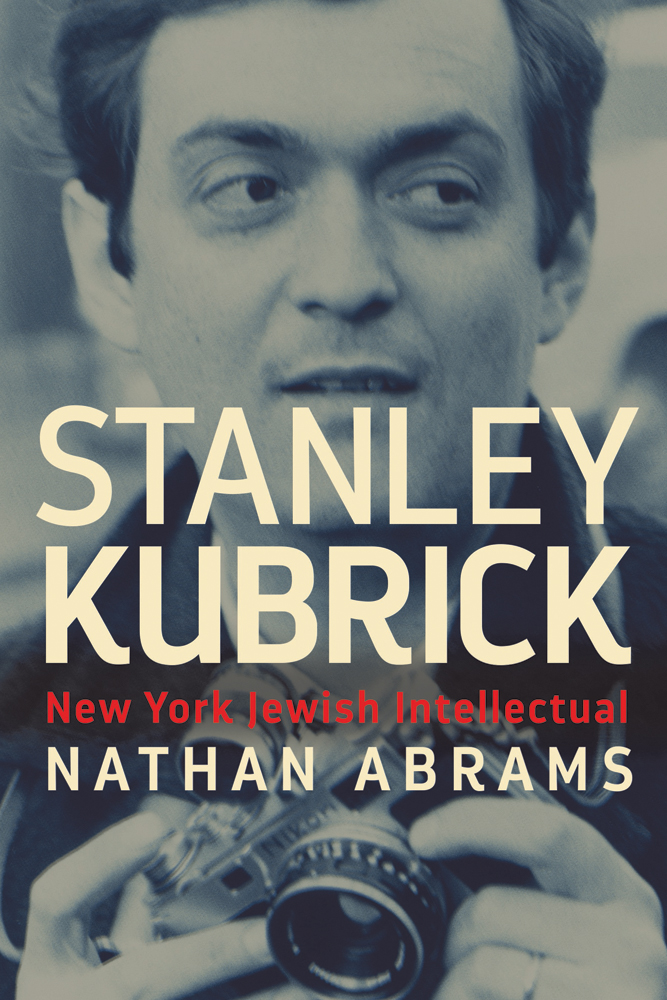
Stanley Kubrick: New York Jewish Intellectual
Stanley Kubrick is generally acknowledged as one of the world’s great directors. Yet few critics or scholars have considered how he emerged from a unique and vibrant cultural the New York Jewish intelligentsia.
Stanley Kubrick reexamines the director’s work in context of his ethnic and cultural origins. Focusing on several of Kubrick’s key themes—including masculinity, ethical responsibility, and the nature of evil—it demonstrates how his films were in conversation with contemporary New York Jewish intellectuals who grappled with the same concerns. At the same time, it explores Kubrick’s fraught relationship with his Jewish identity and his reluctance to be pegged as an ethnic director, manifest in his removal of Jewish references and characters from stories he adapted.
As he digs deep into rare Kubrick archives to reveal insights about the director’s life and times, film scholar Nathan Abrams also provides a nuanced account of Kubrick’s cinematic artistry. Each chapter offers a detailed analysis of one of Kubrick’s major films, including Lolita , Dr. Strangelove , 2001 , A Clockwork Orange , Barry Lyndon , The Shining , Full Metal Jacket , and Eyes Wide Shut . Stanley Kubrick thus presents an illuminating look at one of the twentieth century’s most renowned and yet misunderstood directors.
Stanley Kubrick reexamines the director’s work in context of his ethnic and cultural origins. Focusing on several of Kubrick’s key themes—including masculinity, ethical responsibility, and the nature of evil—it demonstrates how his films were in conversation with contemporary New York Jewish intellectuals who grappled with the same concerns. At the same time, it explores Kubrick’s fraught relationship with his Jewish identity and his reluctance to be pegged as an ethnic director, manifest in his removal of Jewish references and characters from stories he adapted.
As he digs deep into rare Kubrick archives to reveal insights about the director’s life and times, film scholar Nathan Abrams also provides a nuanced account of Kubrick’s cinematic artistry. Each chapter offers a detailed analysis of one of Kubrick’s major films, including Lolita , Dr. Strangelove , 2001 , A Clockwork Orange , Barry Lyndon , The Shining , Full Metal Jacket , and Eyes Wide Shut . Stanley Kubrick thus presents an illuminating look at one of the twentieth century’s most renowned and yet misunderstood directors.
- GenresBiographyNonfictionFilm
344 pages, Paperback
Published October 16, 2020
About the author
Nathan Abrams
24 books4 followersNathan Abrams is Professor in Film at Bangor University in Wales. He is founding co-editor of Jewish Film and New Media: An International Journal, as well as the author of The New Jew in Film: Exploring Jewishness and Judaism in Contemporary Cinema and Stanley Kubrick: New York Jewish Intellectual.
Ratings & Reviews
Friends & Following
Create a free account to discover what your friends think of this book!
Community Reviews
Displaying 1 - 4 of 4 reviews

April 22, 2019
As this highly insightful book written by a Jew from a Jewish perspective demonstrates, all of Kubrick's films are hermetically Hebraic and one must understand this if one wants to fully appreciate the great auteur's undeniably singular oeuvre. In fact, 'Jewishness,' at least in the cultural/racial sense, was arguably the single greatest yet (somewhat paradoxically) most covert influence on his films. As Abrams also demonstrates, Kubrick curiously went out of his way to hide or excise the Judaic elements of his source material. Somewhat unintentionally, the book almost provides insights into the seeming absurdity of Kubrick collaborating with a sappy sentimentalist like Spielberg.
I've read a number of books about Kubrick, including a collection of interviews, and this book is unequivocally the most insightful.
I've read a number of books about Kubrick, including a collection of interviews, and this book is unequivocally the most insightful.

January 22, 2024
A well-sourced accounting of Kubrick's films and early life. But the core thesis -- that most of the films' major characters are essentially Jewish or have traits the author associates with Jewishness (left-handedness?) -- is unpersuasive and quickly becomes tiresome. The acknowledgments indicate the book had a copy editor, though that is hard to believe.

March 7, 2018
If you are into films, this is an interesting book about the Jewish influence in Stanley Kubrick's movies. If you are not Jewish, you won't as David Mamet as said, get the cultural references. I enjoyed the book though. Very informative and well written.

Displaying 1 - 4 of 4 reviews