This is the first graphic novel about the relationship between Science and Faith. After a rich academic career as a philosopher and a physicist, professor Alfio Briguglia and professor Giuseppe Savagnone are still very close friends, and have collaborated on more than a few projects. One of these projects is the book “Scienza e Fede: la pazienza del dialogo” (“Science and Faith: the patience of dialogue”) that they co-wrote and published in Italy in 2010.
Tommaso Todesca, an Italian living in the US, thought of transforming their work into a graphic novel, using the power of the graphic art to pack a lot of information in an image. "Why not use visual beauty to convey complex ideas? That may even attract readers who, at the thought of picking up a book about history and theology, don’t necessarily punch the air in excitement". Professors Briguglia and Savagnone loved the idea and supported it throughout these two years of work.
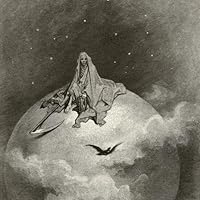
The illustrator is Alexandra Fastovets, whose incredible talent to capture the essence of any image clearly shines from these panels. Her black and white panels are breathtaking, a feast for anyone's eyes.
What really inspires this original work, though, is the fundamental question: is it possible, today, to have a serene and constructive dialogue between scientists, philosophers and theologians? How did this dialogue evolve throughout our recent history?
Let yourself be guided by Alfio and Giuseppe in this journey in history and philosophy: Johannes Kepler, Galileo Galilei, Charles Darwin, Pierre De Chardin, Isaac Newton, Richard Dawkins and St. Thomas Aquinas are only a few of the characters they will meet along the way. Each one of them will provide inspiring insights as our professors keep searching for meaning, truth, and points of convergence among different fields.
The original book “Scienza e Fede” was written in 2010 by two Italian professors.
I’m one of the authors of this graphic novel adaptation - I adapted the book into comic book pages, thereby creating what is probably the most un-marketable book that’s ever been produced.
Yes I say it's almost "unmarketable", simply because lovers of comics don’t typically love theology, and viceversa. But the fact is, this book is a work of love (3 years in the making) and my hope is that it’s going to spark some thoughts and discussions on a topic that’s highly sensitive and ridden with so many stereotypes.
The use of the comic format was a choice driven by my belief that it's such a powerful format to communicate pretty much anything at all. The fact that 99% of comic books published today are juvenile and mindless is not a problem with the medium. Just like with movies, the problem is with the authors, the market and the industry (and maybe with education, as well).
My five stars review is simply because of how delighted I am with the finished product, and in particular with Alexandra Fastovets’ breathtakingly beautiful 145 pages of black-and-white drawings.
I've never read a graphical novel before so this will set the bar pretty high for any that I read again. The illustrations were beautiful, but the premise of the book and the deep philosophical discussion of "science vs. faith" was amazing and quite complex.
The author, Thomas Todesca, has adapted the philosophical discussion of two professors, Alfio Briguglia and Guiseppe Savagnone, who have been friends for more than 70 years, into a graphic novel. These two professors, while discussing the science versus faith topic, embark on a journey, whereby they encounter Kepler, Galileo, Newton, Darwin, Richard Dawkins with a superb conclusion with Saint Thomas Aquinas, who all discuss rationally, without anger or accusation, their respective science and faith viewpoints.
I would highly recommend this book to anyone with questions about "God" as humans naturally want to apply humanistic concepts and restraints to God which ultimately result in questions about our existence, why and how evil is "allowed", and the reconciliation that science and faith are not in opposition to each other.
A meme I saw on Facebook screamed that science is a matter of fact and not belief. This was in response to current fundamentalist views that depict climate science as political, as speculative, as belief, in spite of the nearly unanimous view of the scientific community. I thought of this as I began reading this book, the art for which I gave a casual opinion to the author about a year or so ago. He asked me to read and sent me a copy, and here’s a short review.
This is a dream project of Tommaso Todesca, who wrote this out of the love of a book he read a few years ago, Science and Faith: The Patience of a Dialogue by Alfio Brugulia and Giuseppe Savagnone (2010), the project of lifelong friends, one a philosopher, the other a physicist. Todesca considered translating this story, but then thought he would prefer to convey his sense of what is most valuable about it though a graphic novel.
The basic story conveys a conversation between the two friends, who fancifully meet a range of ghosts, thinkers--Johannes Kepler, Galileo Galilei, Charles Darwin, Pierre De Chardin, Isaac Newton, Richard Dawkins and St. Thomas Aquinas, among others—across history who weigh in on the subject of faith and science. Todesca wants us to be open to a conversation about the relationship between them, as Brugilia and Savagnone’s book accomplished for him. He wants us to stop thinking in either/or categories about the subject; for instance, if you believe in God you can’t believe in science, or if you are a scientist, you can’t be religious. He wants us to stop being so close-minded, as he sees Dawkins and the host of “new atheists” of recent decades.
The title signals this as a scholarly work, with a title as unfortunately uninviting as Science and Faith (except, I suppose, those specifically interested in this topic, such as scholars who would ordinarily not seek out graphic novels on this topic), but it is far from stuffy, actually. The two men and the thinkers they encounter along the way are as warmly engaging enough to imagine a general audience might like this story. Most people in the world do practice some religion, after all. And it is a topic that is part of long and continuing international debates and popular books from atheists to religious thinkers to scientists of various stripes. One thing Todesca achieves here is to introduce us to thinking of great thinkers over time, to encourage us to dig deeper into their works as he—inspired by Brugulia and Savagnone—has done.
The illustration work of Alexandra Fastovets is good, inventive and interesting, and is very much a centrally inviting dimension of this project. The depiction of historical figures as ever-present ghosts and the time travel/fantasy elements make this a fine collaboration, a good and pretty lively introduction to the topic in graphic novel form. As it turns out, science, though taken up with the provable, may co-exist with the world of belief.
While I'm familiar with most of the arguments here, it was refreshing to see them summarized in this format. I especially enjoyed the final conversation with St. Thomas Aquinas.
The art impressed me: the likenesses of all the people were remarkable.
This book landed on my office desk rather unexpectedly. As an atheist, at first I was not too keen, but then I just could not put it down, such is the care the authors have taken to illustrate a most controversial albeit fascinating subject . This graphic novel is the ideal gift and a must-have tome thats should be on everybody's libraries. Give it a go and you won't regret it. p.s. I am still an atheist who continues to see "science" and "faith" as two incompatible agents, but this graphic novel has helped me see things from another standpoint.
I'm not usually a graphic novel fan, but I've found that they can be an engaging means of entering into a story, or discovering something new. And since faith has always been a part of my life, I was intrigued to learn about a graphic novel that takes on the relationship between science and faith, called, appropriately, Science and Faith.
I've seen firsthand the antagonism that can arise when science and faith are discussed together, especially from people holding very different viewpoints on one subject or the other (and I have to include myself in this observation!). I don't get the impression that this book is out to specifically change anyone's mind about their particular view (and probably many people will not agree with every view put forward here), but it does have the potential to make us think, as well as simply to give us an appreciation of some of the scientists and theologians (and some who were both) who have helped shape this conversation over the last several hundred years.
Our fellow travelers on this journey are two real-life professors: Alfio Briguglia and Giuseppe Savagnone, who have been friends for more than seventy years. After they co-wrote a book about science and faith in Italy, Tommaso Todesca wanted to adapt it into a graphic novel -- and here it is. Alfio and Giuseppe encounter many of the greatest minds in history (most long since deceased), and their journey takes them all over Florence and London as they converse with these renowned historical figures.
Kepler, Galileo, Newton, Darwin, and others make an appearance here, as well as both Richard Dawkins and Saint Thomas Aquinas in the last section, which covers the concept of God. Don't worry -- this is no Bill and Ted's Excellent Adventure. Despite the fantastical premise, the questions and quandaries discussed and mused upon here are sincere, earnest, and will probably leave the reader with much to ponder, regardless of their exact viewpoint going in.
I appreciate that the individual characters depicted here do not always agree with each other -- Dawkins especially stands in quite obvious opposition to the religious viewpoints expressed by most others in the book, and yet his "outsider's perspective" is important to prevent this exploration from becoming too inwardly focused. While the two characters don't actually meet here (each says his piece separately) this is probably the next best thing to actually watching a (sadly impossible) debate between Richard Dawkins and Saint Thomas Aquinas.
Even though I'm Protestant, I could still appreciate the Catholic perspective here, because I do think it helps tie in the history of these great thinkers (most of whom were also Catholic) to the present day, and the questions pondered here are really for all Christians to consider, no matter where we may stand on other issues.
Aside from the discussion, the artwork here is really lovely -- nothing cheap or cartoony about it -- the landscapes draw you in, and it's easy to feel that you really are just strolling down the road in Florence or London, conversing with a long-dead ghost. I'm sure anyone who's interested in history has fantasized about getting to meet their favorite historical figures, and the more I read here, the more I saw how well the graphic novel format really does work for this -- it helps give each character their own presence and personality (I found Galileo particularly amusing), even in the short time that some of them are featured.
One of the parts that resonated with me personally was the beginning discussion in section 2, which focuses on the terms we use -- it counters the idea that faith is by definition devoid of reason, and quotes Pope John Paul II as saying, "...faith and reason cannot be split! They are like the two wings with which the human spirit rises up towards the contemplation of truth." The ending was also pretty neat, and a bit surreal. I really should read Dante sometime.
All in all, I found this book both enjoyable and intriguing, and I'd recommend it to any science/faith geek, and probably those interested in philosophy in general. While the book doesn't go into great depth or detail on any of these historical figures (there really isn't room), it's a nice introduction to many topics and controversies in the science/faith discussion, and clearly comes down with the view that yes, science and faith can and do coexist quite well.
I received a copy of this graphic novel as part of a Goodreads giveaway.
I want to start off by saying that I have not read many graphic novels, but the topic of this one in particular was fascinating to me, especially in the modern day Western world. I really liked the graphics and flow of the story, especially going through the journey with the two authors more or less "interacting" with the various theologists, philosophers and scientists on the topic of science, religion and faith and different points of view throughout history.
Another thing I really loved is the one-page at the end of each chapter/part where the two main characters essentially have a short conversation to summarize the key points and takeaways from the given chapter/part. It can be a lot to take in and makes you think about the deeper focal point of the argument and where the divide seemed to stem from. I also liked that they defined some terms that are sometimes misunderstood, like faith, reason, science and truth and debunked some common myths and errors in past thinking to set things straight.
One of the main reasons I am not giving it 5 stars is because (for me personally) I felt that there was a lack of depth on both sides of the argument and the ending felt a bit anticlimatic to me. There were some areas where I feel that a few additional details could have been added. For example, when they are talking about Keplar and how he was not looking for "proof" of God because it was already evident in the perfect structure of mathematics, that would have been a great place to dive into what that actually means. I feel like the perfection and presence of mathematics in our environment and universe is not something that is widely known or understood. Adding explanation here would add to the depth of the material and thinking more closely about a possible link between science and faith especially for skeptics.
Additionally, I was hoping for a more clear cut unbiased look at both sides, but could sense some bias from the part of the two main characters in their interactions and sarcastic condemnation of the "New Atheists" compared to a more apathetic discussion of the opposing religious extreme that rejects science. In some areas it feels more balanced (i.e. end of part 3) when they talk about how religion needs science to keep it close to reality and protect it from creationism and science need religion to have a conscience. But in others, it feels skewed and biased which can make it a bit awkward when you're trying to equally weigh both sides of the topics.
Overall though, I found it to be a unique and interesting take on the topic. It is surely one of those books that you read a few times over and gain a new perspective and idea with each read. One read is not enough to really absorb the intensity of the topic.
This is was a clever concept, an illustrated book about very large questions of philosophy, science and faith. The illustrations were black and white and luxurious. The story was fun, two elderly Italian gentleman have a little sojourn, talking to the ghosts of Aristotle, Galileo, Aquinas, Newton, Darwin and then the new atheists, mainly Dawkins. During the process the creationists get repeatedly thrown under the bus. This book was a novel approach, but made some important points in a format that avoids the sheer weightiness of that characterizes the last couple of thousand years.
The big picture is a simple matter for we scientists - what we know is limited, incredibly limited, to the 5-6 senses we have, and rationality is limited by the questions we can dream. Yet we build on what we learn, to the point of being able today to correct some of nature's genetic errors with what we call "gene therapy". And our poor little 3 lb bags of brains can comprehend the universe, and understand the finite chemicals that have built it, down to subatomic particles under continuous fragmentation as the world gets smaller and yet smaller. It's a formula that could make man arrogant, but as Einstein tried to tell us, this is hubris. The god of yore, the one the fundamentalists teach, is downright silly, and may just be a mis-reading of the book. Todesca's tale tells us that worship of a slab of paper is idolatry - how do they always miss that?
Everyone must struggle with belief, most just don't get uncertainty (or Pascal), but in the end we try to know, then we die and either find out or we don't. I agree with the author that it is folly to reduce the politicization of religion to the cause of warfare and human strife - it is just misunderstanding of true faith, an embrace of the possible and alignment with the eternal, perhaps invisible, threads that hold us together with the divine.
The end was a little trite, as if the author couldn't close - but this book may serve a fine purpose to those critics of Christianity who might not be readers and unwilling to plough through the literature to get the memo.
Thanks Tommaso, for your out of the box approach and passion for bringing the message the masses.
An inspired idea beautifully executed. It makes me want to read more of the dialogues between Savagnone and Briguglia, but I’m not sure whether their book, “Scienza e Fede” has been translated into English yet. I hope that Todesca is still working on it.
I really enjoyed this graphic novel. The illustrations are amazing and truly help to visualize the concepts with the thinkers behind them.
I am very glad that the author, Tommaso, adapted "Science and Faith" into a discussion between the two professors, Alfio and Guiseppe, and their guests. There are so many discussions that happen one-sided in life. But this book does it's best to show all sides! Being that I went to Catholic school most of my academic career, learning everything from only a religious perspective can seem like it cannot be in harmony or unison with the other topics learned in school, like science or philosophy. This book does a great job at showing the distinctions and comparisons between all three (science, faith, and philosophy). However, it makes it clear that having one without the other doesn't do either justice.
There are plenty of great insights to the historical, scientific, and religious figures the professors meet, like Kepler, Galileo, Newton, Darwin, Einstein, Dawkins, and St. Thomas Aquinas. Not only are the backstories on their contributions to science and religion (or both) given, it also pays great thought to how they were or were not conflicted about the relationship between their faith and scientific advancement. Through this, the reader is able to see the role that philosophy and reason play in connecting the two seemingly opposing ideas.
I really liked that this book showed the various opinions and thoughts on science and faith through illustration. But, I also appreciated the summaries of each set of arguments made at the end of each chapter. It made the concepts easy to digest and contemplate.
If you are looking for a graphic novel with depth on science and faith, or to curb your intrigue, this is the book for you.
P.S. This is the 3rd time I've read Science and Faith
I won this book via Goodreads First. I am an ECE administrator and I look forward to adding this book to the lending library for parents and staff at my school.
Interesting book. Illustrations were great but I if you like a serious comic style book then this is one for you. Science and Faith is packed full of information too. Find out and read it for yourself.
It's a graphic novel, all right. Where else can you have Magic School Bus-like encounters with ghosts and the divine with a straight face? Video games, cartoons, and comics.
This is for anyone who has followed a major religion and questioned their beliefs after learning something from their science classes. Scientific examples are mainly limited to the popular ones like Galileo, Darwin, Newton, and so on. Thanks to The Truth About Animals: Stoned Sloths, Lovelorn Hippos, and Other Tales from the Wild Side of Wildlife, I am aware that Science and Faith glazes over the fascinating and somewhat obscure ways that religious beliefs have helped and inhibited different types of scientific discoveries, which made this experience feel lacking to me.
When it kept talking about the increasing divide between science and faith, a part of me wanted to scream that there are still cultures around the world that don't popularly experience it (i.e. Islam, Shintoism, etc.). If you wanted to keep it to just the "Western world", then you have Native American scientists and other indigenous people who blend their spiritual practices and cultural beliefs with environmental scientific studies.
So I was a bit disappointed that the scope was limited to major religions in Europe. It defines the extremes of both sides with bias towards the "true principles" of faith. That means secularism is mentioned and recognized, but explained away as a view that "misrepresents" the divine creator. Of course, that also made the ending extremely cheesy to me. I'm not against anyone who believes one way or the other. Just be aware that this is not a fair book for either side; there is no middle road or a debate that could be had with that ending.
I probably would have rated this book lower if it weren't for Alexandra Festovets's wonderful artwork. That pencil work is gorgeous. I would love to see what else she does in the future.
I received the book for free through Goodreads Giveaways.