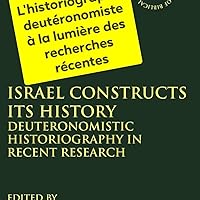
Hardcover with dust jacket. Foxing on upper edge of text and slight wear on lower and outer edges of text. Dust jacket stained on front facing and lower end of spine wit slight tear on front lower corner. Else good.
John Van Seters was a Canadian scholar of the Hebrew Bible (Old Testament) and the Ancient Near East. Latterly University Distinguished Professor Emeritus at the University of North Carolina, he was formerly James A. Gray Professor of Biblical Literature at UNC. He took his Ph.D. at Yale University in Near Eastern Studies (1965) and a Th.D. h.c. from the University of Lausanne (1999). His honours and awards include a Guggenheim Fellowship, an NEH fellowship, an ACLS Fellowship, and research fellowships at Oxford, Cambridge, Katholieke Universiteit Leuven, and National Research Foundation of South Africa. His many publications include The Hyksos: A New Investigation (1966); Abraham in History and Tradition (1975); In Search of History (1983, for which he won the James H. Breasted Prize and the American Academy of Religion book award); The Edited Bible (2006); and The Biblical Saga of King David (2009).
The author undertakes a comparative study of ancient Near Eastern and Greek historiography. The purpose is to explore “what history meant in ancient Israel and… how and why the histories were written.” This called for properly identifying the different forms/genres of historical documentation, and tracing the origins of the tradition of history writing in the Near Eastern and Greek regions, especially as reflected in the Old Testament (OT). The definition of history used is: “the intellectual form in which a civilization renders account to itself of its past.” The comparisons reveal that proper history writing in the region began with the Deuteronomistic Historian (Deuteronomist or Dtr here in short) in the mid-6th century B.C.. He’s said to have used a blend of common genres to create his own narrative with a particular theological framework. Along with the identity propagated by 8th century prophets in northern Israel (as reflected in Deuteronomy), the Deuteronomist’s reconciliation with the southern (Judean) monarchy bolstered the national identity of the Israelite people. Although the different genres were drawn from many Near Eastern historiographic materials, none of those genres had earlier been united and used in the way the Deuteronomist did. The only parallel to the ultimate form of Israelite historiography is said to be found in Greek historiography (especially as reflected in Herodotus), which points to a very similar historical consciousness that was developing in classical antiquity in the Greek and Near Eastern world. The book ends with a call for the need to explore subsequent histories of the Old Testament in more detail – The Yahwist (J), the Priestly Writer (P), and the Chronicler – both in comparison to Greek and Near Eastern historiography, and to the Deuteronomistic historiography.
The rest of this review summarizes some points from the book under 10 headers: (i) early Greek historiography, (ii) Mesopotamian historiography, (iii) Hittite historiography, (iv) Egyptian historiography, (v) texts and inscriptions of the Levant, (vi) Israelite historiography, (vii) historiography in the Books of Samuel, (viii) structure, genre, and theme in the Books of Kings, (ix) the Deuteronomist from Joshua to Samuel, (x) some concluding points from the author.
(i) Early Greek historiography: In its use of genealogy, chronology, eponyms, etiology, historical causality, human responsibility, divine justice, etc. the OT is said to strongly reflect characteristics of Greek works. Genealogies, eponyms, and etiologies were all necessary for historiography to take proper shape. But one shouldn’t draw a straight line of development anywhere along these elements. Extent of fiction in Herodotus’ work varies within scholarly opinions, but almost all scholars agree on some concoction in every component of his work. The Chronicler in the OT reveals clear dependence on the Pentateuch and Deuteronomistic History, but tries to mask his own multiple alterations by claiming dependence on other sources. The genre of such comparative “historiographic” materials says nothing definitive about its origin or transmission process, and from comparative evidence, is shown possible to be largely or entirely literary fabrication.
In comparison to early Greek historiography, Genesis has similarity to the historiographic tradition and not the epic tradition. Although the creation and flood accounts of Genesis have parallels in the Babylonian myth and epic (and to a small extent in Hesiod’s Theogony), the treatment is barely identified as epic in nature. In Genesis 6, the Nephilim account is said to reflect its author Yahwist’s negative attitude toward the heroic age, which he holds responsible for the flood. This is in contrast to the Greek and Mesopotamian traditions where the flood precedes the heroic age and is not directly tied to it. The foreign tradition of first finders/inventors of culture and civilization, is also seen negatively by the Yahwist, as shown through descendants of Cain in Genesis 4, and Noah’s shame post-flood in Genesis 9 after becoming the first cultivator of grapes. The Yahwist however seems to make exception to the founder of religion, Enosh son of Seth.
Phoenicia due to its geo-political setting, is considered likely to have acted as a bridge in transferring chronicling and prose styles between the east and Cyprus, Crete, and the Aegean region. Although it’s highly unlikely that Greeks and Hebrews were in much direct contact prior to the 4th century B.C., Phoenicia may well have served as a connection.
(ii) Mesopotamian historiography: The theme of divine intervention pervasive in all Near Eastern historiography is also found in the OT. Both military campaigns and construction accounts were integral in Assyrian inscriptions. The Sumerian King List has a particular depiction of the past to serve the “political and ideological purpose in the author’s own time.” The tradition of chronicle writing seems to have properly originated in the Neo-Babylonian period, with an interest in reconstructing the past using secondary sources dug up through ‘research’. These did not represent actual historical continuity but rather the writers’ rendition of how the past was likely to have been. Some accounts were blatantly biased, some were more objective.
For epics – mythological, legendary, historical – there’s no sure line of succession, and all forms “were often composed in the same historical periods”. It’s also often difficult to clearly distinguish between legendary and historical epics. What seems clear from studying Mesopotamian epics is that they don’t reveal any oral history of composition, though they seem to have been written for the purpose of oral delivery. The generally poetic style of epics distinguishes it from prose, but prose and epics would often talk about the same subject and same kind of topics, such as myth, legends, and history. The cross-influence between prose and epic went both ways, and no style can be said to have existed before or after the other – they were often both produced in the same time periods.
Akkadian prophecy texts had the common feature of “predicting” past and present events (i.e. the writer making it look like the prediction preceded the events), and in some cases actually trying to forecast future events such as downfall of enemies.
(iii) Hittite historiography: Statements claiming correct copying of documents and warning against making accidental or deliberate changes, were very common in Mesopotamia, so it’s considered no surprise to find similar claims in the Hittite or biblical texts. Some Hittite texts are more “secular” in nature, and the Hittite use of past was practical for their present-day lessons and purposes, not for recording it. Political propaganda was also an important feature of Hittite historiography, similar to Mesopotamian.
(iv) Egyptian historiography: Egyptians were very meticulous in their record-keeping, and in ideological representation of the past. Despite evidence of existence of large Egyptian libraries and/or archives, none have been found since they were mostly written on papyrus and leather which couldn’t be preserved. Following the usurpation at the start of the Twelfth Dynasty, the king had to win people’s allegiance since he had no legitimate claim to the throne. Thus began the literary writing of propaganda including concocted stories of prophesies and divine ordination, to legitimize their rule. Private tomb biographies are thought to majorly influence royal inscriptions, and thus indirectly influence Egyptian historiography.
(v) Texts and inscriptions of the Levant: It was common for heroic and folkloristic elements to be infused with stories of founding monarchs, as seen from Alalakh. Unfortunately, though Phoenicia is believed to have been highly literate, very few and fragmented historiographic work from there remains to say anything conclusive about its role in “the rise of historiography”.
(vi) Israelite historiography: Simultaneous creation and existence of different kinds of works – myths, legends, “history”, in both poetry and prose form – also applies to Israelite work, although they “performed different functions”. There seem to be many early Near Eastern parallels to the Israelite idea of history or “theology” of history. The “more comprehensive theology of history” is said to have developed during the Yahwist’s/Second Isaiah’s time (exilic period).
(vii) Historiography in the Books of Samuel: The “basis of historiography” in Samuel and Kings, is said to be the treatment of binding individual fixed literary units by supplementing and creating redactional links between them. The story of David’s Rise, unlike the story of Saul, doesn’t show significant tension, and can hardly be considered as comprising independent units (unlike units in the story of Saul).
The David Succession Story (aka Court History), although seen as mostly a unity, needs explanation as to why it could be included with the Rise of David story, when the two accounts are so conflicting. The Chronicler deals with this problem by just removing everything negative on David (the entire Court History). The Court History, seen as supplementing the Deuteronomistic History, is thought to have possibly arisen out of anti-monarchical/anti-royal sentiment. However, what seems to be the point of the author of the Court History, is to show how the claim of divine election may be exploited by political leaders to justify dishonest actions. This is how the Court History seems to employ the same theme of divine promise as royal legitimation as in the Rise of David, but for an “anti-legitimation” purpose.
(viii) Structure, genre, and theme in the Books of Kings: Multiple Babylonian and Mesopotamian chronicles and materials, and the Annals of Tyre, show similarity to the style in the Books of Kings but to different extents. But there has been evidence that the exact style of chronology used in Kings may have been from two separate king list traditions in Israel and Judah. Removing the synchronisms between kings of the two kingdoms, two distinct formulae are found for the introduction of kings in Israel and Judah respectively (post-Solomon, and excluding Jeroboam and Jehu).
Different types of prophetic stories/legends were classified by Alexander Rofe. The Elijah and Elisha stories in their canon form differ significantly from one another. The bulk of the Elisha stories connected through itinerary (2 Kings 2, 4-7; 8:1-15), are not considered integrated into the Deuteronomist’s work, seem to be virtually untouched by him, and considered added to the Deuteronomist’s work later, though in existence before. On the other hand, the Elisha stories in 2 Kings 3 & 9, along with the Elijah stories in 1 Kings 17-19, 21, 2 Kings 1, are seen as thoroughly integrated into the Deuteronomist’s work, and their independent wonder-worker theme is seen reworked to present them as messengers of divine oracles from God.
Solomon’s divine theophany in 1 Kings 3:1-15 is considered entirely Deuteronomistic. Both the Queen of Sheba account in 1 Kings 10:1-10, 13, and the Temple materials account in 1 Kings 5:1-14, have in past work been shown to be quite late and post-Deuteronomistic. Whatever the origin of the importance given to wisdom as measured by prudence and ability to govern (some may be found in Psalm 72, Isaiah 11:2), the Deuteronomist is said to have associated this with the earlier time of Solomon since the monarchy was considered to be at its peak at that time.
The downfall of Solomon (1 Kings 11) is also taken to be Deuteronomist’s, using Deuteronomy’s theme of foreign marriage’s leading to apostasy and destruction. Solomon’s case is seen as a lesson for this principle, becoming the main reason for Yahweh’s rejection of David’s House for ruling over all Israel. This then follows with Jeroboam in the same Saul-David pattern. For the southern kingdom, David is considered the standard for judging all subsequent kings. For the northern kingdom, Jeroboam’s creation of the golden calves becomes the sinful turn.
(ix) The Deuteronomist from Joshua to Samuel: The Deuteronomist in Joshua’s campaign account is said to have interpreted the general tradition of entry into the promised land as a full military conquest. Use of various Near Eastern documentation styles is seen, such as annals, campaign accounts in royal inscriptions, letters to the god, etc.
The stories of magistrates/judges are not seen as independent story units, but as relevant only in the larger story containing the monarchy. The Book of Kings is considered the “intellectual prerequisite” for this conscious history writing of past events using chronology and ideology.
(x) In conclusion: When a period in history was not mentioned in king lists, both Greek and Israelite historians employed alternative ways to reconstruct the period. Deuteronomist is said to have done this through creation of the successive leaders (judges) (and their generations) from after Moses to the start of the monarchy. This gave a basic sense of time/chronology for the entire period. Genealogies were not important for giving a sense of time but rather of relationships. Genealogies supposedly became associated with a sense of time only when an existing chronology needed further expansion, as in case of “early Greek historians” and J and P in the Pentateuch.
Although Near Eastern historiographic materials dealt with special election, they were limited to the king and his right to rule. Only in Israel was this notion of special election extended to the entire Israelite nation. “…only when the nation itself took precedence over the king, as happened in Israel, could history writing be achieved.” The Deuteronomistic History triggered different responses as seen in the number of additions made to it. The additions though, do not call into question the general people’s identity, but deal more with some specific theological perspectives. These additions are seen as the man of God in 1 Kings 13, the Elisha cycle, the Court History, etc. But the historical work of J, extending back from Dtr, is said to reflect an entirely different conception of the people’s identity. It is a more inclusive (“universalistic”) perspective contrary to Dtr’s strong nationalistic one. P is said to have used both J and Dtr to provide “a system of institutional and cultic identity”. The work of the Chronicler is also considered a history, using Dtr, post-Dtr, J, and P, to create a “revisionist history” as per his own conception, cherry-picking or rewriting materials to fit his perspective.
The 'minimalist' revision of both OT/NT history began in the 1990's but Van Seters beat them by 10 years with his "In Search of History". This is a must for anyone interested in OT studies and who upends the traditionalist narrative of the OT being a historical document.
Defies easy summation because of the vast amount of material covered, but some of the conclusions were familiar from Van Seters' "The Biblical Saga of King David" (which was written about a quarter-century later). He scours Greek history writing (mainly Herodotus) and what could be considered proto-history writing from Mesopotamia, Egypt, and elsewhere in the ancient Near East: royal stelas, annals, king lists, autobiographical tomb inscriptions and the like, which record facts about the past but aren't history by Dutch historian Johan Huizinga's definition, "the intellectual form in which a civilization renders account to itself of its past."
One thing Van Seters wants to get out of the way in a hurry is William F. Albright and Frank M. Cross' notion that the historical sections of the Hebrew Bible are a prose version of an early poetic epic recounting Israelite history - or even that such an epic existed. A novel idea to someone whose introduction to the field was Cross' famous 1973 book "Canaanite Myth and Hebrew Epic," made all the more striking by Van Seters' reference to those two scholars of titanic reputation as "'authorities'" on the subject (note the scare quotes).
Instead, he argues, the Deuteronomistic writer, operating after the destruction of the first temple, was Israel's first historian, though not in a way his modern successors would endorse: combining bits of lore from all over, adding inventions of his own and creating a conquest-to-exile narrative to bear out his idea of a Davidic covenent and the nation's subsequent apostasy. The Yahwist, far from coming first, and the Priestly writer came later, extending that story backwards to the primeval history and the Patriarchs, while an anti-monarchical layer was grafted onto Dtr after the exile, adding the "Court Narrative" to the saga - not so much a warts-and-all portrait of David as a pungent attack on his kingship.
Van Seters not only rejected the common view that David's story was set down around the time it recounts; he also concluded that the closest thing we have to Dtr's work outside Israel is Herodotus, with all the implications that has for dating it. Not an idea that would have gone over well in the 1980s. Since then, archaeologists like Israel Finkelstein have bolstered the argument, finding little or nothing from the supposed era of the United Monarchy to suggest a state with a scribal class capable of producing such a sophisticated body of writing. (That has lately been challenged, though for what it's worth, the archaeologists doing the challenging apparently have evangelical funding.)
While the emphasis is on the Bible, the book is also a primer on what other ancient civilizations recorded about themselves. One piece of conventional wisdom handed I used to hear a lot was that while the rest of the Near East thought of history as cyclical and the gods as operating in the primeval era, Israel was unique in finding Yahweh at work in human history. Prepare to have that notion exploded, among others.