

What do you think?

Make Better Pictures: Truth, Opinions, and Practical Advice
Henry Horenstein may be the world's bestselling photography teacher, with more than 700,000 copies of his photography manuals sold. Now, in this easily digestible book of wisdom, he distills a career's worth of instruction into one hundred memorable pieces of advice.
Photography has never been a bigger part of our lives. But how do you transform everyday snapshots into enduring images -- or merely upgrade your Instagram game? With images illustrating the impact of each tip, and with examples drawn from iconic artists, Horenstein shows casual and expert photographers alike how to take the best photographs on every device -- from a DSLR to an iPhone.
Photography has never been a bigger part of our lives. But how do you transform everyday snapshots into enduring images -- or merely upgrade your Instagram game? With images illustrating the impact of each tip, and with examples drawn from iconic artists, Horenstein shows casual and expert photographers alike how to take the best photographs on every device -- from a DSLR to an iPhone.
224 pages, Paperback
Published November 6, 2018
About the author
Henry Horenstein
60 books14 followersHenry Horenstein (b. 1947, Boston) is an American artist photographer. Henry Horenstein has worked as a photographer, teacher and author since the early 1970s. He is the author of over 30 books, including a series of photographic textbooks that have been used by hundreds of thousands of students over the past 30 years. In 2003, Chronicle Books published Honky Tonk, Horenstein's documentary survey of country music during the late 1970s and early 1980s. Honk Tonk was also presented as an exhibition by the Smithsonian's National Museum of American History in 2006. His work has been collected by many institutions including the Smithsonian Institution’s National Museum of American History, Washington, D.C.; the George Eastman House, Rochester, New York; the Museum of Fine Arts, Boston; Library of Congress; the Museum of Fine Arts, Houston; and the High Museum of Art in Atlanta, Georgia. Henry Horenstein current lives in Boston and teaches at the Rhode Island School of Design.
Ratings & Reviews
Friends & Following
Create a free account to discover what your friends think of this book!
Community Reviews
Displaying 1 - 11 of 11 reviews

November 21, 2018
Not everyone who shoots photographs will benefit from Make Better Pictures. There are many for whom the joys of point and shoot are all that is required to get a desired result. And, while I suppose such folks might get something out of it, this book is not for them. It is intended for photographers who have more than a passing interest in capturing still images, on film or digital media. It is not for folks who take pictures, but for people who, as the title directs, make pictures, not people who are solely passive recipients of the vast array of imagery the world offers, but people who are already, or who are open to becoming, creators or interpreters of that imagery.
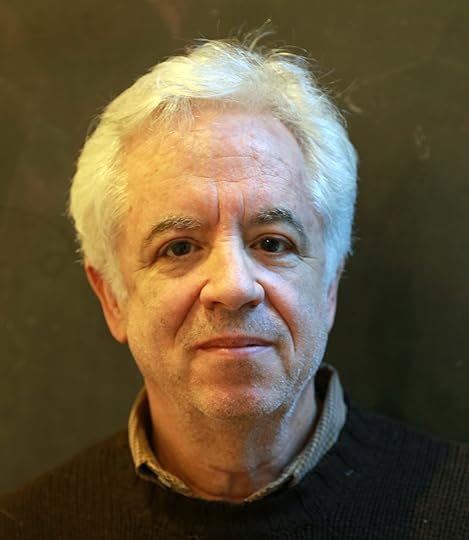
Henry Horenstein - from Donna Marie Miller’s blog
While there were girls with names ending in A who made my heart flutter alarmingly while I was still in grammar school, my first true love was something entirely other. Growing up in the Bronx, it was mandatory to be a Yankees fan, although I struggled with that as I got older, but I was also an admirer of the other Bronx Zoo. It was my parents who introduced me to its splendor, taking me there a reasonable number of times. I spent a fair portion of my tween years going there with friends, or even, gasp, alone. I probably could have given a pretty decent tour for a twelve-year-old. I was in love with the animals. They even inspired one of my sundry childhood career ambitions, to be a zoologist (or a forest ranger, which seemed pretty close). And to see them was to want to shoot pictures of them.
While there are some obvious reminders of information most of us know, things like making sure that your DSLR batteries are fully charged before you head out, that you have a backup, and that you always have backup memory cards, and some obvious intel such as that the power of flash diminishes inversely with distance, there are far more instances of “oh, that’s pretty interesting. Never thought of that.” For example, while it may sound obvious in retrospect, if one is trying to get a very, very close-up macro shot, one that your lens cannot quite handle, try placing a magnifying glass in front of the lens. Obvious, right? But how many of us would have thought of it? There is very useful advice on the use of flash, when to use, when to avoid, and ways to use flash to best effect.
My first camera was Kodak’s Brownie. It was not not a love at all. I struggled to get shots of sundry caged (and not so caged) creatures, in glorious black and white, saved up my pennies to cover the cost of developing, then waited with eager anticipation for results. The results were usually pretty awful. Thankfully, this did not diminish my interest in animals. I was given a serious camera as an adolescent, an old Leica. But, lacking any sort of instruction, it was a classic case of pearls before swine. Oink! Next up was a Kodak Pocket Instamatic, using 110 cartridge film. It accompanied me when I headed to Merry Olde for a semester abroad in 1974. I actually began to find some vision with that little camera. Some shots were pretty good, even if in a postcard-y sort of way, a lovely, novel experience. I was exposed to the wonderful world of the SLR, an OM1 in my 20s, trying out black and white on purpose, this time taking some actual classes. Learned that an F-stop was not just something my train did with demoralizing frequency between stations. Did my own developing and printing. New parenthood put the kabosh on that. It took at least an hour to set up, another to take down the bedroom-as-darkroom setup, which meant it was not really worth the trouble to do so for less than two hours of actual developing. Four-hour chunks were just no longer available, so it was back to sending out film, mostly Kodacolor, for developing, with the occasional roll of Tri-X, and Kodachrome for slides.
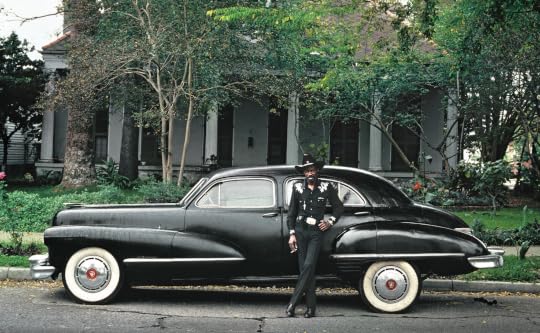
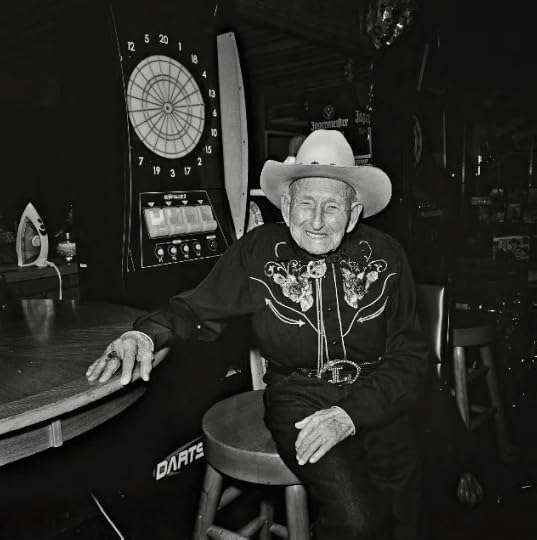
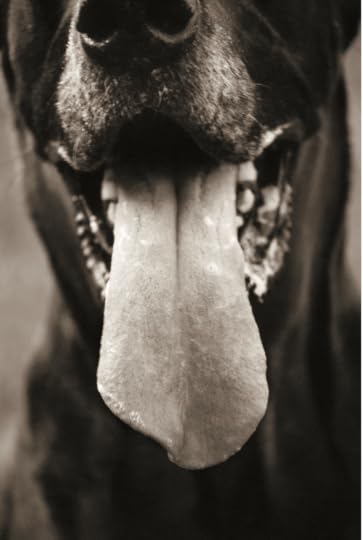
The book is rich with illustrative shots by Horenstein and others, educational as well as wonderful to see. Some bits of advice are repeated. Horenstein favors using auto-focus most of the time, specifying, of course, circumstances in which manual is preferable. He also notes the inadvisability of deleting shots on camera, suggesting, given the affordability of digital media that it would always be better to see your images on a full computer screen before relegating them to the ether. You might see something in the larger view that was not so obvious on a tiny camera screen. The book is also sprinkled with wonderful, relevant quotes from great photographers, and folks as diverse as Albert Einstein and Miles Davis.
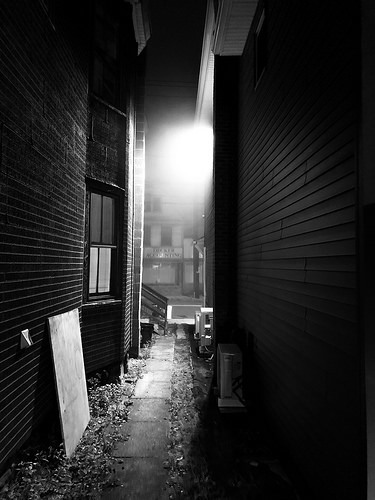
You will learn some new terminology. Here is my favorite.
Review first posted – November 23, 2018
Publication date – October 23, 2018
=============================EXTRA STUFF
Links to the author’s personal, Instagram and FB pages
More on the author
-----A piece on HH at the Annenberg Photo Space
-----A short documentary vid on HH – worth a look - The Photography Series: - Henry Horenstein – about 6 minutes
Stuffing
---I did not want to tart up the review with a dump of my shots, (well, I slipped in one or two) but I did want to get some of them into play, so have tucked them in here under a spoiler tag. It seemed a reasonable compromise.
Henry Horenstein - from Donna Marie Miller’s blog
While there were girls with names ending in A who made my heart flutter alarmingly while I was still in grammar school, my first true love was something entirely other. Growing up in the Bronx, it was mandatory to be a Yankees fan, although I struggled with that as I got older, but I was also an admirer of the other Bronx Zoo. It was my parents who introduced me to its splendor, taking me there a reasonable number of times. I spent a fair portion of my tween years going there with friends, or even, gasp, alone. I probably could have given a pretty decent tour for a twelve-year-old. I was in love with the animals. They even inspired one of my sundry childhood career ambitions, to be a zoologist (or a forest ranger, which seemed pretty close). And to see them was to want to shoot pictures of them.
While there are some obvious reminders of information most of us know, things like making sure that your DSLR batteries are fully charged before you head out, that you have a backup, and that you always have backup memory cards, and some obvious intel such as that the power of flash diminishes inversely with distance, there are far more instances of “oh, that’s pretty interesting. Never thought of that.” For example, while it may sound obvious in retrospect, if one is trying to get a very, very close-up macro shot, one that your lens cannot quite handle, try placing a magnifying glass in front of the lens. Obvious, right? But how many of us would have thought of it? There is very useful advice on the use of flash, when to use, when to avoid, and ways to use flash to best effect.
My first camera was Kodak’s Brownie. It was not not a love at all. I struggled to get shots of sundry caged (and not so caged) creatures, in glorious black and white, saved up my pennies to cover the cost of developing, then waited with eager anticipation for results. The results were usually pretty awful. Thankfully, this did not diminish my interest in animals. I was given a serious camera as an adolescent, an old Leica. But, lacking any sort of instruction, it was a classic case of pearls before swine. Oink! Next up was a Kodak Pocket Instamatic, using 110 cartridge film. It accompanied me when I headed to Merry Olde for a semester abroad in 1974. I actually began to find some vision with that little camera. Some shots were pretty good, even if in a postcard-y sort of way, a lovely, novel experience. I was exposed to the wonderful world of the SLR, an OM1 in my 20s, trying out black and white on purpose, this time taking some actual classes. Learned that an F-stop was not just something my train did with demoralizing frequency between stations. Did my own developing and printing. New parenthood put the kabosh on that. It took at least an hour to set up, another to take down the bedroom-as-darkroom setup, which meant it was not really worth the trouble to do so for less than two hours of actual developing. Four-hour chunks were just no longer available, so it was back to sending out film, mostly Kodacolor, for developing, with the occasional roll of Tri-X, and Kodachrome for slides.
The book is rich with illustrative shots by Horenstein and others, educational as well as wonderful to see. Some bits of advice are repeated. Horenstein favors using auto-focus most of the time, specifying, of course, circumstances in which manual is preferable. He also notes the inadvisability of deleting shots on camera, suggesting, given the affordability of digital media that it would always be better to see your images on a full computer screen before relegating them to the ether. You might see something in the larger view that was not so obvious on a tiny camera screen. The book is also sprinkled with wonderful, relevant quotes from great photographers, and folks as diverse as Albert Einstein and Miles Davis.
You will learn some new terminology. Here is my favorite.
The ability to view the results immediately after exposure is one of the great advantages of digital capture…But immediate feedback has at least one real drawback. It’s called chimping. Take a picture, look at the screen. Take another picture. Look at the screen again. Like a chimpanzee.Early on in my photographic peregrinations it might not have made all that much difference to have had a book like Make Better Pictures. But once in possession of a camera with any sort of adjustability, (and small doses of learning and maturity) it would have been priceless. And that is the situation many of us find ourselves in these days. (the adjustability of cameras, that is, not the maturity part. For that, you are on your own.) For anyone with more than the lowest end interest in photography, for people who require more than simple point-and-shoot smart-phone shooting, Make Better Pictures offers a cornucopia of possibility. Those who have not yet taken photo classes can gain some very useful learning, and those who know their way around ISO, ASA, aperture or shutter speed priority can also benefit from the wide range of advice offered here. Horenstein has distilled down not only his technical knowledge but his observations from a lifetime in the field. He offers advice on one’s approach, on non-technical techniques, looking for opportunities, being prepared for surprises. While it is written in an entirely accessible manner, Make Better Pictures is a master class by a serious pro. If you are at all interested in photography and are looking to develop your technique, this book should click for you. Also, it is major gift fodder for the upcoming holidays.
Review first posted – November 23, 2018
Publication date – October 23, 2018
=============================EXTRA STUFF
Links to the author’s personal, Instagram and FB pages
More on the author
-----A piece on HH at the Annenberg Photo Space
-----A short documentary vid on HH – worth a look - The Photography Series: - Henry Horenstein – about 6 minutes
Stuffing
---I did not want to tart up the review with a dump of my shots, (well, I slipped in one or two) but I did want to get some of them into play, so have tucked them in here under a spoiler tag. It seemed a reasonable compromise.

November 25, 2022
Rec. by: Will Byrnes; Roberta
Rec. for: Shutterbugs
I've always loved reading, and after more than a dozen years on Goodreads, I still enjoy writing and posting reviews here... but I also have other creative pursuits, such as writing short fiction, playing guitar, and taking photographs—and in these endeavors (as in so many other things), I am better than average (warning: Facebook link—ack, ptui) but still not good enough to be a professional. So I greatly appreciated Henry Horenstein's clear, expert and often very funny advice about photography. Most of what Horenstein says in Make Better Pictures was already familiar to me, but having these tidbits of information gathered together in one place was still valuable and instructive—and I wasn't expecting him to be as witty as this.
My own photography is determinedly low-fidelity—I am not into collecting gear, and in fact my best camera is a simple Canon PowerShot point-and-shoot. But I think Horenstein would agree that this is not an impediment to making better pictures—as long as I stay focused (heh) and pay attention. Horenstein combines advice and examples in an eminently readable format—and even if you're an accomplished photographer, I suspect you'll find at least a few useful and novel suggestions in Make Better Pictures.
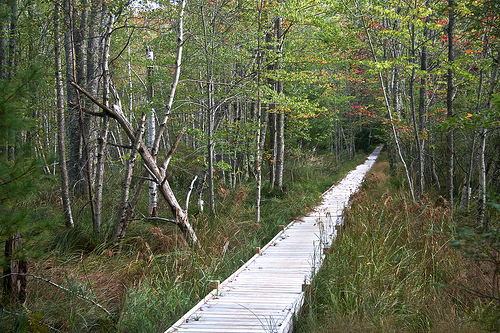
Horenstein's opinion on "Histories" is exemplary, and I'm going to quote this particular page in its entirety:
Make Better Pictures is the last book I read in 2022, and I'm happy to say it was an excellent note on which to end the year.
Rec. for: Shutterbugs
I've always loved reading, and after more than a dozen years on Goodreads, I still enjoy writing and posting reviews here... but I also have other creative pursuits, such as writing short fiction, playing guitar, and taking photographs—and in these endeavors (as in so many other things), I am better than average (warning: Facebook link—ack, ptui) but still not good enough to be a professional. So I greatly appreciated Henry Horenstein's clear, expert and often very funny advice about photography. Most of what Horenstein says in Make Better Pictures was already familiar to me, but having these tidbits of information gathered together in one place was still valuable and instructive—and I wasn't expecting him to be as witty as this.
A car doesn't work as fluidly as a tripod, but it can be even more useful at times, such as when you want to shoot in places where you can't set up a tripod. It will also provide a quick getaway when you want to shoot in sketchy areas—or if you're shooting large and potentially dangerous animals!
—p.45
My own photography is determinedly low-fidelity—I am not into collecting gear, and in fact my best camera is a simple Canon PowerShot point-and-shoot. But I think Horenstein would agree that this is not an impediment to making better pictures—as long as I stay focused (heh) and pay attention. Horenstein combines advice and examples in an eminently readable format—and even if you're an accomplished photographer, I suspect you'll find at least a few useful and novel suggestions in Make Better Pictures.
Horenstein's opinion on "Histories" is exemplary, and I'm going to quote this particular page in its entirety:
Taking a picture is capturing time as it is—at a moment. Actually a fraction of a second. But a picture ages with time. Photographic prints may actually change color or tones, fade, or stain—even when handled correctly. But while the physical change is easy to predict, the more important changes are far more difficult to pinpoint.That sounds pretty good to me.
You don't know how you'll look in ten or twenty years, but you most definitely will look different. So will your friends, family, and everything else around you—from your hometown to your hairstyle. Not only will everyone look different, but your memory of him or her will have changed as well.
This makes photographs important historical markers of your personal history, not to mention history in general—such as political events, celebrities, even disasters. Sure, they don't preserve everything, but they do form a record of physical attributes—what people look like and when—and memories. And for all these reasons, and more, it's important to make good pictures now and to preserve them for the future.
—p.183
Make Better Pictures is the last book I read in 2022, and I'm happy to say it was an excellent note on which to end the year.

October 15, 2018
A quick, friendly book full of useful and practical advice for amateur photographers.
I’m a sucker for all things related to photography so I really appreciated these thoughts and found several tips I’ve already put to use!
I’m a sucker for all things related to photography so I really appreciated these thoughts and found several tips I’ve already put to use!
February 23, 2021
perfect intro for anyone starting the photography game

September 10, 2022
Had some helpful advice and a variety of photos to examine. However, I was frustrated to see multiple nude photos included. It was so unnecessary. That kind of nudity requires an adult rating for movies here in the U.S., and it would be so nice if the same warning was required for books.

August 8, 2023
A quick read. Some good advice, but nothing new or startling
September 3, 2023
This is a pretty basic overview and some of the tips are misleading
May 7, 2024
Very practical! Loves it the way they describe the uncommon things. Great for beginner photographers!

September 21, 2025
Nothing too mind-blowing. it's a short book mostly with notes for busy/lazy beginner photographers
February 23, 2019
Neat book that for the most part has a photograph to illustrate the point on the left hand page and a brief discussion of the point on the right hand page. Most are understandable for beginners--I did find a few topics that were beyond my current understanding.
December 9, 2019
There were some decent pointers in this book. It's good for beginners.
Displaying 1 - 11 of 11 reviews