Odessa, Odessa follows the families of two sons from a proud lineage of rabbis and cantors in a shtetl near Odessa in western Russia.
It begins as Henya, wife of Rabbi Mendel Kolopsky, considers an unexpected pregnancy and the hardships ahead for the children she already has. Soon after the child is born, Cossacks ransack the Kolopskys’ home, severely beating Mendel. In the aftermath, he tells Henya that, contrary to his brother Shimshon’s belief that socialism is their ticket to escaping the region’s brutal anti-Semitic pogroms, he still believes America holds the answer. Henya, meanwhile, understands that any future will be perilous: she now knows their baby daughter, who has slept through this night of melee, is surely deaf.
So begins a beautifully told story that unfolds over decades of the 20th century—a story in which two families, joined in tradition and parted during persecution, will remain bound by their fateful decision to leave Odessa.
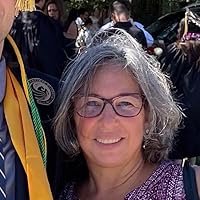
Barbara Artson is a retired psychoanalyst who calls San Francisco her home. She regularly contributes essays and reviews of films and books to professional journals. In addition to a Ph.D. in psychology she holds both B.A. and M.A. degrees in English Literature, and taught Shakespeare as a graduate student while also completing the unfinished Dickens novel The Mystery of Edwin Drood, years before the musical production on Broadway.
Like Dora in the novel, Artson’s own mother worked in a New York garment factory, stitching elastic to the waistbands of women’s bloomers. This photo of her was taken in the early 1920s when she was 19. By the end of that decade she was raising her own family, building a new life in America.
The story begins with a family of devout, Orthodox Jews in Odessa in the early 1900’s. A father and mother wanting to protect and provide for their family at a time when the Cossacks attack. “The screams and cries of terror, the stench of smoke and the burning of sacred books, the river of blood, the barricaded doors and windows caving in to the invader’s powerful fists and clubs bring confusion and dread to all...” A time when life isn’t easy as they endure the hardships of the freezing winter in a home that is not big enough for the growing family. So Rabbi Mendel Kolopsky leaves with some of his children for America, leaving behind his wife Henya and the younger children. She is a devoted wife and mother, who comes a year later on a difficult boat crossing with an entry process that is long, arduous and demeaning. Before leaving Odessa, Mendel had been separated from his older brother by their differing beliefs, a rift over their place in the family. They are also divided by their choice of the places they leave for, with his brother choosing Palestine.
The novel focuses on Henya and Mendel, their children and later their grandchildren in alternating narratives moving around in the years between 1908 and various years through 1996, not in chronological order, yet the chapters were told in a relevant way. It was a different life in America, in Brighton Beach in New York City and in New Jersey for some of them. The children want to fit in, turn away from their family beliefs and traditions. They work on the Sabbath, smoke cigarettes, change their names to “more acceptable names “, as they face anti semitism here as well. Some are more successful than others and their father Mendel never quite makes it as he had hoped as a rabbi, instead sells rags, and is aided financially by his children.
In this short volume, I came to know this family with their flaws and strengths, losses and sadness, and even abuse, as they walk through life and in a way come full circle with family connections. This is a Jewish immigrant story and much about their story, of course is about their being Jews, but I definitely thought how they may have been very much like other immigrant families. Perhaps those who changed their names from Lombardi to Lombard or Lewandowski to Lewis. It made me think about in this time when the immigration issue and asylum is front and center about how so many of us are descended from immigrants and how difficult their journeys might have been. I choose not to get into the politics of today in this review or in the discussion of the Israel and Palestine situation which is a part of the story towards the end. I would rather just say that this is a thought provoking story that I recommend. It will certainly get you thinking about your parents or grandparents or great-grandparents and their journeys to America.
I received an advanced copy of this book from She Writes Press through Edelweiss.
I listened to Odessa, Odessa by Barbara Artson on audiobook. It was narrated extremely well by Christina Delaine. Odessa, Odessa was a very compelling family saga that followed the Kolopsky family from a Shetl near Odessa, Russia to an immigrant community in New York to New Jersey to California and finally to Israel. It was a work of historical fiction that portrayed several generations of Jewish-Russian immigrants and the hardships they had to endure as they tried to assimilate into their new lives.
A vivid picture was painted of the persecution, violence, antisemitism and pogroms Jewish families were forced to endure under the Czar of Russia. It was no wonder why so many Russian Jews tried to leave Russia. Mrs. Kolopsky discovered she was pregnant with a change of life baby. She knew that this baby was different. It was discovered that the baby was deaf. In those days, deafness was looked upon as a mental illness or the child was considered stupid. They knew that they had to leave Russia. The Kolopsky family was lucky enough to escape and get to America. The family had to go in shifts though. They did not have enough money for the whole family to leave together. When it was finally time for the mother and her younger children to board the boat that would take them to America, they were met with offensive “putrid odors” as they found their way to the steerage compartment of the ship. The whole scene that occurred while the Kolopsky family passed through Ellis Island was brilliantly described from both the viewpoints of the Kolopsky family and from some of the doctors that worked there. After the Kolopsky family survived the long voyage to America and miraculously navigated their way through Ellis Island, they would be challenged to find a way to earn a living and to learn the English language. Many of the men that arrived from Russia had been Rabbis or teachers. In America, that was no longer an option. Most worked on the docks of in factories. Some of the members of the Kolopsky family went on to start their own businesses. The elder members of the Kolopsky family rarely if ever spoke about the old country and the cruelties they endured. It wasn’t until 1996 when two sisters from the third generation of the Kolopsky family received correspondence from a long lost cousin in Israel that they were able to piece together their family’s history. The newly discovered cousin’s grandfather had written down his story before he died. That grandfather that had immigrated to Israel was their grandfather’s long lost brother.
Odessa, Odessa by Barbara Artson was written with the author’s family’s history as a background. Although it was not meant as a memoir, the author captured some similar experiences that her family had that resembled the ones she wrote about. It was beautifully written and portrayed the struggles, hardships, successes, failures, trials and resilience this particular family experienced as immigrants. It was a haunting reminder of all the challenges immigrants have to face. I recommend this book.
Did your mother or grandmother ever tell you how your family came to live in this country, since we all come from somewhere else? Have you forgotten the details? Have no surviving member to tell the tale? Have no records to fall back on? Then hurry, order and read ‘Odessa, Odessa,’ and discover the struggle of people who left their country of origin for a better, safer life, often women leading their families away from oppression, misery and fear toward a better life.
“Not enough health, not enough money, not enough courage. Always something. But she steadily pursues her dream with a resolve that grows out of love, longing and the dread of the increasingly virulent anti-Semitism in the Pale and beyond.”
Told mostly in the present tense, which brings us close to each woman’s experience, this novel could be titled ‘Trauma.’ Trauma from hunger, disease, cold, lack of security, of opportunity, depression, and unemployment. Yet resilient people do not give up hope.
In a style both active and evocative, you’ll meet uneducated women loaded with responsibilities, yet capable of taking initiatives when they must. When the dreaded Cossaks attack her home, “Henya shout orders like a general.” In the US, Dori, considered a spinster at twenty-two, does not hesitate to dumps her manipulative boyfriend after delivering him her ultimatum. Light touches of humor appear unexpectedly: “Men and trolley cars come every sixty minutes,” declares a woman friend.
Alone with her children, a mother crosses the Atlantic on the way to New York, enduring “eight days of shipboard misery . . .in the dark coalmine environment of the hold,” where all the family’s belongings fit inside “three cardboard suitcases held together with twine.”
After the dreadful journey, comes the painful, sometimes grotesque, exhausting trials of Ellis Island, where the inability to read or speaking English can mean rejection for any immigrant.
Further problems await newcomers to New York. The need to adapt means more than relinquishing yarmulkes and married women's wigs. It meant letting go of Yiddish, the only language they spoke, as well as changing their given names; acquiring English, adjusting to new surroundings, customs and traditions. The promise of America includes the sweatshops of the textile industry, and the heartbreaking, and cruel treatment of the handicapped. A most arduous road from the brutal Russia of the Czars to still developing America . . .
A sequel in which to discover by what miracles of ingenuity, hard work, and loans, showing how younger, determined generations sprung out of the shmateh, or rag collecting jobs of the early days in America through grim factory and lowly jobs to eventually join the ranks of professionals in their now legal country, would be welcome.
I'm afraid this one was a bit of a disappointment in my current search to find a work of historical fiction that brings to life the inherent drama of life during the pogroms (targeted attacks against Jews in Eastern Europe that spurred many millions to immigrate).
Taken as a whole, the book does give a broad overview of many aspects of the generic Jewish experience (i.e. random and brutal persecution in Eastern Europe, scary passages across the sea to begin a new life, anti-Semitic discrimination in the US, both UNDERemployment for some and success for others, and the loss of contact over generations with distant relatives.) But I don't think it's a well-crafted book.
It's a multigenerational saga, written by a retired psychoanalyst, and to me, it all over the place. The novel is built from a series of discrete chapters, showcasing different aspects of one family's immigrant experience -- from Czarist Russia, to New York and New Jersey, and in Israel. But there is no consistency of voice.
Some chapters relay a family member's very personal experience. Others seem to contain more of a general narrative of Jewish history in the 20th century. In one place, there's a random recipe thrown in, only one of many places where the dialog is so stuffed with information that it simply doesn't ring true. Occasionally the author throws in some complex psychoanalytical explanation to explain someone's random dream or attitude. (These, in particular, seemed out of place to me. Even if this book WAS written by a psychoanalyst.)
In addition, the chapters do not follow a chronological order (1908-9, 1934, 1913-14, etc.), which I felt made it harder to form much of an emotional connection with the characters. Or to find any kind of story arch.
So you may have a sense of why this book felt disjointed. I guess my hunt goes on.
I found this novel somewhat disappointing. I love reading Jewish historical fiction, but the writing style was “off”. Timelines were all over the place, and the chapter sequences were disorganized. The characters were interesting, but the author chose to insert historical facts in a way that made them sound like a high school history lecture. Editing could have been better (a “fowl” stench).
If tightened up and edited more carefully, this novel would rate higher.
A wonderful tale of a Russian Jewish family's immigration and assimilation into American culture. Artson seamlessly weaves various story lines of the Kolopsky family back and forth in time to create a rich tapestry of historical detail and authentic dialogue that leaves the reader craving more.
In the moment of our national concern with the plight of the 21st Century immigrants to America, Barbara Artson offers us an engaging, perceptive and artful account of the experience of an earlier immigration trauma. Her novel and family memoir traces the history of three generations of a Jewish family hounded by Cossacks from their shtetl in the Pale of the Settlement in Russia, their immigration to New York, their painful assimilation there and in New Jersey and eventually Los Angeles. The great strength of the novel is the large cast of compellingly realized characters. Artson shows the primacy of women in holding the family together and she develops memorable women. They must have extraordinary strength and self confidence to manage large households in poverty -- in the shtetl and then the tenements of New York. Artson is particularly effective in rendering the consciousness of Henya, the grandmother and matriarch of the family in the day to day challenges and struggles of the family with poverty, physical abuse, displacement and ostracism. The details of everyday life are rendered realistically and precisely with great empathy as the women care for a large family, avoid the obstacles in adjusting to a new culture and tend to the demands of often autocratic husbands and lovers. But the great narrative is the account of the immigration itself as Hannah must leave with her children to make the journey alone. We participate in her terror of the strangeness and claustrophobia of the train, her anxiety about documents, about various police encounters, then the trip in the crowded steerage of the ship, at every moment fearing being turned back at Ellis Island. The novel is also a family memoir displaying great affection and candor about ancestors re-imagined as characters in the novel. Effectively recreating with realistic detail the cultural history of family life in these decades rendering the changing culture -- in fashion, living spaces, music and entertainment, social habits and the changing self-awareness, social status, ambitions, successes and defeats of her central characters. And just as assimilation is complete a lost branch of the family is discovered and presented through the memoir of Shimson, alienated brother of the grandfather, Mendel, whose life with its harrowing experience as a revolutionary in Russia, his emigration to Palestine, and his life in the new state of Israel adds an additi0nnal account of the trauma of immigration and the stories of another group of engaging characters. Barbara Artson's art is her ability to render realistic characters that compel our empathy, precisely what our culture needs as it attempts to understand its experience of emigration.
This one is a hard one to review. The story was engrossing and interesting - the writing style was sometimes hard to follow. It needed better transitions between characters and timelines. Overall, I really enjoyed it.
Barbara Artson's Odessa, Odessa combines the familiarity of folklore with the structure of a sweeping historical novel. Artson has managed to pull off something that is truly challenging: she has taken the remnants of family history and fictionalized it in a way that resonates with the immigrant experience writ large, never more timely than at the historical moment in which we find ourselves. In addition, she has created something that is a satisfying read. Anyone who has ever wished that their grandparents had left an account of their experiences will find resonance with Artson’s work. And anyone who has ever tried to piece together a coherent and credible account from family documents knows what a daunting task it is to create something linear out of the chaotic bits and pieces that most of us receive as our legacy. One of the challenges one runs up against in historical fiction of this nature is the need to fill in cultural references for contemporary readers. It’s never a smooth process, as it invariably breaks the narrative, but Artson keeps her explanatory voice as quiet as possible. Artson is to be commended for her structuring of the story, which is broken down by era rather than event, and is ultimately character-driven. The inter-generational structuring of the work becomes hypnotic, as eras and characters and episodes are referenced and cross-referenced. The novel engages the two questions that have dominated the Jewish encounter with modernity: is the modern Jewish experience a series of episodes in Jewish history or is Jewish history a part of general history? Artson's intelligent structuring of time and space, grounded in intimate, material detail that has the authenticity of family anecdote, shows that the modern Jewish experience encompasses both the universal and the particular. Reading this tapestry of cultural recollection is like stepping back in time. Arston has managed to telescope the entire political arc of modern American Jewish identity into this compact story through her deft use of narrative. Particularly skillful in its handling of all of the ideological threads that the story touches upon is the final section, which manages, in a mere handful of pages, to set up the dialectical arguments around the Zionist experience in terms of the religious and secular struggles it encompasses. In addition to its evident appeal to mature readers of the generation whose grandparents arrived with the great waves of post-pogrom Eastern European immigration, this work would also make an excellent introduction to American Jewish history for young readers.
Full disclosure: the author's son and I have been best friends for more than fifty years now, and she was one of my "surrogate moms." So when she gave me a copy of her first novel, I confess my heart sank a little: what if I hated it? How would I tell her?
I needn't have worried. I thoroughly enjoyed it, and found myself completely caught up in it. It's a sweeping, multigenerational family saga, and it moved me to tears. And, as a first-generation American myself, I think this book is even more vital now, as our government seems intent on demonizing immigrants (sorry to slip into politics, but this is something about which I feel very strongly). Highly recommended.
Barbara Artson’s epic saga of three generations of a Jewish family from Odessa is a story of faith, hardship, endurance, hope, and the family dynamics which shape the course of our lives. Rooted in the history of the migration of Jews fleeing the religious persecution and economic hardships of early 20th century Eastern Europe, this story is especially relevant for our times. While the current debate around immigration fills the airwaves of public discourse, this passionately and artfully-told tale reminds us of the courage of people who leave their past, their families, their culture and their lives behind for the hope and promise of a new world, the America that was, and remains, a beacon of freedom, opportunity and hope to dreamers world-wide. With her psychologist’s eye, Dr. Artson paints portraits of characters we can easily relate to, whose struggles with their family dynamics are real and recognizable, and show us how life’s choices are so often driven by relationships and tensions with parents and spouses. The touching ending reminds us that no matter how far we journey from home to find our place, we share a universal and deep longing to reconnect with the place from where we came.
I just finished reading Odessa, Odessa and really enjoyed the experience. It was interesting to see the progression through the generations, and I particularly enjoyed hearing the different narrative viewpoints. The chapter written from the point of view of Marya was very poignant, since that as the only time we “heard her voice.” While I am not Jewish, I’ve always been interested in reading about the Jewish experience ever since reading Marjorie Morningstar when I was 13 — fifty years ago!
I’ve always found family history interesting and loved listening to my own grandmother tell stories about her family moving in a covered wagon from Kentucky to Oklahoma. I really wish I had written those stories down while she was alive, as well as the stories my parents told me about their youth. There are so many times when I think of a story my my parents told me which is now fuzzy in its details, and sometimes there is actually an unformed thought that I should ask them for clarification before I realize that they are both gone now and it’s too late to ask them about it! So I really related to Roberta’s fascination with her roots.
First impressions should not be discounted: a familiar image appears in this book, facing the copyright page. The caption reads "Immigrants Arriving in New York City, 1987 Engraving". That immediately gave me pause because it obviously should have read 1887. I looked it up and found the image for sale: http://www.eonimages.com/media/dcea0d.... It is probably available on other sites too for those who may be interested. Such an obvious error should have been caught by the editors or the author and was a clue to the rest of the editorial organization of this book.
This novel about an immigrant Jewish family has many elements – human interest, history and an overlarge dose of psychology, the last not surprising because the author is a retired psychoanalyst. The neuroses of the major characters are analyzed prominently in the book and that detracts from the impact of its emotional pull and adds too much of a clinical aspect.
The other problem with this book is the lack of editing. It doesn't flow in a natural way. It's not necessary for a novel to be told in chronological order, but this one jumps around constantly from time to time, from place to place and from character to character. That may be the reason the chapters are named and dated.
Characters tend to appear, then fade, then possibly return. For example, we read early on about Marya, the youngest daughter of the original immigrant generation. She is born nearly deaf and consequently does not learn to speak beyond unintelligible sounds. When she arrives in New York at school age with her mother, Henya, she is kept from registering because of her disability. For the most part, she recedes from the story, then reappears years later as a young woman who is actually able to hear a limited amount of language and also holds down a job. She more or less disappears again, and much later on we read about her death and how all those years, she took care of herself and amassed a substantial (for the time) amount of savings. Wouldn't it have been interesting to have had more of a story about how all that occurred?
Despite all of these shortcomings, I decided to stick with the book because I was interested in a lot of the historical and social details of the time periods it covered. In that respect, the book is very rich and appealing. It's not enough to overcome the issues that caused me to give it just two stars, but at least I learned a few new details about the plight of Jews in Czarist Russia that caused my own ancestors to immigrate.
In the face of ongoing anti-Semitic persecution in czarist Russia, the decisions made by two brothers help determine their descendants' futures. In Odessa, Odessa, Barbara Artson eloquently shows us a family over the course of a century, and how the prejudice they experience, and their responses to it, shape the stories of their lives. The long arc of history that Artson gives us shows how time, place, family, and beliefs affect us and those who will come after. The novel's vivid scenes and complex characters make this a novel that both teaches and touches the reader.
Barbara Artson’s historical novel, Odessa, Odessa is an unsparing but loving tribute to the experiences of Jews who lived in, died in, survived and ultimately left the early 20th century shtetls of Ukraine. Part history lesson, part family saga, Odessa traces the Kolopsky family with their old world rabbinic heritage, through the pogroms in Imperial Russia, with competing demands of family loyalty and religious strictures, into their experiences as immigrants in the U.S. and in Palestine. The far-reaching effects of persecution and dislocation and the costs of resilience play out in the novel across three generations and three continents. Artson focuses on the Kolopsky women as they struggle to maintain family bonds and find their own places, even as accelerating change and the complications of assimilation threaten or derail those efforts. This well researched novel brings alive a century of time from the world of Jews in a small village in eastern Europe, to the teeming streets of Brooklyn, to the bedroom communities of New Jersey and finally to modern day Israel.Odessa, Odessa is a moving testimony to the complicated legacy of trauma born of genocidal persecution, skillfully told through the interweaving lives of a very human, relatable family.
Disclaimer: I received this book as part of GoodReads' First Reads program.
This well written and interesting novel traces the history of a family of Russian Jews, based in Odessa, from the late 19th century through the late 20th century. One son becomes somewhat militant against the persecution the family must endure. He is disowned and declared dead by his father. He disappears for most of the book, and it's only later we find out what happened to him. Most of the book focuses on the rest of the family, who migrate to America to escape the prejudiced treatment they've been enduring. It follows in detail the growth of several of the children, and they're children in turn, as they become more American over the years.
I was surprised to find myself engrossed in this book, and would not hesitate to recommend it to anyone.
For a window into the lives of Russian Jews in the late nineteenth century and subsequent emigration to the U.S. and Palestine, this is a very good read. As a story about the plight of immigrants in the early 1900s, Artson's background as a psychoanalyst proves especially helpful. She is able to weave into the story not only the cultural and social challenges of immigration, but the identity struggles that are inherent to being an immigrant. Given the heightened debate about immigration in the U.S. and the recent mass shooting at the Tree of Life synagogue in Pittsburgh, this a timely and interesting read.
Interesting story of two brothers who loose track of each other after leaving a small shtetl near Odessa in western Russia. As the sons of rabbis and cantors, the two brothers have different ideas about how to live with the terror of Cossack pogroms. Anti-Semitism drives one brother to fight back and join the socialist underground to fight. The other brother brings his family to America. Following the family through generations of life in America, some keeping old world traditions and others shedding their old world ideas and becoming more American. In the end there are some ties that are so tight that you are connected even through loss.
Odessa, Odessa is an engrossing story about a family of Jewish immigrants to the United States over three generations. Family members are vulnerable, often flawed, and real; the author does not shy away from complex truths. Rich in detail, I learned about a world I knew little about—the (terrible) life for Jews in the Pale of Settlement in Russia, the unimaginable journey to America, disappointments in the promised land, accommodations within families. Generations that follow are finally able to sink roots into the soil of the United States, with opportunities never imagined by their ancestors. This is an affecting, universal story.
I felt my mom and grandfather right next to me as I read this book. This is certainly my grandfather’s story as I am so sure it is for most of our grandfathers. The Yiddish brought my mom right back.. So here we are today at the Mexican border.. heartbreaking but the difference is our grandparents entered legally, often waiting years to get the money and paper work needed.. However these people today are desperate but so weren’t our grandparents... tough questions!
I liked the book. Read on Kindle. I enjoyed the middle section. living in America best. Marya was much smarter than she was given credit for-she worked, she saved. She lead a good but too sheltered life. I liked Samuel's diary because it gave closure to that part of the family tree. I was glad he lived a long life and had children, but sorry that he was so tormented when what he was doing was fighting injustice.
I had high expectations for this one and unfortunately they were not fulfilled. I enjoyed the first 200 pages, but then it just fell apart. I was hoping the story will develop within one, two generations and that characters would be significant. This time in history has so much material to learn from based on social, economic, and moral issues. Stereotypes are aggressively present through out the story. An attempt to describe psychological issues killed it for me.
My book club received copies of this book as a giveaway. I really enjoyed it. It is the compelling story of two Russian Jewish brothers around the turn of the twentieth century who leave Russia to escape violence and prejudice. So much of the experience can be applied to the current immigration climate today. My own grandfather left Russia at the time of the book so I could really relate to it. Would be a great read for any book club!
I found myself immersed in this ancestral story rich in detail about the painful transformation that occurs for immigrant families, especially those who suffer from religious persecution. My eyes opened wider to the angst of the immigrant and I felt my Norwegian grandmother’s presence at each turn of the page.
In her debut novel, Odessa, Odessa, psychoanalyst and Shakespeare scholar Barbara Artson creates the complex world of a Jewish family’s journeys across time, space, and conflicting ideologies. Prepare to abandon all preconceived notions as you follow the Kolopsky family and the destinies of three brothers born in the 1860’s, Shimson, Moishe, and Mendel. You will witness, almost in person, scenes you might never expect: making tea in a samovar (on the Sabbath); the wretched smells, sights, and sounds of steerage; a family member’s responses to the squalid UNRWA camp in Jerusalem.
The story focuses on the descendants of the pious Rabbi Mendel and their varying degrees of assimilation in the US, while always hovering in the deep background is the forbidden history of the banished Bundist brother Shimson. The females of the book, carefully spotlighted, live out widely varied levels of relationships to their surroundings, their mates, their siblings, their children, their history, and their destiny. But the family’s ancestral home, Odessa, the starting point from which the Kolopskys must depart or be killed, in a pogrom, by starvation, or in the Holocaust, is an illusion. It is in “Russia” but no one in the family speaks Russian. It is just as illusionary as the myth of America, the “goldene medina” or of Palestine, “a land without people.”
The use of the present tense lends immediacy, though the narrator waxes briefly omniscient, almost lecturing one of the family, Saul, about the history of the New Jersey area in which he is about to settle, in 1939. But it is our own history, our family story, that we learn can now be revealed. In Odessa,Odessa, technology, unknown to the family’s patriarchs, becomes a tool for reconciliation, for promise, even for redemption.
The historical novel “Odessa, Odessa” by Barbara Artson was a book that gives the reader a lesson of times that need to be remembered by following a Jewish family migrate for a better life. The book expands over several generations and the search to find connections over continents is a mystery in itself.
As two brothers choose different paths to escape Russia for a better life; having families and jobs but also never forgetting where they started, they feel a loneliness for the family they know they will never see again. The generations move quickly with each generation having faith, courage, love and some even continue traditions as their ancestors did before them. I loved the ending with the letter that seems to bring a closure to a lot of unanswered questions.
Barbara Artson is a wonderful writer and she did outstanding research to create a book that will be read and appreciated by many. She puts us on a journey that spans about 100 years. I loved the authentic dialogue used throughout the book, but know the Yiddish term meanings are located in back of book. (I didn't realize this until half-way through book and looked them up online) I just had to laugh out-loud at myself. Remember as Barbara Arson wrote in my book, “We are all immigrates!”
~This book was given to me in a giveaway by the author in exchange for a fair and honest review.~
It was a journey into the past of the collective memories for our nation; it combines personal and collective memories, like a good artistic work, and makes you perceive historical facts as real.
I loved the Israeli part. It was very credible and real. At some points, I even asked myself how could you get into such precise Israeli-everyday details? (How did you?) I imagine you had to do deep research about Israel or, perhaps you asked some Israeli people, because one visit wouldn't be enough to write so well the Israeli chapter.
I also enjoyed the way you narrated Shmuel's part - the personal diary. I loved his complex personality. I loved his character -- impulsive, a real fighter for human rights of that time, sensible but still hard to get, like a wounded dog. He was a lonely wolf that managed, almost by chance, to raise a family that saved him.
What is incredible, is that this is the story of the people of our nation of that time, not just a story. You really touched me.
In this intergenerational novel, Odessa, Odessa spans more than ninety years of one family’s history as immigrants. We see a Jewish Ukrainian family suffer persecution from pernicious, anti-Semitic government policies which propel them to emigrate to the US. In great detail the author gives us a broad sweep of the history of Jewish persecution, grit and survival, and most of all, family secrets. “Sometimes words go over and over in my head; I can’t stop them,” Marya, the deaf little girl confesses in a moment of frustration while dealing with her family.
We all have family secrets. Who really knows their parents, let alone their grandparents? Yet in this family saga we see the immigrant’s heroic efforts to save family members from suffering, death, and irrelevance through breathtaking heroism. Perhaps we should all encourage our families to reveal secrets that otherwise will never be known. A wonderful account reminding us of the struggle to communicate and connect!
Jag tycker det är svårt att just nu koncentrera mig på skönlitteraturen. Valde en bok med den aktuella titeln Odessa, Odessa. Om flykt från förtyck och förföljelse av judar för mer än 100 år sedan. Rabbi Mendel Kopolskis familj flyr till Amerika med hoppet om en ljusare framtid. Delen där mamman Henya på egen hand med de fyra yngsta barnen tar sig från Odessa via Hamburg till New York är är i sig själv en fantastisk historia. En otrolig prestation av en ensam kvinna som varken kan läsa eller själv som skaffar biljetter, pass och alla övriga nödvändiga handlingar. Andlöst spännande är det när familjen ska ta sig igenom alla kontroller på Ellis Island. Klarar man inte testen är det returbiljett till Europa direkt. Avlusning, Test av läskunskap och hur ska de få igenom det minsta syskonet Maria som är döv. Utvecklingsstörda godkänns inte. En läsupplevelse som sträcker sig över flera generationer i nästa 100 år, med en otrolig snygg avslutning som knyter ihop historien över decennierna.
I enjoyed reading about the lives of the Kolopsky family through their hardships in the shtetl to their few simchas. Though their paths through generations varied, interesting details of religious lives came through clearly as when a father disapproved of his son's poor words, lack of respect, and political views and denounced him as a son, saying kaddish for him. The reader becomes attached to both male and female characters and empathizes with the wife who continues following religious practices while the husband does not after they move to a less religious area. There are so many wonderful scenes in this book that explore the past into the present day. Giving examples of incest, deafness, assimilation, survival are just the icing on the cake for giving us a flavor of the richness of immigration. Thank you, Barbara Artson, for sharing such an interesting family with the world.