Stephen Coonts asks what happens when you load a Catalina flying boat with five tons of bombs, a half dozen machine guns, and a crew that walks a line between valor and suicide. In the Pacific Theater of war, the Japanese Navy is about to discover the answer to that very question.
David Hagberg sends the OSS and MI6 behind enemy lines in Germany to stop the one weapon that can win the war for Hitler and Nazi Germany: an electromechanical guidance system that can launch missiles not only across countries, but across the ocean . . . and hit the United States.
Barrett Tillman brings us into gruesome fight as a Marine Corps flamethrower unit fights Japanese defenders on Tarawa Atoll in November 1943.
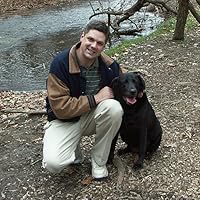
Stephen Coonts (born July 19, 1946) is an American thriller and suspense novelist.
Coonts grew up in Buckhannon, West Virginia, a small coal-mining town and earned an B.A. degree in political science at West Virginia University in 1968. He entered the Navy the following year and flew an A-6 Intruder medium attack plane during the Vietnam War, where he served on two combat cruises aboard the USS Enterprise (CVN-65). He accumulated 1600 hours in the A-6 Intruder and earned a number of Navy commendations, including the Distinguished Flying Cross. After the war he served as a flight instructor on A-6 aircraft for two years, then did a tour as an assistant catapult and arresting gear officer aboard USS Nimitz (CVN-68). His navigator-bombardier was LTjg Stanley W. Bryant who later became a Rear Admiral and deputy commander-in-chief of the US naval forces in Europe.
After being honorably discharged from duty as a lieutenant in 1977, Coonts pursued a Juris Doctor (J.D.) degree at the University of Colorado, graduating in 1979. He then worked as an oil and gas lawyer for several companies, entertaining his writing interests in his free time.
He published short stories in a number of publications before writing Flight of the Intruder in 1986 (made into a movie in 1991). Intruder, based in part on his experiences as a bomber pilot, spent 28 weeks on the New York Times bestseller lists in hardcover and launched his career as a novelist. From there he continued writing adventure-mysteries using the character from his first book, Jake Grafton. He has written several other series and stand-alone novels since then, but is most notable for the Grafton books.
Today Coonts continues to write, having had seventeen New York Times bestsellers (out of 20 books), and lives in Las Vegas, Nevada with his wife and son.
This is a collection of three stories of the Second World War, authored by two that I am familiar with and one that is new to me. The first is The Sea Witch about a sea plane and its crew, as a bomber of Japanese targets. This is by Stephen Coonts who is one of my favourites. The second by David Hagberg, who is new to me. V5 is another in the V1 and V2 series of Nazi rockets and needs to have its infrastructure destroyed before any can carry WMD against North America. The third and final story, Flame at Tarawa, is about a marine who operates a flame thrower on Tarawa. This is by Barrett Tillman who is one of my favourites. (Tillman is the author of “The Sixth Battle.” It is difficult to find but worth the effort; it has my all time favourite aircraft carrier battles.)
The Sea Witch is stream of consciousness; need I say more. Other people are quoted but everything is filtered through the narrator. The narrator is bland, single sided (aren’t we all) and narrow. The story is bland, single sided and narrow. The end does not come as much of a surprise, nor is it much of a story. We have heard this one before. I do not know when the story was written, only when the book was published. Perhaps this was a short story for a magazine, long ago. Not up to Coonts’s usual standard. Two stars.
V5 is the best of this collection. At 120 pages it is the longest and feels like it could be converted to a full novel with additional story elements in a couple of obvious places. The story includes the creation of a commando team in Britain to be inserted into occupied Europe. The commando then must infiltrate the V5 complex defensive structures and destroy enough of the V5 infrastructure to prevent their launch, arming or aiming, preferably all three. The destruction must be violent enough to prevent launch until the end of the war as future defenses will be even more difficult. Following the destruction of course, the commando members will attempt to extricate themselves to safety. The story covers some team selection, little planning or preparation, quite a bit of getting to the site and destruction and very little extrication. What was there was quite good; what was not there would possibly make a complete novel. Very good. Four stars.
Flame in Tarawa was mediocre. This makes it a slight disappointment after my earlier positive experience with Tillman. This story has somewhat a stream of consciousness format but includes a lot more inclusion of other people: what they did and how they felt. It is not a bad story. This could be book material but it would take a lot more effort on the part of the author. Worth the read. Three stars.
Hard to rank the entire book. Given the mixed quality I would have to say three stars.
This is my second of these Coonts' edited anthologies and I enjoyed it. All three tales about WW2 were well done.
Coonts wrote about a Catalina crew who attacked far superior forces.
Hagberg was a tale of espionage, a spy and other sources in Germany have given info about a secret weapon that could reach the US and kill thousands. A small group consisting of OSS and MI6 operatives are sent behind the lines to destroy the weapons.
Tillman writes as an 80 year old remembering back when he was a flame gunner Marine on Tarawa. His experiences on landing on the atoll and about a couple of terrible nights.
Highly recommended, all move along well and I was never bored. Will be looking into grabbing more of these.
I picked this title up as as a means to pass the time during a stint on jury duty last week. Thumbing through the book in the bookstore I was immediately attracted to the title (mainly because of the subject) but also because Stephen Coonts edited the book (and his Flight of the Intruder is one of my favorite titles).
This collection of 3 novellas read quickly and held my attention. This paperback edition contains 3 of the 10 novellas contained in the original hardback edition of Victory (which ran about 700 pages). These stories aren't history lessons and anyone expecting that will be disappointed, but these three character driven stories are good examples of the kind of 'war fiction" of days gone by.
The first story by Coonts, "The Sea Witch" is an interesting tale of a PBY Catalina crew that becomes stranded on a island in the Pacific as it searched for another lost Catalina crew. The story is a straightforward tale with an interesting twist at the end.
Next up is David Hagberg's "V5". This story is deals with the interaction of allied intelligence officers and military planners trying to prevent the Nazi's newest vengeance weapon (the title's V5) from being deployed. Although not strictly a war story this is a good thriller with a nice WWII background.
The final story "Flame at Tarawa" was a pleasant surprise. Penned by another favorite of mine Barrett Tillman. Although I know Tillman for his non-fiction WWII histories, I really enjoyed this story of a Marine flame thrower operator surviving the bloody, hellish, landing at Betio in 1943.
In the end, I feel that the reader is rewarded by characters that are interesting and hold your attention as well as stories that put a little more of a personal spin on the war, without glorifying combat to the same level as the typical war movie.