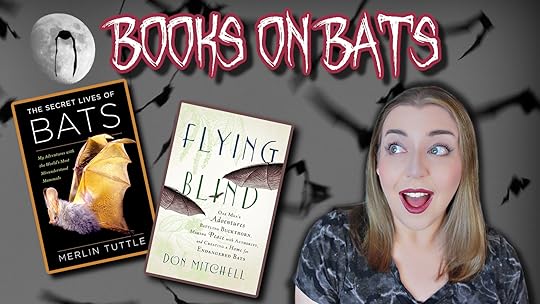
Few people realize how sophisticated and intelligent bats are. Merlin Tuttle knows, and he has stopped at nothing to find and protect them on every continent they inhabit. Sharing highlights from a lifetime of adventure and discovery, Tuttle takes us to the frontiers of bat research to show that frog-eating bats can identify frogs by their calls, that some bats have social sophistication similar to that of higher primates, and that bats have remarkable memories. Bats also provide enormous benefits by eating crop pests, pollinating plants, and carrying seeds needed for reforestation. They save farmers billions of dollars annually and are essential to a healthy planet. Tuttle’s account forever changes the way we see these poorly understood yet fascinating creatures.
“Grips and doesn't let go.” — Wall Street Journal
“It’s a terrific read.” — Huffington Post
“A whirlwind adventure story and a top-shelf natural history page-turner.” — Sy Montgomery, author of The Soul of an Octopus
“One of the best, most interesting books I’ve ever read.” — Elizabeth Marshall Thomas, author of The Hidden Life of Dogs
The Secret Lives of Bats is a memoir/natural history combo focused on bats and the bat research done by world-renowned scientist and conservationist Merlin Tuttle. In the book he details his myriad risky adventures to gather more information about bats, the things he learned from these undertakings, and all of his efforts over the years to change the public opinion about bats.
Bats are typically harmless, gentle creatures who help us more than hurt us, what with their giant appetites for crop-destroying pests and their assistance with pollination of many plant species. They don't deserve the insidious reputation they can sometimes get. Plus, I mean, have you seen these adorable little buggers? They're essentially flying puppies. 😍
Click here to hear more of my thoughts on this book over on my Booktube channel, abookolive!
The Secret Lives of Bats: My Adventures with the World's Most Misunderstood Mammals by Merlin Tuttle
Merlin Tuttle, the famous National Geographic photographer and naturalist takes the reader around the world to various places and situations where he studies and tries to educate people on bats and their importance to the environment. I have the audio version so I don't know if the book version would be better, I imagine it would have photos. I have loved bats all my life and have followed Tuttle's work. He also talks about his close calls while trying to film them including lions, venomous snakes, poisonous caves, and so much more! He has spent his life for bats! Bats and myths are also debunked in here! Nothing really new for me except for his perilous episodes but I always enjoy bat info! 4 1/2 stars
Part bats, part memoir, part advocacy. A wonderful book about how important bats are and really shouldn't be feared. They are amazing creatures, and needed. Interesting notes on nature photography and being out in the field, caving and such, trying to do everything possible to learn about and help the bats.
If you love bats or are afraid of them, i'd highly recommend this book. Also has nice cute pictures of bats.
i wanted to love this book! bats are such special creatures, and they have such an extreme impact on the ecosystems they inhabit. i crave bat facts, bat lore, bat cuteness!
but unfortunately this book leans far into the memoir realm, rather than teaching about bats. i can't believe how many ways tuttle has almost died while studying bats! it's truly a miracle that he's made it to such a ripe old age. he has undeniably done huge things for bat advocacy and conservation.
there's a huge emphasis on unlikely friendships. tuttle is very affable, seeming to befriend everyone he meets, including cops, rural residents and moonshiners, hunters, poachers, vacationers, fellow scientists, and the bats themselves.
not a huge fan of tuttle's narrative choices though. many otherwise heartwarming chapters end abruptly with updates that the colleagues he'd been working with died in all kinds of horrible ways. maybe the audiobook narration was a factor here, but the delivery felt bizarre!
also sad to have listened to the audiobook since apparently the print version includes CUTE BAT PICTURES! i need more cute bats in my life for sure.
Here in Austin, Texas, we already know bats are awesome. Our 1.5 million Mexican free-tailed bats consume thousands of tons of insects a night--including agricultural pests--and their nightly flight from Congress Street Bridge is so complex and beautiful as to Austin a hot spot for eco-tourism, generating money for our city. And we have Merlin Tuttle and his advocacy organization Bat Conservation International for paving the way for our enviro-civic pride. THE SECRET LIVES OF BATS is not only part memoir and part nature document, it's also part advocacy manual. Tuttle recounts his decades of bat research and photography, resulting in numerous discoveries about the complex ways bats interact with nature and drive the evolutions of various plant and animal species--we have no idea the benefits we enjoy just by being near bats! And that's a problem because for every narrow escape from a cobra or charging elephant in the name of bat research, Tuttle has come face to face with more farmers, families, hunters, and the like who are ignorant about our flying mammalian friends, often with devastating consequences for local bat colonies. But Tuttle understands that advocacy is education plus diplomacy, meeting people on their own territory and addressing their concerns with empathy, delicacy, and knowledge. Thank you, Merlin Tuttle!
▫️THE SECRET LIVES OF BATS: My Adventures with the World's Most Misunderstood Mammal by Merlin Tuttle, 2015.
My young days were spent in a southern New Mexico town best known for its 👽, however *my* best memories of flying objects were more directly related to the bat "outflights" witnessed at the nearby Carlsbad Caverns National Park.
Many a school trip to the wonderous caves, and the opportunity to witness thousands of Brazilian free-tail bats leaving the caves at dusk to hunt for food.
Years later, I recall this with such clarity and reverence, as well as the other times I've witnessed bats at dusk in various locations - from the Amazon rainforest to the Sonoran Desert to my own front yard in Maryland just this week...
It was also a childhood experience of caving in Tennessee that brought Dr. Merlin Tuttle to his lifelong work in bat biology, field research, and conservation.
This book is a result of Tuttle's passion to educate on the importance of bats in ecology and agriculture, as well as his work all over the world to photograph elusive bat species for identification and better understanding. Separated into chapters on different species from the frog-eating bats of Costa Rica & Panama to the flying foxes in East Africa & South Asia, the book serves as a field notebook of Tuttle's work. He's an engaging storyteller and shares all sorts of funny and sometimes perilous details of time in the field.
I first learned of Tuttle's work in one of my very favorite nature books: Diane Ackerman's MOON BY WHALE LIGHT from 1991, that I read in 2009. When I came across Tuttle's book in 2015, immediately picked it up to learn more about him and his bats, and finally got round to it this month.
I live in Austin, and one thing about Austin is that it likes bats. Once upon a time, this was unusual. I would like to think that it is not so unusual now, but when I was growing up bats were basically associated with vampires and rabies. If attitudes towards bats have in fact changed in recent decades, at least some of the credit goes to a man named Merlin Tuttle.
Roughly speaking, each chapter in this book tells a similar story: 1) Merlin Tuttle goes somewhere where a lot of bats live 2) the bats are declining in numbers, often due to humans attempting to exterminate them 3) Merlin captures some bats, shows people how they are cute and (mostly) harmless, and also takes some pictures of them for National Geographic 4) people decide maybe bats aren't actually all that dangerous, and their numbers go back up
Of course, the details vary in every case, and a lot of the details are entertaining. Tuttle seems to have a slight overconfidence issue, but he is willing to tell on himself in relating these stories, as for example when he decided to charge at a bull in order to demonstrate to his colleagues that it wasn't a threat (he was incorrect). There also seem to be a lot of instances where studying bats involves sitting around outdoors getting bit by bugs of one sort or another, and I was not at all tempted to go into his line of work after reading his stories. They were often quite entertaining to read about somebody else doing, though.
We also are treated to quite a few full-color photographs of bats, of a variety of species. They are almost all cute, albeit sometimes in a so-ugly-its-cute kind of way, and some of them are arranged in a way that is oddly reminiscent of a high school yearbook.
Tuttle goes to many states in America, and several countries in Asia, Latin America, and Africa during the stories in this book. He appears to be the sort of person whose enthusiasm for his subject is so exuberant that he is able to convert others, whether moonshiners who share the caves with bats or hunters who sell their catch to local restaurants or farmers who worry about competition for their fruit harvest. It is notable that he does not appear to do this by hectoring or appeals to guilt, but starting from an appreciation of the point of view of the person he's talking to. We could use more such ambassadors of goodwill, and the world's bats are lucky to have him on their side.
I have been a fan of bats ever since one got in the house one night and I had to get it out. While my boyfriend at the time overreacted and wanted to kill it, I managed to remove him from the bedroom where I had the bat contained, and I simply opened windows and took screens out so it could eventually fly out. I had an opportunity to observe this little creature and it was simply very cool! We lived in a rented reconverted barn where there were lots of these creatures in the attic. At night I could leave the doors open and not have a bug come in thanks to their industriousness. From that point on, I have been a huge fan of bats because they are such great neighbors! This book confirmed that my feelings for bats have not been misplaced. They control pests (bugs) and pollinate many plants. They are simply wonderful creatures!
Merlin Tuttle's life has been about bats since his childhood. His scientific bat journey has taken him on many exciting adventures around the world, many are told in this book. His adventures span over 40+ years, learning some extremely fascinating things about bats that I'm surprised I had never heard.
I was hoping for more general info on bats, and maybe less on camera angles.
I think Tuttle's objective in the book was to teach people how invaluable bats are to our ecosystem, and to relive some great moments of adventure and discovery.
I am already sold on the importance of bats and was hoping to learn more of the science behind the good and the scary, like their crazy immune systems, and how they are able to carry some intense diseases.
I think bats are fascinating and I just went through a phase learning about Ebola so I was hoping for some neat info, but it wasn't here.
This book is cool, and I wanted more of an 'An Immense World' by Ed Yong type of book. I think there's a new non-fiction book about bats that came out/ is coming out this year (2025) so I'll check that one out.
*He only mentioned Ebola once... in the epilogue. AND I didn't even learn if it was pointless to hang my bat house...
*** but, along with other cool things, I learned that frog-eating Bats learn non-poisonous frog calls and can be trained, untrained, and retrained on different calls.
I ended up enjoying this quite a bit, although Tuttle is not the most dynamic writer. That's a minor quibble on my part, though. The book is well done and where Tuttle is lacking in narrative chops he gets by on the strength of his stories, some of which are really a lot of fun. Aside from the kind of hair-raising escapades you'd expect from stalking bats in the wild, he has some really interesting tales of how he got some of his iconic photos, plus general bat lore (which I for one am quite into).
Apparently they're very intelligent and kind of affable—most of them are very easy to tame (he gets a lot of shots by recreating scenes from the wild in studios he sets up, and takes a few days to get the bats used to taking food out of his hands so they're not freaked out when it's time for their close-ups sipping from some rare cactus flower). Tuttle definitely conveys the sheer coolness of bats, though there's a certain sameness to the tone of his stories that flattens them out a bit. Still, the content made it worth the read, and if you weren't a bat fan before, this book could definitely turn you.
I was hoping for more information about bat anatomy, but this book focuses more on behaviour and conservation. From what he says, I am quite sure Tuttle is single-handedly responsible from keeping several species out of extinction. A fascinating read.
The Secret Lives of Bats is very readable and compelling science book. The first chapters are about Tuttle's interest in exploring caves near his childhood home of Knoxville, Tennessee. Later chapters cover his rise as a bat researcher and conservationist in various locations around the world.
I really enjoyed each chapter and was reminded of a book my sister owned and I borrowed and read while in high school, called Animals Nobody Loves: The Fascinating Story of "Varmints" by Ronald Rood. Bats, like many animals such as spiders, wolves, snakes, etc...are animals that humans grow up learning about from hearsay, bad information or just plain mythology, handed down generation to generation, and, it seems, to be common to cultures worldwide. It is unfortunate, too, because, as Merlin Tuttle so aptly points out throughout the book, bats do a lot for the environment and even have a significant impact on control of deleterious insect pests.
Quibbles? One big one. I am pretty sure that Tuttle is an extremely competent scientist and he has had a long-term and important impact on conservation efforts of bat populations around the world. It seemed like almost every chapter, however, had some point where his efforts were near total disaster or he was at high risk of losing his life and I felt like he was trying to portray himself as the Indiana Jones of bat research. I am just saying, at times, the book felt overly dramatized.
Regardless, a good book of science, and I guarantee you will learn a lot about bats that you did not know by reading it.
This book was awesome! If you've ever been curious about bats or even if you think you hate them, you should definitely pick it up. I have been very interested in them for years now and even I learned a lot of new information from this book. Merlin Tuttle was already considered an expert in bats in my mind due to his amazing bat photography. Unlike most photos of bats with snarling faces, he captured them in a much less threatening (and more realistic) light. He includes two sections of amazing photos in the book and describes what it took to get them. This book shares stories of his life as a bat photographer and researcher. While his writing style does take a little getting used to, the content more than makes up for any of those issues. It was also refreshing to read a book that was not solely focused on White Nose Syndrome. He does mention it, of course, but the tone of the book is one of hope that the bats can be saved. My love for bats has grown even more if that is possible. Please check out this book and tell someone else about it.
Anyone who knows me knows I love bats, so I was shocked by how supremely disappointed I was by this book. Merlin Tuttle has done more for bats than probably anyone ever has and we love him for that, but this book was more about him and how awesome he is than about bats! Very braggadocios and weirdly machismo about risky field adventures. Also, you don’t need to downplay the role that bats play in the spillover and emergence of diseases like Hendra to emphasize that they play an important role in many ecosystems and shouldn’t be killed at random. To basically imply that it’s made up that bats are reservoirs for many emerging infectious diseases is ignoring the facts. If anything, bat conservation helps reduce spillover by keeping bats in their natural habitats and reducing contact with humans and domestic animals (among other reasons). We can be more nuanced than this!! Blerg :(
This is an autobiography on the author’s life search and study of bats worldwide. I actually would give it 3.5 stars, better than average yet not a great read. Some parts were really exciting and adventurous and some parts were really bogged down with his descriptions of what exactly he had to do to get his photos of the bats. But, all in all, I learned a lot about bats…and his photos really are phenomenal.
I had no idea who Merlin Tuttle was. He’s pretty much one of the most notorious Chiropterologist in the U.S., and possibly the world. In 1986, he resigned as curator of mammals at the Milwaukee Public Museum in Wisconsin, moved to Austin, Texas, where he founded Bat Conservation International (BCI) to help Austinites understand and appreciate the 1.5 million Brazilian free-tailed bats (a.k.a. Mexican free-tailed bats) that were starting to move into all the small 16 inch crevasses beneath the Congress Avenue Bridge, just a few blocks down from the State Capitol. They were scared of bats, in general, because of rumors of rabies and attacks on people, and they wanted them exterminated!
But these bats, they would soon learn from Tuttle, were actually very gentle and too beneficial. Just one free-tailed bat can consume 20 to 40 moths a night. That may not seem like a lot, but when you factor in the fact that those 20 to 40 moths can each lay 500 to 1,000 eggs on Texas crops, times 20,000 moths, it changes your whole perspective. These insect-eating bats feed heavily on tons of a variety insects each night, such as corn earworms, tobacco budworms, and, the most costly to eradicate, fall army worm moths, grasshoppers, mosquitoes, etc…Thank God for his efforts! Today, it’s a tourist hot-spot, where hundreds of people will gather to watch their flight out at sunset, flying just above their heads. And never has one person ever been attacked or bitten.
These bats fly south for the winter and are only here from mid-march through September. They fly up to 10,000 feet above ground and can potentially form huge colonies, with 10-20 million or more bats. Up to 500 pups can fill up a single square foot.
Tuttle has invested his life to teaching others the importance of bats on our crops and economics all around the world, and has saved quite a few from becoming extinct. Some plants are strictly pollinated by bats, as their flowers only open at night, such as the agave cactus. We wouldn’t even have Tequila if it weren’t were bats. Fruit-bats are needed for seed dispersing certain plants and trees. And, of course, they are needed for insect and pest control. Bat guano can be used as fertilizer, but I’ve never seen it sold around here in southeast Texas. There are loads of bat caves all around Texas, especially up in the Hill Country (see link below).
I have not seen a bat around here in years…probably because our particular county, Orange County, prefers to shell out a few hundred thousand dollars each year to spray our skies, our ditches, our dogs, our farms, our people, and our gardens with poisons to take care of mosquito and bug problems. And it is usually done in the evenings, just when its finally cool enough for people to go out and tend their gardens. But, hey, it’s totally harmless…they say. But, I think I will still try and put out a few bat houses anyway, just to see if they are really around or not.
Tuttle’s adventures chasing down the more elusive bats are absolutely amazing and harrowing. He definitely has a great passion for bats. He has photographed all 46 bat species found in the U.S., and many in other countries. Some are found inside this book (See photos at the end of chapter 8 and at the end of chapter 12). If reading on a Kindle eBook, you can expand them to get a close up view. He has admitted to taking over 10,000 photos during bat expeditions just to capture that one GREAT shot for National Geographic…because that’s what it takes to get into National Geographic.
Chapter 4 on vampire bats was very interesting! The vampire bats are only down in Latin America for now, and about 130 miles south of the U.S. border. It is the only bat that has grown and become over abundant due to cattle raising and chicken farming where forests have disappeared. Not all, but some can carrie rabies that transfer to cattle, killing many cattle when there’s an outbreak. Still, according to Merlin, they are very gentle and harmless. The people had previously been burning ALL bats in any caves they found, trying to rid the vampire bat, but these turned out to be only fruit and insect-eating bats. The vampire bats hung out in very small numbers and deep inside the caves, separated, where no other bats were. So, they were never being killed. Merlin’s team, with Dr. Hugo Sancho, a local Veterinarian, helped educate the ranchers and farmers on the differences of the bats and how to best kill the vampire bat without harming any others. Interestingly, they use a poison mixture containing rat poison - WARFARIN, an anticoagulant!!… spread a little on top of the feeding bat, which feeds for 20 minutes on an animal. It then returns to the cave and the other bats lick it clean, killing that whole group of vampire bats.
LINKS TO ONLINE SOURCES
Here is a short, current and informative video regarding bats and disease presented by Merlin Tuttle, himself:
It’s hard to believe this is the same fearless guy chasing bats in the book. Watch on YouTube, “The Worldwide Importance of Bats”, presented by Bats Conservation International (12:26):
I was hoping to learn about the lives of bats, but mostly the book is about the life of the author. I suppose that his life is pretty interesting, but it wasn't what I was expecting. If you're interested in the author's adventures in trying to find and photograph bats, this is the book for you. If you're looking for something like Are We Smart Enough to Know How Smart Animals Are, but about bats, don't bother with this book.
Honestly this has been one of my favorite books I’ve read in a long time. Maybe it’s the fact that I have a soft spot with animals who have a bad rap through misinformation (like sharks) or maybe it’s from the writing style that truly makes you feel like you’re in the field encountering and researching these bats along with the author.
Prior to reading this book I had no idea how important bats were for the environment and the economy. These lovely little creatures have unfortunately been associated with so many negative things such as diseases and destruction that is actually quite erroneous and couldn’t be farther from the truth.
We need bats, they can eat over 1,000 insects an hour, protect crops, and many species are more efficient pollinators than birds or insects. Ahh I feel like I want to scream from the rooftops about bat conservation and I want everyone I know to read this book and also get really into bats. That would be like really cool.
Now more than ever, bats need our help. Since the pandemic started, many fingers have been pointed at bats as the cause, and I found myself weeping more than once at seeing videos of people taking flamethrowers to bat colonies, even the bats that aren't at all related to the ones that can carry coronaviruses.
Without bats, the amount insect-born illnesses that humans would have to suffer and die from would far outnumber any other coronavirus related outbreaks, and starvation rates would devastate humanity since bats are also critical pollinators and seed-spreaders; in some areas even moreso than insects and birds.
Bats have always had a bad reputation, and it's been more than enough time to put aside old fears and stereotypes to realize how important they are.
I've been a fan of bats ever since I was a kid, and was never scared of them - and as I was a baby bat [baby goth] growing up, I loved them even more. Despite I already knew a lot about bats, this book taught me so much I wouldn't even have thought of. Besides education about bats, Merlin [I don't know if he calls himself a Bat Wizard with that name, but that's what I've been calling him] tells about his world travels and adventures to help study and save bats. The book also starts and ends with Austin's massive free-trailed bat colonies and what they mean to conservation which was a nice little surprise as an Austinite.
Even if you believe yourself to be fearful of bats or disgusted by them, please read this book.
I absolutely plan on gifting out copies to multiple people this year.
If all activists had the attitude of cooperation, the quest to understand and a passion for an underdog that Merlin Tuttle has for the bats of the world, their causes would have a much better chance. Reading about Mr. Tuttle 's adventures is a reminiscent of sitting with a buddy and exchanging tales while drinking a beer.
Very enjoyable and well-written book of popular science, author Merlin Tuttle discussed in a very relatable way his fifty-five years of experience studying bats, photographing them, conservation (he is founder of Bat Conservation International), and his decades of enthusiastic speaking as to why bats should not be “objects of fear and disgust because of ignorance and resulting superstitions” but instead showing how bats are “essential allies and safe neighbors” and about the “billions of dollars’ worth of bat contributions to human economies” from insect control, pollination, reforestation, to booming bat tourism and simply showing concerned individuals bats can be cute, intelligent, beautiful, and even affectionate.
Tuttle certainly had the flair of a storyteller and an accomplished explainer of science to the interested public, with his many stories both interesting themselves (dealing with bandits, surprised moonshiners, being mistaken for a drug smuggler, tornadoes, language difficulties, getting lost, bureaucracies, ammonia inhalation poisoning from visiting a bat cave, and encountering all manner of wildlife including tigers, elephants, mountain lions, ocelots, and snakes) but in each story conveying educational information on bat biology and bat conservation. His stories range all over the world, starting in eastern Tennessee and north Alabama and over the decades his experiences in such places as Kenya, Australia, American Samoa, Thailand, Costa Rica, Ecuador, Cuba, Mexico, Texas, and British Columbia. Every bat story has a focus, whether protecting the important Rakang and Khao Chong caves in Thailand from development and poachers to researching how frog-eating bats (Trachops cirrhosus) on Barro Colorado Island, Panama select and home in on their frog prey to how old man’s beard cactus (Espostoa frutescens) in Ecuador was bat-pollinated, assisting pollinating bats by echolocation absorbing structures in the plant to visiting Hot Springs Island, in the Queen Charolotte Archipelago to find the tiny Keen’s myotis (Myotis keenii), part of his mission to all 46 bat species found in the United States to his original research as a teen where he did pioneering research discovering a bat in the southeastern US, gray myotis (Myotis grisescens) was actually migratory. He wrote and photographed bats for a number of National Geographic articles and reading about how he photographed bats hunting or pollinating was fascinating.
There was some great coverage of vampire bats. For additional information on them I highly recommend _Dark Banquet: Blood and the Curious Lives of Blood-Feeding Creatures_ by Bill Schutt. The chapter on frog-eating bats, the locale of Barro Colorado Island, was the setting for another book I highly recommend, _The Tapir’s Morning Bath: Mysteries of the Tropical Rain Forest and the Scientists who are Trying to Solve Them_ by Elizabeth Royte, which detailed other research being done in the tropical rain forest of that island.
Two sections of gorgeous full color photos, multiple page bibliography, and an index are included.
I didn't know much and didn't think much about bats besides "they're cool/important/they eat mosquitoes but I don't think I want to meet one" before reading this book. Well now I know! Bats are so cool!! And so tiny?! (there's a bat that weighs LESS THAN A PENNY. there are tons of bats you can hold in the palm of your hand!! incredible. there's also scary giant bats with 6 ft wingspans but I'm obsessed with the tiny ones.) I was also surprised to read so much fascinating information on how Tuttle actually went about photographing bats. I would never have thought that's how the included photos were captured. I learned so much reading this book. Although I did come away with the impression that I want him to be my professor, not my friend, I really enjoyed the very personal perspective from which Tuttle shared his bat stories/knowledge.
Great rec from my bat-obsessed friend Allison, now I get the hype :)
A wonderful book about the author's travels around the world to document bats and change people's minds from fear and hatred to an understanding of how harmless and beneficial they are--not to mention cute! I recommend pairing this audiobook with merlintuttle.org for his amazing photographs. Tuttle deserves a Nobel Prize for his worldwide conservation efforts! Great narrator too.
An enlightening work on bat ecology and conservation. From facts about bats the weight of a penny, run ins with moonshiners and with doctors, the staggering amount of times the author almost died in extreme environments, to the work that goes into a National Geographic photo it was a fun read.