

What do you think?

Notes on Thought and Vision and The Wise Sappho
Notes on Thought and Vision by Imagist poet H.D. (Hilda Doolittle) is an aphoristic meditation on how one works toward an ideal body-mind synthesis; a contemplation of the sources of imagination and the creative process; and a study of gender differences H.D. believed to be inherent in women's and men's consciousness. Here, too, is The Wise Sappho, a lyrical tribute to the great poet of Lesbos, for whom H.D. felt deep personal kinship.
Paperback
First published January 1, 1982
About the author
H.D.
123 books349 followersAn innovative modernist American writer, Hilda Doolittle (1886–1961) wrote under her initials in a career that stretched from 1909 to 1961. H.D., most well known for her lyric and epic poetry, also wrote novels, memoirs, short stories, essays, reviews, a children’s book, and translations. An American woman who lived her adult life abroad, H.D. was engaged in the formalist experimentation that preoccupied much of her generation. A range of thematic concerns resonates through her writing: the role of the poet, the civilian representation of war, material and mythologized ancient cultures, the role of national and colonial identity, lesbian and queer sexuality, and religion and spirituality.
Ratings & Reviews
Friends & Following
Create a free account to discover what your friends think of this book!
Community Reviews
Displaying 1 - 28 of 28 reviews

August 27, 2025
Leído del tirón, prácticamente. Para releer y releer y releer.

January 18, 2010
How lucky the world is to have H.D.'s wild attempts to name the "over-mind," the state of being that opens our capacity for making and appreciating art. I can imagine this essay productively paired with Lorca's In Search of Duende. The "over-mind" seems to lead to the same kind of immersive, immediate, spontaneous experience of art as duende, but H.D. takes a very different tack from Lorca, suggesting that we can only arrive at this "over-mind" through the intellect, rather than through a non-conscious route.
My favorite passages stem from H.D.'s descriptions of a statue of a charioteer at Delphi, which she names as one of her "sign-posts," those works of art that "are straight, clear entrances [...] to over-world consciousness." At one point, she imagines this statue as telegraphing a message and distinguishes between the bounty of art and the paucity of people who can receive the "message" of art: "There is no trouble about art, it is the appreciators we want. We want young men and women to communicate with the charioteer and his like." I wrestled with this idea, which seems to disrupt my populist sensibilities, but even H.D. notes that "this world is there for everyone"--it's only that we're more likely to seek comfort than the kind of unusual consciousness that allows us to appreciate and make art.
My only quibble with "Notes on Thought and Vision" is that H.D. uses so much of what would now be considered ableist language. I know she was a product of her time and that disability was perceived through a different paradigm than it often is now, but the language still grated.
The book also includes another lyric essay, "The Wise Sappho," a beautiful praise-song that riffs on Meleager's statement that Sappho's work is "little, but all roses." I'm not sure I've read one poet so unabashedly and lushly appreciating another. I loved it, and it made me want to return to If Not, Winter: Fragments of Sappho.
My favorite passages stem from H.D.'s descriptions of a statue of a charioteer at Delphi, which she names as one of her "sign-posts," those works of art that "are straight, clear entrances [...] to over-world consciousness." At one point, she imagines this statue as telegraphing a message and distinguishes between the bounty of art and the paucity of people who can receive the "message" of art: "There is no trouble about art, it is the appreciators we want. We want young men and women to communicate with the charioteer and his like." I wrestled with this idea, which seems to disrupt my populist sensibilities, but even H.D. notes that "this world is there for everyone"--it's only that we're more likely to seek comfort than the kind of unusual consciousness that allows us to appreciate and make art.
My only quibble with "Notes on Thought and Vision" is that H.D. uses so much of what would now be considered ableist language. I know she was a product of her time and that disability was perceived through a different paradigm than it often is now, but the language still grated.
The book also includes another lyric essay, "The Wise Sappho," a beautiful praise-song that riffs on Meleager's statement that Sappho's work is "little, but all roses." I'm not sure I've read one poet so unabashedly and lushly appreciating another. I loved it, and it made me want to return to If Not, Winter: Fragments of Sappho.

July 31, 2018
I feel like I´ve just had a conversation with someone I really love and admire (just for trilogy, a beautiful and moving book) but like maybe she is looking straight ahead and saying something much too elevated for me, which I can't really catch completely. Is she a visionary? I think she is, but is she crazy? maybe she is too.

Read
June 20, 2021I first discovered HD in an online Coursera course, Modern and Contemporary American Poetry, ModPo for short. But her contribution to poetry seemed a bit isolated, stand-alone-ish, in its Imagist setting.
I saw a different side of her in the silent film Borderlines (available on YouTube). That led me to her essay, Notes on Thought and Vision, her concept of the Overmind, and her thoughts about the work of Leonardo da Vinci.
Then the epiphany. I was reading a play, Jitney, for a study group I lead on the plays of August Wilson. Jitney was a play written twice, like da Vinci's Virgin of the Rocks, so loved by HD, was painted twice. One is in London and one is at the Louvre. I saw that just as a painting, a play could be less a picture and more a window (if not a mirror) for playgoers.
I wrote in the margin of the HD essay where she discussed her jelly-fish metaphor, super-feelings, a reminder to review the lyrics of the Bill Withers song, "Can we pretend." Check it out on YouTube. You will see what I mean.
I saw a different side of her in the silent film Borderlines (available on YouTube). That led me to her essay, Notes on Thought and Vision, her concept of the Overmind, and her thoughts about the work of Leonardo da Vinci.
Then the epiphany. I was reading a play, Jitney, for a study group I lead on the plays of August Wilson. Jitney was a play written twice, like da Vinci's Virgin of the Rocks, so loved by HD, was painted twice. One is in London and one is at the Louvre. I saw that just as a painting, a play could be less a picture and more a window (if not a mirror) for playgoers.
I wrote in the margin of the HD essay where she discussed her jelly-fish metaphor, super-feelings, a reminder to review the lyrics of the Bill Withers song, "Can we pretend." Check it out on YouTube. You will see what I mean.

August 3, 2009
weird, trippy, all over in thought and writing. perfect.
July 18, 2017
Your enjoyment depends how much mystical claptrap you can stomach, but if you power through that you get a lot of wonderful rumination on HD's art and great lyrical passages.

January 21, 2015
I enjoyed this little book. It consists of scattered notes Doolittle made after her "jellyfish experience." She was apparently on the Scilly Islands--an archipelago south of Great Britain--in 1919 when it happened. From what I've learned, H.D. had been working with Freud but it did not help her. I imagine her as a sort of St. John, outcast on her island and failed by the world and its wisdom, when she had her epiphany. She envisioned "the over-mind," which, she says, is like a jellyfish cap, its tentacles coming down and enveloping the body (we are not, of course, being literal here). This covering is the clarity that comes to the artist through hard work, understanding, and achievement--it is artistic understanding that comes through rigorous work rather than mere "inspiration." Reaching it is moving from "normal consciousness to abnormal consciousness" and "is accompanied by grinding discomfort and mental agony." In other words, H.D.'s enlightened vision of creative consciousness comes to artists through hard work--she disregards the classic notion of inspiration and points to a bodily, corporeal notion of the artist coming into his or her own. It is what many today would call a dismissal of masculine notions of brilliance, which she replaces with what those same people would call a feminine understanding. (I don't have much of a stance on it rather than finding it interesting.)
I see a lot of similarities between H.D.'s concept of the over-mind and the ideas of Ralph Waldo Emerson and Nietzsche concerning "Man Thinking," the "oversoul," and the "superman." These all point to higher, near unattainable ideals for what a person can become. The obvious difference, both in the works but also in the mere wording, is the inclusivity of Doolittle's ideas versus the uber-masculine nature of Emerson and Nietzsche's notions. Interesting.
The last portion of the book is a meditation/homage to Sappho, titled "The Wise Sappho." In it, Doolittle ruminates on Sappho, particularly her place in ancient literature and culture and how that makes her someone to adore and respect today. This part of the book was not as interesting to me, though, to be fair, I am far too ignorant in regards to Sappho, and this could certainly be swaying my opinion on the matter.
Nevertheless, the book as a whole is quite fascinating. Moreover, as a very short book, a reader has very little to lose checking it out (too honest?). Here's a nice quote from the book to end on: "Flowers are made to seduce the senses: fragrance, form, colour. . . If you can not be seduced by beauty, you cannot learn the wisdom of ugliness."
I see a lot of similarities between H.D.'s concept of the over-mind and the ideas of Ralph Waldo Emerson and Nietzsche concerning "Man Thinking," the "oversoul," and the "superman." These all point to higher, near unattainable ideals for what a person can become. The obvious difference, both in the works but also in the mere wording, is the inclusivity of Doolittle's ideas versus the uber-masculine nature of Emerson and Nietzsche's notions. Interesting.
The last portion of the book is a meditation/homage to Sappho, titled "The Wise Sappho." In it, Doolittle ruminates on Sappho, particularly her place in ancient literature and culture and how that makes her someone to adore and respect today. This part of the book was not as interesting to me, though, to be fair, I am far too ignorant in regards to Sappho, and this could certainly be swaying my opinion on the matter.
Nevertheless, the book as a whole is quite fascinating. Moreover, as a very short book, a reader has very little to lose checking it out (too honest?). Here's a nice quote from the book to end on: "Flowers are made to seduce the senses: fragrance, form, colour. . . If you can not be seduced by beauty, you cannot learn the wisdom of ugliness."
July 28, 2007
it's a good book to pick up when one is feeling disillusioned by writing.

April 21, 2024
So glad to have 'The Wise Sappho' in print
July 18, 2024
“Una vez que un hombre se vuelve consciente de esta medusa sobre su cabeza, de esta perla dentro de su cráneo, de esta semilla arrojada al suelo, su cuerpo se convierte automáticamente, en su principal preocupación”

September 30, 2026
The book is two parts, one H.D. explanation of her "over-conscious" mind and how it differs/is similar from the notations by men on "subconscious"; being like a jellyfish, I would stress however because I have seen it elsewhere -that your bodies physical health does not make for a richer or "better" mind or imagination.
It seems this line of misinformation is a result, if I am kind, of a person who's able bodied suddenly getting sick and relief at wellness and being "restored" without lingering on disability or chronic pain or what may occur in old age. A belief that a life being unable to do "normal" things is somehow not worth living or "they would be better off dead"- which is infuriating. People who are able bodied/fit do not have a better head on their shoulders, nor do they possess some kind of moral goodness that comes from God that keeps them "whole" or normal.
I liked better the last few pages on "The Wisdom of Sappho" which gives beyond the impression that Sappho is a haughty beauty of a aristocrat (lol,was she? Or was that self projection of the many wealthy who've got takes on her?), that she had a daughter she named for her mother Cleis, and for lovers Atthis, Andromeda, Mnasidika, Gyrinno, Eranna, Gorgo, Timas. We also get a passing mention of Rhodope/Rhodopis and Sappho's brother (unnamed but Charaxos).
It has puzzled me that modern authors who put names to Sappho's loves largely do not get names from her poems but pelt her with newly named ones, like Bilitis ( Pierre Louÿs), Lykaina (Ellen Frye's The Other Sappho) and the upcoming Leandra "wife of Myrsilus" in the upcoming "The Tenth Muse" by Lara Reed indeed like "little roses". All sacred to Aphrodite.
There's certain thing which Heliogabalus (and Nero?) did to guests at a banquet, having them in a room and with a trap ceiling filling the room with roses until they died. Perhaps inspired by the myth of Aphrodite and Ares caught in bed by chains of Hephaestus. It strangely mirrors a trap ceiling that fills with Nile water which Nitocris/Nitiqrit Queen of Egypt uses to avenge her unnamed king brother. This king who may be Psammetichus is also associated with the Cinderella like myth of Rhodope/Rhodopis who's attached also to Sappho's brother and who's name means "rose faced" and is associated with the building of the third pyramid. Nitocris' name may be familiar to those who read H. P. Lovecraft as a "evil Queen" which was a wildly different take on her myth.
If you're looking for more information on Sappho, her poetry and the modern people who tend and work with it likes garden, I recommend the Sweetbitter podcast you can still listen to season one on Sappho and season two on Pirates on Spotify although sadly their website is down.
It seems this line of misinformation is a result, if I am kind, of a person who's able bodied suddenly getting sick and relief at wellness and being "restored" without lingering on disability or chronic pain or what may occur in old age. A belief that a life being unable to do "normal" things is somehow not worth living or "they would be better off dead"- which is infuriating. People who are able bodied/fit do not have a better head on their shoulders, nor do they possess some kind of moral goodness that comes from God that keeps them "whole" or normal.
I liked better the last few pages on "The Wisdom of Sappho" which gives beyond the impression that Sappho is a haughty beauty of a aristocrat (lol,was she? Or was that self projection of the many wealthy who've got takes on her?), that she had a daughter she named for her mother Cleis, and for lovers Atthis, Andromeda, Mnasidika, Gyrinno, Eranna, Gorgo, Timas. We also get a passing mention of Rhodope/Rhodopis and Sappho's brother (unnamed but Charaxos).
It has puzzled me that modern authors who put names to Sappho's loves largely do not get names from her poems but pelt her with newly named ones, like Bilitis ( Pierre Louÿs), Lykaina (Ellen Frye's The Other Sappho) and the upcoming Leandra "wife of Myrsilus" in the upcoming "The Tenth Muse" by Lara Reed indeed like "little roses". All sacred to Aphrodite.
There's certain thing which Heliogabalus (and Nero?) did to guests at a banquet, having them in a room and with a trap ceiling filling the room with roses until they died. Perhaps inspired by the myth of Aphrodite and Ares caught in bed by chains of Hephaestus. It strangely mirrors a trap ceiling that fills with Nile water which Nitocris/Nitiqrit Queen of Egypt uses to avenge her unnamed king brother. This king who may be Psammetichus is also associated with the Cinderella like myth of Rhodope/Rhodopis who's attached also to Sappho's brother and who's name means "rose faced" and is associated with the building of the third pyramid. Nitocris' name may be familiar to those who read H. P. Lovecraft as a "evil Queen" which was a wildly different take on her myth.
If you're looking for more information on Sappho, her poetry and the modern people who tend and work with it likes garden, I recommend the Sweetbitter podcast you can still listen to season one on Sappho and season two on Pirates on Spotify although sadly their website is down.

March 26, 2024
“The mystic, the philosopher is content to contemplate, to examine these pictures. The Attic dramatist reproduced them for men of lesser or other gifts. He realised, the whole time, that they were not his ideas. They were eternal, changeless ideas that he had grown aware of, dramas already conceived that he had watched; memory is the mother, begetter of all drama, idea, music, science or song.”
“Two or three people, with healthy bodies and the right sort of receiving brains, could turn the whole tide of human thought, could direct lightning flashes of electric power to slash across and destroy the world of dead, murky thought.
Two or three people gathered together in the name of truth,beauty, over-mind consciousness could bring the whole force of this power back into the world.”
—
“We need the testimony of no Alexandrian or late Roman scholast to assure us of the artistic wisdom, the scientific precision of metre and musical notation, the finely tempered intellect of this woman. Yet for all her artistic moderation, what is the personal, the emotional quality of her wisdom? This woman whom love paralysed till she seemed to herself a dead body yet burnt, as the desert grass is burnt, white by the desert heat; she who trembled and was sick and sweated at the mere presence of another, a person, doubtless of charm, of grace, but of no extraordinary gifts perhaps of mind or feature—was she moderate, was she wise? Savonarola standing in the courtyard of the Medici (some two thousand years later) proclaimed her openly to the assembled youthful laity and priests of Florence—a devil.
If moderation is wisdom, if constancy in love is wisdom, was she wise? We read even in these few existing fragments, name upon curious, exotic, fragrant name: Atthis— Andromeda - Mnasidika - Eranna— Gyrinno-more, many more than these tradition tells were praised in the lost fragments. The name of muse and goddess and of human woman merge, interspersed among these verses. ‘Niobe and Leda were friends—‘ it is a simple statement—for the moment, Niobe and Leda are nearer, more human, than the Atthis, the Eranna who strike and burn and break like Love himself.”
“Two or three people, with healthy bodies and the right sort of receiving brains, could turn the whole tide of human thought, could direct lightning flashes of electric power to slash across and destroy the world of dead, murky thought.
Two or three people gathered together in the name of truth,beauty, over-mind consciousness could bring the whole force of this power back into the world.”
—
“We need the testimony of no Alexandrian or late Roman scholast to assure us of the artistic wisdom, the scientific precision of metre and musical notation, the finely tempered intellect of this woman. Yet for all her artistic moderation, what is the personal, the emotional quality of her wisdom? This woman whom love paralysed till she seemed to herself a dead body yet burnt, as the desert grass is burnt, white by the desert heat; she who trembled and was sick and sweated at the mere presence of another, a person, doubtless of charm, of grace, but of no extraordinary gifts perhaps of mind or feature—was she moderate, was she wise? Savonarola standing in the courtyard of the Medici (some two thousand years later) proclaimed her openly to the assembled youthful laity and priests of Florence—a devil.
If moderation is wisdom, if constancy in love is wisdom, was she wise? We read even in these few existing fragments, name upon curious, exotic, fragrant name: Atthis— Andromeda - Mnasidika - Eranna— Gyrinno-more, many more than these tradition tells were praised in the lost fragments. The name of muse and goddess and of human woman merge, interspersed among these verses. ‘Niobe and Leda were friends—‘ it is a simple statement—for the moment, Niobe and Leda are nearer, more human, than the Atthis, the Eranna who strike and burn and break like Love himself.”

April 20, 2024
Fascinating stuff. This requires much closer attention than I've paid it now, but I look forward to discussing it more in-depth. H.D. is clearly a poet who knows her way around prose as well (and does a better job at that, even, though that's probably a very unpopular opinion) and I enjoyed seeing how deeply invested she is in Greek mythology and culture. So much food for thought!


September 3, 2010
HD talks about the creative process in refreshingly direct, yet appropriately ungraspable language.
For me, it was the birth of my child that the jelly-fish conciousness seemed to come definitely into the field or realm of the intellect or brain.In a later essay, she talks about Sappho. It's good, but the language is a bit more dense and hard to parse, and I really don't care about Sappho as much.
May 6, 2018
Aphoristic meditation.

September 1, 2024
"Si no puedes ser seducido por la belleza, no puedes aprender la sabiduría de la fealdad"
February 9, 2025
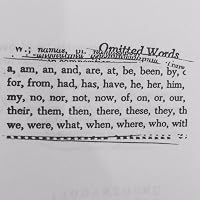
18 ‘That over-mind seems a cap, like water, transparent, fluid yet with definite body, contained in a definite space. It is like a closed sea-plant, jelly-fish or anemone. Into that over-mind, thoughts pass and are visible like fish swimming under clear water.’
20 ‘Vision is of two kinds—vision of the womb and vision of the brain.’
40 ‘The serpent—the jelly-fish—the over-conscious mind.
The realisation of this over-conscious world is the concern of the artist.
But this world is there for everyone.’
50 ‘Probably we pass through all forms of life and that is very interesting. But so far I have passed through these two, I am in my spiritual body a jelly-fish and a pearl. We can probably use this pearl, as a crystal ball is used, for concentrating and directing pictures from the world of vision.’
20 ‘Vision is of two kinds—vision of the womb and vision of the brain.’
40 ‘The serpent—the jelly-fish—the over-conscious mind.
The realisation of this over-conscious world is the concern of the artist.
But this world is there for everyone.’
50 ‘Probably we pass through all forms of life and that is very interesting. But so far I have passed through these two, I am in my spiritual body a jelly-fish and a pearl. We can probably use this pearl, as a crystal ball is used, for concentrating and directing pictures from the world of vision.’
November 29, 2025
reading this work felt surprisingly intimate, like i stepped straight into h.d.’s lore. the way she talks about how thought and vision blend together made me feel like i was literally roaming around inside her brain while she was figuring stuff out. honestly, it didn’t come across as theoretical at all, more like flipping through her diary entries, which i loved. her whole imagism angle was also fun to see from her perspective. i enjoyed getting a glimpse into her mind and now i want to explore more of her stuff.

September 17, 2022
One may be slightly afraid that loving H.D. is a risky proposition--that you'll be disappointed. Don't worry: you won't be. That said, this particular book should be loved in the context of loving her poetry already also.

May 17, 2020
I love H.D., and half of this was super cool insight. The other half I honestly couldn’t understand at all.

February 8, 2025
Oh Hilda. You little jellyfish.
July 28, 2026
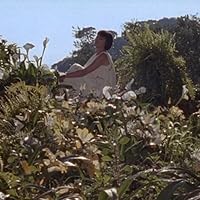
"I am in my spiritual body a jelly-fish and a pearl."
August 10, 2026
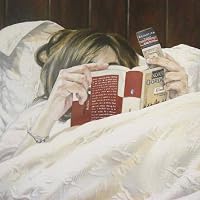
Que locura de libro... pequeño y terrible...pero hermoso.
Me encantó a experiencia de leer a HD una vez más...
Un libro para leer de a poco...
Filosofico y muy humano.
Me encantó a experiencia de leer a HD una vez más...
Un libro para leer de a poco...
Filosofico y muy humano.

December 10, 2012
While reading H.D.'s _Notes On Thought and Vision & The Wise Sappho_, I found myself traversing uncharted territory. An expanse of revelations on display like a constellation of dimly lit stars hidden behind clouds of unknowing that seeks to enlighten the reader to one's self and to the mind of one struggling to embrace the strangeness of existing in the afterglow of an extraordinary event.
H.D. is not fiddling with the mundane in Notes... She demonstrates a deliberate evoking of atypical underpinnings between thought and creativity; evoking a consciousness of "over-mind" that teems within every writer, artist, thinker, and inviting us to explore all that lies barely hidden for exploration.
H.D. is not fiddling with the mundane in Notes... She demonstrates a deliberate evoking of atypical underpinnings between thought and creativity; evoking a consciousness of "over-mind" that teems within every writer, artist, thinker, and inviting us to explore all that lies barely hidden for exploration.

July 22, 2013
My most studious paper is about this volume.

March 24, 2020
If you can not be seduced by beauty, you cannot learn the wisdom of ugliness.

June 6, 2017
English 526: Visuality in American Literature - A strange little book, experimental. Most prominent theme is her figure of the jellyfish. She deals with enjoying nature, just seeing it all, taking it all in while shutting down the analytical part of our mind.
Displaying 1 - 28 of 28 reviews