

What do you think?
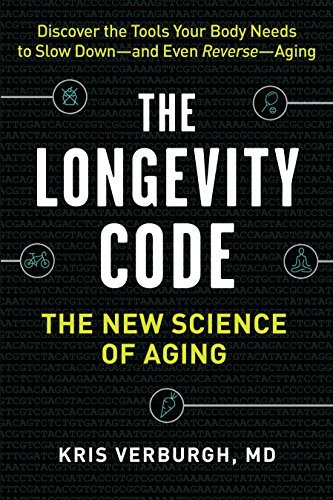
The Longevity Code: Slow Down the Aging Process and Live Well for Longer: Secrets from the Leading Edge of Science
“Why do we grow old? . . . Verburgh tackles this age-old question . . . with practical suggestions for how to slow down our biological clock.” —David Ludwig, MD, PhD, #1 New York Times–bestselling authorDo you know exactly how and why you age? And what you can do—whatever your current age—to slow that process and have a longer, healthier life?In The Longevity Code, medical doctor Kris Verburgh illuminates the biological mechanisms that make our bodies susceptible to heart attacks, dementia, diabetes, and other aging-related diseases. With the facts laid out, he provides the tools we need to slow down the aging process. His scientifically backed Longevity Staircase outlines a simple yet innovative step-by-step method offering better health and a longer life span– especially the crucial role of proper nutrition and exercise.But diet and exercise might not be the only way to crack the “longevity code”: With each passing day, advances in biotechnology that were once the stuff of science fiction are emerging. Dr. Verburgh discusses how new types of vaccines, mitochondrial DNA, CRISPR proteins, and stem cells may help us slow and even reverse aging—now and in the future—and when paired with the right lifestyle, lead to longer, healthier lives than we’ve ever imagined.“Verburgh examines how we age and takes a valuable look at ethical issues surrounding the prevention of aging.” —Library Journal
274 pages, Kindle Edition
Published January 23, 2018
Ratings & Reviews
Friends & Following
Create a free account to discover what your friends think of this book!
Community Reviews
Displaying 1 - 30 of 55 reviews

May 5, 2018
This book overpromised (and therefore underdelivered). The author, it turns out, can't resist going on a rant about nutrition and how poorly the west eats--several times throughout the book. Diet is a crucial aspect of health and I would have been concerned if he didn't talk about it. But that ended up being the whole book. It's not a book on aging. It's a book on the diet that helps us live longer--with a few, non-specific comments about the other faster. The lifestyle factors of aging got a few pages--and they are really important. He spends a lot of time telling us why exercise isn't more important than diet, but then throws in a comment at the end that it's still good for aging--but doesn't say what it's good for or what kind of exercise is most useful for longevity.
So, if you're interested in another book explaining why red meat is bad and vegetables are good, then you might enjoy this book. Otherwise, there are better books on aging.
So, if you're interested in another book explaining why red meat is bad and vegetables are good, then you might enjoy this book. Otherwise, there are better books on aging.

September 14, 2020
Very helpful chapter summaries, excellent illustrations and lists of to-do's. Excellent citation of current research against edge diseases.
But I found david sinclair's book to be more inspirational.
But I found david sinclair's book to be more inspirational.
April 10, 2018
This well researched book provides the most recent medical findings to help you change your lifestyle in order to have a long fulfilling life. Though technical, it's easily understood.
January 7, 2019
“The Longevity Code,” covers the biological roots of ageing and gives an overview of new research that advocates discoveries that will “reverse the ageing process.” Actually, for me, it is a diet book, with lots of valuable information to understand the role of our food choices in healthy ageing.
Most of the book describes the science of the impact of nutrition on the ageing process and ageing-related diseases. The author is doing it in a very methodical way of explaining how poor food choices age us faster and cause age-related diseases. The begging of the book covers proteins, carbohydrates, and fats. The second part deals with more complex topics like how diet affects the structure of our cells and of our DNA as we age. The third part presents breakthroughs that are apparently coming that may reverse the ageing process (not fully convinced). The most useful part of the book explains the role of proteins, carbohydrates, and fats in the ageing enabling the reader to make better dietary choices in each area.
The book made me think about what are the best foods to eat if you want to live longer and healthier. Interesting and useful book.
Most of the book describes the science of the impact of nutrition on the ageing process and ageing-related diseases. The author is doing it in a very methodical way of explaining how poor food choices age us faster and cause age-related diseases. The begging of the book covers proteins, carbohydrates, and fats. The second part deals with more complex topics like how diet affects the structure of our cells and of our DNA as we age. The third part presents breakthroughs that are apparently coming that may reverse the ageing process (not fully convinced). The most useful part of the book explains the role of proteins, carbohydrates, and fats in the ageing enabling the reader to make better dietary choices in each area.
The book made me think about what are the best foods to eat if you want to live longer and healthier. Interesting and useful book.

March 4, 2018
I had high hopes but this book just regurgitates the same advice/science you’ve seen before—eat a Mediterranean diet, limit red meat and sugar, exercise, deal with stress. Good advice just nothing new.
February 7, 2016
Leuk om te lezen als je geinteresseerd bent in gezond eten. Aangezien ik de Voedselzandloper ook heb gelezen, was de meeste informatie reeds bekend. Een prettige opfrisser voor mij dus.

September 10, 2018
The end of chapter summaries can make this a quick read, but the overall lack of endnotes can distract into the web searches. A medical doctor tried to write a popular book and succeeded in entertaining and — of course given the topic —reassuring, but lost a little too much medical rigor for me. Even though only 300 conversational pages, the text repeats itself and needs re-editing. 4 stars since profoundly accurate on advice, and in the end, eminently useful despite its flaws and lack of polish. I deeply regret that when I was younger, I completely fell for and even spoke favorably of, the calorie is a calorie dogma.
The initial “why” section of aging, feels highly original and creative to me.
The small collection of recipes at the end clearly reveal to me the author’s overall wisdom, and make me want to think twice about the areas of the book on which I initially disagree with him, such as the clinical effectiveness of metformin or rapamycin. (p256-7)
“What do you want to be 120 and still look like you were 30, with the same level of fitness, health, and vigorous a 30-year-old? […] As we have seen, the latter scenario may not be as far-fetched as it seems, when cross-link breakers, anti-aging vaccines, telomere therapies, stem cell therapy, lysosomal enzymes, and other therapies become available.” (p218)
“every day, thousands of billions of mitochondria in our body produce about 55 pounds of ATP!” (p99)
The references/endnotes are inadequate, since many assertions in the text are both novel and non-intuitive, so could use further support or data or reading. Author also has a tendency to create longish lists of one word examples, which may all be truly nuanced, but don’t help me see how each element in the list is a valid/useful example. Eg “these are nutrients like flavonoids, stilbenes, coumarins, isothiocyanates, indoles, omega-3 fatty acids, carotenes, lutein, and prebiotic fiber“ (p134)
“Research shows that want to study is paid for or sponsored by the food industry, there is an eight times greater chance that the results are positive for the food industry.” (P170). Corporate food and big food, especially for America but also in Europe increasingly, are truly evil players in this.
“Dr. Richard Kahn, scientific and medical director for the American diabetes Association, commented: ‘there is not an iota of proof that sugar has anything to do with developing diabetes.’” (P172)
A frustrating falls platitude: “as a result, for many years now we often receive outdated, week, and efficient, and conflicting health and nutrition recommendations.[…] We cannot continue to underestimate the power and great importance of healthy nutrition and healthy lifestyle in general. As a society, we need to realize that it is ultimately the consumer who has the power. As consumers we need to be critical“ (p174)
More speculative sections on cryotherapy, lysosome enzymes, and mitochondrial health are completely useless. Were sources cited you could follow them, but much better exists than what the author has read. Also true of the entire fourth section, which fortunately is short. The recipes in section 5 make up for it!
The initial “why” section of aging, feels highly original and creative to me.
The small collection of recipes at the end clearly reveal to me the author’s overall wisdom, and make me want to think twice about the areas of the book on which I initially disagree with him, such as the clinical effectiveness of metformin or rapamycin. (p256-7)
“What do you want to be 120 and still look like you were 30, with the same level of fitness, health, and vigorous a 30-year-old? […] As we have seen, the latter scenario may not be as far-fetched as it seems, when cross-link breakers, anti-aging vaccines, telomere therapies, stem cell therapy, lysosomal enzymes, and other therapies become available.” (p218)
“every day, thousands of billions of mitochondria in our body produce about 55 pounds of ATP!” (p99)
The references/endnotes are inadequate, since many assertions in the text are both novel and non-intuitive, so could use further support or data or reading. Author also has a tendency to create longish lists of one word examples, which may all be truly nuanced, but don’t help me see how each element in the list is a valid/useful example. Eg “these are nutrients like flavonoids, stilbenes, coumarins, isothiocyanates, indoles, omega-3 fatty acids, carotenes, lutein, and prebiotic fiber“ (p134)
“Research shows that want to study is paid for or sponsored by the food industry, there is an eight times greater chance that the results are positive for the food industry.” (P170). Corporate food and big food, especially for America but also in Europe increasingly, are truly evil players in this.
“Dr. Richard Kahn, scientific and medical director for the American diabetes Association, commented: ‘there is not an iota of proof that sugar has anything to do with developing diabetes.’” (P172)
A frustrating falls platitude: “as a result, for many years now we often receive outdated, week, and efficient, and conflicting health and nutrition recommendations.[…] We cannot continue to underestimate the power and great importance of healthy nutrition and healthy lifestyle in general. As a society, we need to realize that it is ultimately the consumer who has the power. As consumers we need to be critical“ (p174)
More speculative sections on cryotherapy, lysosome enzymes, and mitochondrial health are completely useless. Were sources cited you could follow them, but much better exists than what the author has read. Also true of the entire fourth section, which fortunately is short. The recipes in section 5 make up for it!
January 21, 2018
This book is all about the science of aging and what we can do to slow down and reverse it.
There are lots of science involve as well as practicalities when it comes to the recipes. The author also made courageous effort to explain how food industry influence what we eat.
There are also many claims in this book that sound contrary to popular opinion and the author tried to do his best to provide explanations for each of them. Nevertheless, readers should take the time to evaluate these ideas before making any conclusions.
There are lots of science involve as well as practicalities when it comes to the recipes. The author also made courageous effort to explain how food industry influence what we eat.
There are also many claims in this book that sound contrary to popular opinion and the author tried to do his best to provide explanations for each of them. Nevertheless, readers should take the time to evaluate these ideas before making any conclusions.
December 3, 2019
I found the author's scientific explanations of how our body processes foods and how exercise and environmental factors impact our bodies to be very compelling in encouraging my own behavioural change.
While I didn't add intense exercise to my lifestyle, I did start walking more and really took the nutritional advice to heart. Though I have not entirely cut out starches, red meat, sugars, etc., I have significantly reduced my intake of them, and increased the fruits and vegetables in my diet. I ended up dropping around 25 pounds over 6 months, and have kept off all but about 5 pounds as I relaxed my diet somewhat.
I've since re-read The Longevity Code and also picked up a used copy of The Food Hourglass, which is a great companion reference.
While I didn't add intense exercise to my lifestyle, I did start walking more and really took the nutritional advice to heart. Though I have not entirely cut out starches, red meat, sugars, etc., I have significantly reduced my intake of them, and increased the fruits and vegetables in my diet. I ended up dropping around 25 pounds over 6 months, and have kept off all but about 5 pounds as I relaxed my diet somewhat.
I've since re-read The Longevity Code and also picked up a used copy of The Food Hourglass, which is a great companion reference.

April 20, 2024
It's..a diet book. It even has recipes.
I gave it 2 stars because it did describe some interesting ongoing research.
The TLDR; is that you should eat nutritional food but protein is "bad" and caffeine is good, but don't you dare eat carbs. 70% of this would likely be very triggering to anyone struggling with ED. Quite a bit of the book was spent going on to limit or "don't eat this bad food or you'll succumb to aging disease."
Some of the science described was a stretch to the connections they tried to make. In addition, I was disturbed by the sheer lack (or at least acknowledgement of) poverty and other determinants as major determinant of health and aging.
I gave it 2 stars because it did describe some interesting ongoing research.
The TLDR; is that you should eat nutritional food but protein is "bad" and caffeine is good, but don't you dare eat carbs. 70% of this would likely be very triggering to anyone struggling with ED. Quite a bit of the book was spent going on to limit or "don't eat this bad food or you'll succumb to aging disease."
Some of the science described was a stretch to the connections they tried to make. In addition, I was disturbed by the sheer lack (or at least acknowledgement of) poverty and other determinants as major determinant of health and aging.
February 24, 2016
Een uitgebreid relaas over het hoe en waarom van veroudering van ons lichaam. Wat is veroudering? Waar komt de natuur hierin ter sprake? Hoe zit 'leven' in elkaar? Hoofdstuk per hoofdstuk wordt het mysterie ontrafeld. Op een zo begrijpbaar mogelijke manier doet Kris Verburgh het biologische aspect uit de doeken en worden we ingewijd in het alledaagse leven van onze cellen.
Een vlot non-fictieverhaal dat aangenaam wegleest.
Een vlot non-fictieverhaal dat aangenaam wegleest.

October 10, 2023
‘The Longevity Code’: A comprehensive guide that explores the science behind ageing and provides practical advice for improving longevity.
In an era where medical advancements and scientific breakthroughs are reshaping the boundaries of human capabilities, the concept of ageing is undergoing a remarkable transformation. Traditional notions of growing older with declining health and limited lifespans are being challenged by a paradigm shift that promises to extend our vitality and enhance our well-being as we age.
As scientists delve deeper into the intricacies of human biology and unravel the complex interplay between genetics, lifestyle factors, and environmental influences, they are uncovering the secrets to unlocking prolonged health and vitality. ‘The Longevity Code: Secrets to Living Well for Longer from the Front Lines of Science’ by Dr. Kris Verburgh, is one of the works that help to learn more on the topic.
Author’s background
Kris Verburgh MD, is a researcher at the Center Leo Apostel for Interdisciplinary Studies at the Free University of Brussels and is on the faculty of Singularity University, a Silicon Valley think tank devoted to tackling the world’s biggest challenges with emerging technology.
Dr. Verburgh researches interventions that can extend healthy life span and combat ageing-related diseases through nutrition and state-of-the-art biotechnology. He has established a new scientific discipline, nutrigerontology, which researches diets and guidelines to slow down ageing and reduce the risk of ageing-related diseases. Dr. Verburgh is frequently invited to speak at venues all around the world about new developments and paradigm shifts in medicine, health care, the science of ageing, and more.
What is the book about?
In this book, Dr. Verburgh explores the latest advancements in the field of ageing research, including the impact of nutrition, lifestyle choices, and emerging technologies on the ageing process.
‘The Longevity Code’ provides insights into the fascinating world of nutrigerontology, a discipline developed by Dr. Verburgh that focuses on the role of nutrition in slowing down ageing and reducing the risk of age-related diseases. The book presents practical guidelines and dietary recommendations based on scientific evidence, empowering readers to make informed choices about their nutrition and lifestyle to promote longevity and enhance their quality of life.
Key takeaways from ‘The Longevity Code’
1. Lifestyle choices – particularly, nutrition – are the key in promoting longevity
The book stresses the importance of lifestyle choices in determining our overall health and lifespan. Verburgh emphasises the crucial role of nutrition in promoting longevity and combating age-related diseases. He explores the concept of nutrigerontology, which focuses on identifying diets and guidelines that can slow down the ageing process.
Dr. Verburgh encourages readers to adopt a diet rich in fruits, vegetables, whole grains, and legumes. The book emphasises the importance of consuming a variety of nutrient-dense foods to provide essential vitamins, minerals, antioxidants, and phytochemicals that support cellular health and reduce the risk of age-related diseases.
The author also highlights the significance of reducing the intake of processed foods, sugars, and unhealthy fats. He suggests minimising the consumption of red meat and opting for lean protein sources such as fish, poultry, and plant-based alternatives. The book discusses the negative impact of heavy protein diets and provides explanations for the potential benefits of reducing protein intake.
2. There is an ongoing paradigm shift in medicine and biotechnologies
‘The Longevity Code’ introduces paradigm shifts in the field of medicine and healthcare, highlighting the need to move beyond traditional approaches to ageing and embrace innovative strategies and technologies that have the potential to revolutionise our understanding and management of the ageing process. Verburgh also discusses the potential of cutting-edge biotechnologies in extending human lifespan. He explores the concept of age engineering and the possibilities that future advancements may hold for slowing down or reversing the ageing process.
3. Everyone should be more proactive and make informed decisions regarding their health
By providing scientific evidence, practical guidelines, and strategies, ‘The Longevity Code’ equips individuals with the knowledge and tools to make positive changes in their lives. It promotes the idea that individuals have the ability to shape their own health outcomes by adopting healthy habits, engaging in regular physical activity, managing stress effectively, prioritising quality sleep, and making conscious choices about their nutrition.
Strengths and weaknesses, according to readers’ reviews
Strengths:
• Empowers people to improve their lifestyle and adopt a holistic approach to ageing.
• Offers helpful chapter summaries and lists of to-do’s.
• Great citation of current research against edge diseases.
• It’s easily understood by the majority of readers.
Weaknesses:
• Some readers called the writing ‘a bit too technical’.
• Includes varying references, some of which are less rigorous and occasionally lacks references altogether.
• Not much new information for health enthusiasts already familiar with the topic.
Quotes from ‘The Longevity Code’
“Without mitochondria, life on earth would never have become more complex than bacteria. Some scientists argue that the emergence of mitochondria is a much more important and rarer event than the origin of life itself. After all, it looks like we live in a fairly biophilic universe. What this means is that it may not be that difficult for life to emerge from lifeless elements.”
“Anyhow, the composition of the gut microbiome can determine how much food (calories) we absorb. Some Japanese people have bacteria in their intestines that are specialized in breaking down seaweed. Thus, the seaweed is better absorbed and will deliver more energy in the form of calories than it would for Europeans who do not have this type of bacteria in their gut.”
“One study, which followed more than 20,000 men for eleven years, found that men who lived according to five simple guidelines (they ate healthy, had no potbelly, did not drink too much, did not smoke, and exercised regularly) had an 86 percent lower risk of having a heart attack compared to men who did not.”
Final takeaway
‘The Longevity Code’ will be interesting for wellness enthusiasts, particularly those who advocate for balanced plant-based diets and regular exercise. The book emphasises familiar recommendations but offers a fresh perspective on why these choices are beneficial for longevity. Dr. Verburgh also explores emerging anti-ageing treatments at the cellular level, challenging the assumption that ageing is inevitable. He effectively explains the science behind ageing in a way that is accessible, delving into topics such as the impact of heavy protein diets and the potential for extended lifespans.
While the book provides valuable insights, it has some drawbacks. It primarily focuses on nutrition, with little attention given to other important factors like sleep and stress management. However, it still serves as a valuable resource for both beginners and those with a deeper understanding of the subject, as it lays the groundwork for future advancements in anti-ageing medicine. ‘The Longevity Code’ delivers important messages about the potential to extend lifespan through lifestyle choices and challenges prevailing assumptions about ageing.
In an era where medical advancements and scientific breakthroughs are reshaping the boundaries of human capabilities, the concept of ageing is undergoing a remarkable transformation. Traditional notions of growing older with declining health and limited lifespans are being challenged by a paradigm shift that promises to extend our vitality and enhance our well-being as we age.
As scientists delve deeper into the intricacies of human biology and unravel the complex interplay between genetics, lifestyle factors, and environmental influences, they are uncovering the secrets to unlocking prolonged health and vitality. ‘The Longevity Code: Secrets to Living Well for Longer from the Front Lines of Science’ by Dr. Kris Verburgh, is one of the works that help to learn more on the topic.
Author’s background
Kris Verburgh MD, is a researcher at the Center Leo Apostel for Interdisciplinary Studies at the Free University of Brussels and is on the faculty of Singularity University, a Silicon Valley think tank devoted to tackling the world’s biggest challenges with emerging technology.
Dr. Verburgh researches interventions that can extend healthy life span and combat ageing-related diseases through nutrition and state-of-the-art biotechnology. He has established a new scientific discipline, nutrigerontology, which researches diets and guidelines to slow down ageing and reduce the risk of ageing-related diseases. Dr. Verburgh is frequently invited to speak at venues all around the world about new developments and paradigm shifts in medicine, health care, the science of ageing, and more.
What is the book about?
In this book, Dr. Verburgh explores the latest advancements in the field of ageing research, including the impact of nutrition, lifestyle choices, and emerging technologies on the ageing process.
‘The Longevity Code’ provides insights into the fascinating world of nutrigerontology, a discipline developed by Dr. Verburgh that focuses on the role of nutrition in slowing down ageing and reducing the risk of age-related diseases. The book presents practical guidelines and dietary recommendations based on scientific evidence, empowering readers to make informed choices about their nutrition and lifestyle to promote longevity and enhance their quality of life.
Key takeaways from ‘The Longevity Code’
1. Lifestyle choices – particularly, nutrition – are the key in promoting longevity
The book stresses the importance of lifestyle choices in determining our overall health and lifespan. Verburgh emphasises the crucial role of nutrition in promoting longevity and combating age-related diseases. He explores the concept of nutrigerontology, which focuses on identifying diets and guidelines that can slow down the ageing process.
Dr. Verburgh encourages readers to adopt a diet rich in fruits, vegetables, whole grains, and legumes. The book emphasises the importance of consuming a variety of nutrient-dense foods to provide essential vitamins, minerals, antioxidants, and phytochemicals that support cellular health and reduce the risk of age-related diseases.
The author also highlights the significance of reducing the intake of processed foods, sugars, and unhealthy fats. He suggests minimising the consumption of red meat and opting for lean protein sources such as fish, poultry, and plant-based alternatives. The book discusses the negative impact of heavy protein diets and provides explanations for the potential benefits of reducing protein intake.
2. There is an ongoing paradigm shift in medicine and biotechnologies
‘The Longevity Code’ introduces paradigm shifts in the field of medicine and healthcare, highlighting the need to move beyond traditional approaches to ageing and embrace innovative strategies and technologies that have the potential to revolutionise our understanding and management of the ageing process. Verburgh also discusses the potential of cutting-edge biotechnologies in extending human lifespan. He explores the concept of age engineering and the possibilities that future advancements may hold for slowing down or reversing the ageing process.
3. Everyone should be more proactive and make informed decisions regarding their health
By providing scientific evidence, practical guidelines, and strategies, ‘The Longevity Code’ equips individuals with the knowledge and tools to make positive changes in their lives. It promotes the idea that individuals have the ability to shape their own health outcomes by adopting healthy habits, engaging in regular physical activity, managing stress effectively, prioritising quality sleep, and making conscious choices about their nutrition.
Strengths and weaknesses, according to readers’ reviews
Strengths:
• Empowers people to improve their lifestyle and adopt a holistic approach to ageing.
• Offers helpful chapter summaries and lists of to-do’s.
• Great citation of current research against edge diseases.
• It’s easily understood by the majority of readers.
Weaknesses:
• Some readers called the writing ‘a bit too technical’.
• Includes varying references, some of which are less rigorous and occasionally lacks references altogether.
• Not much new information for health enthusiasts already familiar with the topic.
Quotes from ‘The Longevity Code’
“Without mitochondria, life on earth would never have become more complex than bacteria. Some scientists argue that the emergence of mitochondria is a much more important and rarer event than the origin of life itself. After all, it looks like we live in a fairly biophilic universe. What this means is that it may not be that difficult for life to emerge from lifeless elements.”
“Anyhow, the composition of the gut microbiome can determine how much food (calories) we absorb. Some Japanese people have bacteria in their intestines that are specialized in breaking down seaweed. Thus, the seaweed is better absorbed and will deliver more energy in the form of calories than it would for Europeans who do not have this type of bacteria in their gut.”
“One study, which followed more than 20,000 men for eleven years, found that men who lived according to five simple guidelines (they ate healthy, had no potbelly, did not drink too much, did not smoke, and exercised regularly) had an 86 percent lower risk of having a heart attack compared to men who did not.”
Final takeaway
‘The Longevity Code’ will be interesting for wellness enthusiasts, particularly those who advocate for balanced plant-based diets and regular exercise. The book emphasises familiar recommendations but offers a fresh perspective on why these choices are beneficial for longevity. Dr. Verburgh also explores emerging anti-ageing treatments at the cellular level, challenging the assumption that ageing is inevitable. He effectively explains the science behind ageing in a way that is accessible, delving into topics such as the impact of heavy protein diets and the potential for extended lifespans.
While the book provides valuable insights, it has some drawbacks. It primarily focuses on nutrition, with little attention given to other important factors like sleep and stress management. However, it still serves as a valuable resource for both beginners and those with a deeper understanding of the subject, as it lays the groundwork for future advancements in anti-ageing medicine. ‘The Longevity Code’ delivers important messages about the potential to extend lifespan through lifestyle choices and challenges prevailing assumptions about ageing.
June 4, 2019
Nothing very new, but well explained.

August 6, 2019
Very useful!
April 2, 2021
Interessante weetjes. Duidelijk en leerlijk.
Te veel herhaling, zou in 1/3 van de hoeveelheid beschreven kunnen worden.
Te veel herhaling, zou in 1/3 van de hoeveelheid beschreven kunnen worden.

August 18, 2019
As a health and wellness coach dedicated to helping people make healthier lifestyle choices how could I not enjoy yet another book that espouses the benefits of eating a balanced plant-based diet and getting regular exercise.
Some other reviewers commented that there was nothing new here, which I think is part of the point. The recommendations haven't changed even though our understanding of why those recommendations work does. While Verburgh does talk about some up and coming anti-aging treatments that work at the cellular level to defy what has always been assumed to be the inevitability of aging, the reality is that at least for now, the best defense the masses have against aging is to eat whole foods, most plants, and move regularly.
Verburgh also delves into the science and physiology of aging in a way that is not overly technical. For example, he doesn't just say why heavy protein diets can contribute to aging, he explains why and I think that's important. He also questions the assumption that aging is unavoidable by describing anti-aging jelly fish and immortal polyps. He even references human reproductive cells that seem immune to aging in order to make a point. According to Verburgh, life expectancy continues to increase and a few of the youngest among us may actually live well beyond a 100 to 135. Unfortunately, we live longer but are sicker during those years thanks to age-related diseases such as heart disease, diabetes, Alzheimer and the like.
Though much of the book does focus on nutrition and a little time is given to exercise, sleep and stress management barely get an honorable mention. This is indeed unfortunate, however, there is still much here for both the novice and those with a deeper understanding as the book (even if only superficially) lays the groundwork for the "what's next" phase of anti-aging medicine.
The weakest part of the book is undoubtedly the section in which he argues in favor of living longer, mainly by refuting the arguments against living longer such as overpopulation or boredom with life in general.
For someone who believes in the power of a healthy lifestyle, the book is both validating and empowering. Living to 1,000 years aside, I think we would all like to believe that we can lessen the effects of aging both on the outside and the inside. It is only fitting that today I read an article in Women's Health about a 71 year old grandmother who just set a new world record for a half-marathon in her age group...1:37:07. Age really is only a number and how we age can and is impacted by our daily choices.
Some other reviewers commented that there was nothing new here, which I think is part of the point. The recommendations haven't changed even though our understanding of why those recommendations work does. While Verburgh does talk about some up and coming anti-aging treatments that work at the cellular level to defy what has always been assumed to be the inevitability of aging, the reality is that at least for now, the best defense the masses have against aging is to eat whole foods, most plants, and move regularly.
Verburgh also delves into the science and physiology of aging in a way that is not overly technical. For example, he doesn't just say why heavy protein diets can contribute to aging, he explains why and I think that's important. He also questions the assumption that aging is unavoidable by describing anti-aging jelly fish and immortal polyps. He even references human reproductive cells that seem immune to aging in order to make a point. According to Verburgh, life expectancy continues to increase and a few of the youngest among us may actually live well beyond a 100 to 135. Unfortunately, we live longer but are sicker during those years thanks to age-related diseases such as heart disease, diabetes, Alzheimer and the like.
Though much of the book does focus on nutrition and a little time is given to exercise, sleep and stress management barely get an honorable mention. This is indeed unfortunate, however, there is still much here for both the novice and those with a deeper understanding as the book (even if only superficially) lays the groundwork for the "what's next" phase of anti-aging medicine.
The weakest part of the book is undoubtedly the section in which he argues in favor of living longer, mainly by refuting the arguments against living longer such as overpopulation or boredom with life in general.
For someone who believes in the power of a healthy lifestyle, the book is both validating and empowering. Living to 1,000 years aside, I think we would all like to believe that we can lessen the effects of aging both on the outside and the inside. It is only fitting that today I read an article in Women's Health about a 71 year old grandmother who just set a new world record for a half-marathon in her age group...1:37:07. Age really is only a number and how we age can and is impacted by our daily choices.

September 17, 2022
A somewhat interesting, but ultimately not convincing take on the effects of some foods in our diet on longevity. While there are many references in the book, some are from much less rigorous sources than others and sometimes there are no references at all. For example, in one place he states "In prehistoric times, the average potassium intake was even 11,000 mg," but fails to provide any source for this claim. He is passionately opposed to eating carbohydrates like potatoes, bread, pasta and rice, yet does not provide convincing evidence that proves causation or even any correlation between their consumption and a decrease in longevity. In some places he uses studies that talk about the longevity of people who eat certain diets without acknowledging that their standard diet includes consumption of his dreaded carbohydrates like rice or pasta. The author fails to acknowledge that correlation does not prove causation and further sometimes makes claims without any foundation. His dietary prejudices come through even when they are not grounded in science; for example, somehow cheese made from milk is okay since it contains probiotics, but yogurt (which also contains probiotics) made from the same milk is not good. The author states that breakfast should be the most important and largest meal of the day then provides his idea of a healthy breakfast: a bowl of chia seeds with blueberries, cherries and pumpkin seeds, yum. A mix of science, pseudo-science, fads and wishful thinking, the result is ultimately unconvincing. Now if only I can use his vampire technique of providing a continuous source of young blood, I can live forever.
January 19, 2019
It began very strong. Explain so well why we have to die. We are looking gone by accident, infection, or eaten as dinner before our expiry date due. Nature this has no reason to make us genetically able to live ten thousand years. But once a species manage to escape danger (by learning to fly) move to place with no predator, etc, it's lifespan dramatically increase.
The calculation is roughly the lifespan of a species is six times the age reaching sexualized maturity.
Causes of aging:
1. Protein agglomeration, both inside and outside the cell
2. Cross linking of proteins by sugar
3. Any hormone that promote growth: insulin, insulin like growth factor, growth hormone... Growth means everything pile up faster, this aging faster.
Others interesting facts:
1. Insulin stimulate ILGF. Protein also stimulate IGF.
2. Strains reduce inflammation . It is a drug used to lower cholesterol.
3. Mitochondria is a bad place to store DNA, since it is the power house and bombarded with free radicals.
5. Harmful things in small dose can be healthy. That principal is called hormesis. All vegetable contain mild toxins. It stimulate the body to produce or own antioxidant and detoxification protein, they are much stronger that whatever antioxidant we eat.
6. Milk was designed to make caves grow fat so contain a lot of growth inducing substances, this inflammatory for human adult.
But then I don't like it. No matter how sensible and scientific he sounds, he is still yet another guy so cling to life, but who eventually have to die.
The calculation is roughly the lifespan of a species is six times the age reaching sexualized maturity.
Causes of aging:
1. Protein agglomeration, both inside and outside the cell
2. Cross linking of proteins by sugar
3. Any hormone that promote growth: insulin, insulin like growth factor, growth hormone... Growth means everything pile up faster, this aging faster.
Others interesting facts:
1. Insulin stimulate ILGF. Protein also stimulate IGF.
2. Strains reduce inflammation . It is a drug used to lower cholesterol.
3. Mitochondria is a bad place to store DNA, since it is the power house and bombarded with free radicals.
5. Harmful things in small dose can be healthy. That principal is called hormesis. All vegetable contain mild toxins. It stimulate the body to produce or own antioxidant and detoxification protein, they are much stronger that whatever antioxidant we eat.
6. Milk was designed to make caves grow fat so contain a lot of growth inducing substances, this inflammatory for human adult.
But then I don't like it. No matter how sensible and scientific he sounds, he is still yet another guy so cling to life, but who eventually have to die.
This entire review has been hidden because of spoilers.
April 27, 2023
Goed geschreven en vooral zeer toegankelijk voor een breed publiek. Hierdoor ga ik hem zeker aan een aantal mensen uitlenen of cadeau doen! Zelf vond ik dat de opzet voor een langer jong plan met de vijf tredes een beetje misleidend is, aangezien dit vooral om voedingsadvies gaat. Daarenboven, zelfs binnen dat voedingsadvies vond ik dat er soms wat te selectief werd omgegaan met de diepgang: soms wordt één studie goed genuanceerd en met een andere studie in detail vergeleken, maar soms wordt een harde conclusie getrokken (bv. dierlijke eiwitten zijn slechter dan plantaardige eiwitten en moeten dus vermeden worden) zonder dit deftig te onderbouwen... Al bij al in grote lijnen wel goed voedingsadvies voor het brede publiek...
December 31, 2018
I picked up the book, looking for a synopsis of where the most recent scientific findings and conclusions of longevity research lie. This book did not disappoint in summarizing the various causes of aging, and introductory concepts like the workings of mitochondria, DNA etc. to a layperson.
At times, I felt like a little more rigor in dealing with technical concepts would have been more useful.
At times, I felt like a little more rigor in dealing with technical concepts would have been more useful.
January 12, 2024
The entire book concentrates on diet rather than exercise. All advice boils down to a low-glycemic diet, or a Mediterranean diet. Healthy fats do not come from animal sources. High-quality proteins also come only from white meat (chicken) or nuts. Sugar and other carbohydrates are kept to a minimum. The author classifies cereals and pasta as harmful carbohydrates (it seems to me that he is going too far in this regard). The glycemic index (gi) of cereals is not that high.
Вся книга концентрируется на диете, а не на упражнениях. Все советы сводятся к низкогликемической диете, или средиземноморской диете. Жиры полезны не из животного происхождения. Высококачественные белки тоже только из белого мяса (курица) или орехи. Сахара и других углеводов по минимуму. Крупы и макаронные изделения автор относит к вредным углеводам (мне кажется, что в этом он перегибает палку). Гликемический индекс круп не такой уж и высокий.
Вся книга концентрируется на диете, а не на упражнениях. Все советы сводятся к низкогликемической диете, или средиземноморской диете. Жиры полезны не из животного происхождения. Высококачественные белки тоже только из белого мяса (курица) или орехи. Сахара и других углеводов по минимуму. Крупы и макаронные изделения автор относит к вредным углеводам (мне кажется, что в этом он перегибает палку). Гликемический индекс круп не такой уж и высокий.

January 15, 2024
Het boek geeft een uitgebreid en interessant inzicht in het proces van veroudering van het menselijk lichaam. Enkele oorzaken van het verouderingsproces worden nader toegelicht. Er worden 4 zelfzorgprincipes besproken die het verouderingsproces mogelijk kunnen vertragen. Het boek eindigt met een lijst gezonde recepten die passen binnen de zandloper die Kris heeft ontwikkeld om gezondere voedselkeuzes te maken. Aanrader voor iedereen die langer gezond wil leven!
July 26, 2025
I read a lot of books about health and I really liked this book but it was more big picture and not a lot of specific details. It does have a recipe section in the back and the recipes look great but the book never summarizes what to eat and what not to eat. Good read for anyone starting on a health journey.
March 1, 2018
Many ideas in the book are out of the box. It is a thought provoking book and should not be seen as a guide book for longevity.
Many interventions suggested are in developmental stages yet. Still you can adapt to some dietary and other lifestyle changes recommended.
Many interventions suggested are in developmental stages yet. Still you can adapt to some dietary and other lifestyle changes recommended.
April 8, 2018
A discussion on aging and ways to try to slow down aging. Not very much new information, but a good read. However there was lots of repetition (each chapter had a summary, but by the time you got to the summary most things had been said at least twice).

September 10, 2018
Why do we age, why we need to die? What determines our estimated lifespan? what causes aging, how to slow the process down? The answers are all in this book... And they do not include free radicals🤣 nor making room /saving resources for little humans
January 9, 2019
Excellent
Good explanation of aging and so the factors that need to be explored and explained. Includes health information and newest studies as well as recipes of what to eat to lengthen your life.
Good explanation of aging and so the factors that need to be explored and explained. Includes health information and newest studies as well as recipes of what to eat to lengthen your life.
April 10, 2019
A thoughtful book on how to take care of yourself to age better; live longer. Sufficient science included to be interesting without being boring. A little repetitive in places, but information is useful.

April 24, 2019
This book was phenomenal! I LOVE all of the different studies from all over the globe tied into this book. Fantastic author and great premise. I will definitely be following him to see what else he helps to uncover in the aging realm.
October 24, 2023
Very interesting.
Though you should remain critical. I don’t agree with the phrasing of statements like “you can’t loose weight by exercising more”. This statement is in my opinion too shortsighted. I understand the conclusion made by the author, but it can be interpreted in different ways.
Though you should remain critical. I don’t agree with the phrasing of statements like “you can’t loose weight by exercising more”. This statement is in my opinion too shortsighted. I understand the conclusion made by the author, but it can be interpreted in different ways.
Displaying 1 - 30 of 55 reviews