A short Tagalog poem written by a young lady from San Roque, Cavite in 1898 described first-hand the war waged by Emilio Aguinaldo against the Spaniards. She said the gunfire during battle resembled the terrible rumble of thunder, yet through all the noise she could distinguish the sound made by particular guns: “palconete’t cañon Revolver, Remington ang putoc bung bung” “Ang mauser at Riple ay pac bung pac bung” Palconete, cannon, Revolver and Remington go “bung-bung” Mauser and Rifle go “pac bung pac bung” this simple poem, ignored by most historians focused on the great narrative, inspired me to see into the forest and look at the trees. .. God, they say, is in the details, and if it these can add color and understanding to the sepia-toned history we were forced to learn in school then the effort to dig them up and deploy them in my writing has been worthwhile.
Lamberto R. Ocampo better known as Ambeth R. Ocampo (b. 1961) is Filipino historian, academic, journalist, cultural administrator and author best known for his writings about Philippines' national hero José Rizal, and for his bi-weekly editorial page column in the Philippine Daily Inquirer, "Looking Back." He became the Chairman of the National Historical Commission of the Philippines in 2002 until 2010, and was appointed as Chairman of the National Commission for Culture and the Arts in 2005 until 2007.
Like the previous books in the series, Ambeth Ocampo brings into the fore the details that we tend to disregard when we read history. These little details may seem trivial at first glance yet they provide much-needed perspective in assessing people and events in the past.
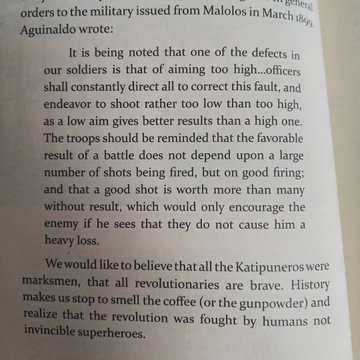
There is something mundane in knowing about how the Katipuneros 'recycled' firearms out of necessity (one is reminded of Dr. José Rizal's warning about an unprepared revolution) or noticing that most of the attendees in the Malolos Congress belonged to the youth group. This clearly shows our disadvantage and yet one will take pride on how we fought valiantly for our independence. Essays on how the USA viewed the Philippines as a 'valuable asset' shows that the country has the potential to be something great. Interesting are the notes about the laws drafted by the Malolos Congress which show how we struggled to walk like an infant as a very young nation.
Like in the rest of his series, Ocampo brings life to Filipino history. In writing on the Revolution, he not only humanises it but reminds us that, even in war, the running of a country must be maintained. To my surprise, he wrote much on the laws of the time and so the second half of the book didn't thrill me as much as the first. For all the thrilling victories and stunning defeats a war has, it must also have its mundane and everyday life; Ocampo brings that reminder in his collected articles here.
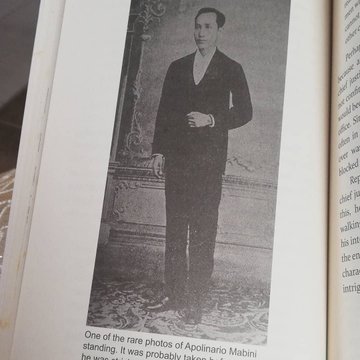
I feel a teeny bit guilty for not having enjoyed this as I thought I would - it's about war and lost lives and failed dreams, after all? But there were some gems in here, like the valor and resourcefulness of our heroes, and the photo of Apolinario Mabini standing. The cover I also liked because it's pretty badass, isn't it?
Such enchanting facts and tales that holds our history. From the poem that the young lady had wrote, describing the wars that was happening in those times, to Mabini's disease that may have cause him being a cripple, there were so many things that history had not yet discovered.
More interesting bits of history, especially during the Fil-Am War era and the young Philippine Republic during that time. Funny how some things are the same.
sadly, i didnt enjoy this as much as the others i've read, but i still learned a lot of new and interesting facts! also the photographs included here were pretty cool
Concise & engrossing. I love how it was narrated. The Katipuneros and our founding fathers. I was able to see them in a different light. More human than hero figure.