

What do you think?

Les Cités obscures #4
La ruta de Armilia y otras leyendas de las ciudades oscuras
À Mylos, le zeppelin a finalement appareillé. Direction le pôle, et la cité d'Armilia. Une expédition de la plus haute importance, comme le souligne le journal de bord de son plus jeune passager, un adolescent nommé Ferdinand Robur Hatteras. Il s'agit ni plus ni moins, grâce à la récitation d'une formule tenue secrète, de remettre en route la cité d'Armilia saisie par les glaces - Armilia étant elle-même la clé de voûte, le mécanisme secret qui fait fonctionner les autres Cités Obscures. En chemin, Ferdinand et sa complice de hasard Hella, une passagère clandestine de son âge qui s'était dissimulée dans les entrailles du dirigeable, découvriront éblouis, depuis les hauteurs du ciel, les mille et une merveilles naturelles, humaines ou techniques qui font la magie de ce monde des confins... Conjuguant textes, illustrations et planches de bande dessinée, une équipée émue et envoûtante dans l'univers des - et un hommage admiratif à tous les récits de voyage, qui depuis toujours savent susciter l'évasion par l'imaginaire.
112 pages, Paperback
First published January 1, 1987
About the author
Benoît Peeters
154 books47 followersBenoît Peeters is a French comics writer, novelist, and comics scholar.
Ratings & Reviews
Friends & Following
Create a free account to discover what your friends think of this book!
Community Reviews
Displaying 1 - 28 of 28 reviews

July 13, 2018
While the previous albums in this series had good storylines but obvious sexism, this album had a ridiculous story and inoffensive sexism. It was just too silly to be bothered about.
If I didn’t already own these books, I would certainly not read the next instalments. Instead, I try to enjoy the attractive illustrations ; that way, the investment I made is not totally wasted.
If I didn’t already own these books, I would certainly not read the next instalments. Instead, I try to enjoy the attractive illustrations ; that way, the investment I made is not totally wasted.

January 11, 2025
"مسیر آرمیلیا" (La Route d'Armilia) چهارمین جلد از مجموعهٔ گرافیکی و مشهور "شهرهای عجیب" (Les Cités Obscures) اثر فرانسوا اسویتن و بنوا پیترز ه. این مجموعه به عنوان یکی از شاهکارهای رمانهای گرافیکی شناخته میشه و هر جلدش، تکهای از یک جهان تخیلی و بینظیر رو به تصویر میکشه.
تصاویر خارقالعادهٔ فرانسوا اسویتن علیرغم زیبایی و جزئیات خیرهکننده، گاهی بیش از حد روی زیباییشناسی تأکید میکنن و در خدمت پیشبرد داستان نیستن. این مسئله میتونه باعث شه که کتاب بیشتر شبیه یک مجموعه طراحی معماری باشه تا یک رمان گرافیکی که روایت و تصویر باید مکمل همدیگه باشن.
علاوه بر این، جهانسازی این جلد نسبت به سایر کتابهای مجموعه کمتر توسعهیافته به نظر میرسه. شهرها و مکانهای معرفیشده در "مسیر آرمیلیا" به اندازه کافی عمیق نیستن و حس زنده بودن و پیچیدگی شهرهای دیگه این مجموعه، مانند "دیوارهای ساماریس"، رو منتقل نمیکنن.
توی این جلد، محوریت داستان بیشتر روی فضاهای مکانیکی و تکنولوژیک قرار داره، درحالیکه جلدهای قبلی بیشتر روی شهرهای معماریمحور یا جامعهشناسی تخیلی تمرکز داشتن. درمجموع این کتاب بیشتر استعارهای از حرکت، کشف و سفر هستش.
"مسیر آرمیلیا" از نظر روایت، ساختار متفاوتی داره. در حالی که ۳ کتاب قبل مجموعه به شکل داستانیتر و با خطوط داستانی مشخصتری پیش میرفتن، این کتاب بیشتر حال و هوای سفرنامه داره.
از نظر تماتیک، این کتاب بیشتر روی جستوجوی ناشناختهها و تعامل انسان با تکنولوژی تأکید داره.
در کل، "مسیر آرمیلیا" یک تکه مهم از پازل دنیای "شهرهای عجیب" هستش که تجربهای خاص و دیدگاهی متفاوت از این جهان پیچیده ارائه میده.
پ.ن: بله متن های این جلد طولانی ان، اما عوضش راحتتر خونده میشن 🙃
تصاویر خارقالعادهٔ فرانسوا اسویتن علیرغم زیبایی و جزئیات خیرهکننده، گاهی بیش از حد روی زیباییشناسی تأکید میکنن و در خدمت پیشبرد داستان نیستن. این مسئله میتونه باعث شه که کتاب بیشتر شبیه یک مجموعه طراحی معماری باشه تا یک رمان گرافیکی که روایت و تصویر باید مکمل همدیگه باشن.
علاوه بر این، جهانسازی این جلد نسبت به سایر کتابهای مجموعه کمتر توسعهیافته به نظر میرسه. شهرها و مکانهای معرفیشده در "مسیر آرمیلیا" به اندازه کافی عمیق نیستن و حس زنده بودن و پیچیدگی شهرهای دیگه این مجموعه، مانند "دیوارهای ساماریس"، رو منتقل نمیکنن.
توی این جلد، محوریت داستان بیشتر روی فضاهای مکانیکی و تکنولوژیک قرار داره، درحالیکه جلدهای قبلی بیشتر روی شهرهای معماریمحور یا جامعهشناسی تخیلی تمرکز داشتن. درمجموع این کتاب بیشتر استعارهای از حرکت، کشف و سفر هستش.
"مسیر آرمیلیا" از نظر روایت، ساختار متفاوتی داره. در حالی که ۳ کتاب قبل مجموعه به شکل داستانیتر و با خطوط داستانی مشخصتری پیش میرفتن، این کتاب بیشتر حال و هوای سفرنامه داره.
از نظر تماتیک، این کتاب بیشتر روی جستوجوی ناشناختهها و تعامل انسان با تکنولوژی تأکید داره.
در کل، "مسیر آرمیلیا" یک تکه مهم از پازل دنیای "شهرهای عجیب" هستش که تجربهای خاص و دیدگاهی متفاوت از این جهان پیچیده ارائه میده.
پ.ن: بله متن های این جلد طولانی ان، اما عوضش راحتتر خونده میشن 🙃

March 18, 2016
Cet album, comme un certain nombre des précédents dans la série des Cités obscures, adopte la forme du journal intime et relate les aventures d’une quête. Mais cette fois la forme textuelle du journal d’une part, qu’accompagne une bordure répétitive évoquant des paysages naturels, et d’autre part la forme visuelle de panoramas urbains à couper le souffle, est scindée (comme dans L'archiviste) dans la double page.
L’objet du voyage en ballon dirigeable des deux enfants à travers le “continent obscur”, jusqu’au cercle polaire, reste mystérieux : il s’agit, semble-t-il, comme dans Mary la penchée (histoire incluse dans ce même volume), d’une mission secrète pour rétablir l’équilibre d’un monde qui court à sa perte. Au dénouement, les enfants font la rencontre d’un homme nommé Pym, référence évidente à The Narrative of Arthur Gordon Pym of Nantucket. Les scénaristes laissent les choses ouvertes à l’interprétation et une histoire parallèle, enchâssée au début et à la fin, dans la forme traditionnelle des vignettes, contribue à obscurcir et à ouvrir le sens de la narration, comme le fruit de l’imagination d’un enfant-esclave. La conclusion prend la forme malicieuse d’une contrepèterie.
Trois histoires courtes concluent cet album, avec des harmoniques souterraines par rapport au récit principal : Mary la penchée (qui annonce L'enfant Penchée), Les chevaux de Lune et La Perle (variation sur La Princess au petit pois d’Andersen). A l’évidence, ce sont des histoires pour enfants, qui présentent des notes surannées et étrangement charmantes.
L’objet du voyage en ballon dirigeable des deux enfants à travers le “continent obscur”, jusqu’au cercle polaire, reste mystérieux : il s’agit, semble-t-il, comme dans Mary la penchée (histoire incluse dans ce même volume), d’une mission secrète pour rétablir l’équilibre d’un monde qui court à sa perte. Au dénouement, les enfants font la rencontre d’un homme nommé Pym, référence évidente à The Narrative of Arthur Gordon Pym of Nantucket. Les scénaristes laissent les choses ouvertes à l’interprétation et une histoire parallèle, enchâssée au début et à la fin, dans la forme traditionnelle des vignettes, contribue à obscurcir et à ouvrir le sens de la narration, comme le fruit de l’imagination d’un enfant-esclave. La conclusion prend la forme malicieuse d’une contrepèterie.
Trois histoires courtes concluent cet album, avec des harmoniques souterraines par rapport au récit principal : Mary la penchée (qui annonce L'enfant Penchée), Les chevaux de Lune et La Perle (variation sur La Princess au petit pois d’Andersen). A l’évidence, ce sont des histoires pour enfants, qui présentent des notes surannées et étrangement charmantes.

January 13, 2025
This one just didn't hit the spot. I don't know why, but it seemed to me that it was not something similar to the previous volumes.
While I was reading the previous ones, a mixture of magnificent paintings with a plot related to them could make me follow the thread. But, here, pieces of the puzzle just didn't fit together and couldn't touch the things in me that were touched by previous volumes.
While I was reading the previous ones, a mixture of magnificent paintings with a plot related to them could make me follow the thread. But, here, pieces of the puzzle just didn't fit together and couldn't touch the things in me that were touched by previous volumes.

December 20, 2012

This fifth volume of the Cités obscures series opens in Mylos, an industrial, Steampunkish city first glimpsed in L'archiviste – but we don't linger. Soon, we are aboard a vast Zeppelin bound for the North Pole, reading the journal of a boy entrusted with a secret scientific mission – to reawaken the lost city of Armilia deep in the Arctic circle.
The journey offers several mysterious views of this mysterious world…but the tone of high adventure and derring-do seems increasingly like a façade. We eventually realise that the whole story is one huge metafiction, put together by someone in desperate need of a little escapism.

The format here is more text-heavy than in other instalments, with long, page-length extracts from our hero's diary illustrated in lush colour on facing pages and in the margins – though the authors occasionally drop into traditional strip-panels with specific intent. The characters – never overbearing presences in these stories – feel even more underdeveloped here than usual, though the ideas at play are full of potential and Schuiten's artwork is as excellent as ever.
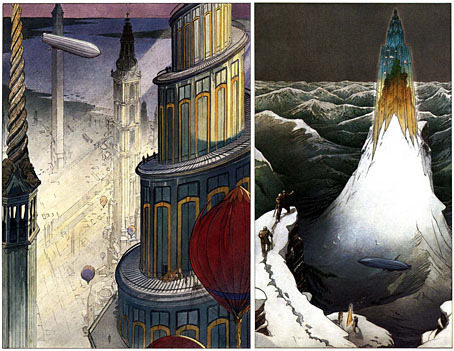
This remastered edition comes with a plethora of extras, including the complete Mary la penchée (originally issued separately), the children's version of the story of Mary von Rathen, who in volume eight of the chronicles will take centre-stage as one of the most important characters of all. It's beautifully illustrated and my daughter loves it. The authors also throw in a textless fantasy about horses on the moon, and a quirky fable which combines the Princess and the Pea narrative with a lightly-disguised portrait of Baudouin, the then-King of Belgium. Odd, thoughtful, beautiful.
February 23, 2025
اگه به جای فورمت کمیک، از داستان کوتاه استفاده میشد همراه با تصاویر تزیینی/تکمیلی، بهش ۴ ستاره میدادم. اما با این تصویرسازی بازیافتی (recycled) اصلاً اثر قابل قبولی نبود. ناامیدم کرد.

March 12, 2016
This is a surprising book, that challenges genres. It is a novella with illustrations, with a BD feel to it. It's fiction that very artfully uses the visual language. It's a BD book with long, long narrative passages. This is, probably what a graphic novel really is, when the expression is not just not another way of saying "comic book". It is a short novel (call it a novella, a short story or just a narrative) that makes full use of graphic languages. It is #5 in The Obscure Cities by Schuiten, and it has the same elegant architectural drawing and that incredible atmosphere that the series produces, with a style of its own. This is not steam-punk, this is not alternate history, this is not exactly an alternate reality. The Obscure Cities created their own universe, narrative-wise and visually. This is a masterpiece. Like every single book in the series.

January 14, 2016
2025: I like the pretty pictures. The twist near the end is great but isn't enough payoff for the rather weak fantasy story we have to read in the journal entries. I like the idea more than the execution.
2016: Probably the weakest entry I've read in the series thus far. It's more of an illustrated short story than a comic. The story is told in lengthy journal entries adjacent to a full page illustration. The illustrations were beautiful! I think this book made me realize how important the visual realization of the world is to these stories.
2016: Probably the weakest entry I've read in the series thus far. It's more of an illustrated short story than a comic. The story is told in lengthy journal entries adjacent to a full page illustration. The illustrations were beautiful! I think this book made me realize how important the visual realization of the world is to these stories.

September 23, 2021
Travel journal of the adventures in a zeppelin of a young boy, charged with the task of getting a formulae across the monde obscure to Armillia, a city on the North Pole that regulates time and weather.
But is it? This feels too much like a young Jules Vernes. And in the panes inserted in the text, we learn about a robot-boy reading about all the places the Zeppelin team visited. Another mystery.
Sexism? Check: the only adult woman pictured was half naked (and being watched by a Tintin-like figure).
But is it? This feels too much like a young Jules Vernes. And in the panes inserted in the text, we learn about a robot-boy reading about all the places the Zeppelin team visited. Another mystery.
Sexism? Check: the only adult woman pictured was half naked (and being watched by a Tintin-like figure).

July 14, 2016
Weakest plot in the whole series, but the artwork is a treat especially for fans of steampunk and/or 19th century sf.

April 26, 2019
An unusual tale, mixing comic-book pages, illustrations and conventional story-telling. Recommended.

March 22, 2020
turns out there is one thing I dislike more than epistolary novels: epistolary comics. Would still recommend, even though it's the weakest book in theseries so far.

November 10, 2015
uvijek nakon citanja ostanem pod velikim dojmom i pokusavam najblizim osobama prepricat sto sam procitao i kako se osjecam ali primjetim da mi ne ide. Inace Opskurni gradovi su predivne price i iskreno nisam procitao losu epizodu...
June 13, 2017
La route d'Armilia décrit un voyage en zeppelin au-dessus des Cités Obscures. Le voyage est assez poétique, la relation entre les deux enfants, Ferdinand et Hella est touchante, mais malheureusement je trouve que les Cités en elle-même ne sont qu'un sujet périphérique de l'histoire et c'est dommage.
D'autant plus que le centre de l'intrigue (le fonctionnement d'Armilia) n'est pas non plus assez approfondi à mon goût. On apprend quelques anecdotes au sujet de Brüsel ou København pat exemple mais c'est à chaque fois assez superficiel.
L'imbrication de cette intrigue avec l'univers concentrationnaire d'une usine/prison à Mylos est aussi poétique et astucieuse mais je trouve que l'ensemble aurait mérité plus de développements et approfondissements.
Les mini-nouvelles qui viennent ensuite (Mary la penchée, Les chevaux de lune...) sont poétiques et sympathiques mais assez déconnectées de l'univers des Cités Obscures (elles pourraient se dérouler ailleurs) et n'apportent à mon avis pas grand chose au Schmilblick.
D'autant plus que le centre de l'intrigue (le fonctionnement d'Armilia) n'est pas non plus assez approfondi à mon goût. On apprend quelques anecdotes au sujet de Brüsel ou København pat exemple mais c'est à chaque fois assez superficiel.
L'imbrication de cette intrigue avec l'univers concentrationnaire d'une usine/prison à Mylos est aussi poétique et astucieuse mais je trouve que l'ensemble aurait mérité plus de développements et approfondissements.
Les mini-nouvelles qui viennent ensuite (Mary la penchée, Les chevaux de lune...) sont poétiques et sympathiques mais assez déconnectées de l'univers des Cités Obscures (elles pourraient se dérouler ailleurs) et n'apportent à mon avis pas grand chose au Schmilblick.

May 23, 2020
La ruta de Armilia es un viaje increíble a través del mundo de las ciudades oscuras. Schuiten y Peeters nos ofrecen la posibilidad de asomarnos desde la ventana del zeppelin y divisar planos preciosos de varias ciudades y villas, incluyendo algunos sobre Brüsel, inmersa de nuevo en otro proceso de transformación, esta vez de naturaleza orgánica.
Esta obra está relatada en forma de cuaderno de viaje. La escribe un niño llamado Ferdinand que solo tiene a su alcance las palabras y la imaginación para salir adelante y abrirse paso hasta Armilia. Como en las demás obras de esta serie, la suerte de las ciudades está inextricablemente ligada a la de sus protagonistas. En este caso, cabe esperar que Friedrich logre terminar su propio relato y de esta forma pueda salir del encierro al que está sometido. Sin duda, Armilia es también la ruta por la que es posible dejar salir al niño interior...
Y por si todo esto fuera poco, la magnífica edición de este quinto volumen de las ciudades oscuras viene acompañada de tres pequeños relatos en forma de leyenda.
Esta obra está relatada en forma de cuaderno de viaje. La escribe un niño llamado Ferdinand que solo tiene a su alcance las palabras y la imaginación para salir adelante y abrirse paso hasta Armilia. Como en las demás obras de esta serie, la suerte de las ciudades está inextricablemente ligada a la de sus protagonistas. En este caso, cabe esperar que Friedrich logre terminar su propio relato y de esta forma pueda salir del encierro al que está sometido. Sin duda, Armilia es también la ruta por la que es posible dejar salir al niño interior...
Y por si todo esto fuera poco, la magnífica edición de este quinto volumen de las ciudades oscuras viene acompañada de tres pequeños relatos en forma de leyenda.

December 22, 2024
La ruta de Armilia y otras leyendas es una joya visual y narrativa dentro del fascinante universo de las Ciudades Oscuras creado por François Schuiten y Benoît Peeters. Esta colección de historias breves nos sumerge en un mundo arquitectónico y onírico, donde el detalle gráfico y la imaginación se entrelazan de forma magistral.
Aunque algunas tramas pueden parecer más simbólicas que argumentales, el cómic compensa con creces gracias a su atmósfera envolvente y la riqueza de su diseño visual. Es un libro que invita a ser explorado lentamente, como un atlas de sueños y ciudades imposibles.
4 estrellas porque, si bien es una lectura fascinante, en ciertos momentos puede sentirse fragmentada, lo que podría desorientar a quienes buscan una narrativa más lineal. Sin embargo, para los amantes de la fantasía arquitectónica y las historias con múltiples capas de significado, es una obra imprescindible.
Aunque algunas tramas pueden parecer más simbólicas que argumentales, el cómic compensa con creces gracias a su atmósfera envolvente y la riqueza de su diseño visual. Es un libro que invita a ser explorado lentamente, como un atlas de sueños y ciudades imposibles.
4 estrellas porque, si bien es una lectura fascinante, en ciertos momentos puede sentirse fragmentada, lo que podría desorientar a quienes buscan una narrativa más lineal. Sin embargo, para los amantes de la fantasía arquitectónica y las historias con múltiples capas de significado, es una obra imprescindible.

December 8, 2025
Not quite a comic as just a few pages and the rest prose with illustrations. But what illustrations. Not just one Dark City but a whole itenary of them. Each half real and half architectural imagination as only Schuiten & Peeters can do it. Towards the end, comic and illustrated book melt into each other. If you love zeppelins or technology of the fin du ciecle, then this is for you. A book to fall in love with.

January 14, 2024
I liked this travel story but what was up with? I'm also thinking that this series is best read for the beautiful drawings and not necessarily the plot(?)
November 14, 2021
tym razem zbiór ilustrowanych historii i słabiej niestety od poprzednich i następnych tomów to wypada

November 12, 2022
I liked it. I think my copy had some pages out of order. I wish there was more comic and less text. Regardless, a fun little story. Why not?

August 31, 2024
23×30+DJ[8cm flaps] ¦ D.L. 04/1988 ¦ 4334 backside
-›Art engulfing "diary prose"- besides @10p as regular bd
-›Art engulfing "diary prose"- besides @10p as regular bd
May 31, 2022
Świetne wydanie. Gruby papier robi robotę.

January 11, 2013
Der weg nach Armilia erzählt von einer Reise mit einem Luftschiff, die ein Junge unternimmt, um die Stadt Armilia zu retten, die vom Eis eingeschlossen ist. Man erfährt durch sein Tagebuch, was er alles erlebt und vor allem sieht, kann sich mit ihm über die ganz unterschiedlichen Städte wundern, die er vom Luftschiff aus beobachten kann. Die Welt, über die er fliegt, ähnelt dabei in vielem unserer Welt, vielleicht während der Zwanziger Jahre, ist aber natürlich mit vielen (phantastischen) Elementen verfremdet.
Den größten Teil der Geschichte nimmt die Ferdinands Luftschifffahrt ein es gibt aber noch eine andere, sehr viel kürzere, aber doch wichtige Ebene, über die ich hier aber nichts verraten will. Nur diese andere Ebene wird wie ein typisches Comic erzählt, mit Panels Sprechblasen und relativ kräftigen Farben. Der Rest dagegen ist eher wie ein illustrierter Reisebericht gestaltet. Große, detaillierte Zeichnungen wechseln ab mit den Seiten aus Ferdinands Tagebuch. Im Mittelpunkt stehen dabei, wie bei der Handlung, all die Dinge, und vor allem natürlich Städte, die Ferdinand auf seiner Reise begegnen, während man die Charaktere selbst vergleichsweise selten sieht. Der Stil der in eher blassen Farben gehaltenen Zeichnungen erinnert dabei sehr an Art Déco und Jugendstil, was natürlich wunderbar zum Setting passt. Trotz der Unterschiede fügen sich die Zeichnungen der beiden Erzählstränge sehr gut ineinander ein und passen auch wunderbar zu deren unterschiedlichen Inhalten.
Insgesamt eine wunderbar illustrierte, eher ruhige erzählte kleine Geschichte. Ich werde sich noch ein paar andere "Geheimnisvolle Städte" erkunden.
Den größten Teil der Geschichte nimmt die Ferdinands Luftschifffahrt ein es gibt aber noch eine andere, sehr viel kürzere, aber doch wichtige Ebene, über die ich hier aber nichts verraten will. Nur diese andere Ebene wird wie ein typisches Comic erzählt, mit Panels Sprechblasen und relativ kräftigen Farben. Der Rest dagegen ist eher wie ein illustrierter Reisebericht gestaltet. Große, detaillierte Zeichnungen wechseln ab mit den Seiten aus Ferdinands Tagebuch. Im Mittelpunkt stehen dabei, wie bei der Handlung, all die Dinge, und vor allem natürlich Städte, die Ferdinand auf seiner Reise begegnen, während man die Charaktere selbst vergleichsweise selten sieht. Der Stil der in eher blassen Farben gehaltenen Zeichnungen erinnert dabei sehr an Art Déco und Jugendstil, was natürlich wunderbar zum Setting passt. Trotz der Unterschiede fügen sich die Zeichnungen der beiden Erzählstränge sehr gut ineinander ein und passen auch wunderbar zu deren unterschiedlichen Inhalten.
Insgesamt eine wunderbar illustrierte, eher ruhige erzählte kleine Geschichte. Ich werde sich noch ein paar andere "Geheimnisvolle Städte" erkunden.

December 26, 2014
Liebes Tagebuch...
Wie hat Patrick Rothfuss so schön geschrieben: Man soll Bücher danach beurteilen, was sie sind, und nicht danach, was sie nicht sind.
Nun: Ich weiß nicht, was dieses Comic ist. Eine komische Mischung aus viel Text mit ein paar kleinen Illustrationen dazu. Etwas, was mich schon an den späteren Ausgaben von "League of Extraordinary Gentlemen" gestört hat. Die Idee dahinter, die ich ohne zu spoilern nicht erläutern kann, ist gewiss eine faszinierende und durchaus eine mit viel Potenzial - die Ausführung finde ich sehr unterdurchschnittlich und artifiziell, und sie lässt mich völlig kalt, was ich schade finde: hier wurde eindeutig eine große Geschichte verschenkt zugunsten eines Experiments in Comic"kunst".
Doch trotzdem hat die Reihe etwas, was man schwer greifen kann, das sie anziehend macht - man will es mögen, aber es spricht nicht zu einem. Frustrierend.
Wie hat Patrick Rothfuss so schön geschrieben: Man soll Bücher danach beurteilen, was sie sind, und nicht danach, was sie nicht sind.
Nun: Ich weiß nicht, was dieses Comic ist. Eine komische Mischung aus viel Text mit ein paar kleinen Illustrationen dazu. Etwas, was mich schon an den späteren Ausgaben von "League of Extraordinary Gentlemen" gestört hat. Die Idee dahinter, die ich ohne zu spoilern nicht erläutern kann, ist gewiss eine faszinierende und durchaus eine mit viel Potenzial - die Ausführung finde ich sehr unterdurchschnittlich und artifiziell, und sie lässt mich völlig kalt, was ich schade finde: hier wurde eindeutig eine große Geschichte verschenkt zugunsten eines Experiments in Comic"kunst".
Doch trotzdem hat die Reihe etwas, was man schwer greifen kann, das sie anziehend macht - man will es mögen, aber es spricht nicht zu einem. Frustrierend.

October 15, 2016
I love Schuiten and his secret cities. So much that I bought any of the books I could find in whatever language I could find.
Which means that I haven't actually read the texts for many of them because I couldn't read them when I bought them.
So some twenty years after having bought this one I finally read it cover to cover instead of just staring at the scenes.It just makes want to track down the ones I am missin gmore.
Which means that I haven't actually read the texts for many of them because I couldn't read them when I bought them.
So some twenty years after having bought this one I finally read it cover to cover instead of just staring at the scenes.It just makes want to track down the ones I am missin gmore.
August 20, 2013
A metafiction of imaginary adventures dreamt up by a child in a dystopian society. Jules Verne meets George Orwell. Recommended.

July 15, 2022
Wunderschöne Illustrationen, ein tolles Abenteuer, hätte mir nur gewünscht, dass die Geschichte länger in den betreffenden Städten verweilen würde.

August 16, 2015
Reread: a little disappointing. Drawings still beautiful, though.
Displaying 1 - 28 of 28 reviews