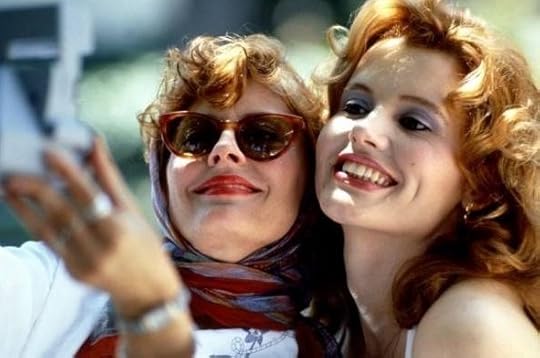
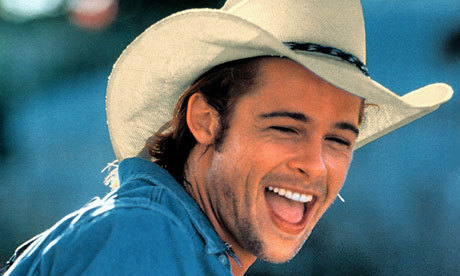
A lively and revealing behind-the-scenes look at the making of one of history's most controversial and influential movies, drawing on exclusive interviews with the cast and crew.“You’ve always been crazy,” says Louise to Thelma, shortly after she locks a police officer in the trunk of his car. “This is just the first chance you’ve had to express yourself.” In 1991, Thelma & Louise, the story of two outlaw women on the run from their disenchanted lives, was a revelation. Suddenly, a film in which women were, in every sense, behind the wheel. It turned the tables on Hollywood, instantly becoming a classic, and continues to electrify audiences as a cultural statement of defiance. But if the film’s place in history now seems certain, at the time its creation was a long shot. Only through sheer hard work and more than a little good luck did the script end up in the hands of the brilliant English filmmaker Ridley Scott, who saw its huge potential. With Scott on board, a team willing to challenge the odds came together—including the stars Geena Davis and Susan Sarandon and a fresh-faced up-and-coming actor named Brad Pitt, as well as legends like actor Harvey Keitel, composer Hans Zimmer, and old-school studio chief Alan Ladd Jr.—to create one of the most controversial movies of all time. But before icons like Davis and Sarandon got involved, Thelma & Louise was just an idea in the head of Callie Khouri, a thirty-year-old music video production manager, who was fed up with working behind the scenes on sleazy sets. At four a.m. one night, sitting in her car outside the ramshackle bungalow in Santa Monica that she shared with two friends, she had a two women on a crime spree, fleeing their dull and tedious lives—lives like hers—in search of a freedom they had never before been able to realize. But in the late 1980s, Hollywood was dominated by men, both on the screen and behind the scenes. The likelihood of a script by an unheard-of screenwriter starring two women in lead roles actually getting made was remote. But Khouri had one thing going for her—she was so inexperienced she didn't really know she would be attempting the nigh impossible. In Off the Cliff, Becky Aikman tells the full extraordinary story behind this feminist sensation, which crashed through barricades and upended convention. Drawing on 130 exclusive interviews with the key players from this remarkable cast of actors, writers, and filmmakers, Aikman tells an inspiring and important underdog story about creativity, the magic of cinema, and the unjust obstacles that women in Hollywood continue to face to this day.
Author of Off the Cliff: How the Making of Thelma & Louise Drove Hollywood to the Edge. She also wrote Saturday Night Widows: The Adventures of Six Friends Remaking Their Lives. Becky was a journalist for Business Week and Newsday. She lives in Brooklyn.
One of the joys of membership in the San Francisco Film Society was the chance to attend pre-release screenings of upcoming movies. We could view these films unaffected by buzz or the influence of reviewers. It was in such an atmosphere that I saw Thelma and Louise in April 1991. No one knew what to expect, and we were uniformly blown away, Now, 25 years later, that film still resonates even more clearly than many things I've seen recently.
In this well researched book, Becky Aikman dissects every aspect of this groundbreaker, from Callie Khouri's first thoughts through her uncompromising insistence on remaining true to her vision and her material, to the choices of Ridley Scott and each cast member as well as production crew. There isn't an aspect of this film that wasn't treated with exacting detail, which explains its lasting quality, the burnished sunset of the third act, the just right casting of the two leads. It would have been such a different outcome if Michelle Pfeiffer and Jodie Foster had hung in there and played those roles. A lot of attention is given to the discovery and ascension of a certain charismatic yet shy young man whose meteoric stardom was sealed with one scene included in this movie. No need to expound on that. Thanks to amazon for the ability to watch this tonight with all these thoughts still fresh in my mind. Unfortunately the industry has not responded with much more inclusion of women at any level of the film making business that this film seemed to foretell. And the ongoing issue of a dearth of women's roles continues as does the shelving of actresses once they pass a certain age.
Love it or hate it, Thelma & Louise is an iconic film.
Personally, I’ve always liked it. I thought Geena Davis and Susan Sarandon were perfect in their roles and I loved the scenes shot in Moab, Utah. Never saw this as a feminist man-bashing film. When I first saw it I took it for what it was - a movie about two women’s friendship and how they were done being used and abused by men and after a life-altering girls’ night out they take to the road.
I enjoyed reading Off the Cliff. I thought it was pretty well done taking you behind the scenes and how this movie was made. Loved finding out who were in talks for which role. From Michelle Pfeiffer and Jodi Foster to Meryl Streep and Goldie Hawn, the roles of Thelma and Louise were highly sought after at the time. For the young drifter J.D., George Clooney read for the part but it was eventually given to Brad Pitt.
(I had such a crush on him when I was a kid!)
Then there was James Caan who was considered for the part of Detective Hal Slocumb (Harvey Keitel’s role). After meeting with Caan and listening to his take on how the character should be played, director Ridley Scott decided not to go with him because he felt that if he did the film would become Thelma & Louise & Hal.
This book also brought to light how women in Hollywood have had to deal with blatant male chauvinism and sexual harassment. I was disgusted (though not really surprised) by the attitudes and behavior of a lot of the men in the industry towards women. And sadly, things haven’t changed much. Just look at the news now, and as the book clearly points out, the inequality is still a problem today as it ever was then when Thelma & Louise was made. So. Frustrating.
As for the controversial ending, I didn’t really see it as tragic. It ended the only way it could, and that’s what cemented the movie in cinematic history.
And to me, it was almost like they drove right out of the picture. Or they could’ve survived it like Marge and Ruth in The Simpsons when they stop at the last minute and instead it's Homer and Chief Wiggum who drive off the cliff...
...and into a landfill. Love that episode!
So if you’re a fan of the film, or like reading about how movies are made, this is a good book that can take you on that journey from page to screen.
I first saw Thelma & Louise when I was 12 or so. I remember renting it the first weekend it was available (at my local Blockbuster--this was back in the days when one did such things), and I didn't know much about it. But I liked Geena Davis and Susan Sarandon (I had already seen The Fly and Bull Durham; my parents were very liberal about what I watched), and I loved the movie immediately.
I don't think I could have articulated why then, but now I realize that I love the fact that--while there are guys in the movie and some of them are good or great guys and some of them are complete jerks--the movie is about their friendship. It was probably the first movie I had ever seen (and there haven't been that many since, either) where the guys were in the background and the women were centerstage. It felt like a bit of a revelation, and it still does.
I like to think of myself as a Louise (in fact, one of my mantras was stolen from her---the unsympathetic but no less true "You get what you settle for") but I'm probably slightly more of a Thelma. I can be scattered and I may not be the best person around in a crisis. Honestly, though, I'd be incredibly proud to be either of them.
But that all doesn't matter. If you love Thelma & Louise (or movies in general), you need this book. It's so well-written and thorough and I feel like I love the movie even more now. And, of course, it's always great when people are passionate about the same things I'm passionate about--and people were so passionate about this, and still are--even decades later.
Great oral history/behind the scenes look at the making of Thelma and Louise from Callie Khouri's initial writing of the script through casting, finding a director, and filming and release. Aikman interviewed over a 100 people involved in the film and in Hollywood of the 1970s-1990s and the book benefits from their viewpoints. The fun of a gossipy look behind the scenes but with the well researched mark of history. Definitely a fun and engaging read.
"Off the Cliff" is about as good a history of the making of a film as I've encountered, and I read enough of them in college and just after that I feel like something of an authority on the subject.
There are two things that make this a particularly compelling take on this well-worn subgenre. First, the research is exhaustive. It feels like Becky Aikman spoke to everyone involved with "Thelma and Louise" and carefully considered their thoughts when she put this book together. It also seems like she got extensive time with key players like Susan Sarandon and Michale Madsen, which allowed her to pull through their long conversations for the juiciest quotes. As someone who has worked fairly extensively in film and television, I can also tell that Aikman has an understanding of how a film comes together, whether that comes from personal experience or expert reporting, she gets it right.
The other thing that makes this book work particularly well is the narrative vision Aikman brings to the subject. She clearly wanted to tell the story through the eyes of screenwriter Callie Khouri and she clearly wanted to tell the story of women struggling for a seat at the table in Hollywood. Too often, histories are told with a kind of objectivity that thinks it is being fair but is actually scattered or unfocused. Here, there is such sharp focus that we feel the female point of view in even the smallest moments: from Brad Pitt's glistening six-pack to the scrapes on Geena Davis' knees after the infamous parking lot scene.
There are certain little things I don't like about the book. Aikman has that Hollywood trades style that labors to come off as a bit world-weary and cavalier. Also, she falls into that trap so many Hollywood stories fall into of giving you way too much moment to moment at the agency and production company level. Even as a Hollywood worker, that stuff always reads like gibberish. No one will remember ICM agents in twenty years. As they say, that's what the money's for. Finally, she tends to go further back in figures' personal lives than feels totally necessary. Generally, I don't care where a production designer grew up or if an actress' dad was nice in stories like this. Biography and a history of a given artistic moment are two different things.
These qualms, ultimately, are minor. This is a well-constructed story, and more importantly, this is the perfect marriage of thematic concern and subject matter. The moment that "Thelma and Louise" came along, the people who were involved, and what the film ultimately meant to Hollywood are so important and so interesting that it more than makes up for any minor dings on style or substance. Aikman's shrewd evaluation of whether or not Ridley Scott is a feminist, and the distinct approaches to feminism of Geena Davis, Susan Sarandon, and Callie Khouri comprises the beating heart of this text, and the work she does with them is thoughtful and important.
"Off the Cliff" feels like an essential text for understanding a particular moment in Hollywood history as well as the broader progress (or lack thereof) that women have made in all facets of the industry.
I loved this book. As a fan of the film, I found the whole behind the scenes anecdotes entertaining. Can you picture Jodie Foster and Cher as Thelma & Louise?
I've always felt that the best films are those that involve collaboration. There are very few writer/director films that hit on all notes. One film that comes to mind is Risky Business. In the case of Thelma & Louise, I would have liked to have seen what Callie Khouri might have come up with had she been the director. I agree with her criticism of the over-the-top trucker. She might also have been right about the biker rescuing the cop in the trunk. But I doubt she would have had the skills needed to add the visual layers that Ridley brought.
The success of the film starts with writer Callie Khouri. Author Becky Aikman didn't mention how many drafts Callie had before she started shopping it. I know from experience that first drafts are seldom good enough. Once Callie found someone to champion her script, though, everyone else who came on board contributed to the success of the film.
My first impression on seeing the movie was that it was a little over the top in its male bashing. Christopher McDonald as Darryl made all us guys look like buffoons. But I got the joke. The scene where the cop goes from badass to a blubbering wimp when under pressure is a scene that fit the theme perfectly. Little did I know that it was the actor playing the role who came up with that idea.
As much credit as I give the writer, I can't envision anyone other than Geena Davis and Susan Sarandon as Thelma & Louise. They made the film work. And then there is Brad Pitt as J.D. Perfect role. Perfect performance. Brad Pitt learning that Thelma held up a convenience store – "What, Thelma?"
As for that ending. I still don't agree with it. It feels to me like Callie put her characters into a corner and had no pages left to find a resolution. I do agree, however, with the freeze frame.
To round out the book, the author delves into the history of women in Hollywood and the many disadvantages that women face. I hope that that trend ends.
I wasn't sure if I should rewatch Thelma & Louise before reading this book, or after. I opted for before, and then surprised myself by deciding to watch it again afterwards. I'm not someone who's typically willing to watch the same movie twice in an eight-day span, but reading the book inspired me to watch the movie from a different perspective the second time around.
Off the Cliff is essentially the story, from concept to creation (and beyond) of a Hollywood motion picture, at least as the process was in 1989 and 1990. This would probably be an interesting book anyway, but the fact that it covers such an iconic movie is definitely a bonus.
Becky Aikman has done a terrific job of documenting the creative process. (This is the main reason I'm giving a five-star rating.) It was especially interesting to learn about how Ridley Scott goes about the craft of directing a movie and about how Susan Sarandon pushes for (and gets, at least in this case) a significant amount of creative input into not only her own portrayal of her character, but of the film as a whole.
I was a little surprised that the fact that the two leads in the film are women made it more difficult to get the movie produced. I mean, it's certainly no shock that Hollywood prefers men, but Thelma & Louise was far from the first female starring vehicle on the big screen. Greta Garbo, Bette Davis, Joan Crawford, and many others were headliners long before Thelma & Louise. I'm not clear on if the problem was that Geena Davis and Susan Sarandon weren't big enough stars (would they have had an easier time if it was Jane Fonda and Sally Field?) or if it's a reflection of the state of the industry at that point in time, when Hollywood's romance with big-budget, male-oriented action films were still a fairly new phenomenon.
Reading this book, I have to admire the way the various creators stuck to their vision for the story, especially how they managed to avoid the pressure to change the classic ending of the film to one that would be more in line with a happy Hollywood ending.
Great read for the film-inclined. Presents an excellent chronicle of the process of making a movie ca. 1990 - from writing the initial idea, to the development, to casting, to shooting, and then distribution and (in this case) awards season. I was reminded a bit of Mark Harris's Pictures at a Revolution that does a similar chronicle of the best picture nominees of 1967 - following them from the initial conception to awards season.
I think that this falls between the two Peter Biskind books - which chronicle the rise and fall of New Hollywood ca. 1965 - 1977 (when Jaws and Star Wars, both New Hollywood creations, ended the cycle of director-driven auteurist films by showing that movies - through synergistic marketing and tie-ins and international markets - could not make millions but BILLIONS of dollars) and the rise and fall of the independent film boom ca. 1987-1997 (his own Bonfire of the Sundance and Miramax vanities). It would make a nice feminist counterpoint to the Don Simpson bio - High Concept.
I haven't seen Thelma & Louise in maybe 20 years, so I need to re-watch. This is my own myopic sense of Hollywood, when it came out I didn't quite see why it was seen as such a feminist film. Aikman's book really illustrates the struggle in getting the film off the ground, and the contextual environment that made it important. Of course, I have been fortunate enough (being a product of the tail-end of the independent boom in NYC where we are more progressive than our West Coast cousin) to work for an extraordinary number of women directors and producers throughout my career. But of course, the movies we were making are much smaller and more intimate than Thelma & Louise.
Why is Hollywood so sexist? This is the industry that the Right loves to eviscerate as being hypocritical so that when its starts and industry leaders bring up a social issue, the Right can bring up that this star also wears 10k jewelry or that star is against gun violence but starred in a movie where he killed 300 people with an AR 15. The individuals might be sincere in their social conscience, but the system of Hollywood remains archaic at best. I think a major part of the desire to make movies (in the populist sense - experimental and art-film is another beast altogether) is a sense of wish-fulfillment, and with the New Hollywood rise of the 1960s it allowed for an environment where rich men could enact their fantasies on and off-screen. The money for movies is dominated by men, and the money still dictates what is seen on on-screen, so guess what? They want beautiful women being saved by men. There are always exceptions, and Aikman's book does a great job of illustrating those exceptions and bringing up women directors and writers throughout history - of course, there aren't that many so it's not like 100s of examples!
Especially where money is concerned, bucking the trends and creating new visions of movies is extraordinarily difficult, and the nasty id of our country (if not our world) - the racism and sexism - comes through in our stories. Our view of women is slowly changing towards equality, and as we are seeing in 2017, this struggle for equality will not happen without a fight by the forces of control. So Thelma & Louise's joyride which leads them into a world a violence feels more prescient, and more important than it did when it was originally released.
This is an entertaining, thorough account of how the groundbreaking film Thelma & Louise got made in the antifeminist, testosterone-dominated filmmaking era of the late 1980s/early '90s.
Some of the writing is a bit schlocky and "little did they know what the fates had in store" tension building, BUT as a history of the making of this fantastic film it's great. The author has really put the time in with interviewing everyone and obviously cares about the film yet manages to remain objective about some of its issues. And I agree with Roger Ebert about the end - the flashback scenes weren't needed. I can still remember seeing this film for the first time, and the sense of jubilation I felt. This book does a great job of explaining how that film created that. *fade to black*
This wasn't as interesting as the Casablanca book, but it was OK. As I've mentioned before, the making of multimillion dollar film is organizationally, similar to making a new model car. Lots of money. Lots of ego. Lots of people. Lots of backstabbing. Lots of sex (well, someone has to try out the back seat). Etc. The film production world works hard to make their gritty production process sexy and "important." The film did break some ground in story structure, while Ridley Scott's visual sense and actor direction did push enhance the film's charisma. While finishing the last couple of chapters, I noted that it was playing on tv, but I only watched for a while, having seen it several times already.
“Thelma & Louise landed in theaters like a depth charge on May 24, 1991. The shock waves rippled out for weeks, months, even years. Watching the movie proved a profoundly riveting and personal experience for the American audience It was entertained, but also electrified. And divided. The film touched off a catharsis for viewers who identified with the heroines, and a roil of controversy for everyone else. It was possible to encounter couple who actually split up after arguing over whether Louise should have fired that pistol. Feminists debated into the wee hours whether driving off a cliff was a defiant statement of self-determination or a capitulation to the view that the only way for women to win was a lose.” From chapter 28, 242 - The Snowball Effect
“Susan Sarandon said to anyone who would listen, “I think people were freaked out and they didn’t even know why. We had completely underestimated how strongly the territory was held by White heterosexual men.”” From chapter 28, 247, The Snowball Effect
“At special screenings in theaters and intimate ones at home, the film still plays and plays. Mention of Thelma & Louise can still touch off a row at a dinner party, and parents debate when daughters should see it for the first time, because it still fells fresh, its critique of American culture and relations between the sexes still sharp and current. As viewers wait - and wait - for another movie like it, Thelma & Louise seems destined to stand alone, like Nora slamming the door in A Doll’s House or Aretha belting out “R-E-S-P-E-C-T,” a touchstone for all that follow, with a force, originality and impact that the timid will never duplicate. From chapter 30, p. 266, A Film of Their Own
“She told Geena and Susan she loved them and thanked her family, assuring the crowd that her husband hadn’t been the model for any of the characters. She got a laugh with the quip, in fact, my brother was - just kidding.”” Callie Khouri’s remarks at her winning the Academy Award for Best original screenplay. From epilogue, p. 270
I watched Thelma & Louise, again, after reading this book. I had forgotten much of the plot since it’s been 28 years since I originally saw the movie. It was great to see Geena and Susan in their roles and Harvey Keitel -loved him running after the racing car as it shot for the cliff while the rest of the world was armed and “cocked” ready to shoot these two women who basically defended themselves from a misogynistic world.
Off the Cliff is a good read if a bit difficult for dredging up all the feminist issues that some of us are so aware of but wish just were not so. I smiled when the women held hands and gunned the Thunderbird off the cliff. What are you willing to die for?
I received an ARC of Off the Cliff a few weeks ago and finally got around to reading it. I must have read close to twenty books between the time I received this one in the mail before I actually picked this one up and decided that I was going to sit down and read it, one way or another. Love it or hate it, it was time to get it out of my TBR pile.
I must admit, I was hesitant at first, primarily because it's about the making of Thelma and Louise, and I'd barely heard of the movie, certainly never watched it before. The book surprised me though. I was hooked from the start. The writing was engaging, the details were intriguing, and the story flowed.
The book talks about the process of movie making, framed around the making of Thelma and Louise, explaining how the movie itself caused a shift in the type of movies Hollywood looked for, exploring movie magic, and lending key insights as to why things are done a certain way, from casting to understanding how trailers are made, to how they blow things up. Fascinating stuff, answering questions I didn't even know I had.
The book also discussed the fact that when the movie came out, the majority of the movie going audiences wanted shoot 'em ups and action, and that's right where I was. Heck, I was seeing five, six movies a week during the time that Thelma and Louise came out (ah, when I had free time), and that movie never even caught my eye. Even to this day, give me a film with a good plot and a high body count, and I'm there.
Having read this book discussing how it was made, I'm definitely going to watch the movie, now, though it has been more than 20 years since the movie came out. I'm finally curious to see what I've been missing.
The book refers to the movie as one of those "pivotal" movies, causing Hollywood to change what they were doing, and it's a fascinating history. I'm not explaining it well, I know, but I just wanted to put this out there, because if there's any book I've read this month that should be recommended, it's this one - and I wasn't even the target demographic for the book! It's just that good.
You wanna a quirky book that you don't expect to enjoy so much??!! This one right here. A work of non-fiction...culture and film...Off The Cliff: How The Making Of Thelma & Louise Drove Hollywood To The Edge is a book that I was hesitate but very curious about. I fully expected to get the book and then have it in my TBR pile for months and months contemplating reading and never actually doing so. Not so....
Of course, I wanted the book because I am a fan of the film. Thelma & Louise is referenced in almost everything. When someone is referring to friendships the term "We are totally a Thelma & Louise" is used often in those terms or something like it. Pop-culture books are always a "YES PLEASE" for me. Perfect summer reading, perfect vacation reading, perfect light reads...this book is no exception. It was such a pleasure to read. Behind the scenes antidotes, the writing process, quotes, snippets of facts and thoughts from cast members....just a complete plethora of all things Thelma & Louise. Never saw the movie?? Grab some popcorn and a soda and go watch it. It may not be your cup of tea...but who doesn't know of Thelma and Louise?? Just do it to be one of those people that can at least claim that. And then read this book....cause it's great. Cause it's pop culture...Cause it's fun and it's nostalgic...all those things.
Beck Aikman..the author....can't say I ever read anything about her until this book...but that's enough for me. I am sold. For what she has done for this movie...putting all the great things of it into a book is wonderful. I'd be impressed to see more by her with other great movies.
Thanks as always to the wonderful peeps of goodreads, Becky Aikman, and Penguin Press for my free copy of this book in exchange for an honest review to which I gladly and voluntarily gave.
Thelma & Louise is a movie made in 1991 starring Geena Davis and Susan Sarandon as two friends who go on a road trip with unexpected results. The supporting cast included Christopher McDonald, Harvey Keitel, Michael Madsen and Brad Pitt.
Thelma and Louise are best friends who set out for a weekend vacation at a fishing cabin in the mountains. Thelma is a ditzy housewife married to a disrespectful and controlling man named Darryl. Louise is a waitress in a diner and dating a musician named Jimmy, who spends most of his time on the road. The vacation doesn't go as planned they end up on the run for murder. Rather than be captured and spend the rest of their lives in jail, Thelma suggests that they "keep going" and they ride the car over the cliff to their deaths.
This book is all about the movie. It discusses how the writer shopped the script around and Ridley Scott finally decided to direct it, the small budget, casting of the parts (Michelle Pfeiffer and Jodie Foster were originally chosen for the leads but eventually dropped out due to other commitments), the actually filming of the movie, the reaction after the movie was made, how it's become a classic and what the actors had done before and since the movie. I found it interesting to get the behind-the-scene view of what was going on at the time and during the filming.
It's been a lot of years since I've seen Thelma & Louise and after reading this book, I'm going to watch it soon now that I have the inside scoop.
I LOVED this movie and when I saw there was a book about the making of it, my finger was on that request button as fast as I could get it there. And, I was not disappointed. This book was full of facts, quotes, reviews, opinions and trivia out the wazoo.
Did you know that George Clooney auditioned for the role that Brad Pitt got? It's in there and it's treated pretty humorously, as well.
I had no idea what kind of controversy this movie posed to a lot of people. All I knew was that I liked the movie. It was entertainment and I enjoyed it. According to this book, the movie caused all kinds of controversy. There was also several pages regarding the ending of the movie.
A book full of facts and one that I don't think I skipped a single page. I was that enthralled and into it. As a matter of fact, Kindle said I still had like 30 or 40 minutes to read, but that was due to the bibliography at the end. If your a trivia buff or a fan of Thelma and Louise, it's worth the read.
Thanks to Penguin Group and Net Galley for providing me with a free e-galley in exchange for an honest, unbiased review.
Off The Cliff: How The Making of Thelma & Louise Drove Hollywood To The Edge Warning: swearing Starts out with Callie and how she grew up in KY, moved to TN and then onto CA over the years she's had many jobs and has met many people. Also goes into what the movie industry is doing as not many movies staring women are endorsed as much as those with men in them. Lots of name dropping so you understand who is out there doing their best. Follows the people at the top of the production as they are selected, along with actors and actresses. Goes into their family life also and what motivated them into their field. Amazing when it gets to the actual production and the complications they come up against. Lots of references and quotes listed at the end. Enjoyed the book mostly because of all the descriptions of the locations that I've yet to visit. Storyline was a bit different than what I'm used to reading. I received this book from a publicist via Net Galley in exchange for my honest review.
Thanks to Penguin Press for providing me an advance copy of the book, with no request to review when finished. I am passionate about filmmaking, feminist leadership, and Thelma & Louise. Reading the pre-production miracle, filming details, and direct aftermath of the release that is now 26 years old made me want to watch the movie again and look for all the details I now know about it. I was impressed with Aikman's interviews gathered from the cast and producers, directors, and important crew that is usually found only in magazine articles, but stretched into a book. She included many facts and statistics about films in the 80s/90s that seemed like it could be a whole other story or thesis, but provided context to make this a well-rounded account of why Thelma & Louise is such a godsend.
This is more than the usual fun showbiz "how we did it" book about the making of a movie. Thelma & Louise was not just any old movie, as it was one of the few movies ever with female leads and a clearly feminist point of view, even before such a thing existed and certainly before it was accepted, if indeed it is now, especially in Hollywood. The book details the sexism rampant in Hollywood, faced by screenwriter Callie Khouri and so many of the women who worked on the movie and on every other movie. The author lays out the prep work and the important choices that went into the making of the movie and its sometimes-controversial scenes, showcasing not just the director or stars but all the other people who worked on the movie and how their choices informed the outcome. The book is fun, but it's also an important record of an important cinematic journey, both on and off the screen.
I loved *Thelma and Louise* when it came out in '91 (so much so that, as a poor grad student, I saw it in theaters four different times--a big splurge on my tiny TA budget). This book tells the backstory of the movie, and is stuffed with revelations (the author did a ton of interviews) that make the movie's being made, and being made with integrity, even more remarkable--a total confluence of events and people colliding. It's written really vivaciously: her description of macho steroidal action stars as "walking briskets" is an example of her typically funny, punchy prose. But it's also substantive--she demonstrates that the abhorrent sexism of Hollywood in the '80s and '90s hasn't much changed (the data on women screenwriters, directors, and leads of films is pretty much constant from the '80s to today).
I didn't fully jive with the writing on this one and felt that it took too long to get into. The first quarter was full of starts and restarts, and while I can see how that is how the process of creating this film was, I didn't need it written that way to grasp it and I found it clunky and difficult to get in to. However, once it got rolling, I loved the nuanced insights and inclusion of interviews with the major players, and I thought it was fun getting to see the movie plot change and flow as everyone put in a bit of themselves, and how it turned into the movie it is today. I also thought it was depressing how the movie industry has kind of changed the way it views women forever, but also nothing has really changed at all. I would recommend if the subject is of interest to you and/or you like thelma & louise.
This book was gifted to me by the publisher because I had written positive reviews of other "movie books" (i.e. Pictures at a Revolution by Mark Harris).
I'm SO GLAD this book was gifted to me, because I'm not sure if I would have come across it otherwise. Basically, this is a fun, snappy, entertaining documentary of the making of Thelma and Louise in book form, starting with a background of what Hollywood was like before it was made, how it was made, and ending with its effect on "feminist" movies afterwards. Aikman did an amazing job interviewing SO many key players from the film, both actors and other film industry people.
I really enjoyed reading it. I need to find more books like this about other movies I love!
***I received my copy through Goodreads Giveaways in exchange for an honest review.***
It's true that Hollywood hasn't done much to change female representation in film after Thelma & Louise. This is an interesting retelling of the world's reaction to an incredibly polarizing film:
"The film touched off a catharsis for viewers who identified with the heroines, and a roil of controversy for everyone else. It was possible to encounter couples who actually split up after arguing whether Louise should have fired that pistol. Feminists debated into the wee hours whether driving off a cliff was a defiant statement of self-determination or a capitulation to the view that the only way for women to win was to lose" (242).
Thelma & Louise as a movie fascinated & still thrills me. This book riveted me with detail and back stories. Aikman did 130 interviews and great research to illuminate the against-all-the-odds rarity of a first time screenwriter such as Calllie Khouri getting the movie she envisioned filmed (mostly) her way. She won the Oscar for Best Original Screenplay and went on to create the successful TV series Nashville. Aikman entertainingly describes the way the incredible talents lined up (stars Geena Davis and Susan Sarandon, director Ridley Scott and many more) and then asks compelling questions about why women are still underrepresented and marginalized in Hollywood and the world in general. If you're human and at all interested in these conundrums, this book is for you.
If you loved Thelma & Louise, you will love this book! It goes beyond the usual "making of" genre, and describes the actual conception of a film from start to finish. From the original screenplay by then-unknown Callie Khouri, to finding a producer brave enough to make it, to directing, casting, production, locations, and even the technique of filming that indelible final scene, it's all here. Great writing and incredible research make this book a true gem. As Callie said after winning the Oscar for best original screenplay, "For everybody that wanted to see a happy ending for Thelma & Louise, this is it."
I really enjoyed this narrative about how Thelma & Louise was made, the casting decisions, Ridley Scott's long search for a director (in which he discovered, a la Dick Cheney, that he was the best candidate for the job), daily life on the set, the changes to the story made during shooting. From the original screenplay to the final print and then the aftermath, it's a readable and thoughtful book. It reminded me of Tom Santopietro's The Sound of Music Story, but with a VERY different movie project.
I really liked this in-depth background on the making of T&L. Thank you Becky Aikman for your enlightening story on how it was made. Also, I liked the movie; however, I did not realize the hurdles and hoops it had to overcome. So, now I've bought a copy for my wife to read and a copy of the DVD. When she finishes the book, we will make a bowl of popcorn and watch the movie with new eyes. Good job.
I'm a BIG fan of Thelma & Louise, but even bigger fan of film history. I hate when nonfiction books don't flow and are inundated with boring, droll, unnecessary facts. Aikman's writing flowed so well that you kept wanting to read more. Not only does this book take you step by step behind the whole development, production, and reception of the T&L, but it also dives deep into the struggle that women in Hollywood deal with STILL to this day. Great read for film buffs.
This was an interesting look into film and film culture from pre to post 2000's. Aikman really does give an insight on the behind the scenes of Thelma and Louise which I would recommend to lovers of the movie, as well as those who just have an interest in Hollywood cinema and gender. It was both informative and entertaining. (It also inspired me to watch the film before reading it, so, a double good experience)