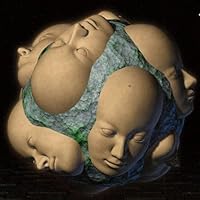
Dentro de su prolífica obra podemos encontrar obras muy irregulares. Desde pequeñas obras maestras en su género, como esta que presentamos, hasta obras menores e irregulares, de caracter "alimenticio". Las gafas del señor Cagliostro fue su novela más popular en España. En ella, como en ninguna otra, el lector se ve cautivado por la esencia de Keeler: la búsqueda de lo azaroso, las casualidades increíbles y las situaciones no menos imposibles.
Born in Chicago in 1890, Keeler spent his childhood exclusively in this city, which was so beloved by the author that a large number of his works took place in and around it. In many of his novels, Keeler refers to Chicago as "the London of the west." The expression is explained in the opening of Thieves' Nights (1929):
"Here ... were seemingly the same hawkers ... selling the same goods ... here too was the confusion, the babble of tongues of many lands, the restless, shoving throng containing faces and features of a thousand racial castes, and last but not least, here on Halsted and Maxwell streets, Chicago, were the same dirt, flying bits of torn paper, and confusion that graced the junction of Middlesex and Whitechapel High streets far across the globe."
Other locales for Keeler novels include New Orleans and New York. In his later works, Keeler's settings are often more generic settings such as Big River, or a city in which all buildings and streets are either nameless or fictional. Keeler is known to have visited London at least once, but his occasional depictions of British characters are consistently implausible.
¿Qué puede surgir de la mente de este escritor de misterio pulp norteamericano, hijo de un mago, que vivía en una pensión que hospedaba a actores de teatro, recluido temporalmente en un manicomio, con estudios de ingeniería electrónica y que trabajó en una fundición? Pues te lo cuento rápidamente: una novela alocada, por momentos divertida, a veces kafkiana y en otras ocasiones de tintes intelectualoides y científicos, con un argumento que parece meterse en camisa de once varas, pero que consigue salir a flote airosamente, cerrando de manera certera y elegante una trama que pareciera evocada al disparate más irresoluble. Todos los elementos biográficos mencionados del autor tienen cabida en esta original obra de misterio repleta de giros y sorpresas, sorprendentemente escrita en 1924 y por tanto bastante adelantada a su época, que debiera merecer más fama y reconocimiento del que por desgracia disfruta. Sirva esta humilde valoración para ayudar a revertir esta situación y dar un poquitito de visibilidad, a una obra y un autor que no se comprende que a día de hoy tan sólo pueda tener un total de 70 calificaciones y 12 comentarios en Goodreads. Enhorabuena a “Ediciones del azar” por la elección, pero vergüenza de edición con una media de dos faltas de ortografía, erratas y errores de puntuación o redacción en cada una de sus 466 páginas. Una pena. Un 3.5 que redondeo gustosamente a 4.
Desconcertante, delirante e imaginativo, así habría que calificar al genial Harry Stephen Keeler (1890-1967), escritor norteamericano de novelas de misterio y policíacas, que publicó sus primeros relatos en las revistas pulp de la época, y que tuvo sus mejores tiempos entre los años 30 y 50. Las características de la obra de Keeler, que podría encuadrarse dentro de un género propio, son sus tramas imaginativas, con giros inesperados y multitud de hilos argumentales que se van uniendo a lo largo de la historia. Hay un hecho en su juventud que lo dejó marcado para toda su vida, y fue la reclusión, por parte de su madre, en un manicomio a los veinte años. Estuvo ingresado durante más de un año, y fue una experiencia que lo marcó hondamente, como se nota en algunas de sus novelas.
La trama de ‘Las gafas del señor Cagliostro’ tiene su punto de partida en la herencia que ha dejado un conocido hombre de negocios. Su hijo, Jerry Middelton, que reside desde siempre en Australia, aunque es norteamericano de nacimiento, viaja hasta este país para la lectura del testamento y para hacerse cargo de los negocios familiares. Pero dicho testamento, con cláusulas más que atípicas, no es lo que se esperaba el joven Jerry. Es imposible contar nada más sin destripar las sorpresas que se encontrará el protagonista, y con él el lector.
Keeler's fiction can't be rated using the same values as other people's. Enjoy it for the bizarre elaborations of the plot and do not worry too much about the stereotypical characterisations and functional dialogue.
(I note that another reviewer complained that the plot was "unrealistic". That's like complaining that a musical has tunes.)
In this case the hero is put into serious jeopardy in an efficient manner in which you don't know how the hell he will escape, yet he does. There's a slightly unsettling love interest, a proper villain, and it all ends happily after many twists that you don't see coming and most importantly that no other writer than Keeler could have devised.
Lamentable edición de Ediciones del Azar que, haciendo honor a su nombre, publica un libro en el que, sin orden ni concierto, los puntos y las comas bailan a su antojo lejos de los ojos de un corrector -tal vez maniatado y amordazado en los sótanos de la editorial y sustituido por un primate-. También es habitual encontrar palabras con erratas y de costosa interpretación.
La trama es ingeniosa pero hubiera hecho bien Keeler en adelgazar el texto y prescindir de pasajes excesivamente morosos que no aportan nada y que parecen ejecutados con la idea de ser mero relleno.
Se trata de un libro muy divertido y con una trama que atrapa. Es una lástima la traducción típica de los 50 que en ocasiones te saca. La mayoría de los libros de este autor llevan muchos años descatalogados. Esperemos que la editorial Reus los reedite como ha hecho con Noches de Sing-Sing que creo que también caerá.
Keeler was committed to an insane asylum for a year when he was a young man. That explains the vivid descriptions of the asylum in this novel, and his clear preference for its mentally ill denizens over their crackpot keepers. The larger plot is itself insane ... or is it? One of the fascinating aspects of HSK is the way he keeps you guessing about his own state of mind.
Give this extraordinary, funny, and frightening novel a try; it's one of Keeler's best, and perhaps his most personal.
As much as I glaze Keeler a lot, I do so in spite of his numerous faults, of which there are many. This is probably the first of his works that I've read that I would say is genuinely good as an actual novel, from start to end, being thrilling and suspenseful, being the story of a man who's desperate to prove to everyone around him that he's not an insane paranoiac despite all evidence to the contrary. You still get some of the typical Keeler tropes, the strange will, the sudden romance, scientific tangents, but here I think it works at its best.
Me recordó mucho a Los renglones torcidos de Dios, la trama es entretenida/delirante y te hace pensar "quién es quién". Eso sí, creo que le sobran bastantes páginas en las que se describen diferentes enfermedades mentales ya que no aportan nada a la trama. La resolución final, algo apresurada para un libro de casi 400 páginas.
This is all Neil Gaiman’s fault. He mentioned Harry Stephen Keeler on his Tumblr blog as one of his ‘secret pleasures’, saying:
"He may have been the greatest bad writer America has ever produced. Or perhaps the worst great writer. I do not know. There are few faults you can accuse him of that he is not guilty of. But I love him."
So, naturally, I had to hunt up an ebook to give Keeler a try. It seems he wrote scores and scores of books in the 1920s, 30s and 40s, most with bizarre titles. The Spectacles of Mr Calgliostro seems to be one of the best-regarded.
It has an utterly whacky plot (a Keeler speciality) to do with the heir to a vast industrial fortune coming to Chicago
from Australia on learning of the death of his father. To his dismay, however, when the will is read it seems that his father only left him a pittance to live on. The business is left in the care of its General Manager.
Then there are these peculiar spectacles that his father bequeaths him, together with a strong request that he wear them for the duration of one year whenever out and in public, to satisfy a bet his father placed with the General Manager…
The screw gets turned several times more as the General Manager of his father’s business offers him money to carry out a bizarre scheme. A scheme which ends up sending the protagonist into a lunatic asylum. And while there…
And there’s this girl whose face he has never seen, but who he fell in love with in Australia because…
Ah, heck, I can’t summarise the plot. Let’s just say that through several very unlikely turns of events, the protagonist finally triumphs.
Whacky, unbelievable. But reasonably well written nonetheless, and really very entertaining provided you can suspend your disbelief.
So now I have to find a copy of The Case of the Transposed Legs , or The Riddle of the Traveling Skull, or The Skull of the Waltzing Clown, or The Mysterious Ivory Ball of Wong Shing Li, or…
Oh, and there’s even a Harry Stephen Keeler Society. Google that and read their website before trying Keeler so you know what you’re getting into.