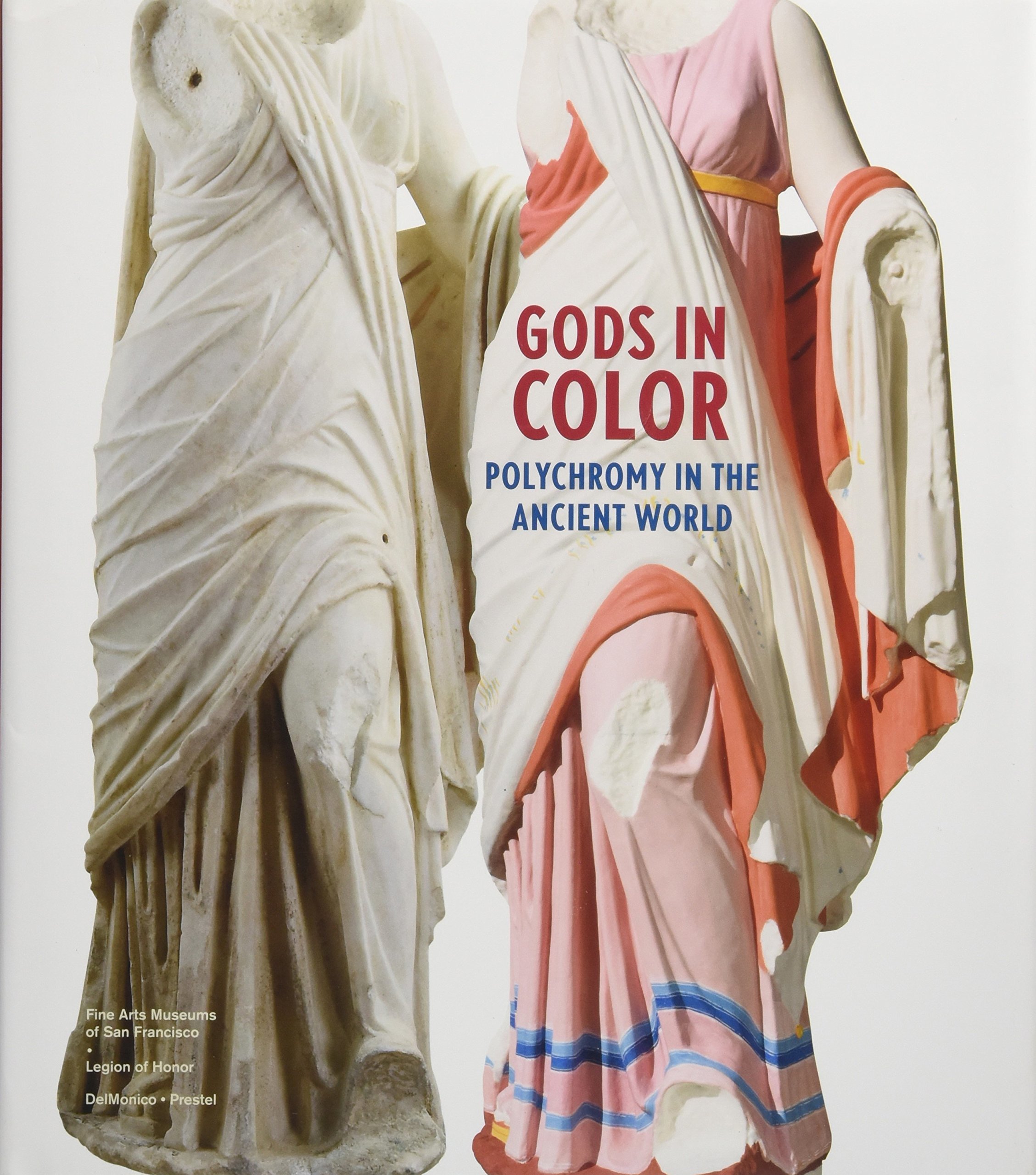
This stunning book uses 21st-century technology to reveal the original colors of ancient sculpture. When Renaissance artists sought to imitate ancient sculpture, their medium of choice was pure, white marble, but little did they know that the works they emulated were originally painted in dazzling and powerful hues--from red ocher and cinnabar to azurite and malachite. By illustrating painted reconstructions of well-known sculptures in relation to original examples, this volume reveals how ancient artists in Egypt, Mesopotamia, the Aegean, Greece, and Rome brought unexpected and breathtaking color to their artworks. Accompanying these reproductions are watercolors of Greece's landscapes dating from different years, which show how our perception of ancient art has changed over time. Generously illustrated, this book testifies that the study of ancient sculpture is incomplete without an understanding of the many ways that color was employed to bring such art to life.
This exhibit combined reproductions of major surviving works of classical Greek and Roman sculpture that restored the painted color sported by the originals when presented in the classical age, with a few original works from the period that retained visible traces of their original paint.
Art historian have understood for some time that classical sculpture was originally painted in life-like color. However, a misunderstanding of classical sculpture has had a long and deep influence on art history. For many years it was believed that ancient Greek and Roman sculpture were originally meant to be seen as they were in the present- as white works of marble. Thus the artists of the Renaissance, in seeking to emulate classical sculptures as they understood them, created Neo-Classical works of the whitest white.
The rather arbitrary deification of ancient Greece and Rome over other, more ancient societies was, perhaps, a celebration of a "whiteness" that never was. For the reproductions show that the subjects of classical sculpture were not exclusively white at all, but were racially and ethnically diverse. Did the fading of paint over the millennia help inspire notions of racism and white supremacy?
Simply as art, I found the full color statues a more visceral experience than looking at the stone-colored originals. There's something more immediately alive about a statue that is staring at you with naturally colored eyes. The sensuality of ancient Greek art becomes yet more assertive. The homoerotic power of some of this imagery becomes even harder to deny.
For all that, I must confess that my favorite object in the exhibition was one of the originals that had a still visible painted decorative pattern on top. It was a relief of a grieving widow, the figure so lightly raised from the stone as to make her seem all the more vulnerable.
I've always been a bit unnerved by the blank eyes of classical statuary....this book shows exactly what I've been sensing was missing for so long!
This book is quite interesting...but as its' basically part of an exhibit on the topic, it has limits. I found this topic pretty exciting and found this book just didn't have enough on the subject of polychomy on ancient art for me. I LOVED the recreations of how things looked in full color. One statue of the Peplos Kore is an intense example of how color was part of the art--the garment of the girl/goddess it portrays has a strange, sharp edge. With color, that same statue can be understood to show a garment that ends at the waist! There are a number of pictures that I felt needed more explanation of how they fitted into the polychrome topic. There's at least one beautifully carved torso in there that had no explanation of color on the figure, the information was just on the overall color of the material which yes, was meaningful but I wanted more about that piece--had there been color on that statue? Why not include statuary of several colors with their assorted meanings? I thought the shifts between cultures needed to be explored more too. More Egyptian polychrome art survives as many pieces of statuary were buried which preserved them. I'd have liked serious discussion of how Egyptians handled color versus how Greeks did. What did they want to show or reveal? What meanings did colors have, were statues meant to be subtle or gaudily bright in their day and what did the use of colors tell us about expectations and preferences? This topic is fascinating but the technical aspect of this book and how much it centers on the exhibit limits it. I wish a wider exploration of color of ancient art and statuary was available. Knowing that Greek and Roman statuary HAD color gives a whole new dimension to their art and the fact temples were brightly painted too gives them so much more depth. While this book was part of what must have been a fascinating exhibit, I just wish it had more in layman's terms and more art and recreations of pieces too. Not every piece could be faithfully replicated, but the images of what they may have been is what spoke to me most. I'd have loved to see possible recreations of major works, may be with two or three possible or plausible ways they could have been colored--heck, the Elgin marbles and the destruction of their colors from "cleaning" could be a whole chapter in themselves. Interesting, fascinating, beautiful...but I just wanted MORE.
This book is amazing, it shows the way monumental sculpture in the a Greek world my have looked in vivid color. It also walks you through generational advances in color reproductions and has examples from all the major temples in the a Greek world. They do a little better than most color reproductions which assume the Greeks didn’t know how to use accents to provide fine detail despite striving for incredible realism in the stone underneath simply because only the base coat flakes remain on the sculptures and those can only be in primary colors.
The bad: there is literally no way to search the book other than flipping through the pages one by one, manually, for example if you’re looking for color sculptures from the Parthenon. There is no index. The book isn’t available in digital format anywhere. It isn’t on Kindle. It isn’t indexed on google books. This all greatly detracts from its value as a reference work, and this would actually have been its primary value for most readers. A shame.
On the whole a very neat work, as the contributors work through how the image of the classical world as being a radiant white came to be, with some consideration of all the racist baggage that became attached to that notion. This is before moving on to how our understanding has changed about what (mostly) Greek and Roman sculpture actually looked like, with some very impressive reconstructions. Any downsides? Not really. Maybe that this has almost instantly become an expensive collector's item; at least it does seem to have a fairly wide availability as a library item.