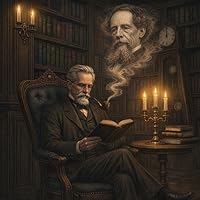
Philip Kindred Dick was a prolific American science fiction author whose work has had a lasting impact on literature, cinema, and popular culture. Known for his imaginative narratives and profound philosophical themes, Dick explored the nature of reality, the boundaries of human identity, and the impact of technology and authoritarianism on society. His stories often blurred the line between the real and the artificial, challenging readers to question their perceptions and beliefs.
Raised in California, Dick began writing professionally in the early 1950s, publishing short stories in various science fiction magazines. He quickly developed a distinctive voice within the genre, marked by a fusion of science fiction concepts with deep existential and psychological inquiry. Over his career, he authored 44 novels and more than 100 short stories, many of which have become classics in the field.
Recurring themes in Dick's work include alternate realities, simulations, corporate and government control, mental illness, and the nature of consciousness. His protagonists are frequently everyday individuals—often paranoid, uncertain, or troubled—caught in surreal and often dangerous circumstances that force them to question their environment and themselves. Works such as Ubik, The Three Stigmata of Palmer Eldritch, and A Scanner Darkly reflect his fascination with perception and altered states of consciousness, often drawing from his own experiences with mental health struggles and drug use.
One of Dick's most influential novels is Do Androids Dream of Electric Sheep?, which served as the basis for Ridley Scott's iconic film Blade Runner. The novel deals with the distinction between humans and artificial beings and asks profound questions about empathy, identity, and what it means to be alive. Other adaptations of his work include Total Recall, Minority Report, A Scanner Darkly, and The Man in the High Castle, each reflecting key elements of his storytelling—uncertain realities, oppressive systems, and the search for truth. These adaptations have introduced his complex ideas to audiences well beyond the traditional readership of science fiction.
In the 1970s, Dick underwent a series of visionary and mystical experiences that had a significant influence on his later writings. He described receiving profound knowledge from an external, possibly divine, source and documented these events extensively in what became known as The Exegesis, a massive and often fragmented journal. These experiences inspired his later novels, most notably the VALIS trilogy, which mixes autobiography, theology, and metaphysics in a narrative that defies conventional structure and genre boundaries.
Throughout his life, Dick faced financial instability, health issues, and periods of personal turmoil, yet he remained a dedicated and relentless writer. Despite limited commercial success during his lifetime, his reputation grew steadily, and he came to be regarded as one of the most original voices in speculative fiction. His work has been celebrated for its ability to fuse philosophical depth with gripping storytelling and has influenced not only science fiction writers but also philosophers, filmmakers, and futurists.
Dick's legacy continues to thrive in both literary and cinematic spheres. The themes he explored remain urgently relevant in the modern world, particularly as technology increasingly intersects with human identity and governance. The Philip K. Dick Award, named in his honor, is presented annually to distinguished works of science fiction published in paperback original form in the United States. His writings have also inspired television series, academic studies, and countless homages across media.
Through his vivid imagination and unflinching inquiry into the nature of existence, Philip K. Dick redefined what science fiction could achieve. His wor
I think I understand all these PKD short stories. But I could be wrong. I am just intelligent and educated enough to realize that this is some incredibly clever and profound stuff. To fully appreciate this story, you need to have read a Lucretius poem and the Bible. When I read PKD's thoughts on this story, I felt like the biggest idiot in the world. Apparently this short story conveys PKDs wish that the Bible was true. He uses Martian Wub fur as a book cover to change a verse in Lucretius early atheist poem. Very clever. But it also sucks that I don't seem to know much about one of my favorite writers.
Not By Its Cover was first published in Famous Science Fiction in 1968, and it brings back the wub, the remarkable Martian animal that featured in an early PKD story. This time, the poor animal is not meant to end up as a dish for a hungry spacecraft crew, but it is killed for its pelt. The furry skins of the mammal are highly sought after because they are actually alive, drawing little particles of food from the air and thus continuing their existence long after the wub itself is dead. In the story, a publisher makes use of these pelts to cover his books with them, but to his dismay and surprise he finds that the pelt changes the contents of the books, imposing its own theological beliefs on the texts it covers, replacing any doubts as to immortality and life after death with apodictic statements as to the opposite. The pelts are even endowed with a quaint sense of humour, for example by making the whole text of Thomas Paine’s The Age of Reason disappear and substitute the mere word bleh in its stead.
One might count this short story among the quirkier and more humorous works of Philip K. Dick, not only because the underlying idea seems to be an exuberant joke, but also because it has sentences in it like,
”’You’d never know it was a pelt talking.’”,
and because the men soon engage in serious discussions as to whether the pelt actually knows what it is talking about or whether it is just an opinionated life form trying to superimpose its own beliefs and tenets on other people’s texts. In dealing with this story, one may do oneself a favour in leaving Dick’s religious convictions out completely and just consider the wub pelt a metaphor of the mind of an active reader, and then the story might be seen as a means of drawing attention to how a reader is inclined to give any text he is perusing the meaning that concurs most with his own views and attitudes. Whenever we are interpreting a text, we are basically doing what a wub pelt would do, one might say. However, there is a slight difference after all, because we normally do not make visible changes in the text and obliterate the original words whenever we happen to disagree with them.
Saying that, there have been tendencies to do exactly this in the name of political correctness. As far as I know, these tendencies, in my home country, are still confined to changing single words that are now considered offensive, thus forcing modern moral codices ex post on earlier writers who cannot do anything about their texts being tampered with, but it is easily imaginable that complete passages may be discarded or rewritten to comply with the sensibilities of modern readers, and that digitalization will lend itself conveniently to this trend of reworking history. Although this is a modern tendency, it is not entirely new, if you think of the bowdlerized Family Shakespeare of 1818. When you remember that a wub is not particularly intelligent and that a ”Terran opossum […] has a brain one-third that of a cat” and that the ”wub has a brain one-fifth that of an opossum”, that is all you need to know.
I believe this was written during his third marriage and before he started getting heavy into theology, but it’s just three people sitting in a room, discussing philosophy texts.
There’s the wub-fur pelt, which is nonesense, and just a reason for Dick to rant about philosophy. Apparently, he didn’t like Thomas Paine.
There’s no plot, and the internal logic doesn’t work either. How would a wub-fur pelt know passages from a book that had not been written on it?
After the two men are done asking the third questions about the wub-fur, they go home. That’s the entire story.
Interesting idea if I take it as a metaphor for information processing/perception of people. The same information can be true and false at the same time.
Krótka historia o nieśmiertelnej skórze marsjańskiego wuba, której użyto do oprawienia książki. Nie czaje do końca jakim sposobem ta skóra zmieniała treść książek ale poza tym przyjemne opowiadanie.
This entire review has been hidden because of spoilers.