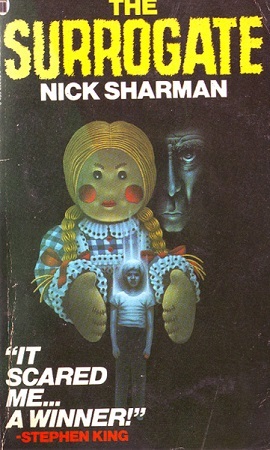
Plot twists are a Surrogate for solid plot
Nick Sharman is one of my favorite authors of scary novels, often blending humor, political satire, social commentary, and pulp kitsch with exciting and well-paced horrors. So I have no idea why this novel went so wrong.
It starts out promising enough. Spooky old house in a London suburb on a rainy day. Our protagonist, Frank, is meeting with his father for the first time in 12 years. There is clearly a strained relationship between the two, and the reader is drawn into this dynamic. What happened between these two? Will they reconcile? The old man seems like he may have been a hard-ass in years past, but Frank seems unduly harsh with him. What did the old man do to Frank as a child? Or is Frank the dangerous one?
We are also introduced to other interesting characters, like the butler Reece who, for various reasons, seems to be ripe for playing an important role in the story later, though he doesn't. We also have Frank's very likeable pal Eddie, and the sexy American bombshell of a psychic Sella, whose fates also end up disappointing. Now, these three start witnessing strange happenings after Frank's father kicks the bucket, and some of these scenes are quite chilling. Most compelling of all is that the main threat seems to be directed at Frank's little son, and this ups the stakes for me as a father myself. Reading about awful things going on with adults is one thing, but a stalking, vicious threat to an innocent child is another.
But by the last chapters of the book, you begin to realize you've been had. The characters all do things and behave in ways totally unlike how they were set up. And the reason for this is that Nick Sharman set up plot-twist after plot-twist, which is unusual for him, since he tends to like his frights straight and to the point. This attempt at throwing the reader off so near the end with really amateurish and tasteless twists makes the pacing awkward, creates glaring plot inconsistencies, fizzles out potentially more interesting story-arc possibilities, denigrates otherwise likeable characters so that what happens to them is less emotionally impactful, and makes the whole novel come across like a half-ass Scooby Doo episode. The novel builds up to a disappointing climax that makes no sense because it seems to throw in every idea the author had while planning the plot, as if he didn't know which idea would best round out the story so--what the hell! Use it all!
This is not the novel in which to be introduced to Nick Sharman. And it is not very recommended overall except to die-hard enthusiasts of the heyday of 80s paperback horror.