Роман за историята на Пан Юлян, една от най-талантливите и провокативни китайски художнички на XX век. Пан е деветгодишна, когато загубва родителите си, а скоро след това вуйчо ѝ я продава за проститутка. Години наред животът ѝ е изпълнен с насилие и борба за оцеляване.
Един ден съдбата най-неочаквано я среща с млад джентълмен, който ѝ помага да опознае света извън публичния дом, а по-късно и извън границите на родния ѝ Китай. Където и да отиде, Юлян бива въвлечена в суровата реалност на политиката, във вихъра на изкуството и любовта. Учила в Шанхай и Париж, тя е първата китайска художничка, която рисува в западен стил. Модернистичният ѝ подход и свободомислието ѝ скандализират консервативното шанхайско общество, но биват радушно приети във френската столица, където прекарва голяма част от живота си.
Авторката разкрива света на жената зад голите автопортрети в стила на Сезан на фона на разказа си за Китай от първата половина на XX в. и за една култура, белязана от потисничество. Епстайн описва разцъфтяването на таланта в репресивни условия, като изгражда хипнотичния портрет на млада жена, потеглила на пътешествие към себе си – пътешествие, което я среща с любовта и развива таланта ѝ въпреки всички превратности по пътя ѝ.
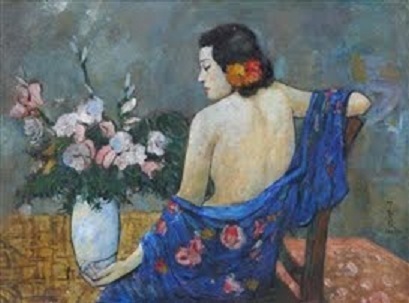
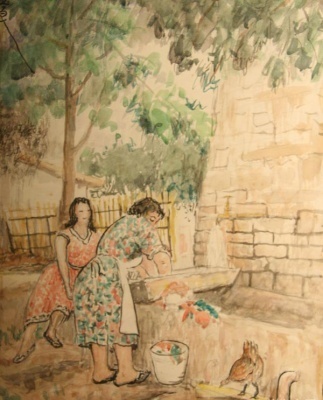
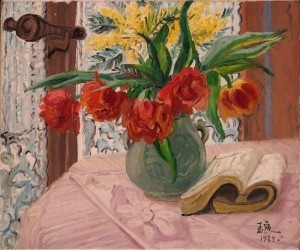
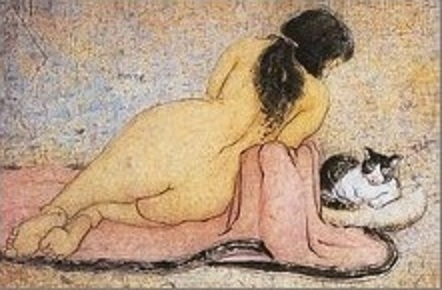
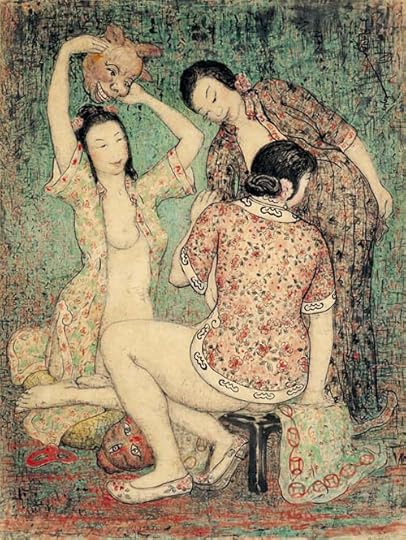
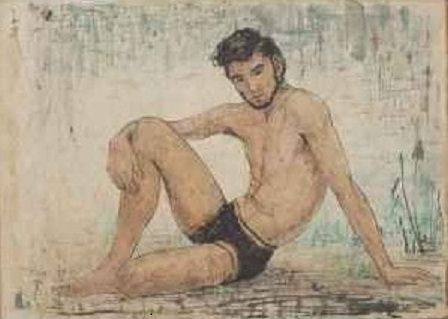
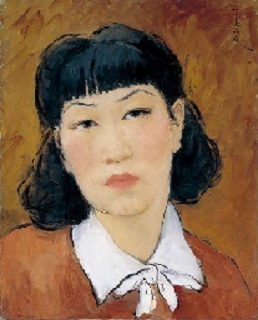
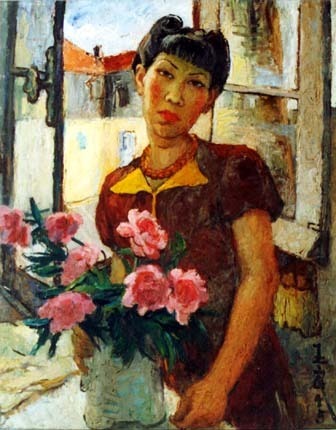
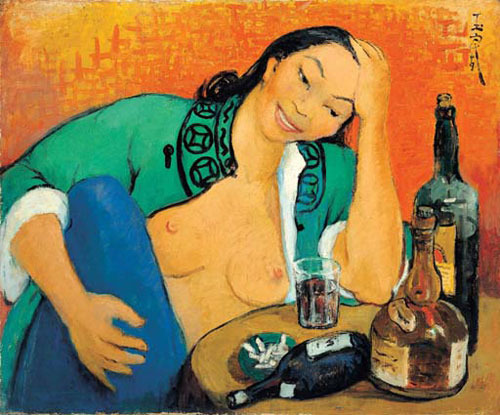
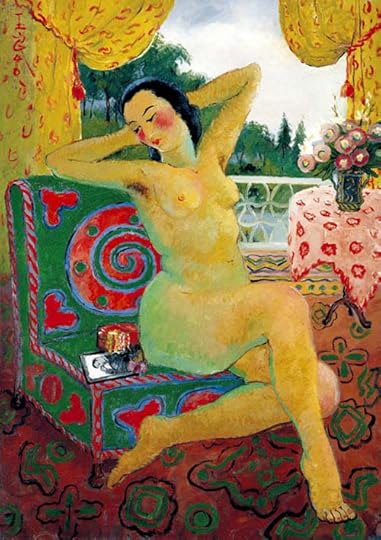
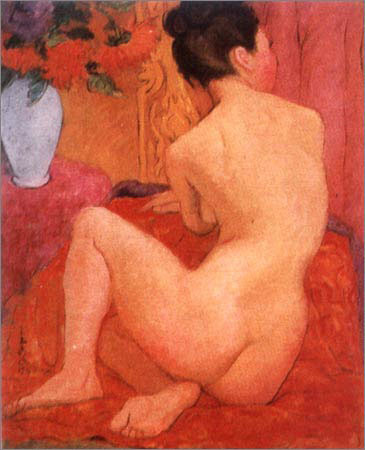
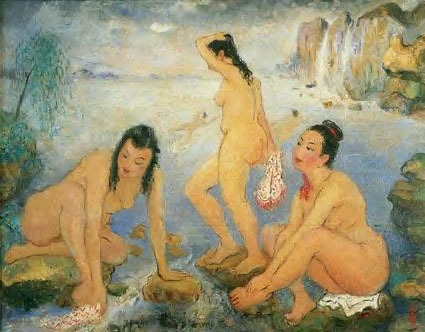
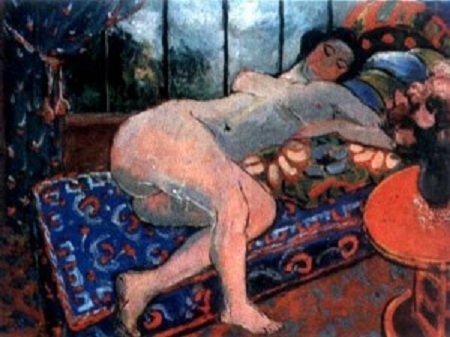
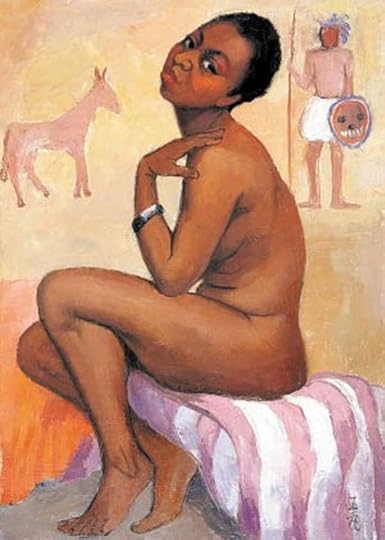
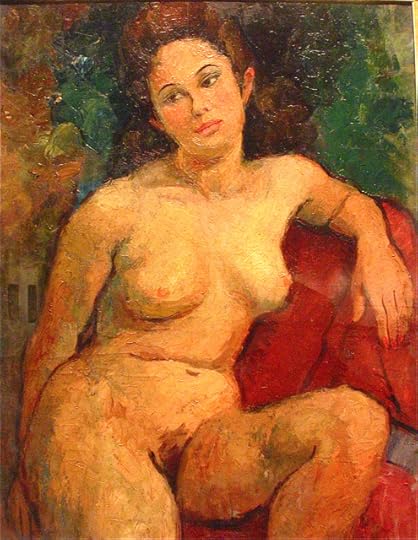
This is a book about a painter. And you know what isn’t in it? Pictures! Here are some paintings by Pan Yuliang:
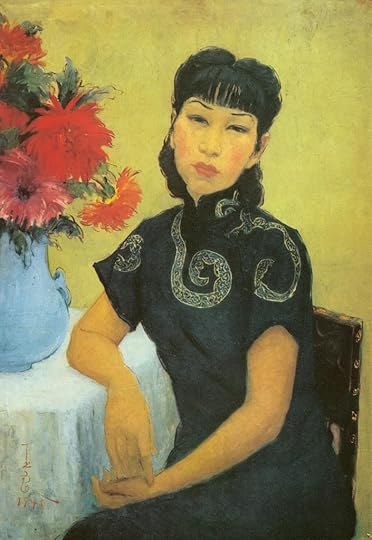
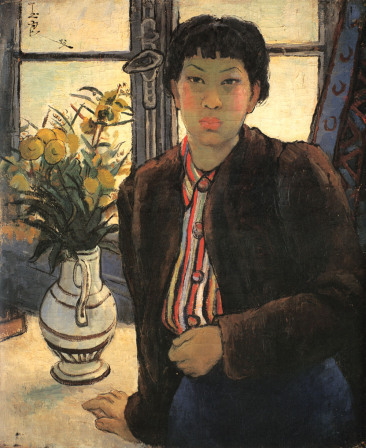
You may have noticed that the book cover is pretty generic and recycled. This is especially odd given that the subject of the book painted so many self-portraits:
Maybe the people who own the rights to all these portraits don't approve of the book. Anyway, as you may have started to gather from the above, Pan Yuliang was controversial for her nude paintings, including ones in which she used herself as a model.
Okay, now what about the book? One word: frustrating!
On a technical level, this isn’t a bad novel, and Pan Yuliang had an interesting life; the book is very readable. But in its characterization, its attempt to reveal the human being behind the biographical facts and bring a historical figure to life, it falls short. Not irredeemably so, if you're looking for a light read, but it's all the more frustrating for the unrealized potential.
You probably haven’t heard of Pan Yuliang, and it might surprise you to learn that she’s also been the subject of a movie and a TV drama. Why so many stories about her? That’s easy: because she was sold into prostitution at 14. Her three years in a brothel are apparently what first drew Epstein to this story as well. And the predictable comparisons to Memoirs of a Geisha are apt; although only about 100 pages deal directly with this part of Yuliang’s life, it feels like more, as this section gets the most heightened focus and detail. Past that section and her immediate recovery, the book speeds up quite a bit; Yuliang had a fairly long life (1899-1977), but by the time she turns 20, we’re already 2/3 of the way through the book.
(Note: there may be SPOILERS below. This isn’t a book that depends on unpredictability--the prologue, set in 1957, gives away a lot--but you’ve been warned.)
The Painter from Shanghai is fairly interesting and competently written. Once it gets past the (admittedly, less fluffy) Memoirs of a Geisha retread, Yuliang’s life began to interest me more: her romance is touching, her time as a starving artist in Paris fascinating (and breezed through all too quickly), and her struggle for acceptance as a western-style painter of nude portraits among the increasingly conservative and inward-looking art society of China of the 1930s has a lot of potential. But the book skips more and more time as it goes--we don’t see a single scene of Yuliang's four years in Italy--and tends to develop only those relationships that culminate in sex; platonic friends and colleagues who apparently played key roles in Yuliang’s life appear in a scene or two at best. Then, save for the prologue, it ends with her leaving China for good in 1937; surely living through WWII in France was worth a chapter or two? Isn't her becoming a teacher at the École des Beaux Arts, where she was initially rejected as a foreign student, worth a mention in a book about her life?
Meanwhile, the frustrating thing about the character development is that there are flashes of character in which Yuliang seems like a real woman rather than a Generic Female Protagonist.... but these are all too brief. Her good-but-imperfect husband, too, has a lot of potential that’s not entirely realized. Minor characters range from adequate but forgettable to the cartoonishly malicious first wife.
And there are some problems with the presentation: a sloppy editing job, and the lack of an author’s note explaining which elements are real and which fictional. Epstein does include a bibliography, but how, for instance, The Rape of Nanking, dealing with an event that occurred after Yuliang’s departure and the end of the book, informed this story, I have no idea. I care far less about her background reading than about how much of the story was factual and which parts were invented.
And now I've complained a lot about this book--not because it's irredeemably awful, but because while it's interesting and competently written, it was ultimately unsatisfying. For the most part, it's a good example of why I generally opt for historical fiction starring fictional characters--it's very difficult to make a real-life historical figure come to life on the page; that person's choices have already been made for the author, who can only guess at what she might have thought and felt. This book, while it came close, left too much distance; the characterization ultimately just wasn't deep enough, and focused too much on Yuliang's sex life and too little on everything else. If you're looking for a light read, it might work for you. But for me, it was... average.
The rampantly overused and often undeserved phrase "stunning debut" happens to be absolutely true in the case of this gorgeously crafted fictional tale of the real-life artist Pan-Yuliang, who was sold into prostitution as a young girl and overcame her sordid past to become one of China's great painters. Epstein breathes vivid life into her characters as she charts Yuliang's journey from the "Hall of Eternal Splendor" brothel in Shanghai to Paris in the roaring 20s and back to a China roiled by imminent revolution. Meticulously researched and compulsively readable, this novel deserves every bit of the advance praise it's receiving from the press (among other things, it's a BN Discover pick for summer).
”Pictorița din Shanghai” este un roman construit pe baza schimbărilor politice din China (1913-1957), și ne aduce în prim plan viața pictoriței (Xiuquing) Pan Yuliang, un personaj real, cu un rol influent în mișcarea artistică post impresionistă.
Autoarea, Jennifer Cody Epstein are licență în studiile asiatice, a trăit cinci ani în Japonia, la Tokyo și Kyoto, apoi în Hong Kong și Bangkok iar pentru primul său roman, Pictorița din Shanghai, și-a dedicat zece ani din viață. Pentru acest fapt și nu numai, acestă lectură merită parcursă deoarece este rezultatul unei munci îndelungate.
Jennifer Cody Epstein nu ne prezintă doar un roman biografic, care urmarește în linii generale viața doamnei Pan, ci și o poveste a curajului de a ne modela propriul destin si de ramane fideli principiilor noastre în ciuda tuturor acelor furtuni care se vor abate asupra noastră. ”Pictorița din Shanghai” nu este o simplă carte din raft, ci lecția de a fi noi înșiși.
”Frumusețea artei poate fi folosită pentru a ascunde adevărul. Prea des imaginile false, dar frumoase sunt folosite pentru a ne distrage de la realități periculoase.” ”-Nu știu cum să fac asta.. -Să faci ce? -Să plec. Să trăiesc. Fără tine. Am nevoie de tine ca să respir. (..) -Da, acest fel de iubire seamănă puțin cu nevoia de aer. Nu ești conștient de asta decât atunci când rămâi fără oxigen. Și brusc, îți dai seama că ești pe punctul de a te sufoca.”
”-Adu-ți aminte, nu picioarele tale au fost acelea care ne-au adus împreună. -Ci fața mea frumoasă. -Nu, ai fost TU. Cuvintele tale. Mintea ta. Până să le folosești, pentru mine nu erai decât o fată frumușică. Când te-ai întrecut cu mine în poeme, atunci am văzut mai mult.”
As often is the case, I found The Painter of Shanghai by pure chance. I had lent my library card to my roommate because she was utterly bored and wanted to walk it off and had no place to go except the nearby library. So off she went and when she came back, she had this book clutched in her hand. Though I didn’t say anything just then, I was secretly disappointed at her choice. I had once tried reading ‘The Memoirs of Geisha’ and was unable to enjoy it even slightly, so the description of ‘Can a concubine escape her past?’ didn’t exactly inspire confidence. Which explains why this book was left untended to for about 2-3 weeks before lack of alternate reading materials forced me to pick it up.
The Painter from Shanghai by Jennifer Cody Epstein is an incredible journey of one woman and the totally different lives she lives. A novel of innocence, hope, determination, abuse, sadness, betrayal and death keep the reader thoroughly ensconced from the very first page.
Yuliang is was put in the care of her uncle at the age of just 6 upon her mother's death. Innocent but with some learning in the way of embroidery her uncle sees in her a promise of something better than he has and educates her in poem's, culture and all the things a young female child should be taught to make her a perfect wife.
Poor Yuliang does not know what is happening to her at the age of fourteen when her uncle takes her away from the sheltered life in which she has been living for the last eight years. He leads her to believe that she is going to a place where she can learn embroidery but it is not long before she finds out just how different life's surprises can truly be. Will she hate him for what is about to happen to her or will she forgive him for what fate has in store for her?
Post WWI was a difficult time for most countries but even more so for China. Internal power struggles for leadership make life very dangerous for anyone and everyone. However, it also provides opportunities for those who are smart enough and daring enough to take them. But even so, life is in itself nothing more than a vicious circle. Yuliang finds this out very quickly once she is sold and must completely discard her old life, the one of her childhood and family. To her uncle she is no more, to her new owner she is a daughter of prostitution. Her only value is her body and how much money she will bring into her new family.
During Yuliang's teen years she learns what it takes to be the "Top Girl" and when the opportunity presents itself she takes on the role but with such loss and heartache that she becomes less of herself and more of just a shell, numb and without feeling for others. Her internal struggles continue while she learns and does what she needs to survive. She takes the occasional stand and is beaten for it, but in her eyes it is worth it as everything comes with a price.
Just by chance a new opportunity presents itself and Yuliang jumps at it. This will give her a new life of choice, education, love and happiness which is rare for a prostitute. She will come to see things in a different light. Not just the usual black and white, but shades of gray, depth and an upside down, inside out reality that the normal person can't see or just takes for granted.
The author has given us history, art, music, oppression, depression, abuse, choice, life and death in what seems such a short span but with a precision of the most accomplished writer. I am not a movie person so to speak but if I could vote on one novel to become a wonderful rendition of words to screen I would have to cast my vote with this wonderful piece of creativeness.
THE PAINTER FROM SHANGHAI, a fictional biography of the artist Pan Yuliang, opens 20 years after she has left China to pursue her life as an artist in Paris. Despite her longing, the pull of her memories, she will never return to China. Even the currents of contemporary art, where she was once considered the cutting edge, seem to have passed her by, with it's restless, capricious trends. “People don't want girls and flowers right now. They want splashes and gashes. Inkblot tests. Fingerpaintings...What was it that dealer from the avenue Montaigne said? 'Our clients want work that goes beyond the figurative. They want' – and this with a straight face – 'metaphorical multivalence. Humor. Puns on form. You understand?'”
The remainder of the book explores the imagined memories of an extraordinary life that began in the final years of the Dowager Empress' reign, and ended in the last quarter of the 20th century. Those memories include an assortment of fascinating characters: Her failed scholar, drug addict uncle, Wu Ding, who sells her into prostitution when she is 14; her one friend, the beautiful, imaginative, charismatic Jinling; the naïve idealist and follower of Sun Yat-sen, Pan Zanhua; and Xing Xudun, a political activist who turns his artistic skill to help the new Chinese Communist Party.
Much of the writing in this book is beautiful and poignant. Our introduction to Pan Yuliang's uncle is through her childhood eyes: “Usually he leaves the little house at dusk and returns with the pale seep of sunrise. Xiuqing senses rather than hears these returns: the heavy vibration of his step; the cloying whiff of smoke-soaked clothes as he passes her door. The wall between them quavering slightly as he drops to his rickety bed.” Landscape is described with particular lyricism. “...things and reflections. Objects and images. She stares at the sinking sun, its rays chipping gemlike off the river. The moon – Li Bai's mirror – is a silver disk to the east. She'd like to string it on a silken cord around her neck.”
The details of social structure are fascinating. Technically, prostitution had been illegal since the Republic was established. In reality, prostitutes were “adopted” by the house Madam, who was called “Godmother.” Well into the 20th century, even women considered the “lotus feet” produced by footbinding a mark of beauty. It's a perspective that makes us regret the mere allusion to such events as “The Long March” and the 1927 Shanghai Massacre.
What this book fails to convey, however, is a real sense of Pan Yuliang as a person. She remains an opaque figure, surrounded by her lovers, her paintings, and China's tumultuous history. Fictional biography is a challenging genre. The author is forced to walk a fine line between fact and dramatic character development.
Sometimes, a story seems better told by a different medium. One can well imagine this one as a play with Pan Yuliang as the narrator of her life, a portal to a conflicted time filled with ultimately tragic but rich and colorful characters. Like the mirror-girl she paints in her self-portraits, or the moon that symbolizes so much of the Chinese aesthetic, her light shines brightest as a reflection rather than the thing.
This is not a review but my thoughts on the real life character featured in this book. Pan Yuliang, born in 1899 in China, was sold at the age of 14 to a brothel by her opium-addict uncle. Through determination she became one of the first women students of the then controversial Shanghai Academy of Art that used nude models (imagine, that was 1910s' China) and taught western art. Pan later won a scholarship to study in France, during which she experienced poverty and loneliness; it was her love for painting that had kept her alive. I tried to imagine her, alone, in a place surrounded by people and language so alien to her, survived by scraps of leftover food on outdoor cafe-tables. There wasn't a question of whether it was worth it; what lingered in her mind was how to perfect her work.
This is an example of someone who is not afraid to challenge conventional practices and stands up for herself. Pan's life reminds us that we can all change our fates, only if we want to.
In this fictionalized story, the author seemed to have burrowed into Pan's mind and make the readers feel for and identify with her. As a writer who lives abroad to fulfill my passion for writing, at times Pan's feelings and emotions -- her worries for her livelihood, her eagerness to find a breakthrough in her work, her frustrations for not being understood by her fellow country folks -- became mine.
The detailed descriptions in this book would drive you into believing every scene is the actual happening in Pan's life.
I read the book's review in NYT and picked it up due to its intriguing story about a painter from Shanghai's golden era who used to be a prostitute. While it is a work of fiction, the story is based on the real life painter Pan Yu Liang who is famous for her beautiful nude paintings which combine both the western and chinese painting styles.
At 14 and orphaned, she was sold to a brother by her uncle. She then attracted the attention of a wealthy official who made her his mistress. He also encouraged her to pursue her passion of painting. She defied the norm by winning a place to study art in the Shanghai Art School and won scholarships to Europe. She left China when her art was under attack for indecency: she painted nude women, western-style, and often used herself as a model.
I didn't expect much as I understand it's a no-brainer perfect for my beach holiday but the story is too superficial. While the description of her days in the brothel is horrifying, the central question posed on the book, can a prostitute escape her past (or something similar), was not answered in the end. The story went on and on about her angelic saviour, the wealthy government official, and the exotic whims of artists who suffered for his or her arts. The writer's padding of the already known facts was thin and typical. It is a pity, really, because Pan's life story is fascinating which may be better told in a form of biography.
I’m always attracted by novels with a backdrop of art, controversial times and exotic locales and quickly became engrossed in The Painter from Shanghai. Only at the end did I realize the central character and many of the supporting ones actually lived. The times were dangerous and the daring commitment of those chronicled in the book’s pages is penetrating.
The author has written a fictional account of Pan Yuliang, a Chinese artist often known in her own country as the “Famous Western-Style Woman Painter”—a title she abhorred because it noted her gender. As a young girl in the early 1900s she was sold to a brothel by her uncle. This is the story of her origins and how she managed to leave that life to enter the world of art, something unheard of in those times, to become a well-known international artist and professor. The reader travels with her from China to Paris to Rome and back to China as she maneuvers between the strong pressures of Chinese tradition, dedication to her art and the political, sometimes deadly upheaval of the 1930s and 1940s. The book provides excellent entertainment as a novel. But it also educates about strict Chinese conventions, some of the heart-breaking practices Chinese women had to endure, and the intersection of Communism and Chiang Kai-shek’s Republicans. Above all it’s about the inner life of an artist and hard choices she makes to adhere to her dream.
Auch wenn das Buch, so wie die Autorin direkt zu Beginn sagt, ein Werk ihrer Fantasie sein soll, so ist es ihr durchaus gelungen, mir als Leser das Gefühl zu geben, dass sie mehr als versucht hat, dem wahren Leben der Protagonistin, Pan Yuliang, gerecht zu werden. Auch wenn ich dieses Leben natürlich nicht kenne, so hatte ich nie das Gefühl, dass die Autorin nicht dessen Kern getroffen haben könnte. Die Ereignisse und Situationen, die sie beschreibt, verbindet sie auch immer mit gesellschaftlich und politisch realen Bezügen, sodass alles sehr real und organisch wirkt. Dabei verwendet sie einen Erzählstil, der sowohl romantisch aber auch äußerst real bis hin zur drastischen Wiedergabe von Begebenheiten reicht. Allerdings wandelt sich dieser Erzählstil, gewollt oder zufällig, im Verlauf der Ereignisse. Ist er zu Beginn der Geschichte sehr drastisch, real und grausam, so wird er im mittleren Teil romantisch bis poetisch und wandelt sich gegen Ende wieder in einen eher rational, klaren Stil und mündet dann in einen melancholisch traurigen Stil. Er passt sich somit organisch den entsprechenden Lebensabschnitten, Gedanken und Gefühlen und auch der inneren Wandlung der Protagonistin sehr treffend an. Dadurch entspinnt sich vor den Augen des Lesers ein Leben voller tiefer Eindrücke, ein Leben, welches stets wie ein innerer Kampf zwischen Sehnsucht, Liebe, Berufung, gesellschaftlichen und politischen Zwängen hin und her geschleudert wird. Selbst wenn die Protagonistin den Anschein erweckt, ihr Schicksal selbst in die Hand zu nehmen, so wird doch immer auch deutlich, dass die wirklichen Fäden das Leben selbst zieht.
Mir hat das Buch sehr gut gefallen und ich bin froh, dass ich es noch nicht aus dem SUB entsorgt hatte. Es ist nicht gerechtfertigt, es so lange ungelesen stehen gelassen zu haben.
In manchen Teilen, vor allem im ersten Drittel, hat es mich an "Die Geisha" erinnert, doch dadurch dass die Personen dieser Geschichte zum größten Teil real sind, hat es eine ganz andere Tiefe gehabt.
Wie schön zu sehen, dass ein SUB, einen auch noch überraschen kann.
Just when I thought I've gotten too pretentious and no book could ever impress me anymore I ended up finding this gem. I was arrogant, I know. So many authors out there, so many wonderful stories that haven't reached my ears yet, so many words that I haven't discovered yet. How could I have ever imagined that I have read them all? This is the story of Pan Yuliang, a Chinese painter, orphaned at a very young age, she is sold into prostitution by her uncle. Later on, she is saved by her future husband and her dream of becoming a painter start to take roots. The only similarity this has with Memories of a Geisha is the part about being a prostitute and the fact that both are very well written books. Later on Yuliang faces many more hardships by trying to become something and include herself in the society's ranks. Her art is viewed as obscene because of her nudes and her past by the common people. She is judges and mistreated more so for being one of the truly independent woman in Shanghai. Strong willed and with an undying passion for art she will capture your heart and will show you a new view on the word impossible. A truly amazing book. Highly recommended!
We have enjoyed our several travels to China and remember vividly our excursion from Shanghai to Wuxi (no tin but formerly Youxi, meaning “has lots of tin") which is on the initial boat trip depicted in the novel. I am reminded of the New Testament Mary Magdalene who thought to be of a scandalous profession nevertheless was courageous and brave enough to stand by Jesus in his hours of suffering, death and beyond! This novel also reminds me of our enjoyed visit to the many art museums throughout the world including the Louvre and have marveled at that South Rose Window of Notre Dame! Epstein has crafted an imaginative and enjoyable depiction of the incredible life of the painter from Shanghai!
A story of a female, Chinese painter Pan Yuliang who was sold into prostitution by her uncle and then was in a way rescued by a good client who took her in and married her. Well, married her and she became his concubine and 2nd wife. In China at that time this was acceptable. The Husband encouraged her in education and when she became interested in painting he supported her in that. The time period starts in the early 1900's and the story goes through the mid 1930's. I love art and was influenced by my father who is an artist. So I was drawn to this story. I'm not familiar with her and asked my father. He was familiar with her work and likes her. It seems a fight to be a female artist in those times and the type of art she did was not accepted in China since it involved nude paintings and Communism was taking root in China. She ended up living in France the rest of her days which was way more accepting of her art. Fascinating story of a woman who didn't change who she was and what she was called to do. Paint.
I didn't seem quite as enamored with this book as several other people. It was interesting, and I loved the exploration of art and early 20th century China, but I never got truly sucked in like I do with some books; I never had that craving to stop everything I was doing to see what happened next to Yuliang. Hence, 3 stars.
However, I couldn't help comparing it to The Private Papers of Eastern Jewel. Both are fictionalized accounts of real Chinese women and set during the period of Chinese cultural revolution and the Japanese invasion of China. In that light, this book was everything Private Papers (which I gave 1 star) should and could have been. This book brings a woman to life, shows effectively what is expected of her as a woman in this time and culture, and how she defies it, and makes me like her and pull for her in the process. If you want to read a book about Chinese women in the early 20th century, this is definitely the book to go for over Private Papers.
I received my subscription copy of Bookmarks magazine for Jan/Feb 2014 and began to read one of the featured sections "Art and Artists in Fiction". One of the reviewed novels under the subtitle 'The Lives of Real-Life Artists' was "The Painter from Shanghai" by Jennifer Cody Epstein. I had not heard of the book before and had not heard of the artist Pan Yuliang who is the central character, but the description is one of a young girl sold into prostitution at the age of 14, then is purchased by one of her clients who marries her and supports her to become an artist during the early 20th century. I am so glad I read the review and purchased this e-book. Pan Yuliang was an extraordinary person not only for her art work - I have looked up some of her paintings - but also for the life she made for herself. A beautifully written novel that I highly recommend.
Everytime I see a novel written by a Westerner about Chinese themes, I am dubious of the authenticity. But this one didn't disappoint me. The use of Chinese literature is very nice, very beautiful. The writing style draws people in slowly. It's a pretty good read. I liked it.
A remarkable journey based on the life of Pan Yuliang, an artist, living in China during the early 20th-century, trying to cultivate her artistic talents against many odds. A Good Read! I give this book 3.5 stars***!
A story that should be interesting— set in one of the most turbulent periods of China’s history and focusing on a talented and driven young woman who defies the odds— is in this book incredibly dull. I could barely get myself through to the last page.
~ Premda se ne može živeti u umetnosti, ona čini život vrednim življenja. Uz nju je gladovanje život. Uz nju su briga, nesreća i život koji bi inače bio lišen svega - život. Ona životu udahnjuje život. ~
~ Čovek je sopstvena zvezda. A duh koji čoveka čini iskrenim i savršenim upravlja svom svetlošću, uticajem i sudbom. ~
~ Ja sam slikarka, slikarka iz Šangaja. A ovo, dotače platno, jeste moje delo. ~
"That the buyer, if she finds one, probably won't be able to read it means little. Yuliang doesn't sign it for him. She signs for herself, to bind her work to her. To tattoo it with a message: she has won." (Page 20)
Jennifer Cody Epstein's The Painter From Shanghai is a fictional account of Pan Yuliang's rise from the ashes of her life as Xiuqing, a young child sold into prostitution. Through careful brushstrokes of her own, Epstein deftly fills her canvas with the sights, sounds, and images of China--from the dark alleys and brothels to the crowded, chaotic streets of Shanghai--in the early 1920s. Yuliang is a complex character who numbly makes her way through the obstacles she faces as a new prostitute under the thumb of corrupted merchants and a harsh and battered old woman, known as Grandmother. Emerging from the dank and corrupted halls of the brothel, she jumps into her new life as the concubine/second wife to Pan Zanhua and embarks on her career as a student and painter at the height of the Communist uprising in China during the 1930s.
"'My husband,' she says, twisting her wedding band, 'writes that even more conservative Republicans will ally with the CCP now. For the nation's sake.'
'If anything, it's a marriage of convenience.' Now he looks straight into her eyes. 'And one I doubt will last.'" (Page 318)
Epstein has a style all her own in which she easily weaves in relevant historical information through character interaction and development, but she also captures even difficult emotions with deft description and poise.
In the brothel, readers will feel Yuliang's degradation as each man leers at her, touches her skin, and makes her kowtow to their desires. The one solace she has is the poetry of Li Qingzhao, which she recites from memory. Readers will enjoy the verse woven into the narrative as Yuliang examines herself at life-changing moments and seeks solace in the beauty of language.
Yuliang is molded by her mentors, but only truly blossoms when she becomes Zanhua's wife and starts painting. Through painting she learns to combat her demons, her past, and her future, coming into her own as a painter and individual. As China is pulled in two directions between the republic and the communists, Yuliang is caught between her rebellious nature and Chinese tradition.
"Tearing off the sheet, she tries again, this time with better results. Use each object as a road into the next. She proceeds to the easiest object on the table, the orange . . . And in the space of a moment that neither registers nor matters, she is no longer outside the still life but working within it, running her mind's hand over nubbly fruit skin. Pressing her face against the smooth tang of the bottle glass. Exploring a vase's crevices with both finger and pencil tip, each item part of a visual sentence she is translating." (Page 220)
The Painter From Shanghai has a lot to offer book clubs, readers interested in painting, historical fiction, the struggle of women in society, China, and political history, and is one of the best novels I've read this year.
Known as the first Chinese woman to paint in the Western style, Pan Yuliang is best described in the words from the book that is based on her life,
"She is strong, but like bamboo. She'll bend if the wind forces her to. But she will not break"
Born as Xiuqing, she loses her mother at six and is brought up by her opium addicted uncle. To pay off his debts, little Xiuqing is sold to a brothel when she is barely a teenager. The story then takes us through her days there, her relationship with the top girl, Jinling, and how an upright customs official Pan Zanhua paves the way out for her to her true calling.
The real story starts after Zanhua makes her his second wife. The aimless sketches that she has made from time to time catches the eye of Zanhua and slowly Yuliang realizes the passion that she has for this art form. It is only her determination that makes her one of the first women to enter the Shanghai Academy of Arts and from there to Paris and Rome.
The first half of the book is slightly dragging and feels like a documentary. It is as if the author's passion awakens along with Yuliang's determination not to give up on what she believes in, in spite of all possible odds and challenges. Imagine a woman painting her own nude portraits in an orthodox China of early 20th Century. Even the displeasure of her husband cannot detract her. She knows without him, she wouldn't have come this far, yet she cannot but be true to the artist in her. During the initial days of her success, you can see a typical man in Zanhua who supports his wife, at the same time believes that a woman's true calling is to take care of her home and hearth. The difference is where he realizes this is a spirit that cannot be chained down and he allows his love for her to dominate all other insecurities.
Yuliang's life in Paris gives us a picture of life as it is for many an artist for whom life itself is their art. The days of penury end in poetic justice when she wins a scholarship to the Royal Roman Art Academy and then finally is invited back to her alma mater in Shang Hai. Circumstances make her return to Paris where she spends the rest of her life.
What catches the reader is one woman's fight for what she truly believes in. She has moments of apprehension thinking of Zanhua and his expectations, she acknowledges that her love for her art is more than her love for him , at one point in life she almost gives it up for him. Interspersed with her story and in the background is the changing political scenario of China, which in itself is quite interesting.
Verdict - If you can put yourself through the first half which I found a little dry and dragging, the other half will more than compensate for it. You are sure to gain new respect for a true artist. Do get a copy if art and biographies interest you.
A very curious hybrid - what begins as an almost tacky bodice-ripper becomes deeper and more meaningful if you can wade through the muck of the first 150 pages. Pan Yuliang is an actual historical figure, one of China's most celebrated painters, a woman who boldly painted using western techniques, including nude self-portraits. She was hugely controversial, not only for her notorious artwork, but also for her life, having risen from early days as a courtesan.
Author Jennifer Epstein has taken this sensational early life and created a fictional life story, sparing few of the more lurid details. She piles on the romance-novel depths of Pan's gruesome origins, including the sale of her maidenhood at a brothel where her uncle has abandoned her. The first half of the novel verges on classic bodice-ripper, although written with a higher moral tone - and less graphic sexual prose.
Things only really become interesting as she awakens first to the world of art, and then to a romantic liaison with the man who will become her husband and champion, a "New Chinese" who knows Zhou Enlai, and believes ardently in the education and equality of women. Pan defies the strictures of the painting academy where she enrolls - disguising herself as a man to attend male nude life-drawing class. She travels to France and Italy to study western painting tradition and technique.
Through these studies, and her resulting fame (and infamy), Pan becomes one of Chia's most celebrated and reviled painters. Her exhibitions attracted huge crowds and furious denunciation. Epstein's story is far more compelling here, as this brash and outspoken artist bravely faces political denunciation, threats, and the destruction of her husband's career. One of her retrospective exhibitions is ransacked.
If you wade through the early purple prose, the later sections are genuinely gripping and rewarding - and grow out of the cheap sensationalism of the early chapters. Stick with it; it's a unique story based on a remarkable artist, a woman whom even today would be a bravely outspoken figure.
Absolutely one of the best books I've read this year. I bought it for $2 at a used book store, and wasn't expecting much from it. Extremely well researched and developed, it follows the life of an orphan, turned prostitute, turned famous artist in 1920s China. She is bought out of her contract by a potential client to become his 2nd wife. The story of their affair, and of her life in general, is written in a dynamic way that really shows the changes in the Pan Yuliang as a character. It highlights the struggles and gives tangible emotion to their relationship.
This is one of the few books were I felt compelled to go back and re-read the first chapter to remind myself of the vast changes the character goes through in the narrative. One of the best things about this book is that it never loses momentum the way that so many, even good, books do. I savored every single page up until the very end, and would have kept reading if there was more.
I can't stop thinking about this book. One thing that really bothered me is that the cover is a classic example of the silhouette of an Asian woman with her face cut off. Especially given, as another reviewer pointed out, that she painted a lot of self-portraits (one of which is highlighted in the story as what jump started her career). [The edition I have has a different cover than is shown here.]
I also wanted to note that the next book I had in line to read,Music for Torching, ironically, has the phrase "There have been very few women writers like Homes". The concept of being a "woman painter" and not just a painter is something that Pan Yuliang fought against relentlessly.
Pan Yuliang has lived and taken care of her uncle, ever since her mother died when she was young. At fourteen years Pan Yuliang was sold to The Hall of Eternal Splendour to become a prostitute. Her uncle did it to play off some loans he had accrued for his habit of opium. After two years of working at The Halls of Eternal Splendour, Pan Yuliang was saved. A young man by the name of Pan Zanhua, who is an inspector. He is so fascinated by Pan that he offers to take her away from Eternal Splendour and make her his wife. For once Pan Yuliang sees Shanghai through a different light. Pan Zanhua recognizes Pan Yuliang interest and talent for painting. He encourages her to become a professional painter but is Pan Yuliang to free spirited for the school and will they even accept a woman.
The Painter from Shanghai is based on true events of Pan Yuliang life. I have to admit that I had never heard of Pan Yuliang. After reading The Painter from Shanghai, I found Pan Yuliang to be a very remarkable woman. She could find beauty in everything around her. This included even during the two years Yuliang was at The Halls of Eternal Splendour. Pan Zanhua was a good husband to Yuliang. He helped Pan Yuliang pursue her dreams no matter what people thought. For this fact Pan Yuliang was able to stand up for what she wanted to paint and not just what sold. I feel Jennifer Cody Epstein did Pan Yuliang justice in this creative masterpiece of a book titled The Painter from Shanghai.