

What do you think?
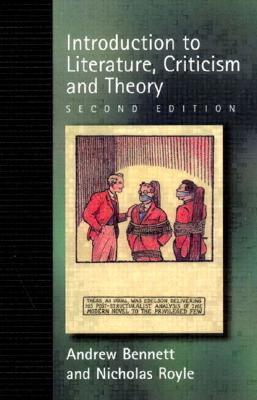
An Introduction to Literature, Criticsm and Theory
This book presents the key critical concepts in literary studies today, avoiding the jargonistic, abstract nature of much theory. The authors explore crucial issues in contemporary criticism and theory by focusing closely on a range of books, from Chaucer to Achebe and from Milton to Morrison.
312 pages, Paperback
First published January 1, 1960
Ratings & Reviews
Friends & Following
Create a free account to discover what your friends think of this book!
Community Reviews
Displaying 1 - 30 of 95 reviews

January 8, 2008
It has all the virtues of Culler's Very Short Introduction except extreme brevity. By far the best introduction I've read so far that breaks 120 pages. Not useful only for classes that require students to know a particular set of data at the end; for those, a more 'traditional' approach, one divided by critical schools rather than by topics, would be most useful. Unfortunately.
Like the Klages and Lynn and Culler, B and R are clear as heck; unlike the Klages, B and R always come back around to reading particular texts (even some Chaucer! in Middle English!); unlike the Lynn, B and R never dumb things down.
Highly, highly recommended to all readers who read more than how-to manuals, and even, perhaps, for them.
UPDATE, Nov. 2008: Now that I've taught this, I'm much more aware of its limitations. 100 pages in my students groaned every time some version of the suspended law of non-contradiction showed up. "Let me guess, this is both X and not-X? How astonishing!" By the end of a month or so with them, they became a cautionary tale about biases: what would they have emphasized had they not been doctrinaire poststructuralists but instead Marxists? Feminist? Postcolonialists? Phenomenologists and Ethicists? <-- and, by the way, we NEED a theory anthology/intro. that handles this new turn in lit. crit.
Like the Klages and Lynn and Culler, B and R are clear as heck; unlike the Klages, B and R always come back around to reading particular texts (even some Chaucer! in Middle English!); unlike the Lynn, B and R never dumb things down.
Highly, highly recommended to all readers who read more than how-to manuals, and even, perhaps, for them.
UPDATE, Nov. 2008: Now that I've taught this, I'm much more aware of its limitations. 100 pages in my students groaned every time some version of the suspended law of non-contradiction showed up. "Let me guess, this is both X and not-X? How astonishing!" By the end of a month or so with them, they became a cautionary tale about biases: what would they have emphasized had they not been doctrinaire poststructuralists but instead Marxists? Feminist? Postcolonialists? Phenomenologists and Ethicists? <-- and, by the way, we NEED a theory anthology/intro. that handles this new turn in lit. crit.

September 9, 2015
This book is a very good introduction to literary theory that also happens to be quite useful for those with some previous knowledge of this subject. It's short and easy to read, with interesting themes such as queer literature explained in an easy way. I really appreciated how the authors included a "further reading" section after each chapter and the examples they used to illustrate complicated concepts. However, one of its strengths ends up being one of its main weaknesses: due to the short length, no concept is explained thoroughly.

March 4, 2017
Read this while thinking of studying literature in a more formal capacity, suspect I am one of the few not forced to read it as part of an undergraduate degree. For my purposes, it was ideal. I read a chapter a day, which gave me plenty of time to digest the ideas and while some chapters were more interesting, and appeared more relevant to the world at large, than others there was always something new to think about. It's a useful read for people fond of literature because it offers new perspectives on old favourites and it gave me a nudge regarding a few unexplored classics too. The authors are quite funny, in a dry, wry sort of way and that helps.

December 31, 2017
While this book is quite readable and gives a good overview of important ideas and visions on literature, the second part of this book ('the themes') are absolutely horrible. It keeps claiming that theme X is ALL literature, even when they're clearly wrong: all literature is concerned with ghosts/secrets/colonialism/pleasure/[insert-other-themes].
All in all, I think it works okay as a companion to a course related to a short introduction to literary theory, but if you want to read something interesting about literary theory, I'd advice you to read something else.
All in all, I think it works okay as a companion to a course related to a short introduction to literary theory, but if you want to read something interesting about literary theory, I'd advice you to read something else.

January 7, 2015
One of the better literature textbooks out there for English Lit majors. The chapters not only include commentary on essays written by scholars, but also reviews excerpts of novels (giving the reader a chance to brush upon works they haven't before). The chapters also pose important questions on literature which do not have a clear and cut answer - something literature should not but has been perceived to be in some textbooks. The first chapter, entitled 'Beginning' was enticing from the very first sentence and keeps the reader going not because the language is easy to read and comical but because it is philosophical in its own way. Truly a great textbook, I wish more university students get to use this book in their courses.

July 19, 2020
nothing is sacred in and of itself. . . . Ideas, texts, even people can be made sacred – the word is from the Latin sacrare, ‘to set apart as holy’ – but . . . the act of making sacred is in truth an event in history. It is the product of the many and complex pressures of the time in which the act occurs. And events in history must always be subject to questioning, deconstruction, even to declaration of their obsolescence.
قد يعتبر البعض هذا الكتاب ممل للأشخاص الغير مهتمين بالأدب والنقد وهذه المواضيع.
the moment of decision is madness
They fuck you up, your mum and dad’
الكتاب عبارة عن أثنين وثلاثين مقالة غير متسلسلة فيمكنك قراءته بأي شكل تريد, وتتناول هذه المقالات مواضيع الجنس والتاريخ والأشباح والمثلية والحرب والدين والفكر والبداية والتفسير والتأويل ودور المؤلف وغيرها من المواضيع المشوقة وكيف ارتباط كل واحد من هذه المواضيع بالأدب وكيف تأثرت هذه الأشياء وأثرت في الأدب عبر التاريخ.
Literary texts are embedded within the social and economic circumstances in which they are produced and consumed.
Narrative power, then, may be the only strategy left for the weak and dispossessed: without narrative power, they may not be heard.
قراءة هذا الكتاب من الغلاف للغلاف قد تكون مفيدة للمبتدئين في الأدب مثلي أما الأشخاص المتخصصين فقد يستفادون من بعض مقالاته فقط. وأفضل ما يميز الكتاب هو أنه بعد كل فصل هناك كم هائل من المصادر للأطلاع الأضافي في حال أردت ذلك.
Samuel Beckett’s characterization of the work of James Joyce: ‘writing is not about something; it is that something itself
The story is our escort; without it we are blind. Does the blind man own his escort? No, neither do we the story; rather it is the story that owns us and directs us. It is the thing that makes us different from cattle; it is the mark on
the face that sets one people apart from their neighbours.
على العموم الكتاب مسلي وشرحه بسيط ومناسب للمهتمين بالأدب ومحاولة فهمه ويمكن لمن يحب أن يقسمه لأجزاء ويقرأ كل يوم فصل, فالفصل الواحد لا يتجاوز العشر أوراق عادة.
Teach me half the gladness
That thy brain must know,
Such harmonious madness
From my lips would flow
The world should listen then—as I am listening now.
I wish either my father or my mother, or indeed both of them, as they were in duty both equally bound to it, had minded what they were about when they begot me; had they duly consider’d how much depended upon what they were then doing;—that not only the production of a rational Being was concern’d in it, but that possibly the happy formation and temperature of his body, perhaps his genius and the very cast of his mind;—and, for aught they knew to the contrary, even the fortunes of his whole house might take their turn from the humours and dispositions which were then uppermost:—Had they duly weighed and considered all this, and proceeded accordingly,—I am verily persuaded I should have made a quite different figure in the world, from that, in which the reader is likely to see me.

November 20, 2024
مباحثی که مطرح کرده واقعاً جالب و خوندنیان، ولی خود متن تا حد زیادی سختخوان و دسترسیناپذیره. اگه یهکم از زبان سادهتری استفاده میکرد، منبع عالیای میشد برای تدریس تو کلاسهای دانشگاهی ادبیات انگلیسی.

June 21, 2026
For uni (not all chapters). Great course book!!!

Read
July 23, 2011Bennett and Royle, 4th edition, is intended as a textbook, but that should not put anyone off. In fact, I don't see how I would use the book in connection with a course, and I enjoyed reading it. In 34 short chapters, the authors apply many critical perspectives to a wide variety of texts: poetry, plays, and fiction, old and new, primarily English and American but including other voices as well. I was hooked by the "Readers and Reading" chapter, looking at Shelley's "Ozymandias" through reader-response, psychological, feminist, ecocritical, poststructuralist, and deconstructionist eyes, even though none of those methods notices how the poem works as a sonnet. The ideas of often difficult theorists such as Foucault, Derrida, and Kristeva are clearly summarized, with books for further reading at the end of each chapter, clearly identified as introductory or more challenging. Even the glossary at the end is worth reading, for example providing Pope's epigram on the king's dog's collar to illustrate "couplet." Separate bibliographies of literary works and theoretical or critical ones show the extent of the book's coverage. Highly recommended.

February 3, 2020
3/5 Stars (%65/100)
Though the title says "introduction," this book also works for people who have some knowledge about the subjects. I've used this book quite a lot as a textbook. The arguments were really well-put and actually interesting to read. I especially loved the chapter dealing with Shelley's "Ozymandias" as well as the ones with William Wordsworth. This is a pretty good book.
Though the title says "introduction," this book also works for people who have some knowledge about the subjects. I've used this book quite a lot as a textbook. The arguments were really well-put and actually interesting to read. I especially loved the chapter dealing with Shelley's "Ozymandias" as well as the ones with William Wordsworth. This is a pretty good book.

July 10, 2022
I enjoyed the first half of this book, which throws light on various traditions of literary criticism. It applies broad concepts (such as the relationship between reader, author and text) to particular texts, from Shelley's Ozymandias to Salinger's The Catcher in the Rye. This was not only helpful for getting to grips with the concepts discussed, but also fascinating to see some of my favourite literature from a new perspective.
Half way through, the book stops dealing with general ideas about approaching literature and turns to specific themes and theories, claiming that any theme/theory can be applied to all literature in a meaningful way. I have two issues with this. First, it is impossible to apply every theory to every text; second, if it were possible to link any particular theory, even tenuously, to all literature, it is doubtful that doing so could provide the same level of clarity, meaning and insight to every text. For example, looking at Jane Eyre from a feminist perspective seems a worthwhile pursuit, whereas trying to understand it solely via a theory of 'ecocriticism' is unlikely to get anyone very far. On the other hand, Hardy's poem The Darkling Thrush is interesting to consider in light of humanity's relationship to nature (although the extent to which 'ecocriticism' aids this pursuit is questionable), but analysing it in terms of feminism is not going to lead to the same level of understanding.
Bennett and Royle claim that the idea that Shakespeare "largely invented us" (Harold Bloom) can be understood "in relation to the cultural construction of gender and sexuality". Of course, Shakespeare's presentation of these things is an interesting area of discussion, but the idea that by reading Shakespeare with 'gender studies' in mind we can understand the extent of his influence on humanity seems almost delusional. One of the strengths of the book is that the authors present each theory in its strongest form and do not take the side of one in particular. However, the issue with this is that they fail to recognise that some fields of criticism simply have more value to certain texts than they do to others. Hence we end up with the problematic idea that all methods of approaching literature are equally valid and productive ways to fully understand any particular text.
Half way through, the book stops dealing with general ideas about approaching literature and turns to specific themes and theories, claiming that any theme/theory can be applied to all literature in a meaningful way. I have two issues with this. First, it is impossible to apply every theory to every text; second, if it were possible to link any particular theory, even tenuously, to all literature, it is doubtful that doing so could provide the same level of clarity, meaning and insight to every text. For example, looking at Jane Eyre from a feminist perspective seems a worthwhile pursuit, whereas trying to understand it solely via a theory of 'ecocriticism' is unlikely to get anyone very far. On the other hand, Hardy's poem The Darkling Thrush is interesting to consider in light of humanity's relationship to nature (although the extent to which 'ecocriticism' aids this pursuit is questionable), but analysing it in terms of feminism is not going to lead to the same level of understanding.
Bennett and Royle claim that the idea that Shakespeare "largely invented us" (Harold Bloom) can be understood "in relation to the cultural construction of gender and sexuality". Of course, Shakespeare's presentation of these things is an interesting area of discussion, but the idea that by reading Shakespeare with 'gender studies' in mind we can understand the extent of his influence on humanity seems almost delusional. One of the strengths of the book is that the authors present each theory in its strongest form and do not take the side of one in particular. However, the issue with this is that they fail to recognise that some fields of criticism simply have more value to certain texts than they do to others. Hence we end up with the problematic idea that all methods of approaching literature are equally valid and productive ways to fully understand any particular text.

February 21, 2022
An Introduction to Literature, Criticism and Theory by Andrew Bennett and Nicholas Royle
Book 13/52
Finally finished reading this, cover to cover. Some really excellent stuff in here and a really easy introduction into literary theory which is HARD. Some of my favourite chapters were ‘The Uncanny’, ‘History’, ‘Eco’, ‘Ghosts’, and ‘War’. A slog but I’m proud that it’s done!
Book 13/52
Finally finished reading this, cover to cover. Some really excellent stuff in here and a really easy introduction into literary theory which is HARD. Some of my favourite chapters were ‘The Uncanny’, ‘History’, ‘Eco’, ‘Ghosts’, and ‘War’. A slog but I’m proud that it’s done!

March 22, 2025
Excellent introduction to literary theory. Covers a lot of topics including uncanny, monuments, characters, narrative, tropes, suspense and many more topics. One to keep on the shelf as a reference.
October 29, 2022
i am finished.
i am so proud of finishing this book bc it took me SO LONG. 33 essays with tiny tiny writing and 10min bus journeys is not a very good combination. this book was incredible though- it has changed my scope of thinking about literature so much that between me finishing my personal statement a month ago and now, i feel like an entirely different person wrote that statement. i have gained sm new ideas, and i set out only really to read the chapters that interested me but i ended up reading the whole thing, as every essay truly brought a new perspective on something familiar (which is what i love about english). who knew that a chapter on 'secrets' would be so engaging? also truly this book unshitposted the concept of sex a level because books are just sex actually if you think about it one way like the concept of pleasure and suspense (withholding pleasure) in narrative which was very interesting. the whole thing was interesting as it was not a book introducing the reader to schools of thought directly, but more a means of getting readers to begin thinking in a critical way and gently introducing these ways of thinking on a particular topic. bennett and royle seem as writers particularly fond of the concept of oxymorons- this might not be an entirely subjective introduction, but when is it ever in english. a lot of questions were never properly answered because of this, but i think also that's a great point of the book, that the book was meant to provoke questioning and thought, kind of an open text, and a beginning. i would absolutely recommend this to anyone hoping to deepen their thinking around english literature- this has also helped me so much with developing close reading skills as they essentially break down texts and analyse on word level in the essays on a particular point, like model answers. such a cool book
i am so proud of finishing this book bc it took me SO LONG. 33 essays with tiny tiny writing and 10min bus journeys is not a very good combination. this book was incredible though- it has changed my scope of thinking about literature so much that between me finishing my personal statement a month ago and now, i feel like an entirely different person wrote that statement. i have gained sm new ideas, and i set out only really to read the chapters that interested me but i ended up reading the whole thing, as every essay truly brought a new perspective on something familiar (which is what i love about english). who knew that a chapter on 'secrets' would be so engaging? also truly this book unshitposted the concept of sex a level because books are just sex actually if you think about it one way like the concept of pleasure and suspense (withholding pleasure) in narrative which was very interesting. the whole thing was interesting as it was not a book introducing the reader to schools of thought directly, but more a means of getting readers to begin thinking in a critical way and gently introducing these ways of thinking on a particular topic. bennett and royle seem as writers particularly fond of the concept of oxymorons- this might not be an entirely subjective introduction, but when is it ever in english. a lot of questions were never properly answered because of this, but i think also that's a great point of the book, that the book was meant to provoke questioning and thought, kind of an open text, and a beginning. i would absolutely recommend this to anyone hoping to deepen their thinking around english literature- this has also helped me so much with developing close reading skills as they essentially break down texts and analyse on word level in the essays on a particular point, like model answers. such a cool book

September 15, 2025
nice bite size chapters; not too deep but strong enough examples. i like how each new edition is so transparent about responding to the quickly changing landscape of literary criticism, and doesn’t attempt to “keep up” but rather untangle what weight some buzzwords in literature have. really enjoyed the section on character in particular, as well as monuments! think an example that could’ve benefitted the writing would’ve been a Barrett Browning poem as she alludes to so many monuments. But it’s still a great read as you can easily find succinct and articulate responses to an array of literary questions, all organised under the kind of terms that transcend constraints like genre or period (the kind of terms that best serve enduring literary texts as they themselves also endure, lol)

February 27, 2023
Güzelim kitap acının, kaybın, üzüntünün öfkenin arasından sıyırdı geçti. Yaşanan travmanın yanında okumanin, okuduğunu anlamanin kendisinin anlamsızlaştıgı günlerden geçiyoruz ne yazık ki. Hakkını vererek okuyamadigim ama bir parça odaklanabildigimde de oldukça etkileyici bulduğum bir eser. Edebiyat kuramları ile ilişkili olmayan ama edebiyata dair okuma yapmayı sevenlerin bile ilgisini çekebileceğini düşünüyorum. Tekrar tekrar dönülecek eserlerden.

January 8, 2019
Kitabın ilave okumalar kısmını özellikle çok faydalı buldum. Konu hakkında derinlemesine okuma yapmak istenirse elde hazır bir kaynak oluyor. Ama ele aldığı başlıklar çok yüzeysel geçilmiş.

Read
January 27, 2020i laughed a surprising number of times. great intro, very readable, covered a bunch of stuff.

June 26, 2020
Literature is full of ambiguities. Even if a text is closed – i.e. it has an expected ending or teleologically resolves in truth – it is, arguably, still open to interpretation. When interpreting a text, we paradoxically bring it to life from the dead to bury it for good, such is the meaning of truth. As readers, we hunger for truth, yet we, arguably, never find it. If that is the nature of literature, then Royce and Bennett do an incredible job of introducing the subject and its associated schools of theories and critical approaches in as clear and truthful a way as possible. What they present here is a readable, highly intelligible and articulate exploration of the uncertainties, the arguments, and the key topics of literature – and it is perfect for any student or advanced reader attempting to develop their own understanding of this notoriously tough, cerebral and, at times, dull subject.
Royce and Bennett tackle a broad area of thought in each chapter, including such titles as ‘Body’, ‘Ghosts’, ‘War’, and, emphatically, ‘The End’. Within each, they draw upon different ideas within literature alongside an extremely wide range of books. The reader can expect to analyse staple Literature texts such as The Prelude and Jane Eyre, alongside short story masters (Katherine Mansfield and Raymond Carver), poetic gems (John Ashbury and Emily Dickinson) and modern reads (Jeffrey Eugenides, Will Self, and Lorrie Moore). Voices are diverse, including Toni Morrison, Ralph Ellison, Chinua Achebe, and Salman Rushdie, although to pick points more voices not from the Western canon could be represented.
At first glance, chapters titled ‘Pleasure’, ‘Desire’ and so on seem a bit wishy-washy, but the authors provide an ‘alternative contents’ with which you can explore the book. So, for example, a highly fascinating chapter on ‘Mutant’ is also specified to be about Posthumanism. Chapters aren’t only limited to one school of thought though, as key critics such as Freud, Barthes, Derrida and Foucault keep cropping up again and again throughout the book. The choice to creatively title each chapter thematically allows the reader to appreciate the way that theories intersect and collide. Ideas aren’t discrete; the develop organically and often speak to each other, much in the same way that authors speak to each other across time.
The best way to approach this book is actively: such is the depth of abstract thought in some chapters – particularly those on Poststructuralism – that what is a key idea is often given just a paragraph. You often have to check yourself and read back through certain passages to really grasp the magnitude of some ideas. Contrastingly, some ideas (i.e. that of true secrets, where a text can say no more than what it says, and in only being interpretable remains a true secret as opposed to one that we expect to be revealed) is intellectually interesting, but materially makes very little difference to everyday life. I tried explaining to my fiancée the idea that discourse is phallogocentric and, therefore, women do not have a ‘voice’ – a female voice (i.e. feminine ecrite) is unimaginable. She simply said that was interesting but, in the end, so what? Does it change lives? Reduce the pay gap between men and women? In terms of discourses of power, it’s an important point – but when articulated as an argument alongside actual material changes it creates a kind of false equivalence between ideas. This can be seen in the debate about statues in the UK today: was the uprooting of Colston’s statue in Bristol rightful? Well, by removing statues of white, colonial supremacy we engineer a discourse where racism isn’t legitimised – but is it actually going to change anything?
The above debate – as reductive as it is – isn’t really a criticism of the book at all. Indeed, Royce and Bennett recognise the limits of what they explore, and their self-described intention is certainly not to promote a certain political view (although non-political writing is a tautology). Actually, the above debate is an example of the richness of thought the book allows you to explore and learn within language, the writer’s craft, society, and politics. The more I learn about Literature, the more I realise how central its arguments and currents of debate are to understanding current political life on a level deeper than the entertainment sideshow that the modern press pumps out.
So, this is an excellent starting point for study of English literature. With a clearer structure and much more focused, intellectually demanding yet accessible writing, it has more academic applicability than Eagleton and Woods. It is far broader than Culler’s A Very Short Introduction, which, on reflection, doesn’t seem to be a suitable book to introduce newcomers to theory at all. Suggested readings at the end of every chapter are relatively up to date, although I wouldn’t be surprised if a new edition is released soon as this mid 2010’s edition. No doubt it will be just as readable and as popular amongst undergraduate students and those tempted to dip their toe in the vast, pleasurable, shark-infested waters of theory.
Royce and Bennett tackle a broad area of thought in each chapter, including such titles as ‘Body’, ‘Ghosts’, ‘War’, and, emphatically, ‘The End’. Within each, they draw upon different ideas within literature alongside an extremely wide range of books. The reader can expect to analyse staple Literature texts such as The Prelude and Jane Eyre, alongside short story masters (Katherine Mansfield and Raymond Carver), poetic gems (John Ashbury and Emily Dickinson) and modern reads (Jeffrey Eugenides, Will Self, and Lorrie Moore). Voices are diverse, including Toni Morrison, Ralph Ellison, Chinua Achebe, and Salman Rushdie, although to pick points more voices not from the Western canon could be represented.
At first glance, chapters titled ‘Pleasure’, ‘Desire’ and so on seem a bit wishy-washy, but the authors provide an ‘alternative contents’ with which you can explore the book. So, for example, a highly fascinating chapter on ‘Mutant’ is also specified to be about Posthumanism. Chapters aren’t only limited to one school of thought though, as key critics such as Freud, Barthes, Derrida and Foucault keep cropping up again and again throughout the book. The choice to creatively title each chapter thematically allows the reader to appreciate the way that theories intersect and collide. Ideas aren’t discrete; the develop organically and often speak to each other, much in the same way that authors speak to each other across time.
The best way to approach this book is actively: such is the depth of abstract thought in some chapters – particularly those on Poststructuralism – that what is a key idea is often given just a paragraph. You often have to check yourself and read back through certain passages to really grasp the magnitude of some ideas. Contrastingly, some ideas (i.e. that of true secrets, where a text can say no more than what it says, and in only being interpretable remains a true secret as opposed to one that we expect to be revealed) is intellectually interesting, but materially makes very little difference to everyday life. I tried explaining to my fiancée the idea that discourse is phallogocentric and, therefore, women do not have a ‘voice’ – a female voice (i.e. feminine ecrite) is unimaginable. She simply said that was interesting but, in the end, so what? Does it change lives? Reduce the pay gap between men and women? In terms of discourses of power, it’s an important point – but when articulated as an argument alongside actual material changes it creates a kind of false equivalence between ideas. This can be seen in the debate about statues in the UK today: was the uprooting of Colston’s statue in Bristol rightful? Well, by removing statues of white, colonial supremacy we engineer a discourse where racism isn’t legitimised – but is it actually going to change anything?
The above debate – as reductive as it is – isn’t really a criticism of the book at all. Indeed, Royce and Bennett recognise the limits of what they explore, and their self-described intention is certainly not to promote a certain political view (although non-political writing is a tautology). Actually, the above debate is an example of the richness of thought the book allows you to explore and learn within language, the writer’s craft, society, and politics. The more I learn about Literature, the more I realise how central its arguments and currents of debate are to understanding current political life on a level deeper than the entertainment sideshow that the modern press pumps out.
So, this is an excellent starting point for study of English literature. With a clearer structure and much more focused, intellectually demanding yet accessible writing, it has more academic applicability than Eagleton and Woods. It is far broader than Culler’s A Very Short Introduction, which, on reflection, doesn’t seem to be a suitable book to introduce newcomers to theory at all. Suggested readings at the end of every chapter are relatively up to date, although I wouldn’t be surprised if a new edition is released soon as this mid 2010’s edition. No doubt it will be just as readable and as popular amongst undergraduate students and those tempted to dip their toe in the vast, pleasurable, shark-infested waters of theory.
December 8, 2022
3.5 obvs wasn’t gripping but for a book about literary theory I think it was pretty much as enjoyable as it was gonna get
December 14, 2025
desperately need my own copy
September 29, 2017
In Taylor Sheridan’s elegiac thriller Wind River, the protagonist consoles and counsels a father who has just lost his daughter, ‘Take the pain. Keep it. It's the only way you can keep her with you.’ The thought is expressed more pithily in Bennett and Royle’s explication of Shakespeare’s King John: ‘to let go of our grief is finally to let go of the object of our love.’ Such a sentence shoots through the reader like an arrow; one’s understanding of grief and love is irrevocably changed.
In light of Bennett and Royle’s notion of traumaturgy (132), one notices that both Wind River and King John address grief on two levels: on a representational level, they portray grief with imagery and rhetorical devices; on a meta-discursive level, they offer a theory of grief, a way of thinking about grief. In their book, Bennett and Royle seek to demonstrate that these two dimensions are not independent, but intertwined.
Literary works themselves are their point of departure, and their close reading of texts is consistently perceptive. Their reading of Emily Dickinson is inspired but, like Dickinson’s poetry, almost inimitable. while their readings of other texts are more instructive. For example, one learns to scrutinise deictic words: the pronoun ‘it’ in Salinger’s opening is slippery in its reference (18); the adverb ‘now’ shifts the temporality of Marvell’s poem and creates immediacy (32); the locative ‘here’ of Lady Macbeth abruptly pulls the reader towards her (124). The effect of deixis is contextually specific, whereas Bennett and Royle’s analysis of repetition tends towards a general principle: repetition defamiliarises the familiar and thereby creates an uncanny effect. Repetition may hint at symbolic meanings beyond the literal: for example, the repetition of ‘falling’ at the end of Joyce’s ‘The Dead’ refers not only to the snowfall but also to the death of language (87). Repetition may also subvert the literal meaning; for instance, the repetition of ‘cause’ in Othello’s line suggests ‘a painful absence or uncertainty of cause’ (120). One may think of Iago, the devious rhetorician: his repetition of ‘honest’ (iii.3.106) points to its opposite; his repetition of ‘think’ (iii.3.109) destabilises the assumption that speech directly expresses thought.
Like repetition, which concerns the Freudian theory of the uncanny and straddles the boundary between literature and theory, most of the theoretical points in the book emerge organically from close readings; it reflects Bennett and Royle’s attempt to bridge the gulf between liberal humanism and theory. Though it is eighteen chapters away from the section on gender theory, in their analysis of Marvell (33), they helpfully direct the reader to a feminist work on the close association between femininity and death in patriarchal cultural constructions (which is, en passant, disturbingly exemplified in Tom Ford’s recent film, Nocturnal Animals). Bennett and Royle show that theory neither precedes reading nor distances one from the text, and one cannot help suspecting that their implied audience include veterans of the Culture Wars, especially the traditionalist critics. Bennett and Royle are suspicious of humanism as an ideological doctrine (300-1), but they engage with liberal humanist critics and make a discernible effort to collapse the distance between literature and critical theory: their quotation of Marx reveals his appreciation of the ‘Greek arts and epic’ (52); they characterise Deleuze and Guattari as ‘profoundly Lawrentian thinkers’ (93); a paragraph about Freudian projection is flanked by two quotations from Matthew Arnold and Wallace Stevens (156-7). In their chapter on literary canon, following an account of the changing canon and shifting literary standards that recalls Kuhn’s theory of paradigm shifts, they willingly address the arch-conservative argument of Harold Bloom, of whom they provide a critical but sympathetic treatment (51). One may also notice that their evaluation of the ‘singular’ styles of Blake, Dickinson, and Kafka is not unlike Bloom’s panegyric on Shakespeare (105-6).
At times (e.g. 247), the way Bennett and Royle juxtapose a literary text with a theoretical one creates the impression that theory is not a meta-discourse but merely the philosophical reformulation of ideas in literature. The point is that theory is neither a scalpel that cuts through a text nor tinted glasses that filter one’s perception of a text. Instead, theory itself comprises texts that exist alongside literary texts, and like literature, it interacts both with social reality and with other texts. It is such a notion of theory that makes their book resemble an orchestral piece: theoretical concerns like interpretation and power recur throughout the book like motifs, while literature, close reading, traditional literary criticism, and various schools of critical theory constitute the instrumental sections that combine and harmonise in a symphony.
Unsurprisingly, parallel to the attempt to bring together literature and theory is an effort to show the interconnectedness of theories. In the opening chapters on authorship and interpretation, not only do Bennett and Royle introduce such traditional theories as New Criticism and Reader Response Theory, they also employ intertextuality, psychoanalysis, and linguistics to suggest that the author is not in absolute control of his literary influences, his subconscious, and his language (22-3). They posit poststructuralist approaches as developments that supervene upon reader-centred hermeneutic theories: the decentring of the author opens up the text to feminist, postcolonial, and eco-critical readings (13-6).
Such connections and juxtapositions are central to Bennett and Royle’s ‘new and distinctive encounters’ with theory (xiii); they highlight common theoretical themes, clarify differences, and prompt further questions. Bennett and Royle distinguish between theoretical ideas that share related concerns: Reader-Response criticism rejects the New-Critical assumption that the text is ‘autonomous’ (11); unlike traditional historicism, New Historicism does not treat history as an objective fact (140); poststructuralist undecidability does not result in the organic unity at which New-Critical ambiguity is directed (276). The author’s connections are as stimulating as they are illuminating. For example, their association of post-colonialism with hermeneutics may lead to a rather unsettling question: if the shift in the locus of meaning enables postcolonial or ‘contrapuntal' readings of the Western Canon (15), would it also legitimise neo-colonial or prejudiced readings of postcolonial literature? It is a question that Bennett and Royle indirectly answer when they qualify the reader-centred approach: identity politics strategically permits a ‘conformist’ focus on authors from marginalised communities so as to subvert current hierarchies and power relations (25).
The ‘death of the author’ nonetheless becomes a leitmotif in Bennett and Royle’s work; implicitly or explicitly, they engage with the thesis when they expound on other ideas. They contrast the historical Freud with a Freud who meant more than he intended (41); they argue that the process of creative writing transforms the writer (105); they suggest that poetry is like a hedgehog, which ‘cannot be owned’ and ‘attests to otherness’ (180); they quote T.S. Eliot’s definition of ‘the progress of an artist’ as ‘a continual extinction of personality’ (220); they regard Shelly’s Frankenstein as a monster ‘created out of her reading’ and beyond her control (303-4). Like their ideal of the author as a spectral figure (26), the Barthesian theme haunts the work like a ghost. In an insightful deconstructionist reading of Barthes’s essay in their chapter on God, Bennett and Royle point out that Barthes relies on the ‘authoritative centre’ that is theology in his anti-theological theory of reading (223). This critique of Barthes is thought-provoking, and one may wonder whether God is indeed a stable point of reference: does God’s tendency to speak through prophets rather than directly suggest the necessity of transmission and mediation? Is there something spectral about God in the scriptures? Is it possible to say that the author is exactly like God?
Bennett and Royle’s historical account of hermeneutic theories reflects an implicit teleology with deconstructionism as its end point; it is part of their general bias towards deconstructionism as well as psychoanalysis. One may note that Adorno appears in the book only once, while Deleuze is cited seven times. Apart from a certain imbalance of perspectives, their predilection is also manifested in a lack of evaluation and some ambiguity in Bennett and Royle’s own writing. Their treatment of Freud is rarely critical: for example, Freud’s theory about childhood desires is presented as if it were uncontroversial (250). Bennett and Royle may have chosen not to complicate the theoretical perspectives simply due to the introductory nature of the work, or they may have adopted a postmodernist relativism that rejects truth as a standard. Critics of postmodernism fault postmodernists as much for their resistance to the notion of truth as for their ambiguous style. Although Bennett and Royle’s style is remarkably succinct on the whole, occasionally at the end of a chapter, it lapses into a lyricism that detracts from clarity. For example, at the end of their chapter on laughter, they appear to offer an answer to the question posed at the beginning: why is there a close association between laughter and death? Their figurative description of the ‘engulfment of uncontrollable laughter’ and its obliteration of identity diverts the reader from the more convincing reason intimated in a quotation from Freud in the same paragraph: laughter encourages ‘psychical conformity’ (116). Laughter undermines individuality not because it is uncontrollable, but because it is communal; in Nietzschean terms, it is the ‘laughter of the herd’ that kills. Despite some lack of logical progression in Bennett and Royle’s ending of the chapter, in its elusive complexity, it also typifies the book’s overflowing abundance of ideas that challenge and stimulate the reader.
Throughout the book, Bennett and Royle are concerned with the deconstruction of Derridean “violent hierarchies” constituted by binary oppositions; in particular, they are preoccupied with the subject-object relations between the writer, the reader, the world, and the text. To deconstruct a binary opposition is to uncover interdependence and interaction: the text is written and interpreted, but it also acts on the writer and the reader; the text reflects the world, but it also constitutes the world and structures our perception of it. Deconstructionism leads to a deeply political approach to literature. For example, no longer an innocent wandering Romantic, Wordsworth can be as implicated in the economic discourse of property, exchange, and charity as Adam Smith (144-8), and his poetry can express mankind’s hostile attitude towards nature (160). At times Bennett and Royle’s deconstructionist approach pushes the argument beyond political interpretation of literature: the world itself resembles a text to which literary concepts and interpretative methods can be applied. For example, synecdoche is a rhetorical figure that underlies the logic of racism, which makes the skin stand for the whole of an individual (82). In this way, to hone our understanding of literature is also to change our understanding of the world, and indeed, Bennett and Royle deem it the function of literature to challenge assumptions and catalyse social change. In this connection, one may gain a new understanding of the superiority of tragedy over comedy: the comic relies on the psychological distance between the audience and characters, rests on common assumptions, and restores the status quo, whereas the tragic induces empathy, complicates morality, and challenges dominant ideologies. The Aristotelian emotions of ‘pity and fear’ are not only opposite movements with respect to the ‘spectacle of destruction and death’ (123) but also located in different times: pity is for the character, while fear is for ourselves; the former is located in the time of the plot, while the latter is in the present. Tragedy resonates across time and transforms us in the present.
In line with Bennett and Royle’s definition of modern tragedy, which concerns the lives of ordinary people circumscribed by ‘social, economic and political realities’ (125), Wind River addresses sexual violence against Native American women and the failure of law enforcement on Indian reservations. The film ends with a few terse notes that retroactively lend social and political significance to the traumatic spectacles of rape and death displayed in the film: for example, ‘while missing person statistics are compiled for every other demographic, none exist for Native American women.’ The text shatters the fictional frame of the film and jerks us into a painful reality; we are reminded of our ethical responsibility not only to empathise with the characters in the film, but also to mourn the dead and protect the living in reality. It is an ending that denies a sense of closure and demands action on the part of the audience; as T.S. Eliot states in a quotation at the end of Bennett and Royle’s book, ‘the ending is where we start from’.
In light of Bennett and Royle’s notion of traumaturgy (132), one notices that both Wind River and King John address grief on two levels: on a representational level, they portray grief with imagery and rhetorical devices; on a meta-discursive level, they offer a theory of grief, a way of thinking about grief. In their book, Bennett and Royle seek to demonstrate that these two dimensions are not independent, but intertwined.
Literary works themselves are their point of departure, and their close reading of texts is consistently perceptive. Their reading of Emily Dickinson is inspired but, like Dickinson’s poetry, almost inimitable. while their readings of other texts are more instructive. For example, one learns to scrutinise deictic words: the pronoun ‘it’ in Salinger’s opening is slippery in its reference (18); the adverb ‘now’ shifts the temporality of Marvell’s poem and creates immediacy (32); the locative ‘here’ of Lady Macbeth abruptly pulls the reader towards her (124). The effect of deixis is contextually specific, whereas Bennett and Royle’s analysis of repetition tends towards a general principle: repetition defamiliarises the familiar and thereby creates an uncanny effect. Repetition may hint at symbolic meanings beyond the literal: for example, the repetition of ‘falling’ at the end of Joyce’s ‘The Dead’ refers not only to the snowfall but also to the death of language (87). Repetition may also subvert the literal meaning; for instance, the repetition of ‘cause’ in Othello’s line suggests ‘a painful absence or uncertainty of cause’ (120). One may think of Iago, the devious rhetorician: his repetition of ‘honest’ (iii.3.106) points to its opposite; his repetition of ‘think’ (iii.3.109) destabilises the assumption that speech directly expresses thought.
Like repetition, which concerns the Freudian theory of the uncanny and straddles the boundary between literature and theory, most of the theoretical points in the book emerge organically from close readings; it reflects Bennett and Royle’s attempt to bridge the gulf between liberal humanism and theory. Though it is eighteen chapters away from the section on gender theory, in their analysis of Marvell (33), they helpfully direct the reader to a feminist work on the close association between femininity and death in patriarchal cultural constructions (which is, en passant, disturbingly exemplified in Tom Ford’s recent film, Nocturnal Animals). Bennett and Royle show that theory neither precedes reading nor distances one from the text, and one cannot help suspecting that their implied audience include veterans of the Culture Wars, especially the traditionalist critics. Bennett and Royle are suspicious of humanism as an ideological doctrine (300-1), but they engage with liberal humanist critics and make a discernible effort to collapse the distance between literature and critical theory: their quotation of Marx reveals his appreciation of the ‘Greek arts and epic’ (52); they characterise Deleuze and Guattari as ‘profoundly Lawrentian thinkers’ (93); a paragraph about Freudian projection is flanked by two quotations from Matthew Arnold and Wallace Stevens (156-7). In their chapter on literary canon, following an account of the changing canon and shifting literary standards that recalls Kuhn’s theory of paradigm shifts, they willingly address the arch-conservative argument of Harold Bloom, of whom they provide a critical but sympathetic treatment (51). One may also notice that their evaluation of the ‘singular’ styles of Blake, Dickinson, and Kafka is not unlike Bloom’s panegyric on Shakespeare (105-6).
At times (e.g. 247), the way Bennett and Royle juxtapose a literary text with a theoretical one creates the impression that theory is not a meta-discourse but merely the philosophical reformulation of ideas in literature. The point is that theory is neither a scalpel that cuts through a text nor tinted glasses that filter one’s perception of a text. Instead, theory itself comprises texts that exist alongside literary texts, and like literature, it interacts both with social reality and with other texts. It is such a notion of theory that makes their book resemble an orchestral piece: theoretical concerns like interpretation and power recur throughout the book like motifs, while literature, close reading, traditional literary criticism, and various schools of critical theory constitute the instrumental sections that combine and harmonise in a symphony.
Unsurprisingly, parallel to the attempt to bring together literature and theory is an effort to show the interconnectedness of theories. In the opening chapters on authorship and interpretation, not only do Bennett and Royle introduce such traditional theories as New Criticism and Reader Response Theory, they also employ intertextuality, psychoanalysis, and linguistics to suggest that the author is not in absolute control of his literary influences, his subconscious, and his language (22-3). They posit poststructuralist approaches as developments that supervene upon reader-centred hermeneutic theories: the decentring of the author opens up the text to feminist, postcolonial, and eco-critical readings (13-6).
Such connections and juxtapositions are central to Bennett and Royle’s ‘new and distinctive encounters’ with theory (xiii); they highlight common theoretical themes, clarify differences, and prompt further questions. Bennett and Royle distinguish between theoretical ideas that share related concerns: Reader-Response criticism rejects the New-Critical assumption that the text is ‘autonomous’ (11); unlike traditional historicism, New Historicism does not treat history as an objective fact (140); poststructuralist undecidability does not result in the organic unity at which New-Critical ambiguity is directed (276). The author’s connections are as stimulating as they are illuminating. For example, their association of post-colonialism with hermeneutics may lead to a rather unsettling question: if the shift in the locus of meaning enables postcolonial or ‘contrapuntal' readings of the Western Canon (15), would it also legitimise neo-colonial or prejudiced readings of postcolonial literature? It is a question that Bennett and Royle indirectly answer when they qualify the reader-centred approach: identity politics strategically permits a ‘conformist’ focus on authors from marginalised communities so as to subvert current hierarchies and power relations (25).
The ‘death of the author’ nonetheless becomes a leitmotif in Bennett and Royle’s work; implicitly or explicitly, they engage with the thesis when they expound on other ideas. They contrast the historical Freud with a Freud who meant more than he intended (41); they argue that the process of creative writing transforms the writer (105); they suggest that poetry is like a hedgehog, which ‘cannot be owned’ and ‘attests to otherness’ (180); they quote T.S. Eliot’s definition of ‘the progress of an artist’ as ‘a continual extinction of personality’ (220); they regard Shelly’s Frankenstein as a monster ‘created out of her reading’ and beyond her control (303-4). Like their ideal of the author as a spectral figure (26), the Barthesian theme haunts the work like a ghost. In an insightful deconstructionist reading of Barthes’s essay in their chapter on God, Bennett and Royle point out that Barthes relies on the ‘authoritative centre’ that is theology in his anti-theological theory of reading (223). This critique of Barthes is thought-provoking, and one may wonder whether God is indeed a stable point of reference: does God’s tendency to speak through prophets rather than directly suggest the necessity of transmission and mediation? Is there something spectral about God in the scriptures? Is it possible to say that the author is exactly like God?
Bennett and Royle’s historical account of hermeneutic theories reflects an implicit teleology with deconstructionism as its end point; it is part of their general bias towards deconstructionism as well as psychoanalysis. One may note that Adorno appears in the book only once, while Deleuze is cited seven times. Apart from a certain imbalance of perspectives, their predilection is also manifested in a lack of evaluation and some ambiguity in Bennett and Royle’s own writing. Their treatment of Freud is rarely critical: for example, Freud’s theory about childhood desires is presented as if it were uncontroversial (250). Bennett and Royle may have chosen not to complicate the theoretical perspectives simply due to the introductory nature of the work, or they may have adopted a postmodernist relativism that rejects truth as a standard. Critics of postmodernism fault postmodernists as much for their resistance to the notion of truth as for their ambiguous style. Although Bennett and Royle’s style is remarkably succinct on the whole, occasionally at the end of a chapter, it lapses into a lyricism that detracts from clarity. For example, at the end of their chapter on laughter, they appear to offer an answer to the question posed at the beginning: why is there a close association between laughter and death? Their figurative description of the ‘engulfment of uncontrollable laughter’ and its obliteration of identity diverts the reader from the more convincing reason intimated in a quotation from Freud in the same paragraph: laughter encourages ‘psychical conformity’ (116). Laughter undermines individuality not because it is uncontrollable, but because it is communal; in Nietzschean terms, it is the ‘laughter of the herd’ that kills. Despite some lack of logical progression in Bennett and Royle’s ending of the chapter, in its elusive complexity, it also typifies the book’s overflowing abundance of ideas that challenge and stimulate the reader.
Throughout the book, Bennett and Royle are concerned with the deconstruction of Derridean “violent hierarchies” constituted by binary oppositions; in particular, they are preoccupied with the subject-object relations between the writer, the reader, the world, and the text. To deconstruct a binary opposition is to uncover interdependence and interaction: the text is written and interpreted, but it also acts on the writer and the reader; the text reflects the world, but it also constitutes the world and structures our perception of it. Deconstructionism leads to a deeply political approach to literature. For example, no longer an innocent wandering Romantic, Wordsworth can be as implicated in the economic discourse of property, exchange, and charity as Adam Smith (144-8), and his poetry can express mankind’s hostile attitude towards nature (160). At times Bennett and Royle’s deconstructionist approach pushes the argument beyond political interpretation of literature: the world itself resembles a text to which literary concepts and interpretative methods can be applied. For example, synecdoche is a rhetorical figure that underlies the logic of racism, which makes the skin stand for the whole of an individual (82). In this way, to hone our understanding of literature is also to change our understanding of the world, and indeed, Bennett and Royle deem it the function of literature to challenge assumptions and catalyse social change. In this connection, one may gain a new understanding of the superiority of tragedy over comedy: the comic relies on the psychological distance between the audience and characters, rests on common assumptions, and restores the status quo, whereas the tragic induces empathy, complicates morality, and challenges dominant ideologies. The Aristotelian emotions of ‘pity and fear’ are not only opposite movements with respect to the ‘spectacle of destruction and death’ (123) but also located in different times: pity is for the character, while fear is for ourselves; the former is located in the time of the plot, while the latter is in the present. Tragedy resonates across time and transforms us in the present.
In line with Bennett and Royle’s definition of modern tragedy, which concerns the lives of ordinary people circumscribed by ‘social, economic and political realities’ (125), Wind River addresses sexual violence against Native American women and the failure of law enforcement on Indian reservations. The film ends with a few terse notes that retroactively lend social and political significance to the traumatic spectacles of rape and death displayed in the film: for example, ‘while missing person statistics are compiled for every other demographic, none exist for Native American women.’ The text shatters the fictional frame of the film and jerks us into a painful reality; we are reminded of our ethical responsibility not only to empathise with the characters in the film, but also to mourn the dead and protect the living in reality. It is an ending that denies a sense of closure and demands action on the part of the audience; as T.S. Eliot states in a quotation at the end of Bennett and Royle’s book, ‘the ending is where we start from’.

September 22, 2026
my brain feels very full now haha

October 24, 2013
Brilliant take on criticism. It narrows down the wide scope of literary theory into different themes, divided into chapters, with references for further reading. It's not a good book for summaries of various schools of criticism, but that's not what it was meant to do. Instead the cunningly self-aware authors bring in all types of literature, obscure and popular, contrasting authors with one another to make their point, including detailed textual analyses that go way beyond the basics. This book makes me want to read theory books for fun!

Read
February 9, 2012I've been reading and re-reading this book on and off, getting hints on materials and methodologies. It is a very good book that may serve as a textbook, though I'm not fond of textbooks in literature courses myself. Its highly accessible language and essential references are helpful as a guide for any literature student. I wouldn't use it as a guide to "theory," but it would definitely work for "criticism."

July 7, 2012
A fresh and very clear approach, with concise chapters followed by well-annotated reading lists. It is clear that a considerable amount of thought and effort has gone into making each chapter engaging, sometimes amusing and packed with ideas. This approach extends to the glossary and to the structure of the book itself, which starts and finishes with chapters on The Beginning and The End. It is a source of insight, ideas and links to further reading that I return to again and again.

March 1, 2014
What a waste of time. I have to read this for a course, and the other book we had was so much better. I just keep skipping paragraphs and whole pages trying to find something worth reading. (I've just read half of the book, and I might not be able to finish it…)
Maybe if I'd just started reading this on my own, I might have liked it. But now I keep wondering what on earth will they even ask about this book.
Maybe if I'd just started reading this on my own, I might have liked it. But now I keep wondering what on earth will they even ask about this book.
February 27, 2021
Don't bother.
Some interesting points made but I'd hardly call it an introduction. Beginning Theory by Peter Barry is the best one to get. This should be more read as short and general essays on different topics within literature. The odd sentence and analysis shines through but this is book is completely third-rate.
Some interesting points made but I'd hardly call it an introduction. Beginning Theory by Peter Barry is the best one to get. This should be more read as short and general essays on different topics within literature. The odd sentence and analysis shines through but this is book is completely third-rate.

January 13, 2012
A great introduction to theory with everything you need to know. What I also loved about this book was that it was simple to understand.

November 9, 2014
This book was below basic. I do not recommend it.
Displaying 1 - 30 of 95 reviews