Hoping to pull his life back together, a distraught philosophy professor rents an old Pennsylvania farm house and is haunted by ghosts reiterating an old murder
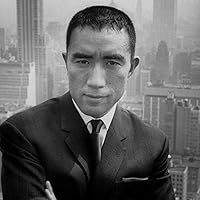
John Champlin Gardner was a well-known and controversial American novelist and university professor, best known for his novel Grendel, a retelling of the Beowulf myth.
Gardner was born in Batavia, New York. His father was a lay preacher and dairy farmer, and his mother taught English at a local school. Both parents were fond of Shakespeare and often recited literature together. As a child, Gardner attended public school and worked on his father's farm, where, in April of 1945, his younger brother Gilbert was killed in an accident with a cultipacker. Gardner, who was driving the tractor during the fatal accident, carried guilt for his brother's death throughout his life, suffering nightmares and flashbacks. The incident informed much of Gardner's fiction and criticism — most directly in the 1977 short story "Redemption," which included a fictionalized recounting of the accident.
”’The solution of the problem of life is seen in the vanishing of the problem.’ Traceable to Nietzsche, like everything else in modern thought.
‘Problems are not solved but outgrown.’
What in hell, he wondered (as always), was it supposed to mean?”
Peter Mickelsson’s life is full of ghosts. Dead philosophers come and argue with him, long dead residents of his country house in Pennsylvania who clatter about raising the hair on the back of his neck, and the living ghosts of the people he has disappointed, from his ex-wife, his kids, his colleagues, his students, all the way down the line to his friends.
It is good that he has the crutch of philosophy to lean on because his life is coming unspooled like a Greek tragedy with monsters too large and growing in number for him to possibly hack his way to freedom. His unhinged ex-wife is trying to take every last drop of his income; an unbalanced IRS agent is trying to seize what little he still owns. A small town whore is trying to steal the pieces of his heart with each illicit screw; a student is on a collision course with suicide, and his “girlfriend,” Jessica Stark, the one with ”gray eyes like Homeric seas,” is under siege by the Marxists in her department.
On top of all this, the American public has lost its mind...they elect Ronald Reagan President of the United States. This is tragic on many levels, but probably the most damaging thing to come from the Reagan victory is the death of progressive ideas in the Republican party. If Mickelsson were real and alive today, I wonder what he would think about the mess we have now?
He isn’t even really a good teacher. He sees the students as necessary evils. Fortunately, he is considered a celebrity asset to the university, due to his past success with publishing books. He is trying in fits and starts to write a best selling philosophy book (you can imagine the blank looks when he tries to explain this to people), but his ghosts, his life, his excessive drinking, his wild bouts of looping paranoia make writing impossible.
Despite the fact that he is quickly sinking in quicksand with no discernible bottom, he does keep flailing away, trying to grab a root or branch. ”I’ve listened too long to your sensible people with your life-withering sanity. What do you do with the impetuous, dangerous torrents of the soul? You try to dry them up!”
Mickelsson’s financial situation becomes more and more untenable. He drops hot checks all over his small town. He even bounces a check on his whore, which is a good way to end up with a shiv in your spleen or a bloody beating in a back alley, but he craves Miss Donnie Matthews and her pale white body, so he settles his account with her before he does with the grocer or the mechanic. ”Tears ran down his face. How many men’s sperm did that warm cave contain? That was Peter Mickelsson’s community: a thousand dark, writhing lives, unfulfilled, unfulfillable. He came, her legs from around him, and--this time, anyway--he did not die.”
It would be rather a fitting epitaph for Mickelsson’s life to have immortalized on his tomb...Death by whore.
It is hard for me to separate John Gardner from Mickelsson. According to sources, Gardner was struggling with alcohol, depression, divorces, overwork, and a lack of sleep, all of which contributed to that tragic motorcycle crash that took his life. Mickelsson’s Ghosts would be his final novel to be published. The spiral downward that the reader experiences with Mickelsson is coming from a deep well spring of Gardner’s own life. The bafflement, How did I end up here? The longing look at the shotgun by the door and thinking, Why Not? The financial struggles to maintain a reasonable lifestyle. The harassment of his ideas by his colleagues and students. ”The treacherous, ego-bloated, murder-stained hovel of philosophy.” The anger that his actions have inspired in the women he has known. All of this smacks of Gardner’s own trials and tribulations.
For Mickelsson, the cost of trying to live a truthful life is proving to be more than even his larger than life figure can withstand. ”All truths are for me soaked in blood.” He begins to make a connection with his past, his father, his grandfather, when he starts to work on the house, when he begins to use his hands as they did. Building things, fixing things, might finally make things right in his mind in a way that philosophy never can. I do wonder if Gardner was on the verge of those truths for himself. Was he wanting to escape academia and return to a life more fulfilled by creating something more visually substantial than words, such as walls, roofs, or gardens? Like a lot of us, maybe what he needed was to find truth through a balanced life. Maybe then, he could keep a woman in his life. Maybe then, he could find peace.
An overlooked American masterpiece. At the time of its appearance (1982), the book got mixed reviews. Today it’s hard to believe it was received so coldly. There is a very good review by Anatole Broyard in The New York Times that appropriately praises it to the skies.
The mode is literary realism. I put it on the same shelf as Saul Bellow’s The Adventures of Augie March, whose mastery of tone and technique it equals. Topically it reminds me of another triumph, Philip Roth’s American Pastoral.
The philosophical sections are interesting primarily because they don’t go on too long. Like all great literary art, Mickelsson’s Ghosts must not be rushed. You will limit the abundant narrative pleasure it serves up if you try to do so. Please see other reviews for plot.
It's odd to learn here at GR that Gardner is out of print and so neglected. Move after move, edit after edit, box after bag of donated books, my tiny stand of Gardner hardbacks endures, waiting for me to go back as i was so sure i would. Apparently i still expect to - and given the porous nature of my weary brain, they will in many ways be new books to me - except i will already know i love and trust the author nearly as much as he loves and trusts his characters.
Mickelsson's Ghosts was John Gardner's final novel. He died tragically at 49 in a motorcycle accident not far from his home in 1982, shortly after the book was published. I discovered Gardner's fiction in the late '70s with October Light, and then Mickelsson's Ghosts in '82. His work has always remained with me, and it had been my intention for decades to return to him one of these days. This reading of Mickelsson's Ghosts is my second, and the start of my plan to continue with October Light, The Sunlight Dialogues, and Nickel Mountain.
The novel tells the sad, pathetic tale of Peter Mickelsson, a once promising philosopher, now reduced to teaching courses at Binghamton University, divorced and nearly broke, hounded by the I.R.S., a drunk and a lecher, paranoid, and quite possibly going mad. Nothing is going well for Peter.
As the novel opens, Peter is seeking some refuge from the "stifling, clammy heat of the apartment his finances had forced him to take, on the third floor of an ugly old house on Binghamton's West Side - the nice part of town, everybody said" by purchasing a gloomy old house in the mountains outside Susquehanna, Pennsylvania, 35 miles from his job at the university. Sure, he can't afford it, what with his ex-wife and the I.R.S. breathing down his neck, but that doesn't stop Peter Mickelsson.
With that move, Peter Mickelsson, the rationalist, the philosopher and academic, finds himself in alien territory, amidst water diviners, rumored hauntings, and the occasional religious cult. He soon learns that the house he is now living in is rumored to be haunted.
Peter Mickelsson, proud ethical philosopher, starts an affair with a young prostitute, then a colleague from the university. He contemplates robbing a man of his money. He begins seeing the purported ghosts.
His life is crumbling around him. And seemingly his philosophy cannot save him.
Gardner weaves a wonderfully rich and complex tale of this tortured soul.
John Gardner was an incredible writer, crafting some of the most psychologically full characters in fiction. His deep moral sense is evident in all his work. It is all the more sad and unforgiveable that much of his work should so soon be out of print, and that he should be so little known to modern readers. John Gardner deserves a place among the great writers of last century.
It is September 1982, and I arrive at my work-study job in the library at the State University of New York at Binghamton. My boss is a bent over petite Italian lady who usually does not give me a second glance. As I go to the back room to punch my time card, I see her tear stained face behind the circulation desk. She looks up, flustered. She tells me in a strained voice that John Gardner has just died in a motorcycle accident, driving to his home in Susquehanna. Who, I ask? "You know, the author of Mickelsson's Ghosts? Just came out a few months ago?" I have no idea who she is talking about.
It is January 1986, and I am sitting on the couch in my parents house. I no longer reside in Binghamton, but impressions and feelings of my time there have seared into my memory. Bits and pieces of these rise up as I read through Mickelsson's Ghosts, which I finish in a one week fog of beer and cigarettes, accompanied by the sounds of George Winston on my Walkman and a crackling fireplace. I am amazed at how precisely the novel captures the woodsy grit of academic life in a dilapidated northern town. The book is an echo of my life: a philosophy major enthralled by Nietzsche, a lone wolf given over to long walks in the winter woods, hunting for something lost, but I am not quite sure what that something might be. One of my collection of unopened bills serves as a bookmark, a tangible symbol of a futile attempt to stave off the consequences of poor decisions. I flip backwards through the book, pausing to meditate on the black and white photos that are sprinkled throughout: a snow drifted train track, a frozen waterfall, a broken down farm in mid-winter, a peeling sign beckoning travelers to vacation in the endless mountains. I arrive at the first page and start to read it again.
It is June 2016 and my current project is to re-read my top ten novels. Mickelsson's Ghosts is the first book I choose. I find myself still astounded at how literate the novel is, how the sentences crackle with intelligence, and how it weaves in the big issues of meaning, loss, abortion and the environment. And how powerfully it can still transport me to a time and place.
Set in the depressed winter of a small Pennsylvania mountain town, the novel unpacks my past; a hope that philosophy can show one how to live, and the eventual big reveal of philosophy as a dead-end as it consumes itself with language-games and what the meaning of is is. The turning away from philosophy to hedonism, and the consequential dream-crushing reality of debt; the romantic sentimentality of poverty. a misguided fondness for squalor and dive bars, the ensuing anxiety of responsibilities avoided, and the ever-present yearning for something bigger than a mere vocation.
I am a bit more clear-eyed now about its faults though. Certain sections are too rambling, especially the last third of the book, and a few circumstances are contrived. In my third reading I notice arcs I'd forgotten or missed: the diminution of Nietzsche, initially portrayed as the superman and slowly transformed by book's end into a pitiful caricature. The poisoning of the environment mirroring a poisoning of the mind, the gray boundaries between reality and madness, the libel of Mormonism, the anti-abortion stance, the similarity with Crime and, eventual, Punishment.
Refreshingly, though not surprisingly, the book has a moral message; contentment is found by not inspecting reality too closely, problems not faced head on will boil and fester, and that purpose can be derived by fighting the evil that men do rather than an abstract devil. And that fortunately you don't need to be a mad philosophy professor to understand this.
This is one of those books that I honestly have a hard time putting in any catergory and that includes whether I really love it, or just appreciate it.
It's the type of thing one reads and is confused not b/c he doesn't get it-but that he actually does.
It's a long, long work-bogged down in some spots by very in-depth and somewhat esoteric philosphical dicussions (the main character is a philosphy teacher afterall)...and I'd be less than forthcoming if I didn't tell you at many many spots I was tempted to skip a few pages-or put down the thing for several days.
And the main character is certainly not a lovable guy, I can't remember being so frustrated or disgusted by a character (and I read several Bukowski works) pathetic attempts at life.
Doesn't exactly set the thing up for your typical 5 star review right?
But there's something here. Something real. Something worth dealing with an annoying central character and numerous diversions from the main plot. There are ghosts, and other "shadows" in this thing, murder, mystery, love-in all forms, past regrets, and plenty of booze. Good old fashioned Pennslyvania outdoor living.
And an ending in which you actually find yourself-after conquerinfg the rest of the epic-having a building vested emotion. And then I wasn't even sure I'd liked it....but somehow still was in no way dissapointed.
It's pretty much a challenging piece of art. An extremely well crafted story-in spite of some cracks that could drive you insane.
I can only recommend it if you really like novels-novels that give you offshoots, novels that make you wait for a payoff, and novels you one moment understand, and one moment sit in near hopless confusion. The actual "life" of a character, with every theme possible.
As I take a refreshing, deep breath after closing this long and deeply detailed novel, I must admit that not since I read the great tale of the murderer Raskolnikov, Fyodor Dostoyevsky's infamous main character from his great book, Crime and Punishment have I savored such a delicious and thoroughly absorbing story. Richly written and fully comprehensive in its scope and thesis, Mickelsson's Ghosts firmly grabs the reader from the outset and doesn't ever let go.
Be warned!, however: John Gardner's last novel is not for the faint of heart nor the eager-for-the-quick-page-turner-type reader. This is no beach novel! The reading is slow and heavy. A great deal of philosophical theory lies along its many detailed, small-typed pages, and in order to fully enjoy the intent and completely absorb the character of Peter Mickelsson, the reader must be patient and willing to go the long haul.
I like moody, emotionally contemplative, lots of talk/little action books. This affection sometimes includes an interest in the derisively named "chick lit" or the occasional Oprah book. There is some notion that this kind of fiction is not well-written or worthwhile. So when I came across Gardner's novel I thought maybe I could get the same satisfaction as I do from some of my genre lit while also being able to claim I had read "literature."
So the two things that elevate this book to the literature level: 1) long, self-indulgent paragraphs and complex sentence structure. 2) lots of liquor, pipe-smoking, tools, guns and notes on philosophy. Don't get me wrong, there is lots of beautiful prose in "Mickelsson's Ghosts." And the construction of a plot that carefully exposed thematic ideas about self, community and morals is well done. It's just that I am not sure the emotional complexity here is that much better or more well done than what an Anne Tyler can do. And if someone else--especially a woman--had written this, I suspect it'd have been a couple hundred pages shorter.
And really, how much gin can one man drink? And how many references to Nietzsche can one author make?
Four stars for saying he never reads the Pipe Dream, academic squabbles against Marxist sociology professors, Socratic dialogues with suicidal students who switched from engineering, drunk driving on route 81, fond descriptions of urban blight, incestuous ghosts, and Mormon radicals. Recommended reading for Binghamton alums and anyone fascinated with the gloomy, neglected Southern Tier and her Endless Mountains.
My second Gardner and this one didn’t disappoint! I’ve read it’s one of his best or people’s favorite and I can see why. Peter Mickelsson is one of the better and more complex characters I’ve read. Gardner has a knack for fully realizing his characters and then having them jump off the page. Wacky, creative and original. And a ton of fun. More on John Gardner to come this year. Loving.
This is a wonderful book, beautifully written. The story is philosophical, sad, funny, suspenseful. John Gardner really captures the spirit of the rural PA/NY setting as well as the politics of academia. A middle aged philosophy professor buys an old house in the country and sets out to renovate it, gets involved with a small town prostitute (or is she a prostitute?), falls in love with a colleague, and is stalked by Mormons and befriended by ghosts. Between events he ponders philosophical issues and memories of his father. I read every word and was never tempted to skim.
Haunting--get it?--novel that documents a university philosophy professor's dissolution and descent into possible madness and his subsequent redemption. Loaded with philosophical allusions, as well as instructive information for the do-it-yourself home renovator. A weighty tome with supernatural leitmotif that is hard to put down, yet is best read slowly and digested in the same manner.
This book is a long novel with just a few illustrations; I read it as part of my project to read fiction with captionless illustrations. Two notes: one on the photographs, and the other on the novel itself.
(I bought the original hardcover, because the print in the pb is very small, and the illustrations seemed to be cropped. The cloth first edition is worth the price.)
1. Concerning the photographs. Gardner isn't particularly interesting or reflective about his use of photographs. All are full page or double-page spreads, printed beyond the text margins but not quite to the trim edge.
The first is placed opposite p. 22. At that point in the narrative, the main character has just discovered a rural home he wants to buy. It's described for the first time on p. 21, and when the reader turns the page, she sees the photo, which is, unaccountably, a triple exposure of a decaying wood wall, rocks, and ferns. The photo doesn't correspond with anything in the description, and its late 1970s black and white art technique doesn't fit the nostalgic descriptions of rural northwest Pennsylvania. Apparently it did not concern Gardner that (1) the image is largely illegible, (2) it doesn't fit the description, and (3) it has a style that is at odds with his narrative.
The second image is a double spread of farm buildings in the winter. This one could easily be of the northeastern US, and so it fits the region Gardner is describing, and it comes just after the book's first invocation of snow. (The main character wonders how he will get through his first winter in his new house.) But the photograph is a specific farm, with a house and four small farm buildings; the house doesn't correspond with the house the character has bought, and the land is entirely different from the hilly place, with a waterfall, described in the book. Apparently it did not concern Gardner that (1) this farm is wholly different from the one he has been describing, or (2) the brief mention of snow in the narrative is at odds with the very specific and detailed scene of snow in the photograph.
The third image faces p. 164; it shows parts of six windows in a brick building, from the outside. Each window has some reflections and some have hints of things inside. This fits the narrative much better than the previous photographs, because the narrator has just been thinking of spying on the prostitute he's been seeing. As the story develops, he peers into someone else's apartment, so the photograph invites the same kind of looking that the narrative describes. But apparently it did not concern Gardner that (1) the relation between text and image here is so close, while the other photographs are much more distant, or (2) that readers, encouraged by this closeness, might return to the previous images in search of more information, which they wouldn't find.
2. Concerning the narrative. I stopped reading carefully after p. 259, for a number of reasons. At that point I could see the structure of the book: the professor, Mickelsson, is depressive, and has had serious mental health issues in the past; he has bought a house in an isolated Pennsylvania town, and he is setting up his life there. The idea is to plot the disintegration of his mind through what's called "subjective third person narration" -- that is, we see the world almost exclusively through Mickelsson's eyes, so his confusions become ours. A number of reviewers online have written well about the novel's project.
For me the ingredients of his dissolution are dramatic clichés. They include:
(a) A "Blue Angel" style descent from famous professor to clownish figure. Degradation and embarrassment await the character in many forms, both in the university and in his adopted town.
(b) A staged drama, which is apparently supposed to provide tension, about his finances: he's bankrupt, and he is lying to the I.R.S..
(c) A repeated device in which we hear about his philosophy seminars in enough detail so that we can follow the philosophic issues involved in his increasing idiosyncrasy and solipsism. These come across, to me, as awkwardly pedagogic.
(d) A repeated device in which the book threatens to become an "actual" ghost story. Clearly, Gardner is only toying with this possibility, because he intends to blend real and invented ghosts. It's telling that by page 180, the narrator still hasn't asked any of the people in his newly adopted town why, exactly, they think his house is haunted. The delay is supposed to create some tension, but Mickelsson's unaccountable lack of interest in details is obviously Gardner's unaccountable belief that readers will continue to think this might be a ghost story, even after 180 pages.
In short: the ingredients for a story about mental disintegration are themselves too conventional, even if the final disintegration might be more radical.
Early in the 21st century, I read this oversized novel in an oversized chair near the corner of Van Pelt Library's main entrance floor's tall glass walls that look out on to UPenn's central grassy areas where Locust Street from 40th slides into Walnut at 34th. This was through many sittings on Friday afternoons after my adjunct classes at other universities had ended for the week. Friday afternoon was my weekend, and Saturday and Sunday were for grading and prep. It is perhaps because Locust Walk is currently fenced off due to pro-Palestinian protests that I was reminded of the phrase in the novel "PLO eyes"; the main character sees a radical spirit in a female colleague--one of those self-fashioned, would-be revolutionary tenured professors who are possibly disappearing fast. I've never read another novel by John Gardner, but this one became my inspiration for what would become Fight for Your Long Day. Years later, "PLO eyes" remained vivid in my imagination--enough so that a character in my second novel, Auggie's Revenge, sees "GLO eyes" when observing a 21st century tenured professor. That is, he sees not radical spirit, but capitalist accumulation--focus on ETFs and closed-end funds--in the rare adjunct glances he steals from his tenured coworkers.
This book is out of print. Which is a pity. I've read most of Gardner's works, and I'd place this as his second best piece. (I argue that Nickel Mountain is the best, with Grendel a distant third, but I digress.) The story is fairly simple, Mickelsson's nearly bankrupt, divorced, and on the outside looking in at the university where he teaches philosophy, and he buys a house that's haunted. What follows is Gardner's strongest story.
The writing, as usual, has flawless rhythm, and there is emotion to spare, not to mention the vast swathes of philosophy kept interesting (and necessary as a reflection of Mickelsson's personality). But there's no one thing that stands out; everything is dealt in proper proportions. As a side note, this is a good book to study if you're working on a novel of your own, especially if said book requires a lot of backstory that you want to mix into the book instead of putting it all in one chapter.
The only problem I had with the book was that some of the resolutions are a bit outlandish, which weakens the drama of the previous 600 pages a bit. But as a savory morsel to read and enjoy, this one stands out.
I read this book as a teen, and I re-read it a few years ago. Certainly my second reading was more comprehensive, and having studied philosophy as a quasi-minor in undergrad, I understood so much more of the setting and characters (in fact I think I had a philosophy prof who could have been a character in this book). But I do still remember the eerie feeling I had reading this book for the first time, the feeling of sliding into a madman's world and no longer remembering exactly what is considered sane and why.
The characters are extremely flawed, as is traditional in literary fiction, but compelling enough for the reader to get involved, although perhaps not quite come to care deeply for them you are more likely to be drawn along by wondering what kind of idiotic crazy thing they will do next.
This book will make you think - and think some more, and then think about what you just thought. All through the actions and words of the characters, without the annoying tendency of some authors to speak through their characters as puppets to convey a message.
You won't forget this novel. A more detailed descent into madness has never been published. I read it only once, but I've never been able to get it out of my mind. What makes it so powerful is the implacable refusal of the protagonist to change his ways. Stories of avoidable catastrophe deliberately not avoided have always haunted me. Grim but very funny in parts.
Gardner is a wonderful writer who brings his characters to life. Professor Mickelsson's story is a sad tale of a man trapped by his hopeless financial circumstances and his precarious mental health.
Despite his dire financial straits, the plot takes some interesting and unexpected twists and turns and a surprising ending. Of course, there are the ghosts to consider.
Okay. So, I can't really say that I've read this book. I read it in grabs and perhaps two long runs over more than five years. I was surprised how much seemed to stay familiar over that time, so that I was never confused as to what was going on. The problem I had is that Gardner might have been. This book is a chunk at just shy of 600 dense pages. Digression: I was introduced to Gardner in college by Nancy Milford, who was his friend or compatriot. It was her recommendation that kept him in my mind all these years. I read October Light years ago and it remains a favorite. This was the last book he was to publish during his lifetime. He was killed in a motorcycle accident at age 49, some months after this was published. Okay, the book. There are some astonishing, typical Gardner passages, where he really is writing with the agility and lightness I associate with him. He does wander and seems to be trying to load weight into the book, the main character of the title is a philosophy professor. There's a run at the end, the last 60 pages, where we check in with various characters, and I get the sense that he was just wrapping things up hoping for the Graces to deliver an end worthy of the journey. Sometimes just getting home is a relief as it was here. The times we live in. This book would likely be shredded by many contemporary readers after not so many pages. An older white male, boozy, careening around with a hooker, and another professor, has the the cancel me-type markers on it to get dismissed despite the strength of prose and remarkable sentences and uses on punctuation. Gardner was a pro's pro in terms of craft. It's not very fair to use current standards to whip a forty-year-old book, is it? It's a portrait, a story, not a billboard for justice. There's a lot about ghosts, a plot about Mormons, martini drinking, pipe smoking, which all read as things that certain generations would need to be warned about, but this book really needs a translation, a wire-brush to knock off the cultural rust and lyric dust to find what Gardner was trying to get at. Personal and sentimental stuff. The language of the book sounds like someone who had never heard rock n' roll, which might be the case, and that formal language seems a bit stiff, though probably better than a massive embrace of "hey, man, that's not cool," etc. I bought this book when I first moved to Seattle in '97 at a bookstore up on 15th that was in a house. I was happy to find a hardcover first edition in such good shape and at a reasonable price. I'll put this on my shelf next to the others I bought there and at Powell's, with the idea to read The Sunlight Dialogues or Nickel Mountain next. It's no crime to write a book like this, and it strikes me as a record of his fine, bright mind trying to make sense of things in a great way. We all think of ourselves and our narrative arcs, but that his was lopped off as it was, has me contemplating what he might have done. Perhaps his ghost will find me in a dream and fill my bedroom with pipe smoke, reproach me for being a lazy reader, but in a kind way, before leaving, purposely not telling me what he might have done.
Mickelsson's Ghosts was John Gardner's final novel. He died tragically at 49 in a motorcycle accident not far from his home in 1982, shortly after the book was published. I discovered Gardner's fiction in the late '70s with October Light, and then Mickelsson's Ghosts in '82. His work has always remained with me, and it had been my intention for decades to return to him one of these days. This reading of Mickelsson's Ghosts is my second, and the start of my plan to continue with October Light, The Sunlight Dialogues, and Nickel Mountain.
The novel tells the sad, pathetic tale of Peter Mickelsson, a once promising philosopher, now reduced to teaching courses at Binghamton University, divorced and nearly broke, hounded by the I.R.S., a drunk and a lecher, paranoid, and quite possibly going mad. Nothing is going well for Peter.
As the novel opens, Peter is seeking some refuge from the "stifling, clammy heat of the apartment his finances had forced him to take, on the third floor of an ugly old house on Binghamton's West Side - the nice part of town, everybody said" by purchasing a gloomy old house in the mountains outside Susquehanna, Pennsylvania, 35 miles from his job at the university. Sure, he can't afford it, what with his ex-wife and the I.R.S. breathing down his neck, but that doesn't stop Peter Mickelsson.
With that move, Peter Mickelsson, the rationalist, the philosopher and academic, finds himself in alien territory, amidst water diviners, rumored hauntings, and the occasional religious cult. He soon learns that the house he is now living in is rumored to be haunted.
Peter Mickelsson, proud ethical philosopher, starts an affair with a young prostitute, then a colleague from the university. He contemplates robbing a man of his money. He begins seeing the purported ghosts.
His life is crumbling around him. And seemingly his philosophy cannot save him.
Gardner weaves a wonderfully rich and complex tale of this tortured soul.
John Gardner was an incredible writer, crafting some of the most psychologically full characters in fiction. His deep moral sense is evident in all his work. It is all the more sad and unforgiveable that much of his work should so soon be out of print, and that he should be so little known to modern readers. John Gardner deserves a place among the great writers of last century
If you've never read John Gardner, this is not the place to start. Published just months before he died in a motorcycle accident, it's a dark, brooding tale. Mickelsson is a philosophy professor whose life is falling apart. He's in the middle of divorcing a money hungry wife, is practically bankrupt and has the IRS chasing him for back taxes. He's worried about his son who is involved in anti-nuclear activities and is currently missing. Socially awkward, Mickelsson has no close relationships with his faculty colleagues except for a charming Sociologist, and a paid relationship with a young woman from town.
He has had a bout with mental illness earlier on before moving to this university and seems to be heading in that direction again. He has questions about everything: the various philosophical viewpoints he has famously held until now, his teaching, the nature of love and life. In the middle of his dark night of the soul, Mickelsson buys an old farmhouse and devotes his energies to renovating it. To some extent this helps his peace of mind but the haunted house begins to wear on him. The story becomes quite rambling as Gardner weaves the story of the ghosts that haunt the farmhouse (whom Mickelsson comes to see) with Mickelsson's personal ghosts (worries, regrets, failings, loneliness, etc), and bizarre stories of the area.
Readers who know a little of Gardner's history will recognize autobiographical elements such as the details of Mickellsson's youth on a farm, his knowledge of the Susquehanna area (Gardner lived there at the time), the philosophical and political viewpoints. Expect a lot of philosophy, a lot of poking fun at political figures like Reagan.
While there are some brilliant passages of prose and some vivid descriptions, this reader often wondered if it was worth continuing to read and also came away with the distinct impression that Gardner was at the time of writing undergoing his own dark night of the soul.
Despite some terrific portions, this got to be a real slog. Gardner includes stage direction down to the minutest detail. Sounds like a small issue to launch a critique with, but it's a huge obstacle to enjoying the book. Reading Mickelsson's, you may not know whether or not the ghosts are real, but you're never in doubt as to whether it's a character's right hand or left being used to light a cigarette or lift a cup of coffee. Every facial response, every eyebrow tic, is painstakingly, Proustianly recorded. For some this may be sweet molasses; for me it was tar. And I LIKE big wordy books. I like Gardner too, at least in Grendel and in his writing about writing.
Mickelsson's descent into madness (or emotional entropy, really) is convincing, yet ultimately more wearying than riveting. It doesn't help that he more or less takes the ghosts for granted -- as in the actual back-from-the-dead, the mournful, angry, malevolent spirits -- and spends more time weighing Nietzsche v. Wittgenstein. (Though who am I to declare his escapism dull and unlikely? My post-divorce distraction of choice was computer solitaire. Then again, had my apartment produced poltergeists, I wouldn't have shrugged it off and wondered if it all boiled down to something regarding Wittgenstein.)
Anyhow, M. refurbishes his house (self or fortress? oh, ambivalent symbolism), regrets and recollects (there are ghosts of all sorts!), writes bad checks (we are each of us debtors), and generally behaves atrociously but still manages to attract the winningest woman around (unlikely redemption's always kinda hot). I won't spoil the Friedrich v. Ludwig suspense, but rest assured Mickelsson makes many expressions in the process and his hands are always very busy.
Le style et la nature philosophique de certains passages classent indubitablement ce roman dans la catégorie "Littérature américaine du XXè siècle". Et si certains de ces passages sont ardus, ils n'en restent pas moins parfois intéressants une fois qu'armés de curiosité on réussisse à dépasser les nuages qui obscurcissent leur compréhension lors d'une première lecture, même si une bonne culture philosophique (notamment de Luther, Nietszche et Wittgenstein) aide beaucoup. L'intrigue est prometteuse, mais... elle s'étire à un point qui n'est certainement pas nécessaire ! Elle semble prouver à quel point de délabrement mental l'auteur en était arrivé, englué dans les pièges tissés par ses démons (comme son personnage principal), nous entraînant dans une longue bagarre contre eux, presque perdue d'avance. Paranoïa, maladie mentale, vision déformée de la réalité, regrets et remords, entourage auquel on ne peut se fier quand il n'est pas outrancièrement persécuteur, religion, bigoterie, fanatisme, alcoolisme, dépendance affective et sexuelle, violence... La liste est longue. La conclusion surprenante voire foutraque, en phase avec ce qui a précédé. C'est une longue plongée dans un cerveau malade, de son propre mépris, de son intelligence sans emploi satisfaisant, de sa frustration et de ce qu'il perçoit comme la liste sans fin de ses échecs, aveugle au bien qu'on lui veut, égocentrique et solitaire. Un livre unique. Pas certaine d'avoir le courage de le lire une seconde fois, quand même.
Many of the complaints here on goodreads are valid: it's bloated, a slog, the philosophical musings (rants?) become burdensome, perhaps belabored, the writing itself is needlessly dense, etc. Character studies, however, tend to be, by nature, slow, and when the main character is a philosopher, a reader should ask herself, "Oh, lord. What did I just get myself into?"It looks as though Gardner's dedication to verisimilitude--an irony considering some of the novel's subject matter--explains some of the criticism: philosophers tend to write in a bloated manner, and most philosophers tend to belabor topics of expertise, supposedly for the sake of accuracy, only to have their prose's meaning paradoxically become obfuscated. In essence, the novel's content explains what appears to be needlessly dense prose, when, considering the character, Gardner's use of voice is essential to understanding Mickelsson, and it reveals the character's personality. But while the novel is first a character study, it is second a psychological thriller and mystery, and when Gardner employs the conventions of these last two genres, the novel moves much more quickly--a lot happens in some relatively short chapters--and the prose cleans itself up, as needed. It's a book that should be read in long sittings so that what Gardner attempted can be appreciated: a hybrid literary novel that I think works quite well. But reading it, during some long sections, does require some patience. 4.5 stars
If I were living in Dickensian London and my only distractions were Dickens, hookers and the occasional debilitating flu, I think I could probably finish this book. As it stands, however, this is my third effort at a Gardner book and my third failure. There is nothing here to prevent me from recommending it other than the fact that it seems to me that the book is wildly too broad. As in, overwritten. As in, just could use to some old-fashioned scissoring. It's well-written, yes--but every second of Mickelsson's day does not an engaging novel make. Probably a spectacular ending that I missed.
This was a strange, strange book. I wasn't sure, all the way through, whether I was "getting" it. The main character is not at all attractive, and his mental health is slipping. I never felt like I wanted to enter Micklesson's world.
I picked up the book because I had so loved John Gardner's writing about the process of writing. I decided that he's a better thinker about writing that writer! That may be unfair, I realize.
Although a bit dark- putting it mildly, perhaps- I loved this book. I found it intriguing, and love Gardner's style. A very good book to read on a cold and snowy winter's day!
Perhaps a mark of a great literature is that what appears tedious and 'too-much' for one reader, appears to another as exactly what was necessary to reflect the human truth.
Mickelsson's Ghosts is much as reviewers describe it. It is a writer's novel for its wonderfully-constructed prose (without fail); and a philosopher's novel for the persistence of profound themes and arguments (esoteric for some, perhaps hilarious for others). It is painstakingly detailed and staged, so that the reader never, ever lacks in vividness of scene and scenario (I will never forget that house in the Endless Mountains; so many episodes stay with me). It is filled with a rambling mixture of Peter Mickelsson's memories, pompous musings, genuine reflections, regrets, anxieties, fears, paranoia, rationalizations, self-condemnations, boring repetitions and standoffs with himself, along with his hopes, affections, aspirations, his summons to his own will-power - but these mixtures are never 'hodgepodge': there is always some rhythmic logic to how these passages occur, and at what stage in the journey.
Some reviewers are of the opinion that the characters in the novel are not likeable. I myself disagree, though I would not even concede this as a primary criteria of greatness. Gardner was interested in creating characters through which values (and their consequences) could be honestly explored. There is nothing stock about most of the personalities in this book; they are all messy and, at least once or twice, surprise you with their choices (and their speech). Those choices emerge from the action of the novel; it is a human world that, in its craziness, its actors somehow make sense of - through neglect as well as obsession, passion and deliberation.
Peter Mickelsson is not 'lovable' in a clear cut way. The reader will surely cringe at his decisions and, equally often, his inaction (his dilly-dallying, his drinking, his diversion tactics). But I also found myself cheering him on throughout the novel - not just wondering what he will do next, but what one could possibly do next, given these circumstances, this string of decisions, and this inner life (which Gardner paints in exact totality). I believe we get everything we get from the writing so that the why behind Peter's choices and non-choices is clear. It makes for an incredibly real character who could not be anyone else.
Perhaps because, as a philosopher myself, I can relate to Peter's elastic sense of self (sometimes crammed, sometimes expansive) and his struggle to see the world as anything but shitty (despite all the potentially good things going) (and yes, a man can drink a lot of gin, and think over and over about Nietzsche...), I found Mickelsson's dilemma neither despicable or abnormal. He is simply a deep thinker (some would say an 'over-thinker') who is wrestling (nearly to the death) with his own capacity to act - and, beyond that, his capacity to take care (of a house, of others, of himself).
The haunted house that Peter buys, in his last-ditch attempt to save his own life, becomes the cipher and location of that struggle to act and take-care. Along the way he grapples with professional ideals, love ideals, views on the sanctity of life, views on society, the discrepancy between belief and behavior, attitudes toward his children, ex-wife, lovers, the fact of entropy, the idea of anything's improving... and then with all the other voices in his head pulling him in contrary directions and tearing him apart. He is haunted and watched by all these entities and influences (this is a portrayal of mental life), and his battle is to somehow keep going and forge a semblance of a way.
For my part, I 'loved' Peter to a degree that I could only concernfully watch him contort himself and try to get things under control (while also not trying enough, or not in the right way, because he was trying hard, no doubt about that...), dance high to one tune and stumble to another, all according to his own being - at times worrisome and chaotic, other times clearheaded, measured, and beautiful. I don't think you could cut too much from this book and still pull off the same effect; even the (one could say) 'boring' parts seem crucial to getting the full feel of Mickelsson's deadlock. It makes his moments of action, when they do happen - and they do - all the more triumphant.
Peter Mickelsson is a character who triumphs, in his own way, over his ghosts. This seems the exploration the author wanted to make come to life for us, the readers. Gardner, who cared so much about caring for his characters, cared especially for this one. Through all the brilliant writing that exposed the character and his world to me, I came to care deeply as well. I think Mickelsson's Ghost a great success and hope it will be read for generations to come.