

What do you think?

Walt Disney's Mickey Mouse #11
Walt Disney's Mickey Mouse Vol. 11: "Mickey vs. Mickey"
Coming home from a trip, Mickey finds another Mouse in his house. A Mouse who could be his twin... evil twin, that is! The dastardly Miklos has been alienating Mickey’s friends and committing crimes in Mickey’s name. He’s got Pluto as a hostage, so Mickey can’t make him stop! Or can he? Send in the clones ― here comes a fight to the finish! “Dry Gulch Goofy” becomes a Wild West movie star this volume ― and Pegleg Pete attacks the “Isle of Moola-La” for perilous paydirt!
296 pages, Hardcover
First published September 5, 2017
About the author
Floyd Gottfredson
257 books39 followersArthur Floyd Gottfredson (1905-1986) was an American cartoonist. He is known for his defining work on the Mickey Mouse newspaper strip, which he drew from 1929 to 1975, and mostly plotted himself from 1929 to 1945. His impact on the character of Mickey Mouse is often compared to the one that cartoonist Carl Barks had on Donald Duck. Because of the large international circulation of his strips, reprinted for decades in some European countries like Italy and France, Gottfredson can be seen as one of the most influential cartoonists of the 20th century. Many groundbreaking comic book artists, like Carl Barks and Osamu Tezuka, declared to have been inspired by his work.
Floyd Gottfredson grew up in a Mormon family from Utah. He started drawing as a kid on doctor's advice, as a form of rehabilitation after a sever injury, which left his dominant arm partially disabled for life. After taking some cartooning correspondence courses, teenage Floyd secured a job as cartoonist for the Salt Lake City Telegram.
At age 23, Floyd moved to California with his wife and family. He interviewed at the Disney Studios, hoping to land a position as a comic strip artist, but was hired as in-between animator instead. In that period writer Walt Disney and artist Ub Iwerks were starting a series of daily syndicated newspaper comic strips featuring Mickey Mouse, the character the two had created for animation the year before. A few months into the publication of the strips however, Iwerks left the Studios. Walt decided then to promote Gottfredson to the role of Mickey Mouse strip penciler, remembering his original request at the job interview. Not long after that, Disney left the entire process of creation of the strip to Gottfredson, who would eventually become head of a small 'comic strips department' within the Disney Studios.
Up to 1955, Mickey's strips were 'continuity adventures': the strips were not just self-contained gags, but they composed long stories that would stretch in the newspapers for months. In this context, Gottfredson had to developed Mickey's personality way beyond his animation counterpart. He made him an adventurer and multi-tasking hero, putting him in all kind of settings and genre-parodies: thriller, sci-fi, urban comedy, adventure in exotic lands, war stories, western, and so on.
Gottfredson scripted the stories on his own for a few years, only getting help for the inking part of the process. (Most notably by Al Taliaferro, who will become himself the main artist on the Silly Symphonies and Donald Duck syndicated strips.) Starting from around 1932, Gottfredson worked with various writers, mostly Ted Osbourne and Merril deMarris, who provided scripts for the strips, while Floyd retained the role of plotter and penciler. Starting from 1945, Gottfredson left all writing duties to writer Bill Wash.
In 1955, by request of the Syndicate, Mickey Mouse strips stopped being continuous stories, and became self-contained gag. Gottfredson would remain in his role of strip artist for twenty more years, up to his retirement in 1975.
Gottfredson died in 1986, with his achievements going mostly unknown to the larger American public (as his strips were technically all signed 'Walt Disney').
In 2006, twenty years after his death, Floyd Gottfredson was inducted into the Will Eisner Comic Industry Awards Hall of Fame.
Floyd Gottfredson grew up in a Mormon family from Utah. He started drawing as a kid on doctor's advice, as a form of rehabilitation after a sever injury, which left his dominant arm partially disabled for life. After taking some cartooning correspondence courses, teenage Floyd secured a job as cartoonist for the Salt Lake City Telegram.
At age 23, Floyd moved to California with his wife and family. He interviewed at the Disney Studios, hoping to land a position as a comic strip artist, but was hired as in-between animator instead. In that period writer Walt Disney and artist Ub Iwerks were starting a series of daily syndicated newspaper comic strips featuring Mickey Mouse, the character the two had created for animation the year before. A few months into the publication of the strips however, Iwerks left the Studios. Walt decided then to promote Gottfredson to the role of Mickey Mouse strip penciler, remembering his original request at the job interview. Not long after that, Disney left the entire process of creation of the strip to Gottfredson, who would eventually become head of a small 'comic strips department' within the Disney Studios.
Up to 1955, Mickey's strips were 'continuity adventures': the strips were not just self-contained gags, but they composed long stories that would stretch in the newspapers for months. In this context, Gottfredson had to developed Mickey's personality way beyond his animation counterpart. He made him an adventurer and multi-tasking hero, putting him in all kind of settings and genre-parodies: thriller, sci-fi, urban comedy, adventure in exotic lands, war stories, western, and so on.
Gottfredson scripted the stories on his own for a few years, only getting help for the inking part of the process. (Most notably by Al Taliaferro, who will become himself the main artist on the Silly Symphonies and Donald Duck syndicated strips.) Starting from around 1932, Gottfredson worked with various writers, mostly Ted Osbourne and Merril deMarris, who provided scripts for the strips, while Floyd retained the role of plotter and penciler. Starting from 1945, Gottfredson left all writing duties to writer Bill Wash.
In 1955, by request of the Syndicate, Mickey Mouse strips stopped being continuous stories, and became self-contained gag. Gottfredson would remain in his role of strip artist for twenty more years, up to his retirement in 1975.
Gottfredson died in 1986, with his achievements going mostly unknown to the larger American public (as his strips were technically all signed 'Walt Disney').
In 2006, twenty years after his death, Floyd Gottfredson was inducted into the Will Eisner Comic Industry Awards Hall of Fame.
Ratings & Reviews
Friends & Following
Create a free account to discover what your friends think of this book!
Community Reviews
Displaying 1 - 5 of 5 reviews

January 3, 2021
The departure of Eega Beeva (see 'Walt Disney's Mickey Mouse Vol. 10: "Planet Of Faceless Foes"') luckily marked the return of Goofy as Mickey's sidekick. Goofy immediately shines as movie superstar in the first adventure of this volume, which covers Mickey Mouse daily comics from 1951 to 1953. These are all Bill Walsh stories, which are typically rambling, improvisational and silly. It helps when you don't take what you're reading too seriously, then the great fun invested in these stories will appear the more. Mickey's encounters with ghost pirate Black Brian, with uncle Wombat's time machine, with the midas ring and with Ohm-Eye the little mechanical man from outer space are all fine. The best adventure, however, is the last one, in which Mickey has to face a villain posing as himself. This adventure marks a single return to a less silly and more thrilling plot. The bonus story by Italian masters Enrico Faccini and Casty is even better in that respect, making excellent use of the villain Miklos. Needless to say Gottfredson's artwork remains a delight, throughout. His dynamic drawings never cease to please.

March 16, 2018
Still well drawn and entertaining, but it has to be said that while the storyline era of the strip is coming to a close Walsh's writing is running out of steam. Not that I ever was a big fan of it to begin with, but now there's barely any coherence left in the stories and most of them can be summed with "Random stuff happening".

March 16, 2021
This is a thick collection of Mickey Mouse newspaper strips from the early 1950s, by Floyd Gottredson and Bill Walsh. At this point, the strip used light adventure stories, and in this volume Mickey (and sometimes Goofy) encountered ghosts, pirates and Mickey's evil twin. I think Carl Barks' Scrooge McDuck stories hold up a little better, but these are still a lot of fun.
May 8, 2018
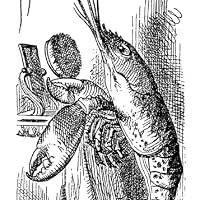
Collecting daily strips from 1951 through 1953, when screenwriter and producer Bill Walsh was scripting the stories, this volume includes some pretty wacky tales of ghosts, time travel, gypsy curses, and miners from outer space. While still a serial adventure strip (it would become gag-a-day later on), it often seems like the plot directions weren't always fully planned out in advance. In "Uncle Wombat's Tock-Tock Time Machine," Mickey meets Goofy's uncle who's invented a time travel device but doesn't really know how to control it, resulting in the two of them visiting Benjamin Franklin, the Roman Colosseum, and a weird future where flowers rule the world. There are certainly amusing moments, like how Mickey and Uncle Wombat make a getaway in a Roman chariot, which changes into a cart, a then-modern car, and a futuristic car. I also appreciate how Gottfredson drew some of the ruling class flowers as the ones from Alice in Wonderland. Overall, though, the visits are so quick that there's no time for the reader to really get too concerned. "Hoosat from Another Planet" has Mickey and Goofy in the desert looking for uranium and coming across a cute robot called Ohm-Eye who belongs to aliens from the planet Unnlax, which is somehow said to be only 300,000 miles from Earth. Their leader is a disembodied voice inside a missile shell, who initially tries to kill Mickey and Goofy, but his daughter Hoosat finds Goofy attractive and wants to marry him. Then she shrinks him down and traps him in a bottle for some reason, and Mickey finds out that the aliens are gathering up a magical element called bleerium to bring back to their world. Hoosat claims it's just to keep it out of the wrong hands, but Ohm-Eye doesn't trust her and gets rid of it. It's very creative, but there isn't much consistency in terms of the characters' motivations. The story referenced in the collection title, "Mickey's Dangerous Double," has the impostor Mickey switching between a childish prankster and a fiendish master criminal, but I think a lot of the former is to cast suspicion on the real Mickey to get him out of the way. The foreword to the collection mentions that the story can at least partially be seen as a commentary on how Mickey himself started out as a mischievous prankster, so he's sort of confronting his former self. A bonus non-Gottfredson comic by Italian writer and artist Andrea Castellan that brings back the impostor Miklos, this time with an even more complex plot that involves a theater troupe and a temporarily successful scheme to convince Mickey that HE'S the fake. Even before Miklos is revealed, there's a repeat appearance by the psychiatrist Dr. Heeza Dhilly from "Dangerous Double."
September 29, 2023
I enjoyed the flower emperor subplot and the Midas Ring story the most.
Displaying 1 - 5 of 5 reviews