DC Winter has gone undercover in an attempt to infiltrate the inner circle of the city's premier drug lord. Isolated from his colleagues, resenting the way his superiors have presented him the job as a fait accompli, and abroad in a world where money is easy and respect is earned in brutally straightforward ways, Winter is in his element—worryingly so. Concerns among his superiors that Winter may finally have had too much temptation put in his path are soon supplanted by two vicious murders. First a high-profile local property developer is shot, with clinical efficiency, in his own bed. A few days later a government minister is assassinated while his car is stuck in a traffic jam. A fevered investigation begins with Winter's erstwhile boss, detective inspector Faraday, in charge. With clues hard to come by, the government panicking, and the anti-terrorist branch circling, Faraday is shoved off the case and left in charge just of the investigation into the property developer's murder. Faraday is also tasked with keeping track of Winter and soon discovers that Winter, the arch-conspirator, has been set up. As Winter begins to realize what his bosses had in mind for him and Faraday begins to put together the pieces of a heartbreaking story of personal and political betrayal that may well link the two murders, The Price of Darkness becomes a study of the desperate measures some people take when their friends and their society let them down.
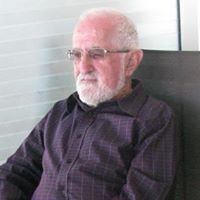
Graham Hurley was born November, 1946 in Clacton-on-Sea, Essex. His seaside childhood was punctuated by football, swimming, afternoons on the dodgems, run-ins with the police, multiple raids on the local library - plus near-total immersion in English post-war movies.
Directed and produced documentaries for ITV through two decades, winning a number of national and international awards. Launched a writing career on the back of a six-part drama commission for ITV: "Rules of Engagement". Left TV and became full time writer in 1991.
Authored nine stand-alone thrillers plus "Airshow", a fly-on-the-wall novel-length piece of reportage, before accepting Orion invitation to become a crime writer. Drew gleefully on home-town Portsmouth (“Pompey”) as the basis for an on-going series featuring D/I Joe Faraday and D/C Paul Winter.
Contributed five years of personal columns to the Portsmouth News, penned a number of plays and dramatic monologues for local production (including the city’s millenium celebration, "Willoughby and Son"), then decamped to Devon for a more considered take on Pompey low-life.
The Faraday series came to an end after 12 books. Healthy sales at home and abroad, plus mega-successful French TV adaptations, tempted Orion to commission a spin-off series, set in the West Country, featuring D/S Jimmy Suttle.
Launch title - "Western Approaches" - published 2012. "Touching Distance" to hit the bookstores next month (21st November).
Has recently self-published a number of titles on Kindle including "Strictly No Flowers" (a dark take on crime fiction), "Estuary" (a deeply personal memoir) and "Backstory" (how and why he came to write the Faraday series).
Married to the delectable Lin. Three grown-up sons (Tom, Jack and Woody). Plus corking grandson Dylan.
Very well plotted and described. Portsmouth must be a hugely depressing city for the cops, despite urban regeneration.
I am not sure the author wants us to admire Winter, a cop who walks off the force to become pally with a criminal and his trashy thuggish friends. Maybe Hurley has got tired of writing true to life police procedurals in which small lives are wasted and big crimes can't be pinned on anyone. This social comment leaves us in no doubt that men can make big money from crime and women can be used and abused by criminals. Even the women given luxuries are just status symbols, to be passed around to other men at the boss's whim.
We also see the murders of a property developer and a minister. I cannot believe it took so long for someone to see the similarities meant they were almost certainly linked. I saw it right away. The painstaking work of the detectives is illustrated through Faraday, who has his own concerns about his ever more strange son JJ.
Well worth a read; and the story draws the reader in at parts, the writing smooth and forceful in turn. This is an unbiased review.
Graham Hurley is a very effective writer of police procedurals. He has a sure feel for the way that police officers think and operate and a succinct method of writing about those things that brings them vividly to life.
The setting for Hurley's Faraday/Winter novels is the island city of Portsmouth off England's south coast and its nearby rival city of Southampton. The city is known to locals by the affectionate nickname of Pompey and that is the name that is often used throughout the novels, especially in those sections that are told from DC Winter's viewpoint. It is a city that has a seafaring history - and present - and is mad about its football team. The city and its surrounding area are major characters in these stories. One can't imagine them happening anywhere else.
Throughout the Faraday/Winter series, a recurring character has been the local crime lord Bazza Mackenzie. The police have tried repeatedly to bring him down but have been notably unsuccessful. A kind of grudging respect has grown up over the years between Mackenzie and DC Paul Winter. They can sometimes be found down at the local pub, having a pint together.
As this book opens, we find that that respect has blossomed. Winter, always the iconoclast and outsider, has finally committed one infraction too many and has been kicked off the police force, the only life he has ever known as an adult and the only thing he is really good at. Soon after being cashiered, he was offered a job by Bazza Mackenzie and he took it! It appears that he has gone all the way over to the dark side. Or has he?
Meantime, DI Faraday and the Portsmouth police are investigating the murder of a high-profile local property developer. The murder was accomplished with meticulous planning with virtually no clues being left behind.
Only a few days later, another murder occurs. This one looks like a political assassination, possibly a terrorist action. A low-level government minister is shot in the head while his car is stuck in a traffic jam. The shooter was riding pillion on a motorcycle which was then able to make its escape.
The two murders appear to be unrelated and are investigated on two different tracks by different teams, but as Faraday and his team investigating the property developer's death dig deeper, they begin to find some troubling connections which lead them to think that perhaps the two are somehow related. But how, exactly? Putting the pieces of the puzzle together is never easy.
It comes as no surprise really when we learn at length that the whole story of drumming Winter out of the police has been a set up. In fact, he has gone undercover to try to infiltrate Mackenzie's organization. But once in that organization, he finds a level of respect and indeed affection for him that he never found with the police. He then finds that his "handlers" with the police have not been especially forthcoming and truthful with him about just what his stint as an undercover agent will mean to his career. All of which makes Winter begin to wonder if perhaps the best career choice for him is to throw in with Mackenzie for real.
The investigation of the two murders eventually uncovers a heartbreaking tale of personal and political betrayal which will be all too familiar to readers who are aware of the economic realities of the bloodthirsty way that big businesses often work in today's society. The Price of Darkness is at its heart a study of the desperate measures that some people will take when society and the institutions they have depended on let them down.
Graham Hurley weaves a modern tale that seems torn from today's news stories. It's a story with which many of us will empathize. Unfortunately, in the end, he leaves a lot of loose ends. Many of the issues raised in Faraday's personal life are left unresolved, as is Paul Winter's status. At the end, we are left believing as we did at the start of the story that Winter has fully signed on to the Mackenzie regime. But is that really true? I guess we'll just have to read the next book to find out for sure.
The Price of Darkness is eighth book in the DI Faraday series that also feature DC Paul Winter. If you enjoy carefully researched, well written police procedurals, that always try to raise wider questions about the nature of society then I highly recommend them. In this case, the book examines the nature of careerism, collective betrayal of individuals for the ‘greater good’, property development greed and asset stripping with little thought for those who lose their job and pension, and so-called problem families and youths with little future prospects. The characterization is excellent, and Hurley has a keen eye for dialogue and the complexities and contradictions of how people live their lives, including coppers. He also does a very good job of evoking Portsmouth and placing the reader in its landscape and amongst its people. The storytelling is multi-layered, but Hurley is always fully in control, parcelling out the plot though a well-paced narrative. I have one real quibble with the story, but I won't discuss it here as there's no way of doing so without putting in a spoiler. Admittedly there was a nice twist on the quibble, but I felt it didn’t quite feel right. Regardless, it was a great read and I’ll definitely be back for more.
I thought this was a good book. It was perhaps a bit long and the ending could have had more detail but overall a very interesting story (two stories actually, as the Winter and Faraday tales had very little to do with each other).
I like the characters in this series set in Portsmouth, UK...but have become rather weary of the focus on organized crime and conspiracy with each mystery. Another book that revolves around the operations of and trying to bring down big time hood & bully Bazza Mackenzie was not really what I was looking forward to. A couple of other series that I once enjoyed also went down this road and I ended up just stopping reading them. If not for DI Joe Faraday's strong character and the descriptions of the coast and his beloved birds, I'd probably have stopped in the middle of this one. It was also good to see his son J-J again.
I read the previous books in this series years ago (pre-Goodreads) and I probably read this one too, but I couldn’t remember anything about it, so I thought I should read it again in preparation for the sequel. A very complicated story with many threads to try to follow. Oddly, I find I like the bad guy, Bazza, quite a bit. He has some interesting things to say in the way of social commentary.
The story was definitely British as it had a lot of police acronyms that were not always explained may it difficult at times to figure out what was going on. The main story line was solved but there were characters who were in the story that you didn't find out what their fate was or just why they were part of the story in the first place and I think of D/I Faraday's son JJ.
I enjoyed the storyline - there were a few bits where i could have done with reading the previous books but thats my error not the authors, its definitely a "series" but i will definitely go back to Book 1. Ive never read any of his and i thought it was really good.
First half was very slow. I was considering giving up and putting it away but since I usually like this author, I kept reading. Glad I did. It started to pick up about chapter fifteen. First half 2 stars. Second half was worth 4 stars. Enjoyed it from then on.
This was my first read in this series, and I found the book to be very slow starting, and difficult to feel connected to the main characters. It developed into something stronger for me as the layers in the narrative became more evident.
Another solid effort from Hurley. Hurley's unvarnished prose style mimics the workaday style of his characters in his police procedurals. Portsmouth in a Hurley novel is grittier version of Peter Robinson's Yorkshire. Both Robinson and Hurley take care with the details and show the less glamorous side of police work. Which is not to say that it is dull. They also take the same care in crafting their plots.
I hesitate to call him a workmanlike writer, because it sounds like I'm damning him with faint praise. It's not. Hurley is quietly competent, at a level few have reached.
Hurley is a Pompey native and some of his descriptions of Portsmouth would make even the Tourist Board blush. That said, he does an effective job of conveying time and place.
Hurley nicely integrates details on both the UK government's failure to ensure that company pension funds remained intact and New Labour's disgraceful cash-for-honours scheme. As usual, there is more than just a crime novel.
There's lots of anger here, as well there should be, yet Hurley doesn't let it hijack his story. The twin plots are masterfully intertwined. A couple of hiccups on characterization, but on the whole, a very solid novel.
This police procedural, set in Portsmouth England, has 2 strands. One focuses on two murders investigated by D.I. Joe Faraday (a businessman and junior government official are shot), the other focuses on a former policeman (Paul Winter, who was booted off the force when he became a bit of a boozer), and his relationship with the local drugs kingpin, Baz MacKenzie.
Faraday and Winter are the 2 extremes of modern policing. Winter is the old school cop who hangs around in bars to pick up the "word on the street," while Faraday is more modern, able to delegate and build the alliances needed in modern policing.
This book is genuinely a decent read. I lived in Portsmouth for 12 years and he caught the place and people pretty well. I'd've given the story four or five stars if I could have believed the Faraday storyline more. The are no seeming links between the 2 murders at the start of the book, but as the story develops you can just see the link developing a mile off.
That's what let the book down for me. You know the murders must be linked (either to each other or the Winter storyline), and by about two-thirds of the way through, you don't need to be a genius to work out how they're linked. That's why I've only given it 3 stars.
this was my first book by Hurley, but it is #8 in a series featuring Joe Faraday who seems to almost be a bit player in this one. At first, because I didn't know that Winter, one of the cops working for Faraday, was actually undercover and not booted from the force, I found the things he did to be a touch strange. His twinges of conscience were the most interesting as it was late in the book that his undercover status came out. He really likes Bazza, the man who grew from petty drug runner to a respected force in upper class society in Britain but he knows and sees the dark side of the man too. meanwhile, back at the station, Faraday has 2 unsolved homicides that are driving him to distraction as they soon end up with ties back to Winter and his precarious position as a bad cop...maybe. I would read the other books in this series and likely other books he has written just because this one was written well, had an interesting story line and because I was in the dark about Winter, it was fun watching him walk the tightrope between the 2 worlds
It's very unlike me to start with Book #8 in a series but I was stuck and had no choice (my Kobo died while I was on a cruise ship and I found this book in the ship library). I have heard of Graham Hurley but had not read any of his books before.
This was a good solid police thriller with two very interesting main characters that the author really makes you care about. The story is well told from both points of view and there are many well-drawn minor characters.
My main criticism is that I was able to guess the solution to the mystery a little too easily. It seemed rather obvious and I thought that the detectives should have realized it too.
Still, I plan to read more books in this series, but I will start with #1 after this!
Although this is not my favourite genre, Hurley is one of my preferred crime writers. His characters are always credible (if not likeable) and the plots are tight and totally convincing. This is about an undercover cop who goes to the darkside. Hurley manages to keep the reader guessing to the end and the story never runs out of steam. There is enough prodcedural detail to make it realistic, but not so much that it gets in the way of the story.
Although the location of Joe Faraday's patch held little interest for me, the standard of writing, the effciency of the plotting and the building of the characters of the cast surrounding him was more than good enough to keep me interested. This was number 8 in the series, and I've missed a few but it was at least as meaty as others, lucid in the telling of the story and convincing with the evidence. And thoroughly enjoyable a story to read.
The dance of Faraday and Winter continues to entertain and fascinate. For anyone not familiar with this series, I recommend starting at the beginning. The evolution of the two protagonists is worth following.
Hurley grapples with two plots and two investigations with the greatest of ease. I really like the way he writes about women, in all his books not just this one. Superb.
This British police procedural is part of a popular series. Quite rightly popular. The writing is clean, tight and the story moves at a good pace. The many threads are not confusing and woven well together. The kernel of the story is the professional killing of a man, no clues left behind, no motives! It takes some sorting out. Strong characters, snappy dialogue and th eusual power play politics at work in the police station.
A good read, especialy for those who like English detectives.