Watercolor Women / Opaque Men is a wild and raucous narrative of a single, working mother, the daughter of Chicano migrant workers, and her struggles for upward mobility. With a remarkable combination of tenderness, wicked humor, and biting satire, the main character, Ella-or "She"-moves toward establishing her sexual identity (she has affairs with both men and women) and finding her rightful place in the world while simultaneously raising her son to be independent and self-sufficient.
Reminiscent of the picaresque novel, Watercolor Women / Opaque Men contains episodes that range from the Mexican Revolution to modern-day Chicago and reflects a deep pride in Chicano culture and the hardships immigrants had to endure: "In my familia we don't / pretend. / We're not / Mixed blood. There are no buried / Spanish titles beneath /anyone's tombstone." Nor does Castillo tolerate the pretensions of others. Pomposity, arrogance, and narrow-mindedness are the targets of her satiric pen.
In a strong rhythmic and colloquial voice, Castillo explores these issues of love, sexual orientation, and cultural identity, taking to heart the words of Mama Grande: "You will always be your most reliable resource."
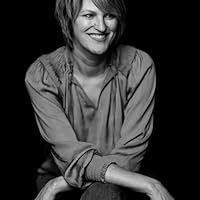
Ana Castillo (June 15, 1953-) is a celebrated and distinguished poet, novelist, short story writer, essayist, editor, playwright, translator and independent scholar. Castillo was born and raised in Chicago. She has contributed to periodicals and on-line venues (Salon and Oxygen) and national magazines, including More and the Sunday New York Times. Castillo’s writings have been the subject of numerous scholarly investigations and publications. Among her award winning, best sellling titles: novels include So Far From God, The Guardians and Peel My Love like an Onion, among other poetry: I Ask the Impossible. Her novel, Sapogonia was a New York Times Notable Book of the Year. She has been profiled and interviewed on National Public Radio and the History Channel and was a radio-essayist with NPR in Chicago. Ana Castillo is editor of La Tolteca, an arts and literary ‘zine dedicated to the advancement of a world without borders and censorship and was on the advisory board of the new American Writers Museum, which opened its door in Chicago, 2017. In 2014 Dr. Castillo held the Lund-Gil Endowed Chair at Dominican University, River Forest, IL and served on the faculty with Bread Loaf Summer Program (Middlebury College) in 2015 and 2016. She also held the first Sor Juana Inés de la Cruz Endowed Chair at DePaul University, The Martin Luther King, Jr Distinguished Visiting Scholar post at M.I.T. and was the Poet-in-Residence at Westminster College in Utah in 2012, among other teaching posts throughout her extensive career. Ana Castillo holds an M.A from the University of Chicago and a Ph.D., University of Bremen, Germany in American Studies and an honorary doctorate from Colby College. She received an American Book Award from the Before Columbus Foundation for her first novel, The Mixquiahuala Letters. Her other awards include a Carl Sandburg Award, a Mountains and Plains Booksellers Award, and fellowships from the National Endowment for the Arts in fiction and poetry. She was also awarded a 1998 Sor Juana Achievement Award by the Mexican Fine Arts Center Museum in Chicago. Dr. Castillo’s So Far From God and Loverboys are two titles on the banned book list controversy with the TUSD in Arizona. 2013 Recipient of the American Studies Association Gloria Anzaldúa Prize to an independent scholar. via www.anacastillo.net
Ana Castillo’s sixth novel, Watercolor Women, Opaque Men focuses on Ella or She, a single, working mother whose family has immigrated to the United States from Mexico. The entirety of the novel is written in tercets, and follows Ella and her family as she navigates grievous hardship through poverty, racism, and sexism. Written in a stream of consciousness style, the story jumps from vignette to vignette, touching on experiences of work, death, love, and pain. Castillo’s expert poetic point of view is extremely effective in this regard, because it strips the narrative down to raw, unflinching moments of unflinching emotion and gives an honest look at how people, “living in hell” cope with their everyday reality. However, Castillo does not paint Ella or the other migrant people in her narrative as simple victims. Instead, her form jumps around in time, giving the reader an emotional whiplash between the mundane and the traumatic. In this way, Castillo paints a realistic picture of trauma; the past that endures and the elements of one's life that doesn’t let it define them. What’s also impressive about Castillo’s prose is her refusal to let go of cultural and political settings. The novel is rife with historical allusions which gives the reader a semblance of time as the story bounces from past to present, while placing an emphasis on how the American and Latin American political landscape shapes the experiences of its characters. This effort is multifaceted as Castillo incorporates mythology from Greek, Aztec, and Christian reference points, an act of apotheosis for her brown, female, poor characters who are reinforced by every facet of society to be worthless to the point of invisibility. This form contributes to her thesis that people who are cast to the margins of society, experience a struggle that transcends nations and eras. Castillo, as a champion of Chicano feminism, provides complexity in identity, especially through her protagonist who attempts to understand her queer sexuality. The title points to her complex feelings towards her lovers, women being fluid, just out of reach, and bleeding through the lines of established societal boundaries such as the nuclear family structure. Men on the other hand are concrete, understood by societal design. This motif, enforced by the novel never establishing a name for the main character, turns Ella into a paradoxical Everywoman, a woman who experienced a unique barrage of financial and racial trauma, while navigating societal and therefore cyclical difficulties. In establishing her struggles of sexuality and gender that are common to most women, Castillo takes her invisible characters out of the dark. Watercolor Women, Opaque Men is a complicated narrative and not for the faint of heart. Point of view is changed without warning, timelines are never linear, and characters are often introduced, simply to establish a memory, before ceasing to exist. However, the novel is worth the effort. Castillo’s humor and magical realism allows for a heartbreaking narrative untouched by many authors. In the true spirit of a novel in verse, linear narrative is sacrificed for raw, palpable emotion.
This was the first time I have read a novel in verse and I wasn't sure what to expect. The entire book is written in 3-line stanzas, with no rhyme pattern or form of repetition. The book shines light on a lot of issues many people in America are ignorant about. The protagonist isn't a one-sided character with one issue, but many things go on in her life. While it was a good idea, the writing itself was incredibly confusing. The attempt at being poetic comes off as vague and it's hard to understand what's happening. In one chapter, her son is the speaker and I didn't even notice until I was almost done with it. Every chapter feels like an individual story and I don't understand its importance until 3 chapters later, when its events are vaguely mentioned again. There is no discernable plot structure. I was excited to read a book with main character in intersecting marginalized communities, but the book feels as though it needs more work.
I'm glad I read this. Picked up on a whim. Fed me images of malnourished, the forlorn, the forgotten—and those same beings rising above their circumstances to try to claim the fullness of life.
Thank you Ana Castilla for your sharp, direct and poignant voice. These are poems of life, of love, of struggle, adversity. All so eloquently, honestly stated. I love them. I love Ana Castillo.
Excerpt from "El Hijo" ...Other days when he was much less sullen it could b said, he marveled at the person who had set an example of fortitude & tenacity, if not to emulate than to admire... But especially he counted as his good fate, how the woman who bore him had resolved to nurture something that in & of itself had done nothing to deserve it. What more organic & without deliberate intention... than to b brought forth from her body - of blood & muscle, contractions & expulsions? Issued from between feces & urine according to St. Augustine. The church of Peter & Paul had not seen woman's birthing as extraordinary. Nor had Jesus, apparently. Why should they? It was centuries later that the ovum was discovered. Who knew women had made any real contribution. But not becoming a man of religious leanings or in awe of god El hijo de ella asked himself: Why should a woman - who is neither a vessel or goddess not get up and leave a newborn to die in the bushes. Such a helpless creature that had caused her revolting pain (as he had heard) hardly human as it was in those first moments? What compelled her to reach down & embrace it - take it to her bosom & let it thrive? Unlike the woman he heard about on the news who was seen bathing in the beach after she had left newborn in the sand. Inhuman the authorities called her, bitch, not fit to b among the decent. Lower than a beast. She should be outcast, stoned, imprisoned for life! But where Oh- where was the male who had sired the infant? Oh- and where were those to prepare that woman when she was pregnant to teach her. What society assumed, demanded, should not have to b taught? Where the elder women to fire up the temezkal & cleanse the mother-to-b with steam & herbs, to recite the prayers that were to b said, sing the chants that were good to b sung And where - the wise ones - for their age had brought experience greater than all riches. And the fathers, who were once brave and not as wise but still strong, who brought gifts of rabbit & venison to the post-partum woman? Who were the leaders, the priests & statesmen that would guarantee the child's path? Where were those who came to rejoice, to bring offerings of fur & wool, a cradle, a toy? To the woman alone there was nothing but a haunting echo inside and all around, he was sure. And he was glad that he - the son, though aware, were often ridden with black moods was also relieved that the woman who made him - had spared his life. But now it was up to him, & no one else to decide what to do with it.
I picked this book up close to a decade ago because I wanted some poetry to expand my mind, and I hit the jackpot with Watercolor Women/Opaque Men. This is the first book of poetry that I read that doubles as a chapter book narrative. Castillo beautifully renders each poem as a whole, but there is a larger story here, and that is this book's strongest feature.
Love, family, identity, hardship: Castillo covers a lot here. It covers issues that are just as important, or maybe even more so, today than they were ten years ago. It is a feminist manifesto that looks at immigration issues and being the daughter of Chicano migrant workers. It is a powerful story of bisexuality and cultural identity. It is a satire of a single, working mother with no name but "She." (Which is a powerful statement, because Ella can be anyone. Her plight is not unique.)
I feel like this book might be even MORE important to read in post-Trump America than it was during Bush2 America. This has been my most recommended book of poetry that I have ever read, and it is something that you should pick up and then get your friends to pick it up too.
This is, indeed, a novel in verse--mostly three-line stanzas in narrative form but with mythological references contrasting contemporary/quotidian images of cleaning toilets and getting hit on by a college professor. There's a lot of heavy-handedness here, but the verse form helped me get over that. The poetic lines and repeated motifs softened the hard edges and gave the work a larger, more mythological sense of "Ella"--the everywoman protagonist.