Professor Hugo Pinero builds a machine that will predict how long a person will live. It does this by sending a signal along the world line of a person and detecting the echo from the far end. Professor Pinero's invention has a powerful impact on the life insurance industry, as well as on his own life...
"Life-Line" is a short story by American author Robert A. Heinlein. Published in the August 1939 edition of Astounding, it was Heinlein's first published short story.
Robert Anson Heinlein was an American science fiction author, aeronautical engineer, and naval officer. Sometimes called the "dean of science fiction writers", he was among the first to emphasize scientific accuracy in his fiction, and was thus a pioneer of the subgenre of hard science fiction. His published works, both fiction and non-fiction, express admiration for competence and emphasize the value of critical thinking. His plots often posed provocative situations which challenged conventional social mores. His work continues to have an influence on the science-fiction genre, and on modern culture more generally. Heinlein became one of the first American science-fiction writers to break into mainstream magazines such as The Saturday Evening Post in the late 1940s. He was one of the best-selling science-fiction novelists for many decades, and he, Isaac Asimov, and Arthur C. Clarke are often considered the "Big Three" of English-language science fiction authors. Notable Heinlein works include Stranger in a Strange Land, Starship Troopers (which helped mold the space marine and mecha archetypes) and The Moon Is a Harsh Mistress. His work sometimes had controversial aspects, such as plural marriage in The Moon Is a Harsh Mistress, militarism in Starship Troopers and technologically competent women characters who were formidable, yet often stereotypically feminine—such as Friday. Heinlein used his science fiction as a way to explore provocative social and political ideas and to speculate how progress in science and engineering might shape the future of politics, race, religion, and sex. Within the framework of his science-fiction stories, Heinlein repeatedly addressed certain social themes: the importance of individual liberty and self-reliance, the nature of sexual relationships, the obligation individuals owe to their societies, the influence of organized religion on culture and government, and the tendency of society to repress nonconformist thought. He also speculated on the influence of space travel on human cultural practices. Heinlein was named the first Science Fiction Writers Grand Master in 1974. Four of his novels won Hugo Awards. In addition, fifty years after publication, seven of his works were awarded "Retro Hugos"—awards given retrospectively for works that were published before the Hugo Awards came into existence. In his fiction, Heinlein coined terms that have become part of the English language, including grok, waldo and speculative fiction, as well as popularizing existing terms like "TANSTAAFL", "pay it forward", and "space marine". He also anticipated mechanical computer-aided design with "Drafting Dan" and described a modern version of a waterbed in his novel Beyond This Horizon. Also wrote under Pen names: Anson McDonald, Lyle Monroe, Caleb Saunders, John Riverside and Simon York.
Life Line is a short work written by a 32-year-old new writer, in fact, Heinlein’s very first published story. In writing this fantastic truism, I think that there was a time when an unknown songwriter sketched the words:
Love, love me do You know I love you I'll always be true So please, love me do Whoa, love me do
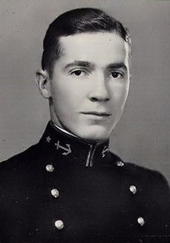
And some record producer thought about it, looked at the young face before him, and made history. In the present case, Astounding editor John W. Campbell made this discovery and decision in the summer of 1939 with an unknown 32 year old Navy veteran and first time writer, someone named Robert Anson Heinlein.
Dr. Pinero’s life and death predicting machine had far ranging consequences for his clients, for the life insurance industry, and ultimately for himself.
Pinero created a machine that could trace the echoes of a person’s life, look far ahead into the pink worm of a human’s existence and see where the line would end. In summary: he could predict the moment of someone’s death.
But this caused problems, if a man knows when he will die, he won’t but life insurance, he won’t plan ahead for an uncertain future, but rather will live his allotted time in forewarned bliss. Pinero tests his device to try for errors, but to no avail, he has used the machine himself and knows the difficult truth.
A fine SF story, this is even more memorable because we can trace backwards along the line and know this is where it all begins.
"In simple language I have invented a technique to tell how long a man will live. I can give you advance billing of the Angel of Death. I can tell you when the Black Camel will kneel at your door. In five minutes time with my apparatus I can tell any of you how many grains of sand are still left in your hourglass."
How exciting! This was Heinlein's first story, the very beginning of the Grand Master prolific career.
Dr. Pinero builds a chronovitameter, a machine that can predict the exact time of death from one person's life line. What would you think are the consequences of that kind of technology? See for yourself. Great story.
Este relato fue mi primer acercamiento con el autor; a pesar de ser un escritor tan conocido aun no había tenido la oportunidad de poder leerlo. La Línea de la Vida es un relato muy cortito pero significativo, que trata un tema que tiene múltiples aristas, porque, ¿Qué haríamos si supiéramos la hora de nuestra muerte?
El libro más bien es como un cuadernillo, tiene 31 páginas y la edición que poseemos no tiene información de la editorial ni de nada.
Como mencionamos anteriormente, el relato nos cuenta del descubrimiento del Doctor Hugo Pinero, quien anuncia la creación de un artefacto que puede llegar a predecir la fecha exacta de la muerte de una persona, a través de un simple examen como cuando uno va a tomarse una radiografía. Esto le conlleva una serie de problemas, tanto con los científicos que no aceptan su descubrimiento como un hecho científico, pero principalmente con las empresas que venden seguros de vida, ya que en este último caso, algunas personas que se realizaban los exámenes con el Doctor Pinero, dejaban sus seguros ante la “certeza” de la fecha de su muerte, por lo que aceptar estos resultados de Pinero, significaría la muerte de dichas empresas. Pinero es demandado y debe enfrentar un juicio donde determinarán la legalidad de lo que está realizando.
В первом рассказе Хайнлайна еще нет типичного нахального и самоуверенного главного героя и история скорее похожа на эпизод Сумеречной зоны, чем на настоящую фантастику. Следить за всей этой массовкой без проработанных персонажей тяжеловато, но уже можно заприметить ростки Истории Будущего: Хайнлайна интересует динамика того, как технологические корпорации будут противиться настоящим инновациям, а не просто сами изобретения.
It has a scientific explanation for how Pinero can tell the date of someone’s death, but like some of Heinlein’s other SF stories, the point of it is not the science, but how a scientific discovery can affect the world, in this case, the life insurance business. It’s a little long for the idea—Heinlein enjoyed letting his characters rant, and Pinero gets into some good insults, and then there’s the court scene, where the Judge gets to state the basic theme of the story: “There has grown up in the minds of certain groups in this country the notion that because a man or corporation has made a profit out of the public for a number of years, the government and the courts are charged with the duty of guaranteeing such profit in the future, even in the face of changing circumstances and contrary public interest. This strange doctrine is not supported by statute nor common law. Neither individuals nor corporations have any right to come into court and ask that the clock of history be stopped, or turned back, for their private benefit.” The ending is only somewhat of a letdown, basically chosen because Heinlein had made his point and wanted to return the world—part of his Future History series?—to status quo.
Buen relato, el desenlace puede ser un poco previsible pero no le arruina la trama. Se centra bastante en como este invento que usa "la línea de la vida" modifica algunas instituciones y comportamientos de la sociedad de manera bien realista, algo que se va a repetir en las demás historias de Heinlein. La explicación de lo que es la línea me gustó bastante sin llegar a ser tediosa ni alargada.
“There has grown up in the minds of certain groups in this country the notion that because a man or corporation has made a profit out of the public for a number of years, the government and the courts are charged with the duty of guaranteeing such profit in the future, even in the face of changing circumstances and contrary public interest. This strange doctrine is not supported by statute nor common law. Neither individuals nor corporations have any right to come into court and ask that the clock of history be stopped, or turned back, for their private benefit.“
This is a short story I really wish were longer. Characters coming into the story are introduced only sometime by name and I feel like with more material it would have been better to have the supporting characters of this story and our main character as well give them more time to flesh out the characters a little more.
For instance we know that Dr. Pinero has the ability to tell when one will die. But I guess after all the scientific advancement stuff and then you know, making money off of your invention like I understand all that but still what I don’t understand is why? Why did Pinero do it? What was his motivation emotionally? Because you could tell he didn’t particularly like telling people when they were going to die. He even tried to stall two of his clients to delay the inevitable and it still happened.
So then a few people linked with the life insurance business pop into Pinero’s office and murder him, so he must have known that he would be dying just then. So like why?? Are we getting rid of the death dates and the technology because it isn’t right to play death that way, or are we doing it so the Life Insurance companies can stop bitching about how much money they’ve lost? Also Pinero claims his device can tell the exact date of birth and death, but when he uses it at one point he says he can only pinpoint someone’s birth to “I get some time in February, 1902”. Shouldn’t he know the exact date? There’s some inconsistencies there. I don’t know if I’m reading too far into something that’s supposed be like a little funny short sci-fi story.
I did like it though. It’s got great ideas. Even though I had some problems with it Heinlein has great ability as a writer. I will definitely be checking out more of his work in the future.
Rating: 4 Stars
This entire review has been hidden because of spoilers.
It tells the story of a scientist who has worked out a way to predict the date and time of a person's death (though not the manner). Coincidently, as an additional parlor trick it can also reveal the date and time of a person's birth.
As is to be expected, established scientists are not overjoyed by the revelation of this technology and seek to stroke their egos by calling it all sorts of names. Also displeased: the life insurance company.
The inventor, however, shows some humanity in a plot twist that I dare not spoil.
A short story, but then in a collection of short stories you knew it was going to be a short story. An enjoyable story, nonetheless.