

What do you think?

Field Guide to the Birds of East Africa: Kenya, Tanzania, Uganda, Rwanda, Burundi
Covering all the resident, migrant and vagrant birds of Kenya, Tanzania, Uganda, Rwanda and Burundi, this book describes some 1388 species in total.
Birds of East Africa
. The first comprehensive field guide to the countries
of Kenya, Tanzania, Uganda, Rwanda, and Burundi
· Covers 1,388 species, with 3,400 color images on 287 plates
. Concise species accounts facing the plates describe
appearance, status, range, habits, and voice
· Information on habitats, protected areas, and
conservation issues
. The essential guide to the birds of this spectacular region
Birds of East Africa
. The first comprehensive field guide to the countries
of Kenya, Tanzania, Uganda, Rwanda, and Burundi
· Covers 1,388 species, with 3,400 color images on 287 plates
. Concise species accounts facing the plates describe
appearance, status, range, habits, and voice
· Information on habitats, protected areas, and
conservation issues
. The essential guide to the birds of this spectacular region
600 pages, Hardcover
First published October 1, 2001
Ratings & Reviews
Friends & Following
Create a free account to discover what your friends think of this book!
Community Reviews
Displaying 1 - 8 of 8 reviews

December 11, 2022
Been amazing seeing all the great birds here :) can't ever finish a bird guide exactly, but finished with it until I return. More detailed descriptions would have been good though.

December 27, 2022
My first visit to East Africa was in the late 1990s. I used a copy of ‘A Field Guide to the Birds of East Africa’ by John Williams (published by Collins). At that time, I thought it was excellent and I still have my copy of that book. On later visits to Kenya I used the ‘Birds of Kenya and Northern Tanzania’ by Dave Zimmerman et al. in the Helm Field Guides. This was a further improvement. On my most recent visit to Kenya I used the Second Edition of ‘Birds of East Africa: Kenya, Tanzania, Uganda, Rwanda, Burundi’ by Terry Stevenson and John Fanshawe which is also published in the Helm Field Guide Series. The second edition published in 2020 is a significant update to the first edition published in 2002. The second edition covers 1,448 species in 289 colour plates compared to 1,338 species on 287 plates in the first edition. 17 Species of vagrants are covered in three pages (606-604) in the end sections.
My overall impression is that this is a fantastic field guide with both the text and illustrations to a very high standard. On a ten day trip covering Nairobi, Amboseli, Tsavo West and Tsavo East National Parks there were hardly any birds which evaded ID. A few Little Brown Jobs evaded ID but this was no fault of the book. Any failed IDs were usually because I did not get sufficiently good views and also because I am not familiar with the calls of difficult groups such as the Cisticolas. The illustrations by John Gale and Brian Small are first class. They are both accurate in enabling ID and also pleasingly life-like. Not all field guide illustrations in books manage to be both accurate for field identification and also manage to be aesthetically pleasing. The concise, crisp text hits the target in enabling ID. The text is identification oriented as expected but also contains information on ‘Status and Habitat’ and ‘Voice’. The latter is especially important for some species. The text is remarkably good at conveying a good portrait of the bird in terms of identification, habits and distribution. Packing so much information into a small word count is a skill itself. This is no doubt facilitated by authors who are expert birders who have spent many hours in the field.
The bulk of the book which are the species accounts (pages 22 – 598) follow the modern field guide format with the illustrations (right hand side) facing the text and colour-coded distribution maps on the left. My only niggle is that I would have liked the political boundaries of the countries much more clear on the maps to help me orient myself to where I was in relation to the marked distributions. As the maps are small there is no space for locations to be marked on them to help orientate. The book broadly follows a modern phylogenetic taxonomy with a few departures to facilitate field use. The most obvious being that the Falcons (Family Falconiformes) are placed next to Hawks, vultures, buzzards and eagles (Family Accipitridae) rather than next to Parrots to show their true evolutionary relationship. Other birds in groups where the taxonomy has only recently been resolved (for example those with the words ‘warbler’ in them) may still have a traditional arrangement to help with field use. The plates are generally arranged to bring a taxonomic level together, whether this is at the level of family, sub-family, tribe or genus. Most plates have one or more headings explaining the taxonomic level. This was a feature I particularly liked. With families that are species rich, it helps to have them broken down into smaller related groups with taxonomic notes that include pointers to help separate them in the field from other family members. It also helps to make sense of the various different taxonomic treatments in other books that precede this book. Occassionaly as with the plate on the White Crowned Shrike and Helmet Shrikes, species which belong into two different families are placed together with an explanatory note that as in the past they been placed together to help with field ID. On the whole a really good balance has been struck in educating the user of modern taxonomy whilst at the same time making the book easy for field use. The plates show distinct subspecies, differences in sexes and immatures. Of course with groups such as birds of prey and gulls although a range of plumages are shown it cannot be a substitute for a more advanced family monograph.
For anyone using this book on a visit to a single country in the book’s scope, it can at times feel like there is too much as a country level book could lose up to a third or more of the 1,448 species covered in the book. On the other hand, it is good so see the distribution of closely related species in the East African region across multiple countries. A country like Kenya is so climatically diverse that even within the country there are huge differences in the avifauna even within its own political boundaries.
The introductory sections contain a map with key place names, with brief chapters on Landscapes, Seasonality, Sites and Species (pages 10-15). Two pages cover bird topography. The chapter on ‘Additional Reading’ references key works, but a standard listing of references is not provided. This may be to avoid an already big book getting any bigger and is not a problem as an internet search will easily bring up the titles that have been referenced within the introductory material. The end sections include a list of the birds endemic to East Africa and maps of the important bird areas for each of the countries covered. There is a comprehensive index of common and Latin names with the very last page (page 640) having a quick index in alphabetical order to the bird groups. This complements the three detailed content pages at the front of the book where the birds are grouped by family in what largely reflects a modern phylogenetic relationship (with exceptions as mentioned earlier).
As someone who has authored field guide to birds and mammals, I suppose I have a deeper appreciation of the amount of field work and desk work a book like this entails. Every time I thumb through this book, I am in awe of the amount of work that must have gone into producing such a superb field guide.
My overall impression is that this is a fantastic field guide with both the text and illustrations to a very high standard. On a ten day trip covering Nairobi, Amboseli, Tsavo West and Tsavo East National Parks there were hardly any birds which evaded ID. A few Little Brown Jobs evaded ID but this was no fault of the book. Any failed IDs were usually because I did not get sufficiently good views and also because I am not familiar with the calls of difficult groups such as the Cisticolas. The illustrations by John Gale and Brian Small are first class. They are both accurate in enabling ID and also pleasingly life-like. Not all field guide illustrations in books manage to be both accurate for field identification and also manage to be aesthetically pleasing. The concise, crisp text hits the target in enabling ID. The text is identification oriented as expected but also contains information on ‘Status and Habitat’ and ‘Voice’. The latter is especially important for some species. The text is remarkably good at conveying a good portrait of the bird in terms of identification, habits and distribution. Packing so much information into a small word count is a skill itself. This is no doubt facilitated by authors who are expert birders who have spent many hours in the field.
The bulk of the book which are the species accounts (pages 22 – 598) follow the modern field guide format with the illustrations (right hand side) facing the text and colour-coded distribution maps on the left. My only niggle is that I would have liked the political boundaries of the countries much more clear on the maps to help me orient myself to where I was in relation to the marked distributions. As the maps are small there is no space for locations to be marked on them to help orientate. The book broadly follows a modern phylogenetic taxonomy with a few departures to facilitate field use. The most obvious being that the Falcons (Family Falconiformes) are placed next to Hawks, vultures, buzzards and eagles (Family Accipitridae) rather than next to Parrots to show their true evolutionary relationship. Other birds in groups where the taxonomy has only recently been resolved (for example those with the words ‘warbler’ in them) may still have a traditional arrangement to help with field use. The plates are generally arranged to bring a taxonomic level together, whether this is at the level of family, sub-family, tribe or genus. Most plates have one or more headings explaining the taxonomic level. This was a feature I particularly liked. With families that are species rich, it helps to have them broken down into smaller related groups with taxonomic notes that include pointers to help separate them in the field from other family members. It also helps to make sense of the various different taxonomic treatments in other books that precede this book. Occassionaly as with the plate on the White Crowned Shrike and Helmet Shrikes, species which belong into two different families are placed together with an explanatory note that as in the past they been placed together to help with field ID. On the whole a really good balance has been struck in educating the user of modern taxonomy whilst at the same time making the book easy for field use. The plates show distinct subspecies, differences in sexes and immatures. Of course with groups such as birds of prey and gulls although a range of plumages are shown it cannot be a substitute for a more advanced family monograph.
For anyone using this book on a visit to a single country in the book’s scope, it can at times feel like there is too much as a country level book could lose up to a third or more of the 1,448 species covered in the book. On the other hand, it is good so see the distribution of closely related species in the East African region across multiple countries. A country like Kenya is so climatically diverse that even within the country there are huge differences in the avifauna even within its own political boundaries.
The introductory sections contain a map with key place names, with brief chapters on Landscapes, Seasonality, Sites and Species (pages 10-15). Two pages cover bird topography. The chapter on ‘Additional Reading’ references key works, but a standard listing of references is not provided. This may be to avoid an already big book getting any bigger and is not a problem as an internet search will easily bring up the titles that have been referenced within the introductory material. The end sections include a list of the birds endemic to East Africa and maps of the important bird areas for each of the countries covered. There is a comprehensive index of common and Latin names with the very last page (page 640) having a quick index in alphabetical order to the bird groups. This complements the three detailed content pages at the front of the book where the birds are grouped by family in what largely reflects a modern phylogenetic relationship (with exceptions as mentioned earlier).
As someone who has authored field guide to birds and mammals, I suppose I have a deeper appreciation of the amount of field work and desk work a book like this entails. Every time I thumb through this book, I am in awe of the amount of work that must have gone into producing such a superb field guide.

March 20, 2018
All Princeton Field Guides fall into the “must have” category when it comes to packing for a long holiday of wildlife safaris. But it’s up to the reader and the utility of the guide as to whether it’s essential to bring in a daily bag. Let’s dive into what features this specific field guide has.
Like others in the series focused on avian species, The Birds of East Africa: Kenya, Tanzania, Uganda, Rwanda, Burundi by Terry Stevenson, published in 2002, has a plethora of information on bird basics, behavior, habitats and biomes, resident/visitor distribution, taxonomic classification, and nomenclature. This field guide covers 1,388 bird species with 286 color plates containing 3,400 color images, and provides a concise overview of avian species in the modern interpretation of East Africa: Uganda, Kenya, Rwanda, Burundi, and Tanzania. This is approximately 80% of known bird species in sub-Saharan Africa, all found in East Africa! Like its sister guides, Birds of East Africa is a solid reference guide suitable for most birders and appears to cover the same number of species as Birds of East Africa (Helm Field Guide) by the same authors while also being less expensive.
As with other Princeton Field Guides, the bulk of the field guide is laid out with information and the range of each bird species on the left page and a full-color image of each species on the right, often with juvenile, male, and female examples in addition to the underside as seen in flight. The illustrations depict some of the species perched, in flight, and even in different stages of development, breeding, or seasonal plumage (juvenile, adult, breeding, non-breeding). A few species also have illustrations of the nest or close-ups of their tail and undertail-coverts. In the front of the book there is also a two-page visual defining the specific names and features of a bird and its plumage.
The information on each bird is very concise and explains appearance, plumage appearance during certain seasons or stages of life, animal size, wingspan, voices, and the status and biology of the species. Each species’ information comes in a single paragraph and is accompanied by a small map showing the estimated range of that species. The only points of reference are country borders and Lake Victoria, which is Africa’s largest lake.
Measuring 8.5x5.5x1.25 inches (21.5x14.0x3.2 cm) Birds of East Africa is a little taller and not quite as wide as other entries in the Princeton Field Guides series on birds. The book is still small enough to be carried around in a day pack, but hikers or photographers on a day-trip already carrying around a lot of weight might want to forego this book in favor of a more compact and region-specific field guide.
What the Field Guide Doesn’t Have:
Birds of East Africa does not have a glossary of terms related to bird species, their habitats, and their behaviors. There is also no section on "Birding Societies" (groups that may interest you) or "Birdlife Clubs" in specific countries. This is something that exists for the Birds of Southern Africa: Fourth Edition guide and is a valuable resource for birders, eco-tourists, and others interested in interacting with serious birders in the region.
Overview & Comparison:
As with all the Princeton Field Guides the ability to look up so many avian species is straightforward, but not as convenient as some others in the series. Aside from thumbing through the book manually, the only other way to find a specific bird species or family is to use one of the two indexes (unfortunately there is no Swahili index): pages 575-590 have an extensive list of bird species by their scientific name and pages 591-602 have a list of common names in English. This makes the book less accessible to first-time and novice birders than Birds of Southern Africa: Fourth Edition and some other Princeton Field Guides which have an illustrated quick reference. This is probably due to the extensiveness of the species covered, but the authors have helpfully included a list of plates (pages of illustrations) at the beginning so that page numbers for specific birds can effectually be found. As a result while this book is useful for anyone going on safari, it’s most useful to: birders confident in their observational skills, birders with a strong knowledge of names, or those who love pouring over species data after a safari to correctly identify their sighting (which is half the fun!).
The last four pages of the guide are dedicated to a large, 2-page map of the region with key points marked. This is supplemented by a 2-page list of “Important Bird Areas of East Africa” which not only includes national parks and notable game reserves, but also forests, mountain regions, and coastal regions which are great for planning a birding adventure.
Typically located in the back of many books and texts, the “additional reading” section is listed in the front to help prepare the serious bird enthusiasts before their adventure begins. However, because the book has not been substantially changed, if at all, since its first publishing in 2002, the list of “additional reading” is surely missing the latest publications and research released in the past fifteen years.
Like others in the series focused on avian species, The Birds of East Africa: Kenya, Tanzania, Uganda, Rwanda, Burundi by Terry Stevenson, published in 2002, has a plethora of information on bird basics, behavior, habitats and biomes, resident/visitor distribution, taxonomic classification, and nomenclature. This field guide covers 1,388 bird species with 286 color plates containing 3,400 color images, and provides a concise overview of avian species in the modern interpretation of East Africa: Uganda, Kenya, Rwanda, Burundi, and Tanzania. This is approximately 80% of known bird species in sub-Saharan Africa, all found in East Africa! Like its sister guides, Birds of East Africa is a solid reference guide suitable for most birders and appears to cover the same number of species as Birds of East Africa (Helm Field Guide) by the same authors while also being less expensive.
As with other Princeton Field Guides, the bulk of the field guide is laid out with information and the range of each bird species on the left page and a full-color image of each species on the right, often with juvenile, male, and female examples in addition to the underside as seen in flight. The illustrations depict some of the species perched, in flight, and even in different stages of development, breeding, or seasonal plumage (juvenile, adult, breeding, non-breeding). A few species also have illustrations of the nest or close-ups of their tail and undertail-coverts. In the front of the book there is also a two-page visual defining the specific names and features of a bird and its plumage.
The information on each bird is very concise and explains appearance, plumage appearance during certain seasons or stages of life, animal size, wingspan, voices, and the status and biology of the species. Each species’ information comes in a single paragraph and is accompanied by a small map showing the estimated range of that species. The only points of reference are country borders and Lake Victoria, which is Africa’s largest lake.
Measuring 8.5x5.5x1.25 inches (21.5x14.0x3.2 cm) Birds of East Africa is a little taller and not quite as wide as other entries in the Princeton Field Guides series on birds. The book is still small enough to be carried around in a day pack, but hikers or photographers on a day-trip already carrying around a lot of weight might want to forego this book in favor of a more compact and region-specific field guide.
What the Field Guide Doesn’t Have:
Birds of East Africa does not have a glossary of terms related to bird species, their habitats, and their behaviors. There is also no section on "Birding Societies" (groups that may interest you) or "Birdlife Clubs" in specific countries. This is something that exists for the Birds of Southern Africa: Fourth Edition guide and is a valuable resource for birders, eco-tourists, and others interested in interacting with serious birders in the region.
Overview & Comparison:
As with all the Princeton Field Guides the ability to look up so many avian species is straightforward, but not as convenient as some others in the series. Aside from thumbing through the book manually, the only other way to find a specific bird species or family is to use one of the two indexes (unfortunately there is no Swahili index): pages 575-590 have an extensive list of bird species by their scientific name and pages 591-602 have a list of common names in English. This makes the book less accessible to first-time and novice birders than Birds of Southern Africa: Fourth Edition and some other Princeton Field Guides which have an illustrated quick reference. This is probably due to the extensiveness of the species covered, but the authors have helpfully included a list of plates (pages of illustrations) at the beginning so that page numbers for specific birds can effectually be found. As a result while this book is useful for anyone going on safari, it’s most useful to: birders confident in their observational skills, birders with a strong knowledge of names, or those who love pouring over species data after a safari to correctly identify their sighting (which is half the fun!).
The last four pages of the guide are dedicated to a large, 2-page map of the region with key points marked. This is supplemented by a 2-page list of “Important Bird Areas of East Africa” which not only includes national parks and notable game reserves, but also forests, mountain regions, and coastal regions which are great for planning a birding adventure.
Typically located in the back of many books and texts, the “additional reading” section is listed in the front to help prepare the serious bird enthusiasts before their adventure begins. However, because the book has not been substantially changed, if at all, since its first publishing in 2002, the list of “additional reading” is surely missing the latest publications and research released in the past fifteen years.

January 20, 2026
Very helpful while on Safari in Kenya, and in identifying photos of many birds that were taken.
September 28, 2009
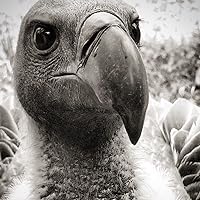
I borrowed this field guide for our recent trip to Tanzania and I took it everywhere. I was somewhat unfamiliar with the species in this region and I was able to identify birds fairly quickly from the illustrations and maps. Most plates contained images of adults, immatures, males and females and a fairly good description of habitat and range for each species. I would have liked more natural history information (such as feeding preferences) but that would have increased the volume of the book.
It is quite bulky and may not be suitable for some that have luggage weight restrictions. It may be too much for someone that isn't familiar with birds in general. A moderate birder should look through this occasionally before their trip to get familiar with the species they are likely to encounter.
It is quite bulky and may not be suitable for some that have luggage weight restrictions. It may be too much for someone that isn't familiar with birds in general. A moderate birder should look through this occasionally before their trip to get familiar with the species they are likely to encounter.

August 2, 2014
All the safari guides in Tanzania carry well-worn copies of this definitive guide. It is well worth taking it along with you if you travel there. The number of species in Tanzania is truly overwhelming, and you will never keep track of what you've seen without this book!

February 16, 2009
I like the way this story is told. So few books these days know how to truly tell a story. It was a quiet unfolding of the characters and events. Perfect for a nice winter day read!
June 7, 2020
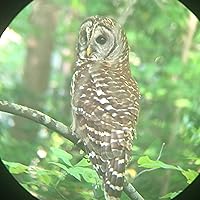
An informational and beautifully illustrated guide that is great for birders in Tanzania.
Displaying 1 - 8 of 8 reviews