

What do you think?

Japan at War: An Oral History
A “deeply moving book” (Studs Terkel) and the first ever oral history to document the experience of ordinary Japanese people during World War II
“Hereafter no one will be able to think, write, or teach about the Pacific War without reference to [the Cooks’] work.” —Marius B. Jansen, Emeritus Professor of Japanese History, Princeton University
This pathbreaking work of oral history by Haruko Taya Cook and Theodore F. Cook was the first book ever to capture the experience of ordinary Japanese people during the war and remains the classic work on the subject.
In a sweeping panorama, Japan at War takes us from the Japanese attacks on China in the 1930s to the Japanese home front during the inhuman raids on Tokyo, Hiroshima, and Nagasaki, offering glimpses of how the twentieth century’s most deadly conflict affected the lives of the Japanese population. The book “seeks out the true feelings of the wartime generation [and] illuminates the contradictions between the official views of the war and living testimony” (Yomiuri Shimbun, Japan).
For decades, American and Japanese readers have turned to Japan at War for a candid portrait of the Japanese experience during World War II in all its complexity. Featuring essays that contextualize the oral histories of each tumultuous period covered, Japan at War is appropriate both as an introduction to those war-ravaged decades and as a riveting reference for those studying the war in the Pacific.
“Hereafter no one will be able to think, write, or teach about the Pacific War without reference to [the Cooks’] work.” —Marius B. Jansen, Emeritus Professor of Japanese History, Princeton University
This pathbreaking work of oral history by Haruko Taya Cook and Theodore F. Cook was the first book ever to capture the experience of ordinary Japanese people during the war and remains the classic work on the subject.
In a sweeping panorama, Japan at War takes us from the Japanese attacks on China in the 1930s to the Japanese home front during the inhuman raids on Tokyo, Hiroshima, and Nagasaki, offering glimpses of how the twentieth century’s most deadly conflict affected the lives of the Japanese population. The book “seeks out the true feelings of the wartime generation [and] illuminates the contradictions between the official views of the war and living testimony” (Yomiuri Shimbun, Japan).
For decades, American and Japanese readers have turned to Japan at War for a candid portrait of the Japanese experience during World War II in all its complexity. Featuring essays that contextualize the oral histories of each tumultuous period covered, Japan at War is appropriate both as an introduction to those war-ravaged decades and as a riveting reference for those studying the war in the Pacific.
496 pages, Paperback
First published January 1, 1992
About the author
Haruko Taya Cook
8 books13 followersHaruko Taya Cook is a member of the faculty today at William Paterson University's Department of Languages and Cultures and Center for the Study of Critical Languages and is Fordham Marymount Professor Emerita of History. She is author of Japan at War: An Oral History and has published extensively on war and the common people of Japan and Asia during the 20th Century.
Ratings & Reviews
Friends & Following
Create a free account to discover what your friends think of this book!
Community Reviews
Displaying 1 - 30 of 129 reviews

July 28, 2021
A Contentious Legacy
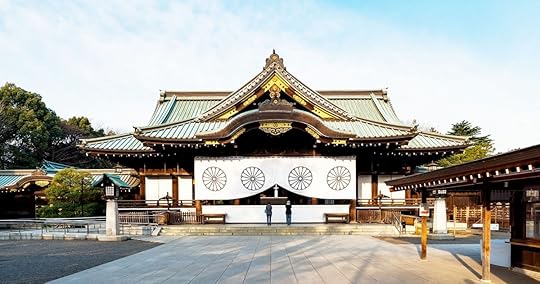
Yasukuni Shrine, Tokyo
This work is a collection of accounts from Japanese (and Korean) witnesses of the events of the war waged by Japan in between 1931 and 1945.
Testimonies are supplemented with critical introduction (historical landmarks, context, a few footnotes, yet all are highly informative).
Some of the key topics broached in this work:
〜Japanese nationalism and totalitarian militarianism (with both Western and endemic roots). The indoctrination of the population, arrests of objectors, the sacrifice of 'expandable' Okinawans (Battle of Okinawa) and Koreans (e.g. building of Matsushiro Underground Imperial Headquarters)...
〜Propaganda, censorship, ban on Western culture at large (exceptions for Italian and German art visibly...), shortages, blackouts, forced labour in Japan during the Pacific War.
〜The glaring inequalities in the Japanese imperial army between soldiers and officers, brutal beatings, thrashings, the avowed merits and iniquities of the former and the latter towards the populations of occupied territories. Distorsion of facts within the Army.
〜The underlying motives for obedience to the imperial authorities in Japan. See 14-18, penser le patriotisme to grasp some common mechanisms behind conscription and draft in both early 20th Europe and Japan).
〜The life of the Chinese civilians, Japanese colonists and military personnel in occupied Manchuria ("Manchukuo"). Some parallels are brought up between Western colonization and Japanese colonization in the Far East.
〜Prisoners of war and how they were dealt with by the Japanese imperial army.
〜How Japanese were frowned upon for allowing themselves to be taken as prisoners by the enemy.
〜... Resulting in the notion of gyokusai (glorious, honorable death)

'Okha' suicide plane
Not to mention suicide motorboats (theoretically not a suicide weapon), suicide diving suits, suicide torpedos...
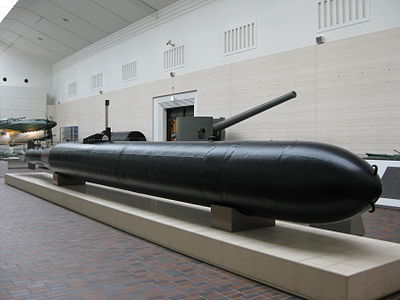
Kaiten suicide torpedo
〜How Japanese soldiers, officers, civilians were dealt with by their different victors.
〜Japanese administration in Burma, Indonesia, Singapore.
〜The nuclear bombs and their aftereffects.
https://marukigallery.jp/en/hiroshima...
〜Responsibility of the Shōwa emperor Hirohito regarding the opening (1931 in China or 1941 in Hawaii depending on the pov) and the lasting of the conflict. Also see Le Japon on this subject.
〜 How the Japanese commemorate the war, how is it remembered and its causes and events passed down to younger generations.
ALSO SEE:
Books:
〜A general history of Japan:
Le Japon
〜On Japanese aesthetics:
The Book of Tea
〜On patriotism and nationalism:
14-18, penser le patriotisme
La création des identités nationales. Europe, XVIIIe-XXe siècle
〜Another testimony:
Something Like an Autobiography
〜Regarding militarianism in Japan:
Runaway Horses
The Temple of Dawn
Battle Royale
〜Propaganda under the Pacific War:
An Artist of the Floating World
〜A brief note on the Kaiten suicide torpedoes:
Les Sous-marins : Fantômes des profondeurs
〜On totalitarianism:
The Rebel
Psychologie Des Foules
Propaganda
〜East Indian Companies, Western trade and colonization of the Far East:
Histoire de la décolonisation au XXème siècle
Capital and Ideology
The Theft of History
Musée de la Compagnie des Indes, Musée d'art et d'histoire de la ville de Lorient
Le goût de l'Inde
Films:
An American propaganda documentary:
Know Your Enemy: Japan - Frank Capra
A war widow investigating about the actual circumstances of her husband's death. A sergeant in the Japanese Imperial Army, he has been executed as a deserter:
Under the Flag of the Rising Sun - Kinji Fukasaku
An animated movie loosely inspired from the life of Jirō Horikoshi, the designer of the Mitsubishi Zero fighter/bomber:
The Wind Rises - Hayao Miyazaki
Inspired from Imperial Japanese Army General Kuribayashi's work Picture Letters from the Commander-in-Chief:
Letters From Iwo Jima - Clint Eastwood
An animated movie about two war orphans and their struggle for survival in bombed and post WW2 Kōbe:
The Grave of the Fireflies - Isao Takahata
https://www.youtube.com/watch?v=4vPeT...
A series of shorts by Akira Kurosawa about his dreams. I personally link 'The Tunnel' to the events told by Japanese veterans in the collection of oral testimonies:
Dreams - Akira Kurosawa, esp. 'The Tunnel'
Yasukuni Shrine, Tokyo
This work is a collection of accounts from Japanese (and Korean) witnesses of the events of the war waged by Japan in between 1931 and 1945.
Testimonies are supplemented with critical introduction (historical landmarks, context, a few footnotes, yet all are highly informative).
Some of the key topics broached in this work:
〜Japanese nationalism and totalitarian militarianism (with both Western and endemic roots). The indoctrination of the population, arrests of objectors, the sacrifice of 'expandable' Okinawans (Battle of Okinawa) and Koreans (e.g. building of Matsushiro Underground Imperial Headquarters)...
〜Propaganda, censorship, ban on Western culture at large (exceptions for Italian and German art visibly...), shortages, blackouts, forced labour in Japan during the Pacific War.
〜The glaring inequalities in the Japanese imperial army between soldiers and officers, brutal beatings, thrashings, the avowed merits and iniquities of the former and the latter towards the populations of occupied territories. Distorsion of facts within the Army.
〜The underlying motives for obedience to the imperial authorities in Japan. See 14-18, penser le patriotisme to grasp some common mechanisms behind conscription and draft in both early 20th Europe and Japan).
〜The life of the Chinese civilians, Japanese colonists and military personnel in occupied Manchuria ("Manchukuo"). Some parallels are brought up between Western colonization and Japanese colonization in the Far East.
〜Prisoners of war and how they were dealt with by the Japanese imperial army.
〜How Japanese were frowned upon for allowing themselves to be taken as prisoners by the enemy.
〜... Resulting in the notion of gyokusai (glorious, honorable death)
'Okha' suicide plane
Not to mention suicide motorboats (theoretically not a suicide weapon), suicide diving suits, suicide torpedos...
Kaiten suicide torpedo
〜How Japanese soldiers, officers, civilians were dealt with by their different victors.
〜Japanese administration in Burma, Indonesia, Singapore.
〜The nuclear bombs and their aftereffects.
https://marukigallery.jp/en/hiroshima...
〜Responsibility of the Shōwa emperor Hirohito regarding the opening (1931 in China or 1941 in Hawaii depending on the pov) and the lasting of the conflict. Also see Le Japon on this subject.
〜 How the Japanese commemorate the war, how is it remembered and its causes and events passed down to younger generations.
ALSO SEE:
Books:
〜A general history of Japan:
Le Japon
〜On Japanese aesthetics:
The Book of Tea
〜On patriotism and nationalism:
14-18, penser le patriotisme
La création des identités nationales. Europe, XVIIIe-XXe siècle
〜Another testimony:
Something Like an Autobiography
〜Regarding militarianism in Japan:
Runaway Horses
The Temple of Dawn
Battle Royale
〜Propaganda under the Pacific War:
An Artist of the Floating World
〜A brief note on the Kaiten suicide torpedoes:
Les Sous-marins : Fantômes des profondeurs
〜On totalitarianism:
The Rebel
Psychologie Des Foules
Propaganda
〜East Indian Companies, Western trade and colonization of the Far East:
Histoire de la décolonisation au XXème siècle
Capital and Ideology
The Theft of History
Musée de la Compagnie des Indes, Musée d'art et d'histoire de la ville de Lorient
Le goût de l'Inde
Films:
An American propaganda documentary:
Know Your Enemy: Japan - Frank Capra
A war widow investigating about the actual circumstances of her husband's death. A sergeant in the Japanese Imperial Army, he has been executed as a deserter:
Under the Flag of the Rising Sun - Kinji Fukasaku
An animated movie loosely inspired from the life of Jirō Horikoshi, the designer of the Mitsubishi Zero fighter/bomber:
The Wind Rises - Hayao Miyazaki
Inspired from Imperial Japanese Army General Kuribayashi's work Picture Letters from the Commander-in-Chief:
Letters From Iwo Jima - Clint Eastwood
An animated movie about two war orphans and their struggle for survival in bombed and post WW2 Kōbe:
The Grave of the Fireflies - Isao Takahata
https://www.youtube.com/watch?v=4vPeT...
A series of shorts by Akira Kurosawa about his dreams. I personally link 'The Tunnel' to the events told by Japanese veterans in the collection of oral testimonies:
Dreams - Akira Kurosawa, esp. 'The Tunnel'

May 29, 2021
To read or write about Japan at War: An Oral History -authors Haruko Taya Cook and Theodore F. Cook without getting emotional is to suggest that the reader has either missed the content of these recollections or is in need of therapy. The authors have collected together a variety of first-person accounts by Japanese people who participated in and survived World War II. Together they provide testimony about not just what was done to them, but what they participated in doing. Along side the Japanese survivors are Korean and Okinawan whose experiences serve to emphasize the complexities of what was a total, nationalistic and race-based war.
Depending on the reader Japan at War is several books. For the Japanese reader is one of the few places they can avoid the Japanese’ governments direct control over the record and the texts books about this period. A typical modern citizen of Japan is unlikely to have more than a general understanding of what was done by their families, including members still alive, nothing about how they came to believe it was right to do these things.
What an Americans thinks of as a war from Dec 1941 to Aug 1945 was for the Japanese, Koreans and Chineses a war that started formally in 1931 and arguably with smaller aggressions going back before 1900. Not specifically addresses in the book was that this period saw a deliberate effort to create a militaristic, centralized image of Japan. The Bushido code was corrupted to emphasize the racial superiority of the Japanese over all people, Asian or otherwise and the righteousness of despising the defeated. By the time any of the speakers recorded in Japan at War were of age they had been taught that the Emperor was a sacred being, something not as traditional as they were being taught, and that Japan had the right and the need to subject others. Much later the term Greater East Asia Co-Prosperity Sphere was invented as a sop to the west and a false flag for the displacement of white colonial powers in many of the invaded nations. It was common among the native populations to initially welcome Japanese invaders, only to realize they were crueler that the pre-existing, and unwanted colonial governments.
Of the survivors the soldiers, airmen and sailors were a mix of those consciously motivated by the same patriotic feelings ascribed to people anywhere in uniform; those who joined as a means of surviving economically hard times and those unwillingly drafted. They lived in a world that only allowed expressions in favor of what the military was doing and who made a point of celebrating the death that so many were being sent to experience. This was an army who were told, and whose family were told could achieve sacred greatness, literally, godhood by dying, and who could only dishonor everyone by failing. Any other expression or attitude was suppressed. Notably suppression could be in the form of the Kenpeitai, the Japanese military police, or by social norms, carefully cultivated to promote voluntary self-suppression.
From early on Japan was in a war it could not sustain. Shortages and privation were almost immediate after the War expanded to include America and Britain. Distribution of ever dwindling resources was apportioned sometimes in favor of those working for the military but ultimately privation was wide-spread, although never universal. It is here that the memories of the Koreans and Okinawans becomes important. At first it was “we are all in this together”. Ultimately it became, Japanese first all others expendable. It has to be said that this attitude even applied to the immediate and long-term survivors of the atomic bombs.
This brings us to readers not citizens of Japan. Among the worst possible ways to read this book is that it justifies what happened to the people of Japan. Shrugging this off as, bad things happen to bad people, or Japan did this this to Japan, or they got what they deserved is to miss some very important warnings.
Everywhere it is easy to acclaim strong men, what in American politics has been described as The Man on The White Horse. There is an attractive aspect of someone who makes huge promises based on huge lies and backed by bully boys. The Japanese military gave itself the right to invade and conquer. They used murder to suppress any effort by the civil government to limit their actions. Public opinion and discourse were supportive, indifferent or violently suppressed. All of this can happen anywhere and some of this has happened everywhere, some not so remotely in time.
Beyond and above the political aspect and the warnings, is the often-horrific fact of what these people were made to endure. Those whose military ranks or assignments spared them the worst of the physical degradation, may have elaborate excuses about what they did or know was done, but they also know that Japan became a much better place after that version of itself was humiliated and destroyed The rest have their real sorrows, regrets, losses and pain.
The lasting, final and most important aspect of Japan at War is that taking a nation to war, means that people, families, civilians, neighbors and the reader will be made subject to these same kinds of regrets, losses and pain. Feelings of patriotism and loyalty can be misused and the results are horrific.
Depending on the reader Japan at War is several books. For the Japanese reader is one of the few places they can avoid the Japanese’ governments direct control over the record and the texts books about this period. A typical modern citizen of Japan is unlikely to have more than a general understanding of what was done by their families, including members still alive, nothing about how they came to believe it was right to do these things.
What an Americans thinks of as a war from Dec 1941 to Aug 1945 was for the Japanese, Koreans and Chineses a war that started formally in 1931 and arguably with smaller aggressions going back before 1900. Not specifically addresses in the book was that this period saw a deliberate effort to create a militaristic, centralized image of Japan. The Bushido code was corrupted to emphasize the racial superiority of the Japanese over all people, Asian or otherwise and the righteousness of despising the defeated. By the time any of the speakers recorded in Japan at War were of age they had been taught that the Emperor was a sacred being, something not as traditional as they were being taught, and that Japan had the right and the need to subject others. Much later the term Greater East Asia Co-Prosperity Sphere was invented as a sop to the west and a false flag for the displacement of white colonial powers in many of the invaded nations. It was common among the native populations to initially welcome Japanese invaders, only to realize they were crueler that the pre-existing, and unwanted colonial governments.
Of the survivors the soldiers, airmen and sailors were a mix of those consciously motivated by the same patriotic feelings ascribed to people anywhere in uniform; those who joined as a means of surviving economically hard times and those unwillingly drafted. They lived in a world that only allowed expressions in favor of what the military was doing and who made a point of celebrating the death that so many were being sent to experience. This was an army who were told, and whose family were told could achieve sacred greatness, literally, godhood by dying, and who could only dishonor everyone by failing. Any other expression or attitude was suppressed. Notably suppression could be in the form of the Kenpeitai, the Japanese military police, or by social norms, carefully cultivated to promote voluntary self-suppression.
From early on Japan was in a war it could not sustain. Shortages and privation were almost immediate after the War expanded to include America and Britain. Distribution of ever dwindling resources was apportioned sometimes in favor of those working for the military but ultimately privation was wide-spread, although never universal. It is here that the memories of the Koreans and Okinawans becomes important. At first it was “we are all in this together”. Ultimately it became, Japanese first all others expendable. It has to be said that this attitude even applied to the immediate and long-term survivors of the atomic bombs.
This brings us to readers not citizens of Japan. Among the worst possible ways to read this book is that it justifies what happened to the people of Japan. Shrugging this off as, bad things happen to bad people, or Japan did this this to Japan, or they got what they deserved is to miss some very important warnings.
Everywhere it is easy to acclaim strong men, what in American politics has been described as The Man on The White Horse. There is an attractive aspect of someone who makes huge promises based on huge lies and backed by bully boys. The Japanese military gave itself the right to invade and conquer. They used murder to suppress any effort by the civil government to limit their actions. Public opinion and discourse were supportive, indifferent or violently suppressed. All of this can happen anywhere and some of this has happened everywhere, some not so remotely in time.
Beyond and above the political aspect and the warnings, is the often-horrific fact of what these people were made to endure. Those whose military ranks or assignments spared them the worst of the physical degradation, may have elaborate excuses about what they did or know was done, but they also know that Japan became a much better place after that version of itself was humiliated and destroyed The rest have their real sorrows, regrets, losses and pain.
The lasting, final and most important aspect of Japan at War is that taking a nation to war, means that people, families, civilians, neighbors and the reader will be made subject to these same kinds of regrets, losses and pain. Feelings of patriotism and loyalty can be misused and the results are horrific.

June 4, 2015
This was a phenomenal book. It is not the first compilation of interviews I have read about World War II, but it was by far the most comprehensive. Haruko and Theodore Cook did an excellent job in presenting the vastly different experiences of WWII Japanese and Japanese-occupied peoples.
This is a must-read for any historian interested in Japanese history, Asian history, WWII, or the twentieth century.
This is a must-read for any historian interested in Japanese history, Asian history, WWII, or the twentieth century.

March 8, 2008
I only began this oral history collection because a close friend gave it to me. Normally I avoid the genre as being too anecdotal, too prone to give false impressions. Starting with the Manchurian incident of 1931, the going was slow at the outset because I know too little about Sino-Nipponese relations before the Pacific war. But once I got to the late thirties and events with which I've acquired some knowledge, it became riveting and coming to its conclusion with the occupation of Japan was a sadness.
The book is objectively significant for two reasons. First, the authors, an Anglo-Japanese couple, provide good historical essays surveying the period and the particular events discussed. One will know enough about the Manchurian Incident to proceed to the first-person accounts of it and its aftermath. Second, an oral history of the war from the perspective of ordinary Japanese has never, incredibly, been done before. What does that say about Japan and its people? What does that say about being the losers in war who renounce war rather than tooling up for another one?
A disproportionate amount of space is given to the extreme, the exotic and the bizarre, to such events as our nuclear bombing of Hiroshima and to such Japanese practices as torturing and testing poisons on prisoners as well as on those men who trained for suicide aeroplane and torpedo missions. But, heavens, I must admit that I am fascinated by these extremes and the psychology of those who bring themselves to promote and justify them. And here you will get, often, both descriptions and repentant confessions. Although disproportionate in that they distort the sense one might obtain about how most Japanese experienced the war, these accounts which punctuate the broader flow of the basically chronological text make this book a page-turner.
The book is objectively significant for two reasons. First, the authors, an Anglo-Japanese couple, provide good historical essays surveying the period and the particular events discussed. One will know enough about the Manchurian Incident to proceed to the first-person accounts of it and its aftermath. Second, an oral history of the war from the perspective of ordinary Japanese has never, incredibly, been done before. What does that say about Japan and its people? What does that say about being the losers in war who renounce war rather than tooling up for another one?
A disproportionate amount of space is given to the extreme, the exotic and the bizarre, to such events as our nuclear bombing of Hiroshima and to such Japanese practices as torturing and testing poisons on prisoners as well as on those men who trained for suicide aeroplane and torpedo missions. But, heavens, I must admit that I am fascinated by these extremes and the psychology of those who bring themselves to promote and justify them. And here you will get, often, both descriptions and repentant confessions. Although disproportionate in that they distort the sense one might obtain about how most Japanese experienced the war, these accounts which punctuate the broader flow of the basically chronological text make this book a page-turner.

June 7, 2014
For those that like oral history this is essential. Well presented in chronological order with everyone from the school children, the house wife, the front-line soldier and even Kamikaze failures, all are represented. For a peoples who are generally reticent to speak this is a must for those that have a thirst for Japanese wartime knowledge.
August 9, 2012
Others have written excellent reviews about this book and I'm not going to repeat the main aspects. The greatest lesson to me though is the mindnumbing emptyness of collective militarism. Nearly all of the people featured in the book struggle to find meaning from the chaos and violence of war, but the message between the lines is actually quite depressing: the horrors were completely meaningless. Stalin allegedly stated that "The death of one man is a tragedy, the death of millions is a statistic". Behind the strategic arrows on maps and the euphemisms used by the powers that be, there are real people that have to fulfill the grand promises of others. Anyone talking about "greatness", "manifest destiny" or "the greater good" should be made aware of this book. War is stupid.

Read
May 2, 2021Right up there with the best of Studs Terkel and Svetlana Alexievich, this is some damn fine oral history (God, that term sounds unfailingly filthy to me). From a society that is so often caricatured as an absolute collective -- both by Japanese and foreign commentators -- you hear a broad spectrum of voices, from "we deserved the atomic bomb!" to "Nanking never happened wut lol." People do horrible things. People are subject to horrible things, and the underlying theme is deceit, failure, atrocity, terrible sadness, and perhaps above all else, the fundamental absurdity of the Japanese Empire's quixotic attempt at establishing dominance and "co-prosperity" in East Asia.

March 17, 2020
I think I’m not a fan of oral history; the accounts are inconsistent in quality, there’s too much readjusting to new voices, it suffers from a lack of thesis or unifying vision. So given that, I still thought this was tedious; cherry-picking resulting in a shorter work would have been better. DNFed at 100 pages.

January 20, 2018
An exceptional account of the people, which was pretty much everyone in Japan, engulfed in this horrendous war. Most people are quite familiar with the basic parties, dates, and events of WWII in the Pacific theater but these amazing, and at times heart-wrenching, first-person narratives give much clearer glimpses and interesting perspectives by the Japanese themselves into what it really felt like to almost die, watch people die, suffer, starve, and lose loved ones. I'm not going to hesitate to throw in the old cliche, "If you're going to read one book about the Pacific War, then make sure it's this one." Definitely worth your time.
October 22, 2017
Growing up in a western-style classroom, everything I learned about my own country has been westernized. I would open my history book excited to finally learn about Japan and all it would cover is the attack of Pearl Harbor and the atomic bomb dropping at Hiroshima. I considered it lucky if Commodore Perry was mentioned. So when my english teacher mentioned this book I was more than excited to read it.
The book covered so much, and captured so many different perspectives and experiences of the people who lived through WW2. The book doesn’t sugarcoat anything, and truly portrays the tragedy that came out of this war. The graphic description of both young and old becoming a casualty to this war, the repeating pattern of civilians placing so much hope in the military while the military manipulated them and the information they receive was truly tragic. This book gave me context, and it truly shows that the people of Japan didn’t want to participate in the war—they had to. Each account left me deep in thought, and I thoroughly enjoyed being able to understand Japan’s history even more.
Chapter 17, “War Comes to Okinawa” resonated me the most, as it covered the events that happened where I currently live. Reading about the Himeyuri students and knowing they were my age when they had to experience the Okinawan war was truly heartbreaking.
This book was both moving and eye-opening for me; it truly exceeded my expectation, and I gained more knowledge about WW2 in Japan than I thought I would. I’ve never really read these type of books, but after reading this book I’m hoping to start reading more about history. I recommend it to anyone interested in History or Japan, but I highly encourage my fellow classmates, or any students attending an international school in Japan to read it.
The book covered so much, and captured so many different perspectives and experiences of the people who lived through WW2. The book doesn’t sugarcoat anything, and truly portrays the tragedy that came out of this war. The graphic description of both young and old becoming a casualty to this war, the repeating pattern of civilians placing so much hope in the military while the military manipulated them and the information they receive was truly tragic. This book gave me context, and it truly shows that the people of Japan didn’t want to participate in the war—they had to. Each account left me deep in thought, and I thoroughly enjoyed being able to understand Japan’s history even more.
Chapter 17, “War Comes to Okinawa” resonated me the most, as it covered the events that happened where I currently live. Reading about the Himeyuri students and knowing they were my age when they had to experience the Okinawan war was truly heartbreaking.
This book was both moving and eye-opening for me; it truly exceeded my expectation, and I gained more knowledge about WW2 in Japan than I thought I would. I’ve never really read these type of books, but after reading this book I’m hoping to start reading more about history. I recommend it to anyone interested in History or Japan, but I highly encourage my fellow classmates, or any students attending an international school in Japan to read it.

April 17, 2008
A must-read for WW II buffs. See the Pacific theatre from the firsthand viewpoints of the Japanese. The book is basically a collection of interviews from Japanese who either promoted or suffered in the War. The overwhelming conclusion even from these Japanese was "we were wrong."

July 19, 2013
this heavy, long, academic work consists of scores of interviews cross-referencing Japan's population during the war, and is a sort of legend in the field, multiply quoted and referenced in academia. it focuses on 'inherently interesting' topics, rather than a person's two years in the early war, their blow by blow account of being aerial bombed, and takes as its scope everything from Nanjing massacre perpetuators to pro-communist koreans-living-in japan to kamikaze pilots to people who did paperwork during the war. there is nothing really shocking or surprising to previous readers of japanese history, so to that degree the work reveals academic/clinical distance and covers a statistically broad range of people, yet of course it might be argued that the attempt to cover as many people as possible actually doesn't present a statistically-even coverage-- i.e., if you're looking for the rare/extreme situations, by design you're not actually covering the standard experience very heavily. if you cover the 300 'himeyuri' (the okinawa girls who committed mass suicide rather than be captured by advancing US forced) then statistically, you're not covering the hundred thousand actual Okinawans who worked as farmers or laborers. (if that purely statistical breakdown makes sense)
I read this book for some elective or as non-required reading during university days, and now understand a little better some of the adult stances or choices made by individuals. a solid and commendable piece of scholarship in the oral history tradition, and a keep for any reference library. as mentioned this is a sort of legendary work in East Asian studies. 500+ pages, so whether you're interested in 'the lives of women in taisho japan' or 'military operations in manchuria in the 1930s' you will find at least one account. and of course, the historian/writer ultimately has to find interesting material, so the one identified flaw, 'the totally boring war experience' is of course doomed to not be covered in any book.
may have been the source material for David Mitchell's coverage of the suicide torpedo pilots. . it might be argued that is the most statistically unique coverage of the book; I believe the okinawa cave fighters have been covered elsewhere, as have, of course, ordinary officers, soldiers, and laborers, but I can't quite identify any other book in English that covered the 110 kaitan / suicide torpedo pilots.
at time of writing in 1993, the Cooks were, as most academics, considered left-of-centre. with the passage of time and growing political power of the Chinese, probably the most 'dangerous' topic is the Rape of Nanking. in this 1993 work, the Cooks provide the Japanese revisionist figure of 4000 as well as the CCP and Kuomintang figure of 300,000 (although Nanking's pre war population was 250000 at the time). today in 2013, "200,000" has sort of entered the western lexicon / historical account --> see en.wikipedia.org/wiki/Rape of Nanking. the Cooks decline to provide a figure themselves, although apparently in 1993 some sources in the west was saying 80,000 (others 150,000).
http://en.wikipedia.org/wiki/Estimate...
(this sub article on WP claims sources of 40-200,000)
I will note that, having been educated in american elementary, middle, and high schools-- I was of course taught 'the war began on dec 9 1941, when the evil japanese sneak attacked pearl harbor', but whatever, as the cooks themselves point out, of course americans are going to say that...
published in 1993 and recently released with new covers; selling $25 in some asia-pac bookstores, list $19, amazon $15, best internet $11. 4/5
I read this book for some elective or as non-required reading during university days, and now understand a little better some of the adult stances or choices made by individuals. a solid and commendable piece of scholarship in the oral history tradition, and a keep for any reference library. as mentioned this is a sort of legendary work in East Asian studies. 500+ pages, so whether you're interested in 'the lives of women in taisho japan' or 'military operations in manchuria in the 1930s' you will find at least one account. and of course, the historian/writer ultimately has to find interesting material, so the one identified flaw, 'the totally boring war experience' is of course doomed to not be covered in any book.
may have been the source material for David Mitchell's coverage of the suicide torpedo pilots. . it might be argued that is the most statistically unique coverage of the book; I believe the okinawa cave fighters have been covered elsewhere, as have, of course, ordinary officers, soldiers, and laborers, but I can't quite identify any other book in English that covered the 110 kaitan / suicide torpedo pilots.
at time of writing in 1993, the Cooks were, as most academics, considered left-of-centre. with the passage of time and growing political power of the Chinese, probably the most 'dangerous' topic is the Rape of Nanking. in this 1993 work, the Cooks provide the Japanese revisionist figure of 4000 as well as the CCP and Kuomintang figure of 300,000 (although Nanking's pre war population was 250000 at the time). today in 2013, "200,000" has sort of entered the western lexicon / historical account --> see en.wikipedia.org/wiki/Rape of Nanking. the Cooks decline to provide a figure themselves, although apparently in 1993 some sources in the west was saying 80,000 (others 150,000).
http://en.wikipedia.org/wiki/Estimate...
(this sub article on WP claims sources of 40-200,000)
I will note that, having been educated in american elementary, middle, and high schools-- I was of course taught 'the war began on dec 9 1941, when the evil japanese sneak attacked pearl harbor', but whatever, as the cooks themselves point out, of course americans are going to say that...
published in 1993 and recently released with new covers; selling $25 in some asia-pac bookstores, list $19, amazon $15, best internet $11. 4/5

December 15, 2014
I had to rate this book as a whole, trying to encompass everything in here, and that was a bit challenging as there's so much. These are personal accounts of people involved in WWII on the Japanese side. Men, women, and children in Japan, China, Korea, Burma, Thailand, the Philippines, Okinawa, etc. from the very beginning of the war to the occupation.
These stories in particular really stayed with me:
-"Manchurian Days" and "Flight": I had never read about a Japanese immigrant in Manchuria before. Fukushima's stories were fascinating. "Flight" was especially sad.
-"As long as I don't fight, I'll make it home.": I want to read more of Suzuki's haiku. His story was surprisingly entertaining, almost comedic.
-"Army Doctor": This was the story that made me sick.
-"Spies and Bandits": The end of this story is chilling.
-"Bride of a Kamikaze": This was probably one of the saddest stories I've ever read. Fascinating too.
Chapter 17/ THE WAR COMES TO OKINAWA was all new information to me and totally shocking. I'll have to look up more. Probably some of the most horrifying civilian accounts I've ever read. I had not heard about the mass suicides before.
-"Death Row at Changi Prison": It was interesting to hear the other side to the Allied POW accounts, but I don't feel that Abe was as innocent as he liked to believe himself to be.
"The Emperor's Retreat": This was another new, strange, and sad topic for me. I also want to research more into this, but as Yamane stated there's not much information available, sadly.
Overall, many sad and/or horrifying personal accounts of war. I recommend to anyone who wants to know more about the Japanese view on WWII.
These stories in particular really stayed with me:
-"Manchurian Days" and "Flight": I had never read about a Japanese immigrant in Manchuria before. Fukushima's stories were fascinating. "Flight" was especially sad.
-"As long as I don't fight, I'll make it home.": I want to read more of Suzuki's haiku. His story was surprisingly entertaining, almost comedic.
-"Army Doctor": This was the story that made me sick.
-"Spies and Bandits": The end of this story is chilling.
-"Bride of a Kamikaze": This was probably one of the saddest stories I've ever read. Fascinating too.
Chapter 17/ THE WAR COMES TO OKINAWA was all new information to me and totally shocking. I'll have to look up more. Probably some of the most horrifying civilian accounts I've ever read. I had not heard about the mass suicides before.
-"Death Row at Changi Prison": It was interesting to hear the other side to the Allied POW accounts, but I don't feel that Abe was as innocent as he liked to believe himself to be.
"The Emperor's Retreat": This was another new, strange, and sad topic for me. I also want to research more into this, but as Yamane stated there's not much information available, sadly.
Overall, many sad and/or horrifying personal accounts of war. I recommend to anyone who wants to know more about the Japanese view on WWII.

September 21, 2012
I originally read this book for a course on memories of WW2 in America and Japan. I picked it up again to read while my car was being fixed, I soon found myself openly crying at Peet's Coffee, reading the account of the woman who married a kamikaze pilot on the night before his suicide mission. A staggering, heartbreaking panorama of the horrors committed and inflicted on Japan in the 1930s and 40s. there is some real darkness in here, such as the man who literally became addicted to beheading, but mainly ordinary people trying to carry on with their lives who believed what they were doing was necessary. I would give this book 6 stars if possible, and highly recommend it to all.
March 23, 2015
Read this for my History of Modern Japan course. I have to admit I was really amazed by this. It's a collection of first-hand accounts of those who survived the war ...but many years later. Some of the stories are horrifying while others seemed to be barely impacted by the war (or so they say). To Japan this was the 15 years war, that began many years before World War II when they invaded China in the hopes of overtaking Asia back from the West.
If you like oral histories, and enjoy reading first hand accounts of the experiences of those who've been through such a traumatizing event, I highly recommend this book. I have it if anyone wishes to borrow it to read.
If you like oral histories, and enjoy reading first hand accounts of the experiences of those who've been through such a traumatizing event, I highly recommend this book. I have it if anyone wishes to borrow it to read.
August 17, 2017
These candid, personal accounts of Japan's war in China and the subsequent Pacific War, from all walks of life, are alternately moving and ghastly, often brutally intense and never once not fascinating. Citizens, soldiers, war criminals, Shinto priests, artists, collaborators, and dissenters are all consulted. I put this book off for a long time, believing the knowledge I'd already amassed about the Pacific War would make it redundant, and that was a mistake. Not only did I learn a startling amount of new information, it turned out to be the best book on the subject I have ever read, and I have read many.

November 30, 2021
wow, a book like this will teach you so much more than just studying the high level military history of this and that battle. Sure the actual military history is interesting and worth knowing, but actually hearing what specific individuals went through is much more useful to a person. Especially a person living in a democratic state experiencing a resurgence of fascism, nationalism, and exceptionalism.
this book includes accounts from all variety of individuals. soldiers, officers, war criminals, resisters, children, shop owners, Hiroshima survivors, Tokyo firebombing survivors, kaiten (a kamikaze torpedo) pilots, - the only group not represented is of course those who didnt survive.
some quotes:
"Before the war, ordinary Japanese citizens were taught from school books compiled by the state, and were made to believe that Japan was a superior nation whose mission was to lead the world. This was particularly true of national-history and ethics textbooks, and the citizenry as a whole accepted these things as the truth."
"The year of the defeat, 1945, I was a sixth-grader. We no longer had many classes at school. The main thing we did was dig an antitank ditch in the corner of the schoolyard."
"if you were left behind, that was the end. A man who had the strength left to pull the pin could always blow himself up, so everyone tried to keep on hand grenade until the last moment. Even those who tossed away their rifles never threw away their last grenade."
"in China, soldiers were forced to practice on prisoners, slashing and stabbing, as soon as they arrived for training. "stab him!" they'd order, indicating an unresisting prisoner. I didnt move. I just stood there. The platoon leader became enraged, but i just looked away, ignoring the order. I was beaten. I was the only one who didnt do it. The platoon leader showed them how, with vigor. "This is how you stab a person!" he said. He hit the man's skull and knocked him into a pit. "now sab him!" they all rushed over and did it. They all rushed over and did it."
"Unlike Allied memories of a desperately hard-fought progress through the Pacific to ultimate victory, Japanese narratives of the Pacific War often descent precipitately from brief tales of victory and joy into a shapeless nightmare of plotless slaughter."
"We were so naïve and unrealistic. We had expected that somewhere far in the rear, we'd raise the red cross and then wrap men with bandages, rub on medicine, and give them shots as we had been trained. In a tender voice we'd tell the wounded, "dont give up please." Now, they were being carried in one after another untig the dugouts and caves were filled to overflowing, and still they came pouring in. Soon we were laying them out in empty fields, then on cultivated land. Some hemorrhaged to death and others were hit again out there by showers of bombs. So many died so quickly."
this book includes accounts from all variety of individuals. soldiers, officers, war criminals, resisters, children, shop owners, Hiroshima survivors, Tokyo firebombing survivors, kaiten (a kamikaze torpedo) pilots, - the only group not represented is of course those who didnt survive.
some quotes:
"Before the war, ordinary Japanese citizens were taught from school books compiled by the state, and were made to believe that Japan was a superior nation whose mission was to lead the world. This was particularly true of national-history and ethics textbooks, and the citizenry as a whole accepted these things as the truth."
"The year of the defeat, 1945, I was a sixth-grader. We no longer had many classes at school. The main thing we did was dig an antitank ditch in the corner of the schoolyard."
"if you were left behind, that was the end. A man who had the strength left to pull the pin could always blow himself up, so everyone tried to keep on hand grenade until the last moment. Even those who tossed away their rifles never threw away their last grenade."
"in China, soldiers were forced to practice on prisoners, slashing and stabbing, as soon as they arrived for training. "stab him!" they'd order, indicating an unresisting prisoner. I didnt move. I just stood there. The platoon leader became enraged, but i just looked away, ignoring the order. I was beaten. I was the only one who didnt do it. The platoon leader showed them how, with vigor. "This is how you stab a person!" he said. He hit the man's skull and knocked him into a pit. "now sab him!" they all rushed over and did it. They all rushed over and did it."
"Unlike Allied memories of a desperately hard-fought progress through the Pacific to ultimate victory, Japanese narratives of the Pacific War often descent precipitately from brief tales of victory and joy into a shapeless nightmare of plotless slaughter."
"We were so naïve and unrealistic. We had expected that somewhere far in the rear, we'd raise the red cross and then wrap men with bandages, rub on medicine, and give them shots as we had been trained. In a tender voice we'd tell the wounded, "dont give up please." Now, they were being carried in one after another untig the dugouts and caves were filled to overflowing, and still they came pouring in. Soon we were laying them out in empty fields, then on cultivated land. Some hemorrhaged to death and others were hit again out there by showers of bombs. So many died so quickly."
January 30, 2024
The war had never seemed so raw and real until this moment. Perhaps the most difficult and intense reads. There's so much I want to express but anything I'd say feels so inadequate.
May 16, 2025
One of the most intense and horrifying books I’ve ever read. A few of the stories stick out (the officers tasked with beheading prisoners in china, the unit 731 medical experiments, and the stories of the atomic bombings) because they’re horrifying, others are really moving and human (the dance instructor who had to stop dancing because it was banned, the cartoonist guy, and the poet who went out of his way to never shoot his gun stick out to me). Quite a special book, well worth it if you are interested in the period or in history in general

September 12, 2017
A gem, as far as oral history goes, as it truthfully represents daily reality of people - from those opposed to the war, to those completely in favour of it, even after it has been lost. It also confirms my hypothesis in part, that the majority of the real war criminals, those who claimed to have acted only upin orders, were never punished, and even if they were, a good part of them felt slighted for that as there was no push on the part of the international community to make them recognize their crimes. Another interesting, and today - largely obscured part of history is the pervasive role the military played in the regulation of daily life and the perpetuation of the war crimes against the Japanese and ideologically allief Korean people in the mainland and on the surrounding islands. A complete surprise and a further cause for investigation for me was the degree of the involvement of the Japanese business figures in setting up the access to political power for military and basically instigating the war, in what was by a contemporary standard, a largely democratic society, comparable to the British Empire of the day.
All in all this is confirming my assumption that in order to make such a war impossible in the future, mankind needs to datamine all the war archives and rejudge all the people and ideas of that time.
All in all this is confirming my assumption that in order to make such a war impossible in the future, mankind needs to datamine all the war archives and rejudge all the people and ideas of that time.
April 13, 2008
As an American, reading this book was particularly interesting. Besides having relatives who lived during World War II, our culture is saturated with John Wayne movies, World War II TV specials and the like. All of which try to present the way every-day Americans dealt with the war.
This book contains dozens of short interviews with people living in Japan or Japanese-controlled areas as children, wives, soldiers, workers and forced-labor during the war. It was amazing to see both the differences and the similarities between myself and the people in the book.
This book contains dozens of short interviews with people living in Japan or Japanese-controlled areas as children, wives, soldiers, workers and forced-labor during the war. It was amazing to see both the differences and the similarities between myself and the people in the book.
January 14, 2020
With accounts straight from the cockpit of a Zero fighter, the ruins of Nagasaki, the jungles of Southeast Asia, this left me gobsmacked. What unimaginable relationship development must've occurred between the interviewer and her subjects, to make this oral history possible.
Stunning panorama of all manner of voices. Pre-war anxieties, combat memories, post-war reckonings. Together, they plunged me into the cultural, psychological, and emotional contexts for experiencing the war and its aftermath.
Essential for understanding the Great Pacific War.
Stunning panorama of all manner of voices. Pre-war anxieties, combat memories, post-war reckonings. Together, they plunged me into the cultural, psychological, and emotional contexts for experiencing the war and its aftermath.
Essential for understanding the Great Pacific War.
February 23, 2010
Disclosure: Both of the authors were my undergrad professors, so maybe I'm biased. However, this book is an excellent collection of interviews conducted by the authors with Japanese who experienced WWII. The interviews range from the interesting (Saburo Sakai) to the horrific (A man who becomes addicted to beheadings) to the heartbreaking. Even a cold historian's heart should melt during the interview with a kamikaze pilot's wife!

September 21, 2018
An extremely valuable resource for anyone researching WWII on the Japanese side. It was interesting enough that I was able to read it just to satisfy my curiousity.
Edit: I'm going to have to re-read this. I doubt the atrocities are depicted in here. I definitely remember it being more sympathetically depicted. Which, yeah, all people from the same nation are not automatically monsters. But I'm interested in re-reading knowing what I know now.
Edit: I'm going to have to re-read this. I doubt the atrocities are depicted in here. I definitely remember it being more sympathetically depicted. Which, yeah, all people from the same nation are not automatically monsters. But I'm interested in re-reading knowing what I know now.
February 24, 2014
This was a very interesting look at WWII through the eyes of Japanese who lived through it. It was surprising how many people admitted to thinking anti-war thoughts at the time, although just as many talked of being indoctrinated into believing that the war was the right thing to do. The authors interviewed a wide variety of people, so the reader gets a lot of information about Japanese life.

July 26, 2026
absolute treasure of a book.
its hard to describe just how expansive and deep this book is. people from all parts of japan, with all different relationships to the war: soldiers, sailors, airman, officers, enlisted, prisoners, civilians of all types, with direct involvement or not, and families of all types involved in all spheres of the war.
some passages in this are high on the list of worst things ive ever read. incredible details that went unrecognized at the time, because people couldn't acknowledge things in the moment but this also leaves open the effects of time on the memories. its an oral history, so it need not be accepted as absolute truth necessarily, but there is great value in how people choose to tell their stories, sometimes even more than in the stories themselves.
this should not be the first book read about japan during this period. there isn't a TON of background, although each section does have a preface to set the reader in mind of the time and events, as well each oral testimony has a short opening description, but the reader should know some about the events before reading to get the full understanding and impact this book can provide.
i cant really review this, but i will say that i find immense value in oral histories. when read alongside other histories, they bring reality to events that are sometimes hard to conceive of ever happening. i noted that although the japanese government at the time, and even today, has always downplayed much of the dark parts of the war, the genocide, the rapes, the forced suicides and the losses, all of these people still spoke using their own names. it was 40+ years later, but still. i note it as the probably more famous oral histories of the soviet union, as compiled by nobel laureate svetlana alexievich, often contain only initials or shortened versions of names so as to protect the tellers, and as such, leave her open to criticism from propagandists or pro-government assholes who wanna say she's made it all up and actually there were not catastrophic soviet losses in afghanistan or whatever reality they wanna convince the public their eyes are lying to them about. its interesting that both governments have done their best to hide reality, and it was differently effective in both cases.
anyways, five stars, immense and priceless work
its hard to describe just how expansive and deep this book is. people from all parts of japan, with all different relationships to the war: soldiers, sailors, airman, officers, enlisted, prisoners, civilians of all types, with direct involvement or not, and families of all types involved in all spheres of the war.
some passages in this are high on the list of worst things ive ever read. incredible details that went unrecognized at the time, because people couldn't acknowledge things in the moment but this also leaves open the effects of time on the memories. its an oral history, so it need not be accepted as absolute truth necessarily, but there is great value in how people choose to tell their stories, sometimes even more than in the stories themselves.
this should not be the first book read about japan during this period. there isn't a TON of background, although each section does have a preface to set the reader in mind of the time and events, as well each oral testimony has a short opening description, but the reader should know some about the events before reading to get the full understanding and impact this book can provide.
i cant really review this, but i will say that i find immense value in oral histories. when read alongside other histories, they bring reality to events that are sometimes hard to conceive of ever happening. i noted that although the japanese government at the time, and even today, has always downplayed much of the dark parts of the war, the genocide, the rapes, the forced suicides and the losses, all of these people still spoke using their own names. it was 40+ years later, but still. i note it as the probably more famous oral histories of the soviet union, as compiled by nobel laureate svetlana alexievich, often contain only initials or shortened versions of names so as to protect the tellers, and as such, leave her open to criticism from propagandists or pro-government assholes who wanna say she's made it all up and actually there were not catastrophic soviet losses in afghanistan or whatever reality they wanna convince the public their eyes are lying to them about. its interesting that both governments have done their best to hide reality, and it was differently effective in both cases.
anyways, five stars, immense and priceless work

May 29, 2017
When I lived in Hiroshima Prefecture, I went one year to the Flower Festival and while I was standing in the Peace Park, an elderly Japanese man walked up to me. In mixed Japanese and English, he asked me where I was from and then drew a triangle shape with two parallel lines intersecting it on the ground and asked me if I knew what it was. When I said I did not, he said it was the island the Peace Park was on.
Then he drew a circle around the island.
I thought I was in for a rant about the bombing, and I was, but not in the way I expected. He told me that he had been drafted into the Imperial Military at age eight--I assume he meant as part of the student corps who cleared fire breaks and so on--and was off duty visiting his relatives north of the city on August 6, 1945, when he saw a flash light up the sky and smoke rise to the heavens. His voice growing stronger, he said that now Hiroshima had a Peace Park and played on his reputation as a peaceful city, but then it was a "military city"--he repeated this several times--run by military men. And then he said that the bombings were a tragedy, but they brought democracy to Japan. 民主主義 was the phrase he used, "democratic principles." And he thanked me, as an American, for what we had done.
That story was not in this book, but it could have been.
Japan at War is an oral history with dozens of stories from Japanese people about what they did during the Pacific War, or the China Incident, or Greater East Asian War, or World War II, or whatever words they use to describe it. There are draftees and officers, housewives left behind and dissidents imprisoned for sedition, members of the Special Attack Corps who were never able to go on a mission--and the widow of one who did--and convicted war criminals, people from all areas of society. People who have a variety of feelings about the war and their part in it.
Sometimes the part is just having lived through the war. One woman recalls the cake stand that she ran in the lead up to the war, unil sugar became too expensive. Then they sold bread until their machines were requisitioned by the military for the metal. Another man ran a dancing studio until it closed due to wartime censorship--they were reported for dancing while the Emperor was giving an announcement. There were several newspaper reporters, who talked about how they had to report the news a certain way and how eventually it was all lies because the Emperor's Children couldn't possibly lose, or how they had to print the characters for the Emperor's name on the top of a column with spaces around it, never on the bottom of a column. One man who edited 中央公論 (chūōkōron, "central review") talked about the constant need to be more and more patriotic even though magazine's audience was mostly on the left, and how none of it mattered anyway because the entire editorial staff blacklisted for foreign sympathies in 1943 after publishing an article about how Japan needed to understand how America functioned in order to defeat it. This was interpreted as sympathizing with America. And there are several people who survived the atomic bombs.
I recognized most of the places that people who had been in Hiroshima mentioned in their stories.
Of course, there are plenty of soldiers' stories as well, dating from the earliest parts of the war. These range from unrepentent war criminals to those who, according the narration, repeatedly broke down crying as they told their stories. A man who says that the official figures of the Rape of Nanking are inflated to make the Japanese look bad to a man who says that the official figures don't capture the scope of the real atrocities. An officer who practiced bayonetting on captured Chinese prisoners or a man who worked as part of Unit 731. Someone who volunteered for the kaiten human torpedos and went on three missions without ever actually making an attack. A man who worked on the factory at Okunoshima. I've been to Okunoshima. Now it's a peaceful island filled with rabbits where tourists go to in the summer, but we took a walk and found an old building, almost overgrown, sealed off, and a one-room museum about the island's past as a chemical weapons manufacturing facility.
It's easy to talk about "The Americans" or "The Japanese," especially about the other side. Humans have brains designed for small familial groups on the savanna, not industrial society with billions of living people. The individual gets lost, and that's why books like Japan at War are so important. They tell these stories, and in doing so, they remind of us of all the stories we never get to hear. All those who died in the war, or were killed by the war, or simply find the memories too painful. They all have their own names.
Then he drew a circle around the island.
I thought I was in for a rant about the bombing, and I was, but not in the way I expected. He told me that he had been drafted into the Imperial Military at age eight--I assume he meant as part of the student corps who cleared fire breaks and so on--and was off duty visiting his relatives north of the city on August 6, 1945, when he saw a flash light up the sky and smoke rise to the heavens. His voice growing stronger, he said that now Hiroshima had a Peace Park and played on his reputation as a peaceful city, but then it was a "military city"--he repeated this several times--run by military men. And then he said that the bombings were a tragedy, but they brought democracy to Japan. 民主主義 was the phrase he used, "democratic principles." And he thanked me, as an American, for what we had done.
That story was not in this book, but it could have been.
Japan at War is an oral history with dozens of stories from Japanese people about what they did during the Pacific War, or the China Incident, or Greater East Asian War, or World War II, or whatever words they use to describe it. There are draftees and officers, housewives left behind and dissidents imprisoned for sedition, members of the Special Attack Corps who were never able to go on a mission--and the widow of one who did--and convicted war criminals, people from all areas of society. People who have a variety of feelings about the war and their part in it.
Sometimes the part is just having lived through the war. One woman recalls the cake stand that she ran in the lead up to the war, unil sugar became too expensive. Then they sold bread until their machines were requisitioned by the military for the metal. Another man ran a dancing studio until it closed due to wartime censorship--they were reported for dancing while the Emperor was giving an announcement. There were several newspaper reporters, who talked about how they had to report the news a certain way and how eventually it was all lies because the Emperor's Children couldn't possibly lose, or how they had to print the characters for the Emperor's name on the top of a column with spaces around it, never on the bottom of a column. One man who edited 中央公論 (chūōkōron, "central review") talked about the constant need to be more and more patriotic even though magazine's audience was mostly on the left, and how none of it mattered anyway because the entire editorial staff blacklisted for foreign sympathies in 1943 after publishing an article about how Japan needed to understand how America functioned in order to defeat it. This was interpreted as sympathizing with America. And there are several people who survived the atomic bombs.
I recognized most of the places that people who had been in Hiroshima mentioned in their stories.
Of course, there are plenty of soldiers' stories as well, dating from the earliest parts of the war. These range from unrepentent war criminals to those who, according the narration, repeatedly broke down crying as they told their stories. A man who says that the official figures of the Rape of Nanking are inflated to make the Japanese look bad to a man who says that the official figures don't capture the scope of the real atrocities. An officer who practiced bayonetting on captured Chinese prisoners or a man who worked as part of Unit 731. Someone who volunteered for the kaiten human torpedos and went on three missions without ever actually making an attack. A man who worked on the factory at Okunoshima. I've been to Okunoshima. Now it's a peaceful island filled with rabbits where tourists go to in the summer, but we took a walk and found an old building, almost overgrown, sealed off, and a one-room museum about the island's past as a chemical weapons manufacturing facility.
It's easy to talk about "The Americans" or "The Japanese," especially about the other side. Humans have brains designed for small familial groups on the savanna, not industrial society with billions of living people. The individual gets lost, and that's why books like Japan at War are so important. They tell these stories, and in doing so, they remind of us of all the stories we never get to hear. All those who died in the war, or were killed by the war, or simply find the memories too painful. They all have their own names.
"Two or three million Japanese deaths in the war," "the deaths of six million Jews." We shouldn't make deaths into numbers. They were each individuals. They had names, faces. "Thirty million Asian deaths." One hundred thousand dead in the Tokyo air raid. Hiroshima, one hundred thousand dead. My brother might just be a fraction of several millions, but for me he's the only Elder Brother in the world. For my mother he was the only Eldest Son.
-Nishihara Wakana
May 24, 2020
An extremely difficult read, but such a valuable collection of stories

November 12, 2019
This is a moving and devastating oral history of the Pacific War gathered some 40-odd years after the war's conclusion. The stories are told chronologically starting with the early heady conquests of Manchuria and ending with a bewildered nation struggling to comprehend its collective and individual trauma, complicity, guilt, victimhood, and responsibility at war's end. The interviewees come from all strata of citizenship. Many of the stories describe day-to-day life in wartime. A pervading theme is military and societal brutality (young officers were compelled to hold a ceremony in front of their battle-hardened troops where they chopped the head off Chinese prisoners with their sword to prove their ruthlessness; rural school-aged kids physically and emotionally bullying the city kids who were evacuated to the countryside to escape Allied bombing). But some stories are funny or mundane since life is often funny and mundane. The stories from the last year of the war are pretty hard to read though—the vicious Okinawa battles and mass civilian suicides, the Tokyo firebombing, the kaiten subs, and kamikaze airplanes, etc. Forty years on a mother who lost two babies in the Tokyo bombings visits each week to pour water over their graves and say, "Hiroko-chan, you must have been hot. Teruko-chan, you must have been hot."
May 24, 2011
The book’s format is inspired by and identical to Studs Terkel’s “The Good War” – a collection of oral histories of soldiers and others involved in World War 2 – only this time we hear from the Japanese perspective. And there is absolutely no way that this collection could have shared Terkel’s title. This was one of the saddest, most depressing books I have read in a long time.
There is one similarity with America’s experience as in “The Good War” – the common man in Japan felt like he was doing what must be done to save his country. Sadly, the common man was misled by the de facto military dictatorship of Japan. Questioning the Emperor’s will was a crime, and the Emperor delegated his authority to the military. The Emperor, being divine, could never be wrong, so everything had to be justified even by lying. Sometimes even military planners didn’t know the true situation on the battlefield due to all the false stories and propaganda in the newspapers and official reports. ”The closer you got to the front, the less often you found a burning and unflinching belief in victory.” The Army and Navy planners stayed mainly in Tokyo.
The war against China demanded oil, and Japan needed to seize that oil from the Western colonies in the Pacific, and stop America from interfering, in order to keep up the fight in China. Japan’s industrial capacity was 1/13th the size of America’s at the outbreak of war. It never really stood a chance. As a Zero ace said, “You need altitude, speed, and firepower to win an air engagement. No amount of bushido will help.”
The final oral history in the book is very fitting. Long after the war ended, a man is giving a tour of a bombed-out Mitsubishi factory in Nagasaki. He says that the torpedoes used in the attack on Pearl Harbor were manufactured there, in the same place where an atomic bomb would destroy everything several years later. ”We fought a stupid war, didn’t we?”
A bit more on my blog: Quo Legatis
There is one similarity with America’s experience as in “The Good War” – the common man in Japan felt like he was doing what must be done to save his country. Sadly, the common man was misled by the de facto military dictatorship of Japan. Questioning the Emperor’s will was a crime, and the Emperor delegated his authority to the military. The Emperor, being divine, could never be wrong, so everything had to be justified even by lying. Sometimes even military planners didn’t know the true situation on the battlefield due to all the false stories and propaganda in the newspapers and official reports. ”The closer you got to the front, the less often you found a burning and unflinching belief in victory.” The Army and Navy planners stayed mainly in Tokyo.
The war against China demanded oil, and Japan needed to seize that oil from the Western colonies in the Pacific, and stop America from interfering, in order to keep up the fight in China. Japan’s industrial capacity was 1/13th the size of America’s at the outbreak of war. It never really stood a chance. As a Zero ace said, “You need altitude, speed, and firepower to win an air engagement. No amount of bushido will help.”
The final oral history in the book is very fitting. Long after the war ended, a man is giving a tour of a bombed-out Mitsubishi factory in Nagasaki. He says that the torpedoes used in the attack on Pearl Harbor were manufactured there, in the same place where an atomic bomb would destroy everything several years later. ”We fought a stupid war, didn’t we?”
A bit more on my blog: Quo Legatis
Displaying 1 - 30 of 129 reviews