

What do you think?

The Limits of Empire: The Roman Army in the East
For more than seven centuries most of the Near East was part of the Roman empire. Yet no work exists which explores the means by which an ancient power originating in the western Mediterranean could control such a vast and distant region. What was the impact of the army presence on the population of the provinces? How did Rome respond to the challenge posed by the desert and its nomadic population? Isaac here offers answers to these questions in the first comprehensive treatment of the Roman military presence in the Near East. Using both well-known and neglected sources, he reassesses the means by which Rome achieved and maintained its control over the region. His study, now revised and updated to reflect recent research findings, casts new light on an important issue which has far-reaching implications for the understanding of ancient and modern imperialism.
524 pages, Paperback
First published July 12, 1990
About the author
Benjamin H. Isaac
17 books2 followersIsaac, B.H
Isaac, Benjamin.
Isaac, Benjamin, 1945-
Isaac, Benjamin H
Isaac, Benjamin Henri, 1945-
ʾIyzaq, Henriy Binyamiyn, 1945-
Izaḳ, Binyamin
Izak, Binyamin, 1945-
איזק, בנימין
איזק, הנרי בנימין 1945-....
Isaac, Benjamin.
Isaac, Benjamin, 1945-
Isaac, Benjamin H
Isaac, Benjamin Henri, 1945-
ʾIyzaq, Henriy Binyamiyn, 1945-
Izaḳ, Binyamin
Izak, Binyamin, 1945-
איזק, בנימין
איזק, הנרי בנימין 1945-....
Ratings & Reviews
Friends & Following
Create a free account to discover what your friends think of this book!
Community Reviews
Displaying 1 - 5 of 5 reviews

September 3, 2021
Investigation of Roman and Byzantine organization of the geopolitical eastern frontier from the Black Sea to the Red Sea from the days of the late Republic to the Islamic Conquest.
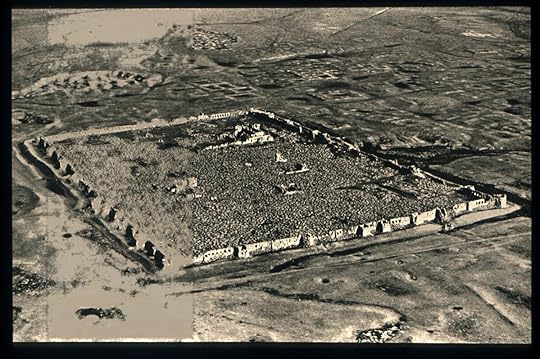
Ruins of fortified and garrisoned road station of Sergiopolis in the Syrian desert on the Persian frontier .
My dead tree version was a moderate 535-pages which included: maps, footnotes, appendices and a bibliography. It had a US 1990 copyright. In addition, the text was copiously footnoted, which included quotations in: Latin, Greek and modern foreign languages other than English.
Benjamin_Isaac is an Israeli historian of Greek and Roman history and author of several books on ancient history, in particular Greco-Roman infrastructure and the Roman army. This was the first book I’ve read by the author.
Firstly, this is an advanced-level text on a particular aspect of middle eastern history. It was written for a scholarly audience. It would be very helpful for a reader to already have a firm background on that region's history from the end of the Roman Republic into Late Antiquity to fully appreciate it. In addition, a previous, good grasp of the region's geography is needed. For example, familiarity with The Tabula Peutingeriana should be a prerequisite for reading this book. I personally recommend having an atlas available; preferably one showing satellite imagery, to relate the geographical locations and conditions found in the narrative.
Prose was in a very formal academic-style. It was very precise. The punctuation was meticulously done. The text was also well-groomed. I found only a single grammatical error in more than 400-pages.
Isaac disputes several the of conclusions of modern historians, on the organization and function of the Imperial Roman and its Greco-successor state’s border in the: Caucasus, Mesopotamia and the Levant. This was the frontier shared with the: Persian Empire (and its successor states); nomads; vassal, buffer states; and settled tribes ("barbarians"). Note, I came to prefer the usage of "frontier" vs. "border" from the narrative. Although, borderlands, which straddles the distinction between frontier and border might also be appropriate?
The description of the frontier starts in the north in the Caucasus, covers Mesopotamia in the middle and ends at the Red Sea in the southern Levant. Conservatively, the arc of the frontier was a linear distance of about 9000 km (5600 miles) during the majority of the period covered. Each of the regions is discussed separately. The regions were described geographically, along with their Roman geopolitical history from the perspective of the Emperor and the Army.
Note that despite being subtitled: The Roman Army in the East, this book was not about: grand strategy, operations, or tactics of the Roman army. It’s mainly about the army’s use for: policing, pacification, infrastructure development (roads, fortifications, aqueducts, etc.), and basing in preparation for offensive and defensive operations.
After discussing each region, Issac then goes back and unpacks the conclusions of modern, historians of the Republic and Late Roman antiquity objecting to many of their conclusions. The frontier in the Levant, shared with Persia and its successor states, receives the majority of attention. The Roman north and west is where the majority of Roman archeology and scholarship have been oriented. His most persuasive argument was: The Roman east was unlike the much-studied Roman north and west: geographically, economically, culturally, militarily and politically. For example, there were “barbarians” in the Roman north and west, not a rival, and substantial empire like Persia to contend with. In addition, the east could be very urban, while the west and north were a wilderness. He also defends the minority opinion that “modern thought” had infiltrated the Roman geopolitical discussion. For example, from ancient literature, the Roman’s conquered populations and centers-of-population (cities), not territories. That is, the frontier was nebulous, and not defined wholly by its geography.
Issac is particularly effective in debunking the concept of the Roman Limes, at least in the east. (Note Issac is referenced in the link.). His thesis was the Limes were not externally-facing hardpoints to warn of and resist invasion in preparation for a modern defense in depth of territory. They were there to police, maintain and in general facilitate the army’s lines of communication in proximity to an unpacified area. Lines of communication being: Roman roads, rivers, canals, etc.. That these ‘lines of communication’ were also the ancient arteries for foreign trade and hence import duty revenue along with: domestic trade, civil travel and communications was briefly mentioned.
The geography of the Roman eastern frontier was not supported by adequate maps, or illustrations in the book. The maps were found in an Appendix. There were adequate, large scale, regional maps, but they were sparsely annotated. I found it particularly annoying that provincial administrative boundaries discussed were ill-demarked on them. Small scale maps with topographical features would have been appreciated. Also, the diagrams of Levant cities felt irrelevant to the text and were too sparse. There were no photographs.
Unfortunately, this book was very ‘lumpy’. It covers almost 700 years of middle eastern history spanning both the Roman and Byzantine Empires. There was too much change over that period to cover between the Roman republic's advancement of the frontier eastward at the beginning of the period; and the static, holding on by their fingernails’ and retreat westward during the Byzantine period to be covered between its covers.
Also uneven was the regional analysis. Being Israeli, Issac’s most detailed information came from ancient Talmudic sources. Discussion of the: vassal, Herodian Kingdom; the three Palestine Roman provinces (1 – 3); Judea and Arabia were comprehensive. The discussion of the Kingdom of Armenia in the Caucasus was scant in comparison. The frontier of the Roman Egyptian province, which is counted by most Roman historians as part of the east, was barely mentioned.
Oddly, the author picks many examples from the well-studied, Roman north and west when illustrating his points about the less-studied east, despite early declaring the unique character of the Roman east.
Finally, the analysis of the frontier was very micro-economic. Roads, fortifications, aqueducts were built by the army. The macro-economics of the empire that caused the expansions of the frontier were assumed to be known. That is: securing the taxation on east-west trade, the effect of late antiquities’ plagues on the population, and the interregnum in the west’s draining affect on the Byzantine army’s available resources’ go unmentioned.
The book covered the Roman and Byzantine management of a 9000 km frontier over 700 years. Each region was managed differently, and again differently at different periods in time. When the book zeroed-in on a particular region and century, it was very good. However, only two regions within the Levant: the present-day Israel and Lebanon, and Iraq and Syria received this treatment. The author was also picking a fight with the Roman-history-in-the-East scholarly orthodoxy. Certain of his points were not as well argued as others. Yet, the book contains a wealth of information on particular aspects of Roman history. It was not popular history. In the hands of someone with the right background to read it, it would be engrossing. However, I think as a book it would have been more compelling by addressing fewer points, during a shorter interval of time, and on a more limited geographical scope.
Readers of this book may be interested in The Grand Strategy of the Byzantine Empire (my review) or The Grand Strategy of the Roman Empire from the First Century AD to the Third . Note that Issac takes exception to Luttwak's analysis in places.
Ruins of fortified and garrisoned road station of Sergiopolis in the Syrian desert on the Persian frontier .
My dead tree version was a moderate 535-pages which included: maps, footnotes, appendices and a bibliography. It had a US 1990 copyright. In addition, the text was copiously footnoted, which included quotations in: Latin, Greek and modern foreign languages other than English.
Benjamin_Isaac is an Israeli historian of Greek and Roman history and author of several books on ancient history, in particular Greco-Roman infrastructure and the Roman army. This was the first book I’ve read by the author.
Firstly, this is an advanced-level text on a particular aspect of middle eastern history. It was written for a scholarly audience. It would be very helpful for a reader to already have a firm background on that region's history from the end of the Roman Republic into Late Antiquity to fully appreciate it. In addition, a previous, good grasp of the region's geography is needed. For example, familiarity with The Tabula Peutingeriana should be a prerequisite for reading this book. I personally recommend having an atlas available; preferably one showing satellite imagery, to relate the geographical locations and conditions found in the narrative.
Prose was in a very formal academic-style. It was very precise. The punctuation was meticulously done. The text was also well-groomed. I found only a single grammatical error in more than 400-pages.
Isaac disputes several the of conclusions of modern historians, on the organization and function of the Imperial Roman and its Greco-successor state’s border in the: Caucasus, Mesopotamia and the Levant. This was the frontier shared with the: Persian Empire (and its successor states); nomads; vassal, buffer states; and settled tribes ("barbarians"). Note, I came to prefer the usage of "frontier" vs. "border" from the narrative. Although, borderlands, which straddles the distinction between frontier and border might also be appropriate?
The description of the frontier starts in the north in the Caucasus, covers Mesopotamia in the middle and ends at the Red Sea in the southern Levant. Conservatively, the arc of the frontier was a linear distance of about 9000 km (5600 miles) during the majority of the period covered. Each of the regions is discussed separately. The regions were described geographically, along with their Roman geopolitical history from the perspective of the Emperor and the Army.
Note that despite being subtitled: The Roman Army in the East, this book was not about: grand strategy, operations, or tactics of the Roman army. It’s mainly about the army’s use for: policing, pacification, infrastructure development (roads, fortifications, aqueducts, etc.), and basing in preparation for offensive and defensive operations.
After discussing each region, Issac then goes back and unpacks the conclusions of modern, historians of the Republic and Late Roman antiquity objecting to many of their conclusions. The frontier in the Levant, shared with Persia and its successor states, receives the majority of attention. The Roman north and west is where the majority of Roman archeology and scholarship have been oriented. His most persuasive argument was: The Roman east was unlike the much-studied Roman north and west: geographically, economically, culturally, militarily and politically. For example, there were “barbarians” in the Roman north and west, not a rival, and substantial empire like Persia to contend with. In addition, the east could be very urban, while the west and north were a wilderness. He also defends the minority opinion that “modern thought” had infiltrated the Roman geopolitical discussion. For example, from ancient literature, the Roman’s conquered populations and centers-of-population (cities), not territories. That is, the frontier was nebulous, and not defined wholly by its geography.
Issac is particularly effective in debunking the concept of the Roman Limes, at least in the east. (Note Issac is referenced in the link.). His thesis was the Limes were not externally-facing hardpoints to warn of and resist invasion in preparation for a modern defense in depth of territory. They were there to police, maintain and in general facilitate the army’s lines of communication in proximity to an unpacified area. Lines of communication being: Roman roads, rivers, canals, etc.. That these ‘lines of communication’ were also the ancient arteries for foreign trade and hence import duty revenue along with: domestic trade, civil travel and communications was briefly mentioned.
The geography of the Roman eastern frontier was not supported by adequate maps, or illustrations in the book. The maps were found in an Appendix. There were adequate, large scale, regional maps, but they were sparsely annotated. I found it particularly annoying that provincial administrative boundaries discussed were ill-demarked on them. Small scale maps with topographical features would have been appreciated. Also, the diagrams of Levant cities felt irrelevant to the text and were too sparse. There were no photographs.
Unfortunately, this book was very ‘lumpy’. It covers almost 700 years of middle eastern history spanning both the Roman and Byzantine Empires. There was too much change over that period to cover between the Roman republic's advancement of the frontier eastward at the beginning of the period; and the static, holding on by their fingernails’ and retreat westward during the Byzantine period to be covered between its covers.
Also uneven was the regional analysis. Being Israeli, Issac’s most detailed information came from ancient Talmudic sources. Discussion of the: vassal, Herodian Kingdom; the three Palestine Roman provinces (1 – 3); Judea and Arabia were comprehensive. The discussion of the Kingdom of Armenia in the Caucasus was scant in comparison. The frontier of the Roman Egyptian province, which is counted by most Roman historians as part of the east, was barely mentioned.
Oddly, the author picks many examples from the well-studied, Roman north and west when illustrating his points about the less-studied east, despite early declaring the unique character of the Roman east.
Finally, the analysis of the frontier was very micro-economic. Roads, fortifications, aqueducts were built by the army. The macro-economics of the empire that caused the expansions of the frontier were assumed to be known. That is: securing the taxation on east-west trade, the effect of late antiquities’ plagues on the population, and the interregnum in the west’s draining affect on the Byzantine army’s available resources’ go unmentioned.
The book covered the Roman and Byzantine management of a 9000 km frontier over 700 years. Each region was managed differently, and again differently at different periods in time. When the book zeroed-in on a particular region and century, it was very good. However, only two regions within the Levant: the present-day Israel and Lebanon, and Iraq and Syria received this treatment. The author was also picking a fight with the Roman-history-in-the-East scholarly orthodoxy. Certain of his points were not as well argued as others. Yet, the book contains a wealth of information on particular aspects of Roman history. It was not popular history. In the hands of someone with the right background to read it, it would be engrossing. However, I think as a book it would have been more compelling by addressing fewer points, during a shorter interval of time, and on a more limited geographical scope.
Readers of this book may be interested in The Grand Strategy of the Byzantine Empire (my review) or The Grand Strategy of the Roman Empire from the First Century AD to the Third . Note that Issac takes exception to Luttwak's analysis in places.

March 18, 2017
Isaac challenges a number of ideas of Roman imperium through his study of the army in the east, although the entire empire is frequently references and the implications of his conclusion are broad. He argues that the Romans had no concept of political boundaries and that what we see as militarized frontiers were never lines of defense. Instead, Rome remained on the offensive in the east. The army was there as a force of occupation to keep the conquests under Roman authority. He argues that the Roman empire had no grand strategy. Rather, warfare was conducted at the behest of emperors, and decisions should be seen as attempts at glory, as the sources claim. A lack of clear-cut aims rules out grand strategy for the Romans. This book is the extreme opposite of Luttwak's 'Grand Strategy of the Roman Empire', and in his attempt to argue against the earlier work Isaac takes things too far. Thus emperors rarely fought for anything other than personal glory, and the frontier fortifications were just set up in almost random locations. This is problematic, especially in the east, where the Arabian frontier has been shown to match the 200mm rainfall line which strongly suggests some sort of planning.

August 20, 2025
A book that challenges your thinking.
You would be well-served by background knowledge of the common perception of the organization of Rome's border provinces, changes in Roman fort layout and architecture, and the history of the Roman east between roughly the 1st century BC and 7th century AD. It will affect what you take away from The Limits of Empire. Regardless, the book is fantastic.
It challenges the narrative that the Roman army was positioned to defend the empire and instead argues that its primary function was population control. Isaac also suggests that many of the excavated installations were not primarily military in nature or were otherwise garrisoned by local militias unaffiliated with the Roman army. These militias were responsible for local security but could also be in charge of defending a city.
I give it four stars because I think parts of the book were not necessary and did not help the main argument, specifically the chapter on who built the eastern Roman cities. There are also moments when I think the author leans too heavily away from the "grand [defensive] strategy" theory and may not give credit to military efficiency where it's due.
A TL;DR of Important Context
(A) In his book Barbarian Within the Gates, Thomas Burns argues that Rome's defense in depth successfully contained the Goths after the Battle of Adrianople. The defense in depth theory is that, after the Crisis of the Third Century, the empire gradually, but deliberately, developed a military system that could choke an enemy force and keep it in place until a field army could arrive. You are exposed to it in Goldworthy's How Rome Fell, although he is critical of it for different reasons than this book. It was more prominent in the 70s and 80s, after Luttwak published The Grand Strategy of the Roman Empire. Books like Isaac's helped to expose major flaws in the theory, and its best understood when knowing this context.
(B) In Southern and Dixon's The Late Roman Army, you learn that military bases became smaller and more irregularly shaped. This, in theory, made them easier to defend with smaller garrisons. Furthermore, their shape could follow the contours of geographic aids, like heights and cliff walls, to eliminate points of attack. It reflects a much more defensive posture of the Roman army, and the archeology seemed to fit with the defense in depth theory. From these bases, the frontier forces (limitanei) guarded supply depots and lines of communication, denying them to the enemy.
You'll see how Isaac challenges this interpretation of the archeological evidence.
(C) The empire's historical narrative is often told as a story of growth, temporary crisis, and a resurgence that almost immediately starts a decline toward the western empire's end. During this first period, the Roman army is aggressive and operates on the offensive. Architecturally, its bases tended to follow the playing card style of fort meant to house an entire legion or more. These camps, with their large perimeters, were not meant to be primarily defensive, but rather bases of offensive operation. However, the conquests slowed. Augustus himself has urged his successors to maintain the empire at its current borders. Despite a number of territorial gains between Tiberius and Trajan, Hadrian begins the empire's contraction. He retreats to more defensible borders.
Although emperors continue to campaign beyond the frontiers into the 4th century, there is an irreversible shift in the balance of power between the empire and her neighbors. In the east, the powerful Sassanids provide the Romans with an enemy that is their equal. Along the Rhine and Danube, the tribes are restless. They had already crossed the rivers and pillaged Europe during the Crisis of the Third Century. Faced with these pressures, the Roman army went primarily on the defensive, and after 376 the western empire would never campaign past its borders again.
This narrative does not apply to the east, as you'll read in The Limits of Empire.
Strength of the Evidence
Isaac's primary pool of evidence comes from Judea. He also pulls from archeological work elsewhere in the near east, but his knowledge of this is through others' research. He personally surveyed sites in Israel. He also heavily relies on Josephus, mostly because Josephus' history is unique in that it was written by a (turncoat) member of the defeated people. Usually, Roman histories are very bad about knowing their enemy, because for them what matters is now who the enemy was, but rather the personalities, politics, and military campaigns of Rome. We therefore have a much better understanding of who the Jewish people were at that time than any other population conquered by the empire. This allows us to see the Roman army from the perspective of the locals. He reinforces Josephus with Talmudic evidence.
What I Found Insightful
He convincingly argues that many, if not most, of the "small forts" along the frontier provinces were not actually forts built for defense. They were typically poorly positioned. The priority was a water supply, not defense. Many were shadowed by towers to provide early warning.
The book does a good job of showing how, along the Judean/Palestinian/Arabian frontier, the "forts" were not part of an elaborate defensive system against external threat. Rather, they were meant for other purposes entirely, like way stations, inns, and other infrastructure for traders and military/political travel). Others were meant for internal security and population control, whether to suppress banditry or to keep the locals in place. Isaac provides inscription and literary evidence in favor of this interpretation.
Benjamin Isaac also shows how not all frontiers were the same. Mesopotamia, a region conquered by Septimius Severus, was characterized by walled and heavily fortified cities. These typically had their own militias, which sometimes had to fight off besieging armies on their own. Here, as elsewhere in the east, the Roman army was often garrisoned in the cities themselves. Where there is literary evidence, whether histories or Christian chronicles, there is plenty of evidence of the use of military force to suppress urban revolts. But in Mesopotamia specifically, the grid of fortified cities gave cause for a multi-century, on-and-off war of attrition against the Sassanids.
An interesting observation he makes is that Rome's temporary expansion farther into the Arabian desert shortened lines of communication between Egypt and Mesopotamia. Beforehand, this territory had been controlled by the powerful and vassal city of Palmyra. Ironically, it shows perhaps inadvertent evidence for Roman military efficiency at mobilizing late Roman field armies.
Nevertheless, the book is convincing that the Roman army remained primarily offensive for most of its history. It repeatedly penetrated Sassanid-held Mesopotamia throughout the 2nd, 3rd, 4th, and 6th centuries. It campaigned in Sassanid-aligned Armenia. Pontus and Cappadocia were never seriously threatened by the Persians. Syria had been breached a number of times, but these were still comparatively few compared to the multitude of times that Ctesiphon was either sacked or occupied (into the 6th century).
Although this is not in the book, consider that even the humiliating loss of Nisibis and other cities to the Persians after the defeat of Julian's army in 363. While its defeat came from the inability to conduct a successful tactical withdrawal, the territorial losses were the result of a failed offensive.
Anyway, if the Roman army was primarily offensive even into the 6th century, the argument that it was guided by a predominantly defensively-minded grand strategy loses weight.
The author also argues that the Roman army was not necessarily for the benefit of the local population. The defense in depth theory infers that Rome cared about protecting people and non-state assets in the provinces. Isaac suggests that the military in the east was a burden. Not only did it often help to enforce taxation, but there was rampant corruption, specifically extortion of civilians.
This corruption went down to the level of individual centurions and soldiers. They had a monopoly on force, and they were not necessarily benevolent rulers. The men with all the power were liable to exploit it for their own benefit, at the expense of those without power. Provinces had their local aristocracies and other wealthy classes, and these mattered to Rome. But the bulk of the people were not afforded that same sort of professionalism and integration. The Talmudic evidence is important for illustrating the case, as it is written from the perspective of the locals.
Even the passing or presence of the emperor or a field army, and their entourage, was a massive financial burden to local landowners and those with assets. And provincials were heavily taxed not just in the form of the anona, or the provisions for the army, but also in the form of the expropriation of horses, mules, other work animals, and animals for butchering. Skilled craftsmen could be forced into service for the military, and "peasant leadership" - leaders who had access to the commoners, in Judea's case, the rabbis who wrote Talmudic laws - was often called upon to corral these people into giving Caesar what was due to Caesar.
Criticism
The book is not without its weaknesses. The chapter on who built the monumental architecture of the Roman east was unnecessary. I also think its the weakest, in terms of evidence. Mostly, because the evidence is so scant.
Josephus records the numerous architectural investments that Judean client kings of Rome, such as Agrippa II, made not just in Jerusalem, but throughout the kingdom and even in the Roman Levant and beyond. Based mostly on Josephus, Isaac questions whether Roman government really had much to do with the development of the eastern cities and their Roman-style monumental architecture, and suggests that local aristocracy was the primary driver (and financial muscle) behind these initiatives. But beyond Josephus, the evidence is very sparse either way.
Isaac is not necessarily wrong in his conclusions, but the subject is better surveyed in other books with wider geographic scopes that allow for more archeological and inscription-based evidence. The chapter does not contribute to the overall thesis of the book: the Roman military presence in the east was primarily about internal control and population management, not frontier defense
Bottom Line
The Limits of Empire has become an instant favorite. I love a book that can really shift a perspective on a problem. It's also very well researched, and I found it a pleasure to read.
You would be well-served by background knowledge of the common perception of the organization of Rome's border provinces, changes in Roman fort layout and architecture, and the history of the Roman east between roughly the 1st century BC and 7th century AD. It will affect what you take away from The Limits of Empire. Regardless, the book is fantastic.
It challenges the narrative that the Roman army was positioned to defend the empire and instead argues that its primary function was population control. Isaac also suggests that many of the excavated installations were not primarily military in nature or were otherwise garrisoned by local militias unaffiliated with the Roman army. These militias were responsible for local security but could also be in charge of defending a city.
I give it four stars because I think parts of the book were not necessary and did not help the main argument, specifically the chapter on who built the eastern Roman cities. There are also moments when I think the author leans too heavily away from the "grand [defensive] strategy" theory and may not give credit to military efficiency where it's due.
A TL;DR of Important Context
(A) In his book Barbarian Within the Gates, Thomas Burns argues that Rome's defense in depth successfully contained the Goths after the Battle of Adrianople. The defense in depth theory is that, after the Crisis of the Third Century, the empire gradually, but deliberately, developed a military system that could choke an enemy force and keep it in place until a field army could arrive. You are exposed to it in Goldworthy's How Rome Fell, although he is critical of it for different reasons than this book. It was more prominent in the 70s and 80s, after Luttwak published The Grand Strategy of the Roman Empire. Books like Isaac's helped to expose major flaws in the theory, and its best understood when knowing this context.
(B) In Southern and Dixon's The Late Roman Army, you learn that military bases became smaller and more irregularly shaped. This, in theory, made them easier to defend with smaller garrisons. Furthermore, their shape could follow the contours of geographic aids, like heights and cliff walls, to eliminate points of attack. It reflects a much more defensive posture of the Roman army, and the archeology seemed to fit with the defense in depth theory. From these bases, the frontier forces (limitanei) guarded supply depots and lines of communication, denying them to the enemy.
You'll see how Isaac challenges this interpretation of the archeological evidence.
(C) The empire's historical narrative is often told as a story of growth, temporary crisis, and a resurgence that almost immediately starts a decline toward the western empire's end. During this first period, the Roman army is aggressive and operates on the offensive. Architecturally, its bases tended to follow the playing card style of fort meant to house an entire legion or more. These camps, with their large perimeters, were not meant to be primarily defensive, but rather bases of offensive operation. However, the conquests slowed. Augustus himself has urged his successors to maintain the empire at its current borders. Despite a number of territorial gains between Tiberius and Trajan, Hadrian begins the empire's contraction. He retreats to more defensible borders.
Although emperors continue to campaign beyond the frontiers into the 4th century, there is an irreversible shift in the balance of power between the empire and her neighbors. In the east, the powerful Sassanids provide the Romans with an enemy that is their equal. Along the Rhine and Danube, the tribes are restless. They had already crossed the rivers and pillaged Europe during the Crisis of the Third Century. Faced with these pressures, the Roman army went primarily on the defensive, and after 376 the western empire would never campaign past its borders again.
This narrative does not apply to the east, as you'll read in The Limits of Empire.
Strength of the Evidence
Isaac's primary pool of evidence comes from Judea. He also pulls from archeological work elsewhere in the near east, but his knowledge of this is through others' research. He personally surveyed sites in Israel. He also heavily relies on Josephus, mostly because Josephus' history is unique in that it was written by a (turncoat) member of the defeated people. Usually, Roman histories are very bad about knowing their enemy, because for them what matters is now who the enemy was, but rather the personalities, politics, and military campaigns of Rome. We therefore have a much better understanding of who the Jewish people were at that time than any other population conquered by the empire. This allows us to see the Roman army from the perspective of the locals. He reinforces Josephus with Talmudic evidence.
What I Found Insightful
He convincingly argues that many, if not most, of the "small forts" along the frontier provinces were not actually forts built for defense. They were typically poorly positioned. The priority was a water supply, not defense. Many were shadowed by towers to provide early warning.
The book does a good job of showing how, along the Judean/Palestinian/Arabian frontier, the "forts" were not part of an elaborate defensive system against external threat. Rather, they were meant for other purposes entirely, like way stations, inns, and other infrastructure for traders and military/political travel). Others were meant for internal security and population control, whether to suppress banditry or to keep the locals in place. Isaac provides inscription and literary evidence in favor of this interpretation.
Benjamin Isaac also shows how not all frontiers were the same. Mesopotamia, a region conquered by Septimius Severus, was characterized by walled and heavily fortified cities. These typically had their own militias, which sometimes had to fight off besieging armies on their own. Here, as elsewhere in the east, the Roman army was often garrisoned in the cities themselves. Where there is literary evidence, whether histories or Christian chronicles, there is plenty of evidence of the use of military force to suppress urban revolts. But in Mesopotamia specifically, the grid of fortified cities gave cause for a multi-century, on-and-off war of attrition against the Sassanids.
An interesting observation he makes is that Rome's temporary expansion farther into the Arabian desert shortened lines of communication between Egypt and Mesopotamia. Beforehand, this territory had been controlled by the powerful and vassal city of Palmyra. Ironically, it shows perhaps inadvertent evidence for Roman military efficiency at mobilizing late Roman field armies.
Nevertheless, the book is convincing that the Roman army remained primarily offensive for most of its history. It repeatedly penetrated Sassanid-held Mesopotamia throughout the 2nd, 3rd, 4th, and 6th centuries. It campaigned in Sassanid-aligned Armenia. Pontus and Cappadocia were never seriously threatened by the Persians. Syria had been breached a number of times, but these were still comparatively few compared to the multitude of times that Ctesiphon was either sacked or occupied (into the 6th century).
Although this is not in the book, consider that even the humiliating loss of Nisibis and other cities to the Persians after the defeat of Julian's army in 363. While its defeat came from the inability to conduct a successful tactical withdrawal, the territorial losses were the result of a failed offensive.
Anyway, if the Roman army was primarily offensive even into the 6th century, the argument that it was guided by a predominantly defensively-minded grand strategy loses weight.
The author also argues that the Roman army was not necessarily for the benefit of the local population. The defense in depth theory infers that Rome cared about protecting people and non-state assets in the provinces. Isaac suggests that the military in the east was a burden. Not only did it often help to enforce taxation, but there was rampant corruption, specifically extortion of civilians.
This corruption went down to the level of individual centurions and soldiers. They had a monopoly on force, and they were not necessarily benevolent rulers. The men with all the power were liable to exploit it for their own benefit, at the expense of those without power. Provinces had their local aristocracies and other wealthy classes, and these mattered to Rome. But the bulk of the people were not afforded that same sort of professionalism and integration. The Talmudic evidence is important for illustrating the case, as it is written from the perspective of the locals.
Even the passing or presence of the emperor or a field army, and their entourage, was a massive financial burden to local landowners and those with assets. And provincials were heavily taxed not just in the form of the anona, or the provisions for the army, but also in the form of the expropriation of horses, mules, other work animals, and animals for butchering. Skilled craftsmen could be forced into service for the military, and "peasant leadership" - leaders who had access to the commoners, in Judea's case, the rabbis who wrote Talmudic laws - was often called upon to corral these people into giving Caesar what was due to Caesar.
Criticism
The book is not without its weaknesses. The chapter on who built the monumental architecture of the Roman east was unnecessary. I also think its the weakest, in terms of evidence. Mostly, because the evidence is so scant.
Josephus records the numerous architectural investments that Judean client kings of Rome, such as Agrippa II, made not just in Jerusalem, but throughout the kingdom and even in the Roman Levant and beyond. Based mostly on Josephus, Isaac questions whether Roman government really had much to do with the development of the eastern cities and their Roman-style monumental architecture, and suggests that local aristocracy was the primary driver (and financial muscle) behind these initiatives. But beyond Josephus, the evidence is very sparse either way.
Isaac is not necessarily wrong in his conclusions, but the subject is better surveyed in other books with wider geographic scopes that allow for more archeological and inscription-based evidence. The chapter does not contribute to the overall thesis of the book: the Roman military presence in the east was primarily about internal control and population management, not frontier defense
Bottom Line
The Limits of Empire has become an instant favorite. I love a book that can really shift a perspective on a problem. It's also very well researched, and I found it a pleasure to read.

July 6, 2022
E.N.Luttwak的這本《羅馬帝國的大戰略》發表也有近四十個年頭了吧,不管認不認同,它都引起了史學界極大的迴響,而且依然有許多讀者。一、兩年前再版時,作者特別撰寫新序言回應人們對它的支持與批評。雖然沒有指名道姓,不過也許這本《帝國的邊界》也許也是其中之一吧。
本杰明‧艾隡克(Benjamin H. Isaac)是以色列特拉維夫大學的古代史教授,曾發表過關於古代種族主義的著作,但他更為人所知的,是關於羅馬的帝國主義跟軍隊的研究。本書《帝國的邊界》,是他綜合這些年對近東地區的各種考古研究的成果,針對勒特維克的“大戰略”發表的異議之作。所以,要閱讀之前,恐怕得先做做功課。
在勒特維克的理論中,首先提出“霸權帝國”跟“領土帝國”兩個概念,前者是一種對鄰近國家以外交的威勢搭配武力的威攝,建構出一系列附庸國環繞來達成“安全”的體系;後者則是直接訴諸征服並畫出穩定的邊境線,依靠穩定的常備軍跟構築要塞來防禦。他認為,在Julius-Cladius王朝時期,帝國是採取“霸權”模式;二世紀後,則採取“領土”模式,並以積極的境外決戰;三世紀後,羅馬在內戰中開始中衰,於是採取“縱深防禦”跟“彈性防禦”,利用邊境要塞跟地方部隊牽制敵人,等待中央野戰軍救援的被動模式。勒特維克的理論與分析非常的系統化及運用了許多現代的術語,就史實上看來,確實是言之成理。但這也正是被詬病之處,艾薩克就對勒特維克是否過度的解釋了古羅馬人的邊疆政策,或許他們在主觀之下只是採取了某種臨機應變的措施,而不是一種有意識的具體計畫,運用那些專有名詞是否太過“現代”提出了質疑。勒特維克認為這種“戰略觀”本來就不可能訴諸在文獻之中,它或許是一種傳統,或存在於官僚機構內的政策習慣,後世的人也只能從具體事實中反推論。但這種作風卻跟史學嚴謹的態度並不相容,畢竟他這種把解釋加在古代人身上的做法,而且又是無法完全證實證偽,是很難讓人信服。
而艾薩克對勒特維克的最大挑戰,即對“霸權帝國”跟“領土帝國”兩個極具現代化概念的術語,是否適用於解釋一個古代國家用自己的論點提出了質疑。他明確的指出,各種史料中,羅馬人談論的是“Imperium Populi Romani”,意思是“羅馬人民的大國”,而非地理意義上的Imperium Romanum(羅馬帝國);而羅馬帝國主義中,針對的其他民族與其國王,不是土地。簡單來講,“帝國”是“臣服於羅馬統治的各個民族”,而不是被想像成一個領土上的實體。在帝國中有行省,這些行省可以劃出邊界,但古代史料很少說明帝國的界限,有時也說的非常模糊,通常都是講述直到某個區域為止之類的方式,不是現代意義上的那種明確標示界限,從考古學上,也不曾找到過證據。以此延伸出的討論是,羅馬人是否真的替自己的帝國構想出一個邊境線,或許有,但意義應該不是我們所想像的那種。
此外,艾薩克也對傳統史學認為,羅馬人在共和時期擴張,帝國時期轉為守成這個觀點感到懷疑。羅馬帝國主義早期的擴張是個具爭議性的題目,但毋庸置疑的是,戰爭帶來的利益肯定是其中的一種驅動力,作者認為沒道理這種追逐會在帝國時期就忽然被拋棄。從上層來說,對皇帝而言,軍事榮耀是他執政合法性的基石;而對士兵來說,戰利品是彌補平常被苛扣的軍餉的最佳來源。或許不需要太過精密的經濟學計算,只需要用簡單的人性去思考,決定兼併與戰爭,擴張與防禦都是帶有機會主義的,未必真的存在什麼宏大戰略。至於帝國在各處構築要塞,建立交通線,與其說是一種經過龐大的計算而建立的防禦網絡,不如說只是針對軍事上的需求,符合實際狀況臨機應變而成。從現有的考古證據看來,那些要塞是否真的是為了防禦作用,值得懷疑,而它們能夠保護住邊境完全不讓敵人侵犯,更是一大疑問。帝國的軍隊不是用來保護人民,這是而是用來捍衛當權者的利益,這也是殘酷的現實。
總而言之,艾薩克對勒特維克把羅馬帝國想像成一種現代意義上的領土國家,並會為了“保境安民”而建構“宏大戰略”的觀點提出了強烈的懷疑。他在書中還詳細了考察帝國在東部的邊境政策,從與波斯的互動、帝國軍隊和平時的實際功能、老兵殖民地的效用、建構要塞與城市化等等各種主題,去論證他的觀點。裡面充滿著詳實的考古證據,硬資料讓人不得不佩服。說真的,本來我對勒特維克的論點是十分的信服,不過,現在多少也產生了動搖。
本書的翻譯基本上算流暢,但是譯者把龐培(Pompey)譯成龐貝(Pompeii),雖然沒有硬性規定,但大家都知道這兩個詞已經約定俗成的有各自的習慣,上網查一下就知道的小細節,卻要“與眾不同”,不免讓人覺得難接受,有點可惜。但整體上來講,這部相當硬的作品,譯者這樣表現,也還是算完成了任務。對於羅馬軍事史有興趣的,本書是值得一看的作品,但它很硬,請做好面對許多考古資料的準備,而且沒有地圖!!同出版社幾年前出過的一本《古代世界歷史地圖集》,當初有砸大錢買的朋友,現在就派上用場了。
本杰明‧艾隡克(Benjamin H. Isaac)是以色列特拉維夫大學的古代史教授,曾發表過關於古代種族主義的著作,但他更為人所知的,是關於羅馬的帝國主義跟軍隊的研究。本書《帝國的邊界》,是他綜合這些年對近東地區的各種考古研究的成果,針對勒特維克的“大戰略”發表的異議之作。所以,要閱讀之前,恐怕得先做做功課。
在勒特維克的理論中,首先提出“霸權帝國”跟“領土帝國”兩個概念,前者是一種對鄰近國家以外交的威勢搭配武力的威攝,建構出一系列附庸國環繞來達成“安全”的體系;後者則是直接訴諸征服並畫出穩定的邊境線,依靠穩定的常備軍跟構築要塞來防禦。他認為,在Julius-Cladius王朝時期,帝國是採取“霸權”模式;二世紀後,則採取“領土”模式,並以積極的境外決戰;三世紀後,羅馬在內戰中開始中衰,於是採取“縱深防禦”跟“彈性防禦”,利用邊境要塞跟地方部隊牽制敵人,等待中央野戰軍救援的被動模式。勒特維克的理論與分析非常的系統化及運用了許多現代的術語,就史實上看來,確實是言之成理。但這也正是被詬病之處,艾薩克就對勒特維克是否過度的解釋了古羅馬人的邊疆政策,或許他們在主觀之下只是採取了某種臨機應變的措施,而不是一種有意識的具體計畫,運用那些專有名詞是否太過“現代”提出了質疑。勒特維克認為這種“戰略觀”本來就不可能訴諸在文獻之中,它或許是一種傳統,或存在於官僚機構內的政策習慣,後世的人也只能從具體事實中反推論。但這種作風卻跟史學嚴謹的態度並不相容,畢竟他這種把解釋加在古代人身上的做法,而且又是無法完全證實證偽,是很難讓人信服。
而艾薩克對勒特維克的最大挑戰,即對“霸權帝國”跟“領土帝國”兩個極具現代化概念的術語,是否適用於解釋一個古代國家用自己的論點提出了質疑。他明確的指出,各種史料中,羅馬人談論的是“Imperium Populi Romani”,意思是“羅馬人民的大國”,而非地理意義上的Imperium Romanum(羅馬帝國);而羅馬帝國主義中,針對的其他民族與其國王,不是土地。簡單來講,“帝國”是“臣服於羅馬統治的各個民族”,而不是被想像成一個領土上的實體。在帝國中有行省,這些行省可以劃出邊界,但古代史料很少說明帝國的界限,有時也說的非常模糊,通常都是講述直到某個區域為止之類的方式,不是現代意義上的那種明確標示界限,從考古學上,也不曾找到過證據。以此延伸出的討論是,羅馬人是否真的替自己的帝國構想出一個邊境線,或許有,但意義應該不是我們所想像的那種。
此外,艾薩克也對傳統史學認為,羅馬人在共和時期擴張,帝國時期轉為守成這個觀點感到懷疑。羅馬帝國主義早期的擴張是個具爭議性的題目,但毋庸置疑的是,戰爭帶來的利益肯定是其中的一種驅動力,作者認為沒道理這種追逐會在帝國時期就忽然被拋棄。從上層來說,對皇帝而言,軍事榮耀是他執政合法性的基石;而對士兵來說,戰利品是彌補平常被苛扣的軍餉的最佳來源。或許不需要太過精密的經濟學計算,只需要用簡單的人性去思考,決定兼併與戰爭,擴張與防禦都是帶有機會主義的,未必真的存在什麼宏大戰略。至於帝國在各處構築要塞,建立交通線,與其說是一種經過龐大的計算而建立的防禦網絡,不如說只是針對軍事上的需求,符合實際狀況臨機應變而成。從現有的考古證據看來,那些要塞是否真的是為了防禦作用,值得懷疑,而它們能夠保護住邊境完全不讓敵人侵犯,更是一大疑問。帝國的軍隊不是用來保護人民,這是而是用來捍衛當權者的利益,這也是殘酷的現實。
總而言之,艾薩克對勒特維克把羅馬帝國想像成一種現代意義上的領土國家,並會為了“保境安民”而建構“宏大戰略”的觀點提出了強烈的懷疑。他在書中還詳細了考察帝國在東部的邊境政策,從與波斯的互動、帝國軍隊和平時的實際功能、老兵殖民地的效用、建構要塞與城市化等等各種主題,去論證他的觀點。裡面充滿著詳實的考古證據,硬資料讓人不得不佩服。說真的,本來我對勒特維克的論點是十分的信服,不過,現在多少也產生了動搖。
本書的翻譯基本上算流暢,但是譯者把龐培(Pompey)譯成龐貝(Pompeii),雖然沒有硬性規定,但大家都知道這兩個詞已經約定俗成的有各自的習慣,上網查一下就知道的小細節,卻要“與眾不同”,不免讓人覺得難接受,有點可惜。但整體上來講,這部相當硬的作品,譯者這樣表現,也還是算完成了任務。對於羅馬軍事史有興趣的,本書是值得一看的作品,但它很硬,請做好面對許多考古資料的準備,而且沒有地圖!!同出版社幾年前出過的一本《古代世界歷史地圖集》,當初有砸大錢買的朋友,現在就派上用場了。
September 8, 2021
This book gives an account of the Roman (and Byzantine) occupation of the Levant from the veiw point of the Talmud and Jewish oral tradition. it is good read but does get tedious with too much detail at times.
Displaying 1 - 5 of 5 reviews